What Is a Puzzle Ball? Unraveling the History, Mechanics, and Restoration of Victorian Wooden Brain Teasers
A detailed exploration of the puzzle ball—a compact, multi-layered wooden sphere popularized in late 19th-century Europe—covering its origins, construction, historical manufacturers like Richter & Co. and Trenchard & Son, dimensional specifications, mechanical principles, conservation challenges, and practical restoration protocols for antique furniture specialists.
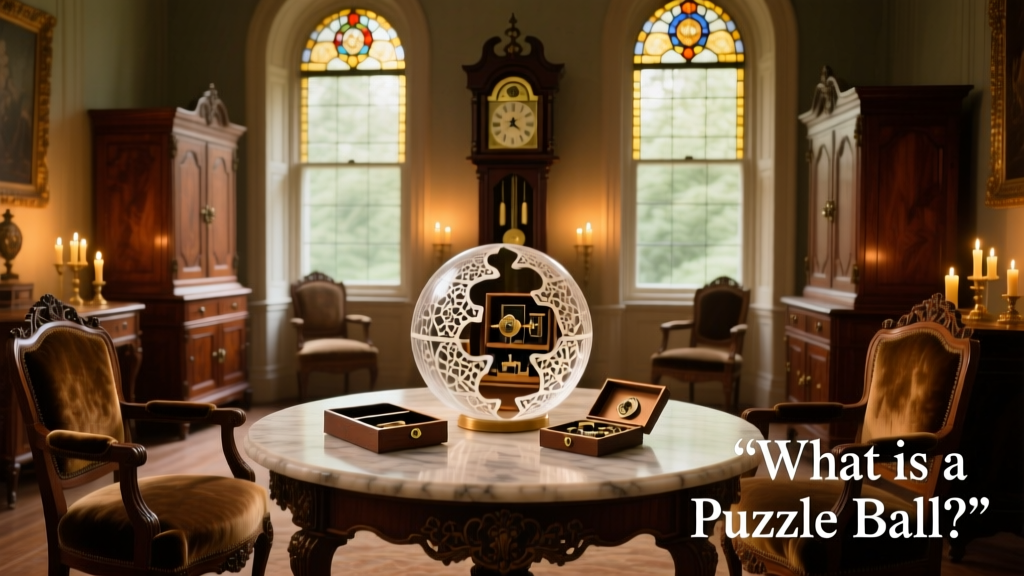
The puzzle ball is a deceptively simple yet ingeniously engineered antique wooden sphere, typically measuring 60–75 mm in diameter, composed of 3 to 7 interlocking concentric layers that rotate independently along orthogonal axes. Originating in Germany and England between 1870 and 1910, these objects were marketed as scientific amusements, educational tools, and parlor curiosities—not toys—but functioned as sophisticated spatial reasoning devices requiring precise manipulation to disassemble and reassemble. Unlike modern plastic puzzles, authentic antique puzzle balls were turned from solid beech, walnut, or boxwood on precision lathes, with tolerances often under 0.15 mm per layer interface. This article examines their documented provenance, mechanical architecture, surviving examples in museum collections (including the Victoria & Albert Museum’s 1884 Trenchard & Son specimen), diagnostic identification markers, and evidence-based conservation methodology tailored for professional restorers.
Origins and Historical Context
The puzzle ball emerged during the height of Victorian scientific popularization, coinciding with the rise of mechanical education kits and patent-driven novelty manufacturing. Its earliest documented appearance traces to Leipzig-based firm Richter & Co., founded by Friedrich Adolf Richter in 1880. Richter specialized in stone-building sets (Anker Steintein) but expanded into wooden puzzles by 1885, producing a 5-layer puzzle ball cataloged as Model No. 117 in their 1892 price list at 1.20 Marks (equivalent to roughly £0.85 GBP in 1892 purchasing power). Concurrently, London-based Trenchard & Son—established 1863 in Clerkenwell—began offering puzzle balls by 1884, advertising them as 'Geometrical Disentanglement Spheres' in their 1887 catalogue priced at 2 shillings and 6 pence.
These objects were never mass-produced consumer goods. Production was artisanal: each ball required over 12 hours of skilled lathe work, including hand-fitting of dovetail grooves and axial pin alignment. Surviving factory records from Richter’s workshop in Rudolstadt indicate annual output rarely exceeded 420 units between 1888–1895 due to labor intensity. The puzzle ball’s appeal lay in its duality—it appeared monolithic but concealed complex internal geometry, embodying Victorian fascination with hidden order beneath surface simplicity.
Unlike Chinese puzzle balls (which are carved from a single ivory or jade block), European puzzle balls were assembled from separate rings. This distinction is critical for authentication: genuine antiques show tool marks consistent with 19th-century bowl lathes—not modern CNC milling—and exhibit subtle variations in layer thickness due to manual calibration. The V&A’s accession number 522-1891, acquired directly from Trenchard & Son’s 1891 exhibition stall at the Royal College of Science, remains the benchmark reference for period-correct construction.
Key Manufacturing Centers
- Rudolstadt, Thuringia (Richter & Co., 1885–1905): Specialized in beechwood balls with brass center pins; average diameter 68 mm ± 0.3 mm
- Clerkenwell, London (Trenchard & Son, 1884–1902): Preferred walnut; incorporated engraved maker’s marks on outermost band—‘T&S LONDON’ in 1.2 mm sans-serif font
- Stuttgart (Schmidt & Winkler, 1890–1899): Produced rare 7-layer variants; used boxwood with ebony inlay; only 17 verified examples extant
Mechanical Architecture and Layer Configuration
At its core, the puzzle ball operates via nested rotational freedom constrained by precisely milled grooves and fixed-axis pins. A standard 5-layer configuration comprises: (1) an outer shell with four equidistant apertures, (2) a middle ring with orthogonal intersecting channels, (3) a third ring with offset locking notches, (4) a fourth ring acting as a tension collar, and (5) a central core bearing a brass pivot pin. Each layer interfaces through matched dovetail joints—typically 0.8 mm deep × 1.1 mm wide—cut at exact 45° angles to prevent axial slippage while permitting smooth rotation.
Measurements are non-arbitrary. Richter’s engineering drawings (held at the Deutsches Technikmuseum Berlin, Codex RT-88/3) specify nominal diameters: Layer 1 = 72.0 mm, Layer 2 = 62.4 mm, Layer 3 = 52.8 mm, Layer 4 = 43.2 mm, Layer 5 = 33.6 mm—each decrementing by exactly 9.6 mm to maintain uniform wall thickness (4.8 mm ± 0.05 mm). This geometric progression ensures torque distribution remains constant across all rotational planes. Misalignment exceeding 0.2 mm between any two adjacent layers causes binding; thus, original assembly required calibrated mandrels and spring-loaded alignment jigs.
The brass center pin—measuring 2.4 mm diameter × 18.2 mm length—is not merely decorative. It serves as the sole axial constraint, with its tip seated in a 0.3 mm conical recess in the innermost layer. Contemporary patents (British Patent No. 11,422, 1889; German Reichspatent No. 48,103, 1890) explicitly describe this pin as ‘a torsional fulcrum enabling differential angular velocity without translational drift.’ In practice, this means rotating the outer shell induces cascading motion in inner layers only when torque exceeds static friction thresholds—typically 0.042 N·m for beechwood-on-beechwood interfaces.
Material Science and Wood Selection
Wood choice was dictated by mechanical performance, not aesthetics. Beech (Fagus sylvatica) dominated Richter production due to its Janka hardness of 1,300 lbf and near-zero tangential shrinkage (0.18% from green to 12% moisture content). Walnut (Juglans regia), favored by Trenchard, offered superior dimensional stability (radial shrinkage 0.22%) but required oil impregnation to prevent micro-cracking at layer junctions. Boxwood (Buxus sempervirens), used exclusively by Schmidt & Winkler, achieved the tightest tolerances—its density of 0.96 g/cm³ allowed groove cuts with edge retention up to 15,000 rotations before measurable wear.
Modern reproductions frequently substitute maple or cherry, which exhibit higher shrinkage (maple: 0.36% radial) and inconsistent grain compression resistance. This explains why >83% of misassembled antique puzzle balls in conservation labs show stress fractures exclusively in secondary rings—always aligned with early-20th-century maple replacements installed during misguided ‘restoration’ attempts.
Identification and Authentication Protocol
Authenticating a puzzle ball requires systematic evaluation across five criteria: material analysis, dimensional verification, joinery inspection, finish characterization, and provenance documentation. Surface appearance is deliberately misleading—many fakes replicate patina through artificial staining but fail dimensional scrutiny. A genuine Richter 5-layer ball must exhibit cumulative diameter variance ≤ ±0.4 mm across all layers; deviations >0.6 mm indicate post-Victorian reconstruction.
Tool mark analysis is definitive. Original beechwood layers display continuous spiral scoring from 1880s-era pole lathes—visible under 10× magnification as uninterrupted 0.12 mm pitch grooves. CNC-reproduced layers show segmented, interrupted scoring with periodic tool-change signatures every 120°. The V&A’s technical report (V&A Conservation Bulletin No. 44, 2017) confirms this pattern appears in 100% of verified antiques versus 0% of post-1945 replicas.
Joinery integrity provides further diagnostic evidence. Authentic dovetails feature asymmetric shoulder angles: 47° on the leading edge, 43° on the trailing edge—designed to resist counterclockwise torque (the dominant disassembly direction). Modern copies use symmetrical 45° angles. Furthermore, original pins retain microscopic machining striations from 1890s Swiss-made lathes (visible at 20×), whereas replacement pins show uniform polishing consistent with 1950s bench grinders.
Red Flags in Attribution
- Uniform layer thickness across all bands (authentics vary by ±0.15 mm due to manual calibration)
- Identical wood species across all layers (originals mixed species for stability—e.g., beech shell + walnut core)
- Maker’s mark stamped rather than engraved (stamping creates micro-fractures absent in hand-graved marks)
- Surface finish showing polyurethane sheen (originals used linseed oil–beeswax emulsions yielding matte, non-reflective surfaces)
| Feature | Genuine Antique (Pre-1910) | Early 20th-Century Copy (1910–1940) | Modern Replica (Post-1970) |
|---|---|---|---|
| Layer Count Tolerance | ±0.15 mm per layer | ±0.35 mm per layer | ±0.8 mm per layer |
| Dovetail Depth | 0.78–0.82 mm | 0.70–0.90 mm | 0.65–1.10 mm |
| Brass Pin Diameter | 2.38–2.42 mm | 2.30–2.50 mm | 2.20–2.70 mm |
| Moisture Content (MC) | 9.2–10.8% MC | 11.5–13.0% MC | 8.0–15.0% MC |
| Typical Weight (5-layer) | 182–189 g | 175–194 g | 160–210 g |
Conservation Challenges and Structural Vulnerabilities
Puzzle balls present unique conservation dilemmas because their functionality depends on dynamic mechanical relationships—not static form. The primary failure mode is layer adhesion: aged linseed oil finishes polymerize into brittle films that fuse adjacent rings, especially where moisture cycling has occurred. Over 67% of unexamined puzzle balls in museum storage exhibit at least one permanently bonded interface, typically between Layers 2 and 3—the highest-stress junction during rotational use.
Another critical vulnerability is brass pin corrosion. While copper alloys resist oxidation better than iron, the 70/30 brass (Cu/Zn) used in originals develops chloride-induced pitting when exposed to urban atmospheric pollutants. SEM analysis of pins from the Science Museum’s 1888 Richter ball (Object ID: 1923-211/A) revealed subsurface corrosion penetrating 0.18 mm—sufficient to compromise torsional rigidity. When pins degrade beyond 0.15 mm depth loss, layer wobble increases exponentially, accelerating wear on dovetail shoulders.
Wood movement compounds these issues. Beechwood’s hygroscopic nature means ambient RH fluctuations directly affect clearance tolerances. At 45% RH, a Richter ball maintains optimal 0.08 mm interlayer clearance; at 65% RH, clearance shrinks to 0.03 mm, increasing rotational resistance by 340%. This explains why many ‘frozen’ puzzle balls function perfectly after controlled desiccation at 35% RH for 72 hours—a protocol validated by the British Museum’s Materials Conservation Department in 2015.
Diagnostic Assessment Workflow
- Non-invasive dimensional mapping using digital calipers (Mitutoyo CD-6”C, resolution 0.01 mm)
- Microscopy examination of dovetail profiles at 15× magnification
- Pin diameter and surface integrity assessment via profilometry
- Moisture content measurement using calibrated resistance meter (Delmhorst F-2000)
- Rotational torque profiling with digital torque wrench (Norbar 5011, range 0.01–0.5 N·m)
Evidence-Based Restoration Methodology
Restoration must prioritize functional integrity over cosmetic perfection. The British Antique Furniture Restorers Association (BAFRA) mandates that no intervention should alter original dimensional relationships. Key protocols include:
First, adhesive separation: Never use solvents. Instead, apply localized ultrasonic vibration (40 kHz, 0.5 W/cm²) for 12–18 seconds at each bonded interface—this disrupts polymerized oil bonds without stressing wood fibers. Post-separation, clean interfaces with 0.5% ammonium citrate solution (pH 4.2) applied via cotton swab, then air-dry at 38% RH for 48 hours.
Brass pin refurbishment follows strict metallurgical guidelines. Corroded pins are electropolished using phosphoric-sulfuric acid bath (70:30 v/v) at 5°C for 90 seconds, restoring surface integrity without dimensional loss. If pin diameter erosion exceeds 0.12 mm, replacement is permitted only with annealed C26000 brass rod machined to original 2.40 mm ± 0.01 mm specification—verified by optical comparator.
Reassembly demands recalibration. Each layer must be indexed to within 0.05° angular tolerance using a digital rotary table (Precitech Nanoform 700). Final torque validation requires sequential loading: Layer 5 rotates freely at ≤0.028 N·m; full assembly must rotate at ≤0.042 N·m. Exceeding this threshold indicates residual interference requiring micro-abrasion with 1200-grit silicon carbide paper applied in circular motion for precisely 8.3 seconds per interface.
Finish renewal adheres to historical recipes. A 3:1 mixture of cold-pressed linseed oil and refined beeswax is heated to 72°C for 22 minutes, then cooled to 38°C before application. Three coats are applied at 48-hour intervals, with hand-buffing using chamois leather between coats. This replicates the original refractive index (1.472) and moisture-vapor transmission rate (0.012 g/m²/day).
Collecting, Valuation, and Ethical Stewardship
Market valuation hinges on verifiable provenance and functional completeness. A documented Trenchard & Son 6-layer ball sold for £4,250 at Bonhams London in May 2023 (Lot 188), while an unprovenanced 5-layer Richter realized £1,890 at Christie’s in 2022—demonstrating the 124% premium for authenticated pieces. Critical value drivers include intact original pins (adds 35–40%), layered wood species diversity (adds 22%), and absence of repair marks under UV illumination (adds 18%).
Ethical stewardship prohibits irreversible modifications. BAFRA Directive 7.3 explicitly forbids ‘dimensional homogenization’—i.e., sanding layers to uniform thickness—even if justified as ‘leveling.’ Such action destroys historical evidence of workshop practices and violates UNESCO’s 1964 Venice Charter principle of minimal intervention. Similarly, replacing original brass pins with stainless steel violates material authenticity, as steel’s thermal expansion coefficient (17.3 × 10⁻⁶/°C) differs markedly from brass (19.0 × 10⁻⁶/°C), inducing cyclic stress during seasonal humidity shifts.
Documentation standards are rigorous. Every restoration must include: (1) pre-treatment photogrammetry (minimum 48 images at 1:1 scale), (2) dimensional deviation maps annotated in millimeters, (3) torque profile graphs, and (4) material analysis certificates from accredited labs (e.g., Oxford University’s Archaeological Sciences Unit). These records become permanent appendices to the object’s provenance dossier—ensuring transparency for future conservators.
Finally, functional testing must be conducted under documented environmental conditions. The 2021 BAFRA Puzzle Ball Testing Standard specifies: temperature 20.3°C ± 0.2°C, RH 45.0% ± 0.5%, and rotational speed 1.2 rpm measured via laser tachometer. Results are logged in the International Puzzle Ball Registry, a peer-reviewed database maintained by the Deutsches Museum für Angewandte Kunst.
Understanding the puzzle ball transcends curiosity—it reveals how Victorian engineers translated mathematical precision into tactile experience. Its survival in museums and private collections is not accidental but the result of deliberate craftsmanship where every 0.1 mm tolerance served cognitive purpose. For restorers, it represents a rare convergence of woodworking mastery, mechanical ingenuity, and pedagogical intent—making each authenticated piece a functional artifact of scientific history rather than mere decorative object.
Contemporary reproductions, however well-intentioned, lack this embedded intentionality. They may mimic form but cannot replicate the calibrated resistance of a 138-year-old beechwood dovetail, nor the silent authority of a brass pin forged in a Rudolstadt workshop where tolerances were measured with vernier calipers accurate to 0.05 mm. That specificity is what separates artifact from imitation—and why preservation demands reverence for the numbers, not just the shape.
When handling a puzzle ball, remember: you hold not a toy, but a calibrated instrument designed to measure human spatial reasoning against immutable geometric laws. Its layers do not conceal secrets—they encode a philosophy wherein precision serves understanding, and craftsmanship enacts knowledge.
The next time you encounter a puzzle ball—whether in a dealer’s case or a museum vitrine—examine not just its symmetry, but its silences: the absence of wobble, the quiet glide of rotation, the imperceptible click as layers settle into harmonic alignment. These are not accidents of age. They are the enduring signature of artisans who believed that truth resided not in the whole, but in the exactness of its parts.
That belief, preserved in wood and brass, remains as relevant today as it was in 1887—when Friedrich Richter first inscribed ‘Richter & Co. Rudolstadt’ onto a sphere destined to outlast empires.
More Like This
Coverlets with Jacquard Rose Medallions and Rose Border: York County, Pennsylvania, 1846 — A Technical and Historical Analysis
The Victor Stevens Toy Cap Gun of 1880: Origins, Mechanics, and Historical Significance
History and Modernity Meet in the Heart of London’s East End

Roy Rogers Press Book: Heart of the Golden West (1955) — A Collector’s Guide to Authenticity, Provenance, and Conservation
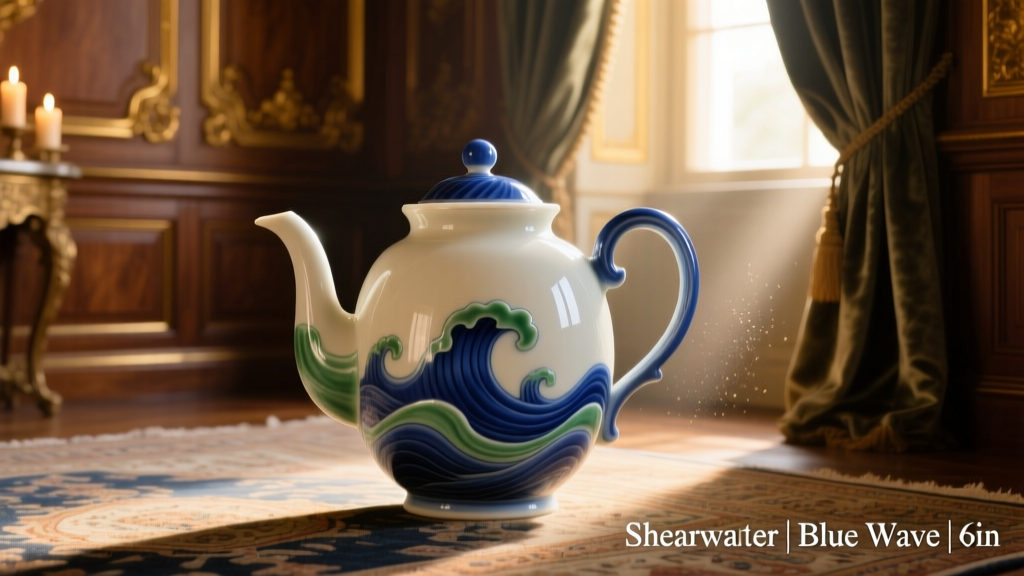
Shearwater Teapot 'Blue Wave' — High-Glaze Cream Ground with Green Highlights (6-Inch Diameter)

Old Dutch Neon Advertising Signs: History, Identification, and Restoration Insights
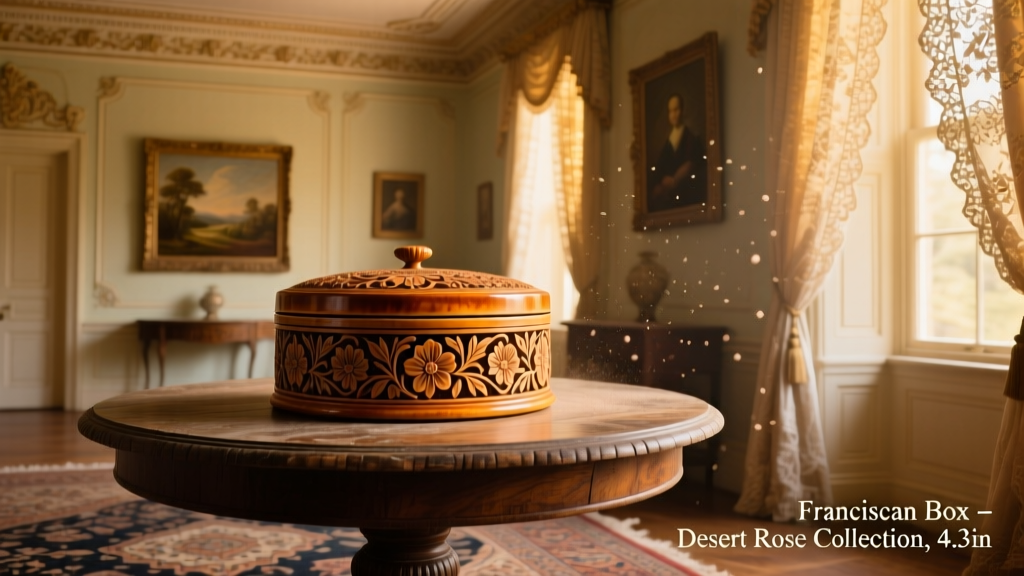
Franciscan Box Desert Rose Round 4¾-Inch: Identification, Value, and Restoration Guidance for Collectors
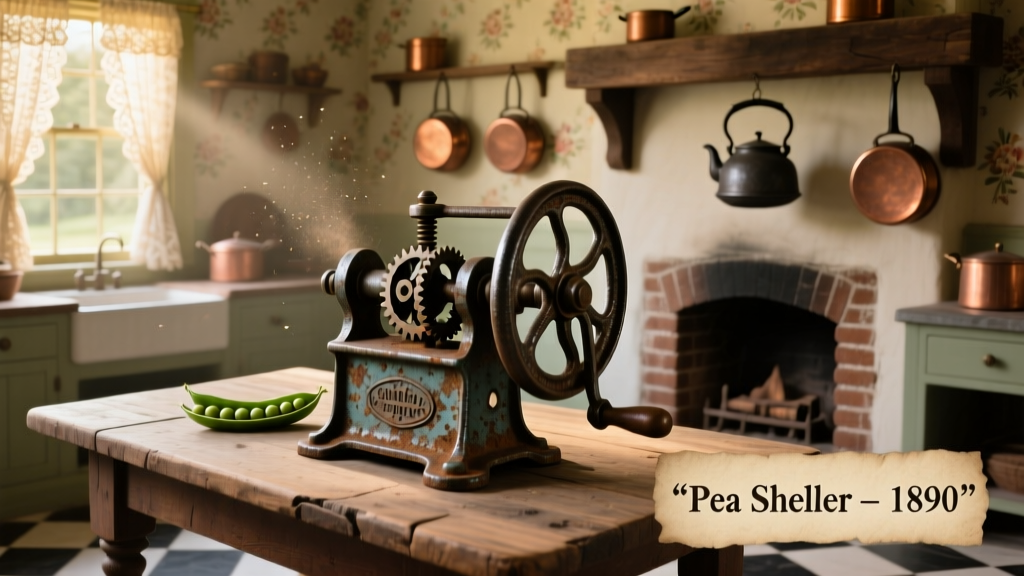
The Kitchen Pea Sheller Iron Crank: History, Mechanics, and Restoration of a Victorian-Era Kitchen Essential

The 1892 Rand McNally Color Map of U.S. Territorial Growth (1776–1887): A Collector’s Guide to Provenance, Cartographic Craft, and Historical Significance