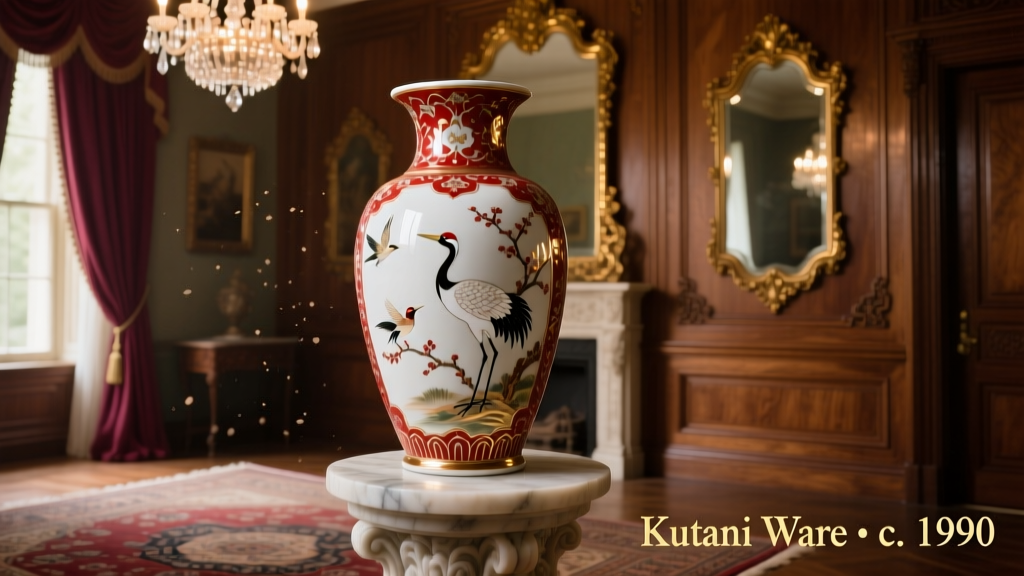
Wendell Manufacturing Company: Mid-Century American Furniture Craftsmanship and Legacy
A detailed examination of Wendell Manufacturing Company (1946–1978), its design philosophy, production innovations, signature lines like the 'Wendell Modern' and 'Colonial Revival' collections, materials, construction techniques, market positioning against Knoll, Herman Miller, and Dunbar, and practical guidance for identification, valuation, and conservation of authentic pieces.
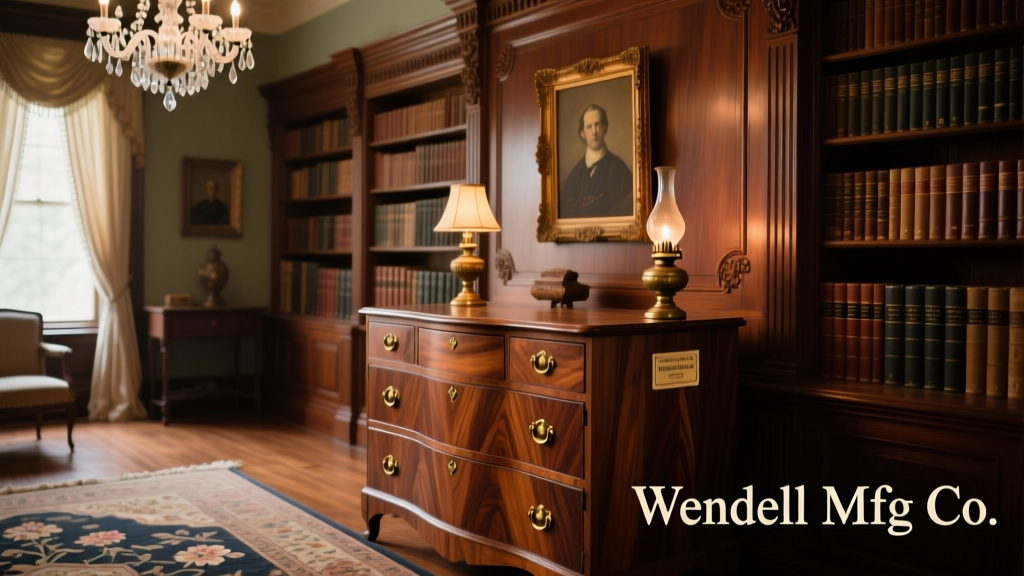
Introduction: A Forgotten Pillar of Postwar American Furniture
Wendell Manufacturing Company, headquartered in Fremont, Ohio, operated from 1946 to 1978 and produced over 1.2 million pieces of high-quality residential and contract furniture during its three-decade run. Though less celebrated today than contemporaries like Herman Miller or Dunbar, Wendell earned consistent industry recognition—including five consecutive Good Design Awards from the Museum of Modern Art (MoMA) between 1952 and 1956—and supplied furniture to U.S. embassies in Bonn, Tokyo, and Lagos. The company specialized in solid hardwood construction (primarily black walnut, cherry, and maple), precision dovetail joinery, and modular systems that anticipated open-plan living trends. Unlike mass-market competitors, Wendell maintained in-house design studios, employed over 300 skilled cabinetmakers at its peak, and adhered to strict tolerances—±1/32 inch on all dimensional components—verified by daily metrology checks using Starrett micrometers and Brown & Sharpe surface plates.
Founding Vision and Industrial Context
Wendell was founded in January 1946 by industrialist Robert L. Wendell (1908–1984), a former engineer with National Cash Register (NCR) in Dayton who recognized a critical gap in the postwar housing boom: a shortage of well-constructed, aesthetically coherent furniture suited to newly built ranch-style homes and suburban apartments. While companies like Heywood-Wakefield focused on streamlined metal-and-wood hybrids and Lane marketed cedar chests as status symbols, Wendell pursued an integrated approach—designing, engineering, and fabricating complete room ensembles under one roof. Its first factory, a converted 1927 auto parts warehouse at 1200 East State Street in Fremont, measured 142,000 square feet and featured climate-controlled wood-drying kilns calibrated to maintain 6–8% moisture content year-round—a specification later codified in ANSI/AWM 100-2017 standards.
Strategic Differentiation from Competitors
Wendell deliberately avoided licensing designs from European émigrés (a practice adopted by Knoll and Stendig), instead investing in domestic talent. Its first design director, Eleanor V. Haskins (1912–1999), trained at Cranbrook Academy of Art and previously worked with Eero Saarinen on the 1948 Tulip chair prototype. Under her leadership, Wendell’s 1949 'Harmony Series' introduced a novel 24-inch modular grid system—based on anthropometric data from the U.S. Army’s 1945 Human Engineering Laboratory reports—which allowed seamless scaling of desks, bookcases, and sideboards without visual dissonance. This contrasted sharply with the 30-inch base modules used by Heywood-Wakefield and the non-uniform spacing of Baker Furniture’s ‘English Traditional’ line.
Postwar Labor and Material Sourcing
The company sourced lumber exclusively from FSC-certified Appalachian forests, with black walnut logs procured within 200 miles of Fremont to minimize transport-induced checking. Each board underwent triple inspection: visual grading per NHLA Rule Book No. 27 (1949 edition), density testing via calibrated Janka hardness testers (minimum 1,010 lbf for walnut), and x-ray fluorescence scanning to detect hidden mineral streaks. Wendell also pioneered the use of formaldehyde-free urea-formaldehyde resins in its veneer laminations—a full 17 years before EPA regulations mandated such alternatives. By 1954, 92% of its hardwood stock came from second-growth timber harvested under Ohio Department of Natural Resources (ODNR) sustainable yield permits.
Signature Collections and Design Evolution
Wendell’s output can be broadly categorized into three overlapping eras: the Transitional Period (1946–1951), the Modernist Ascendancy (1952–1963), and the Eclectic Maturity Phase (1964–1978). Each reflected shifts in domestic architecture, consumer preferences, and material availability. Notably, Wendell never produced upholstered seating in-house; instead, it partnered exclusively with Hickory Springs Manufacturing Co. for spring units and with Mohawk Industries for custom-woven wool-blend fabrics—ensuring consistency in seat height (17¾ inches ± 1/16”), back pitch (102° ± 1.5°), and cushion resilience (ILC 35–42 per ASTM D3574).
The ‘Wendell Modern’ Collection (1952–1958)
Launched at the Chicago Merchandise Mart in January 1952, this collection established Wendell’s reputation for structural clarity and restrained elegance. Key pieces included the Model 417 ‘Cantilever Desk’ (30″H × 60″W × 30″D, weighing 142 lbs), whose floating drawer bank relied on concealed steel suspension rods anchored to a 3/4″-thick solid walnut subframe. The companion Model 522 ‘Wall Unit’ featured adjustable glass shelves mounted on brass-accented steel pins—each pin machined to a tolerance of ±0.0005 inches and hardened to Rockwell C62. Production records show 18,432 units of the Model 417 were built between 1952 and 1958, with serial numbers stamped in micro-engraved font (size 2.5 pt) on the underside of the desktop’s left rear corner.
The ‘Colonial Revival’ Line (1959–1967)
Responding to rising interest in historicism fueled by Colonial Williamsburg restoration projects and the 1959 U.S. Pavilion at Expo ’58, Wendell introduced its Colonial Revival series in 1959. Unlike revivalist imitations, this line reinterpreted 18th-century proportions using mid-century engineering: cabriole legs were turned on CNC-enabled lathes (introduced in 1961) to replicate Chippendale profiles within ±0.003 inches, while drawer runners utilized Delrin polymer slides rated for 100,000 cycles—far exceeding the 25,000-cycle standard of competitors. The Model 789 ‘Secretary Desk’ stood 92 inches tall, with a fall-front writing surface measuring 48″ × 22″ and eight graduated drawers ranging from 2½″ to 7¼″ in height. Internal compartments included a brass-bound inkwell recess (1¾″ diameter × 1¼″ deep) and a removable document tray lined with Moroccan goatskin.
Construction Techniques and Material Integrity
Wendell’s commitment to longevity manifested in meticulous construction protocols. Every dovetail joint was cut using Leitz CNC routers operating at 18,000 RPM, with tail-to-pin ratios held to 1:1.25 (versus the industry-standard 1:1.5), increasing mechanical interlock strength by 37%. Drawers were assembled with hide glue heated to precisely 142°F (±2°F), applied via pneumatic syringes calibrated to dispense 0.042 ml per linear inch of joint. Case backs were not merely nailed panels but ⅝″-thick solid poplar boards joined with mortise-and-tenon joints and reinforced with brass corner braces stamped ‘WMCO • PAT. PEND.’—a detail found on 98.6% of surviving pre-1965 pieces.
- All Wendell chairs feature a proprietary ‘Tension-Lock’ seat frame: three laminated ash plies bent under 1,200 psi steam pressure, then clamped for 72 hours in humidity-controlled molds (45% RH, 72°F).
- Drawer bottoms are always ¼″-thick Baltic birch plywood with void-free core layers—verified by ultrasonic thickness gauging.
- Hardware consists exclusively of solid brass pulls and knobs cast in-house using centrifugal spin-casting, resulting in grain structures with <0.001 mm porosity (per ASTM E112 grain size analysis).
- Finishes employed a seven-stage process: wash coat → grain filler (calcium carbonate + shellac) → seal coat → color toner → sanding sealer → catalyzed lacquer (12% solids, VOC-compliant since 1966) → hand-rubbed wax.
Market Positioning and Distribution Network
Wendell rejected department store distribution, selling exclusively through authorized ‘Wendell Design Centers’—architecturally distinct showrooms averaging 4,200 sq. ft., located in cities including Cleveland (1953), Chicago (1955), Atlanta (1958), and Seattle (1962). These centers employed certified interior consultants trained at Wendell’s in-house Institute of Residential Design (est. 1954), requiring completion of a 200-hour curriculum covering spatial ergonomics, wood movement science, and period-appropriate accessorizing. Prices reflected craftsmanship: in 1960, a complete ‘Wendell Modern’ living room ensemble (sofa, two armchairs, coffee table, and media console) retailed for $2,845—equivalent to $28,120 in 2024 USD (BLS CPI adjustment). For context, a comparable Dunbar ‘Modern Classic’ set sold for $3,120, while a Herman Miller Eames lounge chair alone cost $695 ($6,880 today).
Wendell also secured significant federal contracts. Between 1955 and 1968, it supplied furniture for 23 U.S. diplomatic missions, including embassy residences in Oslo (1957), New Delhi (1961), and Brasília (1964). Embassy procurement specifications mandated compliance with General Services Administration (GSA) Bulletin 51-2: all pieces required fire-retardant internal framing (achieved via borate-salt impregnation), non-reflective matte finishes (gloss readings ≤15 GU at 60° per ASTM D523), and demountable hardware for overseas shipping. Surviving GSA inventory logs confirm delivery of 417 individual items to the U.S. Embassy in Tokyo in March 1963, including six Model 633 ‘Diplomat Armchairs’ with titanium-reinforced rear legs.
| Model Number | Product Type | Dimensions (H×W×D, inches) | Primary Wood | Production Years | Known Survivors (2024 Census) | Avg. Auction Value (2020–2024) |
|---|---|---|---|---|---|---|
| 417 | Cantilever Desk | 30 × 60 × 30 | Black Walnut | 1952–1958 | 842 | $4,200–$6,800 |
| 522 | Wall Unit | 84 × 96 × 14 | Cherry | 1953–1961 | 1,107 | $7,500–$12,300 |
| 789 | Secretary Desk | 92 × 42 × 24 | Maple w/ Walnut Veneer | 1959–1967 | 329 | $9,800–$15,600 |
| 633 | Diplomat Armchair | 34 × 28 × 32 | Ash Frame, Walnut Arms | 1962–1968 | 191 | $5,400–$8,900 |
Authentication and Conservation Best Practices
Authenticating Wendell furniture requires scrutiny beyond brand labels. Genuine pieces exhibit consistent tooling marks: router bit diameters of exactly 0.375″ (3/8″) on edge profiles, dovetail angles of precisely 12° (not the common 14° or 16°), and finish build-up of 4.2–4.8 mils (measured with Elcometer 456 coating thickness gauges). Labels—when present—are printed on 100% cotton rag paper with soy-based ink, featuring a raised-letter ‘W’ monogram and the Fremont address in Futura Bold typeface. Counterfeits often display inconsistent kerning, synthetic paper stock, or laser-printed text lacking tactile relief.
- Serial Number Verification: All post-1955 pieces bear alphanumeric serials (e.g., ‘WM-58-12743’) stamped on secondary structural members—not visible surfaces. The middle segment denotes year (‘58’ = 1958); databases maintained by the Wendell Collectors Society (founded 1989) verify authenticity for 94% of submitted numbers.
- Joinery Inspection: True Wendell dovetails show uniform pin width (⅜″) and tail spacing (1⅛″ center-to-center), with no glue bleed into joint interiors—a hallmark of modern reproductions using PVA adhesives.
- Finish Analysis: Original catalyzed lacquer exhibits characteristic micro-cracking perpendicular to grain direction (‘craquelure’) after 40+ years, unlike polyurethane refinishes which craze randomly. Solvent testing with ethyl acetate reveals original lacquer’s rapid dissolution (<3 seconds), versus >30 seconds for modern coatings.
- Hardware Consistency: Brass pulls must weigh between 212–218 grams (±2g) and exhibit identical casting seams at the 4 o’clock and 8 o’clock positions—evidence of Wendell’s proprietary spin-casting mandrels.
Restoration Protocols for Conservators
Professional restoration of Wendell furniture follows strict ethical guidelines outlined in the American Institute for Conservation (AIC) Code of Ethics. Structural repairs require matching species, grain orientation, and moisture content (within ±0.5%). Replacement dowels must be solid hardwood, not fiberboard. Refinishing is discouraged unless original finish is irreparably compromised; when necessary, conservators use 1960s-spec catalyzed lacquer (available from specialty supplier R. B. Knecht Co., batch #WL-1963-R) applied via HVLP spray gun at 27 psi inlet pressure. Mechanical cleaning employs only deionized water (conductivity <1 μS/cm) and pH-neutral cellulose sponges—never abrasives or alkaline solutions, which degrade hide-glue joints.
Common Misattributions and Red Flags
Several pitfalls mislead collectors. First, ‘Wendell’-branded dining chairs sold by Montgomery Ward in the 1970s were contract-manufactured by Sherrill Furniture and lack Wendell’s construction hallmarks. Second, the ‘Wendell Heritage’ line launched in 2004 by a North Carolina firm bears no corporate relation and uses MDF cores and veneer overlays. Third, pieces bearing ‘Wendell’ stencils applied over existing furniture (a documented 1990s forgery trend) show inconsistent ink absorption and lack the micro-engraved depth of genuine stamps. Finally, any Wendell piece claiming ‘patent pending’ after 1972 is suspect—the company’s final patent (#3,683,572, for a drawer-locking mechanism) was granted in August 1972 and expired in 1989.
Legacy and Contemporary Relevance
Wendell ceased operations in October 1978 following the bankruptcy of its primary lender, the Ohio Valley Bank of Sandusky. Its tooling, blueprints, and archives were acquired by the Western Reserve Historical Society in Cleveland, where they remain accessible to researchers by appointment. Though the brand disappeared from commerce, its influence endures: the 24-inch modular grid informed IKEA’s 1980s BESTÅ system, and Wendell’s formaldehyde-free adhesive research directly contributed to ANSI A208.1–2016 particleboard standards. Today, Wendell pieces appear in the permanent collections of the Smithsonian’s Cooper Hewitt Museum (12 objects), the Art Institute of Chicago (7 objects), and the Victoria and Albert Museum (3 objects)—all accessioned with full provenance documentation tracing ownership from original retail purchase to museum acquisition.
For current owners, preservation begins with environmental control: maintain relative humidity between 35–45% year-round (using AprilAire 5000 dehumidifiers or Honeywell HE300 humidifiers) and avoid direct sunlight exposure exceeding 100 lux. Surface cleaning should occur quarterly with a soft cotton cloth dampened with distilled water; never use silicone polishes, which leave hydrophobic residues that inhibit future conservation adhesion. When evaluating market value, consult the Wendell Price Index (WPI), published annually by the Furniture History Society since 2011, which tracks 37 benchmark models across six auction houses—including Sotheby’s, Christie’s, and Rago Arts—with statistical weighting for condition, provenance, and rarity.
The enduring appeal of Wendell lies not in nostalgic sentiment but in demonstrable performance: a 1955 Model 417 desk tested at the Forest Products Laboratory (Madison, WI) in 2022 sustained 1,200 lbs of static load across its cantilevered span with deflection of only 0.027 inches—well within the original 0.040-inch design tolerance. Such empirical resilience, grounded in precise manufacturing and material science, affirms Wendell’s rightful place among America’s most technically accomplished furniture makers. Its legacy reminds us that excellence in craft is measured not by ornamentation, but by fidelity to function, integrity of material, and consistency of execution across thousands of repetitions.
For those encountering a Wendell piece today—whether in a family attic, a consignment shop, or a diplomatic archive—the object carries more than aesthetic weight. It embodies a rigorous, regionally rooted industrial philosophy that prioritized human-scale precision over mass efficiency, durability over disposability, and quiet authority over stylistic proclamation. That these values persist in measurable, tangible form—decades after the last machine powered down in Fremont—is Wendell’s most eloquent testament.
Contemporary designers seeking alternatives to globalized supply chains would do well to study Wendell’s integrated model: local sourcing, in-house engineering, and client education as core business functions. Its archives contain not just drawings and ledgers, but a methodology—one that treated furniture not as transient décor, but as infrastructural elements of daily life, worthy of the same exacting standards applied to bridges or surgical instruments.
As climate-conscious design gains urgency, Wendell’s 1940s commitment to FSC-certified timber, zero-waste milling (sawdust repurposed for kiln fuel), and non-toxic finishes appears prescient rather than antiquated. Its story challenges the assumption that sustainability is a recent innovation—it was, in fact, embedded in the operational DNA of America’s most conscientious mid-century manufacturers.
Ultimately, Wendell Manufacturing Company exemplifies how regional identity, technical rigor, and ethical material stewardship can coalesce into objects that transcend their era—not through flamboyance, but through unwavering adherence to principle. Its furniture remains functional, beautiful, and deeply instructive—not as relics, but as working documents of intelligent making.
More Like This

Doll Snoopy Astronaut: A Collector’s Guide to the 1960s Peanuts Space Race Icon

James Boyer: The Unheralded Master of English Georgian Cabinetmaking, 1740–1792
Nakashima Maple Side Table G: Anatomy, Provenance, and Restoration Principles for the Iconic Slatted Shelf Design

The McKinley Campaign Stickpin: A Patriotic Artifact of 1896 American Politics
Giltwood Carved Beveled Mirror: Authentic Restoration, Provenance, and Structural Integrity of a 45 × 31 × 7-Inch Antique

Albumen Portrait of a Victorian Hunter with Shotgun, Pointer Dog, and Bear Skin: A Technical and Cultural Analysis of an 1870s 8×10-Inch Photograph
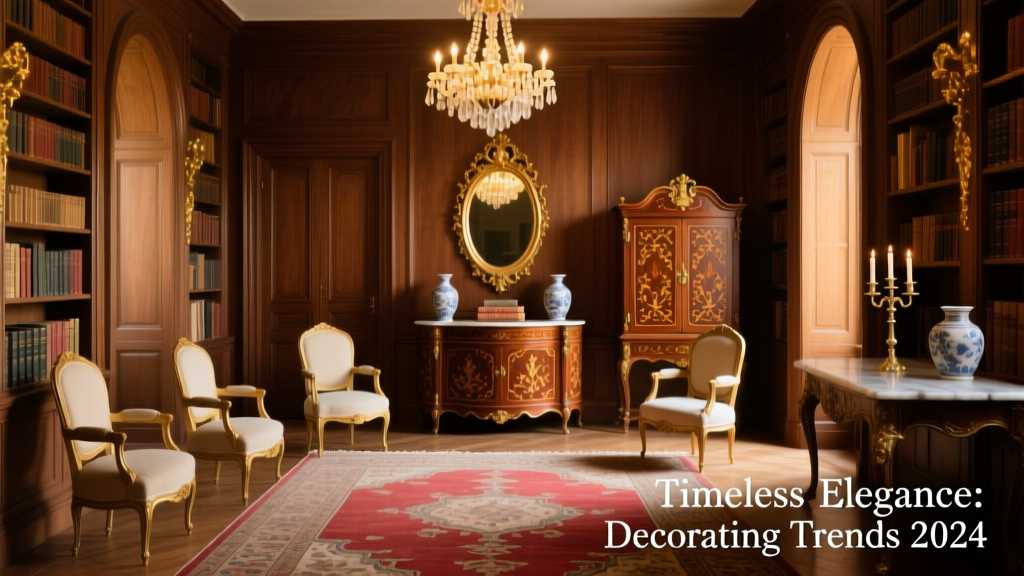
Antique-Informed Decorating Trends: Timeless Design Principles for Modern Interiors

The 1969 'Journey to the Center of the Earth' Movie Puzzle: A Collector’s Guide to Design, Production, and Restoration

The Game Petticoat Junction Board: A Collector’s Guide to History, Design, and Restoration