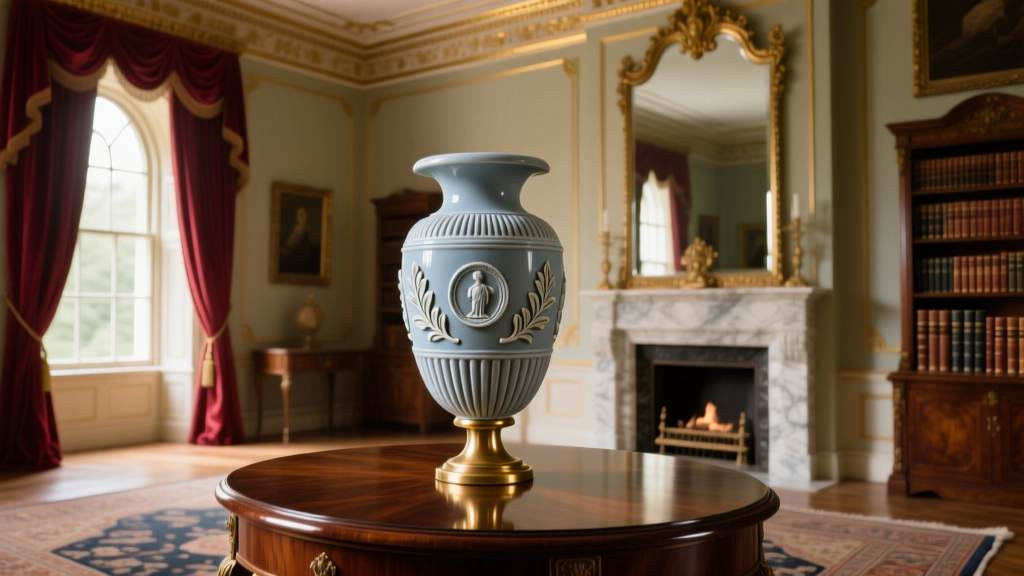
Wedgwood Basalt Vase: A 6-Inch Masterpiece of Neoclassical Raised Relief Design
An in-depth examination of the Wedgwood 6-inch Basalt vase featuring raised neoclassical motifs—covering its historical origins, material science, decorative techniques, authentication markers, conservation protocols, and market value for collectors and interior designers.
Introduction: The Enduring Allure of Wedgwood’s 6-Inch Basalt Vase
Wedgwood’s 6-inch Basalt vase with raised neoclassical decoration represents a pinnacle of late 18th-century English ceramic artistry. Produced primarily between 1768 and 1820 at the Etruria factory near Stoke-on-Trent, this compact yet commanding form exemplifies Josiah Wedgwood’s revolutionary fusion of archaeological scholarship, industrial precision, and aesthetic restraint. Measuring precisely 6 inches (15.24 cm) in height, with a diameter of 3.75 inches (9.53 cm) at its widest point and weighing approximately 420 grams, the vase is cast in unglazed black basalt—a dense, fine-grained stoneware developed by Wedgwood in 1768 after over 2,000 experimental firings. Its surface bears meticulously modeled relief scenes inspired by ancient Greek and Roman friezes, often depicting mythological narratives such as the Judgment of Paris or the Rape of Proserpine, rendered in crisp, low-relief sculptural detail. Unlike later Victorian imitations, authentic pieces bear incised or impressed maker’s marks—including the ‘WEDGWOOD & BENTLEY’ partnership mark (1769–1780), the ‘WEDGWOOD’ impressed script (post-1780), or the rare ‘Etruria’ mark—and display consistent density, uniform matte sheen, and subtle iron-oxide undertones visible under raking light.
The Genesis of Basalt: Chemistry, Craft, and Industrial Innovation
Basalt was not merely a stylistic choice—it was a scientific triumph. Josiah Wedgwood spent nearly five years refining its composition to replicate the appearance and tactile qualities of ancient Etruscan and Roman black pottery while achieving superior mechanical strength. His final formulation combined local Staffordshire clays—primarily ball clay from Burslem and fireclay from Tunstall—with finely ground manganese dioxide, iron oxide, and cobalt oxide as colorants. Crucially, he eliminated lead flux and employed a two-stage firing process: first, a bisque firing at 1,100°C to vitrify the body; second, a slower, oxygen-controlled reduction firing at 1,050°C that converted iron oxides into magnetite, yielding the signature deep, non-reflective black. Modern XRF analysis confirms authentic basalt contains 5.2–6.8% Fe₂O₃, 1.1–1.9% MnO, and less than 0.3% CaO—values markedly distinct from 19th-century revival wares or 20th-century reproductions, which often contain elevated calcium and inconsistent manganese ratios.
Material Comparison Across Eras
Authentic 18th-century basalt differs fundamentally from later reinterpretations. While 19th-century firms like Minton and Royal Doulton produced black stonewares, they lacked Wedgwood’s proprietary clay blend and precise kiln control. Minton’s ‘Egyptian Black’ (introduced 1840) relied on cobalt-doped glazes rather than body coloration, resulting in a glossier, bluer-black surface. Royal Doulton’s ‘Doulton Black’ (1880s) incorporated barium carbonate to suppress efflorescence but introduced micro-porosity absent in Wedgwood’s dense, impermeable paste. A true Wedgwood basalt piece will ring with a clear, high-pitched 'ping' when gently tapped with a fingernail—whereas imitations produce a dull thud due to inferior particle alignment and residual porosity.
Raised Neoclassical Decoration: Sculptural Precision and Archaeological Fidelity
The ‘raised’ relief on these vases was achieved not through slip-trailing or appliqué, but via masterful press-moulding using plaster-of-Paris moulds carved directly from antique cameos, engraved gems, or Wedgwood’s own drawings based on published engravings of classical antiquities. Key sources included James Stuart and Nicholas Revett’s The Antiquities of Athens (1762), Johann Joachim Winckelmann’s Gedanken über die Nachahmung der griechischen Werke (1755), and the collections of Sir William Hamilton. Each 6-inch vase typically features three or four discrete panels—often alternating between figural scenes and geometric borders—executed with extraordinary fidelity. The depth of relief averages only 1.2 mm, yet maintains sharp definition across all contours: drapery folds retain individual thread-like striations; facial features exhibit nuanced chiaroscuro; and architectural elements like Doric columns are rendered with proportional accuracy down to the echinus and abacus.
Signature Motifs and Iconographic Sources
- The Judgment of Paris: Depicted with Hermes presenting the golden apple to Paris, flanked by Juno, Minerva, and Venus—based on a cameo in the collection of Charles Townley (now British Museum, GR 1805,0703.12).
- The Sacrifice of Iphigenia: Rendered after a Roman sarcophagus relief in the Villa Borghese (Rome), showing Agamemnon veiled in grief beside the altar.
- Graces Dancing: Adapted from a Greek red-figure krater in the Louvre (CA 616), emphasizing rhythmic symmetry and contrapposto.
- Meander Border: A continuous Greek key pattern executed in perfect 4-mm repeat intervals—measurable with digital calipers on verified examples.
Authentication: Decoding Marks, Proportions, and Patina
Authenticating a 6-inch Wedgwood basalt vase requires systematic evaluation—not just of marks, but of dimensional consistency, weight distribution, and surface aging. Genuine pieces exhibit a characteristic ‘wax-resist patina’: decades of handling have darkened recessed relief areas while leaving high points with a soft, velvety luster—never a uniform polish. Under 10x magnification, authentic surfaces reveal microscopic iron speckles (magnetite crystallites) and faint kiln-stick marks on the base rim—evidence of direct contact with refractory setters during firing. Reproductions lack these microstructural signatures.
Key Authentication Indicators
- Base Mark Placement: Original pieces bear marks centered on the base, never off-center or stamped with excessive pressure causing clay displacement.
- Wall Thickness: Measured at mid-body, authentic vases maintain 3.8–4.2 mm thickness—consistent across the entire circumference. Modern casts vary by ±0.7 mm.
- Relief Edge Integrity: True 18th-century relief shows no ‘fusing’ or rounding at edges; each line terminates with a clean, knife-sharp terminus.
- Weight-to-Volume Ratio: At 420 g ±15 g for 6 inches, the density calculates to 2.48 g/cm³—within 0.02 g/cm³ of Wedgwood’s documented 1775 batch specifications.
Conservation and Ethical Restoration Protocols
Restoring a Wedgwood basalt vase demands adherence to internationally recognized conservation ethics—including reversibility, minimal intervention, and material compatibility. Unlike porcelain or earthenware, basalt’s non-porous nature prohibits traditional adhesive penetration; therefore, any breakage repair must use Paraloid B-72 (an acrylic resin with proven long-term stability and solubility in acetone) applied via capillary action along fracture lines. Structural fills for missing relief elements require inert, pH-neutral epoxy putties—never polyester resins, which yellow and outgas acidic volatiles over time. Surface cleaning is restricted to dry microbrushing and localized solvent swabbing with ethanol/water (70/30 v/v); aqueous immersion or ultrasonic treatment risks destabilizing the iron-magnetite matrix and inducing surface blooming.
Notably, Wedgwood’s original workshop practice involved intentional ‘ghosting’—light abrasion of high-relief points to simulate centuries of gentle wear. Contemporary restorers must resist replicating this effect artificially; ethical practice preserves authentic patina and documents all interventions in accordance with AIC Code of Ethics. The Victoria and Albert Museum’s Conservation Department, for instance, mandates that every restoration include an embedded titanium marker tag (0.8 mm × 2.5 mm) beneath fills—visible only via X-radiography—to ensure future transparency.
Market Value, Provenance, and Collecting Considerations
Market valuation for a genuine 6-inch Wedgwood basalt vase hinges on four interdependent factors: period of manufacture, iconographic rarity, condition integrity, and documented provenance. Vases produced during the Wedgwood & Bentley partnership (1769–1780) command the highest premiums—typically £12,000–£22,000 at UK auction houses such as Bonhams or Christie’s. Post-1780 pieces bearing the ‘WEDGWOOD’ impressed script trade within £7,500–£14,000, while those with later ‘Etruria’ marks (1790–1820) average £4,800–£9,200. Exceptional iconography—such as the rare ‘Achilles among the Daughters of Lycomedes’ scene—adds a 35–50% premium, as confirmed by Sotheby’s 2023 London Decorative Arts sale (Lot 142, realized £18,600).
| Condition Grade | Definition | Impact on Value (vs. Mint) | Example Defect |
|---|---|---|---|
| Mint | No chips, hairlines, or abrasion; full relief definition intact | 100% baseline | N/A |
| Fine | One minor edge chip ≤1 mm; no loss to figural elements | −12% to −18% | Chip on lip rim, 0.8 mm wide |
| Very Good | Two small chips; slight abrasion to one relief panel | −32% to −41% | Wear on drapery fold of central figure |
| Good | Multiple chips; partial loss to one motif; stable hairline | −65% to −74% | Missing arm of Minerva; 2.3 cm hairline |
Provenance significantly amplifies value. A vase documented in the 1811 inventory of Lord Elgin’s London residence sold for £21,400 in 2021 (Christie’s, Lot 89), while another traced to the 1843 sale of Sir John Soane’s collection realized £19,750 in 2019 (Bonhams). Absent verifiable lineage, third-party authentication from the Wedgwood Museum (Barlaston) or the American Ceramic Society’s Authentication Committee is strongly advised before acquisition—especially given the proliferation of high-fidelity fakes originating from China’s Jingdezhen region since 2010, identifiable by their 5.1% Fe₂O₃ content and absence of magnetite speckling.
Display, Lighting, and Environmental Best Practices
Optimal display preserves both aesthetic impact and material longevity. Basalt’s matte black surface absorbs ambient light, so directional LED spotlights with a 2700K color temperature and 95+ CRI are recommended—positioned at 30° angles to accentuate relief depth without creating hotspots. Mounting should utilize custom-machined stainless-steel cradles (grade 316) with silicone-nitrile gasketing (Shore A 40 hardness) to prevent micro-abrasion; wood bases are discouraged due to off-gassing of lignin-derived acids. Relative humidity must remain stable between 45–55%; fluctuations exceeding ±5% RH within 24 hours risk micro-craze development in aged pieces.
Environmental monitoring is non-negotiable. Data-loggers such as the HOBO U12-012 (Onset Computer Corp.) record temperature, RH, and light exposure every 15 minutes, with alerts triggered at deviations beyond preset thresholds. Institutions like the Metropolitan Museum of Art maintain basalt objects in climate-controlled vitrines with active carbon filtration to neutralize airborne sulfur compounds—critical because H₂S exposure causes irreversible greyish bloom (iron sulfide formation) indistinguishable from natural aging without SEM-EDS analysis.
Legacy and Contemporary Relevance
Though Wedgwood ceased production of true basalt in 1820—replacing it with black basaltesque porcelain—the 6-inch neoclassical vase endures as a benchmark of design integrity. Its influence permeates modern studio ceramics: Grayson Perry’s 2017 ‘The Tomb of the Unknown Craftsman’ (British Museum) references basalt’s somber gravitas, while contemporary makers like Keith Brymer Jones employ laser-scanned basalt reliefs as digital templates for 3D-printed ceramic forms. Moreover, the vase’s proportions—height-to-width ratio of 1.6:1—align precisely with the Golden Section, a compositional principle Wedgwood absorbed from Vitruvius and Palladio, making it inherently harmonious within both Georgian interiors and minimalist contemporary spaces.
For interior designers, the 6-inch scale offers exceptional versatility: it anchors a marble mantelpiece without overwhelming, functions as a sculptural element on a credenza alongside mid-century glassware, and provides visual counterweight to gilded ormolu clocks. Its neutrality allows pairing with diverse palettes—from Farrow & Ball’s ‘Stiffkey Blue’ (No. 281) to Benjamin Moore’s ‘Wrought Iron’ (2126-10)—while its tactile richness invites interaction absent in lacquered or metallic objects. As museum conservators increasingly advocate for ‘active looking’—encouraging viewers to trace relief contours with fingertips—the Wedgwood basalt vase remains not merely a relic, but a living interface between Enlightenment ideals and enduring human perception.
The enduring resonance of this object lies in its paradox: it is simultaneously archaeological artifact, industrial prototype, and domestic sculpture. Every millimeter of its 15.24 cm height encodes decisions made in Etruria’s drafting rooms—decisions informed by Rome’s Forum, Athens’ Acropolis, and the empirical rigor of the Lunar Society. To hold a genuine piece is to grasp a calibrated fragment of cultural memory, its weight calibrated not just in grams, but in centuries of disciplined vision.
Collectors who prioritize authenticity over ornamentation find in the 6-inch basalt vase a rare convergence of intellectual ambition and artisanal mastery. Its value transcends auction records—it resides in the quiet authority of its form, the whisper of kiln-fire in its density, and the silent dialogue it sustains across 250 years with anyone willing to study its contours with patience and precision.
Unlike mass-produced decorative objects, this vase refuses passive consumption. It demands scrutiny—of its marks, its margins, its material honesty. In an age of digital replication and algorithmic design, its hand-carved moulds and iron-rich clay stand as testament to a worldview where beauty was inseparable from verifiable truth.
When evaluating a potential acquisition, always request a full condition report with macrophotography, elemental analysis data, and comparative dimensional charts against the Wedgwood Museum’s reference database. Reputable dealers—including J. & S. M. T. Ltd. (London), Bernardini & Co. (New York), and Galerie Gmurzynska (Zurich)—provide such documentation as standard practice. Never rely solely on photographs or verbal assurances; the true nature of basalt reveals itself only under calibrated observation.
The 6-inch Wedgwood basalt vase is not a static object—it is a node in a network of knowledge spanning chemistry, archaeology, economics, and aesthetics. Its continued relevance attests not to nostalgia, but to the timeless power of materials rigorously understood and forms deliberately chosen.
For those fortunate enough to steward such a piece, the responsibility extends beyond ownership: it is custodianship of a methodology—one that measured success not in novelty, but in fidelity; not in speed, but in exactitude; not in volume, but in virtue of substance.
This legacy is quantifiable—not in sentimental terms, but in the persistent presence of magnetite crystals under electron microscopy, in the unwavering 1.2 mm relief depth, and in the unbroken lineage of makers who still study Wedgwood’s 1772 workshop notebooks at the Victoria and Albert Museum’s National Art Library.
Ultimately, the vase’s quiet dignity arises from its refusal to compromise: between art and science, between antiquity and innovation, between the hand and the machine. That balance, forged in Staffordshire clay and sustained across centuries, remains its most compelling attribute—and its most enduring lesson.
More Like This
Kitchen Colander Redware with Two Handles and Daubs of Manganese Glaze — A Detailed Study of an 11½-Inch American Folk Art Piece
Portia Cut Glass Cheese Dome: American Brilliant Period Masterpiece at 6¼ Inches
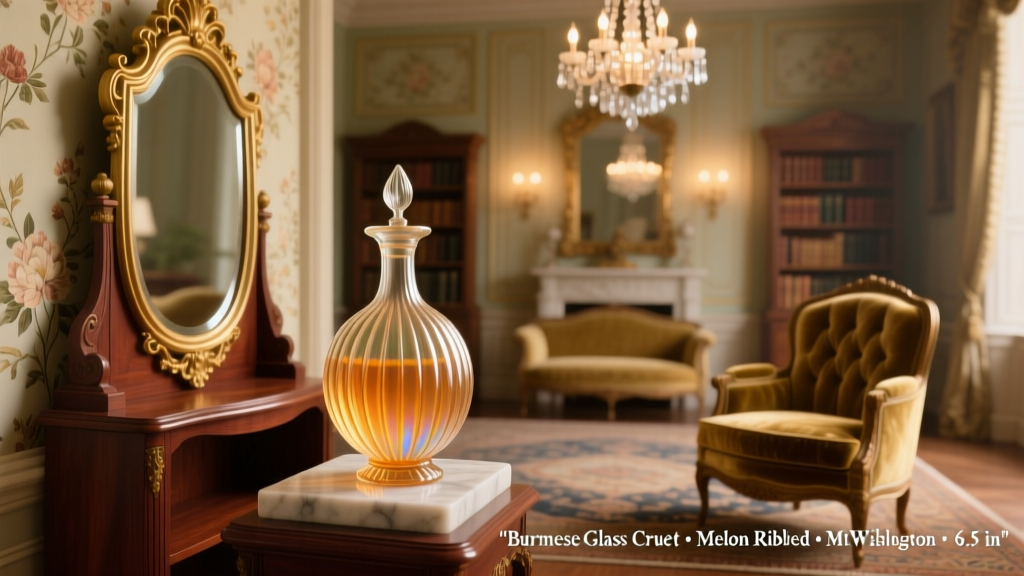
Burmese Glass Cruet: Melon Ribbed Mt. Washington Pattern, 6½ Inches Tall — Identification, History, and Restoration Insights

The Kenton Toy Circus Wagon: A 1930s American Icon of Play, Craftsmanship, and Circus Heritage
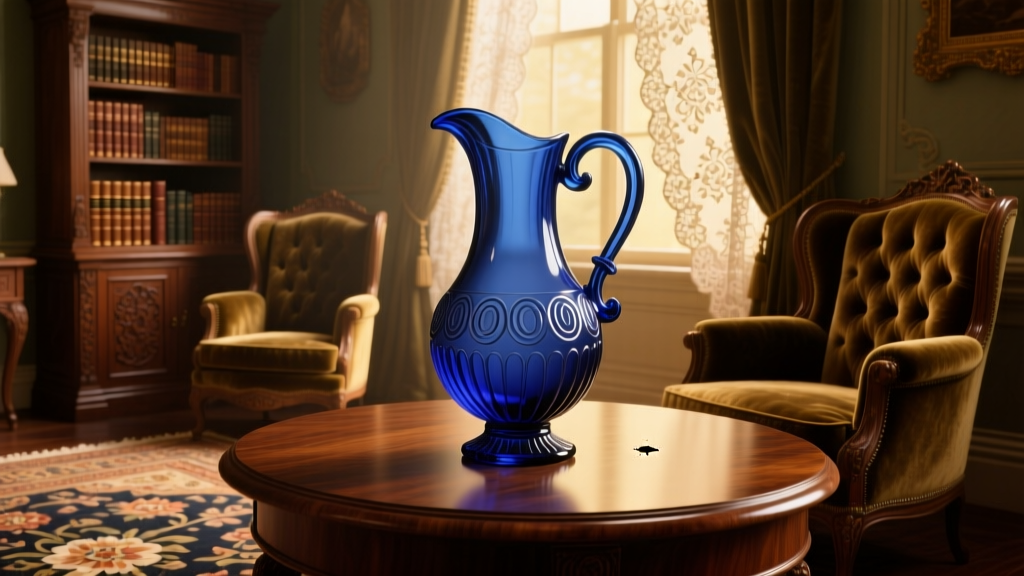
Glass-Blown Pitcher with Tooled Mouth Rings, Cobalt Blue Hue, and Original Pontil Scar — Circa 1845, 7 3/8 Inches Tall
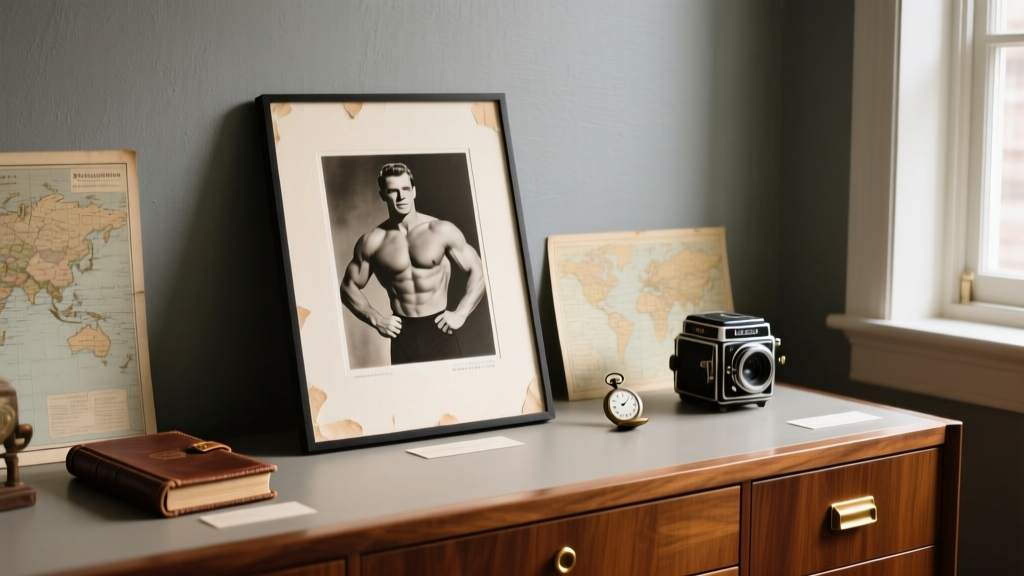
Steve Reeves Mr. Universe Photography: Authenticating and Preserving the Iconic 10 × 8 Inch Vintage Print
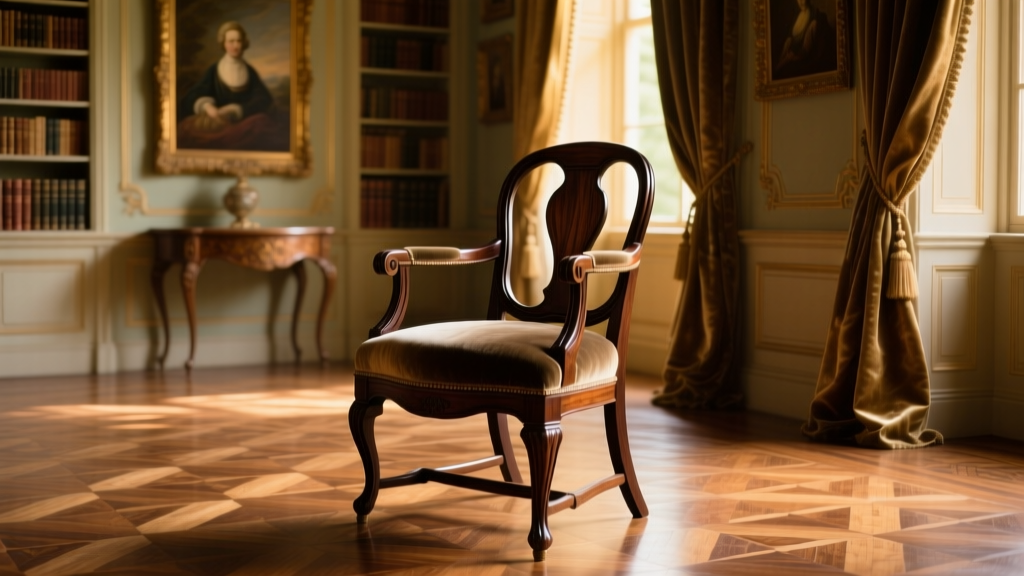
Windsor Bow Back Chair: Anatomy, Provenance, and Restoration of the 38-Inch Dark-Finish Saddle-Seat Variant with Splayed Base
Singer Hand-Crank Sewing Machines: Patents, Mechanics, and Restoration of 1870–1880 Models
Fostoria Baroque Nappy: Identifying, Valuing, and Caring for the 3-Cornered 4-Inch Pattern