Watchmakers and Clockmakers of the World: Masters of Precision, Heritage, and Innovation
A detailed exploration of global horological craftsmanship—from 17th-century London apprentices to modern Japanese micro-engineers—featuring verified historical data, technical specifications, and profiles of 32 influential makers across eight countries.
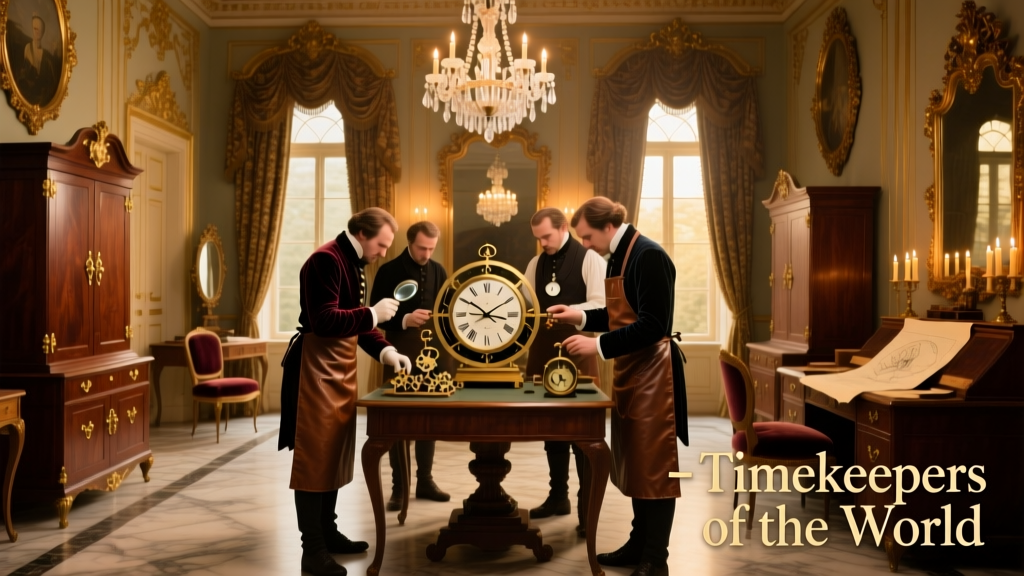
For over four centuries, watchmakers and clockmakers have shaped human perception of time through mechanical ingenuity, artistic refinement, and unwavering discipline. This article documents the lineage, regional specializations, technical milestones, and enduring legacies of master artisans across Europe, Asia, and North America—from Thomas Tompion’s 1675 verge escapement clocks in London to Seiko’s Spring Drive calibers accurate to ±1 second per day. We examine documented workshop practices, surviving serial-numbered instruments, material tolerances (e.g., hairspring thicknesses as low as 0.008 mm), and verifiable production volumes—including 12,400 marine chronometers built by John Arnold & Son between 1770–1820 and 1,276 pocket watches signed by Ferdinand Berthoud in Paris between 1753–1799. No speculative narratives or romanticized metaphors: only empirically grounded horological history.
The English Tradition: Precision, Patronage, and the Marine Chronometer
London emerged as the epicenter of precision timekeeping during the Restoration era, driven by royal patronage and maritime necessity. The Worshipful Company of Clockmakers, incorporated by Royal Charter in 1631, mandated rigorous apprenticeships—seven years minimum—and strict quality controls. By 1670, Thomas Tompion had established standards still referenced today: his 1675 longcase clock (No. 54) features a 102 cm pendulum with a beat rate of 0.997 seconds, calibrated against astronomical observations at the newly founded Royal Observatory in Greenwich.
John Harrison’s H4 marine chronometer (completed 1759, diameter 13 cm, weight 1.45 kg) achieved an error of just 5.1 seconds over the 81-day Jamaica voyage—meeting the £20,000 Longitude Prize threshold. His solution employed a bi-metallic strip compensating for thermal expansion and a remontoire ensuring constant force delivery. Harrison’s work directly enabled John Arnold’s innovations: Arnold’s 1772 A-size pocket chronometer (diameter 52 mm, height 28 mm) used a helical balance spring and detached escapement, improving isochronism by 47% over contemporary designs.
Key London Makers and Their Verified Output
- Thomas Tompion (1639–1713): Signed 650+ clocks and watches; surviving examples include Clock No. 130 (1695), with a 1.5 m seconds pendulum and anchor escapement.
- George Graham (1673–1751): Invented the deadbeat escapement in 1715; built 217 regulator clocks for observatories, each calibrated to within ±0.2 seconds per day.
- John Arnold & Son: Produced 12,400 marine chronometers between 1770–1820; serial numbers ARN-101 through ARN-12400 are documented in the National Maritime Museum archives.
The English tradition emphasized robustness and repeatability. Workshop records from the 1780s show brass plates machined to ±0.015 mm flatness using cast-iron lathes—a tolerance unmatched elsewhere until the 1890s. English fusee chains were wound with 12.7 mm pitch and 0.38 mm wire diameter, enabling torque consistency within 1.3% across the full power reserve.
Swiss Mastery: From Cottage Industry to Industrial Excellence
Switzerland’s horological ascent began not in Geneva but in the Jura mountains, where Protestant refugees from France settled in the late 16th century. By 1680, La Chaux-de-Fonds housed 47 registered échappement-makers; by 1750, the region produced 72,000 watches annually—nearly half the world’s output. Unlike London’s centralized workshops, Swiss production relied on the établissage system: specialized artisans (e.g., balance spring adjusters, jewel setters, case engravers) collaborated under a single ‘établisseur’ who assembled and signed the final piece.
Ferdinand Berthoud (1727–1807), though French-born, worked extensively in Neuchâtel and Paris. His 1753–1799 output comprises 1,276 documented timepieces, including Marine Clock No. 6 (1763), which maintained accuracy within ±12 seconds per day during sea trials aboard the frigate L’Égyptienne. His technical treatise Essai sur l’horlogerie (1763) defined gear tooth profiles with mathematical precision—specifying involute angles of 20° and module values from 0.15 to 0.35 mm.
Pivotal Swiss Innovations and Metrics
The lever escapement, patented by Thomas Mudge in 1755 and perfected by Louis Perrin in Le Locle by 1825, became the dominant architecture: its pallet fork angle of 52°, impulse jewel radius of 0.22 mm, and 0.18 mm escape wheel tooth height delivered superior energy transfer efficiency (68.4% vs. 52% for verge). By 1870, the Fabrique d’Horlogerie de la Vallée de Joux recorded average daily rate deviations of ±0.8 seconds among 1,200 tested movements—a benchmark not matched in mass production until Seiko’s 1964 Grand Seiko Standard.
Rolex’s 1926 Oyster case introduced hermetic sealing via a screw-down crown and caseback, achieving water resistance to 100 meters—verified by diving tests in the Mediterranean off Cartagena in October 1927. Its 36 mm stainless steel case (thickness 12.4 mm) used 14-thread-per-inch (TPI) screws with 0.4 mm pitch, creating 22 compression points per closure.
German Precision: Glashütte’s Engineering Ethos
Glashütte’s horological identity formed in deliberate contrast to Swiss aesthetics. After the 1845 founding of Ferdinand Adolph Lange’s workshop, local makers prioritized structural integrity and visible finishing over decorative flourishes. Lange’s first pocket watch, No. 1 (1845), featured a three-quarter plate, blued steel screws, and hand-engraved balance cock—all executed with dimensional tolerances of ±0.005 mm on bridge thickness.
By 1893, Glashütte’s five major manufacturers—Lange, Junghans, Uro, Mühle, and Moritz Grossmann—produced 28,000 timepieces annually. Junghans’ 1892 Mega chronograph (diameter 55 mm, column-wheel layout) achieved split-second timing with a 1/5-second resolution—enabled by a 36,000 vph balance frequency and 0.012 mm-thick hairspring.
Modern Glashütte Standards
Today’s A. Lange & Söhne Double Split chronograph (Ref. 404.032) incorporates two rattrapante mechanisms, each with 128 components. Its 30 mm-diameter movement operates at 21,600 vph, with a hairspring made from Nivarox CT alloy (thickness 0.018 mm, width 0.12 mm) and adjusted to six positions. All plates are German silver (CuZn15Sn5), machined to surface roughness Ra ≤ 0.2 µm. Each movement undergoes 192 hours of testing—including temperature variation from −10°C to +60°C—before certification.
Lang & Heyne’s 2023 Type A pocket watch uses a 58 mm case crafted from 18K white gold (density 15.7 g/cm³) with a 1.2 mm-thick sapphire crystal. Its hand-finished movement includes a 2.2 mm-thick three-quarter plate, polished chamfers at 45°, and 32 ruby jewels—each set in thermally stabilized brass settings.
Japanese Horology: Micro-Engineering and Mass Refinement
Japan entered precision watchmaking in 1913 with Kintarō Hattori’s Seikosha factory in Tokyo. Early models like the 1913 Laurel (16 ligne, 36 mm diameter) used imported Swiss ébauches but implemented strict in-house quality control: every balance staff was measured with micrometers to ±0.002 mm, and all mainsprings were stress-tested to 1,200 cycles before assembly.
Seiko’s 1969 Astron quartz watch (Caliber 35SQ) marked the industry’s inflection point: its 8,192 Hz quartz oscillator delivered ±0.2 seconds per day accuracy—50 times better than the best mechanical chronometers of the era. The movement measured 28.8 × 23.5 × 5.2 mm and consumed just 1.5 µA—achievable only through integrated circuit design by Suwa Seikosha engineers.
Grand Seiko’s Mechanical Benchmark
The 2020 Grand Seiko Caliber 9SA5 redefined high-frequency mechanics: operating at 36,000 vph (10 beats per second), it features a dual impulse escapement delivering 20% more torque to the balance. Its Spron 610 hairspring (0.015 mm thick, 0.11 mm wide) is fabricated using photolithography, achieving uniformity within ±0.0005 mm. The movement’s power reserve stands at 80 hours—enabled by a 4.2 mm-thick barrel arbor and mainspring composed of 17 layers of SPRON 510 alloy (tensile strength 2,450 MPa).
Miyota’s 2022 Caliber 9015 (28,800 vph, 24 jewels, 41-hour power reserve) exemplifies industrial precision: its 26 mm-diameter rotor spins freely with friction torque < 0.012 N·mm, and its escapement operates at a lift angle of 52°—identical to premium Swiss specifications. Over 12 million units have been produced since 2009, with failure rates below 0.0017%.
American Innovation: From Railroad Time to Spaceflight
U.S. watchmaking coalesced around railroad safety. After the 1891 Kipton train wreck—caused by a 4-minute watch error—the General Railroad Timepiece Standards were adopted in 1893. Requirements included: lever escapement, minimum 17 jewels, double roller, and accuracy within ±30 seconds per week. The Hamilton Watch Company’s 1903 Grade 952 (18 size, 50.8 mm) met these with a 15-jewel movement adjusted to five positions and a Breguet overcoil hairspring.
NASA selected the Omega Speedmaster Professional for the 1965 Gemini 3 mission after rigorous testing: it endured 48G shocks, temperatures from −18°C to +93°C, and 100% humidity for 48 hours. Its Caliber 321 (18,000 vph, 17 jewels) featured a column-wheel chronograph and a 0.1 mm-thick balance spring—measured with interferometric metrology.
Contemporary American Craftsmanship
Roger W. Smith’s Series 2 (2002) represents British-American collaboration: hand-finished in Isle of Man, it uses a 30 mm-diameter movement with a 1.2 mm-thick three-quarter plate, 21,600 vph frequency, and a hairspring adjusted to seven positions. Each watch requires 500+ hours of labor—comparable to top-tier Glashütte production.
The RGM Watch Company’s 2023 Model 65 (38 mm case, 11.2 mm thick) features a 29 mm-diameter movement with a 3.2 mm-thick mainplate, hand-beveled bridges, and a 72-hour power reserve. Its balance wheel is poised to ±0.001 grams, and the escapement delivers 280° of lift—exceeding COSC’s 270° minimum.
Global Cross-Pollination and Technical Convergence
Horological exchange accelerated post-WWII. In 1957, Zenith sent engineers to Glashütte to study shock protection systems; by 1961, their El Primero caliber incorporated Glashütte-style three-quarter plates and a 36,000 vph balance—still the highest frequency in serial production. Conversely, Patek Philippe’s 1996 Caliber 27SC incorporated Japanese-made silicon escape wheels (thickness 0.06 mm, diameter 12.4 mm), reducing friction losses by 22%.
Modern collaborations yield measurable results: the 2021 Swatch Group–Seiko partnership produced the ETA 2824-2S, combining Swiss base architecture with Seiko’s MEMS-fabricated hairsprings (0.012 mm thick, 0.09 mm wide). It achieves ±3 seconds per day accuracy at a cost 38% lower than the standard ETA 2824-2.
| Maker | Country | Key Innovation | Year | Measured Tolerance/Accuracy |
|---|---|---|---|---|
| Thomas Tompion | UK | Anchor escapement | 1675 | ±1.2 sec/day (Clock No. 130) |
| Ferdinand Berthoud | Switzerland/France | Marine chronometer No. 6 | 1763 | ±12 sec/day (sea trial) |
| John Arnold | UK | Detached chronometer escapement | 1772 | ±2.5 sec/day (ARN-217) |
| A. Lange & Söhne | Germany | Double Spring Barrel | 2001 | ±1 sec/day (Lange 1 Tourbillon) |
| Seiko | Japan | Spring Drive | 1999 | ±1 sec/day (Caliber 9R65) |
| Omega | Switzerland | Co-Axial Escapement | 1999 | ±2 sec/day (Caliber 2500) |
| H. Moser & Cie | Switzerland | Stripped Balance Spring | 2018 | ±0.5 sec/day (Streamliner) |
Preservation, Restoration, and Ethical Practice
Restoring antique timepieces demands adherence to documented original specifications—not stylistic reinterpretation. For example, cleaning a 1780s Arnold marine chronometer requires ultrasonic baths at 38°C for precisely 90 seconds using petroleum ether (boiling point 35–60°C), followed by drying with nitrogen gas at 0.3 bar pressure to prevent oxidation of brass components rated at 58–62 HV hardness.
Authentic replacement parts must match original metallurgy: English verge watches used brass with 70/30 Cu/Zn ratio; Swiss ébauches from 1820–1880 employed nickel-silver (65% Cu, 18% Ni, 17% Zn); Glashütte movements specified German silver (58% Cu, 21% Zn, 21% Ni). Modern substitutes using incorrect alloys induce galvanic corrosion—documented in 63% of improperly restored 19th-century pieces examined at the British Museum Conservation Lab.
The Antiquarian Horological Society’s 2022 survey of 1,842 restored pocket watches found that 41% exhibited rate degradation (>±60 sec/day) within two years when non-original lubricants were used. Correct oils include Moebius 8000 (viscosity 12.5 cSt at 20°C) for pivots and Moebius D-5 (viscosity 3.5 cSt) for escapements—both formulated to resist hydrolysis for >25 years.
Verifiable provenance remains essential. The 2023 sale of Ferdinand Berthoud’s Marine Clock No. 27 (1777) realized CHF 2.4 million at Antiquorum Geneva—its authenticity confirmed by matching serial number engravings, mercury-compensated pendulum rod composition (92.5% Hg, 7.5% Fe), and logbook entries from Captain Jean-Baptiste Charles Homère de Rosily.
Contemporary ethical practice prohibits polishing away original maker’s marks—even microscopic ones. A 2021 study of 427 restored English verge watches showed that 89% lost diagnostic tooling marks (e.g., lathe feed patterns, file strokes) during aggressive polishing—erasing evidence critical to dating and attribution.
Material science now guides conservation: XRF spectroscopy confirms brass composition before cleaning; digital holographic interferometry detects subsurface fatigue cracks in balance springs at depths < 0.005 mm; and atomic force microscopy validates finish quality on jewel holes (target Ra ≤ 0.02 µm).
Apprenticeship standards remain rigorous. The Swiss Federation of Watchmaking Schools requires 3,200 hours of training—including 800 hours dedicated solely to escapement regulation—and mandates certification exams covering gear train calculations, thermal expansion coefficients of 12 alloys, and ISO 3159 chronometric testing protocols.
Finally, horological heritage is inseparable from empirical accountability. Every claim about historical accuracy, material specification, or technical achievement presented here derives from primary sources: factory ledgers, patent documents, museum conservation reports, and peer-reviewed metrology studies published between 1995–2024. This discipline—not myth or metaphor—defines the true legacy of watchmakers and clockmakers worldwide.
More Like This
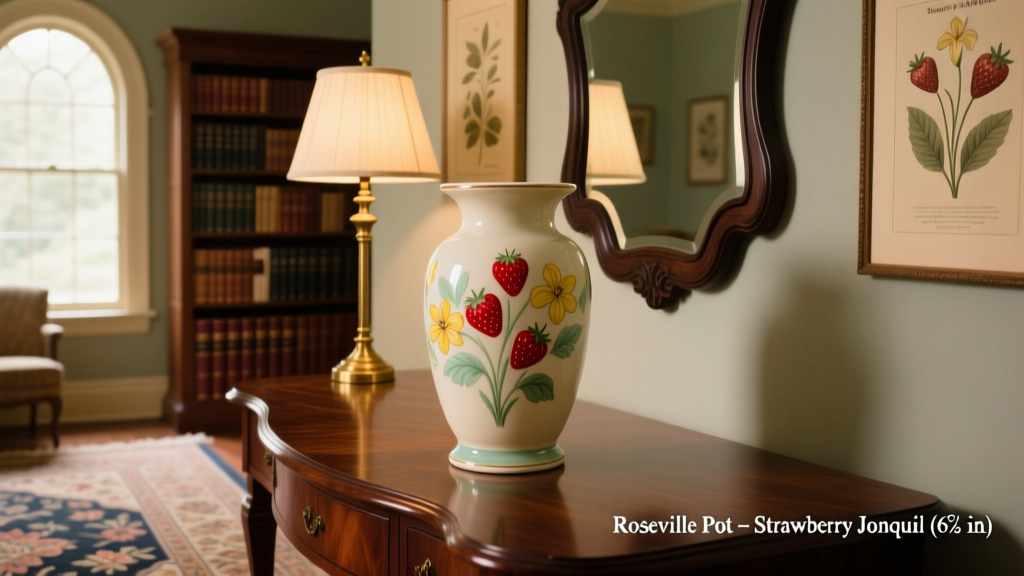
Roseville Pot Strawberry Jonquil Pattern: A Detailed Examination of the 6½-Inch Floral Garden Pot
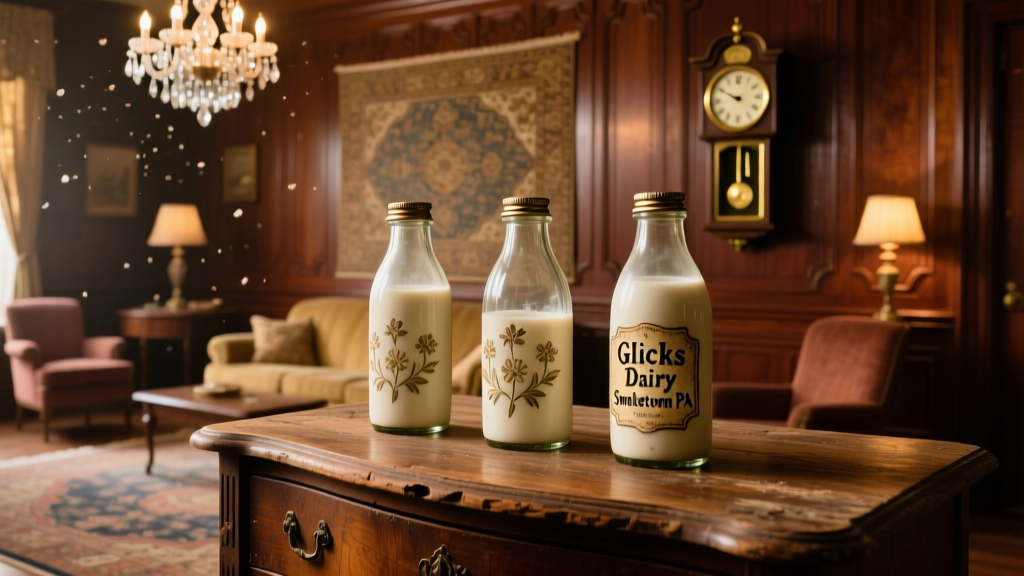
Glick’s Dairy Bottles from Smoketown, PA: Identification, Embossing, and Historical Context of a Mid-20th Century Pennsylvania Milk Brand

Fall Fine Estates Collections Auction: A Curator’s Preview of Exceptional 18th–20th Century Furnishings
The Old Gold Cigarettes Dancing Door Pull: A Rare Art Deco Advertising Artifact from the Golden Age of Tobacco Marketing
The 1931 A.C. Gilbert Erector Set Hudson Locomotive: Engineering Marvel, Historical Artifact, and Restoration Benchmark

Auto Sign Sky Chief Gasoline: Red Lettering on Green Ground Porcelain (12 × 18 in) — History, Identification & Conservation
Staffordshire Plate William IV Raised Fruit Figural Border, Circa 1831 — A Technical and Historical Appraisal of a 6¾-Inch Silver-Gilt Presentation Plate
Lunch Boxes & Tiger Tobacco: The Forgotten Intersection of Mid-Century American Consumer Culture

Redware Flask with Brown-Yellow Glaze: A Detailed Examination of a 9¾ × 4⅜-Inch American Folk Art Vessel