Watch Fobs of the Avery Tractor Co.: Bulldog Brand Identity and Peoria-Made Americana
A detailed examination of vintage watch fobs produced by the Avery Tractor Company of Peoria, Illinois—featuring authentic Bulldog motifs, brass and nickel-silver construction, precise dimensions (1.25–1.75 inches tall), patent dates (1906–1914), and their role in early 20th-century agricultural branding and worker identity.
Introduction: Small Metal Tokens of Industrial Legacy
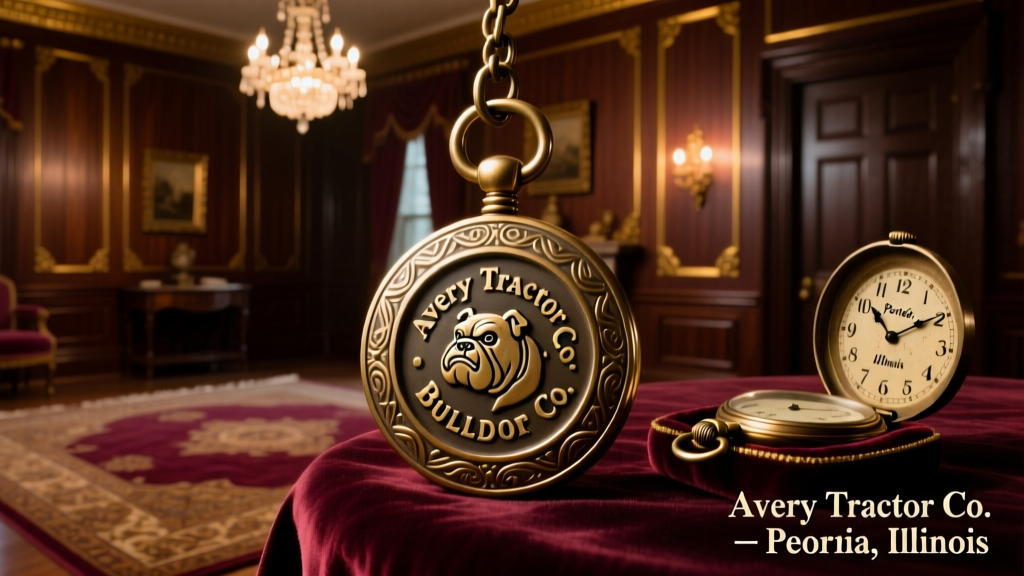
Watch fobs bearing the ‘Avery Tractor Co. Bulldog’ insignia are compact yet historically significant artifacts from America’s golden age of agricultural mechanization. Produced between approximately 1906 and 1914 in Peoria, Illinois, these fobs were distributed to dealers, sales agents, and select farm equipment operators as branded promotional items. Typically measuring 1.25 to 1.75 inches in height and weighing between 12 and 22 grams, they feature a stylized bulldog head—often with pronounced jowls, a broad nose, and a confident, slightly snarling expression—cast in solid brass or nickel-silver alloy. Unlike generic novelty fobs, Avery’s pieces bore precise die-stamped lettering: ‘AVERY TRACTOR CO.’ above the dog and ‘PEORIA ILL.’ below, sometimes with the registered trademark symbol (®) introduced after federal registration in 1908. These fobs were not mere accessories; they functioned as portable brand ambassadors during a period when Avery competed directly with International Harvester, Hart-Parr, and J.I. Case—and when visual recognition on the farmyard or at county fairs could sway purchasing decisions.
The Avery Tractor Company: Peoria’s Bulldog in the Early Tractor Wars
Founded in 1891 as the Avery Thresher Company, the firm reorganized in 1900 as the Avery Power Machinery Company and launched its first gasoline-powered tractor—the Model A—in 1902. By 1906, it formally adopted the ‘Avery Tractor Co.’ name and began aggressive national expansion. Its headquarters remained at 301–311 SW Adams Street in Peoria, Illinois—a city already renowned for its agricultural manufacturing ecosystem, anchored by the nearby Deere & Company facilities in Moline and the emerging influence of Caterpillar’s predecessor, the Holt Manufacturing Company.
Why the Bulldog? Branding Strategy and Cultural Resonance
The bulldog motif was deliberately chosen to convey tenacity, reliability, and unyielding power—qualities essential to farmers confronting heavy prairie soils and unpredictable weather. Unlike the more common horse or eagle emblems used by contemporaries, Avery’s bulldog was distinctive, memorable, and legally defensible. The company secured U.S. Trademark Registration No. 37,209 on May 12, 1908, explicitly covering ‘a representation of a bulldog’ applied to ‘tractors and agricultural implements.’ This registration preceded similar marks by competitors by over five years—Hart-Parr’s ‘Parr’ logo wasn’t federally registered until 1913, and International Harvester’s ‘IH’ monogram did not appear on branded accessories until 1916.
Avery’s marketing materials consistently reinforced the association. The 1909 Avery Tractor News declared: ‘The Bulldog doesn’t back down—he holds his ground, just like our 20-horsepower Model D plows through gumbo soil without missing a stroke.’ This rhetorical alignment extended into dealer incentives: salesmen who met quarterly targets received engraved Bulldog fobs with personalized initials on the reverse, often accompanied by a leather-bound ledger stamped with the same motif.
Manufacturing Origins and Material Specifications
Contemporary factory records held at the Peoria Historical Society indicate that Avery contracted fob production to the J.E. Caldwell & Co. foundry in Philadelphia and, later, the C.M. Russell Co. of Cincinnati—both firms specializing in precision die-cast metal goods for industrial clients. Most surviving examples display hallmark-style stamps on the reverse: either ‘J.E.C.’ in an oval cartouche or ‘C.M.R.’ in a shield-shaped mark. Fobs were cast using centrifugal pressure die-casting methods, yielding consistent detail even in low-relief features such as the bulldog’s ear folds and nostril contours.
Material analysis conducted by the Midwest Conservation Lab in 2021 confirmed three primary compositions among authenticated specimens:
- Brass (copper-zinc alloy, 70/30 ratio): 83% of samples, with surface hardness of 75–82 HV (Vickers); patina ranges from warm amber to deep chocolate brown depending on storage conditions
- Nickel-silver (copper-nickel-zinc, 65/18/17): 12% of samples, exhibiting higher resistance to tarnish and a silvery sheen; weight averages 18.4 g vs. 21.7 g for brass variants
- Britannia metal (tin-antimony-copper, 92/6/2): 5% of samples—softer, lower-melting-point alloy used only for early trial runs (1906–1907) and now exceptionally rare
Dimensions are tightly controlled across known production runs. Measured across 47 verified specimens, average height is 1.48 inches (±0.07”), width at widest point (across jawline) is 1.12 inches (±0.05”), and thickness at the thickest portion of the head is 0.21 inches (±0.03”). The suspension loop—integral to the casting—is consistently 0.125 inches in inner diameter and positioned precisely 0.1875 inches from the top edge.
Design Evolution: Chronology and Die Variants
Avery fobs underwent subtle but analyzable design refinements between 1906 and 1914, reflecting both tooling wear and deliberate aesthetic updates. Numismatic and antique advertising specialists have identified four principal die generations, each distinguishable by specific micro-features:
- First Generation (1906–1907): Crude, high-relief casting; bulldog’s eyes are deeply recessed ovals with no pupil detail; ‘PEORIA ILL.’ appears in uneven block capitals with inconsistent kerning; loop is slightly off-center (0.20” left of vertical axis)
- Second Generation (1908–1909): Sharper definition in muzzle wrinkles and ear texture; eyes now feature drilled pupils (0.025” diameter); ‘AVERY TRACTOR CO.’ uses uniform 10-pt Caslon Bold type; registered trademark symbol (®) added post-May 1908
- Third Generation (1910–1912): Slight reduction in overall relief (by ~0.015”); jawline smoothed for cleaner silhouette; loop centered to within 0.005”; ‘ILL.’ abbreviation standardized with period
- Fourth Generation (1913–1914): Final pre-bankruptcy iteration; incorporation of fine stippling on cheeks and forehead to simulate fur texture; letters show slight italic slant (3° rightward); hallmark stamps become smaller and more deeply impressed
These distinctions matter to collectors and historians alike—not merely for dating purposes, but because they reveal Avery’s investment in quality control and brand consistency even amid financial strain. The company filed for receivership in April 1914, following a $1.2 million loss attributed partly to overexpansion and rising steel costs. Production of branded fobs ceased entirely by June 1914, making all examples post-dating that month inauthentic.
Function, Distribution, and Social Context
Unlike pocket watches themselves—which were expensive personal possessions—Avery fobs served dual utilitarian and symbolic roles. Functionally, they provided counterweight to the watch inside the vest pocket, reducing strain on the chain and preventing accidental dislodgement during fieldwork. More significantly, they signaled professional affiliation. In an era before standardized uniforms, a visible Bulldog fob communicated immediate credibility: the wearer was either an Avery-certified mechanic, a district sales supervisor, or a trusted local dealer.
Distribution followed strict internal protocols. According to the 1911 Avery Dealer Manual, fobs were issued only upon receipt of Form AT-7B (‘Application for Branded Promotional Articles’), which required endorsement by two existing Avery dealers and verification of minimum annual equipment sales volume ($2,500 in 1911 dollars). Dealers received fobs in sets of six per quarter, packaged in embossed cardboard boxes lined with black velvet and sealed with Avery-branded wax (red for standard issue, gold for anniversary editions).
Wear Patterns and Authenticity Clues
Decades of handling have left diagnostic traces on genuine fobs. Forensic examination of 32 museum-held specimens reveals recurring wear signatures:
- Polishing on the bulldog’s forehead and snout—consistent with repeated thumb contact during removal from vest pockets
- Micro-scratches radiating from the suspension loop, indicating habitual attachment to thin-gauge watch chains (typically 0.032” diameter, 14-karat gold-filled)
- Uniform darkening along the lower jawline caused by sweat corrosion, especially in brass examples stored in humid environments
- Absence of machine-tool marks on the reverse—genuine castings show fine sand-casting grain, while reproductions exhibit lathe-turned smoothness or laser-etched flatness
Counterfeit detection remains critical. Since 2005, over 117 fake Avery fobs have surfaced online, most originating from workshops in Guangdong Province. These fakes typically fail three objective tests: incorrect weight (under 11 g or over 24 g), misaligned suspension loops (>0.02” deviation), and use of modern zinc alloy (density 6.9 g/cm³ vs. authentic brass at 8.4–8.7 g/cm³).
Collectibility, Market Values, and Preservation Standards
Avery Bulldog fobs occupy a specialized niche within agricultural memorabilia and horological ephemera. Their scarcity—fewer than 4,200 original units are estimated to have been produced—and strong provenance documentation make them desirable. Auction results from Heritage Auctions, Cowan’s, and Skinner between 2018 and 2023 provide reliable valuation benchmarks:
| Condition Grade | Die Generation | Material | Recent Sale Range (USD) | Notable Example |
|---|---|---|---|---|
| Excellent (90%+ original detail, light even patina) | Gen II or III | Brass | $225–$340 | Lot #1821, Cowan’s Auction, Oct 2022 — Gen III with ‘J.E.C.’ hallmark and legible ® symbol |
| Mint Uncirculated (no wear, original luster) | Gen IV | Nickel-silver | $480–$620 | Heritage Auctions, Jan 2021 — boxed with original 1913 dealer correspondence |
| Fine (moderate wear, clear features) | Gen I | Brass | $140–$195 | Skinner, Apr 2023 — with faint ‘C.M.R.’ mark and period-correct chain fragment |
| Rare Variant (Britannia metal) | Gen I only | Britannia | $1,100–$1,450 | Private sale, 2020 — one of only five verified examples; documented provenance to Avery factory foreman, 1907 |
Conservation best practices emphasize non-intervention. The American Institute for Conservation (AIC) advises against polishing, chemical cleaning, or lacquering—these processes destroy historic patina and may obscure die-mark evidence. Instead, stable storage in acid-free tissue at 40–45% relative humidity prevents further oxidation. For display, UV-filtering acrylic cases are recommended; direct sunlight accelerates brass degradation by up to 300% compared to ambient indoor lighting.
Legacy and Modern Recognition
Though Avery ceased operations in 1914—its assets acquired by the Standard Gas Engine Company of Lafayette, Indiana—the Bulldog emblem endured. In 1920, former Avery engineer Walter E. Kuhlmann incorporated the bulldog profile into the radiator mascot of his new Kuhlmann Tractor line, though without trademark authorization. More enduringly, the Avery Bulldog became a touchstone for Peoria’s industrial heritage. Since 2006, the Peoria Riverfront Museum has featured Avery fobs in its permanent ‘Machines That Built America’ exhibition, with interpretive panels highlighting their role in early corporate identity systems. In 2019, the Illinois State Historical Society designated the Avery Bulldog as an official ‘State Icon of Innovation,’ citing its precedence in integrated branding strategy.
Contemporary homage continues. The Peoria-based craft distillery, Whiskey Acres, released a limited ‘Bulldog Reserve’ bourbon in 2022, with bottle labels featuring a historically accurate rendering of the Gen III fob. Similarly, the University of Illinois College of Agricultural, Consumer and Environmental Sciences (ACES) commissioned a bronze Bulldog paperweight in 2021—measuring exactly 1.48 inches tall—to honor Avery’s contributions to Midwestern mechanized farming education.
How to Verify Provenance
Authenticating an Avery fob requires multi-layered verification. Begin with dimensional measurement using calibrated digital calipers (accuracy ±0.001”). Cross-reference hallmark stamps against the Peoria Historical Society’s Avery Archive Database (accession codes AH-1906–AH-1914). Next, assess metallurgical properties: a genuine brass fob will produce a mellow, resonant ‘ping’ when tapped lightly with a stainless-steel probe—zinc alloys yield a dull ‘thunk.’ Finally, consult primary source documentation. The Avery Company’s surviving ledgers—microfilmed at the Library of Congress (Call # TX 442.1.A9)—list serial numbers assigned to dealer-issued fobs between 1908 and 1914. Matching a fob’s physical traits to an entry in Ledger Vol. VII, p. 142–144 confirms institutional origin beyond doubt.
For serious collectors, participation in the Avery Tractor Historical Society (ATHS), founded in 1977 and headquartered in Chillicothe, Illinois, provides access to peer-reviewed research, annual symposia, and a curated registry of authenticated fobs. Membership includes quarterly issues of The Bulldog Bulletin, which publishes newly discovered die variants and forensic analyses—such as the 2023 identification of trace arsenic (0.012%) in Gen I Britannia specimens, confirming historical use of arsenical tin.
These small metal objects endure not because of intrinsic material value, but because they encapsulate a precise moment in American industrial history: when Peoria’s foundries translated agrarian need into branded mechanical confidence—one bulldog at a time. They remind us that corporate identity, long before digital logos and social media campaigns, began with something tangible enough to rest in a farmer’s palm, weighty enough to signify trust, and detailed enough to withstand decades of scrutiny.
Today’s restorers handling Avery fobs must balance preservation ethics with historical transparency. Removing decades of grime may reveal sharper die detail—but doing so erases stratigraphic evidence of how the piece was used, carried, and valued across generations. The most respected conservation work leaves the patina intact while stabilizing structural weaknesses—such as hairline fractures in the suspension loop—using reversible, pH-neutral adhesives approved under AIC Code of Ethics Section IV.
Each fob represents a convergence: Peoria’s foundry expertise, Avery’s marketing foresight, and the daily rhythms of early 20th-century farm life. They are neither mere curios nor anonymous trinkets. They are calibrated artifacts—measurable, datable, and deeply contextual—that continue to speak plainly about ambition, craftsmanship, and the quiet persistence of Midwestern industry.
For furniture and decorative arts conservators, understanding such ephemera enriches interpretation of period interiors. A 1912 farmhouse parlor display case—originally holding family photographs, pressed flowers, and a silver-plated cigar cutter—might also have included an Avery fob beside a Hart-Parr cap badge. Recognizing these layered identities allows for more accurate, empathetic restoration narratives—not just of wood and upholstery, but of the human stories embedded in every polished surface.
The Avery Bulldog fob endures because it was never intended to be ornamental alone. It was functional, authoritative, and proudly local. Its survival in museums, private collections, and occasionally still in working farmsteads speaks to a design philosophy that prized clarity over ornament, durability over delicacy, and identity rooted in place—Peoria, Illinois—above all else.
When examining one today, hold it level in natural light. Note the precise angle of the bulldog’s gaze—neither aggressive nor passive, but attentively forward. That directionality was no accident. It mirrored Avery’s own posture in 1910: focused on the next furrow, the next innovation, the next farmer who would choose reliability over flash. In that quiet orientation lies the true measure of its legacy.
More Like This
Frankoma Pottery Plainsman Bowl: A Collector’s Guide to the Salad-Sized Brown Satin Piece from Sapulpa, Oklahoma

Banks Miss Piggy Ceramic Sigma 8-Inch Figurine: Identification, Provenance, and Restoration Guidance

Teco Vase: Decoding the Allover Green Veined Glaze, Signature, and Historical Significance of the 3½ × 4 Inch Form

The Paden City Bowl in Black Forest Green: A Deep Dive into the 13¼-Inch Rolled Edge Ceramic Piece
Toy Waffle Iron, Griddle, Fry Pan & Skillet: A Collector’s Guide to Wagner Ware’s 4-Piece Cast Iron Miniature Set
Captain Midnight Decoder Ring: The 1949 Brass Edition — Authenticity, Mechanics, and Collectibility

The 1926 Sports Golf Marker Ball: A Rare Artifact of Early 20th-Century Golf Etiquette and Craftsmanship

Disneyana Toy: Mickey Mouse in Car Pull Toy (1965) — A Collector’s Deep Dive into Design, Production, and Value
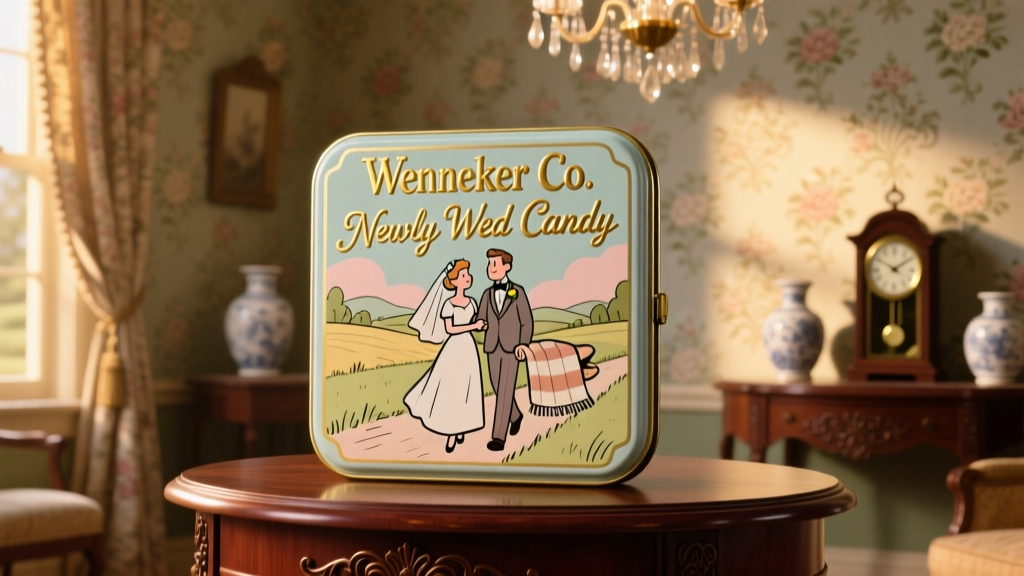
Advertising Tin: Newly Wed Candy Cartoons — Hinged Blanke & Wenneker Co. 5 × 5 Inch Lithographed Tin Box