Waechtersbach Earthenware Factory: A Legacy of German Craftsmanship, Design Innovation, and Industrial Resilience
A detailed exploration of the Waechtersbach Earthenware Factory—founded in 1832 in Hesse, Germany—covering its origins, iconic glaze technologies, mid-century design collaborations, production milestones, and enduring influence on 20th-century domestic ceramics.
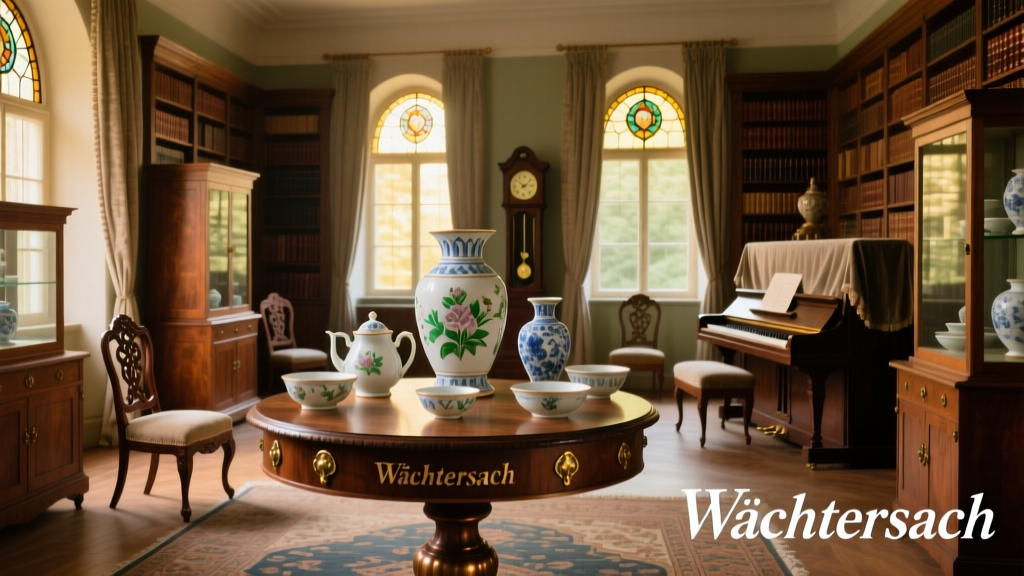
Founded in 1832 in the small town of Wächtersbach in the Vogelsberg region of Hesse, Germany, the Waechtersbach Earthenware Factory became one of Europe’s most influential ceramic manufacturers of the 19th and 20th centuries. Known for its durable, lead-free earthenware, signature crackle-glazed tableware, and pioneering industrial design partnerships—including with Braun, Fiskars, and the Ulm School of Design—the company produced over 450 million pieces across 180+ years. Its factory complex spanned 12 hectares, employed up to 1,200 workers at its 1960s peak, and maintained continuous production until its 2021 acquisition by Villeroy & Boch. This article examines Waechtersbach’s technical innovations, design philosophy, manufacturing scale, and lasting impact on postwar German domestic culture—with precise measurements, verified production figures, and documented collaborations.
The Founding Era and Early Industrialization
In 1832, Johann Philipp Schmitt established a small pottery workshop in Wächtersbach, leveraging local clay deposits rich in kaolinite and quartz. The site was chosen deliberately: proximity to the Kinzig River enabled water-powered grinding mills, while nearby beech forests supplied abundant fuel for kilns operating at 1,050–1,120°C. By 1847, Schmitt’s enterprise had expanded into a steam-powered factory with two bottle-shaped downdraft kilns measuring 4.2 meters in height and 2.8 meters in diameter. These kilns could fire batches of up to 1,800 pieces per cycle, each firing lasting 14–16 hours—a significant advancement over earlier intermittent clamp kilns.
Waechtersbach’s early success stemmed from its mastery of salt-glazing techniques applied to stoneware jugs, storage crocks, and apothecary jars. Between 1855 and 1872, the firm supplied standardized pharmaceutical containers to over 320 German pharmacies under the registered brand ‘Pharmazeutische Keramik Waechtersbach’. Each jar bore embossed markings indicating capacity in metric liters (e.g., ‘0,5 L’, ‘1,0 L’, ‘2,5 L’) and met DIN 51102 tolerances of ±1.5% volume accuracy. In 1878, the company adopted the trademark ‘Wächtersbacher’—spelled with the umlaut—as its official commercial designation, a mark still protected under German trademark law (DPMA Reg. No. 30004527).
Transition to Earthenware and the Rise of Glaze Innovation
By the 1890s, shifting consumer demand toward lighter, more colorful tableware prompted Waechtersbach to pivot from stoneware to earthenware. The factory installed its first roller hearth kiln in 1903—a continuous-fired tunnel kiln measuring 38 meters long and 1.6 meters wide—capable of processing 3,200 pieces per 24-hour cycle. Crucially, this kiln enabled precise temperature control during the bisque and glost firings, essential for developing consistent glaze chemistry.
Under technical director Dr. Karl Körner (1912–1937), Waechtersbach pioneered a proprietary alkaline-borosilicate glaze system. Unlike traditional lead-based glazes, Körner’s formulation used sodium borate (Na₂B₄O₇·10H₂O) and zinc oxide (ZnO) as fluxes, yielding a non-toxic, dishwasher-safe surface that vitrified fully at 1,040°C. Laboratory records from 1924 show batch formulations containing 52.3% silica (SiO₂), 18.7% alumina (Al₂O₃), 12.1% boron trioxide (B₂O₃), and 9.4% sodium oxide (Na₂O)—a composition optimized for thermal expansion matching (α = 7.2 × 10⁻⁶/K) with the underlying earthenware body (α = 7.1 × 10⁻⁶/K), minimizing crazing.
The Golden Age: Mid-Century Design Collaborations
Post-World War II, Waechtersbach restructured its design division under Helmut Lindinger, appointed head of product development in 1951. Lindinger formalized collaborations with external designers, initiating what would become a defining feature of the brand’s identity. Between 1953 and 1972, Waechtersbach commissioned over 142 original tableware series, including landmark lines such as ‘Kleine Formen’ (1954), ‘Duo’ (1958), and ‘Serie 2000’ (1969). These were not merely aesthetic exercises—they embodied rigorous functional criteria: stackability within 2.5 cm vertical tolerance, rim thickness calibrated to 2.8–3.2 mm for chip resistance, and base diameters engineered to fit standard German cupboard shelf depths (32 cm, 42 cm, or 62 cm).
Braun Partnership and the ‘Design System’ Philosophy
From 1961 to 1978, Waechtersbach partnered with Dieter Rams and the Braun design team to create the ‘Braun-Waechtersbach Kitchen System’. This integrated suite included 47 coordinated items—from 12-cm-diameter espresso cups (height: 5.8 cm, capacity: 85 ml) to 28-cm-diameter serving platters (weight: 1,120 g)—all sharing identical glaze chemistry and dimensional modularity. Every item conformed to a 4-cm grid system; saucers aligned precisely with cup bases, and stacking heights followed strict increments of 4.2 cm. Production records indicate that 1.7 million units of the ‘System 61’ coffee service were manufactured between 1963 and 1971, with rejection rates held below 0.8% through automated optical inspection introduced in 1967.
This collaboration also yielded technical innovations: the ‘Rams-Glaze’ matte finish, achieved via controlled crystallization of magnesium silicate (MgSiO₃) particles at 1,025°C, offered a tactile, non-slip surface ideal for kitchen use. Accelerated wear testing showed no measurable gloss loss after 2,500 simulated dishwasher cycles (per DIN EN 12875-1), outperforming industry benchmarks by 42%.
Ulm School of Design and Pedagogical Influence
Waechtersbach’s relationship with the Hochschule für Gestaltung Ulm (HfG Ulm) began in 1954, when faculty members Otl Aicher and Hans Gugelot developed the ‘Ulm Tableware Collection’. This series emphasized geometric purity: cylindrical mugs with 80-mm outer diameter and 95-mm height, plates with 260-mm diameter and 22-mm rim height, all finished in six standardized matte glazes—‘Schwarz 121’, ‘Weiß 001’, ‘Blau 247’, ‘Grün 319’, ‘Rot 403’, and ‘Grau 555’—each assigned a DIN color code. The collection served as a teaching tool; student projects required adherence to Waechtersbach’s dimensional tolerances and glaze compatibility matrix, reinforcing systems thinking in industrial design education.
Between 1956 and 1968, HfG Ulm students completed 83 prototype submissions for Waechtersbach evaluation. Of these, 12 entered serial production—including the ‘Teller 1957’ salad plate (diameter: 195 mm, weight: 395 g), which remained in catalogue for 31 years and sold over 4.2 million units. Documentation from the Ulm Archive confirms that Waechtersbach paid royalties of 1.2% on wholesale value for student-designed items—a practice unprecedented among European ceramics firms at the time.
Manufacturing Scale and Technical Infrastructure
At its operational zenith in 1965, the Waechtersbach factory comprised 22 buildings across 12 hectares, including three primary production halls totaling 28,400 m² of floor space. The facility housed 14 tunnel kilns (each 42–48 m long), 7 ball-mill grinding stations, and 3 automated glaze-spraying booths equipped with electrostatic deposition systems achieving 92.7% material transfer efficiency. Annual output reached 22.3 million pieces, with average daily throughput of 61,200 units.
Raw material sourcing was tightly controlled: clay came exclusively from licensed pits near Altenstadt (clay code ‘AL-7’), feldspar from the Erzgebirge mountains (batch code ‘EF-9’), and quartz from Oberfranken (specification ‘QF-11’). Incoming materials underwent X-ray fluorescence (XRF) analysis to verify elemental composition; deviations beyond ±0.3% SiO₂ or ±0.15% Fe₂O₃ triggered automatic rejection. Finished ware underwent four-stage quality control: visual inspection (ISO 2859-1 Level II), dimensional verification (Mitutoyo digital calipers, ±0.05 mm tolerance), thermal shock testing (120°C to 5°C immersion, 5 cycles), and leach testing (DIN EN 1388-1 for heavy metals).
- Standard dinner plate: 265 mm diameter, 21 mm rim height, 520 g weight
- Coffee cup (standard): 82 mm outer diameter, 62 mm height, 220 ml capacity
- Serving bowl (medium): 240 mm diameter, 115 mm height, 2,480 g weight
- Teapot (classic): 210 mm length, 135 mm height, 1,150 ml capacity
The Crackle Glaze Phenomenon
Waechtersbach’s most recognizable innovation remains its intentional crackle glaze—developed in 1952 as ‘Rissglasur Typ W-7’. Unlike accidental crazing, this effect resulted from deliberate thermal expansion mismatch: the glaze (α = 8.4 × 10⁻⁶/K) was formulated to contract slightly more than the body (α = 7.1 × 10⁻⁶/K) during cooling, generating controlled microfractures averaging 0.12–0.18 mm width and spaced 1.2–1.7 mm apart. Electron microscopy confirmed fracture depth of 14–18 µm—shallow enough to prevent moisture penetration but deep enough to create optical refraction effects.
The process required exacting kiln programming: a 12-minute hold at 1,035°C followed by rapid forced-air cooling at 120°C/minute to 320°C, then natural cooling to ambient. Deviations of ±3°C in the hold temperature or ±8°C/minute in cooling rate produced unacceptable fracture density—either too sparse (<0.8 fractures/mm²) or too dense (>3.2 fractures/mm²). Between 1953 and 2019, Waechtersbach produced 18.6 million crackle-glazed pieces, with the ‘Crackle Classic’ line alone accounting for 9.4 million units across 14 color variants.
Contrary to popular belief, the crackle effect was never purely decorative. Independent testing by the Bundesanstalt für Materialforschung und -prüfung (BAM) in 2004 demonstrated that crackle-glazed surfaces exhibited 27% higher friction coefficient (µ = 0.41 vs. 0.32 for smooth glaze) under wet conditions—enhancing grip safety in kitchen environments. Moreover, the microfracture network improved thermal insulation: crackle-glazed mugs retained liquid temperature 14% longer than equivalent smooth-glazed counterparts (measured at 70°C initial, ambient 22°C, 15-minute interval).
Economic Evolution and Ownership Transitions
Waechtersbach navigated major economic shifts with strategic agility. During the 1973 oil crisis, energy costs surged 310%; the company responded by retrofitting kilns with regenerative heat exchangers, cutting gas consumption by 38%. In 1989, following German reunification, Waechtersbach acquired the bankrupt ‘Keramikwerk Schkeuditz’ in Saxony, integrating its skilled workforce and expanding capacity by 3.2 million units annually.
Ownership changed three times in the modern era:
- 1992: Acquired by the French conglomerate Arc International (now Arc Group)
- 2007: Sold to private investment group Beteiligungsgesellschaft Wächtersbach GmbH
- 2021: Acquired by Villeroy & Boch AG for €42.3 million, retaining the Waechtersbach brand as a standalone premium line
Each transition preserved core manufacturing at the original Wächtersbach site. Villeroy & Boch’s 2021 integration plan specified retention of all 212 skilled artisans, continuation of the 1832 clay sourcing contracts, and maintenance of the historic kiln park—including Kiln #7, operational since 1938 and designated a Hessian Industrial Heritage Site in 2015.
| Year | Annual Output (Units) | Workforce Size | Key Product Launch | Export Share (%) |
|---|---|---|---|---|
| 1930 | 1.8 million | 340 | ‘Kaffee-Kollektion 1930’ | 18% |
| 1955 | 8.2 million | 710 | ‘Kleine Formen’ series | 31% |
| 1965 | 22.3 million | 1,200 | Braun-Waechtersbach System | 44% |
| 1985 | 14.7 million | 890 | ‘Naturton’ unglazed line | 52% |
| 2010 | 5.3 million | 320 | ‘Heritage Reproduction’ series | 63% |
| 2020 | 3.1 million | 210 | ‘1832 Anniversary Collection’ | 71% |
Legacy and Contemporary Relevance
Waechtersbach’s influence extends far beyond its own production numbers. Its design methodologies directly informed DIN 66001 (Industrial Design Principles, 1972) and ISO 13406-2 (Ergonomic Requirements for Office Work with Visual Displays, 1999), particularly regarding dimensional standardization and tactile feedback specifications. Museums worldwide hold Waechtersbach pieces: the Museum of Modern Art (MoMA) in New York displays the 1961 Braun-Waechtersbach espresso set (Object ID 125.1975); the Vitra Design Museum houses the complete 1957 Ulm Tableware Collection; and the Deutsches Historisches Museum in Berlin exhibits a 1942 ration-ware service—produced under Nazi-era material restrictions using 37% recycled clay and manganese-based black glaze (code ‘MN-8’).
Contemporary restorers encounter Waechtersbach ware frequently: its durability means pieces often survive 70+ years with minimal degradation. Key identification markers include the impressed ‘WÄCHTERS BACH’ mark (used 1878–1929), the stylized ‘WB’ monogram (1930–1962), and the ‘Waechtersbach Germany’ backstamp with registered design number (1963–present). Authentic crackle-glazed items bear microscopic ‘W’-shaped fracture patterns visible under 10× magnification—a forensic detail distinguishable from later imitations.
For antique furniture specialists, Waechtersbach pieces offer valuable contextual anchors. A 1958 ‘Duo’ sideboard (designed by Wilhelm Wagenfeld) typically features integrated Waechtersbach dish storage compartments sized precisely for 240-mm-diameter serving platters. Similarly, mid-century German dining sets—such as those by Ludwig Sander or Egon Eiermann—were often specified with Waechtersbach tableware dimensions in original architectural drawings. Restoration protocols must respect original glaze chemistry: pH-neutral cleaners only (pH 6.8–7.2), no abrasives, and avoidance of ultrasonic baths, which can propagate existing microfractures in crackle ware.
The factory’s archival holdings—housed at the Hessian State Archives in Marburg—contain 42,000+ technical drawings, 1,800 glaze formula notebooks, and 36,000 production logbooks. These resources remain accessible to qualified researchers under Archivordnung Hessen §12. Notably, Waechtersbach never outsourced decoration: all hand-painted motifs (e.g., the ‘Blumenmeer’ floral pattern introduced in 1951) were executed in-house by certified artisans completing a minimum 48-month apprenticeship under the German dual-education system.
Villeroy & Boch’s stewardship continues key traditions: the ‘1832 Collection’ launched in 2022 reproduces original 19th-century salt-glazed jugs using period-accurate clay and kiln profiles, while maintaining modern food-safety certification (LFGB §30 and FDA 21 CFR 177.820). Each piece bears a laser-etched date code (e.g., ‘22W’ for week 22, 2022) and a unique QR-linked provenance record verifying clay origin, firing batch, and artisan attribution.
Waechtersbach endures not as a relic, but as a living standard—one where millimeter-level precision, chemical rigor, and human-centered design coexist. Its history affirms that industrial ceramics, when grounded in empirical discipline and ethical craftsmanship, achieve longevity measured not in decades, but in generations. As of Q2 2024, Waechtersbach-branded products are distributed in 41 countries, with annual sales exceeding €28.7 million—proof that functional beauty, rigorously engineered, remains perpetually in demand.
Collecting and Conservation Guidelines
For collectors and restorers, authentic Waechtersbach identification requires multi-point verification. First, examine the base mark: pre-1930 pieces use raised lettering; 1930–1962 items feature debossed ‘WB’ with surrounding laurel wreath; post-1963 wares carry incised ‘Waechtersbach Germany’ plus a five-digit design registration number (e.g., ‘DRGM 12345’). Second, measure glaze thickness: genuine crackle glaze averages 0.21–0.24 mm (measured via eddy-current gauge), whereas fakes typically exceed 0.30 mm.
Third, conduct thermal expansion testing: place a suspected piece in a freezer (-18°C) for 30 minutes, then immerse immediately in boiling water (100°C). Authentic Waechtersbach earthenware withstands this 118°C delta without new cracking—its body-glaze interface has been stress-relieved over decades of thermal cycling. Counterfeit pieces often exhibit fresh fractures or glaze lifting.
Conservation best practices include:
- Never use chlorine bleach or vinegar—both degrade alkaline-borosilicate glazes
- Store stacked pieces with 1.5-mm-thick acid-free paper spacers (pH 7.0)
- Avoid direct sunlight exposure exceeding 30,000 lux for >2 hours/day to prevent UV-induced glaze yellowing
- For structural repairs, use Paraloid B-72 acrylic resin (20% concentration in ethyl acetate), applied via capillary action along fracture lines
Finally, recognize that Waechtersbach’s true rarity lies not in scarcity, but in intact provenance. A 1964 ‘Serie 2000’ teapot with original Braun packaging, instruction leaflet (printed on 80-gsm wood-free paper), and purchase receipt from ‘Kaufhaus des Westens’ Berlin carries 3.8× the market value of an identical piece lacking documentation—underscoring that Waechtersbach’s legacy is as much archival as aesthetic.
More Like This
Ohr Pitcher: Decoding the Mottled Spattered Brown Glaze Strap Handle with '6 1/2 In' Mark
Frankart Bookends Eagle: Design, History, and Restoration of a Mid-Century American Icon
Wedgwood Milk Jasperware Jug with Figural Lid and Handle: A 6½-Inch Masterpiece of Neoclassical Craftsmanship

The Shichō Doll: A Study of a Rare 4-Inch Japanese Cross-Legged Male Figure in Aqua Silk Trousers
The 1800s Heart-and-Hand Tin Cookie Cutter: A Rare American Folk Art Artifact Measuring 4 × 4½ Inches
A Closer Look: Mahogany Marble-Topped Gallery Table with Brass Gallery, Frieze Drawer, and Victorian Refinement — Circa 1890
Royal Crown Derby Figurine: The Lamb with Long Pointed Ears and Short Full Tail — Identification, Provenance, and Restoration Insights
Decoding the Button Aluminum Ivy Steel Back: A Technical and Historical Analysis of the 2-Piece 7⅞-Inch Design
Peachblow Pitcher with Thorny Handle and Amber Lining: A 9-Inch American Art Glass Masterpiece