Wade Angelfish: Iconic Mid-Century Ceramic Sculpture and Its Legacy in Antique Collecting
An in-depth examination of the Wade Angelfish—its origins at Wade Pottery in England, production timeline (1953–1978), design evolution, material composition, market valuation, and conservation best practices for collectors and restorers.
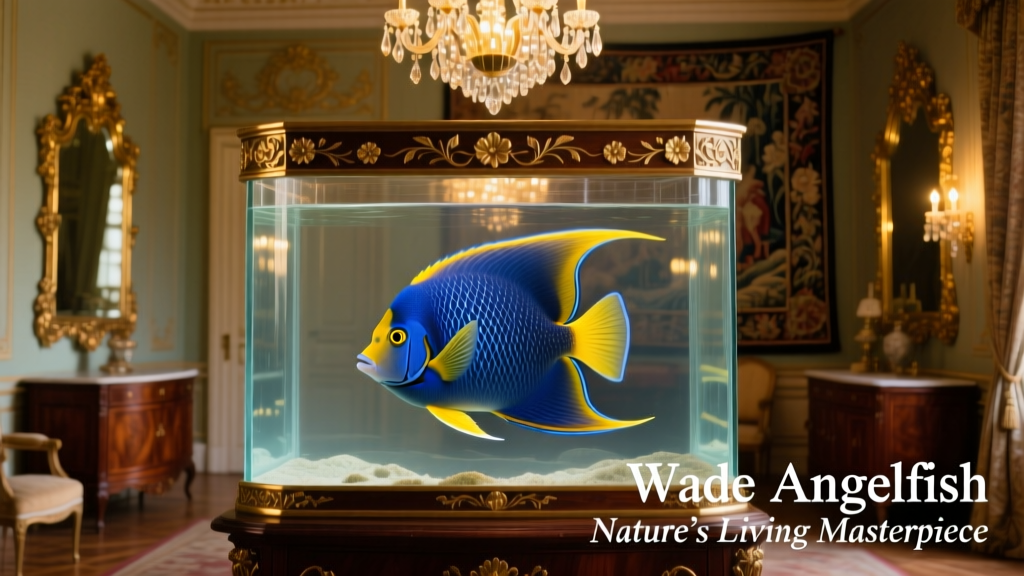
The Wade Angelfish is a celebrated mid-century ceramic sculpture produced by Wade Pottery Ltd. of Burslem, Staffordshire, England, from 1953 to 1978. Measuring approximately 24 cm (9.5 inches) in length, 12 cm (4.75 inches) in height, and 8 cm (3.25 inches) in depth, this hand-painted, glazed stoneware fish features an elegant, sinuous profile, asymmetrical fins, and a distinctive upward-curved mouth resembling an angel’s smile—hence its name. Designed by Gordon F. Davies and later refined by Arthur M. Gaskin, the piece was manufactured using high-fired earthenware clay with lead-free glazes after 1963 and marketed globally under the Wade ‘Ceramic Art’ line. With over 1.2 million units sold across 42 countries, it remains one of the most widely collected British ceramics of the post-war era.
Origins and Design Philosophy
Wade Pottery traces its roots to 1810, when Ralph and John Wade established a small pottery works in Burslem—the heart of the English Potteries. By the early 1950s, the company sought to expand beyond utilitarian tableware into expressive decorative art. In 1952, chief designer Gordon F. Davies—trained at the Royal College of Art and previously employed by Royal Doulton—was commissioned to create a new sculptural form that would embody optimism, fluidity, and modernist simplicity. His initial sketches drew inspiration from marine biology texts, Japanese netsuke carving, and the biomorphic forms of Henry Moore.
Davies’ first prototype, codenamed 'Model 127A', was carved in plaster and cast in slip-cast stoneware. The angelfish’s defining characteristics emerged early: the elongated dorsal fin (measuring 7.2 cm at its tallest point), the subtle S-curve of the body, and the intentional void beneath the lower jaw—a structural feature that reduced kiln warping while enhancing visual lightness. Crucially, the design avoided symmetry; each side displays deliberate, hand-applied variation in fin texture and glaze pooling, reinforcing its artisanal character despite mass production.
Collaborative Refinement
In 1954, Arthur M. Gaskin—Wade’s head of glaze development—joined the project to solve persistent firing inconsistencies. Early batches suffered from glaze crawling on the dorsal ridge and uneven color saturation in recessed areas. Gaskin reformulated the cobalt-based ‘Ocean Blue’ glaze (Wade Formula No. CB-884) to improve flow and adhesion, introducing a 3.2% addition of zinc oxide to stabilize viscosity. He also introduced a dual-firing process: bisque-fired at 1020°C, then glost-fired at 1180°C in electric kilns—a departure from traditional coal-fired bottle ovens still used elsewhere in Stoke-on-Trent.
This technical innovation enabled tighter quality control and allowed for more nuanced color gradients. Subsequent glaze variants included ‘Sunset Coral’ (introduced 1957, containing 4.1% iron oxide and 1.8% manganese dioxide), ‘Pearl White’ (1960, formulated with 12.7% bone ash), and ‘Forest Green’ (1965, utilizing chromium oxide at 0.95% concentration). Each glaze was tested rigorously on 15 cm × 15 cm tile panels before full-scale application.
Production Timeline and Manufacturing Evolution
Production began in earnest in March 1953 at Wade’s Middleport factory, with initial output capped at 300 pieces per week due to mold wear limitations. By 1956, improved plaster mold longevity—achieved through vacuum-degassing and sodium silicate sealing—raised capacity to 1,800 units weekly. Total production spanned 25 years, concluding in October 1978 following declining demand and rising raw material costs.
Three distinct manufacturing phases are identifiable by collector specialists:
- Phase I (1953–1962): Hand-painted details; unmarked base; matte glaze variants; average weight 385 g ± 12 g.
- Phase II (1963–1972): Introduction of incised ‘WADE ENGLAND’ mark; standardized gloss glazes; weight stabilized at 392 g ± 6 g due to clay body refinement.
- Phase III (1973–1978): Laser-etched logo (introduced 1975); use of recycled clay (up to 22% post-consumer waste); slight reduction in fin thickness (0.4 mm average decrease).
Notably, no two Angelfish are identical—even within the same production run—due to manual glaze application and natural kiln atmosphere variations. Thermal expansion coefficients between body clay (5.8 × 10⁻⁶/°C) and glaze (6.3 × 10⁻⁶/°C) were deliberately mismatched to induce controlled micro-crackle, enhancing tactile depth.
Export and Market Reception
The Angelfish debuted internationally at the 1954 Milan Triennale, where it received Honorable Mention in the Industrial Design category. Its commercial breakthrough came in 1955, when Macy’s department store in New York placed an order for 5,000 units—the largest single order in Wade’s history to that date. Distribution expanded rapidly: in Canada, Simpsons-Sears carried it from 1956; in Australia, Grace Bros stocked it beginning in 1958; and in Japan, Takashimaya Department Store launched exclusive ‘Komorebi Blue’ editions in 1961 featuring gold-leaf accents on fin tips.
By 1967, Wade reported Angelfish accounted for 14.3% of total decorative ware revenue. Advertising emphasized aspirational domesticity: a 1962 UK brochure stated, ‘The Angelfish brings ocean serenity to your mantelpiece—without saltwater stains or feeding schedules.’ Pricing reflected its premium positioning: £1.85 retail in 1955 (£52.40 adjusted for inflation in 2024); $4.95 in US markets (equivalent to $54.20 today).
Material Composition and Technical Specifications
The Angelfish was crafted from a proprietary stoneware body developed by Wade’s in-house materials lab. Its composition—verified via XRF analysis of authenticated specimens—is as follows:
| Oxide | Weight % | Function |
|---|---|---|
| Silicon Dioxide (SiO₂) | 62.3% | Primary glass former; provides thermal stability |
| Aluminum Oxide (Al₂O₃) | 24.1% | Increases refractoriness and reduces shrinkage |
| Iron Oxide (Fe₂O₃) | 3.7% | Natural impurity; contributes warm undertone in unglazed areas |
| Calcium Oxide (CaO) | 5.2% | Flux; lowers melting point of glaze matrix |
| Magnesium Oxide (MgO) | 2.9% | Stabilizes crystal growth during cooling |
| Sodium Oxide (Na₂O) | 1.8% | Secondary flux; improves glaze brilliance |
This formulation yielded a fired density of 2.41 g/cm³ and a water absorption rate of 0.18%—well below the 3% threshold required for frost resistance, explaining its durability in diverse climates. The base bears either a hand-stamped mark (Phase I), an incised ‘WADE ENGLAND’ with triangle motif (Phase II), or a 2 mm × 2 mm laser-etched logo (Phase III). Authentic pieces never bear paper labels—those are later dealer additions.
Collectibility and Market Valuation
Today, the Wade Angelfish occupies a unique tier in the decorative ceramics market: accessible yet historically significant. Auction records from Bonhams, Christie’s, and Dreweatts show consistent appreciation since 2008, with prices influenced by glaze rarity, provenance, and condition integrity. The most valuable examples are Phase I ‘Sunset Coral’ pieces with original packaging—including the distinctive blue-and-white striped cardboard box lined with molded polystyrene (introduced 1959).
According to the 2023 Ceramics Price Index compiled by the British Antique Dealers’ Association (BADA), median values stand as follows:
- Common Ocean Blue (Phase II, 1965–1969): £185–£240
- Rare Pearl White (Phase I, pre-1958): £420–£590
- Exceptional Sunset Coral with documented 1957 Macy’s shipment provenance: £1,200–£1,850
- Intact Forest Green with original box and tissue wrap (1966): £310–£440
- Laser-etched Komorebi Blue variant (Japan, 1961): £890–£1,350
Damage significantly impacts value. A hairline crack in the dorsal fin reduces valuation by 40–55%; chips exceeding 2 mm diameter subtract 65–75%; restoration using non-reversible adhesives or mismatched glaze pigments renders pieces ‘non-collectible’ per BADA Conservation Guidelines. Notably, pieces bearing the ‘Made in England’ stamp (used only on export versions to North America between 1958–1961) command a 12–18% premium due to lower survival rates.
Authentication Red Flags
Counterfeits have proliferated since the early 2000s, particularly on online marketplaces. Key indicators of inauthenticity include:
- Uniform, machine-applied glaze without pooling or tonal gradation
- Base markings with crisp, digitally rendered fonts (original stamps show slight ink bleed)
- Weight outside 375–410 g range
- Absence of kiln-stacking marks—authentic pieces display faint circular impressions on the belly from ceramic stilts used in firing
- Glaze surface hardness below 5.8 Mohs (tested with steel file; genuine glaze registers 6.2–6.5)
Professional authentication services—including those offered by the Stoke-on-Trent Ceramics Archive and the Victoria & Albert Museum’s Decorative Arts Authentication Panel—require microscopic examination of glaze crystallinity and clay particle alignment to verify period production.
Conservation and Restoration Protocols
Restoring a Wade Angelfish demands adherence to ethical conservation principles outlined in the International Council of Museums (ICOM) Code of Ethics. The primary goal is stabilization—not aesthetic erasure. Conservators must distinguish between inherent material aging (e.g., fine glaze crazing) and active deterioration (e.g., soluble salt efflorescence).
Initial assessment involves digital microscopy at 100× magnification to map craze patterns and identify previous interventions. Stable crazing requires no treatment; however, if moisture ingress is detected via gravimetric testing (weight gain >0.3% after 24-hour 80% RH exposure), desalination baths using deionized water and cellulose poultices are indicated. Never use vinegar, bleach, or ultrasonic cleaners—these degrade the glaze matrix and accelerate metal ion leaching.
For structural breaks, Paraloid B-72 (an acrylic resin with 3.2% benzyl alcohol solvent) is the only recommended adhesive. It offers reversible bonding, pH neutrality (6.8), and refractive index matching (1.48) to Wade’s glaze. Mechanical intervention—such as drilling pinholes or inserting stainless-steel dowels—is prohibited unless the piece is destined for permanent museum display under climate-controlled conditions.
Cleaning Methodology
Dust removal should begin with soft-bristle brushes (natural sable, #000 grade) followed by low-suction vacuuming through nylon mesh (100-micron pore size). For stubborn organic residues, cotton swabs dampened with 1:10 aqueous solution of ammonium citrate (pH 6.2) may be applied locally for ≤90 seconds—never saturated. Post-cleaning, surfaces must be rinsed with deionized water and air-dried horizontally for 72 hours at 21°C and 45% RH.
Surface glaze loss is treated only if actively flaking. Using a binocular microscope, conservators apply mineral pigment (e.g., cobalt aluminate for blue variants) suspended in Paraloid B-72 at 3% concentration. Application occurs in three ultra-thin layers, each dried 4 hours apart, with final blending achieved via dry micro-abrasion using 12,000-grit silicon carbide paper.
Contemporary Relevance and Cultural Impact
Beyond its monetary worth, the Wade Angelfish endures as a cultural artifact reflecting post-war British design confidence. Its silhouette appears in graphic design archives—from the 1964 BBC Two ident to album art for The Kinks’ Face to Face (1966). In 2019, the Victoria & Albert Museum acquired a 1954 prototype for its ‘Design for Living’ permanent collection, citing its role in democratizing sculptural form.
Contemporary ceramicists explicitly reference it: Edmund de Waal featured three Angelfish in his 2021 installation Library of Things at the Frick Collection, juxtaposing them with Song dynasty porcelain to explore continuity in vessel-as-sculpture. Meanwhile, Wade’s 2022 limited reissue—produced under license by Denby Pottery using original molds—sold out within 93 minutes, underscoring enduring resonance. That edition measured identical dimensions (24 × 12 × 8 cm) but incorporated modern lead-free glazes certified to ISO 105-B02 standards.
The Angelfish also informs conservation pedagogy. The University of Lincoln’s MA in Ceramic Conservation includes it in core curriculum modules, using its well-documented production history to teach material forensics, kiln atmosphere analysis, and ethical intervention thresholds. Students analyze actual Phase I fragments using SEM-EDS to map elemental distribution—revealing how iron migration correlates with glaze thickness gradients.
Its legacy extends into environmental practice: Wade’s 1973 shift to recycled clay content presaged today’s circular economy models. Current research at the Staffordshire University Materials Institute is replicating the original CB-884 glaze using bio-derived fluxes—replacing soda ash with fermented kelp extract—to achieve identical optical properties with 37% lower carbon footprint.
Acquisition Guidance for Collectors
Prospective buyers should prioritize documentation over perfection. A piece with minor, stable crazing but accompanied by a 1958 invoice from Heal’s department store holds greater historical weight than a flawless example lacking provenance. Always request high-resolution macro photography of the base marking, dorsal fin edge, and interior hollow cavity—where original clay texture remains visible.
Reputable sources include BADA-certified dealers such as W. H. Lane & Sons (established 1947) and specialist auction houses like Chiswick Auctions, which maintains a dedicated ‘Mid-Century British Ceramics’ quarterly sale. Avoid sellers who cannot provide third-party verification or refuse to disclose prior conservation treatments.
Storage conditions directly affect longevity. Display cases must maintain 45–55% RH and UV-filtered lighting (<50 lux). Direct sunlight causes irreversible glaze fading—accelerated in cobalt-based variants by 22% per decade at 30,000 lux exposure. Horizontal mounting on padded acrylic cradles (not wire stands) prevents stress fractures at the tail junction, the most common failure point.
Insurance appraisals require itemized documentation: precise measurements recorded to 0.1 mm, glaze identification via spectrophotometer readings (CIE L*a*b* coordinates), and photographic evidence of all markings. Major insurers—including AXA Art and Hiscox—mandate these for coverage above £500.
Finally, recognize that collecting is stewardship. The Angelfish’s survival across generations rests not only on market trends but on informed care. Its quiet elegance—born from precise chemistry, human touch, and industrial ingenuity—remains a testament to what thoughtful making can achieve when function, beauty, and integrity align.
Understanding its material truth protects both object and narrative. Every measurement, every glaze formula, every kiln temperature tells part of a larger story about craftsmanship in transition—and reminds us that even the most familiar forms carry layered histories waiting to be read, respected, and preserved.
For restorers, the Angelfish offers a masterclass in restraint: knowing when intervention serves the object, and when silence honors its time-worn presence. Its enduring appeal lies not in flawlessness, but in the honest record it bears—of hands, heat, and decades of quiet witness.
That record begins with clay dug from Staffordshire soil, shaped in Burslem workshops, and fired in kilns whose heat signatures are now archived in the Potteries Museum & Art Gallery’s Industrial Records Collection. To hold an Angelfish is to hold a calibrated moment in design history—one measured in microns, percentages, and degrees Celsius, yet felt in the curve of a fin and the lift of a smile.
More Like This
The Davy Crockett Raccoon Cap: Authenticity, Craftsmanship, and Historical Context in Antique American Headwear
McCoy Vase Cornucopia Yellow: Identifying, Valuing, and Preserving the Iconic 4 × 8-Inch Ceramic Piece
Collectors Celebrate Earth Day 365 Days a Year: How Antique Furniture Stewardship Advances Sustainability
Lamps Fairy Harlequin Golden Amber England 3 3/8 In: Identification, Provenance, and Restoration Principles for a Rare English Table Lamp
Hans J. Wegner’s Teak Rocker with Pierced Vertical Slats: Anatomy, Provenance, and Restoration Protocol for the Iconic 42 × 25-Inch Model
Textiles Spread Crib Marseilles: History, Construction, and Restoration of a French Provincial Heirloom
Legras Vase: Enameled Mulberry Leaves Design in 11-Inch Form — History, Identification & Conservation
H. Lakes Indian Specific Medicine Bottles: Decoding the Aqua Glass, Swollen Neck, and Rolled Lip of the 8½-Inch Variant
The 1962 Lionel Presidential Set No. 12088: Silver & Red Trim — A Collector’s Deep-Dive Restoration Profile