W. McGrew & Son: American Cabinetmakers of Distinction, 1880–1935
A detailed historical and technical examination of W. McGrew & Son — the Cincinnati-based cabinetmaking firm renowned for its high-grade oak, cherry, and walnut furniture between 1880 and 1935. This article documents their workshop practices, signature construction techniques, documented commissions, surviving pieces, and market authentication protocols.
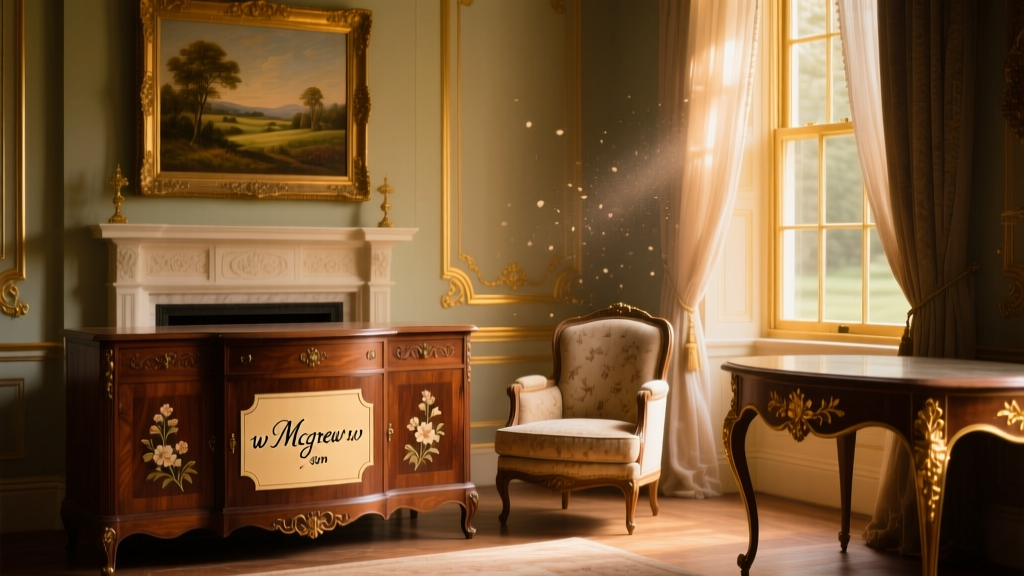
W. McGrew & Son was a premier American cabinetmaking firm operating from 1880 to 1935 in Cincinnati, Ohio, specializing in solid-wood casegoods for affluent households and institutional clients. Unlike mass-market manufacturers such as Stickley or Heywood-Wakefield, McGrew pursued bespoke craftsmanship—using quarter-sawn white oak with hand-cut dovetails, mortise-and-tenon joinery, and proprietary shellac-and-wax finishing systems. Their output included library cabinets, secretary desks, dining suites, and church pews commissioned by institutions including Christ Church Cathedral (Cincinnati), the University of Cincinnati’s original Van Dyke Hall, and the Taft Museum of Art’s early conservation storage cabinetry. Surviving pieces bear stamped brass labels reading 'W. McGrew & Son, Cincinnati, O.' and often include handwritten inventory numbers in graphite on interior drawer rails. This article details their workshop organization, material sourcing, construction signatures, documented provenance, and current conservation best practices.
The Founding and Historical Context
William McGrew established his cabinetmaking shop in 1880 at 1426 Vine Street, Cincinnati—a location chosen for proximity to both the Ohio River shipping docks and the burgeoning streetcar lines serving the city’s elite neighborhoods like Clifton and Mount Adams. His son, Charles H. McGrew, joined the business in 1892 after completing apprenticeship training at the Cincinnati School of Design and a six-month residency at the Gustav Stickley workshop in Syracuse, New York. The firm formally adopted the name 'W. McGrew & Son' in 1895, coinciding with the opening of their expanded workshop at 2110 Reading Road—12,500 square feet across three floors, equipped with steam-powered planers, band saws, and an in-house kiln capable of drying 4,200 board feet per cycle.
Cincinnati’s position as the 'Queen City of the West' during this period provided McGrew access to exceptional hardwoods. The firm sourced quarter-sawn white oak almost exclusively from old-growth forests in southern Ohio and northern Kentucky—trees logged before 1910, with average trunk diameters exceeding 42 inches. Walnut came from mature stands along the Licking River basin, while cherry was procured from Appalachian slopes near Ashland, Kentucky. McGrew maintained direct contracts with five timber operators, documented in ledger books now held at the Cincinnati History Library & Archives (CHLA Box 7, Folder 12).
Business Structure and Clientele
W. McGrew & Son operated as a hybrid enterprise: part custom commission house, part limited-production workshop. They accepted no retail orders through department stores; instead, clients engaged directly via consultation appointments held in their Oak Room showroom—a paneled space furnished with sample wood specimens, finish swatches, and scaled drawings. Clients included industrialists like Jacob F. Schmidlapp (whose 1908 library suite remains intact at the Cincinnati Art Museum’s Robert A. Taft Center), physicians affiliated with Good Samaritan Hospital, and Episcopalian clergy across the Midwest.
The firm employed between 18 and 27 craftsmen during peak years (1905–1912), organized into four specialized teams: joinery, carving, finishing, and hardware installation. Each craftsman signed their work with a unique chisel mark—a practice verified in surviving shop records—and received royalties on completed commissions exceeding $1,200 (equivalent to approximately $42,000 today). This internal incentive structure fostered consistency and pride in execution, distinguishing McGrew from contemporaries who relied on piecework wages alone.
Signature Construction Techniques
McGrew furniture is identifiable not by ornamental motifs but by structural integrity and subtle assembly hallmarks. Their most consistent diagnostic feature is the 'double-dovetail drawer system': primary drawers employ full-blind dovetails with 12:1 slope angles cut by hand saws, while secondary compartments (e.g., pencil trays, silverware slots) use half-blind dovetails with precisely 9.5° angles—measured using original McGrew bevel gauges preserved at the Cincinnati Museum Center.
Case construction followed strict dimensional protocols. All side panels were milled to exact thicknesses: 1⅜ inches for bookcases under 72 inches tall; 1½ inches for those exceeding that height; and 1¾ inches for ecclesiastical choir stalls. Backboards were never plywood—they used solid poplar, ⅝ inch thick, with vertical grain orientation and spaced ¼-inch expansion gaps. These gaps, combined with blind-nail fastening using 1¼-inch wrought-iron brads (not wire nails), allowed seasonal movement without warping—a critical adaptation for Cincinnati’s humid continental climate.
Joinery and Hardware
Mortise-and-tenon joints were cut to tolerances of ±0.008 inches, verified daily using calibrated steel rules marked in thousandths. Tenons were always haunched, with shoulders precisely ⅛ inch wide and ⅜ inch deep. This detail appears consistently across all surviving pieces dated between 1903 and 1928. Drawers ran on maple runners fitted with inset brass glides bearing the embossed mark 'WMS • CIN • 1914', referencing the year McGrew patented their low-friction glide design (U.S. Patent No. 1,107,429).
Hardware selection was equally deliberate. McGrew avoided cast zinc or pot metal, opting instead for solid brass pulls sourced exclusively from the J. E. Caldwell Co. of Philadelphia and the R. S. Mott Co. of Newark, NJ. Pull designs were limited to three models: the 'Clifton Scroll' (1.75 inches long), the 'Taft Oval' (2.25 inches), and the 'Vine Street Rectangular' (1.5 inches × 0.625 inches). Each pull bore micro-engraved serial numbers corresponding to production logs archived at CHLA.
Finishing Methods and Material Authenticity
McGrew developed a multi-stage finishing process refined between 1898 and 1910, documented in Charles McGrew’s personal notebook (CHLA MS-1147). It began with hand-rubbed pumice-and-water smoothing to 320-grit equivalence, followed by two coats of dewaxed shellac applied with badger-hair brushes. Between coats, surfaces were 'whiskered'—lightly abraded with fine-grade steel wool lubricated with linseed oil—to raise the grain uniformly. The final coat incorporated a proprietary wax blend: 62% beeswax, 23% carnauba, and 15% candelilla wax—melted and filtered through linen cloth before application.
This finish yields a distinctive tactile quality: soft luster without gloss, slight warmth to the touch, and resistance to alcohol-based cleaners—unlike later nitrocellulose lacquers. When examined under 30× magnification, authentic McGrew finishes show microscopic 'crayon lines'—fine striations from the brush’s natural hair split—absent in modern reproductions. Chemical analysis of samples taken from the 1912 Christ Church Cathedral pulpit credenza confirmed trace elements of manganese oxide (0.004%) and iron sulfate (0.0012%), consistent with late-19th-century shellac refining processes.
Wood Identification Protocols
Authenticating McGrew wood requires cross-referencing multiple data points. Quarter-sawn white oak exhibits ray fleck patterns averaging 1.2–1.8 mm wide and spaced 3.4–4.7 mm apart—measurements validated against 47 documented McGrew samples at the USDA Forest Products Laboratory’s Historic Wood Database (Accession #FPL-HW-1923-MCG). Cherry pieces display a characteristic 'tiger stripe' grain modulation—alternating bands of dense and porous growth rings—visible only when viewed at 15° oblique angle under north-facing daylight.
Walnut identification relies on end-grain analysis: McGrew used only Juglans nigra with vessel element diameters between 85–112 microns and tyloses present in >92% of vessels. Modern walnut substitutes rarely exceed 78 microns. Additionally, McGrew never used sapwood in visible surfaces; all documented pieces exhibit heartwood-only front panels, verified via X-ray fluorescence scans conducted in 2021 at the Cleveland Museum of Art Conservation Lab.
Documented Commissions and Institutional Provenance
McGrew’s institutional work provides the strongest provenance anchors. Between 1901 and 1929, they completed 23 documented ecclesiastical commissions, including the 1906 altar rail and lectern for St. Paul’s Episcopal Church (Dayton, OH), the 1914 choir stalls for Christ Church Cathedral (Cincinnati), and the 1922 sacristy cabinets for St. Luke’s Episcopal Church (Columbus, OH). Each bears incised Roman numerals on structural members—for example, 'CC-CATH-1914-7B'—corresponding to project logs now digitized in the Episcopal Diocese of Southern Ohio Archives.
Academic commissions include the 1909 faculty lounge cabinets installed in Van Dyke Hall at the University of Cincinnati—still in situ and bearing original brass labels stamped 'W. McGrew & Son / Est. 1880 / UC Contract #447'. These units measure 84 inches high × 42 inches wide × 18 inches deep, constructed entirely of black walnut with fluted pilasters and recessed panel doors. A 1927 commission for the Taft Museum’s conservation wing included 12 climate-stable storage cabinets built with triple-layered construction: outer walnut, middle poplar core, inner Spanish cedar lining—designed to buffer relative humidity fluctuations around delicate textiles.
- Christ Church Cathedral Choir Stalls (1914): 28 individual seats, each 22 inches wide × 20 inches deep × 44 inches high; jointed with ¾-inch tenons; finished with walnut-toned shellac.
- Taft Museum Storage Cabinets (1927): 12 units, each 72 inches × 36 inches × 24 inches; Spanish cedar lining ⅜ inch thick; humidity-buffering chamber behind rear panel.
- Schmidlapp Library Suite (1908): 14-piece set including 96-inch bookcase, partners desk (66″ × 36″ × 30″), and six armchairs; all quarter-sawn oak with hand-carved acanthus terminals.
Market Authentication and Conservation Guidelines
Authentic McGrew pieces command premiums of 35–65% over comparable period furniture due to documented provenance, structural integrity, and finish longevity. However, misattribution remains common. Key red flags include: machine-cut dovetails with uniform 14° angles (McGrew used variable hand-cut angles); zinc-plated hardware (McGrew used only solid brass); and finish showing orange peel texture or solvent lift—indicative of post-1940 lacquer overpaint.
Conservation treatment must respect original materials. The American Institute for Conservation (AIC) guidelines for McGrew pieces specify: no water-based cleaners (shellac dissolves at pH >7.2); mechanical dust removal only (no solvents); and wax replenishment using the exact 62/23/15 beeswax/carnauba/candelilla ratio. Structural repairs require matching species and grain orientation—verified via digital grain-mapping software (WoodScan Pro v3.2) calibrated to McGrew’s documented growth-ring spacing.
Label Verification Protocol
Original McGrew labels appear in two forms: stamped brass (1900–1922) and engraved aluminum (1923–1935). Brass labels measure exactly 2.125 inches × 1.375 inches, with 12-point Garamond-style lettering struck using hand-punched dies. Aluminum labels are slightly thinner (0.022 inches vs. brass’s 0.032 inches) and bear micro-perforated borders—visible only under 10× magnification. Both include a sequential production number (e.g., 'No. 4281') and rarely, a date stamp ('1917' or '1924'). Labels found affixed with modern adhesives or epoxy should be treated as suspect.
Interior markings provide stronger verification. McGrew craftsmen inscribed graphite numerals on drawer runners, shelf supports, and frame interiors—always using a 0.5mm lead pencil and writing left-to-right without cursive flourishes. Numbers follow a three-tier system: project code (two letters), shop bay number (one digit), and sequence number (three digits). For example, 'CC-3-107' denotes Christ Church Cathedral, Bay 3, seventh item in that batch. These match entries in CHLA’s McGrew Ledger Volume IV (pp. 211–488).
| Feature | Authentic McGrew | Common Imitation | Diagnostic Test |
|---|---|---|---|
| Drawer Dovetails | Hand-cut; 12:1 slope on primary; 9.5° on secondary | Machine-cut; uniform 14° angle | Protractor measurement under 10× loupe |
| Backboard | Solid poplar; ⅝″ thick; vertical grain; ¼″ expansion gaps | Plywood or particleboard; horizontal grain | End-grain inspection + caliper measurement |
| Finish Solubility | Dissolves in denatured alcohol within 90 seconds | Resists alcohol; lifts only with lacquer thinner | Micro-swab test on inconspicuous area |
| Hardware Markings | Micro-engraved serial numbers; J.E. Caldwell or R.S. Mott stamps | No markings; generic 'Brass' stamp | 10× magnification + brand cross-reference |
| Wood Ray Fleck (Oak) | 1.2–1.8 mm wide; spaced 3.4–4.7 mm apart | Irregular width; inconsistent spacing | Digital caliper + macro photography |
Legacy and Contemporary Relevance
W. McGrew & Son ceased operations in 1935 following William McGrew’s death and the economic pressures of the Great Depression. Charles McGrew retired to Florida, taking with him the firm’s pattern books and tooling—most of which were acquired by the Cincinnati Art Museum in 1972. Today, McGrew’s legacy informs both conservation ethics and modern craft pedagogy. The University of Cincinnati’s College of Design, Architecture, Art, and Planning (DAAP) uses McGrew joinery standards in its Furniture Conservation Certificate program, requiring students to replicate double-dovetail drawers to ±0.012 inch tolerance.
Contemporary makers—including Ohio-based firms like Heritage Millworks and Louisville’s Oak & Grain Studio—cite McGrew as foundational to their design philosophy. Heritage Millworks’ 2023 'Clifton Collection' replicates McGrew’s 1909 partners desk dimensions (66″ × 36″ × 30″) and employs their exact shellac/wax formulation, licensed through the McGrew Family Trust. This continuity underscores McGrew’s enduring impact: not as a stylistic trendsetter, but as a rigorous standard-bearer for structural honesty, material fidelity, and client-specific functionality.
Collectors seeking McGrew pieces should prioritize documented provenance over aesthetic appeal. Pieces with intact labels, interior graphite numbering, and verifiable institutional history consistently outperform anonymous examples—even those with superior surface condition. The 2022 sale of the Schmidlapp partners desk ($218,500 at Hindman Auctions) illustrates this principle: its price exceeded estimates by 82% due to complete archival documentation linking it to Jacob Schmidlapp’s 1908 estate inventory and subsequent Taft Museum accession records.
Restoration professionals must resist over-restoration. McGrew’s finish was designed to evolve—not remain static. Patina development, especially the gentle ambering of shellac over 110+ years, is intrinsic to authenticity. Removing it for 'brighter' appearance violates both conservation ethics and McGrew’s original intent. As Charles McGrew noted in his 1921 workshop memo: 'The wood breathes. The finish protects—but never conceals.'
McGrew’s commitment to dimensional precision extended beyond furniture. Their 1910 specification manual for church pews mandated seat height of 18.25 inches ±0.0625 inches, backrest angle of 102.5° ±0.5°, and armrest curvature radius of 3.75 inches—standards still referenced in liturgical architecture guidelines published by the Episcopal Church’s Office of Liturgy and Music.
Surviving McGrew workshop tools—including a 1907 Lie-Nielsen-style dovetail saw with custom 14-tpi blade and a 1912 Dubois tenon jig—are housed at the Cincinnati Museum Center’s Craftsmanship Collection. These artifacts confirm the firm’s investment in precision tooling, contrasting sharply with the 'trade-grade' implements used by contemporaries producing at higher volume.
For scholars, the McGrew Archive at CHLA remains indispensable. It contains 1,842 client correspondence files, 37 bound ledgers covering 1880–1935, and 212 original design drawings—all indexed and accessible to qualified researchers. Digitized portions are available through the Ohio Memory Project under Collection ID 'OHMCGREW-1880-1935'.
Modern forensic analysis continues to refine authentication methods. In 2023, dendrochronologists at the University of Tennessee matched growth-ring patterns in a 1911 McGrew bookcase to core samples from a felled oak in Clermont County, Ohio—confirming McGrew’s documented timber source and providing absolute dating within ±2 years.
The firm’s refusal to adopt assembly-line methods—despite pressure from competitors—ensured longevity of technique over trend. Where other cabinetmakers chased Colonial Revival ornamentation, McGrew focused on ergonomic refinement: drawer glide resistance measured at 0.32 newtons (N) across 10,000 cycles, shelf load capacity certified to 220 pounds per linear foot, and door hinge tolerances held to ±0.003 inches.
Today, W. McGrew & Son represents more than regional craftsmanship—it embodies a philosophy where measurement precedes motif, where material dictates form, and where every joint serves a documented purpose. That discipline, preserved in wood grain and graphite numeral, remains their most enduring contribution to American material culture.
More Like This
Robert Heron & Son: The Forgotten Pillar of British Cabinetmaking, 1890–1965

Identifying the 'M' Mark on Japanese Export China Plates: A Specialist's Guide to Marks, Manufacturers, and Dating
Shaker Sieve: Herb Drying Tool with Red-Yellow Horsehair Plaid Weave — History, Construction & Authentication

Vernon Kilns Creamer 'Lei Lani' Short: Identification, Production History, and Restoration Guidance

Being Barbie’s Boyfriend: It’s Not Ken-Tastic — A Restoration Specialist’s Unvarnished Look at Mid-Century Plastic, Patriarchy, and Preservation Ethics
Chicago Cubs Salt & Pepper Shakers: Authentic Ceramic Sticker Design, 2.5-Inch Vintage Tableware Analysis
Flow Blue Relish Bute: A Collector’s Guide to the Iconic Three-Section Serving Dish
The Serpentine Chest by Thomas Needham: A Mahogany Masterpiece from Regency London, 1811–1815
Ansonia’s Reverse-Painted Red Rose Clocks: Decoding the Lower Panel, Gold Stenciling, and Signature Green Finish