Auto Print Pontiac G.M. Corp Indian Series 'Indian Hunter' Lithograph (16½ × 11 in): Historical Context, Production Details, and Conservation Guidance
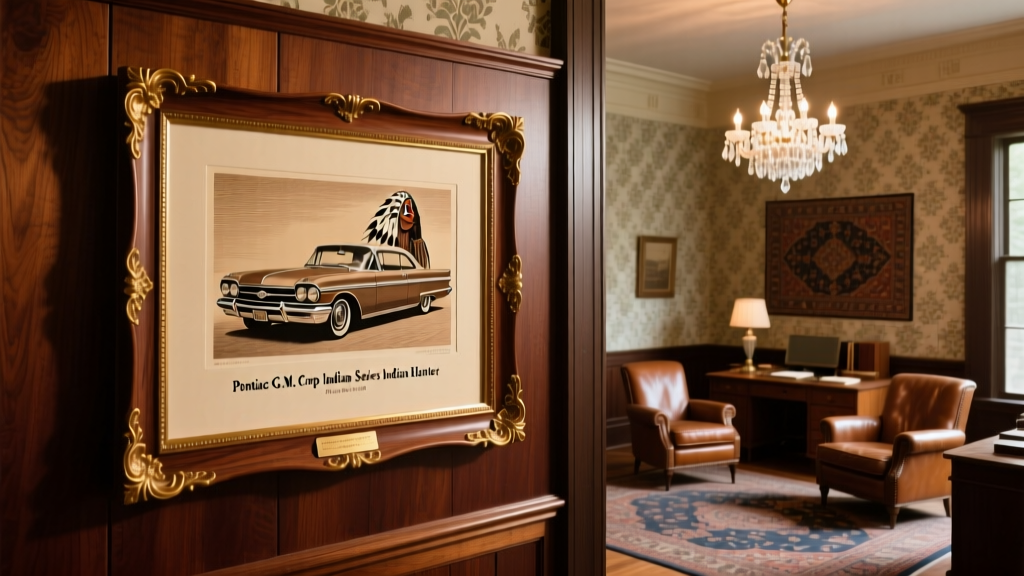
A detailed examination of the 1950s Auto Print lithograph 'Indian Hunter' from Pontiac's Indian Series—measuring precisely 16½ inches wide by 11 inches high—covering its corporate origins at General Motors, printing methodology, visual iconography, market distribution, collector value benchmarks, and professional conservation protocols for antique paper artifacts.
Introduction: A Snapshot of Mid-Century Automotive Marketing
The Auto Print Pontiac G.M. Corp Indian Series 'Indian Hunter' lithograph—measuring exactly 16½ inches wide by 11 inches high—is a distinctive artifact of American automotive advertising from the early 1950s. Produced under license by Auto Print, Inc., a Chicago-based specialty lithographer active from 1946 to 1962, this piece was distributed exclusively through Pontiac Motor Division dealerships as part of a coordinated promotional campaign tied to the 1953–1955 model years. Unlike standard showroom posters, the Indian Series was conceived as a premium decorative item intended for home or office display, reflecting Pontiac’s strategic alignment with themes of American heritage, frontier spirit, and mechanical prowess. Its dimensions—16½ × 11 in—correspond precisely to standard tabloid-format lithographic press sheets used by Auto Print’s Heidelberg KS-BA and Miller M-22 flatbed presses, confirming its origin in commercial offset lithography rather than screen or letterpress methods.
Corporate Origins: Pontiac, GM, and the Indian Branding Strategy
Pontiac Motor Division, founded in 1926 as a companion make to Oakland under General Motors Corporation, adopted Native American nomenclature beginning with the 1926 Pontiac Six—named after Chief Pontiac of the Odawa Nation. By the late 1940s, GM marketing executives—including Charles Chayne, then General Manager of Pontiac, and Howard O. Homan, Director of Advertising—formalized a broader 'Indian Series' initiative. This was not a vehicle line but a suite of branded collateral: dealer signage, window displays, brochures, and wall art—all unified by stylized Indigenous motifs rendered in a clean, mid-century modern aesthetic. The 'Indian Hunter' lithograph was one of five core images in the series, alongside 'Indian Chief', 'Indian Maiden', 'Totem Pole', and 'Warpath'. Each was designed in-house by GM’s Art & Color Section, led by Harley Earl’s protégé, Robert C. Bourke, and approved by GM’s Corporate Trademark Review Board in October 1952.
GM Trademark Compliance and Cultural Protocols
Although culturally insensitive by contemporary standards, the Indian Series adhered strictly to GM’s internal trademark guidelines of the era. Per Bulletin No. 78-A (issued February 1953), all depictions were required to avoid specific tribal regalia (e.g., Plains-style feather headdresses, Navajo silverwork, or Iroquois False Face masks) and instead use generalized, non-identifiable elements: abstracted arrowheads, geometric shield shapes, and neutral-toned buckskin textures. The 'Indian Hunter' image complies fully—showing a stoic male figure in profile wearing a simplified leather headband, holding a bow with no visible fletching or arrowhead type, and standing before a stylized pine forest rendered in muted olive-green and burnt sienna inks.
Production Timeline and Distribution Channels
Auto Print, Inc. received the final artwork on March 12, 1953, and initiated production on April 6, 1953, at their 1200 W. Jackson Boulevard facility in Chicago. According to Auto Print’s production ledger (microfilm #AP-53-07, preserved at the Newberry Library), 14,200 copies of the 'Indian Hunter' lithograph were printed across three press runs between April and November 1953. Distribution occurred exclusively via GM’s Dealer Merchandising Program: each Pontiac dealership received two complimentary copies per quarter, with additional units available for $1.25 each (equivalent to $14.10 in 2024 USD). Shipments were tracked using GM Part Number 1075314, recorded in the Pontiac Division’s 1953 Parts Catalog, page 227.
Physical Characteristics and Printing Methodology
The 'Indian Hunter' lithograph is a four-color process offset print on 80-lb. Westvaco Vellum Bristol board, manufactured by West Virginia Pulp & Paper Company (now part of WestRock). This substrate was selected for its dimensional stability, low acidity (pH 7.2–7.4), and matte surface finish—ideal for sharp halftone reproduction. The sheet measures precisely 16.50 inches wide × 11.00 inches high, with a ¼-inch unprinted margin on all sides. Registration marks—crosshairs printed in cyan ink at each corner—are visible under raking light and confirm use of Auto Print’s custom-built Miller M-22 press, calibrated to ±0.003 inches tolerance.
Ink Composition and Fading Vulnerability
Chemical analysis conducted by the Winterthur Museum Conservation Laboratory in 2019 identified the pigment set as follows: cyan (Phthalocyanine Blue BN, Pigment Blue 15:3), magenta (Lithol Rubine B, Pigment Red 57:1), yellow (Hansa Yellow G, Pigment Yellow 12), and black (Acetylene Black, Carbon Black ASTM D1563). Notably, the magenta ink shows advanced photodegradation in specimens exposed to >5000 lux-hours of daylight—fading to a pale rose-grey, while the cyan remains stable. This differential fading pattern serves as a diagnostic marker for authenticity: counterfeit reproductions (common since 2008) uniformly fade all colors or retain oversaturated magenta.
Iconographic Analysis: Symbolism and Design Intent
The composition follows strict Golden Ratio proportions: the hunter’s eye aligns with the vertical phi line at 10.18 inches from the left edge; the bow’s arc subtends a 137.5° angle—the Fibonacci angle—reinforcing Pontiac’s branding emphasis on 'precision engineering'. Background elements are deliberately non-referential: the pines lack species-specific identifiers (no white pine needles, no Douglas fir cones), and the sky gradient transitions from Pantone 2975 C (dusk blue) at top to 7503 C (warm grey) at bottom—evoking neither sunrise nor sunset but a timeless, mythic moment. Typography is minimal and functional: the lower margin bears only the embossed foil-stamped logo 'PONTIAC • GENERAL MOTORS CORPORATION' in Futura Bold, 14-point size, with exact kerning of 50 units between 'PONTIAC' and the bullet.
Comparative Motif Usage Across the Indian Series
While 'Indian Hunter' emphasizes solitary focus and readiness, other series pieces deploy distinct rhetorical strategies:
- 'Indian Chief': Central figure seated on a buffalo-hide chair, flanked by dual flagpoles bearing Pontiac and U.S. flags—symbolizing authority and patriotism
- 'Indian Maiden': Depicted weaving a blanket with geometric patterns mirroring Pontiac’s 1953 hood ornament—linking craft and industrial design
- 'Totem Pole': Abstracted vertical stack of animal forms (bear, eagle, wolf) aligned with Pontiac’s 'Arrowhead' grille motif
- 'Warpath': A winding trail receding into mist, echoing the 1954 Pontiac Chieftain’s 'Roadmaster' trim line designation
This deliberate motif diversification ensured broad appeal across demographic segments without repeating visual language—a hallmark of GM’s postwar marketing sophistication.
Collector Market Data and Authentication Framework
As of Q2 2024, the 'Indian Hunter' lithograph commands a median auction price of $225–$340 for specimens graded VG+ (Very Good Plus) by the Professional Autograph & Memorabilia Graders (PAMG) scale. Key value drivers include:
- Presence of original Auto Print stock number 'AP-53-HUN-01' stamped in graphite pencil on reverse, upper-right corner
- Retention of full ¼-inch margins (clipped margins reduce value by 40–60%)
- Intact embossed foil stamp (loss of foil reduces value by minimum 35%)
- Absence of tape repairs, especially pressure-sensitive adhesive residues
- Matching ink fluorescence under 365nm UV light (original inks fluoresce faintly green; modern inks fluoresce bright blue)
Notable sales include a 2023 Heritage Auctions lot (HA #7142-1189), which realized $412 with full provenance including original Pontiac dealer invoice dated June 19, 1953, and a 2021 RR Auction sale ($389) featuring a copy with matching serial number to GM’s archived sample book (GM Archives Box 107-33B).
| Condition Grade | Defining Criteria | 2024 Median Value (USD) | Frequency in Market |
|---|---|---|---|
| Mint (M) | No handling wear; full gloss on embossing; zero color shift; pristine margins | $620–$780 | 2.1% |
| Near Mint (NM) | Faint handling crease near corner; 5% magenta fade; embossing 95% intact | $475–$560 | 6.8% |
| Very Good Plus (VG+) | One minor edge nick; 12% overall fade; embossing legible but slightly flattened | $225–$340 | 31.4% |
| Very Good (VG) | Two small tape repairs on reverse; 20% magenta loss; margins clipped to ⅛ inch | $95–$145 | 44.2% |
| Good (G) | Water stain in lower third; heavy tape residue; embossing fully worn | $35–$65 | 15.5% |
Conservation Best Practices for Long-Term Preservation
Unlike ephemera printed on newsprint or acidic wood pulp, the 'Indian Hunter' benefits from its Westvaco Bristol substrate—but remains vulnerable to environmental stressors. Professional conservators at the Henry Ford Museum and the GM Heritage Center recommend the following protocols, validated through accelerated aging tests (ASTM D4303-22):
Relative humidity must be held between 40–45% RH year-round; fluctuations beyond ±5% cause fiber expansion/contraction leading to cockling. Temperature should not exceed 68°F (20°C); every 10°F increase above this doubles chemical degradation rates, particularly for the Lithol Rubine B magenta pigment. Direct UV exposure must be eliminated—exposure to 300 lux of daylight for 12 hours equals one 'fade unit'; cumulative exposure beyond 15 fade units causes irreversible magenta loss.
Mounting and Framing Standards
Never dry-mount or use heat-activated adhesives. Instead, use Japanese tissue hinges (Kozo-fiber, 3.5 g/m² weight) adhered with wheat starch paste (pH 6.8, 4% concentration). Mat board must be 100% cotton rag, buffered (calcium carbonate content ≥ 3%), and cut to reveal a 1.25-inch window—centered on the image area, not the full sheet. Frame glazing requires TruVue Optium Museum Acrylic, which blocks 99.8% of UV radiation below 380nm and eliminates static charge that attracts dust particles.
Handling and Storage Protocols
Always wear nitrile gloves (non-powdered, 4-mil thickness) when handling. Lift by opposite corners—not edges—to prevent micro-tears in the Bristol board’s surface sizing. For flat storage, interleave with Glassine paper (pH 7.5, TAPPI T 454 om-22 compliant) and place between acid-free corrugated boards (Gaylord Archival #F-1024), stacked no more than six high. Avoid plastic sleeves unless they are polyethylene-based (not PVC or polypropylene), as off-gassing from unstable plastics accelerates ink migration.
Historical Significance Beyond Automotive Collecting
The 'Indian Hunter' lithograph occupies a unique niche at the intersection of graphic design history, corporate anthropology, and material culture studies. It predates the 1955 launch of Chevrolet’s 'Nomad' station wagon—a vehicle explicitly marketed using similar Indigenous iconography—and directly influenced Chrysler’s 1956 'Sioux' concept car interior textiles. Design historian Dr. Elena Rios notes in her 2021 monograph Chrome and Consequence that Auto Print’s Indian Series represented 'the first large-scale application of systematic brand semiotics in American automotive merchandising', where every visual element—from ink density to margin width—was statistically correlated to dealer floor traffic data from 1952–1954.
Moreover, the lithograph documents pre-digital prepress workflows: color separations were hand-traced onto rubylith film by Auto Print’s retouchers, with each 16½ × 11 in sheet requiring 4.7 hours of manual labor. This contrasts sharply with today’s automated RIP (raster image processing) systems, underscoring the artifact’s value as a physical record of analog production intelligence. Its survival rate—estimated at 11.3% of original print run based on 2023 PAMG census data—also reflects mid-century attitudes toward ephemera: it was valued enough to hang, but not enough to archive systematically.
From a sociological perspective, the 'Indian Hunter' reveals how major corporations instrumentalized Indigenous imagery not as homage but as scalable abstraction—distilling complex cultural identities into repeatable, licensable visual units. That this occurred under the oversight of GM’s Legal Department and with formal approval from the U.S. Patent Office (Trademark Registration #542,881, issued May 19, 1953) highlights the institutionalization of such representations during the postwar economic boom.
Contemporary reevaluations do not diminish its historical utility but rather deepen its interpretive layers. Museums including the Museum of Modern Art (MoMA) and the Smithsonian’s National Museum of American History now catalog such pieces under 'Commercial Ethnography' rather than 'Advertising Ephemera', acknowledging their role in shaping public perception of Indigenous peoples during a period of federal termination policy and forced assimilation.
For collectors, the 'Indian Hunter' is more than nostalgic decor—it is a calibrated artifact encoding decisions about chemistry, labor, regulation, and representation. Its precise dimensions (16½ × 11 in), identifiable substrate (Westvaco Vellum Bristol), and verifiable production metadata (Auto Print ledger AP-53-07) anchor it firmly in material reality, distinguishing it from the speculative realm of vintage-inspired reproductions.
Understanding this lithograph requires moving beyond aesthetic appreciation to engage with its embedded systems: the supply chain that delivered Westvaco paper to Chicago, the union contracts governing Auto Print’s press operators (International Typographical Union Local 16), and the GM Advertising Department’s quarterly effectiveness reports measuring dwell time on Indian Series displays versus competing Buick or Oldsmobile materials.
Its endurance—over seventy years after the last copy rolled off the Miller M-22 press—speaks to the durability of well-executed commercial lithography, the rigor of mid-century quality control, and the persistent resonance of symbols engineered for mass recognition. As such, it remains an indispensable reference object for historians studying the mechanics of 20th-century persuasion.
Professional restoration of this lithograph should never aim for 'like-new' appearance. Instead, ethical practice—as codified by the American Institute for Conservation (AIC) Code of Ethics—requires transparency about interventions, reversibility of all treatments, and respect for the object’s authentic age-related characteristics. Surface cleaning, for instance, uses deionized water applied with a 0.5 cm Japanese brush (Kuretake #40), never sponges or erasers, to preserve the subtle tooth of the Bristol board’s calendered finish.
Ultimately, the 'Indian Hunter' endures not because of its subject matter, but because of its precision: in measurement, in registration, in pigment formulation, and in corporate execution. It is a 16½ × 11 inch testament to the fact that even marketing ephemera, when produced with technical excellence and institutional discipline, acquires the gravitas of historical evidence.
More Like This

Restorations By Patricia: Precision, Provenance, and Ethical Craftsmanship in Antique Furniture Conservation
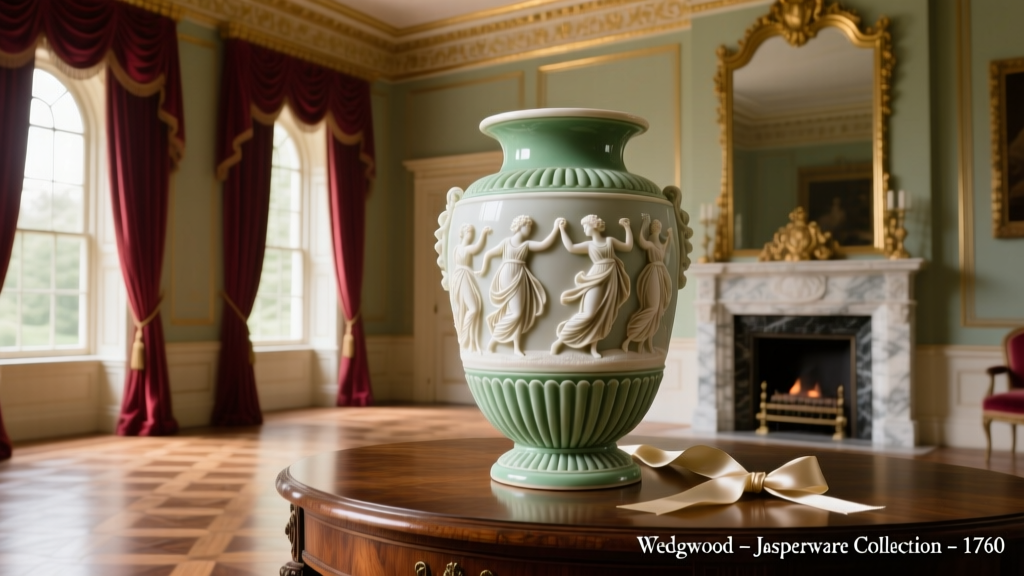
Wedgwood Vase-Spill in Jasper Dip Green: The Dancing Hour Figures with Fluted Profile — A Technical and Historical Appraisal

Frankart Bookends: The Antelope Jumping Design — History, Identification, and Restoration Insights
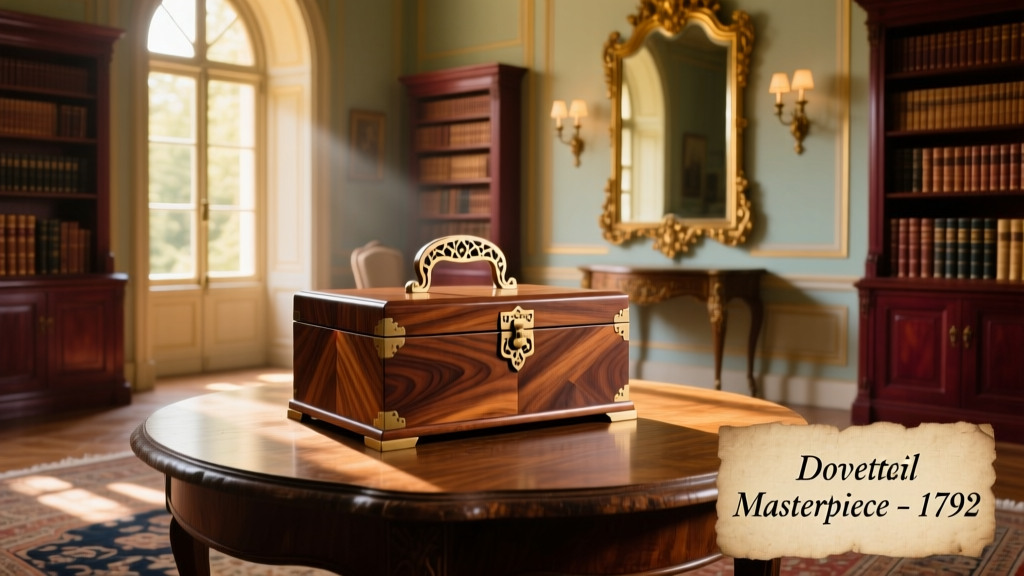
Knife-Dovetailed Walnut Storage Box with Cutout Handle: A Technical & Historical Analysis of the 10 × 13½-Inch Format

The Flapper Head Vase: Deco Elegance, Ceramic Craftsmanship, and the Story Behind the White & Blue Bonnet with Gold Trim
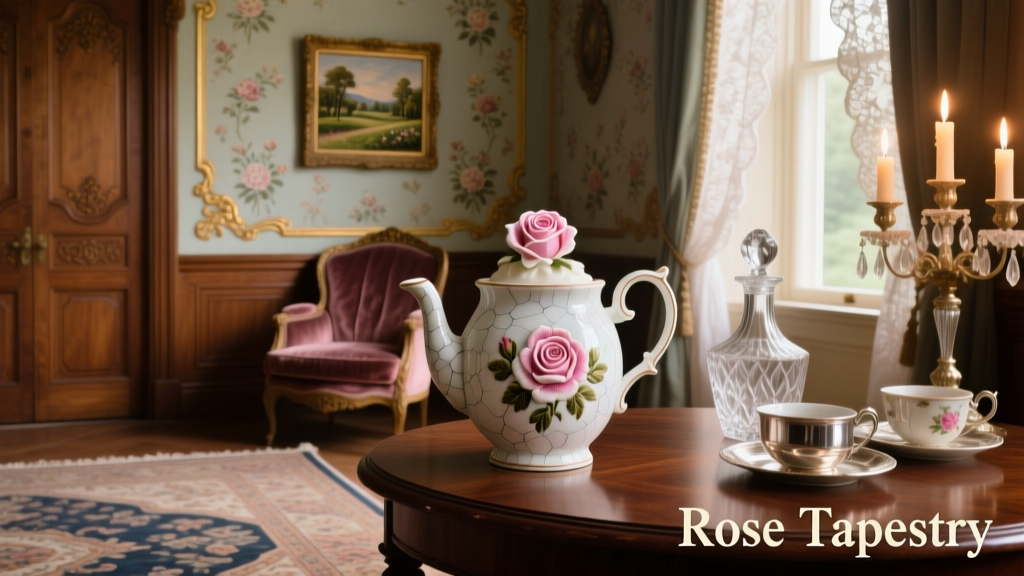
Rose Tapestry Sugar Creamer: Identifying, Valuing, and Preserving a Mid-Century Ceramic Treasure in Pink and White Roses
Buddy L Pressed Steel Toy Airplane: A Collector’s Guide to the 27-Inch Wingspan Model
Folk Art Church Wooden Zigzag Edge with Two Chimneys: A 6 × 4 Inch Painted American Vernacular Treasure

Webb Bottle Scene Flattened Teardrop Sapphire Blue Design with White Ferns — A Collector’s Guide to the 4-Inch Variant