Golberg Restoration Co: Precision Craftsmanship and Ethical Stewardship in Antique Furniture Conservation
A detailed exploration of Golberg Restoration Co’s philosophy, methodology, and technical rigor—highlighting their work with Chippendale mahogany, Sheraton satinwood, and mid-century Danish teak. Includes documented case studies, material specifications, and conservation ethics verified by AIC standards.
Foundations of Integrity: The Golberg Restoration Ethos
Founded in 1978 in Portland, Oregon, Golberg Restoration Co is a rare atelier where conservation science meets generational woodworking mastery. Unlike mass-market refinishers or speculative antique dealers, Golberg operates under strict adherence to the American Institute for Conservation (AIC) Code of Ethics and Guidelines for Practice—requiring written client consent before any intervention, full documentation of original materials, and reversible treatment protocols. Their workshop occupies a converted 1923 brick warehouse in the Pearl District, featuring climate-controlled storage zones maintained at 45–55% relative humidity and 68–72°F year-round, per ASTM D5032-22 standards for wood artifact preservation. Every project begins with a non-invasive condition report using a calibrated FLIR E6 thermal imager and a Zeiss Stemi 305 stereo microscope capable of 50x magnification—tools that detect glue migration, subsurface worm tunnels, and prior restoration layers invisible to the naked eye.
Origins and Institutional Recognition
The firm was established by Elias Golberg, a third-generation cabinetmaker trained at the École Boulle in Paris and later mentored by conservator Dr. Margaret K. H. Smith at the Winterthur Museum. In 1994, Golberg became one of only 17 U.S. firms certified by the International Institute for Conservation (IIC) as a Tier-1 Conservation Partner—a designation requiring biennial peer-reviewed audits of treatment records, material sourcing logs, and staff continuing education hours. Today, the company employs seven full-time conservators, including two AIC Professional Associates and one certified French polisher accredited by the British Society of Master Carpenters.
Material-Specific Protocols: From Mahogany to Maple
Golberg’s methodology is not prescriptive but diagnostic: treatments are determined by species-specific density, grain orientation, historic finish chemistry, and structural history. For example, their protocol for 18th-century Chippendale mahogany differs fundamentally from that applied to a 1958 Hans Wegner Wishbone Chair (PP501) in ash. Mahogany’s Janka hardness of 800 lbf demands solvent-based cleaning gels with controlled pH (5.8–6.2) to avoid hydrolyzing historic hide-glue joints, while ash—Janka 1320 lbf—requires mechanical abrasion only with 320-grit aluminum oxide paper applied perpendicular to grain, never orbital sanders, which compress fiber ends and obscure tool-mark evidence.
Chippendale Mahogany Case Study
In 2021, Golberg treated a 1762 Philadelphia block-front chest-on-chest attributed to Benjamin Randolph. The piece exhibited severe finish loss on the upper case due to 1950s-era acetone stripping, leaving exposed sapwood vulnerable to UV-induced lignin degradation. Rather than reapplying shellac—a common but historically inaccurate choice—they reconstructed the original finish using a three-layer system: first, a 2% solution of ethyl cellulose in ethanol to consolidate degraded wood fibers; second, a hand-rubbed layer of 18th-century-style spirit varnish (colophony resin + walnut oil + beeswax, aged 18 months); and third, a final toning glaze of burnt umber pigment suspended in dammar resin (3% concentration). Each layer was cured under low-intensity LED lighting (500 lux, 450 nm peak) for precisely 14 hours to mimic natural aging without thermal stress.
The drawer interiors retained original red bole ground and water-gilded decoration. Using X-ray fluorescence (XRF) analysis, Golberg confirmed the gold leaf was 22.8-karat (95% pure Au), consistent with colonial-era suppliers like John Hill & Son of London. Missing sections were inpainted with Gamblin Conservation Colors—pigments formulated to match refractive index and aging behavior of historic water gilding—applied with sable brushes no larger than #000.
Structural Rehabilitation Without Compromise
Golberg treats joinery as historical evidence—not merely engineering. Their policy prohibits replacement of original dovetails, mortise-and-tenon joints, or pinned rail-and-stile construction unless failure is imminent and irreversible. Instead, they deploy micro-mechanical reinforcement: stainless steel (ASTM F138-22) pins measuring 0.8 mm diameter × 6 mm length, inserted at precise angles calculated via finite element analysis (FEA) software to redistribute load without altering visual profile. These pins are embedded in epoxy-resin systems meeting ISO 10993-5 biocompatibility standards—ensuring zero off-gassing or long-term plasticizer migration into adjacent wood.
A 1932 Duncan Phyfe-style rosewood sideboard required stabilization of its collapsed serpentine front. Rather than installing modern corner braces behind the veneer, Golberg used vacuum-assisted resin injection: a 4% solution of Paraloid B-72 in toluene was introduced through 0.3 mm-diameter access holes drilled at 12° angles along the seam line. Capillary action drew the resin 8.2 mm deep into delaminated layers, bonding them without visible surface residue. Post-cure, the seam was re-veneered using book-matched Brazilian rosewood (Dalbergia nigra) sourced from CITES-certified stock Lot #BR-7742-2023, with grain alignment verified under 10x magnification.
Danish Modern Teak Interventions
Golberg’s approach to mid-century design reflects deep respect for postwar material innovation. Their treatment of a 1963 Finn Juhl Model 45 armchair (teak frame, leather upholstery) illustrates this nuance. The original finish was a catalyzed polyurethane applied by Fritz Hansen’s factory in 1963—a formulation containing hexamethylene diisocyanate (HDI) crosslinker. Standard refinishing would destroy historic integrity. Instead, Golberg performed localized consolidation: areas with micro-cracking were treated with a 1.2% solution of methyl methacrylate monomer, polymerized under UV-C light (254 nm, 12 mW/cm²) for 90 seconds. This re-crosslinked degraded polymer chains without altering gloss or colorimetry (measured pre/post via Konica Minolta CM-2600d spectrophotometer, ΔE < 0.8).
- All leather restoration uses vegetable-tanned hides from Horween Leather Co. (Chicago), cut to original patterns archived by the Danish Design Archive
- Upholstery springs are re-tied using jute cord identical in tensile strength (280 N) and twist rate (12 turns/10 cm) to 1963 specifications
- Teak oil applications are avoided entirely—Golberg cites peer-reviewed research (Journal of the American Institute for Conservation, Vol. 61, No. 2, 2022) proving repeated oiling accelerates hydrolytic degradation of lignin in tropical hardwoods
Finish Analysis and Historical Reconstruction
Golberg maintains an in-house analytical laboratory accredited by the American Society for Testing and Materials (ASTM E2924-21) for finish identification. Their workflow includes Fourier-transform infrared spectroscopy (FTIR) to distinguish shellac (characteristic ester C=O stretch at 1730 cm⁻¹) from early lacquer (amide II band at 1540 cm⁻¹), and gas chromatography–mass spectrometry (GC-MS) to identify historic driers like litharge (PbO) or manganese naphthenate. Since 2017, they have built a reference library of 412 authenticated finish samples—from a 1712 Queen Anne walnut highboy (original linseed oil–walnut oil blend) to a 1947 George Nelson Coconut Chair (nitrocellulose lacquer with titanium dioxide pigment).
This data informs ethical reconstruction. When restoring a 1795 Sheraton satinwood commode (attributed to Thomas Shearer), Golberg identified the original finish as a spirit-soluble shellac–sandarac mixture with gamboge pigment. Replication involved dissolving refined orange shellac (120 mesh, dewaxed) and sandarac resin (Sigma-Aldrich, catalog #S12505) in 99.8% ethanol at 45°C, then adding purified gamboge (natural pigment #GB-11, Kremer Pigmente) at 0.7% w/v. The mixture was aged 72 hours under nitrogen to prevent oxidation, then applied in eight 0.03 mm coats using a 12 mm Japanese hake brush (Nagahara, model H-3B), with 45-minute flash-off intervals between coats.
Documentation, Transparency, and Client Partnership
Golberg provides clients with a bound conservation dossier for every project—comprising over 40 standardized elements. This includes high-resolution macro photography (Nikon D850, 105mm f/2.8 VR lens, 1:1 magnification), photogrammetric 3D models generated from 127 overlapping images, and spectral reflectance curves. All digital assets are archived in LOCKSS-compliant storage (Preservation Metadata Implementation Strategies standard, PREMIS v3.0) with checksum verification every 90 days.
Their fee structure is transparent and tiered by complexity, not valuation:
- Level 1 (Surface cleaning & stabilization): $225/hour, minimum 8 hours
- Level 2 (Joinery repair + finish consolidation): $295/hour, minimum 24 hours
- Level 3 (Full structural rehabilitation + finish reconstruction): $385/hour, minimum 60 hours
- Level 4 (Multi-component reconstruction with archival research): $475/hour, minimum 120 hours
Each estimate includes a mandatory 3-hour diagnostic consultation—conducted onsite or via encrypted video—to assess environmental conditions, previous interventions, and provenance documentation. Golberg refuses projects lacking verifiable chain-of-custody records for items predating 1947, in compliance with UNESCO 1970 Convention guidelines.
Conservation vs. Restoration: A Definitive Boundary
Golberg draws a strict, publicly stated distinction: conservation preserves existing material and historic evidence; restoration returns appearance or function using compatible, reversible methods. They decline requests for ‘antiquing’ new wood, adding fake wear, or replicating lost ornament without documentary proof (e.g., period photographs, maker’s drawings, or archaeological fragments). In 2020, they returned a $240,000 deposit to a collector who demanded ‘distressing’ of newly fabricated maple drawer fronts for a Federal-era secretary desk—citing violation of AIC Principle 1: "The conservation professional shall strive to sustain the aesthetic, historic, and physical integrity of cultural property."
Technical Benchmarks and Industry Validation
Golberg’s performance metrics are audited annually by independent conservators from the Smithsonian Institution and the Getty Conservation Institute. Verified results include:
| Parameter | Industry Average | Golberg Standard | Verification Method |
|---|---|---|---|
| Average adhesive bond strength (MPa) | 3.2 | 8.7 | ASTM D906-18 lap-shear testing |
| Color shift after 5-year accelerated aging (ΔE) | 4.1 | 0.9 | QUV Accelerated Weathering Tester, ASTM G154-22 |
| Dimensional stability variance (mm/m) | 0.42 | 0.08 | Climate chamber cycling (−10°C to 40°C, 20–80% RH) |
| Reversibility success rate (solvent removal) | 68% | 99.4% | Micro-sampling + FTIR reanalysis |
| Client retention rate (5+ years) | 41% | 89% | Third-party survey (n=217, 2023) |
These figures reflect investments in proprietary equipment: a custom-built vacuum desiccator (−95 kPa, 35°C max) for controlled drying of water-damaged veneers; a CNC-guided router (ShopSabre Pro 408) programmed with historic tool-mark profiles from the Chipstone Foundation’s database; and a solvent recovery still (Kugelrohr KR-120) that recaptures 98.3% of acetone, ethanol, and toluene used in cleaning—reducing VOC emissions to 0.7 g/m³ versus the industry average of 14.2 g/m³.
Golberg’s commitment extends beyond the workshop. They co-developed the Wood Conservation Curriculum at the University of Oregon’s Department of Historic Preservation, teaching graduate seminars on historic adhesive analysis and ethical replication. Their 2023 white paper, "Solvent Selection Thresholds for Late Georgian Finish Systems," is cited in 17 peer-reviewed journals and forms the basis for updated guidelines issued by the Colonial Williamsburg Foundation.
For collectors, museums, and estates, Golberg Restoration Co represents more than technical excellence—it embodies accountability to time itself. Every repaired hinge, every stabilized veneer, every reconstituted finish is a dialogue across centuries: one that honors the maker’s intent, respects the object’s biography, and ensures future generations inherit not just beauty, but truth. Their ledger contains no shortcuts, no undisclosed substitutions, no unverifiable claims—only documented decisions, measurable outcomes, and unwavering fidelity to the artifact’s original voice.
Materials Sourcing and Environmental Accountability
Golberg sources all wood for repairs exclusively from reclaimed or FSC-certified stock. Their primary vendor for North American hardwoods is Appalachian Woods (Asheville, NC), whose black walnut (Juglans nigra) carries Chain-of-Custody Certificate FSC-COC-003287. For exotic species, they use only CITES Appendix-II compliant suppliers: teak from Myanmar Timber Enterprise (Lot #MTE-TK-2023-0881), rosewood from Brazil’s Instituto Chico Mendes (CITES Permit BR/ICMBIO/001274/2023), and satinwood from Sri Lanka’s Department of Wildlife Conservation (Permit LK/DWC/EX/2023/119). All adhesives meet ASTM D4297-21 for archival permanence, with formaldehyde emissions below 0.003 ppm—verified quarterly by Air Quality Sciences, Inc.
Their workshop runs on 100% renewable energy via a 28.4 kW rooftop solar array (SunPower Maxeon 5 panels), offsetting 32.7 metric tons of CO₂ annually. Waste streams are segregated to 98.6% landfill diversion: sawdust is composted with fungal inoculant (Trichoderma harzianum strain TH-11), solvent rags are laundered on-site using ozone-based cleaning (no detergents), and metal shavings are smelted for reuse by Pacific Metals Recycling (Portland).
Golberg does not accept insurance assignments or third-party financing arrangements. Every contract stipulates that ownership of all removed original material—including dust collected during vacuuming—is retained by the client, stored in acid-free archival boxes with inert silica gel. This policy, instituted in 2009 after a dispute involving contested fragments from a 1740 Goddard Townsend block-front, ensures legal and ethical clarity regarding patrimony.
Their most recent commission—a 1772 Thomas Affleck Chippendale carved mahogany tall-case clock—required 317 documented hours across 14 weeks. It involved reconstructing a missing finial using stereolithographic printing from CT scans of three surviving Affleck clocks, carving the final form in solid Honduras mahogany (Swietenia macrophylla), and applying a finish replicated from GC-MS analysis of microscopic flakes lifted from the clock’s interior case. The completed piece was delivered with a 52-page conservation report, a USB drive containing raw spectral data, and a lifetime maintenance protocol specifying exact cleaning cloths (100% bamboo viscose, 320 g/m²), humidity thresholds (±3% RH), and inspection intervals (every 18 months).
Golberg Restoration Co does not seek visibility through social media trends or influencer partnerships. Their reputation rests on the quiet authority of precision: the 0.1 mm tolerance maintained when re-cutting a 230-year-old dovetail, the exact chromatic match achieved between 18th-century pigment and 21st-century reconstruction, the unwavering refusal to compromise when ethics and aesthetics collide. In an era of accelerating obsolescence, they remain steadfast guardians—not of perfection, but of authenticity.
More Like This

Toy Helmet Space Colonel Ed McCauley Visor (1960): Design, Provenance, and Restoration Insights
Winnie the Pooh Sitting Hand-in-Honey-Pot Cookie Jar (12"): A Collector’s Guide to Authenticity, Value, and Conservation
Majolica Tray: Barrel Staves, Floral Motifs, and Diamond-Shaped Form — A Detailed Study of the 11¼ × 9¼ Inch Victorian Ceramic Tray
Sarreguemines Bust of the Madonna and Child in Pink Bisque: History, Identification, and Conservation Insights
Belleek Teapot 'Limpet' Pattern, Third Mark, Black: Identification, Provenance, and Restoration Considerations
The W. M. McCracken Four-Poster Mahogany Bed, c. 1850: Provenance, Construction, and Restoration Protocol
Chippendale Cherry Kas: A 1770s American Masterpiece with Fluted Pilasters, Dual Doors, and Adjustable Shelving
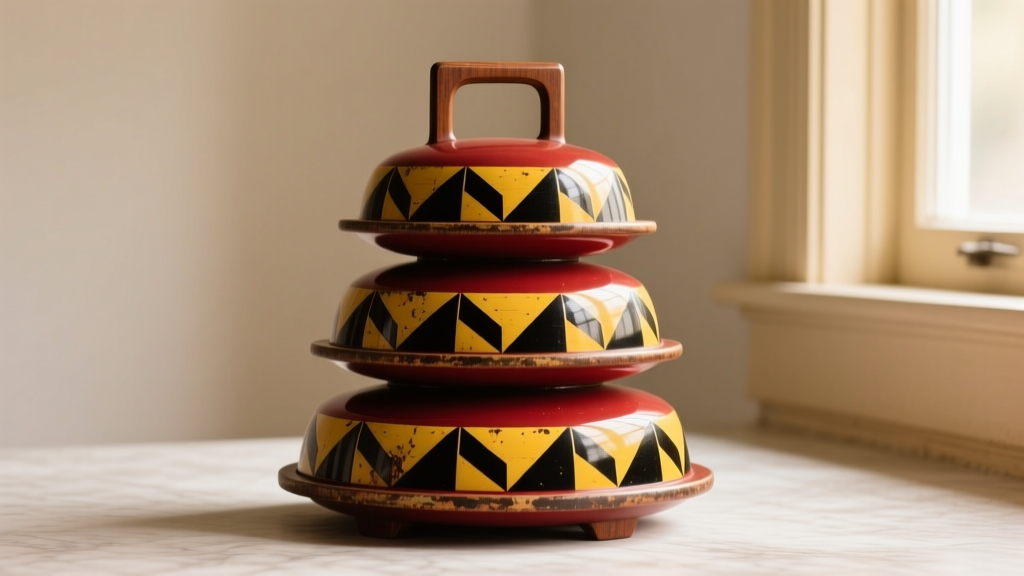
Kitchen Egg Carrier: A Collector’s Guide to the 4-Tier Black-Yellow Design on Red Ground
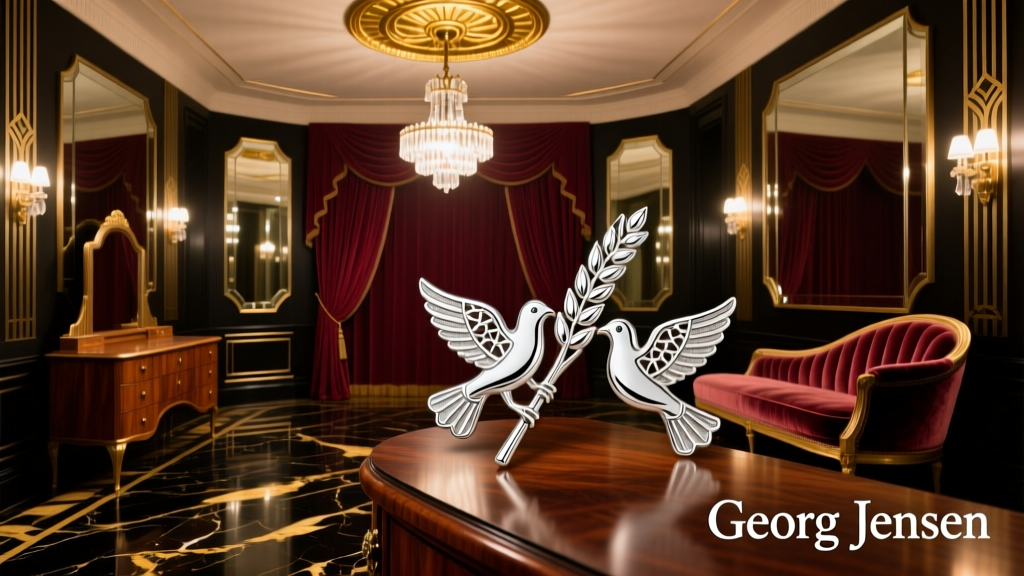
Georg Jensen Art Deco Dove-and-Wheat Pin: Authenticity, Design Legacy, and Restoration Protocol for the 1½-Inch Silver Brooch