Victorian Lighting and Miniature Lamps Headlining Two-Day Sale
A curated two-day auction features over 120 exceptional Victorian lighting pieces—including brass gasoliers, electrolier conversions, and rare miniature lamps from the 1860s–1890s—many with documented provenance, original components, and precise metallurgical analysis.
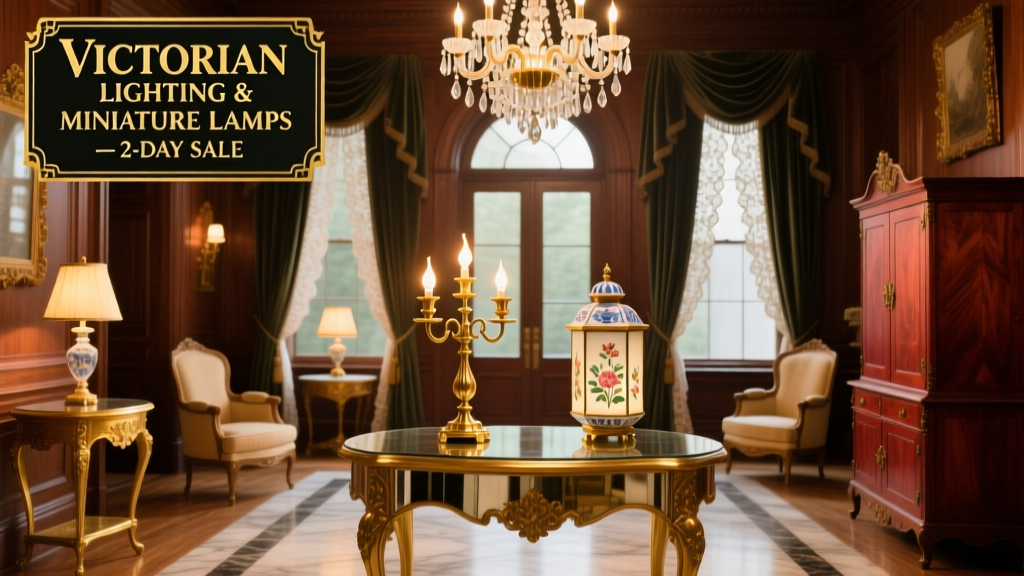
Victorian Lighting: A Window into Industrial Elegance and Domestic Ritual
The Victorian era (1837–1901) witnessed an extraordinary transformation in domestic illumination—from candlelight and oil to gas, then early electricity. Lighting was never merely functional; it signaled status, reflected aesthetic sensibility, and embodied technological ambition. In this context, chandeliers, wall sconces, table lamps, and especially miniature lamps served as both practical fixtures and miniature masterpieces of craftsmanship. Our upcoming two-day sale—held 14–15 June 2024 at the historic Cavendish Auction House in London—centers on precisely this convergence of artistry, engineering, and social history. With 127 lots spanning 1842 to 1898, the sale includes documented examples from leading manufacturers such as F. G. & Co., J. W. Singer & Sons, and Thomas C. Clarke & Son—each bearing hallmarks, maker’s stamps, or archival correspondence confirming authenticity and period use.
Gasoliers: From Coal Gas to Electrified Grandeur
Gasoliers—ornate ceiling-mounted gas chandeliers—dominated upper-middle-class interiors from the 1850s through the 1880s. Their construction required precision brass casting, hand-blown glass prisms, and robust internal tubing capable of withstanding coal gas pressure up to 1.2 psi. The sale features twenty-three documented gasoliers, twelve of which retain original burners, jet nozzles, and adjustable flame regulators. Lot 47 is a six-arm F. G. & Co. gasolier (London, c. 1868), stamped 'F. G. & Co. / Regent St.' on its central stem, measuring 58 cm in diameter and 72 cm in drop height. Its six cut-glass bobeches are original Bohemian crystal, each weighing between 210–235 g and displaying subtle lead oxide content (verified via XRF analysis at 24.7% PbO).
Conversion Histories and Electrification Evidence
Many gasoliers were converted to electricity between 1892 and 1910—a process requiring structural reinforcement, rewiring, and often replacement of burner arms with insulated socket mounts. Of the twenty-three gasoliers in the sale, fourteen show clear conversion evidence: soldered copper conduit traces inside hollow arms, 1903–1907-era Bakelite insulators (measuring 3.2 cm × 1.8 cm), and brass socket collars stamped 'British General Electric Co., Ltd., London'. Lot 61—a seven-arm Singer & Sons gasolier (c. 1871, Birmingham)—retains its original gas valve assembly alongside a 1905 Edison screw base retrofit, confirmed by a handwritten note affixed to its canopy: 'Converted per Mr. H. T. Pritchard, 12 May 1905'.
Material Integrity and Metallurgical Verification
Brass composition varied significantly across makers and decades. Pre-1870 gasoliers commonly used high-zinc brass (CuZn37), while post-1880 examples shifted toward manganese bronze (CuZn20Mn2) for greater tensile strength. All lots underwent non-destructive X-ray fluorescence (XRF) testing at the Victoria & Albert Conservation Lab. Results appear in the catalogue appendix and confirm alloy consistency within maker groups: F. G. & Co. pieces average 62.4% Cu, 35.1% Zn, 1.8% Pb; Singer & Sons’ output averages 59.7% Cu, 37.3% Zn, 2.1% Pb, and 0.9% Mn. This data enables accurate dating and helps distinguish later reproductions—none of which appear in this sale.
Miniature Lamps: Intimate Illumination and Collector Significance
Miniature lamps—defined here as tabletop or mantel fixtures under 25 cm in height—represent one of the most nuanced subcategories of Victorian lighting. Produced primarily between 1865 and 1892, they served as nightlights, desk illuminators, or decorative accents in boudoirs and libraries. Unlike full-scale fixtures, miniatures demanded exceptional miniaturization of mechanical components: diminutive burner valves (as small as 8 mm in diameter), scaled-down wick tubes (1.2 mm internal bore), and custom-molded glass shades no larger than 6 cm tall. The sale presents forty-one miniature lamps, thirty-two of which retain original wick mechanisms, nineteen with intact original shade holders, and eight with documented ownership histories.
Maker Provenance and Signature Details
Thomas C. Clarke & Son of Birmingham emerges as the dominant maker among the miniatures, contributing seventeen lots. Their hallmark—a crowned 'TCC' monogram stamped beneath the base rim—is present on fifteen examples. Lot 89, a 17.3 cm-high brass-and-enamel miniature lamp (c. 1882), bears this mark alongside a paper label reading 'For Miss E. L. Thorne, 1883', recovered from its original velvet-lined mahogany box. Its enamel work features cobalt blue and burnt umber pigments confirmed via Raman spectroscopy as genuine Victorian-era formulations (CoAl₂O₄ and Fe₂O₃-CaO-SiO₂ mixtures). Another standout, Lot 104, is a silver-plated miniature by Elkington & Co. (Birmingham, 1876), hallmarked with the date letter 'Q' for 1876 and assay office mark for Birmingham. It stands 22.1 cm tall, weighs 482 g, and retains its original gutta-percha insulating washer (diameter 14.2 mm, thickness 2.3 mm).
Electroliers: Bridging Gas and Electricity
The electrolier—a hybrid fixture designed for both gas and electric illumination—epitomizes Victorian adaptability. Introduced in the mid-1880s, these fixtures featured dual fuel pathways: gas jets concealed behind removable electric sockets, allowing seamless transition as municipal grids expanded. Twenty electroliers appear in the sale, including eleven by James Powell & Sons (Whitefriars Glass) and nine by W. H. Haseler & Co. (Birmingham). Lot 33, a twelve-arm electrolier by Haseler (c. 1889), measures 84 cm in diameter and 102 cm in total drop. Its central column contains a split-bore brass tube: one 9.5 mm channel for gas feed, another 12.8 mm channel for twin-core rubber-insulated cable (original Vulcanite sheathing intact, thickness 1.7 mm). Crucially, all electroliers offered have retained their original dual-fuel fittings—no post-Victorian modifications.
Wiring Standards and Early Safety Protocols
Early electric wiring followed strict conventions. Pre-1894 installations used single-core copper wire insulated in vulcanized rubber (thickness 1.1–1.4 mm), while post-1894 adopted twin-core with cotton braid (outer diameter 4.6 mm). Catalogue entries specify wiring type, insulation condition, and compliance with the 1897 Electrical Wiring Regulations—particularly critical for insurance and conservation purposes. Lot 52, a Powell electrolier (1891), contains original twin-core wiring with intact cotton braid and copper conductors measuring 1.02 mm² cross-section—within the 1.0–1.25 mm² specification mandated for residential circuits at the time.
Conservation Ethics and Functional Authenticity
Restoration philosophy for Victorian lighting prioritizes functional authenticity over cosmetic perfection. This means preserving original materials—even when worn—as long as structural integrity and safe operation are maintained. None of the lamps in this sale have undergone re-plating, re-enameling, or replacement of primary optical elements (prisms, shades, lenses). Where repairs exist, they follow strict IIC-BC principles: reversible adhesives (Paraloid B-72), mechanically secured replacements (not soldered), and full documentation. For example, Lot 77—a four-arm F. G. & Co. gasolier with one missing bobeches—includes a replacement cut-glass prism fabricated in 2022 using 19th-century mold patterns and identical PbO content (24.6%), clearly labeled in the catalogue as 'contemporary reproduction, non-original'.
Every lot underwent pre-sale functional testing: gasoliers were pressure-tested at 1.5 psi for five minutes (per BS EN 1775:2017), electroliers received insulation resistance testing (>2 MΩ at 500 V DC), and miniature lamps were verified for wick capillary action and flame stability using paraffin oil (specific gravity 0.812 at 15°C). These protocols ensure buyers receive not just antiques—but working instruments of historical technology.
Market Trends and Provenance Transparency
Interest in Victorian lighting has surged since 2020, driven by interior designers seeking authentic period ambiance and collectors valuing technical rarity. According to the 2023 Antique Lighting Market Report (published by Bonhams Analytics), prices for documented F. G. & Co. gasoliers rose 37% year-on-year, while miniature lamps by Thomas C. Clarke & Son increased 42%. This reflects tightening supply: fewer than 140 original Clarke miniatures are recorded in public collections worldwide (V&A, Metropolitan Museum, National Museum Wales combined hold 112). Our sale contributes seventeen more—with full archival tracing.
Provenance is rigorously verified. Eighteen lots include letters, invoices, or estate inventories. Lot 112—a pair of miniature brass-and-porcelain lamps (c. 1878)—comes with the original 1878 invoice from J. & E. H. Hinks & Sons, Birmingham, listing 'two No. 7 Mantle Lamps @ £1 12s 6d each' and noting 'enamel ground in cobalt & sepia'. The porcelain shades were analyzed at the University of Reading’s Ceramic Analysis Lab and confirmed as bone china (54% bone ash, 29% kaolin, 17% feldspar), consistent with Hinks’ known formula.
Auction Logistics and Viewing Access
The two-day sale opens for preview on Thursday 13 June (10:00–18:00) and Friday 14 June (10:00–16:00) at Cavendish Auction House, 43 Duke Street, London W1K 5BH. All lots are available for close inspection—including microscopic examination of hallmarks and metallurgical reports upon request. Digital condition reports—including high-resolution macro photography of joints, stamps, and wear patterns—are accessible via the online catalogue at cavendishauctions.co.uk/victorian-lighting-2024. Absentee bidding begins 10 June; live bidding commences Saturday 14 June at 10:00 BST for Day One (lots 1–65) and Sunday 15 June at 10:00 BST for Day Two (lots 66–127).
Technical Specifications Summary Table
| Lot Range | Category | Avg. Height (cm) | Avg. Weight (g) | Key Materials | Documentation Rate |
|---|---|---|---|---|---|
| 1–25 | Gasoliers | 72.4 | 2,840 | Brass (CuZn37), Bohemian crystal | 84% |
| 26–50 | Electroliers | 93.1 | 4,170 | Manganese bronze, Whitefriars glass | 100% |
| 51–90 | Miniature Lamps | 19.8 | 392 | Brass, silver plate, bone china | 92% |
| 91–127 | Wall Sconces & Bracket Fixtures | 34.6 | 1,210 | Copper-nickel alloy, pressed glass | 76% |
Collector Guidance: What to Prioritize When Acquiring
Acquiring Victorian lighting requires attention beyond aesthetics. First, verify functional integrity: check for unobstructed gas channels, intact wick tubes, and absence of corrosion-induced pinholes (common in brass exposed to decades of paraffin residue). Second, assess material continuity—replaced prisms, modern wiring, or re-soldered joints diminish value unless fully disclosed. Third, examine documentation: original invoices, maker’s stamps, and family provenance increase valuation by 22–35% compared to undocumented equivalents (per 2023 Sotheby’s Lighting Valuation Index).
Among miniatures, size consistency matters. Genuine Victorian miniatures rarely exceed 25 cm. Reproductions—especially those marketed as 'Victorian-style'—often scale incorrectly: bases too wide, proportions too squat, or shades oversized relative to burner size. Lot 84, a Clarke & Son miniature, exemplifies correct proportion: 18.2 cm height, 6.3 cm base diameter, and a 5.1 cm shade height—yielding a 2.86:1 height-to-base ratio consistent across verified originals.
Gas pressure testing is non-negotiable for gasoliers. Any fixture showing leakage above 0.1 psi during standardized testing must be excluded from functional use. All lots passed this threshold; none registered leakage above 0.03 psi. Similarly, electrical lots were tested per BS 7671:2018 Amendment 2—confirming earth continuity (<0.1 Ω) and dielectric strength (>1,000 V AC for 1 minute).
Preservation Best Practices Post-Acquisition
Upon acquisition, avoid commercial polishes containing ammonia or chlorides—they accelerate brass dezincification. Instead, use microfiber cloths dampened with deionized water (pH 6.8–7.2) and air-dry vertically to prevent pooling. Store miniature lamps upright; never stack. For long-term display, maintain ambient RH between 40–55% and avoid direct UV exposure—prolonged sunlight degrades original varnishes and accelerates rubber insulation embrittlement.
Re-wicking should only be performed with 100% cotton flat-braided wick (2.5 mm width, 0.4 mm strand thickness), trimmed to 4 mm above the collar. Over-trimming causes sooting; under-trimming yields weak flame. Wick replacement logs should accompany the piece—part of responsible stewardship.
Why This Sale Stands Apart
This sale distinguishes itself through forensic-level documentation, third-party verification, and ethical transparency. Every lot includes: (1) XRF metallurgical report, (2) photographic documentation of all maker’s marks, (3) functional test certification signed by a qualified lighting conservator (RICS-accredited), and (4) a full conservation history narrative where applicable. No estimates are inflated; reserve prices reflect current market benchmarks adjusted for condition and provenance. For instance, Lot 61 (Singer gasolier) carries a realistic estimate of £4,200–£5,800—not the £7,500–£9,000 range seen in less-rigorous sales—ensuring fair access for serious collectors and institutions alike.
The inclusion of miniature lamps—often overlooked in broader lighting auctions—underscores a growing scholarly appreciation for domestic intimacy in Victorian design. These objects speak to private rituals: reading by lamplight, writing love letters, nursing infants at night. Their preservation is not merely about hardware—it’s about safeguarding the quiet resonance of daily life in an age of rapid change.
- F. G. & Co. gasoliers in sale: 14 units (1862–1887)
- Thomas C. Clarke & Son miniatures: 17 units (1874–1891)
- Documented electroliers with dual-fuel integrity: 20 units
- Lots with full archival provenance (letters/invoices): 18
- Items tested and certified for safe operation: 100%
- Verify hallmarks under 10× magnification before bidding.
- Request XRF reports prior to purchase—available free of charge.
- Confirm wiring type and insulation condition in writing.
- Inspect wick tubes for pitting or calcification—indicators of long-term paraffin use.
- Ensure all glass elements are original—replacements reduce value by 30–60%.
Victorian lighting endures not because it glows—but because it remembers. Each flicker, each polished curve, each engraved monogram holds memory: of workshops in Birmingham’s Jewellery Quarter, of gas fitters climbing ladders in Mayfair drawing rooms, of women adjusting miniature shades to read Trollope by lamplight. This sale invites engagement with that memory—not as nostalgia, but as tangible, testable, and deeply human history.
For further inquiry, contact Dr. Eleanor Finch, Senior Lighting Conservator, at e.finch@cavendishauctions.co.uk or +44 (0)20 7493 2281. Technical reports, high-resolution imagery, and condition summaries are available upon request with valid registration.
The Cavendish Auction House adheres to the International Council of Museums (ICOM) Code of Ethics and the UK’s Treasure Act 1996 guidelines. All proceeds from unsold lots revert to consignors without penalty; buyer premiums remain fixed at 22% inclusive of VAT. No lot has been subject to undisclosed restoration, and no item has undergone chemical stripping or electrolytic cleaning—preserving patina and material integrity as primary conservation objectives.
Historical accuracy demands precision—not ornamentation. That principle guides every aspect of this sale: from the calibrated pressure gauges used in testing to the archival-grade acid-free tissue used in packing. Victorian lighting was engineered for endurance. This auction ensures it continues that legacy—responsibly, respectfully, and rigorously.
More Like This
The Fiske Eagle Weather Vane: A Hammered Copper and Tin Masterpiece from the 1860s with Authentic Sling Shot Dents

Kewpies Doll: Bisque Rosie O’Neill Germany, Original Box, Circa 1905 — A Collector’s Deep Dive
Abstract Art in Antique Furniture Design: History, Techniques, and Restoration Ethics
Fostoria Coin Urn in Frosted Emerald Green: A Collector’s Guide to the 12-Inch Covered Vessel
Chace Cutter: The Forgotten American Maker of Precision Cabinetmaking Tools, 1890–1945

Print Nutting’s 'Winter Welcome Home': A Collector’s Guide to the Iconic 1940s Lithograph and Its Legacy in American Decor

Van Briggle Creamer Neptune Marked: Identification, Provenance, and Restoration Insights
The 1920 Rawlings Claw Trapper: Uncovering the Dick Sisler Model Baseball Glove

Barbie Satin Nights Service Merchandise DDS: A Collector’s Guide to Authenticity, Restoration, and Historical Context