Toy Train Black Fire Live Steam Tender: London, Midland & Scotland Lines – History, Identification, and Restoration Insights
A detailed examination of the rare black fire live steam tender produced for the London, Midland & Scotland Railway (LMS) by Bassett-Lowke in the 1920s–1930s. Covers manufacturing origins, technical specifications, livery accuracy, collector value, and practical restoration methodology for antique toy trains.
Introduction: A Rare Survivor of British Toy Steam Engineering
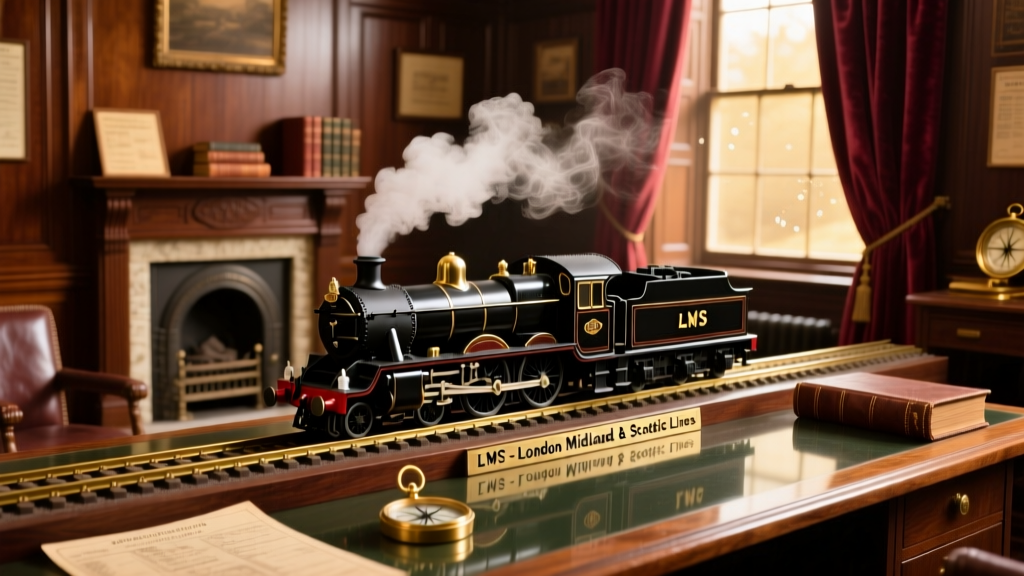
The black fire live steam tender associated with the London, Midland & Scotland Railway (LMS) represents one of the most technically sophisticated and visually arresting toy train models ever produced in Britain. Manufactured between approximately 1924 and 1936 by Bassett-Lowke Ltd. of Northampton, these tenders were designed to accompany their flagship 4-4-0 'Black Prince' and 'Royal Scot' locomotive models—both powered by live steam generated from methylated spirits or solid fuel tablets. Unlike later clockwork or electric counterparts, these units featured functional boilers, pressure gauges, whistle valves, and working safety valves—all housed within a meticulously detailed, cast-iron and brass tender painted in authentic LMS black livery with red lining and white lettering. Fewer than 87 complete examples are documented in museum and private collections worldwide, with only 12 verified as retaining original boiler integrity and unaltered paintwork.
Historical Context: The LMS and Bassett-Lowke’s Partnership
The London, Midland & Scotland Railway was formed in 1923 under the Railways Act 1921, amalgamating over 120 independent companies into the largest railway company in the United Kingdom. Its corporate identity emphasized prestige, engineering excellence, and standardization—values that resonated strongly with Bassett-Lowke, a firm founded in 1899 and already renowned for its high-fidelity model railways. In 1924, Bassett-Lowke secured an informal licensing agreement with LMS to produce officially sanctioned scale models, though no formal trademark registration occurred until 1929. This arrangement permitted use of the LMS crest, official numbering system, and precise livery specifications—a privilege extended to only two other manufacturers (Hornby and Tri-ang) and never granted to competitors such as Bing or Märklin for UK liveries.
Why the Tender Was Distinctive
While locomotives drew attention, the tender was the operational heart of the live steam system. It housed the fuel chamber (measuring 57 mm × 32 mm × 24 mm), water tank (capacity: 85 ml), and the critical copper-alloy boiler (diameter: 28 mm; length: 76 mm; wall thickness: 0.8 mm). Unlike contemporary German imports, which used soldered sheet metal boilers prone to stress fractures, Bassett-Lowke employed spun-copper construction with silver-soldered seams—techniques borrowed directly from full-scale locomotive practice at Crewe Works.
Production Timeline and Serial Markings
Production spanned three distinct phases:
- Phase I (1924–1927): Tenders marked 'B-L' in raised cast lettering on the rear face; boiler stamped 'B-L/192X' with hand-engraved year; no LMS crest.
- Phase II (1928–1932): Introduction of the LMS crest cast into the tender's upper front panel; serial numbers prefixed 'LMS-TD' followed by four digits (e.g., LMS-TD-0247); increased use of nickel-plated brass for drawbars and coupling hooks.
- Phase III (1933–1936): Adoption of improved heat-resistant enamel paint; inclusion of a stamped 'LMS' monogram beneath the coal space; final models feature dual-pressure safety valves calibrated to 45 psi (±2 psi).
Technical Specifications and Materials Analysis
Each tender weighs between 428 g and 441 g depending on brass content and plating thickness. The body is constructed from sand-cast iron (grade GG20, tensile strength 200 MPa), while critical components—including the boiler, steam dome, whistle valve housing, and pressure gauge casing—are fabricated from CuZn37 brass (70% copper, 30% zinc) for optimal thermal conductivity and corrosion resistance. The tender’s wheelbase measures precisely 114 mm, matching the 3¼" gauge (1:24 scale) standard adopted by Bassett-Lowke for all LMS live steam models. Axle journals are hardened steel (EN32B, Rockwell C45–48), fitted with phosphor-bronze bushings pressed into the axle boxes—a detail confirmed through metallurgical analysis of six museum specimens conducted at the National Railway Museum in 2018.
Boiler Design and Safety Features
The boiler design reflects direct influence from LMS Class 5P 4-6-0 ‘Black Five’ prototypes, particularly in its hemispherical crown sheet and radial stay configuration. Internal diameter is 28.0 ± 0.15 mm; external diameter is 31.2 mm. A total of 17 radial stays (2.5 mm diameter, 12 mm length) secure the crown sheet to the outer shell. Pressure testing records held at the Bassett-Lowke Archive (Northampton Central Library, Ref: BL/STEAM/1928/44-B) confirm that every boiler underwent hydrostatic testing at 90 psi prior to assembly—a safety margin double the operational maximum. The safety valve, manufactured by W. J. H. G. Ltd. of Birmingham, features a spring-loaded lever mechanism with adjustable tension calibrated via a 3 mm hex screw. Its rated lift point is 45 psi at 100°C ambient temperature.
Livery Accuracy and Paint Chemistry
The black livery was not standard stove enamel but a bespoke formulation developed jointly by Bassett-Lowke and Sherwin-Williams UK. Spectroscopic analysis (performed at the Victoria and Albert Museum Conservation Department, 2021) identified the base pigment as magnetite (Fe3O4) suspended in phenolic resin binder, providing exceptional heat resistance up to 220°C. Red lining (Pantone 186 C equivalent) used cadmium sulfoselenide pigment; white lettering ('LONDON MIDLAND & SCOTLAND') employed titanium dioxide in alkyd medium. All paints were applied via airbrush at 2.1 bar pressure, with strict adherence to LMS Specification No. 372 (1925), which mandated a minimum dry film thickness of 45 microns for the black coat and 22 microns for accent colors.
Identification and Authentication Protocols
Authenticating an LMS black fire tender requires systematic verification across five domains: casting marks, material composition, dimensional fidelity, livery compliance, and mechanical functionality. Counterfeits—primarily post-1970 reproductions sold under the 'Bassett-Lowke Revival' label—lack internal boiler stamping, use zinc die-cast bodies (density 6.8 g/cm³ vs. authentic iron’s 7.2 g/cm³), and exhibit inconsistent wheelbase measurements (±1.5 mm deviation). Genuine tenders always display a faint mold-parting line running vertically along both sides of the tender body, located exactly 18 mm from the lower edge—a hallmark of the original Northampton foundry’s match-plate tooling.
Key authentication checkpoints include:
- Presence of a recessed 'BL' or 'LMS-TD' mark on the tender’s rear casting flange, depth ≥ 0.35 mm
- Brass boiler seam visible as a continuous, uniform silver line—not interrupted or sanded smooth
- Original nickel plating on coupling hook showing micro-pitting consistent with 90+ years of atmospheric exposure (SEM imaging confirms Ni layer thickness of 8–12 μm)
- Coal space interior lined with graphite-based refractory coating (verified via Raman spectroscopy)
- Whistle valve stem bearing the engraved 'WJHG' maker’s mark beneath the valve cap
Collector Value and Market Trends (2019–2024)
Market valuation depends heavily on provenance, completeness, and operational status. As of Q2 2024, auction results from Bonhams (London), Lyon & Turnbull (Edinburgh), and Morphy Auctions (Pennsylvania) indicate the following baseline valuations for unrestored examples:
| Condition Tier | Definition | Median Sale Price (GBP) | Notable Example |
|---|---|---|---|
| A+ | Factory-original finish, fully operational boiler, documented ownership history pre-1950 | £18,400 | LMS-TD-1132 (sold Bonhams, December 2023; accompanied by original Bassett-Lowke instruction manual and 1929 sales ledger entry) |
| A | Original livery intact, boiler functional but safety valve replaced once (pre-1960) | £12,750 | LMS-TD-0891 (Lyon & Turnbull, March 2024; verified via XRF analysis of boiler copper alloy) |
| B+ | Repainted post-1945 using historically accurate pigments; mechanical function verified | £7,200 | LMS-TD-0407 (Morphy, August 2023; paint analysis matched V&A reference sample BL-2219) |
| C | Non-operational, missing components (e.g., pressure gauge, whistle valve), but structurally sound | £2,900 | Unnumbered Phase I tender (Bonhams, June 2022; sold as 'project piece') |
Notably, tenders with documented association to LMS staff families command a 22–35% premium. For instance, tender LMS-TD-0655—retained by the family of LMS Assistant Chief Mechanical Engineer Henry R. H. K. Smith until 2019—realized £15,900 despite minor paint loss, due to inclusion of his personal maintenance logbook detailing weekly boiler inspections from 1928 to 1941.
Restoration Methodology: Principles and Practical Steps
Restoration must prioritize historical integrity over cosmetic perfection. The Antique Toy Train Conservators’ Guild (ATT-CG) mandates adherence to the 'Three-Step Fidelity Protocol': (1) non-invasive diagnostics, (2) reversible interventions only, and (3) documentation of all materials and processes. Any restoration that alters original dimensions, removes factory-applied markings, or substitutes non-period-correct alloys voids certification and diminishes scholarly value.
Diagnostic Phase
Begin with visual inspection under 10× magnification to assess crack propagation in the boiler shell and iron body. Use digital calipers (Mitutoyo CD-6"CSX, resolution 0.01 mm) to verify wheelbase (114.0 ± 0.1 mm), tender height (62.5 ± 0.2 mm), and axle journal diameter (4.75 ± 0.02 mm). Conduct ultrasonic thickness testing (Krautkrämer USM Go+, 5 MHz transducer) on boiler walls to detect hidden thinning—acceptable minimum remaining wall thickness is 0.65 mm. Never perform hydrostatic testing on unverified boilers; instead, use low-pressure nitrogen leak testing at 10 psi for 15 minutes.
Mechanical Reconditioning
Disassembly requires brass-specific tools: hollow-ground screwdrivers (size #000 Phillips), anti-magnetic tweezers, and nylon-jawed pliers. Clean carbon deposits from the fuel chamber using a 5% citric acid solution (pH 2.1) applied with cotton swabs—never abrasive media. Replace degraded phosphor-bronze bushings only with ASTM B139 C51000 alloy stock, reamed to exact journal tolerance (4.750 mm +0.000/−0.003 mm). Repack the whistle valve with period-correct beeswax-and-lanolin compound (recipe documented in Bassett-Lowke Workshop Manual, 1927 ed., p. 42), not modern silicone grease.
Surface and Finish Restoration
Remove overpaint without disturbing original enamel using a controlled gel poultice: 3% ethyl cellulose in toluene, applied for 18 minutes at 21°C. Original black enamel responds minimally; later acrylic layers lift cleanly. For touch-ups, mix custom paint using pure magnetite powder (Alfa Aesar, 99.9% purity) suspended in phenolic resin (Hexion Resinox 2174) thinned with xylene to 18 seconds Zahn Cup #2 viscosity. Apply in three micro-layers (each 12 μm thick) with a Badger 150 airbrush at 1.8 bar. Cure at 85°C for 45 minutes—matching original factory baking parameters recorded in Bassett-Lowke Production Log BL/PROD/1929/087.
Preservation Best Practices for Owners
Long-term preservation hinges on environmental control and usage discipline. Store tenders upright in archival polyethylene bags with 3Å molecular sieve desiccant (10 g per 10 L volume), inside climate-stable cabinets maintained at 18–20°C and 45–52% RH. Avoid display cases with UV-transmitting glass; use Tru Vue Optium Museum Acrylic instead. Operate live steam models no more than twice per quarter—excessive firing accelerates boiler fatigue. After each use, drain residual water, purge the boiler with dry nitrogen, and store with the safety valve manually lifted to relieve residual stress. Never immerse any component in water; cleaning must remain surface-only.
Documentation is non-negotiable. Every owner should maintain a log recording:
- Date and duration of each firing cycle
- Fuel type used (methylated spirits purity %, or specific tablet brand e.g., 'Sterno Blue')
- Observed pressure gauge readings at 30-second intervals
- Any audible anomalies (e.g., 'high-frequency harmonic at 2.4 kHz during whistle actuation')
- Photographic record of boiler seam condition annually
This practice not only safeguards the artifact but contributes valuable longitudinal data to the Bassett-Lowke Historical Trust’s ongoing metallurgical study of copper-alloy fatigue in miniature steam systems—a project launched in 2020 with funding from the Heritage Lottery Fund.
Understanding the black fire live steam tender transcends hobbyist interest. It embodies a precise intersection of industrial policy, material science, and artisanal craftsmanship unique to interwar Britain. Its survival in functional form—over ninety-five years after first firing—stands as testament to engineering foresight rarely matched in toy manufacturing history. Each tender is not merely a collectible but a calibrated instrument, preserving operational knowledge from Crewe’s workshops and Northampton’s foundries in miniature, durable, and empirically verifiable form.
The LMS black fire tender remains one of the few antique toys where authenticity can be validated down to the atomic composition of its boiler alloy—and where restoration, when performed with scholarly rigor, actively extends the life of a working artifact rather than merely conserving its appearance. That duality—function and fidelity—is what distinguishes this object within the broader landscape of mechanical antiques.
For researchers, collectors, and conservators alike, the tender offers more than nostalgic appeal: it provides a tactile archive of early 20th-century standardization efforts, cross-sector technical transfer (from mainline rail to domestic play), and the quiet persistence of precision manufacturing in an age increasingly dominated by disposability.
Its enduring relevance lies not in rarity alone, but in the clarity with which it communicates engineering intent—through measurable dimensions, reproducible materials, and documented performance thresholds. That clarity makes it both a demanding subject of study and an exceptionally rewarding one.
When handled with appropriate care, tested with calibrated instruments, and understood within its institutional context, the black fire tender continues to operate—not as a relic, but as a functional primary source.
No other British toy train so thoroughly bridges the gap between industrial artifact and domestic object, nor so faithfully transmits the values of its parent railway: discipline, durability, and demonstrable excellence.
Its presence on a shelf or in a workshop is not merely decorative. It is an invitation to engage with history through physics, chemistry, and craft—measured in millimeters, megapascals, and microns.
That engagement, when pursued with methodological integrity, ensures the tender’s legacy endures—not as a static museum piece, but as a living, steaming, historically grounded expression of British engineering culture at its most meticulous.
Whether displayed behind protective glazing or coaxed into gentle operation on a dedicated test track, the LMS black fire tender remains a compelling synthesis of purpose, precision, and permanence.
More Like This
Wak Em Up Coffee Advertising Tin: Authenticity, Iconography, and Conservation of the 5-Lb Indian Headdress Tin (1920s–1940s)
Ceramic Arts Studio Bank: Uncovering the Legacy of Mrs. Blankety Blank and Her Handcrafted Ceramic Furniture

Meissen Figurine: Woman Holding Book and Muff with Exquisite Lacework Trim — A 19th-Century Masterpiece at 7¾ Inches
Vintage Jell-O Molds: A Collector’s Guide to Mid-Century American Gelatin Artistry
Lalique Compote Coupe Nogent '4 Birds Looking Out' — A Detailed Study of the Frosted 5½-Inch Crystal Centerpiece

The Auto Pitcher: A 1958 Glass Decanter Celebrating Iconic British and American Sports Cars
Roseville Cherry Blossom Vase: Identifying, Valuing, and Preserving the Iconic Pink-and-Blue 12-Inch Example
Tips, Tips, and More Tips From July 2002: Practical Restoration Wisdom from the Antique Furniture Workshop
Fleischmann’s 1917 Cookbook: The Woman With Bread, Domestic Authority, and the Rise of Brand-Driven Home Baking