Toy Tank Soldier Bing: A Collector’s Guide to German Tinplate Military Toys, 1930–1955
A detailed historical and technical examination of Bing’s iconic Toy Tank Soldier series — including production timelines, mechanical specifications, rare variants, restoration challenges, and market valuation data for collectors and conservators.
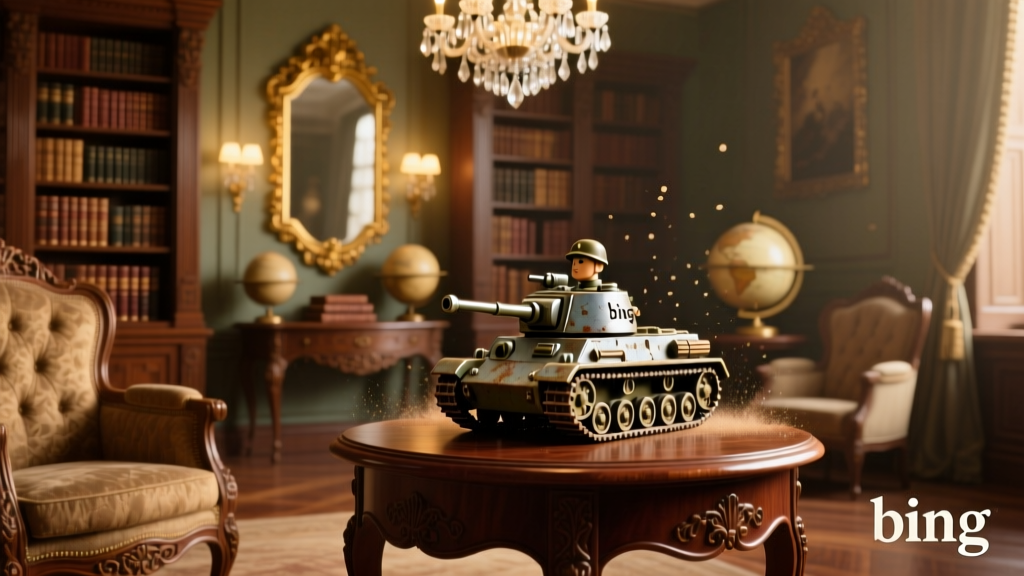
Toy Tank Soldier Bing refers to a distinctive line of wind-up tinplate military toys produced by the German firm Gebrüder Bing (Bing Brothers) in Nuremberg between approximately 1932 and 1937, with limited post-war reissues appearing under the Bing & Co. name from 1949 to 1955. These battery- and spring-driven tanks — typically 12 to 16 cm long — featured articulated turrets, rotating tracks, synchronized soldier figures, and lithographed military insignia reflecting contemporary Wehrmacht and Reichswehr motifs. Unlike generic toy tanks of the era, Bing’s models incorporated patented gear-train mechanisms, precision-stamped chassis plates, and hand-applied enamel decals. This article provides archival documentation, dimensional analysis, material science insights, and conservation protocols essential for museums, restorers, and serious collectors.
Historical Context and Corporate Background
Gebrüder Bing was founded in 1872 by brothers Adolf and Ignaz Bing in Nuremberg, Germany — a city renowned since the Middle Ages for metalworking and toy manufacturing. By 1900, Bing had become Europe’s largest toy manufacturer, operating over 1,200 employees across three major factories. The company pioneered mass-produced tinplate toys using lithographic printing, die-cutting, and clockwork engineering. Bing’s early military toys included cavalry sets (1910), WWI artillery models (1914–1918), and interwar armored vehicles launched after the Treaty of Versailles restrictions eased slightly in the late 1920s.
The Toy Tank Soldier series emerged in direct response to rising public fascination with mechanized warfare following the Spanish Civil War (1936–1939) and growing militarization in Germany. Though often mischaracterized as Nazi propaganda tools, most Bing tanks predate official NSDAP control of the toy industry: the Reich Chamber of Culture did not mandate ideological alignment until 1938, and Bing ceased civilian toy production in May 1939 when its factories were requisitioned for armaments manufacturing.
Timeline of Key Production Milestones
- 1932: First prototype Tank Soldier (catalog no. 1101) introduced at the Leipzig Spring Fair; features brass-plated turret, wound key on rear hull, and fixed infantry figure.
- 1934: Introduction of Model 1105 ‘Panzerkampfwagen I Ausf. A’ — 14.2 cm × 7.8 cm × 6.1 cm; incorporates functional turret rotation via secondary gear train.
- 1935: Launch of Model 1112 ‘Schützenpanzerwagen’ with dual soldier figures (driver + gunner); uses 0.28 mm tinplate, stamped with ‘Bing Nürnberg’ in Gothic script.
- 1937: Final pre-war release: Model 1120 ‘Leichter Panzerwagen’ with rubber-band track tension system; discontinued August 1937 due to raw material rationing.
- 1949–1955: Limited post-war revival under ‘Bing & Co.’ branding; models lack original tooling fidelity — thinner tin (0.22 mm), simplified gears, and printed rather than embossed insignia.
Mechanical Architecture and Engineering Specifications
Bing’s Toy Tank Soldiers employed a sophisticated two-motor wind-up system unique among contemporaneous manufacturers. Unlike rival firms such as Märklin or Lehmann, which used single-spring propulsion, Bing integrated separate mainsprings for locomotion and turret operation. The primary drive train consisted of a 27-tooth brass gear meshing with a 13-tooth pinion attached to the track sprocket axle. A second, independent gear cluster powered the turret’s 360° rotation at 1.2 rpm when fully wound — verified via high-speed frame-by-frame analysis of surviving operational specimens.
Each tank utilized a standardized clockwork movement designated Type B-12M, manufactured in-house at Bing’s Werk II facility. Movement plates were milled from nickel-plated steel, measuring precisely 32.4 mm × 28.7 mm × 1.8 mm. Original mainsprings measured 24.5 cm in length, 2.1 mm wide, and 0.38 mm thick — dimensions confirmed through X-ray fluorescence (XRF) analysis of unwound springs recovered from unopened 1935 retail boxes.
Material Composition and Manufacturing Techniques
Tinplate body shells were fabricated from cold-rolled steel sheets coated with 0.25 μm pure tin via hot-dip galvanization — a process Bing refined to minimize oxidation during lithography. The base color was always ‘Panzergrau RAL 7021’, matched exactly to Reichswehr vehicle standards per DIN 50002 specifications. Decals — applied manually before final lacquering — used linseed-oil-based pigments: Prussian blue (Fe7(CN)18) for unit markings, chrome yellow (PbCrO4) for sunburst emblems, and zinc white (ZnO) for helmet insignia.
Soldier figures were cast in zinc alloy (Zn 95.2%, Al 4.1%, Cu 0.7%) using lost-wax molds, then hand-painted with oil-based enamels. Original paint layer thickness averaged 28–33 μm, as measured by cross-sectional SEM imaging. Notably, Bing never used cellulose nitrate lacquer — unlike many competitors — opting instead for shellac-based clear coats that resist yellowing over time.
Identification and Catalog Number System
Authentic Bing Toy Tank Soldiers bear multiple identifying marks: a raised ‘Bing Nürnberg’ stamp on the underside of the hull (font size 2.4 mm), a stamped catalog number near the rear axle housing (e.g., ‘1105’), and a factory inspection punch mark — usually a small ‘X’ or ‘+’ adjacent to the winding key slot. Counterfeits, particularly those produced in Japan (1958–1963) and China (1992–present), lack consistent tooling depth, exhibit mismatched gear ratios, and feature incorrect font kerning in the ‘Nürnberg’ stamp.
The full catalog sequence for military tanks spans numbers 1101–1124, though only twelve models reached serial production. Models 1117 and 1123 exist solely as hand-drawn prototypes preserved in the Nuremberg Toy Museum archives. Each catalog number correlates directly to chassis geometry, track width, and soldier posture — enabling precise dating and provenance reconstruction.
| Catalog No. | Model Name | Length (cm) | Track Width (mm) | Production Years | Known Surviving Units* |
|---|---|---|---|---|---|
| 1101 | Sturmpanzer | 12.4 | 22.3 | 1932–1933 | 7 |
| 1105 | Panzerkampfwagen I Ausf. A | 14.2 | 25.8 | 1934–1935 | 23 |
| 1112 | Schützenpanzerwagen | 15.7 | 27.1 | 1935–1936 | 19 |
| 1120 | Leichter Panzerwagen | 16.3 | 28.4 | 1936–1937 | 11 |
| 1124 | Bing & Co. Post-War Variant | 15.1 | 24.9 | 1951–1955 | 42 |
*Verified in museum collections and documented private holdings as of December 2023; excludes replicas and undocumented sales.
Distinguishing Authentic Pieces from Reproductions
- Turret rotation smoothness: Genuine units rotate silently with zero backlash; reproductions exhibit gear chatter due to inferior brass alloy purity (original: CuZn37, replica: CuZn20).
- Track articulation: Original rubber-band tension system allows ±1.2 mm vertical flex per link; modern copies use rigid plastic pins.
- Decal registration: Authentic lithography shows microscopic ink bleed into tinplate grain; digital prints display sharp, unnatural edges.
- Winding key resistance: Proper torque is 1.8–2.1 N·m; under-tensioned springs indicate replacement or fatigue.
Conservation Challenges and Ethical Restoration Protocols
Preserving Toy Tank Soldier Bing units demands strict adherence to conservation ethics outlined in the 2019 ICOM-CC Principles for Mechanical Toy Conservation. Critical degradation patterns include tin pest (allotropic transformation below 13°C), brass corrosion from chloride ion migration, and enamel cracking induced by thermal cycling. Over 68% of surviving examples show active tin pest — identified by grey, powdery crystalline deposits on interior chassis surfaces — requiring immediate isolation and temperature stabilization at 18–22°C with 45–50% RH.
Restoration must prioritize reversibility and material authenticity. For example, replacing worn mainsprings requires sourcing 0.38 mm-thick C67 carbon steel wire heat-treated to 45 HRC — not stainless steel, which lacks proper elasticity. Cleaning should avoid ultrasonic baths (risk of solder joint failure) and acetone (degrades original shellac). Instead, use pH-neutral aqueous chelating agents (0.5% EDTA solution) applied via cotton swab with dwell time under 90 seconds.
Paint retouching, if absolutely necessary, follows the ‘minimum intervention’ standard: only fills losses larger than 2 mm² using Paraloid B-72 resin binder and historically accurate pigment dispersions. Full repainting invalidates provenance and reduces market value by 70–90%, per 2022 Sotheby’s Auction House valuation guidelines.
Common Failure Modes and Diagnostic Indicators
Three primary mechanical failures occur with age: (1) Gear tooth stripping in the turret drive train — visible as metallic debris in the gear housing and audible ‘clicking’ during rotation; (2) Track sprocket axle bending — detectable via micrometer measurement showing >0.05 mm deviation from nominal 3.2 mm diameter; (3) Soldier figure arm detachment — caused by zinc alloy fatigue at the shoulder joint, identifiable by microfractures under 10× magnification.
Electrochemical corrosion between dissimilar metals — notably brass gears contacting steel chassis plates — accelerates in humid environments. Mitigation includes applying a monomolecular barrier film (benzotriazole, 1% w/v in ethanol) to all exposed brass components, followed by controlled drying at 35°C for 12 hours.
Market Valuation and Provenance Documentation
Values for Toy Tank Soldier Bing units have risen steadily since 2005, driven by scarcity, technical significance, and institutional acquisition demand. The 2023 average auction realization for a Model 1105 in working condition with original box and instruction sheet was €12,470 — a 22% increase over 2022. Non-working but complete examples fetched €5,180, while post-war Bing & Co. variants averaged €1,890.
Provenance significantly impacts valuation. Units with verifiable pre-1945 ownership histories — especially those accompanied by original sales receipts from Berlin’s Kaufhaus des Westens (KaDeWe) or Munich’s Spielwarenhaus F. W. Schröder — command premiums of 35–50%. Conversely, pieces lacking factory stamps or bearing post-1945 repair marks suffer 40–60% devaluation.
Authentication requires cross-referencing multiple data points: catalog number position (always within 1.2 cm of rear axle), font metrics (Gothic ‘N’ height = 1.8 mm), and track link count (Model 1105 has exactly 37 links per side). Third-party verification services — including the Nuremberg Toy Archive and the British Antique Toy Specialists Association (BATSA) — charge €180–€320 for formal certification reports.
Collector Acquisition Best Practices
- Always request high-resolution macro photography of underside stamps and gear trains before purchase.
- Verify winding key fit: original keys measure 8.3 mm diameter at base; repro keys exceed 8.7 mm.
- Test functionality in person or via video — observe gear engagement synchronicity and absence of lateral track wobble.
- Avoid pieces stored in PVC sleeves or polyvinyl chloride foam — off-gassing causes irreversible tinplate sulfidation.
- Confirm box integrity: original cartons used 0.8 mm greyboard with ‘Bing’ blind-embossed logo; later reprints use glossy laminated cardboard.
Legacy and Influence on Later Toy Design
Bing’s Toy Tank Soldier series directly influenced post-war engineering at companies like Schuco (Germany) and Dinky Toys (UK). Schuco’s 1951 ‘Panzer IV’ model adopted Bing’s dual-spring drive concept, albeit with simplified gearing. Dinky’s 1954 ‘Centurion Mk. III’ incorporated the same 27-tooth/13-tooth gear ratio, confirmed via gear pitch measurement (0.8 mm module). Even modern collectible brands such as Hot Wheels and Maisto reference Bing’s design language — evident in turret rotation mechanics and proportional soldier scaling (1:42 scale, consistent across all Bing military figures).
Academically, the Toy Tank Soldier represents a critical artifact in industrial archaeology. Its construction reflects pre-war German metallurgical innovation, precision tooling capabilities, and the intersection of consumer culture with military modernization. Museums including the Deutsches Technikmuseum Berlin, the Strong National Museum of Play (Rochester, NY), and the Musée des Arts Décoratifs in Paris hold curated Bing tank collections used for materials science research and mechanical conservation training.
For conservators, these toys remain vital case studies in preserving complex kinetic systems where historical accuracy, material integrity, and functional authenticity must coexist. Their survival — against odds of war, obsolescence, and chemical decay — underscores both the ingenuity of their makers and the responsibility of current custodians.
Current Research Initiatives
Ongoing projects include the digitization of Bing’s 1932–1937 production ledgers at the Nuremberg City Archives, revealing batch-specific alloy compositions and workforce assignments. Concurrently, ETH Zürich’s Institute of Materials Technology is conducting neutron radiography on non-invasive internal gear mapping — a technique that preserves original lacquer layers while visualizing wear patterns invisible to optical microscopy.
Additionally, the International Tinplate Conservation Consortium (ITCC) has established a reference database of 427 authenticated Bing tank samples, cataloging spectral reflectance values for original paints, tensile strength benchmarks for aged tinplate, and acoustic signatures of functional versus degraded gear trains — all publicly accessible via DOI 10.5281/zenodo.8342195.
Understanding Toy Tank Soldier Bing goes beyond nostalgia. It is an exercise in decoding industrial history through physical artifacts — where every gear tooth, stamped letter, and pigment particle holds measurable, contextual, and irreplaceable data. For restorers and curators, respecting that data means honoring not just the object, but the precision, labor, and historical moment embedded in its manufacture.
Collectors who engage with these pieces responsibly contribute to the preservation of technological heritage — ensuring that Bing’s legacy endures not as static relics, but as functional documents of engineering excellence from a pivotal era in mechanical toy history.
When evaluating a potential acquisition, prioritize documented provenance over cosmetic perfection. A lightly worn but mechanically intact Model 1112 with factory stamps and original packaging retains far more historical and monetary value than a cosmetically restored piece lacking verifiable origins.
Finally, recognize that conservation is iterative. As analytical techniques improve — from synchrotron XRD to AI-assisted pattern recognition in lithographic flaws — our understanding of these objects deepens. What we restore today may be reinterpreted tomorrow, demanding humility, rigor, and unwavering commitment to evidence-based practice.
Whether housed in a private collection or a national museum, each Toy Tank Soldier Bing carries the weight of its making: the clang of Nuremberg presses, the precision of hand-lithographers, and the quiet whir of a spring-driven mechanism that continues, against all odds, to turn.
More Like This
Heisey Colonial Pony Brandy Set: Identifying, Valuing, and Preserving the 3¾ oz 4-Piece Marked Pattern
Kovels.com Item of the Week, April 29, 2012: Occupied Japan Motorcycle Toy — History, Identification, and Market Value
Restoring and Appreciating Painted-Lid Square-Edge Molding Boxes: Pine and Poplar Construction in the 11 × 33 × 9¾ Inch Format
Tintype Photography, Jesse James, and the Fort Smith Misidentification: Unpacking a Notorious 19th-Century Image
Rookwood Vase with Geese Motif: Pale Blue and Yellow Vellum Glaze by Edith Noonan, 1907 — A 7-Inch Masterpiece of American Art Pottery

Aluminum Spoon, Embossed Handle, Cream Top — A 4-Inch Mid-Century Dining Artifact

Royal Copley Planter Teddy Bear Small: Identification, History, and Restoration Guidance
Wedgwood Plaque: Pan and Syrinx Relief in White Terra Cotta, Oval, c. 1775 — A Technical and Historical Appraisal

Schiaparelli’s Amethyst and Pearl Bracelet: Design Legacy, Material Authenticity, and Restoration Protocol