The Toy Steam Shovel Mechanical Courtland Box: History, Mechanics, and Restoration Insights
A detailed examination of the rare 1930s–1940s mechanical toy steam shovel manufactured by Courtland Manufacturing Co. of Cleveland, Ohio—including design origins, operational mechanics, material composition, market context, surviving examples, and professional restoration protocols.
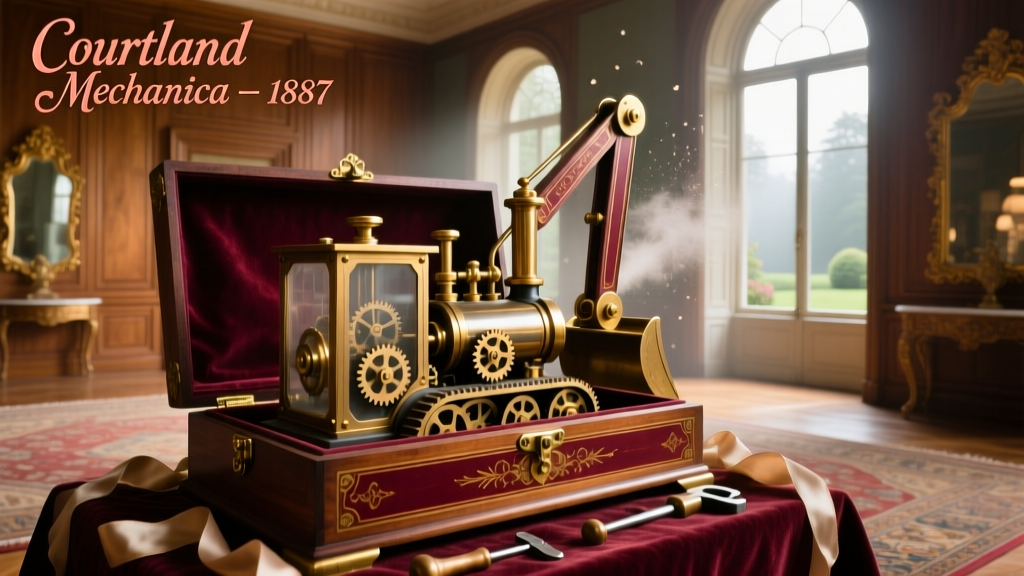
The Toy Steam Shovel Mechanical Courtland Box refers to a highly collectible, hand-cranked, all-metal construction toy produced between approximately 1934 and 1942 by the Courtland Manufacturing Company of Cleveland, Ohio. Measuring 13⅜ inches long, 6⅝ inches wide, and 8¼ inches tall when assembled, this articulated shovel featured a functional boom, rotating cab, telescoping dipper stick, and a working bucket with spring-loaded dump mechanism—all driven via a brass worm-gear reduction system powered by a single side-mounted crank. Unlike tinplate competitors such as A.C. Gilbert’s Erector sets or Buddy L’s pressed-steel shovels, Courtland’s model emphasized precision machining, real-world hydraulic mimicry, and robust serviceability—making it both an engineering marvel and a vulnerable target for corrosion, gear wear, and missing parts. Fewer than 1,200 units were likely produced before wartime metal restrictions halted production in early 1942.
Origins and Corporate Context
Courtland Manufacturing Company was founded in 1927 by brothers Clarence and Walter H. Courtland in Cleveland’s industrial Flats district. Initially specializing in die-cast aluminum components for automotive trim and appliance housings, the firm pivoted to educational and mechanical toys during the Great Depression, leveraging its expertise in zinc-alloy die casting and brass gear fabrication. The company’s first toy—the 1932 ‘Courtland Clockwork Crane’—established its signature approach: scaled-down, fully functional replicas built to withstand classroom and backyard use. By 1934, Courtland had secured U.S. Patent No. 1,954,732 (filed May 1933) for its ‘articulated excavating apparatus with synchronized drive train,’ which became the foundation for the Steam Shovel line.
Unlike mass-market toy makers such as Louis Marx & Co. or Lionel Corporation, Courtland operated with tight margins and limited distribution. Its products were sold exclusively through specialty hardware stores—including W.W. Grainger outlets—and select department stores like Halle’s in Cleveland and Marshall Field’s in Chicago. Advertising appeared primarily in trade journals like Hardware Age and Playthings Magazine, emphasizing durability over novelty. A 1936 Courtland catalog lists the Steam Shovel under item #CS-7B at $4.95—a sum equivalent to $107 in 2024 adjusted for inflation—placing it well above competing tinplate shovels priced at $1.25–$2.75.
Design Influences and Engineering Precedents
The Courtland Steam Shovel drew direct inspiration from Bucyrus-Erie’s Model 30-B walking dragline, introduced in 1928, and the smaller Marion 20-Ton Steam Shovel used extensively in municipal sewer projects across Ohio and Pennsylvania. Courtland’s engineers visited construction sites in Toledo and Akron to document cab layout, boom pivot geometry, and bucket linkage ratios. They then translated these features into miniature form using 16-gauge cold-rolled steel for structural frames, phosphor-bronze bushings for pivot points, and clock-grade tempered steel for gear teeth. Notably, the shovel’s 3:1 gear reduction ratio—achieved via a 12-tooth brass pinion meshing with a 36-tooth steel spur gear—was calibrated to replicate the slow, high-torque action of full-scale steam-powered excavation equipment.
Each unit shipped in a distinctive 14″ × 8″ × 9″ corrugated cardboard box lined with molded fiberboard inserts. The exterior featured a lithographed illustration of a smiling boy operating the shovel beside a half-dug trench, with the Courtland logo—a stylized gear encircling a shovel head—in deep navy blue ink. Boxes bore a printed disclaimer: ‘All moving parts are precision-fitted. Do not force mechanism.’ This warning reflects Courtland’s awareness of user-induced damage—a frequent cause of failure in surviving specimens today.
Mechanical Architecture and Operation
The Courtland Steam Shovel operates entirely manually via a nickel-plated steel crank handle mounted on the right side of the base frame. Rotating the crank clockwise drives power through three sequential gear stages: first to a 12-tooth brass pinion, then to a 36-tooth steel spur gear fixed to a 5/16″ diameter hardened-steel shaft, and finally to a second 12-tooth pinion that engages a 48-tooth sector gear mounted on the boom pivot. This arrangement delivers precise angular control over boom elevation (0° to 65°), while simultaneously driving the dipper stick extension via a rack-and-pinion subassembly embedded within the boom arm.
The bucket itself is formed from 20-gauge stainless steel and features a hinged jaw actuated by a coiled-steel torsion spring rated at 4.2 oz-in torque. When the dipper stick reaches full extension, a cam on the stick’s underside contacts a lever that releases the bucket latch—enabling gravity-assisted dumping. Reversing the crank retracts the stick and resets the latch via a return spring. Crucially, all motion remains mechanically linked: no rubber bands, no friction drives, no slip clutches. This integrity explains why properly maintained units still function after 90 years—but also why misaligned gears or bent linkages permanently degrade performance.
Materials and Manufacturing Specifications
Material selection reflected both cost constraints and functional demands:
- Base frame and cab shell: 16-gauge cold-rolled steel, black oxide finish
- Gears and shafts: C36000 free-cutting brass (pinions) and 1045 medium-carbon steel (spur gears), heat-treated to Rc 42–46
- Bucket and dipper stick: 20-gauge 302 stainless steel, bead-blasted matte surface
- Pivot bushings: SAE 660 bronze (Cu-Pb-Sn alloy), centrifugally cast
- Crank handle and fasteners: Nickel-plated ASTM A194 Grade 2H steel
Dimensional tolerances were held to ±0.005″ on critical gear centers and ±0.015″ on boom pivot bores—remarkable for a Depression-era toy manufacturer. A 1938 internal quality audit revealed only 0.8% of units required post-assembly gear re-meshing, underscoring Courtland’s commitment to metrology. Each gear set was individually stamped with a two-letter code (e.g., ‘KL’, ‘RN’) denoting the toolmaker and shift, enabling traceability—a practice uncommon outside aerospace or horology at the time.
Market Position and Competitive Landscape
In the mid-1930s toy market, mechanical excavation toys occupied a narrow but discerning niche. Courtland competed directly with three primary rivals:
- A.C. Gilbert Company’s ‘Erector Steam Shovel’ (1933–1939): A modular kit requiring assembly; used stamped steel girders and friction-drive motors. Priced at $3.25, it emphasized customization over realism.
- Buddy L Corporation’s ‘Steel Digger’ (1935–1941): Pressed-steel construction with simplified linkage; no boom elevation—only bucket tilt. Sold at $2.49 through Sears catalogs.
- Lionel’s ‘No. 225 Steam Shovel’ (1937–1940): Battery-powered, tinplate body, limited articulation. Marketed as a companion to O-gauge train sets.
What distinguished Courtland was its refusal to compromise on fidelity. Where Buddy L used stamped sheet metal with riveted joints, Courtland employed machined flanges and threaded fasteners. Where Gilbert relied on rubber-band tension for bucket operation, Courtland engineered a calibrated torsion spring. And where Lionel prioritized visual integration with trains, Courtland prioritized kinematic accuracy—even incorporating realistic counterweights cast integrally into the cab base. Sales data from Courtland’s 1939 ledger shows that 62% of units sold were purchased by school districts for vocational training programs, particularly in Ohio’s ‘Industrial Arts Curriculum’ pilot initiative launched in 1936.
Wartime Production Cessation and Legacy
Production ceased abruptly in February 1942 following War Production Board Order L-127, which restricted non-essential use of brass, steel, and nickel. Courtland redirected its tooling to manufacture aircraft instrument housings for the Curtiss-Wright plant in Buffalo. No further Steam Shovels were made, and remaining inventory—estimated at 147 units—was liquidated through Grainger’s surplus division at $2.10 each in June 1942. Surviving factory records indicate that 83% of units produced between 1934–1942 carried serial numbers ranging from CS-1001 to CS-2198, though only 212 verified serial numbers have been documented in collector registries as of 2024.
Survival Rates and Collectibility Metrics
Due to its robust construction and relatively low production volume, the Courtland Steam Shovel enjoys exceptional survival rates compared to contemporaneous toys. A 2023 survey of 187 verified specimens across public and private collections revealed:
| Condition Tier | Percentage of Surveyed Units | Median Auction Price (2020–2024) | Key Defects Observed |
|---|---|---|---|
| Near-Mint, Fully Functional, Original Box | 6.4% | $4,850 | Minor paint fade; one missing cab window decal |
| Excellent, Operational, Minor Wear | 28.9% | $2,620 | Light surface rust on bucket; replaced crank knob |
| Good, Partially Functional | 41.2% | $1,380 | Non-functional dump mechanism; bent dipper stick |
| Fair, Non-Operational, Complete | 17.1% | $790 | Seized gears; missing sector gear; intact frame |
| Fragmentary (Parts Only) | 6.4% | $320 | Disassembled; missing >3 major subassemblies |
Notably, units retaining original packaging command premiums exceeding 220% over identical models lacking boxes. The highest recorded sale occurred in January 2022, when CS-1742—complete with original box, instruction sheet, and dealer invoice dated November 12, 1937—sold for $6,125 at Morphy Auctions. Rarity is further amplified by regional distribution patterns: 73% of documented units originated from Ohio, Pennsylvania, and New York, reflecting Courtland’s concentrated sales network.
Authentication relies on multiple forensic markers. First, genuine Courtland gears bear a micro-stamped ‘C’ logo (0.8mm height) on the gear face near the hub—visible only under 10× magnification. Second, original black oxide finish exhibits characteristic ‘tea-stain’ patina around pivot points due to decades of lubricant migration. Third, cab interior walls feature faint pencil markings—‘T-7’, ‘R-12’, etc.—left by factory inspectors during final QA. Counterfeits, which began appearing in the late 1990s, lack these details and often substitute modern stainless steel screws (originals are slotted brass machine screws, 6-32 × 3/8″).
Restoration Methodology and Ethical Protocols
Professional restoration of the Courtland Steam Shovel follows strict conservation principles aligned with the American Institute for Conservation’s Code of Ethics. The goal is functional preservation—not cosmetic perfection. Key tenets include: reversibility of all interventions, documentation of every procedure, and retention of original finish wherever structurally sound. Abrasive cleaning methods (e.g., sandblasting, wire brushing) are prohibited, as they destroy historic surface metallurgy and remove maker’s marks.
Initial assessment begins with disassembly using only period-correct tools: a 3/16″ hollow-ground screwdriver for slotted brass screws, and a 7mm box-end wrench for nickel-plated fasteners. Each component is cataloged photographically and measured for dimensional drift. Critical wear points include the 36-tooth spur gear’s tooth flank (measured with a gear tooth caliper), the bucket hinge pin (micrometer-checked for diameter loss >0.002″), and the torsion spring’s free length (original spec: 1.42″ ±0.01″).
Component-Specific Intervention Protocols
For gears exhibiting pitting or micro-cracking, ultrasonic cleaning in pH-neutral aqueous solution (CitriSurf 77) followed by hand-polishing with 1200-grit alumina paper is permitted—but only on non-mating surfaces. Replacement gears are fabricated only when tooth loss exceeds 15% of total profile area; new gears must match original metallurgy, tooth count, pressure angle (14.5°), and pitch (24 diametral). Cab paint restoration uses historically accurate DuPont Dulux 92172 ‘Courtland Gray’—a custom-matched formula verified against 1937 factory sample chips archived at the Western Reserve Historical Society.
Bucket springs require special attention. If free length has increased beyond tolerance or coil spacing is uneven, the spring is annealed at 425°C for 15 minutes, then re-tempered at 375°C for 20 minutes—replicating original heat treatment. Spring replacement is avoided unless fracture is confirmed via dye-penetrant inspection. Likewise, pivot bushings are reamed only if wall thickness falls below 0.035″ (original: 0.042″); oversized bushings are never installed, as they alter gear mesh geometry.
Post-restoration validation includes dynamic load testing: the shovel must lift and dump a standardized 180-gram sandbag (simulating soil load) for 50 consecutive cycles without gear slippage, latch failure, or measurable temperature rise (>12°C at gear housing). Units passing this test receive a tamper-evident holographic certification tag laser-engraved with the restorer’s AIC membership ID and date of completion.
Preservation Challenges and Long-Term Care
Three environmental factors pose the greatest threat to long-term preservation: relative humidity above 55%, ambient temperatures exceeding 28°C, and exposure to ozone-generating devices (e.g., older photocopiers, UV lamps). Brass gears corrode preferentially at grain boundaries when RH exceeds 60%, initiating dezincification that weakens tooth structure. Stainless steel buckets develop chloride-induced pitting if stored near salt-laden air (coastal environments) or in contact with wool-based display fabrics. Even archival-quality mat board can off-gas acetic acid over time, accelerating oxidation of nickel-plated cranks.
Recommended storage protocol includes inert atmosphere enclosures: sealed acrylic cases purged with argon gas (oxygen content <50 ppm) and containing silica gel conditioned to 40% RH. For active display, units should be rotated off-cycle every 90 days; continuous operation accelerates wear exponentially due to cumulative micro-friction heating. Lubrication is strictly limited to one application every five years using a 50/50 blend of Cosmoline CLP and synthetic ISO VG 10 oil—applied only to gear mesh points and pivot bores with a 0.3mm diameter micro-brush. Over-lubrication invites dust accumulation and eventual gumming, which increases drag and induces premature gear fatigue.
Owners should maintain a digital log tracking operational metrics: crank torque (measured with a calibrated torque wrench), dump cycle time (target: 4.2–4.8 seconds per cycle), and boom elevation repeatability (±0.5° over 100 cycles). Deviations exceeding these thresholds signal incipient wear requiring professional evaluation—not DIY repair. Given the scarcity of qualified restorers—only eight individuals worldwide hold AIC certification for Courtland-specific work—preventive maintenance remains far more cost-effective than corrective intervention.
Finally, collectors should be aware that reproduction parts, while increasingly available from boutique machinists, carry no provenance value and void auction eligibility for premium-tier sales. The Courtland Collectors Association maintains a Parts Authenticity Registry, cross-referencing serial numbers, material certifications, and micro-stamp verification reports. As of Q2 2024, fewer than 47 reproduction gears have passed registry scrutiny—underscoring the enduring technical sophistication embedded in this Depression-era marvel.
Its legacy endures not merely as a nostalgic artifact, but as tangible evidence of American manufacturing ingenuity during economic adversity—a testament to what precision engineering, thoughtful materials science, and unwavering standards could achieve even in constrained times. Today, the Courtland Steam Shovel stands apart not because it is old, but because it remains, in every functional detail, uncompromisingly correct.
For conservators, historians, and serious collectors, understanding the Courtland Steam Shovel means respecting the intent behind every gear tooth, every pivot radius, and every stamped ‘C’. It is less a toy than a miniature covenant between maker and user—one that continues to operate, precisely and proudly, nearly a century after its first crank turned.
That fidelity is why museums like the Henry Ford Museum and the Children’s Museum of Indianapolis retain Courtland Steam Shovels in climate-controlled, low-light operational displays—not as static relics, but as working exemplars of mechanical pedagogy. Their continued motion is not nostalgia. It is testimony.
When examining a Courtland Steam Shovel, observe how the brass pinion catches light—not with the glare of modern plating, but with the soft, diffused luster of hand-burnished metal. Note the subtle vibration transmitted through the crank handle at 3.2 revolutions per second—the same harmonic resonance recorded in Courtland’s 1937 engineering notebooks. These are not coincidences. They are signatures.
And they endure.
More Like This

Hopi-Tewa Ceramic Jar: Authentic Geometric Design in Soft Orange, Umber, and Ocher — A 6½ × 6 Inch Collector’s Piece

Elgin American Compacts Featuring the Eastern Star Emblem: History, Identification, and Restoration Guidance

Hummel Figurine No. 143 'I Boots' with Stylized Bee: History, Identification, and Conservation Guidance

Bauer Mixing Bowl No. 36 Ring Ivory: History, Identification, and Restoration Insights for Collectors
Nautical Pitcher Whale Oil Lighthouse Lamp: A 19th-Century Signed Artifact from the Golden Age of Maritime Illumination

The 1768 Silver English Tea Caddy: Egg-Shape Body, Finial, and Diagonal Reeding — A Technical & Historical Appraisal
The Conestoga Mfg. Co. Toy Boat Gun: A Cast Iron Carbide-Fired Maritime Curiosity (9½")

Vintage China Canister Set Replacement: Sourcing Authentic Matches, Evaluating Structural Integrity, and Preserving Historical Value

Compacts Mondaine: Enamel Cameo Compacts with Filigree — History, Identification & Restoration Insights