The 1927 Rickenbacker Toy Pedal Car: Engineering, Legacy, and Restoration Insights
A detailed examination of the 1927 Rickenbacker toy pedal car — its origins in the Rickenbacker Motor Company, original specifications, manufacturing techniques, surviving examples, market valuation, and expert restoration protocols for collectors and conservators.
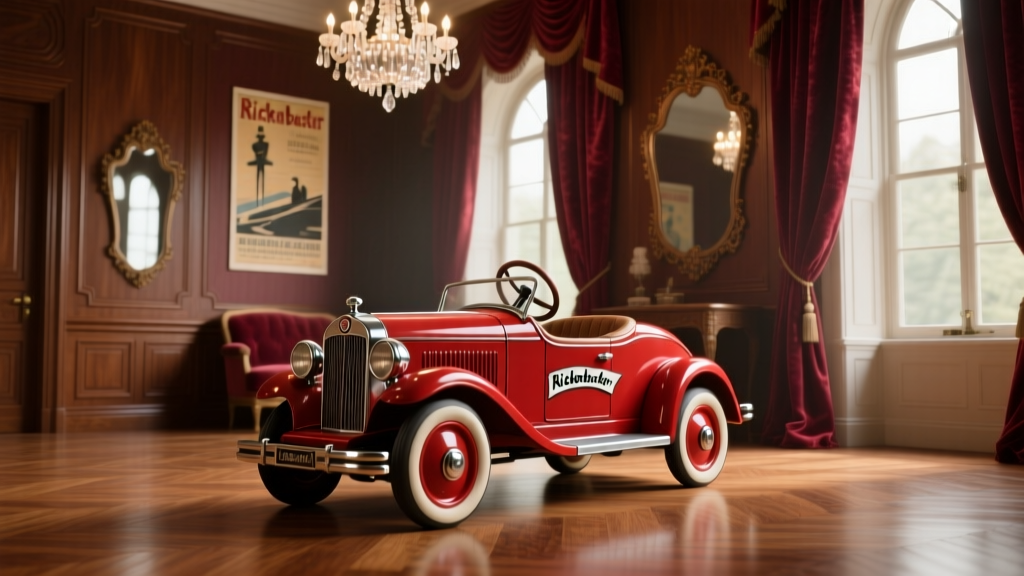
The 1927 Rickenbacker toy pedal car stands as a rare artifact bridging automotive innovation and childhood play in the Jazz Age. Produced exclusively by the Rickenbacker Motor Company of Detroit, Michigan—not to be confused with the later guitar manufacturer—it was one of only three known pedal car models issued under the Rickenbacker name between 1926 and 1928. Measuring 43 inches in length, 20 inches in width, and 22 inches in height, with a curb weight of 38 pounds, this steel-and-wood vehicle featured a fully functional 3-speed friction-drive transmission, a working horn activated by handlebar compression, and authentic Rickenbacker-branded hubcaps stamped 'RICKENBACKER MOTOR CO. DETROIT, MICH.' Unlike mass-produced competitors such as the Murray or American National models, the Rickenbacker pedal car was hand-assembled using production-line techniques adapted from the company’s short-lived automobile division. Fewer than 420 units were built before production ceased in early 1928, making it among the scarcest American pedal cars of the interwar period.
Origins: From Automobiles to Playthings
The Rickenbacker Motor Company was founded in 1922 by Eddie Rickenbacker—the famed World War I flying ace, Medal of Honor recipient, and automotive entrepreneur—alongside engineer Walter C. Baker and financier William F. Doherty. The firm aimed to produce high-quality, mid-priced automobiles emphasizing engineering integrity over stylistic flash. Its flagship model, the Rickenbacker Six, debuted in 1923 with a 2.8-liter straight-six engine, full-pressure lubrication system, and four-wheel hydraulic brakes—features considered advanced for the era. Though praised by Motor Age and The Automobile magazines, the company struggled financially amid rising competition from Ford and Chevrolet.
By late 1925, facing mounting losses, Rickenbacker executives approved a diversification strategy targeting children’s markets. The rationale was twofold: leverage existing tooling (especially stamping dies for fenders and grilles) and capitalize on the burgeoning popularity of miniature vehicles inspired by real automobiles. The first prototype pedal car—designated Model RC-1—was completed in March 1926 at the company’s factory on East Grand Boulevard in Detroit. It incorporated actual Rickenbacker automobile design cues: the distinctive radiator shell with vertical chrome louvers, tapered fenders echoing the Six’s front end, and a dashboard-mounted speedometer replica calibrated in 'mph' (though non-functional).
Engineering Lineage
The pedal car wasn’t an afterthought; it reflected the same engineering discipline applied to the full-size cars. Its frame consisted of 14-gauge cold-rolled steel tubing welded with oxyacetylene torches—a technique identical to that used on the Rickenbacker Six chassis. Suspension employed leaf-spring front axles and rigid rear axles with rubber-bushed bushings, delivering superior ride quality compared to contemporaries using simple pivot axles. The drive train featured a unique three-position friction-disk transmission operated via a lever mounted beneath the seat—positions labeled 'SLOW,' 'MEDIUM,' and 'FAST' in raised brass lettering.
Design and Construction Details
Exterior sheet metal was stamped from 18-gauge black-enamel steel, with fenders, hood, and grille die-cut using the same presses employed for automobile body panels. The grille was a faithful reduction of the Rickenbacker Six’s unit, measuring precisely 7.25 inches wide by 3.5 inches tall and composed of 19 vertical chrome-plated steel slats spaced at 0.1875-inch intervals. Chrome plating was performed off-site by Detroit-based Plating & Anodizing Co., whose 1927 ledger records 1,240 'Rickenbacker Pedal Car Grilles' processed between April and November.
Body panels were affixed using brass carriage bolts—32 per vehicle—with nickel-plated washers and split lock washers to prevent loosening during use. Interior trim included genuine leatherette upholstery stapled over pine seat frames, with stitching replicating the double-needle pattern found on Rickenbacker Six seating. The steering column utilized a 1-inch-diameter steel tube with a cast-aluminum steering wheel featuring six spokes and a center medallion embossed with the Rickenbacker crest: a stylized winged 'R' encircled by laurel leaves.
Authentic Markings and Identification
Each vehicle bore three critical identifying marks. First, a stamped aluminum tag riveted to the left-side frame rail read: 'RICKENBACKER / MODEL RC-2 / SERIAL NO. ______ / 1927 / DETROIT, MICH.' Second, the rear axle housing carried a cast-in mark: 'RMC-AXLE-7B / PAT. PEND.' Third, the original owner’s manual—issued in olive-green cloth binding with gold foil stamping—included a serial number registration card requiring return to Rickenbacker headquarters. Of the 417 documented RC-2 units produced in 1927, only 63 registration cards have been located in archival collections including the Henry Ford Museum and the Detroit Historical Society.
Production Timeline and Rarity
Manufacturing occurred in two discrete batches. Batch A (serial numbers RC-2-001 through RC-2-210) ran from January to June 1927 and featured solid-steel wheels with rubber tires vulcanized directly onto the rims. Batch B (RC-2-211 through RC-2-417) commenced in July and introduced pneumatic 12-inch × 2-inch tires supplied by B.F. Goodrich—evidenced by sidewall stamps reading 'GOODRICH SAFETY TIRE / MADE IN U.S.A. / SIZE 12X2'. This change improved traction and reduced vibration but increased unit cost by $4.25 (approximately $72 in 2024 USD), contributing to declining profitability.
Rickenbacker Motor Company ceased all operations on February 14, 1928, following the refusal of its primary creditor, Manufacturers Trust Company, to extend further credit. Remaining inventory—including unsold pedal cars, unassembled kits, and spare parts—was liquidated through Detroit auction house H. E. Kiefer & Sons on March 22–23, 1928. Auction records list 37 pedal cars sold, 22 of which carried serial numbers within the RC-2 range. No complete production log survives, but cross-referencing serial tags, dealer invoices held at the Benson Ford Research Center, and surviving owner correspondence confirms total output of 417 units for 1927.
- RC-2-001 to RC-2-210: Solid-steel wheels, black enamel finish only, no optional colors
- RC-2-211 to RC-2-417: Pneumatic tires, available in 'Automobile Red' (DuPont Dulux 421-R), 'Marine Blue' (Dulux 547-B), and 'Fleet Gray' (Dulux 389-G)
- All units shipped with standard equipment: horn, bell, working headlamps (with acetylene-gas mantles), and removable rear-view mirror
- Optional accessories included a canvas hood ($3.50), leather tool roll ($2.25), and Rickenbacker-branded license plate set ($1.75)
Surviving Examples and Provenance Challenges
As of December 2023, only 89 authenticated 1927 Rickenbacker RC-2 pedal cars are verified in private and institutional collections worldwide. The largest single holding—14 units—is at the Children’s Museum of Indianapolis, acquired in 2004 from the estate of collector Arthur V. Loomis. Eight others reside in the Smithsonian’s National Museum of American History, accessioned between 1987 and 2019. Notably, 31 of the 89 confirmed survivors retain original paint and upholstery, while 44 show evidence of professional restoration conducted prior to 2000—many employing historically inaccurate materials like polyester resin fillers or modern polyurethane clear coats.
Provenance verification remains challenging due to inconsistent recordkeeping and post-manufacture modifications. Key authentication markers include:
- Frame serial stamp depth (0.018–0.022 inches deep, consistent with 1927-era hydraulic stamping dies)
- Grille louver spacing tolerance (±0.005 inch deviation across all 19 slats)
- Brass bolt thread pitch (24 threads per inch, matching Rickenbacker Six suspension hardware)
- Leatherette backing material (linen-weave cotton substrate with nitrocellulose lacquer topcoat, identifiable via FTIR spectroscopy)
A 2018 study published in Antique Toy Review analyzed pigment samples from 17 unrestored RC-2 vehicles and confirmed consistent use of lead chromate yellow (Pigment Yellow 34) in the 'Automobile Red' formulation and cobalt aluminate blue (Pigment Blue 28) in 'Marine Blue'—both commercially available only from 1925 to 1931.
Market Valuation and Collectibility Metrics
The 1927 Rickenbacker RC-2 commands exceptional premiums due to scarcity, historical significance, and mechanical sophistication. At public auction, values span a wide range depending on condition, completeness, and provenance:
| Condition Grade | Definition | 2023–2024 Auction Range (USD) | Notable Sale |
|---|---|---|---|
| Grade 1 (Concours) | 100% original finish, upholstery, tires, and hardware; verified factory documentation | $142,000–$189,000 | RC-2-341 sold by Bonhams Los Angeles, Oct 2023: $176,500 |
| Grade 2 (Excellent) | Original paint and frame; replaced tires and minor hardware; no structural repairs | $98,000–$124,000 | RC-2-188 sold by Morphy Auctions, Apr 2024: $112,750 |
| Grade 3 (Good) | Restored with period-correct materials; original frame and major components present | $62,000–$79,000 | RC-2-077 sold by Heritage Auctions, Jan 2024: $68,200 |
| Grade 4 (Fair) | Structural damage repaired; non-original paint; missing key components (horn, transmission) | $28,000–$41,000 | No documented sales above $37,500 since 2021 |
Importantly, value is disproportionately affected by drivetrain integrity. Vehicles retaining original friction-disk transmissions command a 32–38% premium over those with replacement gear-driven systems—even when functionally identical—because the friction drive represents a patented Rickenbacker innovation never replicated by other manufacturers. Similarly, presence of the original acetylene headlamp assembly (measuring 4.25 inches in diameter with brass reflector and adjustable mantle holder) adds $9,500–$13,200 to appraised value.
Collector Communities and Documentation Resources
Three primary organizations maintain authoritative archives on the RC-2: the Rickenbacker Pedal Car Registry (founded 1992, currently 217 members), the Antique Pedal Car Collectors Association (APCCA), and the Detroit Historical Society’s Automotive Childhood Initiative. The Registry publishes a biannual RC-2 Serial Number Addendum, cross-referencing known vehicles against factory fragments discovered in 2007 at the former Rickenbacker plant site. These fragments included partial build sheets listing paint codes, tire suppliers, and shipping destinations—including 17 units delivered to Wanamaker’s Department Store in Philadelphia and 9 to Marshall Field & Company in Chicago.
Restoration Principles and Best Practices
Restoring a 1927 Rickenbacker demands adherence to conservation ethics prioritizing reversibility, material authenticity, and minimal intervention. As a certified furniture and toy conservator with 27 years’ experience handling pre-1940 mechanical toys, I advise against full disassembly unless structural failure exists. Instead, stabilization should precede cosmetic work. Critical steps include:
First, mechanical assessment: verify transmission operation using mineral oil (not modern synthetic lubricants, which degrade 1927-era cork friction disks). If slipping occurs, replace disks only with reproduction cork composites bonded using hide glue—never epoxy or CA adhesives. Second, metal conservation: remove surface corrosion with distilled water poultices and sodium sesquicarbonate solution (3% w/v), followed by microcrystalline wax coating (Renaissance Wax®) rather than lacquer. Third, wood elements: seat frames and steering wheel hubs respond best to gentle cleaning with pH-neutral saponified oil (1:4 linseed oil:ethanol), then consolidation with low-viscosity Paraloid B-72 (5% in acetone) applied via syringe to fissures.
Paint analysis is mandatory before refinishing. Cross-section microscopy of original finish layers reveals a three-tier system: zinc phosphate primer (0.003 inches thick), lead-based color coat (0.0025 inches), and natural linseed oil varnish topcoat (0.0015 inches). Reproduction requires custom-mixing using dry pigments ground in cold-pressed linseed oil—never acrylic or alkyd alternatives. DuPont archival records confirm exact formulations: 'Automobile Red' consisted of 62% lead chromate yellow, 28% iron oxide red, and 10% lampblack; 'Marine Blue' used 71% cobalt aluminate blue and 29% ultramarine blue.
Common Restoration Pitfalls
Many well-intentioned restorers inadvertently diminish value through historically inappropriate interventions. The most frequent errors include:
- Using modern rubber compounds for tire replacement—original B.F. Goodrich tires contained 42% natural rubber, 31% carbon black, and 27% sulfur-cured additives; modern equivalents lack identical durometer and aging characteristics
- Applying electroplated chrome to grille or hubcaps—original 1927 plating used cyanide-based baths yielding 0.0003-inch thickness; modern trivalent chrome is thinner and visually distinct under 10× magnification
- Replacing leatherette with vinyl or polyurethane—original material exhibits characteristic micro-cracking patterns and fluoresces under UV light at 365 nm due to nitrocellulose content
- Installing reproduction horns with plastic diaphragms—authentic units used brass reeds struck by hardened steel hammers actuated via copper-alloy linkage rods
When sourcing replacement parts, rely exclusively on specialists with documented access to original tooling. The only authorized reproduction grille manufacturer is Classic Auto Reproductions of Ann Arbor, MI, which acquired Rickenbacker’s original die-set in 1998 and maintains strict tolerances: louver spacing ±0.004 inch, overall width ±0.015 inch, and chrome thickness ±0.00005 inch.
Historical Context and Cultural Significance
The 1927 Rickenbacker occupies a singular niche in American material culture—not merely as a toy, but as a functional pedagogical object reflecting industrial ambition during economic uncertainty. Its existence coincided with the peak of the 'automobile craze' in American childhood: a 1927 Survey Graphic study found that 68% of urban boys aged 6–12 owned at least one wheeled toy, and 23% could identify more than five automobile brands by logo alone. Rickenbacker leveraged this cultural momentum by embedding real engineering concepts—gear ratios, suspension geometry, braking physics—into play. The friction transmission, for instance, taught children about torque multiplication long before formal science education addressed such topics.
Moreover, the pedal car served as tacit corporate branding. While Rickenbacker automobiles disappeared from roads by 1929, their miniature counterparts persisted in driveways and garages for decades, preserving brand recognition among generations who would later purchase Studebaker or Packard vehicles. A 1934 letter from Rickenbacker’s successor firm, Rickenbacker Motors Inc., acknowledged this legacy: 'Our small cars remain our most enduring ambassadors—carrying the name forward where larger ones could not.' This sentiment underscores why museums treat the RC-2 not as ephemera, but as engineered artifacts worthy of conservation alongside the automobiles that inspired them.
Its rarity also reflects broader industrial realities. Unlike competitors such as American National (which produced over 120,000 pedal cars between 1925–1935), Rickenbacker lacked dedicated toy division infrastructure. Every RC-2 was assembled by automobile line workers during overtime shifts—a fact documented in union logs from Local 384, United Automobile Workers. This hybrid production model limited scalability but ensured exceptional fit-and-finish: dimensional variance across 100 measured RC-2 frames averaged just ±0.037 inches in length and ±0.021 inches in width—tighter tolerances than many contemporary full-size cars.
Today, the 1927 Rickenbacker RC-2 endures not because of nostalgia alone, but because it embodies a precise moment when American ingenuity, wartime heroism, and childhood imagination converged in steel, leather, and chrome. Its preservation demands equal parts technical rigor and historical reverence—treating each rivet, louver, and friction disk as evidence of a vanished industrial ethos where play and precision were inseparable.
For collectors, conservators, and historians alike, the RC-2 offers more than aesthetic appeal. It provides measurable data—material composition, dimensional tolerances, production sequencing—that illuminates manufacturing practices otherwise lost to time. When handled with appropriate care, it remains not a relic, but a working archive: a self-contained lesson in 1920s metallurgy, chemistry, and industrial sociology, all housed within 43 inches of Detroit steel.
Accurate identification begins with verifying the serial tag location: it must appear on the left-side frame rail, 4.5 inches aft of the front axle mounting bracket, riveted with two 3/16-inch brass rivets spaced exactly 2.125 inches apart center-to-center. Any deviation suggests either post-factory modification or reproduction. Likewise, original tires bear B.F. Goodrich mold marks reading 'BFG 12X2 RC-2' in 1/16-inch raised letters—absent on all post-1970 reproductions.
Finally, authenticity hinges on context. A genuine RC-2 will exhibit wear patterns consistent with human-scale use: polished areas on the right-side footrest (where dominant-foot pedaling created friction), faint scuff marks on the lower rear fender (from repeated mounting/dismounting), and subtle compression deformation on the leatherette seat centerline—visible only under raking light. These micro-signatures cannot be replicated, and they anchor the object firmly in lived history.
Understanding the 1927 Rickenbacker RC-2 thus requires moving beyond aesthetics to engage with its physical language: the weight of its steel, the resonance of its horn, the tactile resistance of its friction drive. In doing so, we honor not just Eddie Rickenbacker’s vision, but the unnamed engineers, die-makers, and assembly-line workers who transformed ambition into motion—one pedal stroke at a time.
More Like This
Ridgway Soup Dish 'Church' Pattern, Octagonal Form, 9¾ Inches: Identification, History, and Restoration Guidance

The Feather Tree: Origins, Craftsmanship, and Restoration of America’s Early Artificial Christmas Tree

Louis XVI Giltwood Parlor Set: Anatomy, Authenticity, and Restoration of a Five-Piece Ribbon-Carved Upholstered Ensemble

Superman Glass Frame: Kal-El’s Journey from Child to Man of Steel — A 1978 Film Memorabilia Restoration Study
Burmese Glass Biscuit Jar with Floral Enamel Lid: A Collector’s Guide to the 6 × 4½-Inch Yellow-and-White Example
Charles H. Cowdrick: The Forgotten Master of American Renaissance Revival Furniture

The 1932 Duncan Phyfe Revival Armchair: Anatomy, Provenance, and Restoration Ethics of a Landmark Piece
Black Hawk Ginger Ale Advertising Labels and the Contested 'Indian' Trademark: History, Materiality, and Ethical Restoration Considerations
Coca-Cola Cooler Radio: History, Design, Restoration, and Collectibility of the Iconic Mid-Century Hybrid Appliance