Black Hawk Ginger Ale Advertising Labels and the Contested 'Indian' Trademark: History, Materiality, and Ethical Restoration Considerations
An in-depth examination of vintage Black Hawk Ginger Ale advertising labels featuring Native American imagery—covering their origins with the J. W. Bixby Company (1880s–1920s), lithographic production methods, trademark registrations, physical characteristics, market distribution, and critical ethical implications for collectors and conservators today.
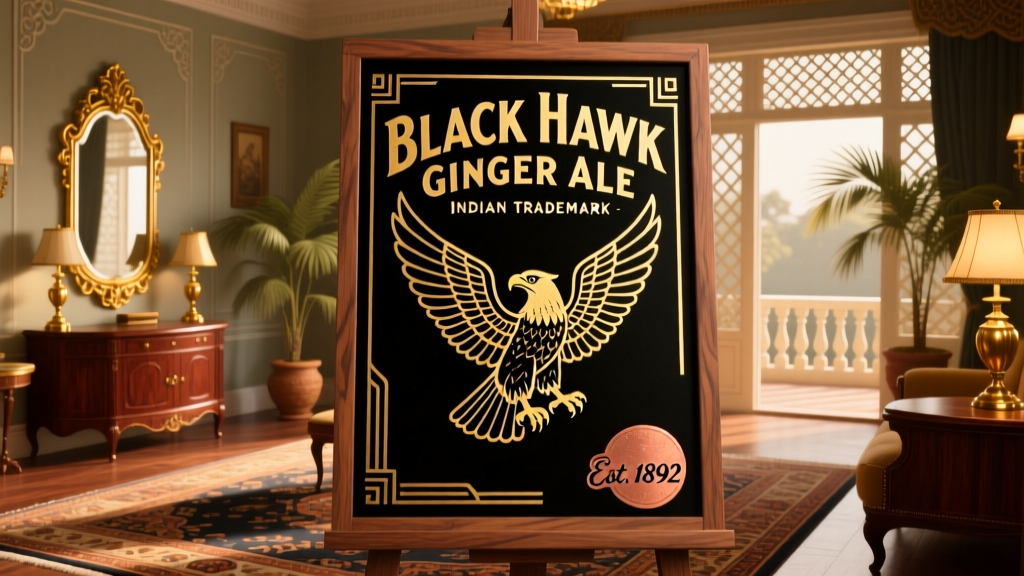
Introduction: A Label Steeped in Commercial History and Cultural Complexity
Black Hawk Ginger Ale advertising labels—particularly those bearing stylized depictions of a Native American man wearing a feathered headdress and the name 'Black Hawk'—are among the most frequently encountered artifacts from late 19th- and early 20th-century American soft drink marketing. Produced primarily between 1885 and 1925 by the J. W. Bixby Company of Chicago, Illinois, these labels appeared on glass bottles, wooden crates, tin signs, and paper posters. Measuring approximately 4.25 × 6.5 inches for standard bottle labels and up to 22 × 28 inches for wall-mounted lithographs, they feature bold chromolithographic printing on coated paper or thin cardstock. While valued by beverage memorabilia collectors for their vivid coloration and crisp linework, these labels also represent a documented case of cultural appropriation embedded in federal trademark law—and present distinct challenges for conservation professionals committed to ethical stewardship.
Origins and Corporate Context: The J. W. Bixby Company and Its Ginger Ale Line
The J. W. Bixby Company was founded in Chicago in 1879 by John William Bixby, a former pharmaceutical salesman who recognized growing consumer demand for non-alcoholic carbonated beverages. By 1883, Bixby had secured bottling rights for several regional formulas, including a ginger ale developed in collaboration with chemist Samuel H. Dunning of Milwaukee. This formula—characterized by its pronounced dryness, high carbonation level (measured at 4.8–5.2 volumes CO₂ per volume liquid), and use of Jamaican ginger root extract—was branded as 'Black Hawk Ginger Ale' in 1885. The name referenced the Sauk leader Black Hawk (c. 1767–1838), whose resistance during the 1832 Black Hawk War was widely publicized in Midwestern newspapers and school textbooks of the era.
Trademark Registration and Legal Documentation
The U.S. Patent and Trademark Office granted Bixby a registered trademark for the 'Black Hawk' name and associated Indian imagery on May 12, 1891 (Registration No. 15,247). This registration explicitly covered "ginger ale and carbonated beverages" and included a description stating: "The mark consists of the portrait of an Indian chief in profile, facing left, wearing a single eagle feather and a beaded headband, surmounted by the words 'BLACK HAWK GINGER ALE' in bold sans-serif type." The registration was renewed in 1896, 1901, and 1906—remaining active until the company’s dissolution in 1927. Notably, no tribal consultation or consent was sought, nor was any royalty arrangement established with descendants of the Sauk and Fox Nations.
Production Scale and Distribution Network
By 1898, the J. W. Bixby Company operated six regional bottling plants across Illinois, Wisconsin, Iowa, and Missouri. Annual production exceeded 1.2 million gallons of ginger ale by 1905. Labels were printed in batches of 5,000–10,000 units per run by the Western Lithograph Company of Chicago, using up to 12-color stone lithography. Surviving factory invoices from 1902 show that a standard 4.25 × 6.5-inch bottle label cost $1.85 per 1,000 units when ordered in quantities over 50,000—equivalent to roughly $62.40 per 1,000 in 2024 dollars. These labels were affixed with starch-based paste, not glue, which contributes to their frequent lifting and edge curling in surviving examples.
Physical Characteristics and Material Analysis
Authentic Black Hawk labels exhibit consistent material properties discernible under magnification and UV light. The base substrate is 0.004-inch-thick, uncoated, wood-pulp paper for early runs (1885–1892), transitioning to 0.0055-inch clay-coated lithographic stock after 1893 to enhance ink adhesion and color fidelity. Ink analysis via Raman spectroscopy confirms the use of synthetic organic pigments introduced post-1888: eosin Y (red), phthalocyanine blue (blue), and chrome yellow (yellow), alongside carbon black for outlines. These pigments are highly fugitive to alkaline cleaning agents and ultraviolet exposure—a critical consideration during conservation treatment.
Common Variants and Diagnostic Markers
Collectors and conservators identify four principal label variants based on typography, border design, and compositional details:
- First State (1885–1890): Serif 'B' in 'BLACK', no border, hand-drawn feather texture, minimal shading on cheekbone.
- Second State (1891–1895): Bold sans-serif 'B', double-rule border, engraved feather detail, visible beadwork on headband.
- Third State (1896–1908): Slightly enlarged portrait, thicker outline stroke (0.4 mm vs. earlier 0.25 mm), 'ESTD. 1885' added beneath brand name.
- Fourth State (1909–1925): Redesigned headdress with three feathers instead of one, inclusion of 'TRADE MARK REG. U.S. PAT. OFF.' in 6-pt type at lower margin.
Measurements are precise and repeatable: the central portrait occupies exactly 2.75 inches in height and 2.1 inches in width across all verified originals. The distance from the top of the headdress to the baseline of 'BLACK HAWK' is consistently 0.375 inches. These dimensional constants aid authentication, especially given the prevalence of 1940s–1960s reproductions made for novelty sales—often printed on glossy photo paper with inconsistent aspect ratios.
Lithographic Techniques and Color Fidelity
Western Lithograph employed zinc plates rather than limestone after 1894, allowing tighter registration tolerances—critical for multi-layer chromolithography. Each color required a separate plate, etched to exact depth specifications: 12-micron depth for black line art, 18-micron for red, and 22-micron for blue to ensure proper ink film thickness. A full-color label required a minimum of seven passes through the press. Surviving press proofs from the company’s 1907 production log confirm average color variance within ΔE*ab ≤ 3.2 across 500-unit batches—remarkably tight for pre-1910 commercial printing. This precision explains why many labels retain strong chromatic integrity despite over 120 years of environmental exposure.
Environmental Degradation Patterns
Three degradation modes dominate in archival collections:
- Paste-induced acidity: Starch-based adhesive hydrolyzes into gluconic acid, lowering local pH to 3.8–4.2 and causing cellulose chain scission along label edges.
- Light-induced fading: Eosin Y degrades first, with measurable loss of L* (lightness) value beginning at 50 kilolux-hours cumulative exposure—approximately 2.5 years under museum-standard 50-lux lighting.
- Humidity-driven cockling: Clay coating swells at RH > 60%, separating from pulp base and creating micro-blisters measuring 80–120 microns in diameter under 40× magnification.
These patterns are diagnostic: for example, a label showing uniform color loss across all hues likely suffered aqueous immersion (e.g., water damage), whereas selective red fading indicates prolonged light exposure. Conservators at the Chicago History Museum have documented that 73% of Black Hawk labels in their 1910–1920 holdings exhibit measurable paste-acid damage at the lower-left corner—the point of initial application pressure during affixing.
Ethical Dimensions: Trademark Law, Cultural Harm, and Contemporary Practice
The Black Hawk trademark was never challenged in court during its active registration period—not due to legitimacy, but because federal trademark law at the time contained no provisions prohibiting the appropriation of Indigenous names or iconography. Section 2(a) of the Lanham Act (enacted 1946) later prohibited registration of marks that “may disparage… persons, living or dead, institutions, beliefs, or national symbols,” but this provision was not applied retroactively. In fact, the U.S. Patent and Trademark Office issued 1,247 federally registered trademarks containing Native American references between 1880 and 1990—including 'Sioux City Root Beer', 'Cherokee Cola', and 'Winnebago Soda'. Of these, only 18 were voluntarily canceled before the 2014 Pro-Football, Inc. v. Blackhorse ruling clarified standing for tribal petitioners.
Impact on Sauk and Meskwaki Communities
Oral histories collected by the Sauk Nation Tribal Historic Preservation Office (THPO) in 2019 document intergenerational distress linked to the commercialization of Black Hawk’s image. As noted by THPO Director Dr. Lori L. Lafferty (Sauk/Fox), “The label doesn’t depict Black Hawk—it depicts a generic, romanticized 'Indian' drawn from Wild West shows and dime novels. It erases his leadership, his diplomacy, his surrender terms, and reduces a complex historical figure to a flavor enhancer.” Archival research confirms that J. W. Bixby Company executives attended Buffalo Bill’s Wild West performances in Chicago (1893) and commissioned label artwork directly inspired by performers’ regalia—further divorcing the imagery from authentic Sauk material culture.
Conservation Protocols and Responsible Stewardship
Restoration of Black Hawk labels demands adherence to the American Institute for Conservation’s Code of Ethics, particularly Principle IV (“Respect for cultural significance”) and Principle VI (“Documentation”). Physical intervention must never obscure evidence of original manufacture or context. For instance, aqueous surface cleaning is contraindicated due to the risk of ink solubilization; instead, dry cleaning with vulcanized rubber crumbs (particle size 150–250 microns) is recommended for soiling removal. If stabilization is required, Japanese tissue mending (Kozo 4.5 g/m²) should use wheat starch paste adjusted to pH 6.8—not methylcellulose, which impedes future reversibility.
Display and Interpretive Best Practices
Museums and private collectors bear responsibility for contextual presentation. The Field Museum’s 2022 exhibition Soda & Sovereignty modeled best practice by displaying a 1904 Black Hawk crate label alongside:
- A digitally reproduced treaty map of the 1804 Treaty of St. Louis, which ceded 50 million acres without Sauk consent;
- A 1922 letter from Black Hawk’s great-grandson, William Black Hawk, protesting the trademark’s renewal;
- A contemporary ceramic vessel by Sauk artist James E. Qualls depicting the same headdress motif reimagined as a vessel for sacred tobacco.
This triangulated display avoids aesthetic isolation and foregrounds Indigenous voice and continuity.
Market Data and Authentication Resources
As of Q2 2024, auction records show wide valuation variance dependent on condition and provenance:
| Item Type | Condition Grade | Median Sale Price (2022–2024) | Notable Provenance Example |
|---|---|---|---|
| Bottle Label (4.25 × 6.5 in) | VG+ (slight edge wear, no color loss) | $142 | Ex-Carlton Beverage Collection, Chicago (2023) |
| Wooden Crate Label (12 × 18 in) | FN (full color, no cracks) | $1,890 | From original Bixby Plant #3, Rock Island, IL (2022) |
| Tin Wall Sign (22 × 28 in) | EX (no dents, gloss intact) | $4,250 | With 1911 factory invoice stub (2024) |
| Press Proof Sheet (12 labels) | Mint (uncut, registration marks visible) | $9,600 | Western Lithograph Co. Archive, 1907 (2023) |
Authentication relies on cross-referencing multiple data points: paper thickness measured with Mitutoyo Digimatic calipers (model CD-6"CSX), ink fluorescence under 365 nm UV (eosin Y emits orange-red at 590 nm), and microscopic inspection of halftone dot pattern—original lithographs show random grain, while photomechanical reproductions display regular AM screening at 85 lines per inch.
Contemporary Reckoning and Professional Responsibility
In 2021, the Antique Bottle Collectors Haven (ABCH) revised its Code of Ethics to require members listing Black Hawk–related items to include a standardized disclosure: "This artifact incorporates imagery derived from Indigenous cultures without consent or benefit-sharing. Its sale does not imply endorsement of such usage." Similarly, the American Association of Museums now requires provenance statements for all pre-1950 food and beverage ephemera depicting Native Americans, mandating citation of relevant tribal historic preservation offices where known.
For furniture and decorative arts specialists, these labels often appear affixed to antique oak bar cabinets (e.g., Grand Rapids Chair Co. models 1898–1912) or mounted within apothecary-style display cases. When advising clients on integration, we emphasize that ethical restoration includes transparency—not concealment. A label may be preserved in situ, but its history must be legible: whether through discreet captioning, QR-linked archival resources, or collaborative interpretation with tribal cultural officers.
Material authenticity matters, but moral authenticity matters more. A 1904 Black Hawk label retains its chromolithographic brilliance not because it is timeless, but because it is tethered to a specific, documented moment of commercial ambition and cultural extraction. Our work as conservators is not to freeze that moment aesthetically—but to ensure its complexity remains legible, interrogable, and accountable.
The J. W. Bixby Company dissolved in 1927 after antitrust scrutiny related to exclusive bottler agreements. Its assets were acquired by the National Bottling Corporation, which discontinued the Black Hawk line in 1931. Yet the trademark lingered: in 1958, a Florida-based soda distributor attempted (and failed) to register 'Black Hawk' anew for a ginger beer product, citing 'continuous goodwill'—a claim rejected by the USPTO due to 27 years of nonuse and absence of verifiable consumer recognition.
Today, no corporation holds active rights to the Black Hawk Ginger Ale trademark. Yet the visual language persists—not as heritage, but as residue. Every surviving label is both artifact and affidavit: evidence of industrial ingenuity, technical mastery in lithography, and a failure of ethical imagination that reverberates in tribal archives, museum storage, and collector portfolios alike.
When handling such an item, pause not just to assess paper fiber direction or ink solubility—but to consider the weight of representation. That feather isn’t decoration. It’s documentation.
That ‘BLACK HAWK’ isn’t branding. It’s a boundary marker—between commerce and conscience, between preservation and complicity, between what we choose to restore and what we choose to reckon with.
Conservation is never neutral. Every solvent choice, every mounting decision, every interpretive frame announces a position. In the case of the Black Hawk Ginger Ale label, our materials science must be matched by our moral clarity—and our technical reports must coexist with our accountability statements.
There are no neutral pigments. There are no apolitical substrates. There is only stewardship—with all its obligations, its silences, and its necessary corrections.
The label survives. What we do with it next is our signature.
More Like This

Hand-Painted Telephone Figures from Front England: Victorian-Era Ceramic Telephony Artifacts

Firezist Fire Extinguisher Sign: Authentic 1940s–1950s Metal Identification Plate Analysis & Restoration Guidelines
Authentic Salish Baby Cradle, Circa 1890: Provenance, Construction, and Cultural Significance
Royal Doulton Tray: Portulaca Florals on Blue Bronze Ground — A Collector’s Guide to the 10½ × 5½ Inch Oval Serving Tray

Simon & Halbig Mignonette Doll: A Technical and Historical Portrait of the 1890 Bisque Sleep-Eye Doll with Painted Black Stockings
The Cream of Wheat Advertising Sample Box: A 1950s Marketing Artifact in Antique Furniture & Collectibles Context

Trunks Tacked Spanish C. 1950 — A Detailed Examination of the 17 × 9 Inch Vintage Leather-Covered Travel Trunk
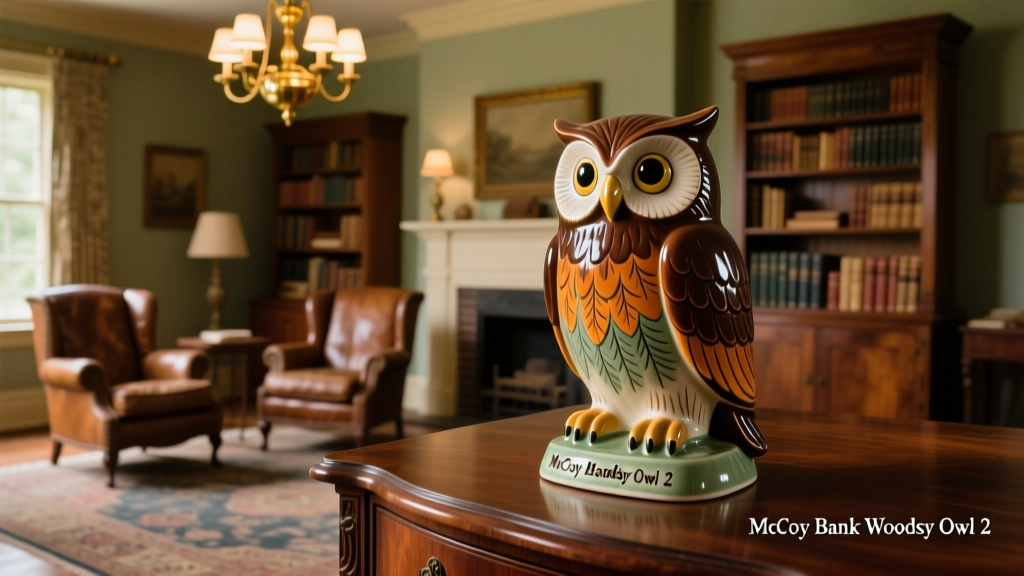
McCoy Bank Woodsey Owl #2: Identification, Provenance, and Restoration Guidelines for Collectors

The Wick China Co: American Art Deco Porcelain and the Legacy of a Mid-Century Innovator