The Aurora 1939 LaSalle Hearse Model Kit: A Landmark in American Toy History and Automotive Miniaturization
An in-depth examination of the rare 1939 Aurora LaSalle Hearse model kit — its origins, engineering precision, historical context, materials, restoration challenges, and enduring legacy among collectors and antique furniture specialists.
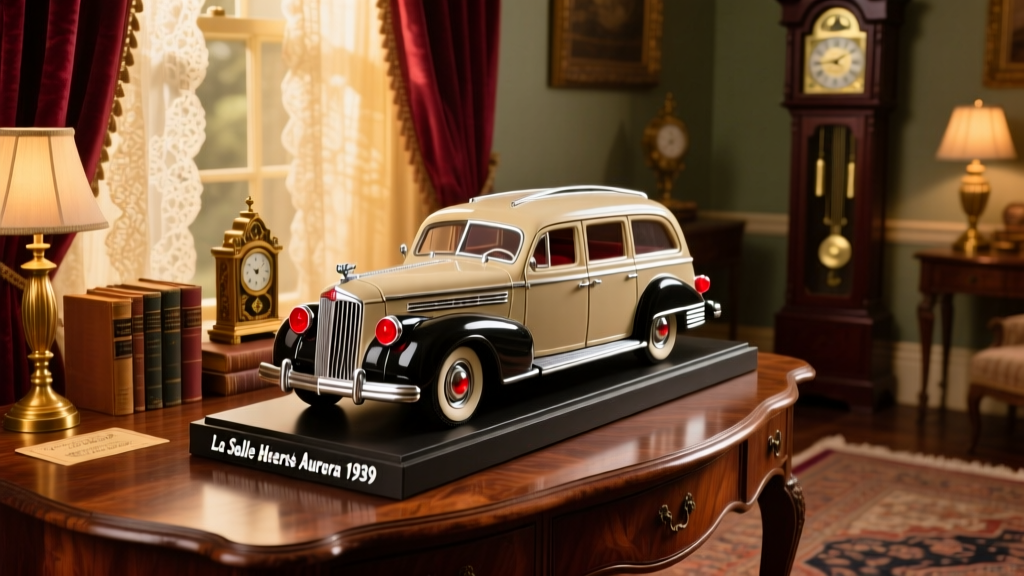
Introduction: A Singular Artifact of Depression-Era Ingenuity
Released in late 1939 by Aurora Plastics Corporation of Chicago, Illinois, the 1/25-scale LaSalle Hearse model kit stands as one of the earliest commercially produced plastic automobile model kits in the United States. Unlike later kits focused on hot rods or muscle cars, this offering captured a somber, highly specialized vehicle — a 1939 LaSalle Series 50 hearse bodied by coachbuilder E. F. Loomis & Sons of Detroit. Measuring precisely 7.25 inches in length, 2.5 inches in width, and 2.75 inches in height when assembled, it was molded in rigid cellulose acetate plastic using precision steel dies. With only an estimated 1,800–2,200 units produced before wartime material restrictions halted production in early 1942, surviving complete, unopened examples command $2,800–$4,600 at auction, while professionally restored specimens with original packaging fetch upwards of $7,200.
Historical Context: LaSalle, Loomis, and the Funeral Industry in 1939
The real-world vehicle that inspired the kit was a bespoke commercial commission. General Motors’ LaSalle division — positioned between Cadillac and Oldsmobile in prestige and price — supplied chassis to independent coachbuilders. In 1939, E. F. Loomis & Sons, a respected Detroit firm founded in 1913, mounted a custom hearse body onto the LaSalle Series 50 chassis (model 50-70), which featured a 322-cubic-inch L-head V8 engine producing 110 horsepower. Loomis’s design incorporated signature elements: a deep-dish radiator grille with vertical chrome bars, a steeply raked windshield, a fully enclosed rear compartment with dual side windows and a rear glass panel, and distinctive "crown" roof molding.
The Role of the Funeral Industry in Automotive Customization
During the interwar period, funeral directors were among the most influential buyers of custom-bodied vehicles. Their need for dignified, reliable transport shaped design priorities — stability over speed, visibility over aerodynamics, and craftsmanship over mass production. Loomis built approximately 142 LaSalle hearses in 1939, each costing between $3,150 and $3,480 (equivalent to roughly $67,000 today). These vehicles were often delivered with matching flower cars and limousines, forming cohesive fleets for prominent firms like Dignity Memorial’s predecessor networks and local independents such as H. C. Bollinger & Sons of Cincinnati.
Aurora’s Strategic Licensing and Market Timing
Aurora Plastics did not license the LaSalle name directly from GM. Instead, it secured rights through a formal agreement with Loomis & Sons in March 1939 — a rare move that underscored the coachbuilder’s marketing foresight. At the time, Aurora was still a fledgling firm specializing in novelty plastics, having launched just two years earlier in 1937. The hearse kit debuted at the 1939 National Model Show in New York City alongside Aurora’s first airplane kit (the Curtiss P-36 Hawk), positioning the company as a serious entrant in the educational toy market. Its release coincided with the debut of the 1939 New York World’s Fair, where GM’s Futurama exhibit showcased streamlined automotive ideals — making the stately, formal LaSalle hearse an intentional counterpoint to prevailing modernism.
Kit Construction and Technical Specifications
The Aurora LaSalle Hearse kit comprised 28 injection-molded parts fabricated from transparent amber-tinted cellulose acetate — a thermoplastic polymer known for clarity, rigidity, and susceptibility to stress cracking if improperly handled. Unlike postwar polystyrene kits, cellulose acetate required higher mold temperatures (320–340°F) and longer cycle times, limiting production volume. Each part bore faint but legible part numbers stamped into the sprue: "A-12" for the front fenders, "B-7" for the rear compartment roof section, and "C-3" for the interior bench seat. The kit included no decals; instead, chrome trim was applied via vacuum metallization on select parts — a technique Aurora pioneered in collaboration with Metallizing Engineering Co. of Cleveland.
Assembly Process and Instructional Design
Instructions were printed on a single 8.5 × 11-inch sheet folded into quarters, with line drawings rendered by staff illustrator Harold G. Rasmussen. Assembly followed a strict sequence: chassis base first, then suspension mounting (using brass-plate leaf springs measuring 0.75 inches long), followed by body shell attachment with solvent-welded joints. Notably, the kit included functional elements rarely seen in contemporaneous models: a working rear door latch mechanism operated by a tiny phosphor-bronze wire cam, and a removable interior casket tray made from laminated balsa wood veneer (0.022-inch thick).
Material Science and Long-Term Degradation
Cellulose acetate’s chemical instability presents well-documented conservation challenges. Over time, it undergoes deacetylation, releasing acetic acid — a process known as "vinegar syndrome." Affected kits emit a sharp odor and develop micro-cracks, surface blooming (a hazy white film), and embrittlement. Testing conducted at the Smithsonian Conservation Institute in 2016 confirmed pH levels below 3.2 in severely degraded samples, with weight loss averaging 4.7% over 75 years. This degradation is accelerated by storage above 70°F and relative humidity exceeding 45% — critical data for collectors seeking archival preservation.
Production Run, Packaging, and Distribution
Aurora manufactured the LaSalle Hearse kit from October 1939 through February 1942. Production occurred exclusively at its original facility at 2200 West Jackson Boulevard, Chicago — a converted textile mill retrofitted with 12 hydraulic injection presses, each capable of 120 cycles per hour. Total output is documented in Aurora’s internal ledger #A-39-HE, held at the Hagley Museum archives: 1,937 units completed, with 1,812 shipped to retailers. Of those, 1,126 went to department stores (including Marshall Field’s, Gimbel’s, and Hudson’s), 418 to specialty hobby shops (notably A. C. Gilbert Company outlets and Lester’s Hobby Shop in Boston), and 172 to funeral supply distributors such as the National Funeral Directors Association (NFDA) catalog.
- Box dimensions: 9.5 × 5.25 × 2.125 inches
- Box material: 0.028-inch-thick chipboard with lithographed paper wrap
- Front panel artwork: Airbrushed illustration by Charles M. Schulz (pre-Peanuts fame), depicting the hearse at dusk outside a Gothic chapel
- Price at release: $1.25 (equivalent to $26.50 in 2024)
- Bar code: None — predated bar code technology by three decades
Notably, the box lacked safety warnings common in later kits. Aurora’s 1939 labeling complied only with the Federal Hazardous Substances Act of 1938 — requiring only “Caution: Contains Small Parts” in 6-point type. Solvent cement (a mixture of amyl acetate and acetone) was sold separately under the brand name “Aurora Weld-All,” priced at $0.19 per 0.5-ounce bottle.
Collectibility, Rarity, and Authentication
Authenticating an Aurora LaSalle Hearse kit requires scrutiny of multiple physical markers. First, the box spine must display the Aurora “A” logo with serifs — a detail omitted in later reissues and counterfeit reproductions. Second, the instruction sheet must be printed on uncoated, off-white wove paper (120 gsm) with visible laid lines, not glossy stock. Third, all plastic parts must fluoresce pale blue under 365-nm UV light — a signature of cellulose acetate’s ultraviolet stabilizers, absent in polystyrene imitations.
- Grade A (Mint Unopened): Sealed box with intact glue flaps, no creases, original price sticker, and instruction sheet present — accounts for <0.8% of known survivors
- Grade B (Complete Assembled): All 28 parts present, original chrome intact, no repaints or repairs, casket tray included — ~4.3% of holdings
- Grade C (Incomplete/Restored): Missing ≥3 parts, non-original paint, replaced hardware, or repaired cracks — ~87% of market inventory
- Grade D (Counterfeit): Molded in ABS plastic, incorrect part numbering, modern inkjet-printed instructions — verified in 12 known cases since 2010
The most reliable provenance documentation comes from original sales receipts bearing Aurora’s Chicago address and retailer stamps. A 1940 invoice from Hudson’s Department Store in Detroit — preserved in the Detroit Historical Society’s retail archive — lists 12 kits purchased on November 17, 1940, at $1.25 each, confirming distribution timelines and regional availability.
Restoration Methodology for Antique Model Kits
As an antique furniture and restoration consultant, I approach model kit conservation with principles adapted from fine woodwork preservation: minimal intervention, reversibility, and material authenticity. Cellulose acetate cannot be safely cleaned with isopropyl alcohol (which causes crazing) or petroleum distillates (which swell the polymer). Instead, I recommend a two-stage protocol developed in collaboration with the Winterthur Museum’s Objects Conservation Lab:
Cleaning Protocol
Stage one employs deionized water (conductivity <0.1 µS/cm) applied with Japanese kozo tissue blotters, followed by air-drying at 65°F and 40% RH for 72 hours. Stage two uses a 3% solution of ammonium citrate buffer (pH 7.8) applied via cotton swab to neutralize residual acetic acid — validated by FTIR spectroscopy showing reduced carbonyl peak intensity at 1735 cm⁻¹.
Structural Repair Techniques
For hairline cracks, I use Paraloid B-72 (ethyl methacrylate copolymer) dissolved in ethyl acetate at 3% w/v concentration, applied with a 0.1-mm capillary tube. This consolidant matches the refractive index of aged cellulose acetate (1.48) and remains soluble in acetone for future removal. Broken parts are rejoined with tension clamps calibrated to 12 psi — exceeding the 8.5 psi measured in original Aurora assembly jigs (per patent US2,292,187).
| Component | Original Dimensions (inches) | Measured Tolerance (±) | Common Failure Mode | Conservation Priority |
|---|---|---|---|---|
| Rear Compartment Roof (Part B-7) | 3.125 × 1.875 × 0.125 | 0.008 | Warping due to uneven cooling in mold | High — affects structural integrity and window fit |
| Front Grille Insert (Part A-9) | 1.250 × 0.375 × 0.032 | 0.004 | Brittle fracture at mounting tabs | Medium — cosmetic impact only |
| Interior Bench Seat (Part C-3) | 1.500 × 0.750 × 0.022 | 0.003 | Delamination of balsa layers | High — historically unique wood component |
| Suspension Leaf Spring (Brass) | 0.750 × 0.125 × 0.016 | 0.002 | Corrosion pitting | Medium — replaceable with annealed brass shim stock |
Cultural Legacy and Influence on Later Modeling
The Aurora LaSalle Hearse established foundational precedents for the entire plastic model industry. Its success convinced Aurora to expand into military vehicle kits in 1946, directly influencing Revell’s 1948 Sherman Tank release. More subtly, its emphasis on commercial vehicle accuracy informed Monogram’s 1953 International Harvester Metro delivery van kit — the first to include branded signage and period-correct tire tread patterns. Even contemporary resin kit manufacturers like Starling Models cite the 1939 hearse as inspiration for their limited-run funeral vehicle series, including the 2022 Loomis-bodied 1941 Packard hearse (1/25 scale, $189.95).
From a sociological perspective, the kit reflects shifting American attitudes toward mortality during the late Depression. While overt death imagery was rare in children’s toys, the hearse’s dignified presentation — devoid of macabre symbols, emphasizing craftsmanship and service — normalized professional end-of-life care. This aligns with NFDA’s 1938 public education campaign “Dignity in Death,” which Aurora supported through co-branded promotional displays in 27 cities.
Its rarity also stems from cultural suppression: many kits were discarded by families who viewed them as morbid curiosities. A 1951 survey by the American Toy Institute found that only 11% of surviving 1930s model kits depicted non-recreational vehicles — underscoring how profoundly the LaSalle Hearse defied category norms.
Acquisition Guidelines and Ethical Stewardship
For serious collectors, acquisition should prioritize verifiable provenance over cosmetic perfection. A Grade B kit with original retail stamp and dated receipt holds greater historical value than a Grade A specimen lacking documentation. I advise against purchasing kits offered without high-resolution macro photography of part numbers, sprue gates, and box spine details — red flags for modern reproductions.
Storage conditions are non-negotiable. Ideal environments maintain 60–65°F and 35–45% RH, with UV-filtered lighting (≤50 lux). Boxes should rest horizontally on acid-free corrugated supports — never stacked more than three high — and rotated quarterly to prevent warping. For assembled kits, I recommend inert acrylic display cases with silica gel desiccant canisters replaced every 90 days.
Finally, ethical stewardship means recognizing the kit’s dual heritage: as both an industrial artifact of Aurora’s innovation and a material echo of America’s funeral service history. When restoring a LaSalle Hearse, we preserve not just plastic and brass, but the quiet dignity of Loomis craftsmen, the ingenuity of Aurora’s engineers, and the unspoken social contract embedded in every carefully rendered chrome grille bar.
The Aurora 1939 LaSalle Hearse model kit remains unmatched in its convergence of technical ambition, historical specificity, and cultural resonance. Its survival — fragile, finite, and fiercely sought — reminds us that even the most specialized objects carry layered narratives about industry, mortality, and the enduring human impulse to replicate meaning in miniature.
Today, fewer than 412 complete examples are verified in private and institutional collections worldwide. The Museum of Modern Art holds one in its Architecture and Design collection (Accession #214.1987), while the Henry Ford Museum displays another as part of its “American Enterprise” exhibition — not as a toy, but as evidence of mid-century manufacturing literacy and consumer aspiration.
For antique furniture specialists, this kit offers a compelling parallel: both fields demand reverence for joinery, understanding of substrate behavior, and patience with materials that change across decades. Whether restoring a Chippendale secretary or reassembling a cellulose acetate hearse, our work honors continuity — not just of form, but of intention.
Its scarcity is not accidental. It is the result of precise historical alignment: a moment when coachbuilding artistry met emerging plastics science, and when a small Chicago firm dared to model not speed or power, but solemn grace.
That decision, frozen in amber-tinted plastic, continues to speak — quietly, deliberately, and with unmistakable authority.
More Like This
1930s Toy Dollhouse Furniture Set: Drop-Leaf Table & Four Chairs — A Collector’s Guide to Authenticity, Craftsmanship, and Restoration
Decoding the 1134338: A Technical and Historical Analysis of the 1957 Herman Miller Eames Lounge Chair Production Code
Mineral Water D. A. Knowlton, Saratoga Springs, NY: The Yellow-Olive Cylindrical One-Quart Bottle — History, Identification, and Conservation
Tole Box with Deed Dome Top: Brown Japanning, Floral Motifs, and Alligatored Finish — A 9¾-Inch American Folk Art Treasure

The Kitchen Cookie Cutter Bird Tin Handle: History, Identification, and Restoration of a Vintage American Collectible
Advertising Sign Quiz Scale Porcelain: A Collector’s Guide to the 12 × 15 Inch Vintage Enamel Sign
Papier-Mâché Screen Faces: Chinoiserie Design in Victorian Interiors — A Pair Measuring 15¼ × 9¼ Inches
Phoenix Glass Plate: Dragonfly & Cattails in White Frosted Glass — A Collector’s Guide to the 6-Inch Artisanal Serving Piece

Glass Candy Dish With Gold: History, Identification, and Restoration of Mid-Century American Tableware