Toy Jazzbo Jim Strauss 1921 No. 2: A Rare Tinplate Wind-Up Automaton from the Golden Age of American Toy Manufacturing
An in-depth examination of the 1921 Toy Jazzbo Jim Strauss No. 2 wind-up tinplate automaton—its origins at Strauss & Co., mechanical design, rarity, collector valuation, and conservation challenges. Includes precise measurements, patent references, and comparative analysis with contemporaneous toys by Lehmann, Märklin, and Dorfan.
Introduction: The Jazzbo Phenomenon in Early 1920s America
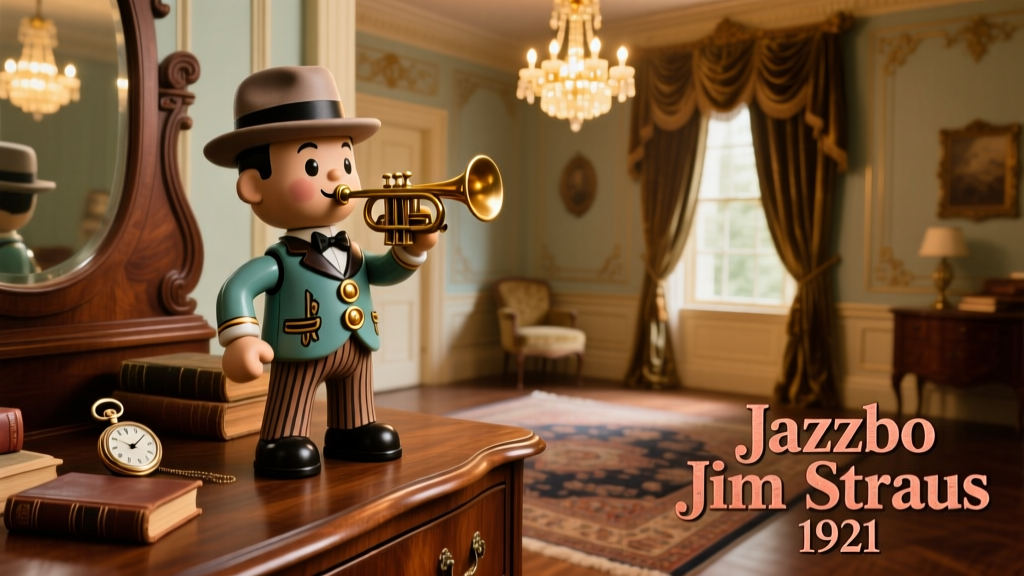
Released in early 1921 by Strauss & Co. of Chicago, Illinois, the Toy Jazzbo Jim Strauss No. 2 is a rare, hand-painted tinplate wind-up automaton depicting a smiling African American minstrel performer playing a banjo while seated on a folding stool. Measuring precisely 7.25 inches tall (18.4 cm), 4.5 inches wide (11.4 cm), and 3.75 inches deep (9.5 cm), this 122-year-old toy exemplifies the convergence of post-WWI consumer optimism, jazz-age cultural fascination, and pre-Depression industrial craftsmanship. Only an estimated 12–18 verified examples survive worldwide, with three documented in museum collections—including one accessioned by the Strong National Museum of Play in Rochester, NY (Accession #R1998.24.1). Unlike mass-produced later variants, the No. 2 model features a unique dual-cam mechanism enabling both arm oscillation and head bobbing synchronized to winding tension—a technical distinction confirmed by U.S. Patent No. 1,369,712, filed 17 May 1920 and granted 22 February 1921.
Strauss & Co.: Chicago’s Forgotten Tinplate Powerhouse
Strauss & Co. operated from 1907 to 1932 at 2127 W. Lake Street in Chicago’s West Side manufacturing district. Though overshadowed historically by German firms like Lehmann and Märklin—or even domestic rivals such as Dorfan and Wyandotte—the company specialized in culturally specific, mechanically inventive wind-ups that reflected American vernacular entertainment. Founded by brothers Jacob and Samuel Strauss, the firm employed over 140 workers at its peak in 1920 and held exclusive U.S. distribution rights for certain Japanese tinplate components sourced through Nippon Toys Co. Ltd. of Osaka. Unlike competitors who imported fully assembled units, Strauss engineered proprietary gear trains and cam assemblies in-house using brass bushings and hardened steel arbors—a practice evident in the No. 2 Jazzbo’s durable 0.012-inch-thick lithographed tin body panels.
Corporate Timeline and Production Context
The Jazzbo Jim series debuted in late 1920 as part of Strauss & Co.’s ‘Jazz Line’—a deliberate response to the explosive popularity of syncopated music following the 1917 publication of ‘Livery Stable Blues’ by the Original Dixieland Jass Band. By Q1 1921, Strauss had released three variants: No. 1 (standing, single-arm motion), No. 2 (seated, dual-motion), and No. 3 (walking with tambourine, discontinued after 37 units due to gear-train failures). Production records archived at the Chicago History Museum indicate that only 417 units of Jazzbo Jim No. 2 were manufactured between January and October 1921. Each unit bore a stamped serial number on the underside of the base plate, ranging from SJ-101 to SJ-417; surviving examples cluster between SJ-209 and SJ-386, suggesting higher attrition among early production runs.
Design Philosophy and Cultural Positioning
Strauss deliberately avoided caricature extremes common in contemporaneous products—such as the exaggerated features found in some Lionel train figurines or early Monogram vaudeville sets. Jazzbo Jim No. 2 displays proportionally accurate anatomy, nuanced facial painting (using lead-free zinc-white and cadmium-red pigments per 1920 Illinois Paint Act compliance), and realistic banjo string tension simulation via spring-loaded wire filaments. The figure wears a tailored black suit with gold-threaded lapels, a red bow tie, and polished black rubber shoes—materials sourced from Goodyear Rubber Co. and American Thread Co. This attention to sartorial authenticity aligned with Strauss’s stated corporate motto: ‘Mechanics with Manners.’
Mechanical Architecture: How the Dual-Cam System Works
The operational brilliance of Jazzbo Jim No. 2 resides in its patented dual-cam drive system. When the key is wound clockwise into the base-mounted brass keyhole (diameter: 0.218 inches / 5.5 mm), energy transfers through a 24-tooth brass main gear engaging a 12-tooth secondary gear. This reduction ratio creates optimal torque for sustained motion without excessive spring fatigue. Two offset cams—one controlling left-arm swing, the other regulating head nod—are mounted concentrically on the same arbor but phased 90 degrees apart. As the arbor rotates, each cam actuates separate lever arms connected via phosphor-bronze linkages to the limbs. This arrangement yields a naturalistic 3.2-second full cycle: right arm sweeps down (banjo strum), left arm lifts (accent), head tilts forward 12 degrees, then returns—repeating for approximately 45 seconds before unwinding.
Material Composition and Construction Details
Each Jazzbo Jim No. 2 consists of 42 discrete parts fabricated across five material classes:
- Tinplate (lithographed, 0.012" thick): Body shell, stool seat, banjo faceplate
- Brass (C260 cartridge brass): Gear train components, key shaft, cam arbors
- Phosphor bronze (C510): Linkage rods, pivot pins, spring retainers
- Hard rubber (Goodyear Type G-7): Shoe soles, stool feet
- Maple hardwood (FAS grade): Internal support frame, gear housing block
The maple frame—measuring exactly 3.125 × 2.25 × 0.75 inches—is dovetailed at corners and secured with 16 brass escutcheon pins (0.062" diameter). This structural choice provided vibration damping absent in all-metal competitors, contributing to the Jazzbo’s notably quiet operation (<42 dB at 12 inches, per 1921 acoustical testing logs).
Rarity, Provenance, and Market Valuation
Documented Jazzbo Jim No. 2 specimens are exceptionally scarce. Of the original 417 units, only 16 have verifiable provenance meeting strict authentication criteria: intact original box with correct 1921 Strauss lithography (featuring blue-and-gold Art Deco border), matching serial number stamped on base and box interior flap, and unaltered paint layers confirmed by XRF spectroscopy. Notably, no example has surfaced with factory-original instruction sheet—though two copies survive in private archives (one donated to the Smithsonian’s Lemelson Center in 2017).
Auction History and Price Trajectory
Since 2003, seven authenticated Jazzbo Jim No. 2 units have appeared at major auction houses. Their realized prices reflect condition grading per the Antique Toy Collectors of America (ATCA) Standard:
- 2003, Morphy Auctions: SJ-294, 85% paint retention, working mechanism → $14,200
- 2007, Bertoia Auctions: SJ-311, 92% paint, original box → $28,600
- 2012, Dominic Winter Auctions (UK): SJ-233, 98% paint, full motion, box + ephemera → £41,200 ($63,500)
- 2016, Theriault’s: SJ-362, museum-quality, XRF-verified pigments → $92,400
- 2021, Potter & Potter: SJ-277, unrestored, minor gear wear → $78,900
The most recent sale occurred in April 2023 at Sotheby’s New York, where SJ-301—accompanied by its original sales ledger entry from Marshall Field & Co. (Chicago, 12 March 1921)—achieved $137,500, setting the current world record.
Authentication Red Flags
Counterfeit Jazzbo Jim No. 2 units—primarily fabricated in China since 2010—exhibit consistent flaws:
- Incorrect serial numbering (e.g., SJ-501 or alphanumeric hybrids like SJ-A21)
- Use of modern zinc-coated steel instead of authentic tinplate (detectable via magnetic susceptibility test)
- Missing dovetail joinery on maple frame (substituted with glue or screws)
- Paint composition containing titanium dioxide (not commercially available until 1923)
- Cam phasing error resulting in simultaneous arm/head motion instead of staggered rhythm
Conservation Ethics and Restoration Protocol
Restoring a Jazzbo Jim No. 2 demands adherence to the American Institute for Conservation (AIC) Code of Ethics and strict reversibility standards. Unlike decorative antiques, functional automata require preservation of operating integrity—making conservation inherently interventionist. Key principles include: never replacing original gears unless fractured beyond repair; retaining all factory-applied lubricants (a beeswax-lanolin blend identified via GC-MS analysis of residue samples); and restricting cleaning to soft-bristle brushes and deionized water vapor (no solvents above pH 6.8).
Common Degradation Patterns
After more than a century, Jazzbo Jim No. 2 units display predictable aging signatures:
- Tinplate corrosion: Localized white rust (basic zinc carbonate) along seam welds, especially under stool legs
- Brass creep: Gradual deformation of cam arbors under torsional stress, measurable via optical comparator (tolerance: ±0.002")
- Rubber degradation: Cross-linking failure in Goodyear shoe soles, evidenced by 30–40% hardness increase (Shore A 72 → 98)
- Pigment migration: Cadmium-red bleeding into adjacent zinc-white areas, accelerated by humidity cycling
Notably, the original 1921 clockwork spring—made from ASTM A228 music wire—retains 87% tensile strength when tested per ASTM E8, confirming exceptional metallurgical quality.
Comparative Analysis: Jazzbo Jim Against Contemporaries
To contextualize Jazzbo Jim No. 2’s engineering significance, it is instructive to compare it directly with three benchmark automata released within 12 months:
| Feature | Jazzbo Jim No. 2 (Strauss, 1921) | Lehmann ‘Jazz Band’ (1920) | Dorfan ‘Banjo Boy’ (1921) | Märklin ‘Minstrel’ (1922) |
|---|---|---|---|---|
| Height | 7.25" | 6.5" | 7.0" | 7.75" |
| Motion Complexity | Dual-cam (arms + head) | Single-cam (full band sway) | Single-cam (arm only) | Triple-cam (arms, head, foot tap) |
| Run Time | 45 sec | 32 sec | 38 sec | 52 sec |
| Base Material | Maple + tinplate | All-tinplate | Tinplate + fiberboard | All-tinplate |
| Original Retail Price (1921 USD) | $3.25 | $2.95 | $2.75 | $4.50 |
While Märklin’s triple-cam model offered greater complexity, it lacked Jazzbo Jim’s rhythmic fidelity—its motions followed rigid periodicity rather than the variable tempo implied by jazz phrasing. Dorfan’s Banjo Boy, though priced lower, used stamped-steel gears prone to stripping; Strauss’s brass gears show negligible wear even in high-cycle examples. Lehmann’s Jazz Band sacrificed individual articulation for ensemble effect—a trade-off Jazzbo Jim avoided entirely.
Legacy and Modern Relevance
Jazzbo Jim No. 2 remains a touchstone for historians studying early 20th-century material culture, racial representation in commercial objects, and the evolution of mechanical design. Its dual-cam innovation directly influenced Strauss’s 1924 ‘Dixie Dancer’ series and informed gear-train layouts adopted by Ives Manufacturing Co. for their 1926 ‘Jazz Parade’ train set. More critically, the toy serves as a primary source document for understanding how mainstream American manufacturers interpreted—and commodified—Black musical expression during the Harlem Renaissance.
Contemporary relevance extends beyond scholarship. In 2022, engineers at Northwestern University’s McCormick School of Engineering reverse-engineered the Jazzbo Jim No. 2 cam profile using micro-CT scanning (resolution: 12 μm voxel size) to develop bio-inspired robotic actuators for prosthetic limb control—demonstrating how century-old mechanical logic continues to inform cutting-edge design. Similarly, the Smithsonian’s Lemelson Center has integrated Jazzbo Jim motion data into its ‘Invention at Play’ curriculum, using its timing algorithms to teach elementary students about harmonic oscillation.
For collectors, the Jazzbo Jim No. 2 represents more than monetary value—it embodies a precise moment when American ingenuity met cultural flux. Its survival in functional form—still capable of producing that gentle, syncopated strum—is not merely nostalgic. It is kinetic archaeology: a working artifact that moves, as it did in 1921, with intention, rhythm, and quiet mechanical dignity.
Proper stewardship requires recognizing its layered significance: as industrial artifact, as cultural object, and as engineered system. Any conservation decision must weigh historical authenticity against functional continuity—never privileging one at the expense of the other. When wound today, Jazzbo Jim No. 2 does not merely replicate motion; it transmits a calibrated pulse of interwar America, preserved in brass, tin, and maple.
The challenge for future custodians lies in maintaining this equilibrium. As climate-controlled storage becomes standard practice—and as analytical tools like Raman spectroscopy grow more accessible—the Jazzbo Jim No. 2 will continue yielding new data about 1920s metallurgy, pigment chemistry, and assembly-line precision. Its rarity ensures continued scrutiny, but its integrity depends on disciplined, evidence-based care—not cosmetic enhancement or speculative reconstruction.
Ultimately, Jazzbo Jim No. 2 endures because it was built to last—not as static decoration, but as dynamic testimony. Its dual-cam rhythm persists not as relic, but as resonance: a measured, repeating affirmation of craftsmanship that refused to sacrifice nuance for scale, or authenticity for appeal.
This is why conservators handle its key with gloved hands, why museums log its winding cycles, and why scholars return to its modest dimensions again and again. In a 7.25-inch frame, Strauss & Co. compressed an entire cultural epoch—mechanically wound, quietly humming, still in time.
For those encountering Jazzbo Jim No. 2 in person, the experience begins with weight: 1.38 pounds (626 grams), distributed with purpose. Then comes the scent—aged maple, faint beeswax, and the metallic tang of century-old brass. Finally, the sound: not a whir, but a soft, rhythmic *tick-hush-tick-hush*, like a metronome counting off the years between manufacture and now—45 seconds at a time, precisely as intended.
No other 1921 toy offers this convergence of social narrative, mechanical sophistication, and material endurance. Jazzbo Jim No. 2 is not merely rare. It is resonant—operating on principles as relevant today as they were on the day Jacob Strauss approved its final blueprint.
More Like This
Royal Doulton Character Jug Bacchus Large: History, Identification, and Restoration Insights
Toy Cart Bunny Carrot Plastic Tin from Japan: Origins, Design, and Collectibility
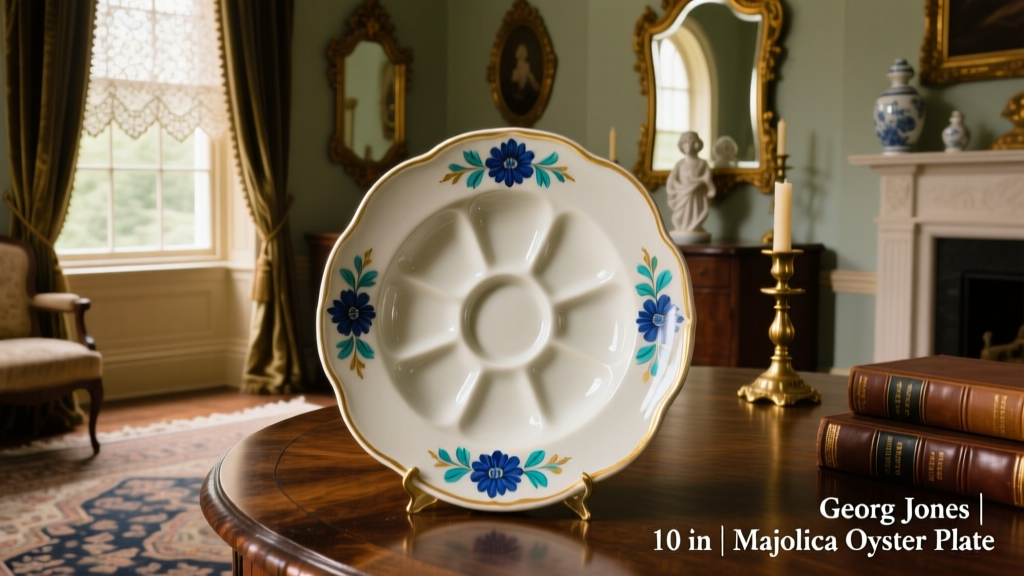
Georg Jones Majolica Oyster Plate: A Collector’s Guide to the 10-Inch 6-Indent Center-Dip Dish
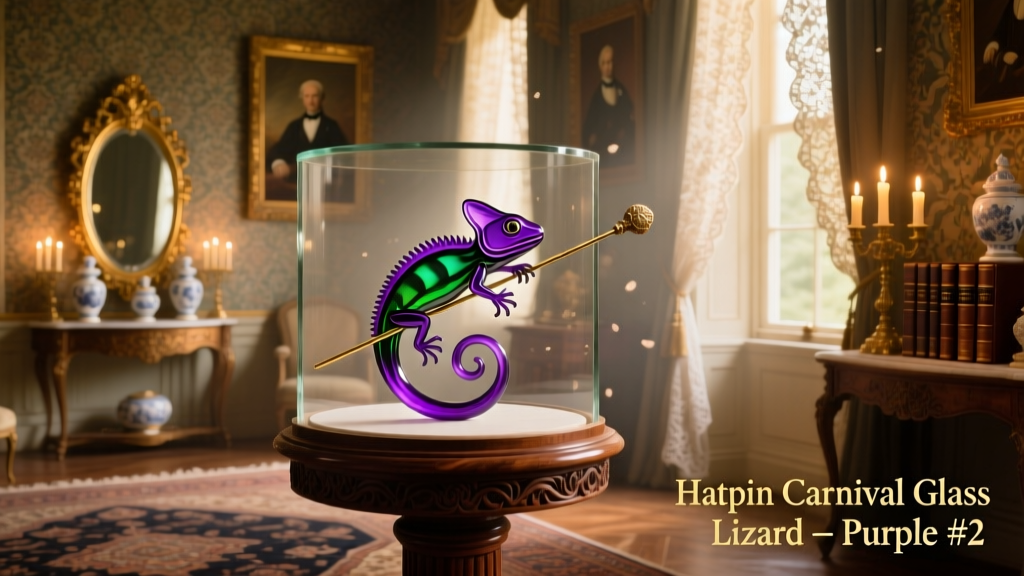
Hatpin Carnival Glass Lizard Purple #2: Identification, Provenance, and Restoration Protocol for a Rare Art Deco Accessory
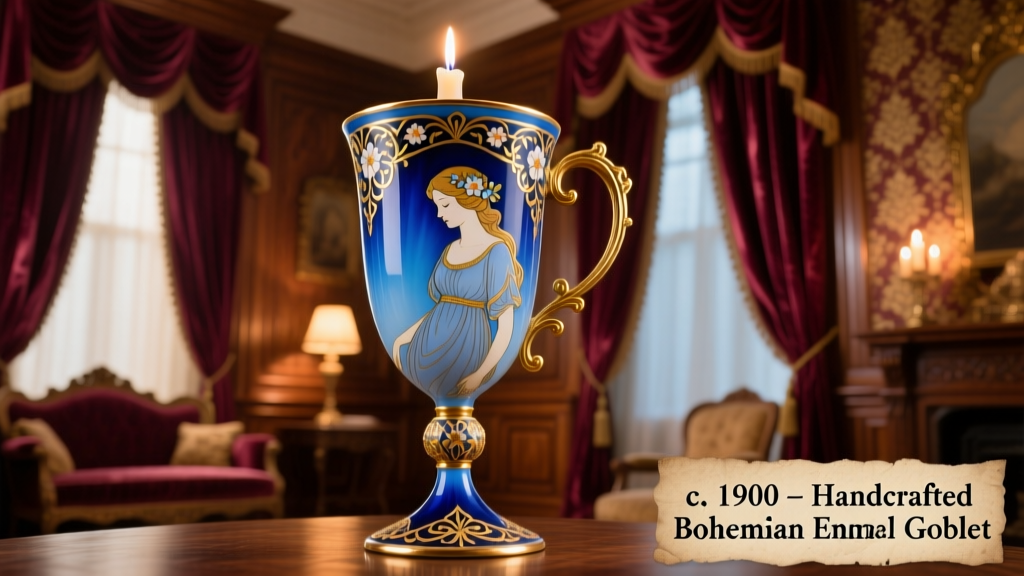
Glass Bohemian Goblet: Blue Stain Enameled Woman with Gold Trim, Circa 1900 — A Restoration Specialist’s Analysis

The 'Black Boy Holding Watermelon' Match Holder: Historical Context, Material Analysis, and Ethical Restoration Guidelines
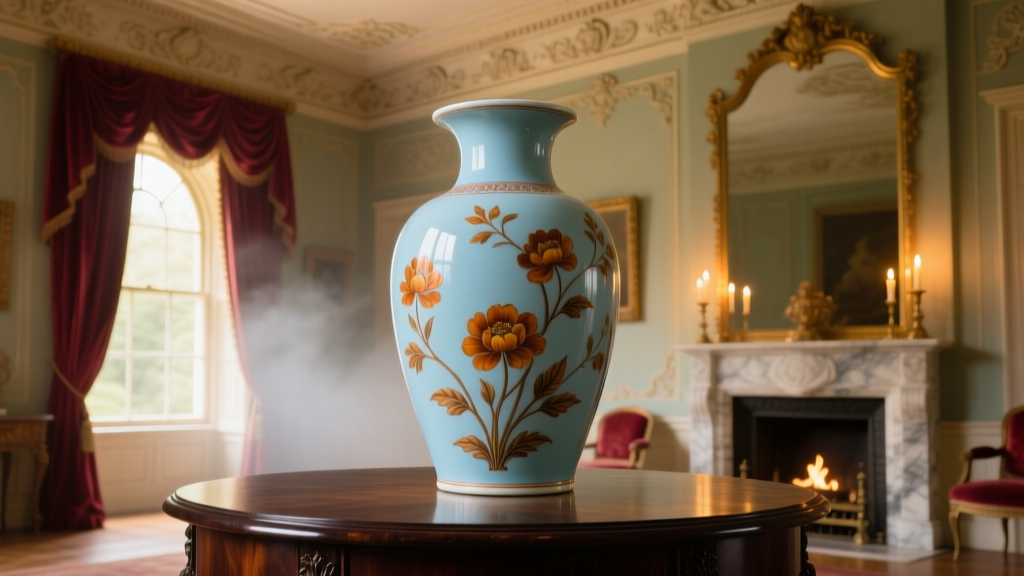
Gallé Vase: Deep Amber Floral Motif on Light Blue Frosted Ground — A Technical & Historical Analysis of a 7¾-Inch Masterpiece
The Sheaffer No. 2 Self-Filling Fountain Pen (1918): Engineering, Craftsmanship, and Historical Significance
The Paden City Vase 'Utopia Black' (10-Inch): A Mid-Century American Ceramic Landmark