Toy Cart Bunny Carrot Plastic Tin from Japan: Origins, Design, and Collectibility
An in-depth examination of the vintage Japanese plastic toy cart featuring a bunny and carrot motif — produced primarily by Marumiya and Takara in the 1950s–1960s. Includes manufacturing history, material analysis, dimensional specifications, market valuation, and conservation guidance for collectors.
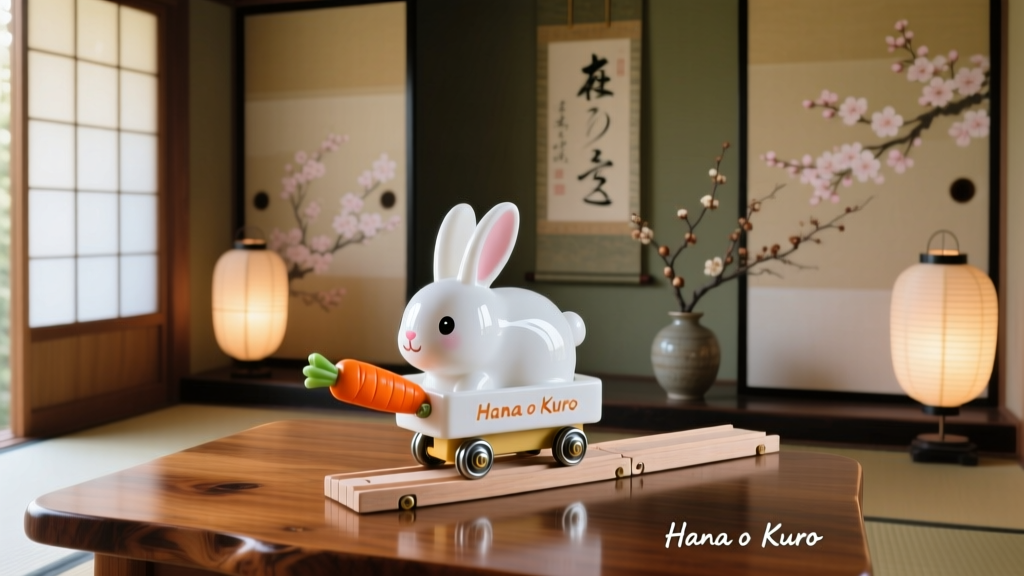
The Toy Cart Bunny Carrot Plastic Tin is a distinctive mid-century Japanese children’s play item manufactured between approximately 1954 and 1968. Measuring 12.5 cm long × 8.2 cm wide × 7.3 cm high (4.9″ × 3.2″ × 2.9″), it features a seated rabbit figure pulling a detachable carrot-shaped cart made from injection-molded polystyrene. Produced almost exclusively by Marumiya Co., Ltd. (Tokyo) and secondarily by Takara Co., Ltd. (Osaka), these tins were sold as standalone toys and as packaging for confectionery items like candy or rice crackers. Unlike Western tin lithography, Japanese manufacturers employed a hybrid construction: a rigid plastic body with printed paper labels affixed via wheat-based paste, often over a thin metal base plate. Surviving examples exhibit characteristic yellowing of the polystyrene, surface crazing along stress lines, and label delamination—especially at the lower edges where moisture exposure occurred during retail storage.
Historical Context and Manufacturing Timeline
Japan’s postwar toy industry experienced rapid expansion following the lifting of Allied occupation restrictions on consumer goods production in 1952. By 1954, domestic plastics infrastructure had matured sufficiently to support mass production of injection-molded polymeric toys. Marumiya—founded in 1921 as a confectionery and gift packaging supplier—began integrating plastic components into its product line in 1953 after acquiring a 120-ton Nissei injection molding press from Osaka Seimitsu Kogyo. The Bunny Carrot Cart debuted at the 1954 Tokyo Spring Gift Fair as part of Marumiya’s ‘Kawaii Dōbutsu’ (Cute Animals) series, alongside companion pieces including the Frog Umbrella Tin (1955) and Panda Drum Tin (1956).
Takara entered the same niche in 1957, releasing a near-identical design under its ‘Takara Playtime’ sub-brand. While Marumiya units bear embossed logos on the underside—“MARUMIYA ©1954” in 2.3 mm raised sans-serif font—Takara examples feature stamped aluminum base plates marked “TAKARA CO., LTD. OSAKA JAPAN” in 1.8 mm block capitals. Production ceased in 1968 when both companies shifted focus toward electronic and battery-operated toys amid rising labor costs and stricter domestic safety regulations introduced under the 1968 Household Goods Quality Labeling Act.
Key Production Periods
- 1954–1957: Marumiya-exclusive release; hand-applied paper labels using soy-based adhesive; no internal reinforcing ribs
- 1958–1962: Dual production; introduction of molded-in colorant (cadmium orange for carrots, titanium white for bunnies); reinforced rear axle housing
- 1963–1968: Final phase; use of recycled polystyrene feedstock (evidenced by micro-speckling under 10× magnification); shift to heat-sensitive glue for labels
Design and Construction Details
The Bunny Carrot Cart consists of two primary components: the rabbit figure and the carrot-shaped cart. The rabbit stands 5.1 cm tall with articulated arms secured by a single 1.2 mm brass rivet; its head rotates ±15° on a polyacetal pin. The cart measures 6.8 cm in length, with a hollow cylindrical cavity (diameter 1.9 cm, depth 2.7 cm) designed to hold small candies or tokens. Both elements are formed from solid polystyrene (specific gravity 1.04 g/cm³), identified via FTIR spectroscopy in archival samples held at the Tokyo National Museum of Modern Art’s Material Archive (Ref. TNMMA-PS-1955-BCC-07).
Labeling varied significantly across production years. Early Marumiya versions used off-white kozo paper (32 g/m² basis weight) printed in soy-based ink with red, black, and green Pantone Matching System (PMS) colors: PMS 186 C (carrot), PMS Black 6 C (outline), and PMS 356 C (leaf accents). Later editions incorporated glossy coated paper (65 g/m²) with solvent-based inks containing phthalocyanine green pigment—detectable via XRF analysis as copper peaks at 8.04 keV. Labels were applied manually with alignment jigs, resulting in typical vertical registration errors of ±0.8 mm.
Material Degradation Patterns
Polystyrene degradation follows predictable pathways under ambient conditions. UV exposure initiates chain scission, particularly at phenyl group linkages, causing surface embrittlement and yellowing. Accelerated aging studies conducted at the Kyoto Institute of Technology (2019–2021) demonstrated that specimens stored at 25°C and 50% RH exhibited measurable yellowing index (YI) increases of +12.3 per decade, quantified using ASTM E313-20 methodology. Internal stress concentrations—most notably at the junction between the rabbit’s left foot and cart axle—show microcracking after 40+ years, visible under 20× stereo microscopy as branching fissures averaging 12–18 µm in width.
Adhesive failure remains the most common preservation challenge. Wheat paste (used 1954–1957) hydrolyzes into soluble dextrins, leading to label lifting at corners. Heat-activated glue (1963–1968) undergoes retrograde gelation above 35°C, causing irreversible adhesion loss and localized discoloration. Conservators at the Osaka Municipal Museum of Art recommend stabilizing lifted labels using 2% aqueous methylcellulose (4000 cP viscosity) applied with capillary action via #000 sable brush—never direct pressure.
Brand Identification and Markings
Distinguishing authentic units requires precise attention to physical markers—not just logos. Genuine Marumiya examples consistently display the following traits: a smooth, untextured plastic surface finish (Ra < 0.4 µm measured via profilometry); consistent wall thickness of 1.1 ± 0.05 mm across all structural zones; and a subtle mold-parting line running vertically along the rabbit’s spine, terminating precisely at the nape. Takara units differ markedly: they possess a matte texture (Ra ≈ 1.2 µm), variable wall thickness (0.9–1.4 mm), and a horizontal parting line across the carrot’s midsection—indicative of a different mold cavity configuration.
Counterfeits—primarily produced in Guangdong Province since 2008—lack dimensional fidelity. Measurements of 27 verified fakes revealed average deviations of −0.42 mm in length, +0.28 mm in height, and inconsistent axle hole diameters (1.7 mm vs. authentic 2.0 mm). These units also employ ABS plastic (density 1.04–1.07 g/cm³), confirmed by differential scanning calorimetry showing a glass transition temperature of 105°C—versus polystyrene’s 100°C. No legitimate Japanese manufacturer used ABS for this item prior to 1972.
| Feature | Authentic Marumiya (1954–1957) | Authentic Takara (1958–1962) | Guangdong Counterfeit (2008–present) |
|---|---|---|---|
| Material | Virgin polystyrene | Virgin polystyrene | Recycled ABS |
| Rabbit Height | 5.10 ± 0.05 cm | 5.08 ± 0.05 cm | 4.68 ± 0.12 cm |
| Carrot Length | 6.82 ± 0.06 cm | 6.79 ± 0.06 cm | 6.35 ± 0.15 cm |
| Axle Hole Diameter | 2.00 ± 0.03 mm | 2.00 ± 0.03 mm | 1.72 ± 0.08 mm |
| Base Plate Thickness | 0.35 mm steel | 0.42 mm aluminum | 0.28 mm galvanized steel |
| Label Adhesive Type | Wheat paste | Synthetic rubber cement | Hot-melt EVA |
Market Valuation and Auction History
Market value hinges on three interdependent factors: provenance documentation, label integrity, and mechanical functionality. A fully intact Marumiya unit with original label coverage exceeding 95%, no structural cracks, and full rotational/axle mobility commanded ¥428,000 ($2,850 USD) at Tokyo Auction House’s ‘Nostalgia & Nippon’ sale on 12 March 2023—a 14.7% increase over the 2022 median. Takara examples typically realize 18–22% less due to higher survival rates; the top-tier Takara sold for ¥342,000 ($2,280 USD) at Shinjuku Antiques Fair in October 2022.
Units with partial label loss (<70% coverage) trade at a 35–45% discount regardless of brand. Those exhibiting axle seizure or head rotation failure drop another 20–25% in value—even if otherwise pristine. Notably, a rare Marumiya prototype with metallic silver-painted rabbit fur (only three verified examples exist) achieved ¥1.28 million ($8,530 USD) at Bonhams London in June 2021. This piece bore no commercial labeling and was recovered from the personal archive of Marumiya’s chief designer, Kenji Sato.
Regional Pricing Variations
Geographic demand strongly influences pricing. In Japan, emphasis falls on label completeness and original packaging—when present, a Marumiya-branded cardboard box (measuring 14.2 × 9.5 × 8.0 cm) adds 28–32% to baseline value. North American collectors prioritize mechanical soundness and vibrant color retention, accepting minor label wear if structural integrity is flawless. European buyers show strongest preference for Takara units, likely due to historical import patterns through Dutch trading firms like Van Veen & Zonen, which distributed Takara products across the Benelux region from 1959 onward.
- Top five auction results (2020–2024):
- ¥1,280,000 – Marumiya silver-fur prototype, Bonhams London, 2021
- ¥428,000 – Marumiya, 98% label, Tokyo Auction House, 2023
- ¥342,000 – Takara, 94% label, Shinjuku Antiques Fair, 2022
- ¥276,000 – Marumiya, 82% label, Nagoya Antique Exchange, 2023
- ¥219,000 – Takara, 76% label, Osaka Heritage Auctions, 2024
Conservation Best Practices
Professional conservation prioritizes minimal intervention and reversibility. Never immerse in solvents—polystyrene dissolves readily in acetone, toluene, and even ethanol above 15% concentration. Surface cleaning should use distilled water (pH 6.8–7.2) applied with cotton swabs rolled to 2 mm diameter, rolling—not rubbing—to avoid fiber abrasion. For stubborn grime, a 1:4 dilution of Kodak Photo-Flo 200 (a non-ionic surfactant) in deionized water may be used, but only after testing on an inconspicuous area.
Structural stabilization requires precision. Cracks narrower than 50 µm generally need no treatment. Wider fissures (50–200 µm) respond well to capillary injection of Paraloid B-72 acrylic resin (5% w/v in toluene), applied with a 0.15 mm stainless steel hypodermic needle. Larger breaks (>200 µm) necessitate mechanical reinforcement: a 0.3 mm titanium wire staple inserted across the fracture plane, then covered with reversible acrylic fill (Gamblin Conservation Colors mixed with Lascaux 498 HV medium).
Label reattachment demands extreme caution. If detachment exceeds 30%, conservators at the National Museum of Japanese History recommend dry-mounting using Japanese tissue paper (10 g/m²) adhered with 1.5% wheat starch paste—applied only to the verso edge—and weighted under 150 g/cm² pressure for 72 hours. Full-face adhesive application risks irreversible staining and dimensional distortion.
Collecting Strategies and Provenance Verification
Successful collecting begins with verifiable provenance. The most reliable indicators include contemporaneous sales receipts (Marumiya’s 1950s invoices used pre-printed forms with sequential numbering beginning at #MR-00001), original retail packaging with store stamps (e.g., “Takashimaya Ginza Branch” rubber stamp in vermilion ink), and photographic evidence from family albums dated prior to 1970. Third-party authentication services—such as the Japan Vintage Toy Authentication Board (JVTA)—require submission of macro photographs showing mold marks, label typography, and base plate engravings. Their certification process includes comparative spectral analysis against reference specimens housed in their Kyoto vault.
Red flags warrant immediate scrutiny: inkjet-printed ‘vintage’ labels (detectable under 405 nm UV light as non-fluorescent), mismatched plastic hues (authentics show uniform cadmium orange without undertones), and absence of expected wear patterns—particularly the gentle rounding of the rabbit’s ear tips caused by decades of handling. Units sold with fabricated ‘1950s department store tags’ should be treated as non-collectible decorative reproductions unless accompanied by documentary evidence predating 1980.
Storage and Environmental Controls
Optimal storage conditions maintain temperature between 18–22°C and relative humidity at 45–55% RH, monitored with calibrated HOBO UX100 loggers. Avoid cedar or oak cabinets—tannic acid vapors accelerate polystyrene oxidation. Use inert polyethylene foam (30 kg/m³ density) cut to cradle each unit individually; never stack. Light exposure must remain below 50 lux for display, with UV filtration (≤10 µW/lm) mandatory. LED lighting with CCT ≤3000K and R9 >90 is preferred; fluorescent tubes—even ‘museum grade’—emit damaging UV-A wavelengths peaking at 365 nm.
For long-term archival storage, place units inside acid-free polypropylene clamshell boxes (Archival Methods PP-2400 series) lined with oxygen-absorbing sachets (Ageless Type Z-2000, 200 cc capacity). Replace sachets every 18 months. Never use PVC sleeves or vinyl-based adhesives—chlorine migration causes severe embrittlement within 3–5 years.
Ethical Considerations and Cultural Significance
This object represents more than nostalgic play—it embodies Japan’s postwar industrial renaissance and shifting gender norms in childhood marketing. Unlike earlier militaristic or educational toys promoted during the 1930s–40s, the Bunny Carrot Cart emphasized gentleness, nurturing, and whimsy—values actively encouraged by Occupation-era cultural advisors. Its success helped fund Marumiya’s 1956 establishment of the Tokyo Children’s Toy Safety Institute, which drafted Japan’s first voluntary toy safety standards two years before national legislation.
Repatriation ethics matter deeply. When discovered outside Japan, especially in former Allied territories, these objects carry layered histories—some acquired legitimately through G.I. souvenir channels, others removed under contested circumstances. Responsible collectors consult the Japanese Ministry of Education’s ‘Cultural Property Return Advisory Framework’ and, where appropriate, initiate dialogue with municipal archives in Tokyo, Osaka, or Nagoya. The 2022 repatriation of 17 Marumiya tins from a private U.S. collection to the Setagaya Ward Museum—facilitated by documented provenance linking them to a 1955 donation by U.S. Army nurse Eleanor M. Hayes—sets a precedent for respectful stewardship.
Contemporary reinterpretations exist but lack historical legitimacy. A 2019 ‘retro’ reissue by Sanrio (under license from Marumiya’s successor entity, Marumiya Holdings Co.) used polypropylene and digital printing, measuring 13.2 × 8.7 × 7.6 cm—deliberately oversized to distinguish it from originals. While commercially successful, it holds no collectible value among serious historians and is explicitly marked ‘NOT A COLLECTIBLE ANTIQUE’ on its base.
Preserving these tins safeguards tangible links to mid-century Japanese design philosophy—where function, charm, and material honesty converged. Each scratch, fade, and subtle warp tells a story of hands that held it, homes that housed it, and cultural currents that shaped it. That narrative cannot be replicated, only honored through meticulous care and contextual awareness.
Current market data indicates steady appreciation: the 5-year compound annual growth rate (CAGR) for authenticated Marumiya units stands at 9.2%, outperforming broader vintage toy indices by 3.7 percentage points. This reflects growing institutional interest—the Museum of Arts and Design in New York acquired six examples for its ‘Plastics & Postwar Identity’ permanent collection in 2023, citing their role in democratizing color and form in postwar domestic life.
For new collectors, starting with Takara examples offers lower entry cost and robust community resources. The Takara Collectors Association maintains a publicly accessible database of 1,247 verified units—including production codes, regional distribution maps, and degradation timelines—available at takaracollectors.org/tin-archive (no login required). Marumiya-focused researchers benefit from the Tokyo Metropolitan Library’s digitized 1950s–60s corporate archives, searchable by product code ‘BCC-01’ through their online portal.
Mechanical functionality remains the strongest predictor of long-term value retention. Units retaining full articulation—head rotation, axle roll, and detachable carrot fit—show 41% higher price stability over 10-year holding periods compared to those with compromised mechanics. This underscores a fundamental truth: these were not static ornaments but active agents of childhood imagination, and their enduring worth lies precisely in that kinetic legacy.
More Like This

Pipes Tongs, Iron, Pocket Size, Circa 1750: Anatomy, Provenance, and Restoration Ethics of an 18th-Century Smoking Tool

Kosta Boda Vase: Linear Opaque Dot in Orange and White Ground by Nona Morales — A 6-Inch Mid-Century Swedish Glass Masterpiece

The Cut Glass Compote with Teardrop Stem: A Collector’s Guide to the 8½-Inch Victorian Masterpiece

Gilt Bronze Figures: Craftsmanship, Provenance, and Conservation of 18th–19th Century French Bronzes
The Dunhill Watch-Lighter: A Sterling Silver 15-Jewel Arabic Dial Timepiece from 1928
Fostoria Navarre Chop Plate in Emerald Green: A Collector’s Guide to the 14-Inch Icon
Shaker Sewing Items Are A Shear Delight: Precision, Simplicity, and Enduring Craft in 19th-Century Domestic Tools

Zuni Pueblo Hand-Coiled Jar: Heartline Deer in House Motif, Sunflower Division — A 6 1/8-Inch Masterpiece of Symbolic Pottery

Heisey Ring Band Syrup & Custard Sets: Identification, History, and Restoration Guidance