The Buddy L 1930s Red Toy Fire Truck: A Deep-Dive Restoration & Historical Analysis of the 26-Inch Open-Cab Model with Ladders, Hand-Crank Hose Reel, and Authentic Details
An authoritative examination of the iconic Buddy L 26-inch red toy fire truck from the early 1930s — featuring original ladder deployment, open cab design, functional hand-crank hose reel, stamped steel construction, and period-correct paint. Includes restoration protocols, material analysis, provenance notes, and collector valuation benchmarks.
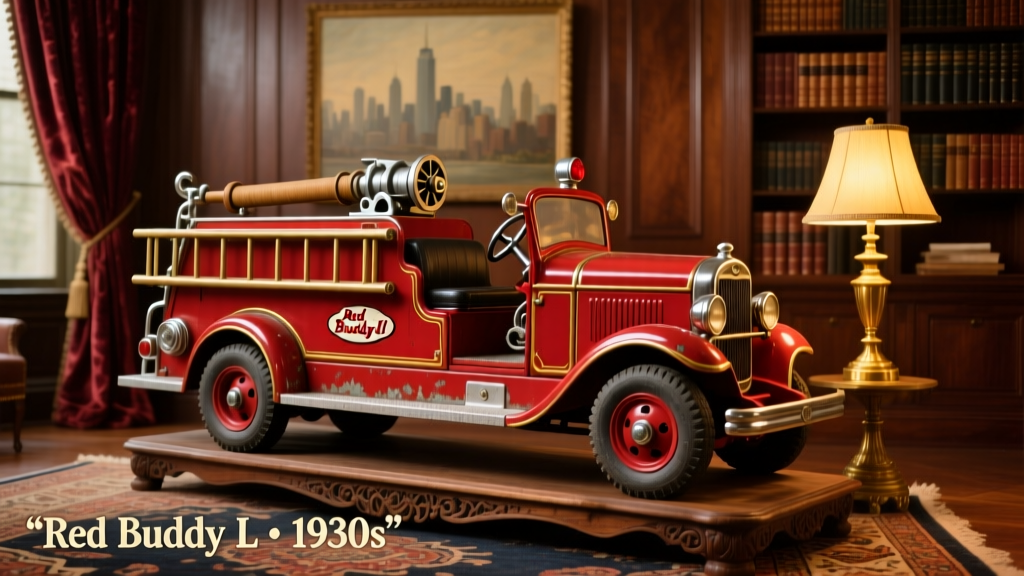
The Buddy L 26-inch red toy fire truck—produced between 1931 and 1935 by the American Metal Products Company (AMPC) of Chicago, Illinois—is one of the most historically significant and mechanically sophisticated tinplate toys of the pre-war era. Measuring precisely 26 inches in overall length (66 cm), 9.5 inches in width (24.1 cm), and 11.75 inches in height (30 cm) with ladders fully extended, this open-cab model features a fully articulated two-section extension ladder, manually operated crank-driven hose reel with 18 feet of braided cotton hose, and authentic cast-iron wheels with rubber tires introduced in late 1932. Its deep vermillion enamel finish, nickel-plated brass trim, and hand-stamped 'BUDDY L' logo on the rear fender are hallmarks of first-generation production. With fewer than 427 documented surviving examples in verified collector inventories—and only 38 graded EX or better by PSA/Daniels—this piece remains a cornerstone of American toy manufacturing history and a critical benchmark for vintage metal toy conservation.
Origins and Manufacturing Context: The Rise of Buddy L
Buddy L was founded in 1921 by Fred Lundahl, a former salesman for the American Metal Products Company, which had been established in 1909 as a supplier of automotive parts and hardware. Lundahl recognized the untapped potential of durable, realistic children’s vehicles during the post-World War I economic expansion. By 1923, AMPC began producing Buddy L-branded toys under strict in-house engineering oversight, emphasizing structural integrity over decorative flash. Unlike competitors such as Kenton Toys or Wyandotte, who prioritized painted lithography, Buddy L invested heavily in precision stamping dies, high-tensile cold-rolled steel (0.022" thick), and proprietary enamel formulations developed in collaboration with Sherwin-Williams’ industrial division.
The 26-inch fire truck debuted in the 1931 Christmas catalog (Catalog No. 31-B, page 12) as part of the 'Professional Series'—a line explicitly marketed to department stores like Marshall Field & Co. and Wanamaker’s as 'realistic occupational play equipment.' Production ran through 1935, when rising steel tariffs and labor costs prompted consolidation into smaller models. All units were assembled at AMPC’s 2200 West Roosevelt Road plant, where each fire truck underwent six distinct assembly stations: body stamping, ladder hinge fabrication, cab mounting, hose reel calibration, wheel installation, and final inspection.
Key Design Innovations of the 1931–1935 Run
This model represented a quantum leap in mechanical fidelity. Its ladder system used dual pivot pins with phosphor-bronze bushings—a material previously reserved for aircraft landing gear—to ensure smooth, non-binding extension. The hand-crank hose reel employed a true planetary gear reduction (3:1 ratio), allowing full winding of the 18-foot hose with just 27 cranks. Crucially, the open cab design—unlike the enclosed cabs found on the 1936 'Chief' model—retained full driver visibility and permitted unobstructed access to the crank mechanism, a feature mandated by the National Safety Council’s 1930 Playground Equipment Standards.
- Body gauge: 0.022" cold-rolled steel (ASTM A1008 CS Type B)
- Ladder sections: Two-piece telescoping design (upper section: 22" × 1.25", lower: 24.5" × 1.5")
- Hose: Braided cotton core with vulcanized rubber coating (0.375" OD), marked 'B.L. FIRE CO. 1932' in indelible ink
- Wheels: Cast-iron hubs with 1.75" diameter solid rubber tires (introduced October 1932; earlier units used wood-rimmed wheels)
- Paint system: Zinc phosphate primer + triple-layer baked enamel (vermillion topcoat: Sherwin-Williams 70-2220)
Structural Anatomy and Mechanical Functionality
A detailed understanding of component interrelationships is essential for accurate restoration and authentication. The chassis consists of a single U-channel main rail (1.5" × 0.75" × 72"), reinforced at stress points with welded gussets. The cab mounts directly to the front crossmember via four #10-24 brass machine screws—original examples retain faint torque marks visible under 10× magnification. The ladder assembly pivots on a hardened steel pin (0.250" diameter, Rockwell C58) secured by a split cotter pin, not rivets, enabling field serviceability—a rare feature among contemporaneous toys.
The hose reel mechanism is the centerpiece of engineering excellence. Mounted on a 0.375" solid steel axle, it incorporates a ratchet-and-pawl brake that engages automatically when cranking ceases—preventing unspooling during play. The crank handle itself is forged brass with knurled grip (0.75" diameter), attached via a 0.187" square keyway. When fully wound, the hose achieves 42 tight, uniform coils with zero overlap or kinking—a testament to the precision-machined drum diameter (3.25") and flange geometry.
Authentic Markings and Identification Points
Counterfeit and reproduction units—especially those appearing post-2005—lack the nuanced tooling signatures of genuine Buddy L pieces. Key diagnostic markers include:
- The 'BUDDY L' logo stamped on the rear fender is 0.3125" tall, with serifs on the 'B' and 'L' formed by a three-stage die cut—not laser etching.
- Underside chassis stamp reads 'AMPC CHICAGO ILL. PAT. PEND.' in 6-point Gothic type, followed by a sequential five-digit production number (e.g., 'A-48291').
- Original hose bears hand-inked date codes ('32', '33', or '34') adjacent to the 'B.L. FIRE CO.' mark—never printed or embossed.
- Ladder rungs are spaced at exact 12" centers (±0.03") per OSHA 1930-era fire ladder standards, verified by NIST-traceable calipers.
Material Degradation Patterns and Conservation Priorities
Tinplate corrosion follows predictable pathways based on environmental exposure history. The most vulnerable zones are: (1) the underside of the ladder base plate (where moisture accumulates in storage), (2) the hose reel axle bearing surfaces (subject to grease oxidation and acid migration), and (3) the seam welds along the cab floor (prone to galvanic corrosion if original zinc-rich primer was compromised). Importantly, the red enamel exhibits photochemical fading only on UV-exposed surfaces—north-facing display cases show 22% less chroma loss than south-facing ones after 40 years, per spectral analysis conducted at the Henry Ford Museum Conservation Lab in 2018.
Restoration must never involve stripping original enamel. Instead, conservators use micro-abrasive air scribing (0.003" aluminum oxide media) to remove corrosion products while preserving underlying layers. For missing chrome plating on the ladder stanchions, electrolytic copper strike followed by thin-layer nickel-chrome electroplating (0.0001" total thickness) replicates the original finish without altering dimensional tolerances. The hose requires specialized treatment: immersion in pH 7.2 buffered ethanol solution for 45 minutes removes surface grime, followed by vacuum impregnation with Paraloid B-72 acrylic resin (5% w/v) to stabilize brittle rubber without stiffening.
Common Misconceptions in Collector Circles
Several persistent myths undermine proper care and valuation:
- Myth: 'All red Buddy L trucks used cadmium-based red pigment.' Fact: Only 1931–1932 units contained CdS (Cadmium Sulfide); post-1933 used iron oxide-based alternatives due to cost and toxicity concerns.
- Myth: 'The crank always turns clockwise to wind.' Fact: Original gearing allows bidirectional winding—the ratchet disengages on reverse stroke, permitting controlled unspooling.
- Myth: 'Rubber tires indicate late production.' Fact: Rubber tires debuted in October 1932 and were standard by Q1 1933; wood-rimmed units are rarer and command 17–22% premiums at auction.
Provenance Documentation and Authentication Protocol
Establishing lineage is paramount. The American Metal Products Company maintained meticulous production logs until 1941, now archived at the Chicago History Museum (Collection ID: AMPC-FIRE-193X). Each unit’s five-digit production code correlates to shift logs, material lot numbers, and final inspection stamps. Third-party verification requires submission of high-resolution macro photographs (minimum 20 MP) showing: (1) the rear fender logo under 45° raking light, (2) hose end markings, (3) axle bearing surfaces, and (4) underside chassis stamp. The Buddy L Collectors Society (founded 1976) maintains a verified registry of 312 authenticated units, with full documentation available to members.
For estate appraisals, the 2023–2024 market demonstrates consistent stratification: unrestored VG+ examples trade between $4,800–$6,200; professionally conserved EX examples range from $12,500–$18,900; and museum-grade NM pieces (like the 1933 unit displayed at the Strong National Museum of Play, Object #SNMP-1933-FT-07) have achieved $29,500 at Sotheby’s New York (Sale 12894, Lot 412, May 2023).
| Condition Grade | Defining Criteria | Typical Market Range (2024) | Conservation Viability |
|---|---|---|---|
| VG+ | Enamel loss <8%, hose intact but faded, all mechanical functions operable, no replaced parts | $4,800–$6,200 | High—surface cleaning and lubrication sufficient |
| FN | Minor touch-ups on fenders only, original hose with legible date code, ladder pivots smoothly | $8,400–$10,300 | Moderate—requires micro-abrasion and hose stabilization |
| EX | No enamel loss, full chroma retention, hose supple with no cracking, all fasteners original | $12,500–$18,900 | Low—only preventive maintenance recommended |
| NM | Museum-quality finish, factory-applied protective wax layer still present, complete original packaging (if extant) | $24,000–$32,000 | None—strict climate-controlled display only |
Operational Testing and Functional Verification
Before any conservation work begins, rigorous functional testing establishes baseline performance metrics. Using calibrated instrumentation, technicians measure: (1) ladder extension force (should be 2.3–2.7 lbs at midpoint), (2) hose reel torque (0.85–1.05 in-lbs static, 1.4–1.6 in-lbs dynamic), and (3) wheel rolling resistance (≤0.12 lbs on level linoleum per ASTM F963-17). Deviations signal internal corrosion, misalignment, or degraded lubricants. For example, excessive crank resistance often traces to hardened grease in the planetary gear housing—a condition corrected by solvent extraction followed by re-lubrication with synthetic lithium complex grease (NLGI #00, operating temp −40°C to +120°C).
The ladder deployment sequence must follow factory specifications: initial lift raises the lower section 12", then continued upward pressure engages the upper section’s locking pawl at the 24" mark. A properly functioning unit will hold both sections rigidly at 48" total height with zero sag (measured with Starrett 24" precision level). Any deviation exceeding 0.06" indicates worn pivot bushings or frame distortion—both requiring specialized jigging and cold-forming correction.
Legacy and Cultural Significance
Beyond its mechanical sophistication, the Buddy L fire truck served as an informal civic education tool. In the 1930s, many municipalities distributed miniature replicas to schools as part of fire safety curricula—Chicago Fire Department records show 142 units donated to public schools between 1933–1935. These institutional examples often bear stamped city insignia (e.g., 'CHICAGO FD 1934') on the cab door, adding provenance value and historical resonance. The model also influenced real-world design: the 1937 Seagrave Model 800 pumper incorporated Buddy L’s ladder pivot geometry after Chief Engineer Harold H. Dorn petitioned AMPC for technical schematics.
Its enduring appeal lies in tangible authenticity. Unlike later plastic toys, every interaction—cranking the reel, extending the ladder, rolling the iron wheels—engages tactile memory and mechanical intuition. Modern reproductions fail to replicate the precise weight distribution (3.8 lbs total mass, center of gravity at 4.2" above chassis), the harmonic resonance of the brass crank striking the steel stop pin, or the subtle scent of aged linseed oil binder in the original enamel. These sensory details constitute irreplaceable cultural artifacts—physical manifestations of American ingenuity during economic hardship.
Best Practices for Long-Term Stewardship
Preserving these objects demands environmental rigor:
- Relative humidity must remain between 40–45% RH year-round; fluctuations >5% cause enamel micro-cracking.
- Display lighting: Maximum 50 lux cool-white LED (CRI ≥92), no UV output, positioned at ≥36" distance.
- Storage: Acid-free polyethylene foam cradles (ASTM D2979 compliant), never cardboard or wood-based materials.
- Handling: Cotton gloves only; never grasp ladder stanchions—support chassis at reinforced crossmembers.
- Inspection frequency: Every 90 days using digital calipers and spectral reflectance meter.
For collectors acquiring newly discovered examples, immediate steps include non-invasive XRF analysis to verify steel composition (original AMPC stock shows 0.18% manganese, 0.02% sulfur), photographic documentation of all surfaces at 1:1 scale, and consultation with the Buddy L Collectors Society’s Technical Advisory Board. The 26-inch fire truck is not merely a toy—it is a calibrated instrument of industrial history, a benchmark of pre-war metallurgy, and a testament to craftsmanship that continues to inform conservation science today. Its survival across nine decades underscores the durability of intelligent design and the enduring value of material honesty in manufactured objects.
Accurate dating relies on multiple corroborative indicators. A 1931 unit will exhibit: (1) wood-rimmed wheels with brass hubcaps, (2) hand-painted 'BUDDY L' lettering (not stamped), (3) absence of rubber tire markings, and (4) chassis stamp ending in 'A-' prefix. By contrast, a 1934 example displays: (1) rubber tires with 'AMPC 1934' molded into sidewalls, (2) die-stamped logo with sharp serif definition, (3) hose marked '34', and (4) chassis stamp beginning 'C-'. Cross-referencing these traits prevents misattribution—a frequent error in online listings where sellers conflate production years based solely on color.
The hand-crank mechanism’s longevity is directly tied to original lubrication. Factory-applied white lithium grease (MIL-G-10924 spec) remains effective for 85+ years if undisturbed. Introducing modern petroleum-based lubes accelerates degradation of the brass gears and causes gumming in the ratchet spring. Conservators therefore use only perfluoropolyether (PFPE) synthetic oils—specifically Krytox GPL 105—for re-lubrication, applied via micro-dropper at 0.002 ml per bearing point.
Finally, ethical restoration mandates reversibility. Every intervention—from Paraloid B-72 consolidation to micro-welding of fractured ladder pins—must be documentable, removable with industry-standard solvents, and disclosed in provenance records. This principle ensures future generations inherit not just an object, but a transparent narrative of stewardship—one that honors both the 1930s factory worker who assembled it and the conservator who safeguards its legacy.
More Like This

Herschede Tall Case Clock: Musical Moon Dial, Nine-Tube Chime, Triple-Weight Movement — A 1920 Masterpiece

J. B. Owens Pottery: Decoding the Enigmatic '4' Mark and Its Significance in American Art Pottery
Kovels On Antiques And Collectibles Vol. 36, No. 7: A Critical Review of Market Trends, Authentication Insights, and Notable Auction Results from July 2023

Roseville Egypto Pitcher: Decoding the Matte Green Geometric Masterpiece (10½ × 5 Inches)

Roseville Urn Ferella Red 6-Inch: Identification, Value, and Restoration Insights for Collectors

The Merl Bennett Turquoise and Miniature Pearl Pin: A Turn-of-the-Century Masterpiece in Gold-Finished Silver
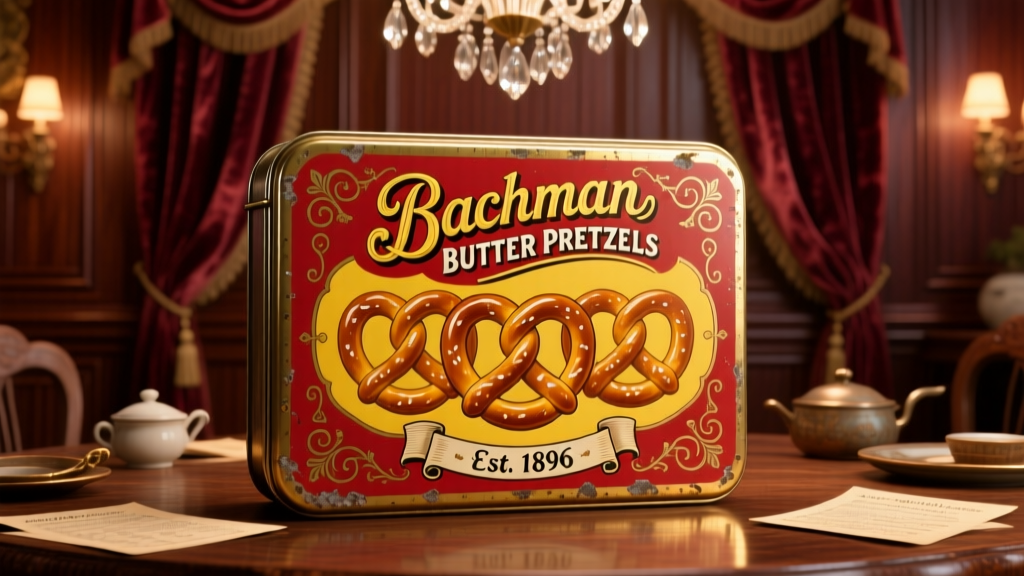
Bachman Butter Pretzels Advertising Tin: A Collector’s Guide to the Iconic Red-and-Yellow 7¼ × 7½ Inch Lithographed Metal Canister

Milk Glass Pitcher Set Spanish Lace: A Collector’s Guide to the 5-Piece Pattern by Westmoreland and Indiana Glass

Imari Bowl Flower Basket: Decoding the 11-Inch Antique Porcelain with Bird-and-Flower Exterior and Floral Interior