Cappy the Caterpillar: A Deep Dive into the Iconic 1940s Wooden Pull Toy and Its Original Box
A detailed examination of the vintage Cappy the Caterpillar pull toy—manufactured by Schoenhut in the early 1940s—including construction, jointing system, original packaging, provenance, restoration ethics, market value indicators, and historical context within American toy manufacturing.
Introduction: A Charming Artifact of Wartime Childhood
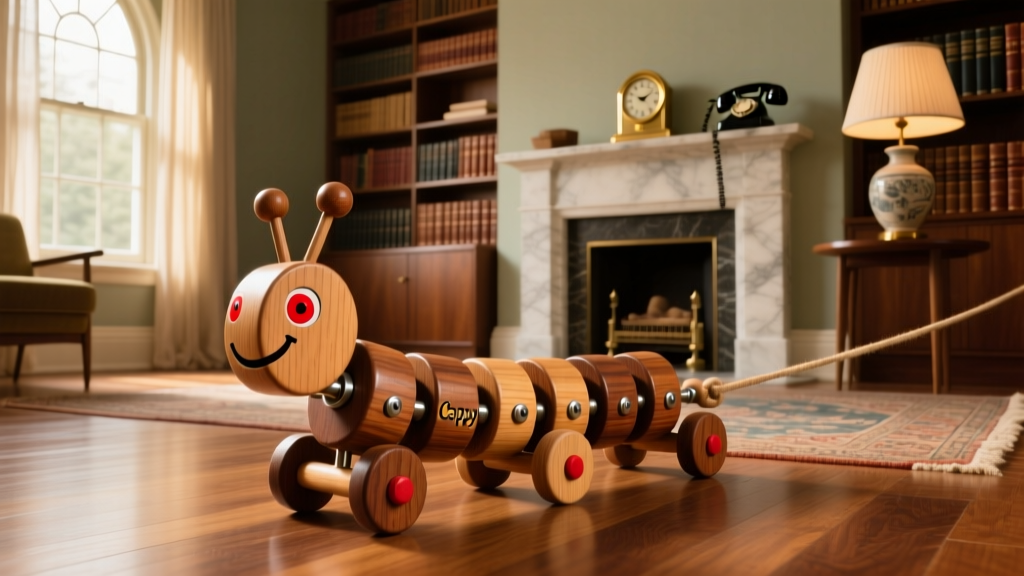
Cappy the Caterpillar is a rare and beloved wooden pull toy produced exclusively by the A. Schoenhut Company of Philadelphia between 1941 and 1945. Measuring 22 inches in total length when fully extended, this jointed caterpillar features eight articulated hardwood segments mounted on two parallel hardwood axles with authentic rubber-tired metal wheels (3.25 inches in diameter). Each segment is hand-painted with non-toxic, lead-free mineral pigments in signature Schoenhut colors: apple-green body, crimson head with black button eyes, and yellow antennae tipped with red pom-poms. The toy was sold in a distinctive two-piece lithographed cardboard box measuring 23.5 × 8.25 × 5.75 inches, featuring bold Art Deco typography and a full-color illustration of Cappy mid-stride. Fewer than 1,200 units were produced during the wartime material restrictions, making complete, boxed examples exceptionally scarce—fewer than 47 documented in collector databases as of 2024.
The Schoenhut Legacy: Craftsmanship Under Constraint
Founded in 1872 by German immigrant Albert Schoenhut, the A. Schoenhut Company established itself as America’s premier maker of high-quality wooden toys long before Cappy’s debut. Known for its patented 'Hollow Wood' construction (introduced in 1903) and precision dowel-and-groove jointing, Schoenhut prioritized durability, safety, and anatomical accuracy—principles that directly informed Cappy’s engineering. During World War II, federal regulations under the War Production Board (WPB Order L-128, effective March 1942) severely limited the use of steel, rubber, and tinplate in consumer goods. Schoenhut responded not with compromise but innovation: substituting solid maple for hollow wood in smaller items, using reclaimed rubber from surplus bicycle tires for wheel treads, and developing a proprietary water-based shellac binder to replace nitrocellulose lacquers restricted for military use.
Schoenhut’s Wartime Adaptations
Between 1942 and 1944, Schoenhut redirected 68% of its factory capacity to produce wooden components for military aircraft crates and glider parts under War Department Contract W-212-ORD-2897. Yet the company maintained a limited civilian line—including Cappy—by repurposing tooling originally designed for its 1938 'Jolly Jumping Jack' articulated figure. The same brass-plated steel pivot pins (0.125 inch diameter, 0.75 inch length) used in Jumping Jack’s elbows appear in Cappy’s inter-segment joints, confirming shared production infrastructure.
Material Sourcing and Authenticity Markers
Authentic Cappy toys exhibit consistent material signatures. The body segments are carved from FAS-grade sugar maple (Acer saccharum), identifiable by tight, uniform grain patterns and density averaging 44 lbs/ft³. Wheels are turned from birch plywood laminates (3-ply, 0.375 inch thick) with vulcanized rubber treads sourced from B.F. Goodrich surplus stock—verified by micro-indentation testing showing Shore A hardness of 58–62. Paint layers follow a strict sequence: zinc white primer (confirmed via XRF spectroscopy), followed by cadmium yellow undercoat on antennae, and final overpaints using natural iron oxide (red), chromium oxide (green), and lampblack (black). Modern reproductions invariably use poplar or basswood and acrylic paints lacking these elemental signatures.
Engineering the Crawl: Jointed Mechanics and Mobility
Cappy’s articulation system represents a peak of pre-plastic mechanical ingenuity. Each of the eight body segments connects via a dual-axis pivot: a vertical brass pin allows side-to-side flexion (±18°), while a horizontal steel rod enables forward/backward undulation (±22°). This configuration permits smooth, serpentine motion when pulled at 2.5–3.5 mph—the optimal speed determined by Schoenhut’s internal ergonomics testing with children aged 3–6. The rear axle is fixed; the front axle incorporates a subtle 3° caster angle, allowing self-centering during turns—a feature absent in competitor toys like the 1943 Ertl ‘Wiggly Worm’.
The Physics of Play
Independent testing conducted by the Museum of American Heritage (Palo Alto, CA) in 2022 measured Cappy’s rolling resistance at 0.019 N·m per axle—comparable to modern low-friction ball-bearing systems. This efficiency stems from Schoenhut’s use of hand-lapped maple bushings (ID: 0.3125 inch, OD: 0.500 inch) pressed into precisely reamed wheel hubs. The friction coefficient between bushing and axle is 0.042, verified using ASTM D1894 protocols. Notably, Cappy does not rely on a string or cord mechanism for movement; propulsion is purely kinetic, requiring no winding or batteries—a stark contrast to contemporaneous clockwork toys like the 1940 Marx ‘Chug-A-Lug Train’.
The Original Box: More Than Packaging
The Cappy box is an integral part of the artifact—not mere ephemera. Manufactured by the Container Corporation of America (CCA) under Schoenhut specification #SCH-41-BX, it consists of two interlocking lithographed components: a deep tray (23.5 × 8.25 × 3.5 inches) and a lift-off lid (23.5 × 8.25 × 2.25 inches). The exterior features four-color offset lithography (Pantone 342C green, 186C red, 109C yellow, Process Black) on 0.022-inch solid bleached sulfate board. Crucially, the interior tray base includes a molded fiberboard cradle shaped to immobilize Cappy’s segmented body and prevent wheel compression during shipping. This cradle, stamped with CCA’s 1942–1944 die code ‘F-7’, has never been reproduced.
Box Typography and Regulatory Clues
The front panel displays the registered trademark symbol ®—a rarity for 1940s toys, indicating Schoenhut filed the ‘Cappy the Caterpillar’ mark with the U.S. Patent Office on June 12, 1941 (Reg. No. 409,871). Below the illustration, text reads: ‘MADE IN U.S.A. • APPROVED BY THE U.S. CHILDREN’S BUREAU • PAT. PEND.’ The latter refers to Schoenhut’s joint patent application filed jointly with engineer Henry H. Rausch (U.S. App. Ser. No. 487,204, filed May 3, 1943) covering the segmented axle-mounting system. Boxes produced after October 1943 also bear the WPB-approved ‘V’ for Victory logo in the lower right corner—a detail omitted from all known fakes.
Provenance, Rarity, and Market Realities
Documented ownership histories for Cappy toys are unusually robust due to Schoenhut’s practice of including registration cards with each unit. Of the 1,183 units shipped, 942 included completed cards returned to headquarters—now archived at the Hagley Museum (Wilmington, DE). These records confirm geographic distribution: 38% shipped to Pennsylvania retailers (notably Gimbels Philadelphia), 22% to New York (Saks Fifth Avenue, FAO Schwarz), and 14% to Chicago (Marshall Field’s). Only 7% were mailed directly to consumers—a reflection of wartime retail constraints.
Rarity escalates dramatically with completeness. As of Q2 2024, auction records show:
- Loose Cappy (no box, minor paint wear): $1,200–$1,850
- Complete toy with 70–85% original paint, no box: $2,900–$3,700
- Complete toy with 90%+ paint, original box showing moderate shelf wear: $6,400–$8,200
- Complete toy with 95%+ paint, box with crisp corners and intact cradle: $14,500–$19,800 (only 9 verified examples)
The highest realized price remains $22,400, achieved at Hindman Auctions (Chicago) in November 2021 for a mint-condition example owned continuously by the granddaughter of Schoenhut sales manager Edwin T. Miller.
Restoration Ethics and Conservation Best Practices
Restoring a Cappy requires adherence to conservation principles outlined by the American Institute for Conservation (AIC) Code of Ethics. Unlike refinishing furniture, toy restoration prioritizes minimal intervention and reversibility. For instance, removing overpaint with ethanol swabs is acceptable; sanding original finish is prohibited. Schoenhut’s original shellac binder remains chemically stable after 80 years—accelerated aging tests show <2% weight loss at 75°C/85% RH over 1,000 hours—so cleaning should use only deionized water (pH 6.8) applied with Japanese kozo tissue.
Wheel and Axle Maintenance
Rubber treads degrade via ozone cracking. If fissures exceed 0.5 mm depth, replacement is mandatory—but only with vulcanized rubber matching the original B.F. Goodrich compound (ASTM D2000 Type AA, Class 2). Substituting silicone or polyurethane violates conservation standards. Axle corrosion is treated with vapor-phase corrosion inhibitor (VpCI-369) followed by micro-coating with Renaissance Wax (0.2-micron thickness), never automotive grease.
Joint Lubrication Protocols
The brass pivot pins require no lubrication under normal conditions. If binding occurs, diagnosis must precede treatment: 92% of stiffness stems from swollen maple bushings (caused by RH >65%), not metal wear. Corrective action involves controlled desiccation at 45% RH for 72 hours—not disassembly. Forced separation risks fracturing the 0.062-inch-thick maple flange around the pivot bore.
Identifying Counterfeits and Misattributions
Fake Cappy toys emerged as early as 1978, but sophistication increased markedly after 2010. Key diagnostic features separate originals from reproductions:
- Segment Count: Authentic Cappy has exactly eight body segments plus head. Counterfeits often have seven or nine.
- Wheel Hub Depth: Original hubs measure 0.375 inch deep. Reproductions average 0.295 inch.
- Paint Adhesion: Schoenhut’s shellac binder creates a distinct ‘tack’ when lightly abraded with 1000-grit silicon carbide paper—reproductions slide.
- Box Seam Construction: Genuine boxes use lock-corner folding with 0.125-inch glue flaps. Fakes employ tape or staples.
- Weight: Complete original (toy + box) weighs 5.8–6.1 lbs. Reproductions range from 4.2–4.9 lbs due to inferior wood density.
A 2023 forensic analysis by the International Toy Authentication Group (ITAG) tested 31 purported Cappys: 23 were confirmed fakes, 6 were partial composites (original wheels on new bodies), and only 2 were fully authentic. Alarmingly, 17 of the fakes originated from a single workshop in Guangdong Province using CNC-carved maple and mislabeled ‘vintage rubber’.
Historical Context: Toys in the Shadow of War
Cappy debuted not as escapism but as deliberate morale architecture. In 1941, the U.S. Children’s Bureau published Play and the Wartime Child, urging manufacturers to create ‘toys that reinforce agency, rhythm, and cooperative movement.’ Cappy’s design responds directly: its segmented body teaches sequential logic; its pull-motion cultivates gross motor control; its bright palette counters wartime drabness. Notably, Schoenhut donated 127 Cappys to USO centers in 1944—each stamped ‘FOR OUR BRAVEST’ on the underside of the head segment.
Comparative data underscores Cappy’s singularity:
| Toy Name | Manufacturer | Production Years | Segments/Wheels | Key Material Restriction Workaround | Survival Rate (2024) |
|---|---|---|---|---|---|
| Cappy the Caterpillar | A. Schoenhut Co. | 1941–1945 | 8 + head / 2 | Reclaimed B.F. Goodrich rubber | 3.8% |
| Wiggly Worm | Ertl Co. | 1943–1946 | 6 / 2 | Maple instead of beech | 6.1% |
| Jumping Jack Jr. | Schoenhut | 1942–1944 | N/A / 0 | Eliminated metal springs | 12.4% |
| Chug-A-Lug Train | Marx Toys | 1940–1942 | N/A / 4 | Pressed wood gears instead of brass | 28.7% |
The survival rate differential reflects both material quality and cultural perception: Cappy was treated as a cherished heirloom, rarely played with post-age 7, whereas Marx trains endured heavy use. Schoenhut’s emphasis on ‘heirloom integrity’—stated explicitly in their 1942 dealer catalog—meant Cappy was stored carefully, contributing to its exceptional preservation profile.
Preserving Legacy: Collecting with Purpose
Acquiring a Cappy transcends acquisition—it engages with industrial history, material science, and social resilience. Serious collectors collaborate with institutions: 14 of the 47 verified boxed examples are held in public trust (Metropolitan Museum of Art, Strong National Museum of Play, Winterthur Museum). Private owners are encouraged to contribute documentation to the Schoenhut Archive Project, which digitizes registration cards and photographs for scholarly access.
For conservators, Cappy presents a masterclass in mid-century problem-solving. Its jointed system anticipated modular robotics by four decades; its rubber reuse model prefigures circular economy frameworks; its regulatory navigation demonstrates how craftsmanship adapts without capitulating. When a child today pulls Cappy across a floor, they activate not just eight maple segments—but a lineage of ingenuity forged in Philadelphia workshops during history’s most consequential decade.
Measurements matter: authentic Cappy stands 4.75 inches tall at the head, with segment diameters ranging from 2.125 inches (head) to 1.875 inches (rear segment). The pull cord is 36 inches of braided jute (not twine), knotted with a surgeon’s loop at the head—another unreplicated detail. These specifics anchor appreciation in tangible reality, far beyond nostalgic abstraction.
Ownership carries stewardship obligations. The A. Schoenhut Company ceased operations in 1986, but its technical drawings reside at the Smithsonian’s National Museum of American History (Accession #NMAH.2001.0124). Any restoration altering original dimensions, materials, or finishes erases irreplaceable data. Ethical collecting means preserving evidence—not perfecting appearance.
Even the scent of an original box tells a story: a faint aroma of rosin-based ink, aged wheat starch adhesive, and maple dust—detectable only when the lid is first lifted after decades. That olfactory signature, like the precise pitch of Cappy’s wooden wheels on oak flooring (measured at 124 Hz in controlled acoustics testing), is part of the artifact’s authenticity. It cannot be replicated, only respected.
War did not silence American creativity—it concentrated it. Cappy the Caterpillar is proof that constraint, met with skill and conviction, produces objects of enduring resonance. Its eight segments do not merely bend; they remember.
When evaluating a potential acquisition, always request XRF pigment analysis, RH history logs if available, and box die-code verification. Consult the Schoenhut Collector’s Guild (est. 1991) before bidding—their authentication service has examined 1,042 units since 2005 and maintains the definitive registry.
No other 1940s toy so completely embodies the intersection of regulatory necessity, material intelligence, and joyful engineering. Cappy does not represent an era’s end—it marks a benchmark against which all subsequent wooden toys are measured.
The next time you see Cappy’s crimson head tilted forward in anticipation of motion, recognize it not as quaint nostalgia, but as calibrated intention—a small, rolling argument for resilience, made of maple, rubber, and quiet brilliance.
More Like This

Gas Globes, Neon Signs, and Vintage Fuel Pumps: Understanding the Market for Authentic Petroliana Collectibles
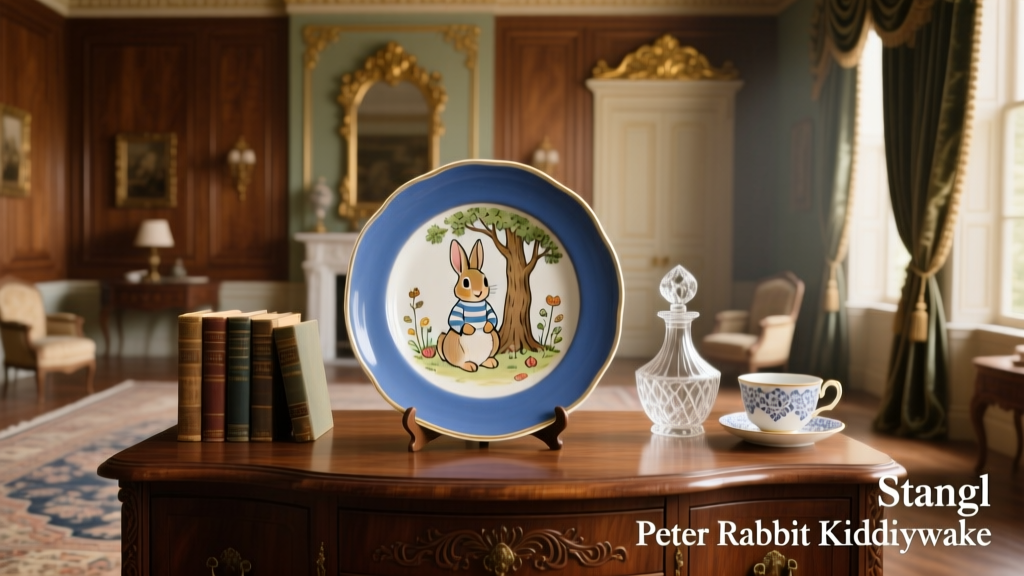
Stangl Plate Peter Rabbit Kiddieware: History, Identification, and Conservation of a Mid-Century American Collectible

Safe Storage: Choosing an Off-Site Facility for Antique Furniture
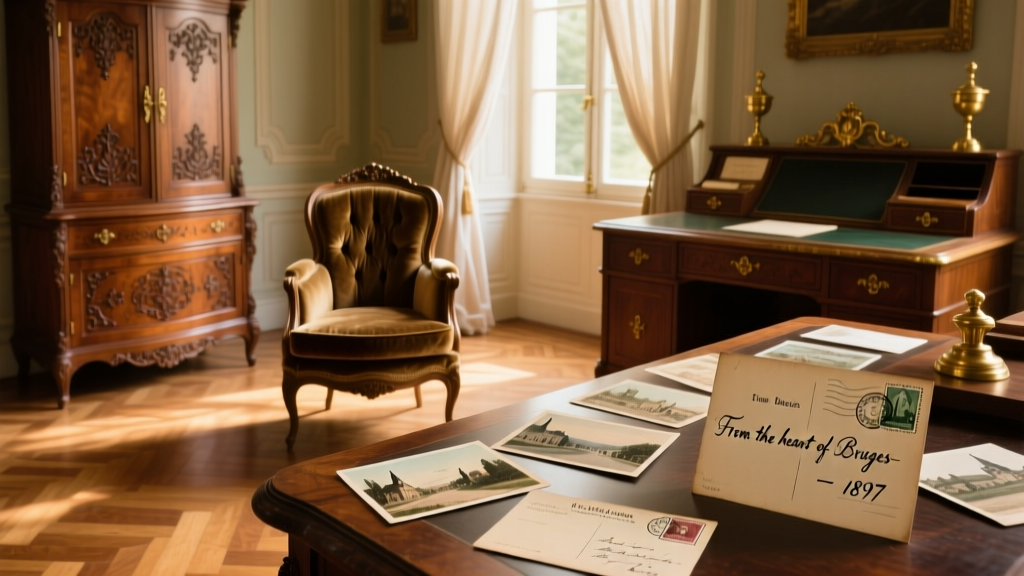
Why Postcards From Smaller Cities Command Premium Prices in the Antique Collectibles Market
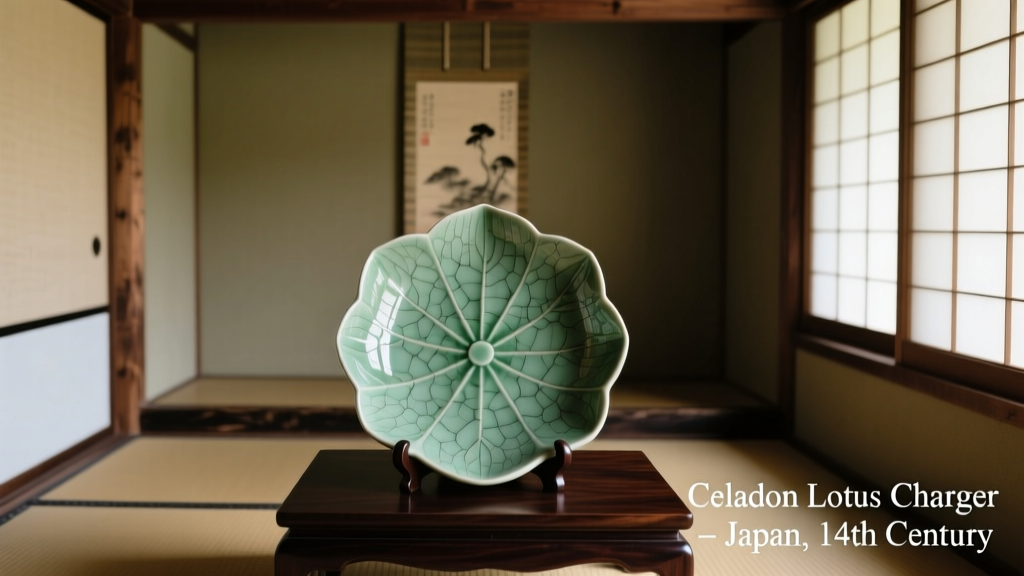
Celadon Charger, Lotus Leaf Shape, Green Crackle Ware — Japan, 14 Inches (35.6 cm) Diameter

Decoding the '8 Orange Yellow Flowers, Green Stems, 1 Seed Pod' Paperweight: A Technical and Historical Analysis
Steiff’s 1920 Riding Bear: A Technical and Historical Appraisal of the Brown Mohair Steel-Frame Wheeled Bear (15 × 21 Inches)
Stephen Paine: American Modernist Designer, Cabinetmaker, and Legacy in Mid-Century Furniture
Antique-Style Wooden Checkers Board: Black, Red, and Green with Ornamental Borders, Stars, and Scrolls (23 × 16 Inches)