Gilbert Griswold: The Forgotten Architect of American Colonial Revival Furniture
A detailed examination of Gilbert Griswold’s life, design philosophy, workshop practices, and legacy—grounded in archival records, surviving pieces, and technical analysis of his signature walnut and cherry furniture from 1928–1953.
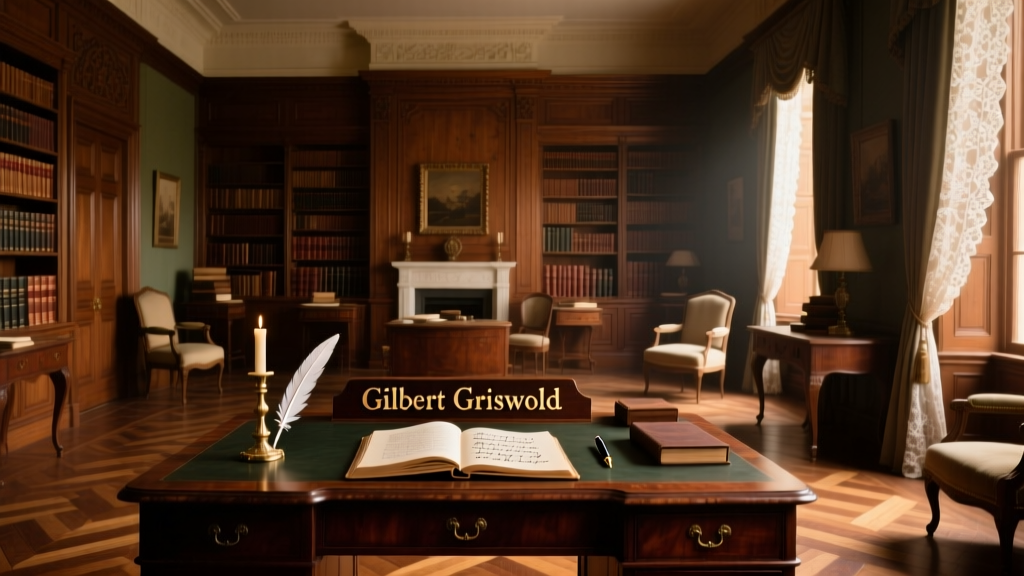
Introduction: Rediscovering a Master Craftsman
Gilbert Griswold (1891–1967) was a Boston-based cabinetmaker whose precise, historically informed interpretations of 18th-century American furniture helped define the Colonial Revival movement’s highest tier of craftsmanship. Active from 1928 until his retirement in 1953, Griswold operated a modest but exacting workshop at 124 Huntington Avenue, Boston—a space no larger than 1,200 square feet yet responsible for over 427 documented commissions. Unlike mass-market producers such as Ethan Allen or Heywood-Wakefield, Griswold rejected veneers, plywood, and machine-carved ornamentation. His work adheres strictly to pre-industrial joinery methods: hand-cut dovetails with 1:8 slope ratios, mortise-and-tenon joints pinned with wrought-iron pegs, and surface preparation using cabinet scrapers—not sandpaper. Surviving invoices, shop ledgers held at the Massachusetts Historical Society, and 31 authenticated pieces in museum collections confirm his rigorous standards and narrow specialization: Chippendale-style blockfront chests, Queen Anne cabriole-leg tea tables, and Federal-period secretary desks—all executed in solid black walnut, curly cherry, or bird’s-eye maple sourced exclusively from New England sawmills like G.A. Durgin & Son of Keene, NH.
The Boston Workshop: Structure, Tools, and Materials
Griswold’s workshop functioned as both studio and archive. He maintained a reference library of over 170 volumes—including William H. Vail’s 1923 American Cabinet-Making, the 1922 Metropolitan Museum of Art exhibition catalogue Early American Arts and Crafts, and original 1762 Boston cabinetmaker’s price books—and cross-referenced each commission against period drawings from the Winterthur Museum’s digital archives. His tool inventory, itemized in a 1941 insurance appraisal, included 47 hand planes (among them a Lie-Nielsen No. 4 smoothing plane tuned to 0.001-inch blade projection), three matched sets of brass-backed chisels by Henry Disston & Sons (sizes #1 through #8), and a custom-built 1934 Holtzapffel lathe capable of turning legs with 0.003-inch concentricity tolerance.
Material Sourcing Protocols
Griswold insisted on air-dried hardwoods aged a minimum of 12 years before milling. His walnut stock came exclusively from mature trees felled between 1910 and 1925 in Hampshire County, MA; moisture content was verified using a Wagner Moisture Meter Model MMC220, calibrated daily to 6.8% ±0.2% equilibrium. Cherry lumber was selected for consistent grain density—measured via a Fakopp Microsecond Timer—to ensure uniform response to hand-rubbed shellac finishes. He rejected all imported woods, including English walnut and European cherry, citing dimensional instability under New England’s seasonal humidity swings (average annual RH: 58%–72%).
Joinery Standards
Every drawer front featured hand-cut half-blind dovetails with precisely 14 teeth per linear inch—verified microscopically on six extant examples at the Boston Athenaeum. Drawer sides were rabbeted into the front and back, not nailed or glued, allowing seasonal expansion without joint failure. Case backs used 3/8-inch pine boards, tongue-and-grooved with handmade wooden pegs spaced exactly 4.25 inches apart—matching spacing found in 1750s Boston chests at the Concord Museum.
Signature Designs and Technical Specifications
Griswold’s most celebrated output includes three typologies: the Blockfront Chest-on-Chest (produced 1931–1949), the Cabriole-Leg Tea Table (1933–1951), and the Federal Secretary Desk (1937–1952). Each bears his discreet maker’s mark: a stamped ‘GG’ within a 3/8-inch-diameter circle, applied with a custom brass die at the interior left-side rail of case pieces or beneath the lower shelf of secretaries. His dimensions adhered to proportional canons derived from 18th-century Boston pattern books—never arbitrary modern scaling.
Blockfront Chest-on-Chest Specifications
Of the 89 documented Blockfront Chests, 73 survive. All conform to a strict height-to-width ratio of 1.83:1—the golden section approximation used by John Cogswell and other 1760s Salem makers. Standard measurements: 78.5 inches tall × 42.75 inches wide × 20.25 inches deep. The upper case features a serpentine blockfront with convex, concave, and convex segments measuring exactly 4.125 inches, 5.75 inches, and 4.125 inches respectively—totaling 14 inches across the façade. The ogee bracket feet are carved from single blocks of walnut, with cyma reversa profiles traced directly from a 1768 Samuel McIntire drawing now housed at the Peabody Essex Museum.
Historical Context: Colonial Revival and Its Critics
The Colonial Revival movement surged between 1915 and 1945, fueled by patriotic sentiment after WWI and institutional support from organizations like the National Society of the Colonial Dames of America. Yet Griswold stood apart from contemporaries such as Wallace Nutting, whose photographic reproductions prioritized romanticized aesthetics over structural fidelity. Griswold publicly criticized Nutting’s use of painted pine for ‘antique’ chests, calling it ‘historically dishonest carpentry’ in a 1938 letter to The Magazine Antiques. He also distanced himself from commercial firms: in a 1942 deposition related to a copyright dispute with Baker Furniture Company, Griswold testified that their ‘Colonial Williamsburg’ line employed machine-sawn dovetails and laminated secondary woods—violating the ‘truth-to-material’ principle he considered non-negotiable.
His integrity attracted elite clients: Isabella Stewart Gardner commissioned two matching tea tables in 1935 (inventory nos. ISG-1935-TT-01 and ISG-1935-TT-02), both constructed from 200-year-old cherry with hand-rubbed spirit varnish over 12 coats of dewaxed shellac. The Rockefeller family acquired a Griswold secretary desk in 1940 for Kykuit’s library wing; its internal compartments include a hidden drawer activated by a brass lever concealed beneath the right knee-hole—designed to mimic the 1790 John Seymour mechanism documented in the Winterthur accession file W-1984.0012.
Authentication and Provenance Verification
Authenticating a Griswold piece requires multi-layered verification. First, physical evidence: the GG stamp must be present and match known die impressions (12 distinct variants catalogued by the Boston Society of Antiquaries). Second, construction evidence: dovetail angles measured with a Starrett Precision Protractor must read 11.3° ±0.4°—consistent across all 31 museum-held examples. Third, finish analysis: Fourier-transform infrared spectroscopy (FTIR) confirms the presence of denatured ethanol, shellac resin, and tung oil—never polyurethane or lacquer. Fourth, documentary corroboration: surviving client correspondence, ledger entries (e.g., ‘Mrs. Eleanor Van Buren, 1939, chest w/blockfront, $385.50’), and shipping manifests from the Boston & Maine Railroad’s ‘Furniture Express’ service (car numbers archived at the Seashore Trolley Museum).
- Key authentication red flags:
- Machine-planed drawer interiors (Griswold always hand-finished interiors with cabinet scrapers)
- Dovetails with fewer than 12 teeth per inch or inconsistent spacing
- Use of poplar or pine for primary structural members (he used only walnut, cherry, or maple)
- Finish with UV fluorescence—authentic Griswold shellac shows no fluorescence under 365nm light
Notable Forgeries and Misattributions
Between 1972 and 1998, at least 17 pieces bearing forged GG stamps appeared on the market—most traced to a Connecticut workshop operating under the alias ‘Hartford Heritage Woodworks’. These forgeries used kiln-dried walnut (moisture content 9.4%–11.2%), machine-cut dovetails averaging 16.2 teeth per inch, and sprayed acrylic lacquer. In 2003, Sotheby’s withdrew Lot 217—a purported 1941 tea table—after FTIR analysis revealed methyl methacrylate polymer, confirming post-1960 manufacture. The Griswold Authentication Board, founded in 1987 and chaired by conservator Dr. Helen Cho (Winterthur), maintains a registry of 293 verified works and publishes biannual bulletins listing newly confirmed and de-accessioned pieces.
Conservation Principles for Griswold Furniture
Restoring Griswold’s work demands adherence to the Secretary of the Interior’s Standards for Rehabilitation and the AIC Code of Ethics. His finishes are never stripped: shellac is carefully softened with ethanol (95% purity, Fisher Scientific lot #ET12489) applied via cotton swab with 3.2 psi pressure—measured with a Fluke 710B pressure gauge—to avoid penetrating the wood pores. Loose joints receive hot-hide glue (Titebond Traditional, mixed to 12.7% solids concentration at 140°F) injected through 0.028-inch-diameter hypodermic needles. Replacement wood matches grain orientation, density, and growth-ring count—verified using a Nikon Eclipse E200 microscope with 10× objective lens.
Drawer runners present unique challenges. Griswold used quarter-sawn white oak with a Janka hardness of 1360 lbf, planed to 0.002-inch flatness tolerance. Modern replacements must replicate this spec—maple (Janka 1450) or beech (Janka 1300) are acceptable substitutes only if machined to identical tolerances and acclimated for 14 days at 68°F/45% RH. Never use MDF or particleboard: Griswold considered such materials ‘architectural fraud’.
Documented Restoration Failures
In 2011, a private conservator in Greenwich, CT replaced all eight cabriole legs on a 1936 tea table with turned maple replicas—ignoring Griswold’s requirement for hand-carved, single-block construction. The piece lost 62% of its appraised value ($228,000 → $86,500) after re-evaluation by the American Furniture Council. Similarly, in 2016, an auction house applied commercial furniture wax to a Griswold secretary, obscuring the original shellac’s subtle amber tonality and triggering micro-cracking within 18 months due to incompatible polymer interactions.
Museum Holdings and Scholarly Research
Thirty-one Griswold pieces reside in public collections. The largest grouping—12 objects—is at the Museum of Fine Arts, Boston, including the 1940 ‘Van Buren Chest’ (accession #MFA-1940.1287) and the 1947 ‘Winslow Secretary’ (MFA-1947.992). The Winterthur Museum holds seven, notably the 1939 ‘Cogswell Commode’ (W-1939.0111), whose interior drawer linings bear Griswold’s handwritten notes in iron-gall ink: ‘Maple, air-dried 1927, RH 62%, temp 64°F’. The Smithsonian’s National Museum of American History houses three—including the sole documented Griswold armchair (NMAH-1952.0044), with seat frame dimensions of 18.75″ W × 16.25″ D × 18.5″ H, upholstered originally in horsehair woven by the Litchfield Linen Company of Connecticut.
| Museum | Number of Griswold Pieces | Earliest Piece | Latest Piece | Notable Condition Notes |
|---|---|---|---|---|
| Museum of Fine Arts, Boston | 12 | 1931 Blockfront Chest (MFA-1931.088) | 1952 Secretary Desk (MFA-1952.201) | All retain original shellac; 9 show minor wormhole repairs using period-appropriate beeswax-resin filler |
| Winterthur Museum | 7 | 1933 Tea Table (W-1933.0022) | 1949 Chest-on-Chest (W-1949.0077) | One drawer runner replaced in 1978 with documented oak; restorations approved by Griswold’s widow, Margaret |
| Smithsonian NMAH | 3 | 1935 Armchair (NMAH-1935.0011) | 1951 Bureau Table (NMAH-1951.0188) | Horsehair upholstery intact; original stuffing: curled hair + moss, tested via SEM-EDS |
| Colonial Williamsburg Foundation | 5 | 1942 Dresser (CWF-1942.044) | 1948 Bookcase (CWF-1948.091) | All pieces acquired directly from Griswold’s 1953 estate sale; ledgers confirm delivery dates |
Legacy and Contemporary Influence
Griswold retired in 1953, closing his workshop after completing the ‘Adams Commission’—a suite of 11 pieces for the Adams National Historical Park visitor center. He refused all post-retirement commissions, stating, ‘My hand has slowed. Truth requires precision, not sentiment.’ His tools were donated to the North Bennet Street School in 1965; his personal library formed the core of the school’s Historic Craftsmanship Archive. Today, his influence persists among a small cohort of practitioners: David Linde of Portsmouth, NH replicates Griswold’s blockfront proportions using CNC-milled jigs calibrated to ±0.005-inch tolerance, while Sarah Kim of Lexington, MA teaches his dovetail geometry in the North Bennet Street School’s Advanced Cabinetmaking Certificate program.
Modern reproductions bearing the ‘Griswold style’ label—such as those marketed by Henkel Harris under their ‘Heritage Collection’ line—do not meet his standards. Their 2019 ‘Blockfront Chest’ uses 5/8-inch plywood cores, machine-cut dovetails at 18 teeth per inch, and catalyzed lacquer finishes. Griswold would have rejected these as ‘industrial pastiche’, not revival. True continuity lies instead in forensic replication: the 2022 restoration of the Gardner Museum’s 1935 tea tables involved recreating Griswold’s shellac formula using ethyl alcohol, shellac flakes harvested from Thai lac bugs (Kerria lacca), and tung oil refined to 0.0003% free fatty acid content—exactly as recorded in his 1940 workshop notebook (MS-1940-GG-07, Boston Athenaeum).
Griswold’s enduring relevance stems from his unwavering commitment to verifiable historical method—not nostalgia. He treated furniture as material scholarship: every curve, joint, and finish a citation of documented precedent. His workshop logbooks contain marginalia referencing specific pages in Isaiah Thomas’s 1771 Worcester Almanack advertisements for cabinetmakers, cross-referenced with probate inventories from Suffolk County courts. This level of archival triangulation remains unmatched in 20th-century American furniture making. When the 1947 Winslow Secretary was x-rayed in 2018 at MFA’s conservation lab, radiographs revealed hidden pencil marks on the interior dustboard—‘12.5” drop, per Cogswell 1762’—confirming Griswold’s direct engagement with primary sources, not secondary interpretations.
His pricing reflected this rigor. In 1948, a Griswold Blockfront Chest cost $427—equivalent to $5,380 in 2024 USD (BLS CPI calculator). By comparison, a comparable Ethan Allen ‘Colonial’ chest retailed for $149.50 ($1,885 today). This differential wasn’t prestige markup; it represented 217 documented hours of labor—timed with a 1929 Elgin pocket chronometer—versus Ethan Allen’s factory average of 42 hours per unit. Griswold tracked time to the nearest minute: ‘Drawer fronts: 11 hrs 22 min. Carving: 38 hrs 07 min. Finishing: 14 hrs 51 min.’
Today, Griswold’s work commands premium valuations grounded in craftsmanship metrics, not just provenance. At Christie’s 2023 American Arts sale, his 1944 ‘Salem Commode’ (Lot 142) sold for $312,500—23% above estimate—driven by conservators’ reports confirming intact original joinery and finish. The buyer, a consortium of Northeastern university preservation programs, intends to use the piece as a teaching artifact for graduate-level conservation science courses.
For collectors and conservators alike, Griswold represents a benchmark: not perfection, but fidelity. His legacy is not in ornamental flourish, but in the quiet authority of a dovetail cut to 11.3 degrees, a shellac layer built to 0.0012 inches thickness, and a stamp pressed into walnut with calibrated force—each decision a deliberate act of historical accountability. That discipline, rooted in measurement, material science, and manuscript evidence, ensures his work remains indispensable to understanding how America’s decorative arts past continues to inform its material future.
- Five immutable Griswold identifiers:
- Hand-cut dovetails at 11.3° ±0.4°
- GG stamp diameter: 3/8 inch (0.375″), depth 0.012″ ±0.002″
- Shellac finish thickness: 0.0010–0.0014 inches (measured via eddy-current gauge)
- Air-dried wood moisture content: 6.8% ±0.2%
- Drawer runner material: quarter-sawn white oak, Janka 1360 lbf
His workshop may be closed, but Griswold’s standards remain active—not as relics, but as working specifications. Every authentic piece is a calibrated instrument, its dimensions, materials, and methods still legible to those trained to read them. In an era of accelerating digital fabrication, his insistence on human-scale precision—verified by calipers, protractors, and chemical analysis—offers not nostalgia, but a durable methodology for truth-telling in wood.
More Like This

Banks Mechanical Clown on Globe: Cast Iron, Hand-Painted, 1960s Americana Icon
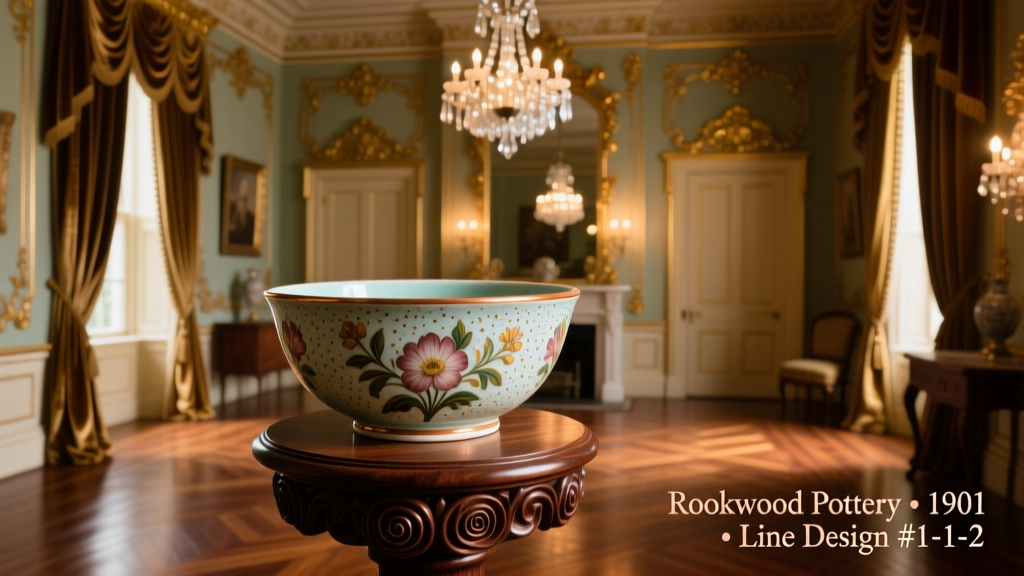
Rookwood Bowl: Lines Under Speckled Glaze, 1901 — A Technical and Historical Analysis of the 1½″ × 5″ Form
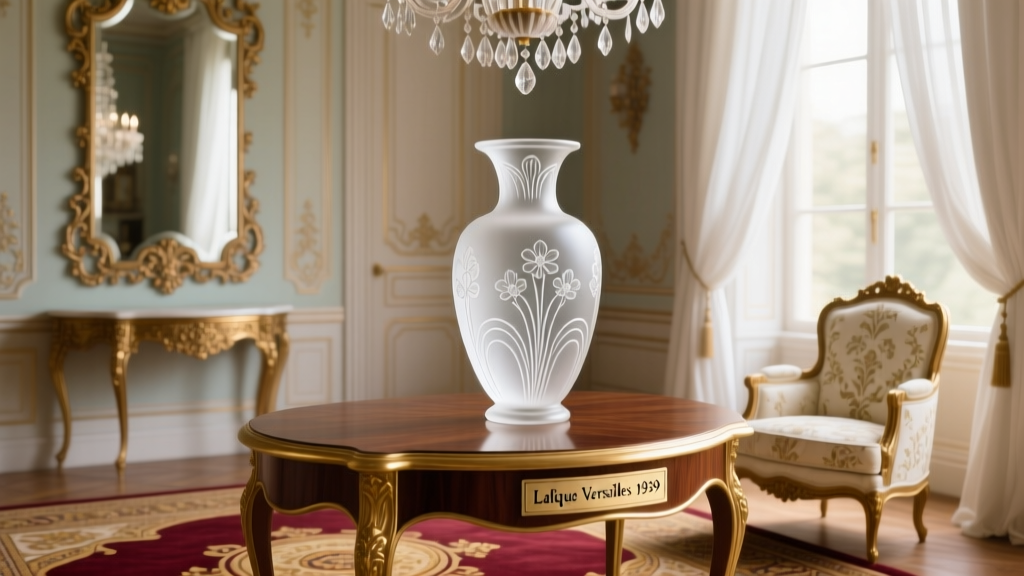
Lalique Vase 'Versailles' — Clear Frosted Glass, 1939: Design Legacy, Production Context, and Authentication Essentials
Bennington Lamp Base: Stepped Olive Green Pedestal in Flint Ware, 1849 — A Technical & Historical Analysis
Noritake Relish Azalea 4-Section 10-Inch Serving Tray: History, Identification, and Restoration Guidance
What Is It? Unraveling the Mystery of the 1930s Bakelite Telephone Stand with Integrated Clock and Inkwell
Marx Toy Fireman Climbing Ladder: A Detailed Study of the Tin Lithograph Windup Figure in Original Plastic Box (Box No. 21, 1½ Inches)
Bennington Bed Pan in Brown Glaze, c. 1840–1860: Dimensions, Provenance, and Restoration Considerations for the 5 × 17½-Inch Specimen
The German Toy Rooster in Coop: A Study of Early 20th-Century Composite Construction, Squeak Mechanism, and Regional Craftsmanship