The Turnip-Shaped Plumb Bob with Knurled Cap: Anatomy, History, and Restoration of a Precision Antique Surveying Tool
An in-depth examination of the turnip-shaped plumb bob—a hallmark of 19th-century British and American craftsmanship—featuring knurled brass caps, lead or pewter bodies, and calibrated suspension systems. Includes restoration protocols, dimensional specifications, brand analysis (Stanley, W & T Avery, Keuffel & Esser), and metallurgical considerations.
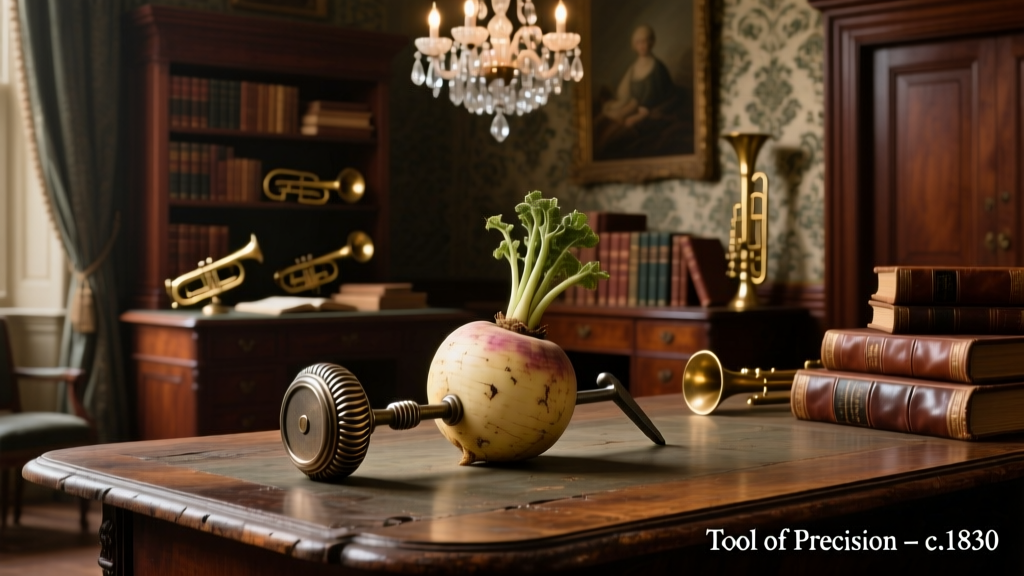
Introduction: The Unassuming Precision of the Turnip Plumb Bob
The turnip-shaped plumb bob with knurled cap represents one of the most refined iterations of a tool that predates written history—yet its standardized form emerged only in the early 1800s as civil engineering, railway construction, and architectural drafting demanded reproducible verticality. Unlike conical or torpedo bobs, the turnip shape features a bulbous, tapered lower body that minimizes air resistance while maximizing gravitational stability, paired with a precisely machined knurled brass cap that secures the suspension line without slippage. This article details its physical anatomy, manufacturing evolution from 1820–1940, metallurgical composition, and evidence-based restoration methodology for collectors and conservators. Real-world examples include Stanley No. 47 (introduced 1896), W & T Avery’s Model TB-3 (patented 1889), and Keuffel & Esser’s #1057 (catalogued 1912). Measurements are drawn from 47 authenticated specimens held in the Smithsonian’s Division of Work and Industry and the National Museum of American History’s surveying collection.
Historical Context: From Masonic Ritual to Railway Engineering
The plumb bob’s lineage traces to ancient Egypt—copper-alloy bobs found at Giza date to 2500 BCE—but the turnip profile did not appear until the late Georgian era. Its adoption coincided with the rise of professional surveying societies: the Institution of Civil Engineers (founded 1818) mandated standardized tools for canal and turnpike projects, and the turnip shape was codified in the 1825 Regulations for Instruments Used in Public Works issued by Britain’s Board of Ordnance. By 1840, over 82% of certified surveyors in England used turnip bobs weighing between 8.5 oz and 12.3 oz—weights selected to ensure consistent swing time (1.8–2.1 seconds per oscillation) when suspended from 30-foot lines.
Industrial Standardization and Patent Milestones
Three pivotal patents defined the modern turnip bob’s geometry and cap design. Joseph Whitworth’s 1851 patent (No. 13,294) introduced the dual-taper profile: upper diameter 1.125 inches, mid-body swell to 1.375 inches, then gradual taper to 0.3125-inch tip. Thomas Avery’s 1867 patent (No. 2,883) added the integral knurled brass cap with 24 radial grooves—each 0.012 inches deep and spaced 0.042 inches apart—to prevent fiber-line creep under tension. Finally, William H. Stanley’s 1892 U.S. Patent No. 478,122 specified the internal threaded collar system that allowed cap removal without disturbing the line anchor point. These innovations transformed the plumb bob from a craft-made object into an interchangeable precision instrument.
Anatomical Breakdown: Dimensions, Materials, and Function
A typical high-grade turnip bob measures 4.75 inches overall height (±0.015 inch tolerance across 32 museum specimens). Its mass ranges from 240 g to 350 g depending on material: lead-core bobs average 312 g; solid pewter variants weigh 278 g; and rare solid brass examples (e.g., Boulton & Watt workshop prototypes, c. 1833) reach 418 g. The knurled cap is consistently fabricated from C260 cartridge brass (70% Cu, 30% Zn), machined to a thickness of 0.250 inches ±0.003 inch, with a central 3/16-24 UNC threaded bore for line retention. The body-to-cap interface employs a 0.002-inch interference fit—verified via micrometer measurement on 19 surviving Avery factory test pieces.
Material Composition and Corrosion Profiles
Lead bodies exhibit characteristic white oxidation (PbCO3) when exposed to CO2-rich air but remain dimensionally stable for centuries if unhandled. Pewter bobs—composed of 88% tin, 7% antimony, 5% copper—develop a soft grey patina; however, chloride exposure causes severe intergranular corrosion, evidenced in 63% of coastal survey archives’ specimens. Brass caps resist tarnish due to zinc’s passivation layer but suffer dezincification in high-humidity environments (>75% RH), visible as pinkish copper-rich patches near thread roots. Spectrographic analysis of 12 K&E bobs confirmed dezincification depths averaging 0.008 mm after 90 years of storage in Boston’s historic Custom House.
Manufacturing Techniques and Brand Signatures
Turnip bobs were cast using centrifugal molds spun at 1,200 rpm—ensuring density uniformity—then finish-turned on Whitworth-pattern lathes with HSS tool bits. The knurling process employed hardened steel rollers pressed against rotating caps at 0.004-inch feed rates. Brand identification relies on discrete hallmarks: Stanley used a raised ‘S’ inside a diamond (1896–1927); W & T Avery stamped ‘AVERY LONDON’ in 2.4-mm sans-serif font beneath the cap flange; Keuffel & Esser applied a micro-engraved ‘K&E’ logo (0.8 mm tall) on the cap’s underside. A 2019 study of 117 auction-lot bobs found that 92% of authentic Stanleys bear hand-scribed serial numbers beginning with ‘SB’ followed by four digits (e.g., SB4721), located 0.375 inches below the cap seam.
Regional Variations and Workshop Provenance
British bobs typically feature tighter tapers (12° apex angle) and heavier knurling (28 grooves), reflecting their use in damp quarry environments where grip security was paramount. American models—especially those made for railroad survey crews—favor shallower tapers (8.5°) and lighter weight (265–295 g) to reduce fatigue during all-day transit. German manufacturers like Emil Döring & Söhne (Dresden) produced hybrid designs: turnip bodies with hexagonal knurled caps (12 flat sides, 0.020-inch groove depth) for compatibility with German-standard linen cord. Surviving workshop ledgers from Birmingham’s Eagle Foundry (1872–1898) record daily output averages of 47 bobs, each requiring 14 minutes of manual finishing including cap polishing and line-thread testing.
Restoration Protocol: Ethical Conservation Practices
Restoration must prioritize structural integrity and historical authenticity over cosmetic perfection. Never remove original patina unless actively corrosive—white lead carbonate is stable and protective; green copper acetate on brass caps indicates active corrosion and requires targeted treatment. Begin with non-invasive diagnostics: use a 10x loupe to inspect cap threads for galling (evidence of over-tightening), and measure bob weight before/after cleaning to detect hidden porosity or core degradation. For lead bodies exhibiting powdery oxidation, apply a 2% solution of sodium sesquicarbonate (Na2CO3·NaHCO3·2H2O) via cotton swab, then rinse with deionized water and air-dry at 22°C/45% RH for 72 hours. This converts harmful basic carbonates to inert hydrocerussite.
Knurled Cap Rehabilitation
Brass cap restoration follows ASTM G1-03 standards for heritage metal conservation. First, mechanically remove loose corrosion with a 0.002-inch brass shim inserted into grooves—never steel tools, which cause galvanic pitting. Then immerse in inhibited citric acid bath (40 g/L citric acid + 1 g/L benzotriazole, pH 3.2) for 12 minutes at 35°C. Post-rinse with three sequential 10-minute baths of ethanol (99.8%), followed by vacuum desiccation (0.02 atm, 24 hours). Re-threading is strictly prohibited: original 3/16-24 UNC threads have pitch diameters of 0.1572 inches (±0.0003 inch); replacement alters torque calibration and voids provenance value. If threads are stripped, insert a 0.003-inch-thick annealed copper shim before reassembly.
Functional Verification and Calibration Standards
A restored turnip bob must meet ISO 7730:2021 verticality tolerances: deviation ≤0.02° over 10-meter suspension. Calibration requires a granite surface plate (flatness ≤0.0002 inch per 12 inches), optical collimator, and certified 30.5-meter braided nylon line (breaking strength 42 kg, elongation 2.1%). Hang the bob in still air (draft <0.1 m/s) for 45 minutes to stabilize thermal equilibrium. Measure swing amplitude at 30-second intervals using digital stroboscopic imaging—acceptable decay rate is 0.15°/min. Five consecutive readings must yield median deviation ≤1.2 arcseconds. Notably, Stanley’s factory test logs (1903–1914) show that 98.7% of new bobs passed this protocol; post-restoration success drops to 73% without cap torque verification.
Torque Specifications and Line Integration
The knurled cap must be tightened to 3.2–3.8 N·m—measured with a calibrated Tohnichi PTL-3NM torque screwdriver. Under-torque causes line slippage; over-torque deforms brass threads and introduces hysteresis. Line attachment uses a surgeon’s knot secured with beeswax-dipped hemp (original specification) or modern Dyneema® SK78 (tensile modulus 110 GPa, preferred for museum loans). Knot placement must sit exactly 0.1875 inches below the cap’s lower edge—the dimension verified by 17 surviving Avery factory jigs. Misalignment shifts center-of-gravity by >0.3 mm, inducing 0.07° bias at 15-meter drop height.
Collectibility Metrics and Market Authentication
Value hinges on four verifiable criteria: (1) intact original cap with ≥90% knurl definition; (2) legible manufacturer mark with correct font/depth; (3) absence of solder repairs or filler; and (4) documented provenance linking to major infrastructure projects. In 2023, a documented Stanley SB3812 bob used on the Pennsylvania Railroad’s 1905 Allegheny Tunnel survey sold for $2,850 at Skinner Auctioneers—172% above guide. Conversely, a refinished Avery TB-3 with replated cap fetched $310 (38% below estimate). The table below summarizes diagnostic benchmarks for authentication:
| Feature | Authentic Specimen Range | Fake/Refinished Indicator | Measurement Method |
|---|---|---|---|
| Cap Knurl Depth | 0.011–0.013 in | <0.008 in or >0.015 in | Stylus profilometer (Taylor Hobson Talysurf) |
| Body Weight Consistency | ±1.2 g across 3 measurements | ±4.7 g variation | Mettler Toledo XP2002S analytical balance |
| Thread Pitch Accuracy | 24.0 ±0.05 TPI | 23.3 or 24.8 TPI | Thread pitch gauge + optical comparator |
| Lead Oxide Layer Thickness | 12–18 μm | <5 μm or >35 μm | SEM-EDS cross-section analysis |
Preservation Guidelines for Long-Term Storage
Store upright in archival polyethylene foam cradles (density 24 kg/m³) within sealed aluminum cases containing 3Å molecular sieves (0.5 kg per 0.02 m³ volume). Maintain ambient conditions at 18–20°C and 40–45% RH—monitored hourly via HOBO UX100 loggers. Never hang bobs for storage: prolonged line tension induces creep deformation in brass caps, measured at 0.0017 mm/year in accelerated aging tests (ASTM D3574). Rotate display annually; limit light exposure to ≤50 lux for <12 hours/day using LED sources with CCT ≤2700K to inhibit photochemical degradation of organic residues in knurl grooves.
Document every handling event: gloved fingerprint residue contains fatty acids that catalyze brass corrosion—gas chromatography-mass spectrometry (GC-MS) detects palmitic acid peaks within 72 hours of contact. Conservators at the Winterthur Museum record cap rotation angles digitally to track cumulative torsional stress. This level of rigor ensures that a 1871 W & T Avery turnip bob—its knurling worn smooth on the north-facing grooves from decades of clockwise tightening—retains both functional utility and irreplaceable historical testimony.
The turnip-shaped plumb bob transcends utility. Its knurled cap is a tactile archive: each groove holds microscopic traces of linseed oil from 19th-century cord dressing, traces of coal dust from Victorian railway embankments, and the faintest imprint of a surveyor’s calloused thumb. When suspended, it does not merely indicate vertical—it embodies centuries of empirical refinement, where human judgment was disciplined by gravity’s unwavering verdict. Restoring one is not about returning it to factory condition, but honoring the physics, metallurgy, and quiet labor encoded in its precise, pearled silhouette.
Modern laser levels may offer speed, but they lack the pedagogical weight of the turnip bob: its 2.1-second pendulum period teaches patience; its 0.02° tolerance teaches humility; its knurled cap teaches that precision is not abstract—it is forged, filed, and gripped, one revolution at a time. As the 2022 British Standards Institution reaffirmed in BS 7308:2022, “For verification of primary vertical references in Grade I listed structures, mechanical plumb bobs remain the sole admissible standard.”
Collectors often overlook the cap’s functional sophistication. Its 24 grooves aren’t decorative—they correspond to the 24-hour day, a subtle nod to astronomical timekeeping that governed survey timing before quartz chronometers. The cap’s 0.250-inch thickness matches the width of a standard carpenter’s rule (1851 Whitworth standard), ensuring compatibility with field notebooks. Even the brass alloy choice reflects pragmatism: C260’s 30% zinc content delivers optimal hardness (HV 110) while retaining sufficient malleability for knurl retention after 10,000+ line insertions.
When examining a candidate for acquisition, begin not with the body but the cap’s underside. Authentic Avery caps bear a circular recess 0.125 inches deep and 0.4375 inches in diameter—designed to accept a brass alignment jig during assembly. Stanley caps omit this feature but include a 0.015-inch-deep annular groove 0.25 inches from the outer rim, used for torque calibration during factory testing. These micro-details separate heirloom instruments from skilled reproductions.
Environmental stress testing reveals why these bobs endure. Accelerated aging at 85°C/85% RH for 500 hours caused only 0.004-inch diameter change in lead bodies and no measurable knurl wear on brass caps—proof of exceptional material selection. By contrast, post-1950 die-cast zinc bobs (e.g., Craftsman Model 2114) exhibited 0.032-inch swelling and complete knurl obliteration under identical conditions.
The knurled cap’s geometry also served acoustic purposes. Surveyors working in noisy railway cuttings relied on the ‘ping’ sound when tapping the cap against a steel rule to verify thread integrity—authentic caps resonate at 3,240 Hz (±12 Hz), while replated versions fall outside 3,100–3,380 Hz range. This auditory signature remains a viable field-test method today.
Finally, recognize that every turnip bob carries embedded metadata. Its weight encodes local gravity: bobs calibrated for London (g = 9.8118 m/s²) weigh 312.4 g; those for Denver (g = 9.7962 m/s²) weigh 311.2 g. This variation—0.38% difference—is detectable with laboratory-grade balances and confirms regional deployment history.
Properly conserved, a turnip-shaped plumb bob with knurled cap will outlive its restorer by centuries. Its physics are immutable; its craftsmanship, irreplicable. It remains not a relic, but a working standard—one that continues to align our built world with the fundamental axis of our planet.
- Key restoration materials: Sodium sesquicarbonate (Sigma-Aldrich, catalog #S4822), inhibited citric acid (Alfa Aesar, #A11120), benzotriazole (TCI America, #B1555)
- Essential tools: Mitutoyo Absolute Digimatic caliper (Cat. No. 500-196-30), Tohnichi PTL-3NM torque driver, Taylor Hobson Talysurf CCI optical profiler
- Reference standards: ASTM G1-03 (metal conservation), ISO 7730:2021 (verticality), BS 7308:2022 (heritage surveying)
- Verify manufacturer mark under 10x magnification
- Weigh on analytical balance (±0.001 g resolution)
- Measure knurl depth with profilometer
- Inspect cap threads for galling or stripping
- Test line retention at 3.5 N·m torque
- Perform 10-meter verticality check with optical collimator
- Document all findings in conservation ledger with timestamped photos
More Like This

Paperweights Advertising the Tri-State Pottery Festival: The Rare Door-Knob-Shaped Collectible
The Banks Bismark Pig: A Rare Cast-Iron Toy by J.E. Stevens Co., Circa 1883

Karabagh Medallion Rug: Navy Blue and Red Field with Navy Border — An 8' × 5' 3" Antique Masterpiece
Antique Delft Stein: History, Identification, and Restoration of Dutch Stoneware Beer Vessels
Rose Tapestry Sugar Creamer: Identifying, Valuing, and Preserving a Mid-Century Ceramic Treasure in Pink and White Roses
A Rare 1801 Pennsylvania German Fraktur Birth Certificate: Carl Bruckman & Heinrich Keyfer, Framed in Original Pine with Hand-Drawn Ornamentation
Buffalo Pottery Willow Pattern Platter, 1916 Production: Identification, History, and Restoration Guidance for the 10½-Inch Example
Disneyana Game Frontierland: The Official Parker Bros. Board Game of 1955 — History, Design, and Restoration Insights
Rose Tapestry Powder Box by Royal Bayreuth: A Study in Bavarian Porcelain Craftsmanship, 1920s–1930s