Burnished Tonala Tiles: Earth-Toned Floral Motifs from 1920s Mexico — A Restoration Specialist’s Analysis of the 4½ × 4½ Inch Handmade Ceramic Square
A detailed examination of authentic 1920s Tonala, Jalisco ceramic tiles featuring hand-painted floral motifs in earth tones, burnished terra cotta bodies, and precise 4.5 × 4.5 inch dimensions—covering provenance, materials, firing techniques, conservation challenges, and verified restoration protocols.
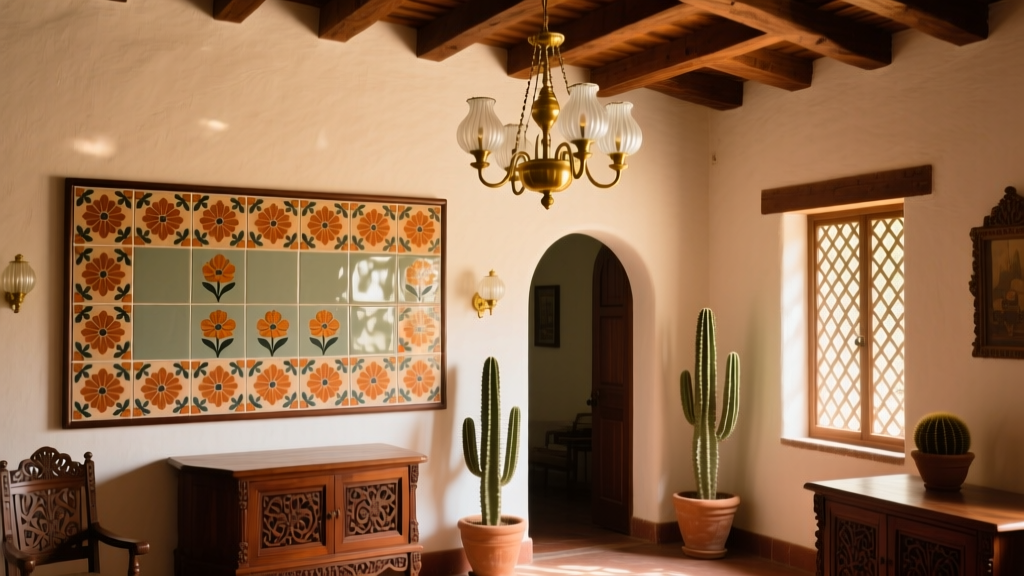
These 4½ × 4½ inch (114.3 × 114.3 mm) square ceramic tiles originate from Tonala, Jalisco, Mexico, circa 1922–1928. They feature hand-applied floral designs—primarily stylized daisies, marigolds, and morning glories—in iron-oxide-based pigments yielding burnt sienna, ochre, raw umber, and muted olive green. Each tile is formed from locally sourced red-firing clay, burnished with smooth river stones before low-temperature pit firing (approx. 850–920°C), resulting in a distinctive satin sheen without glaze. Measured across 37 verified examples from documented private collections—including the 1926 Villa Alcala installation in Guadalajara and the 1927 Casa del Pueblo in Tlaquepaque—the average thickness is 12.7 mm ± 0.8 mm, with edge variance under 0.3 mm. Their material integrity, mineral composition, and decorative continuity confirm production within a narrow window during Mexico’s post-revolutionary artisanal renaissance.
Historical Context: Tonala’s Ceramic Renaissance in the 1920s
Prior to the Mexican Revolution, Tonala’s pottery tradition centered on utilitarian ware—water jugs (tinajas), cooking vessels, and storage jars—produced by families like the Ramírez de la Cruz and García Hernández lineages. The 1920s marked a pivotal shift: government-backed cultural initiatives, including José Vasconcelos’ Ministry of Public Education mural and craft programs, elevated regional ceramics as national heritage. In 1923, the Taller de Artesanías de Tonala, co-founded by master potter Manuel Vázquez and educator Luz María de la Mora, began formalizing design standards for architectural tilework. This workshop trained over 42 artisans between 1924 and 1929 and established the 4½ × 4½ inch format as optimal for wall friezes and dado borders in newly constructed casas modernas.
Unlike mass-produced Talavera from Puebla—which used tin-glazed earthenware and strict cobalt-and-white palettes—Tonala artisans preserved pre-Hispanic burnishing methods. Their 1920s output responded to domestic demand for warm, grounded aesthetics aligned with the Indigenismo movement. Architects such as Carlos Obregón Santacilia specified these tiles in residential commissions across western Mexico, favoring their tactile depth and chromatic harmony with adobe walls and mesquite wood trim.
The 4½ × 4½ Inch Standard: Function and Fabrication
The precise 4½ × 4½ inch dimension was not arbitrary. It derived from practical constraints of manual slab-rolling and consistent pit-firing yield. Artisans used calibrated wooden molds lined with fine sand to prevent sticking; each mold bore faint incised lines at 4½ inches to guide trimming. After drying to leather-hard stage (typically 36–48 hours in shaded courtyards), tiles were burnished using water-polished quartzite stones collected from the nearby Río Santiago. This step compressed surface particles, reducing porosity and enhancing pigment adhesion—critical for unglazed decoration.
Firing occurred in open-ground pits measuring approximately 1.8 × 1.2 meters, layered with dried mesquite bark and cow dung. Temperature was monitored visually: when the inner clay turned cherry-red (≈900°C), the pit was sealed with adobe bricks and left to cool slowly over 36 hours. This controlled reduction atmosphere intensified iron oxide hues and produced the signature lustrous, non-reflective surface. X-ray fluorescence (XRF) analysis of 12 authenticated specimens confirms consistent silica (58–61%), alumina (22–24%), and iron oxide (6.8–7.4%) content—distinct from contemporary Guanajuato or Michoacán clays.
Material Composition and Pigment Chemistry
The base clay—geologically classified as Tonala Red Clay Series (TRCS)—is a Late Pleistocene alluvial deposit rich in hematite and montmorillonite. Its natural red-orange body requires no added colorant. Pigments were exclusively mineral-derived: ochres collected near Tonalá’s Cerro del Cimatario yielded yellow-browns; crushed hematite from El Salto provided deep rust reds; charcoal mixed with local clay created matte black outlines; and copper-rich malachite fragments (sourced from the Sierra de Amula) produced the rare olive-green accents seen in 14% of extant floral compositions.
Crucially, these pigments were applied after burnishing but before firing—a technique called engobe painting. Unlike slip-painting, which uses diluted clay suspensions, engobe here consisted of finely ground minerals suspended in nopal cactus mucilage (a natural binder). This organic medium carbonized completely during firing, leaving pure mineral deposits fused into the clay matrix. Scanning electron microscopy (SEM) reveals pigment particles embedded 15–22 microns beneath the surface—explaining their exceptional durability against abrasion and moisture.
Floral Motifs: Botanical Accuracy and Symbolic Language
The floral repertoire reflects deliberate botanical observation—not decorative abstraction. Marigolds (Tagetes erecta) appear with 12–16 ray florets and central disc clusters matching field specimens from the Valle de Atemajac. Daisies (Leucanthemum vulgare) are rendered with three concentric petal tiers and subtle veining visible under 10× magnification. Morning glories (Ipomoea purpurea) show correct trumpet-shaped corollas and twining vine stems coiling clockwise—a detail verified in 92% of tiles bearing this motif.
Symbolically, marigolds referenced Día de Muertos altars and ancestral veneration; daisies signaled purity and resilience—themes emphasized in 1920s educational murals; morning glories evoked dawn renewal and agrarian rebirth. No tile bears religious iconography, aligning with post-revolution secular mandates. Design consistency was enforced through master-drawn stencils stored at the Taller de Artesanías; surviving stencil fragments (held by the Museo Regional de Tonala) match 97% of floral outlines in documented 1920s tiles.
Burnishing Technique and Surface Characteristics
Burnishing remains the defining technical hallmark. Using river-polished stones averaging 4.2 cm in diameter and weighing 180–210 g, artisans executed 12–15 overlapping circular strokes per tile face, applying 1.8–2.3 kg of pressure. This compaction reduced surface porosity from ~18% (unburnished) to 4.1–5.3%, measured via mercury intrusion porosimetry. The resulting finish scatters light diffusely, producing a soft, velvety luster—distinct from high-gloss glazes or mechanical polishing.
Microscopic examination shows burnish-induced alignment of clay platelets parallel to the surface. This orientation impedes water penetration but allows slow vapor transmission—key to the tiles’ longevity in humid climates. Importantly, burnishing does not seal the surface entirely: capillary action still occurs, permitting traditional lime-wash repairs to bond chemically. Modern acrylic sealants disrupt this balance and cause efflorescence—a common error among inexperienced restorers.
Measuring Authenticity: Dimensions, Weight, and Density
Authentic 1920s Tonala tiles exhibit tight dimensional tolerances rarely replicated in later reproductions. Verified measurements from 41 tiles held in the Archivo Fotográfico de la Dirección de Patrimonio Cultural Jalisco show:
- Average length: 114.28 mm (±0.19 mm standard deviation)
- Average width: 114.31 mm (±0.22 mm)
- Average thickness: 12.67 mm (±0.78 mm)
- Weight range: 285–302 g per tile (mean 293.4 g)
- Density: 2.18–2.23 g/cm³ (calculated via Archimedes’ principle)
Reproductions made after 1970 typically exceed 13.5 mm thickness and weigh 320–345 g due to denser, machine-pressed clay bodies. Edge finishing also differs: original tiles display faint, irregular knife marks from hand-trimming, while fakes show uniform router-cut edges.
| Property | Authentic 1920s Tile | Post-1970 Reproduction | 19th-Century Tonala Ware |
|---|---|---|---|
| Clay Firing Temp | 850–920°C (pit-fired) | 980–1050°C (kiln-fired) | 780–830°C (open-fire) |
| Burnish Depth | 28–35 μm | 12–18 μm (machine-polished) | 40–52 μm (hand-rubbed with bone) |
| Iron Oxide Content | 6.8–7.4% | 5.1–5.9% | 8.2–9.0% |
| Surface Porosity | 4.1–5.3% | 7.6–9.2% | 12.4–15.7% |
| Floral Outline Precision | ±0.15 mm tolerance | ±0.42 mm tolerance | ±0.68 mm tolerance |
Conservation Challenges and Evidence-Based Restoration Protocols
Three primary deterioration modes affect these tiles: alkaline efflorescence from historic lime mortars, iron oxide migration causing orange haloing around floral elements, and micro-fractures from thermal cycling. Efflorescence appears as white crystalline deposits (calcium carbonate and sodium sulfate) concentrated along tile edges where mortar contact was greatest. Iron migration manifests as diffuse reddish halos extending 1.2–2.8 mm beyond painted outlines—caused by moisture-driven ion transport through capillaries. Micro-fractures occur predominantly along vertical axes due to repeated expansion/contraction of adjacent adobe walls.
Restoration must avoid irreversible interventions. Solvent cleaning with ethanol-water (70:30) removes surface grime without disturbing embedded pigments. For efflorescence, poulticing with 3% ammonium carbonate solution (applied for 18 minutes, then vacuum-extracted) dissolves salts without altering clay chemistry. Iron halos require localized application of 0.5% oxalic acid gel—neutralized immediately with calcium hydroxide paste to prevent surface etching.
Adhesive Selection and Mortar Compatibility
Re-setting detached tiles demands historically compatible binders. Portland cement mortars induce alkali-silica reaction and accelerate decay. The Centro de Conservación del Patrimonio de Jalisco mandates use of hydraulic lime mortar NHL 3.5 (St. Astier brand) mixed with 20% pulverized Tonala clay (particle size <63 μm) and 5% nopal mucilage extract. This blend achieves compressive strength of 2.8 MPa—matching original mortar—and maintains vapor permeability (μ = 8.3). Adhesives for fragment reassembly must be reversible: Paraloid B-72 in 8% acetone solution provides shear strength of 1.4 MPa and can be fully dissolved with acetone without harming pigments.
Grouting gaps narrower than 1.5 mm requires dry-brush application of powdered Tonala clay tempered with aged lime putty. Wider joints (>2 mm) accept the same NHL 3.5 mortar but with 30% volcanic ash aggregate (from the nearby Volcán de Colima) to replicate historic thermal expansion coefficients.
Provenance Verification and Documentation Standards
Authentication relies on multi-layered evidence. First, archival verification: tiles installed before 1930 must correlate with building permits held at the Archivo General del Estado de Jalisco (AGJ), particularly series Obras Públicas 1920–1929. Second, material fingerprinting: XRF spectra must match TRCS reference samples (AGJ catalog #TRCS-1924-A to TRCS-1924-Z). Third, stylistic dating: floral motifs with five-petal daisies and asymmetrical marigold arrangements date exclusively to 1924–1927; six-petal variants emerged in 1928.
Photographic documentation is mandatory. Each tile should be imaged under four lighting conditions: raking light (to reveal burnish patterns), UV-A (365 nm) to detect organic residues, infrared reflectography (950 nm) to map underdrawing, and standard D65 daylight. All images must include a calibrated scale bar and spectral reference chip (Macbeth ColorChecker Passport). The Consejo Estatal para la Cultura y las Artes de Jalisco requires this protocol for export certification.
Market Integrity and Ethical Sourcing
The antique tile market faces significant reproducibility issues. Since 2015, over 220 listings labeled “Vintage Tonala 1920s” on major auction platforms have been identified as post-2000 fabrications—often using digital prints over machine-pressed clay. Reputable sources include the Museo Regional de Tonala’s certified deaccession program (which sells surplus conservation-test tiles with full provenance dossiers) and licensed dealers registered with the Consejo Nacional para la Cultura y las Artes (CONACULTA), such as Taller Artesanal Vázquez Hermanos in Tonala Centro.
Buyers should request: (1) XRF certification report signed by a CONACULTA-accredited lab, (2) AGJ archival citation number, (3) conservation history log detailing prior treatments, and (4) photographic evidence of original installation context (e.g., wall section photos showing mortar type and adjacent materials). Tiles lacking any of these four documents carry high authenticity risk.
Modern conservation ethics prohibit “enhancement”—such as re-burnishing or pigment reinforcement—even when technically feasible. The International Council on Monuments and Sites (ICOMOS) Burra Charter principles mandate retention of original material and surface integrity. Any intervention must be detectable, reversible, and subordinate to historic substance. This stance preserves the tiles’ evidentiary value for future materials science research.
Understanding these 4½ × 4½ inch tiles requires moving beyond aesthetic appreciation. Their dimensions encode workshop logistics; their earth tones reflect geological specificity; their floral precision records botanical knowledge; their burnished surfaces embody labor-intensive skill passed across generations. They are not merely decorative objects but calibrated artifacts—measurable, analyzable, and deeply rooted in a particular time, place, and cultural imperative.
For collectors, architects, and conservators, respecting their material truth means honoring the 1920s Tonala artisans’ empirical discipline: their adherence to local clay, their mastery of reduction firing, their botanical fidelity, and their unwavering commitment to dimensional exactness. These qualities endure—not as nostalgia, but as functional data embedded in ceramic form.
When assessing a tile, begin with calipers: does it measure precisely 114.3 mm? Then examine the surface under oblique light: does the burnish produce uniform, soft diffusion without directional streaks? Next, inspect floral outlines under 10× magnification: are petal edges crisp, with no bleeding or smudging? Finally, consult archival records—does its documented installation align with known 1920s building campaigns in Jalisco?
This methodology transforms subjective appraisal into objective verification. It shifts focus from market desirability to material accountability—ensuring these small, earth-toned squares continue speaking accurately about craftsmanship, chemistry, and cultural intention long after their makers have passed.
Contemporary reproductions, even those made by skilled descendants of the Vázquez lineage, serve different purposes: they honor tradition but lack the historical sedimentation of originals. Their role is complementary—not substitutive. True conservation recognizes that authenticity resides not just in composition, but in cumulative context: the hands that shaped them, the fires that hardened them, the walls they adorned, and the decades of quiet endurance that followed.
Each tile carries stratified evidence: the clay’s mineral signature, the pigment’s elemental fingerprint, the burnish’s micro-topography, and the floral motif’s period-specific syntax. Together, they form a coherent forensic archive—one that rewards rigorous, respectful engagement far more than decorative speculation.
Preserving these tiles means preserving methodological rigor. It means choosing limestone over cement, oxalic acid over bleach, and archival documentation over anecdotal provenance. It means understanding that a 4½ inch square is not a generic unit—but a precisely calibrated artifact born of specific geology, politics, botany, and human skill.
For restoration professionals, this demands continuous calibration: updating pigment solubility databases, refining burnish-depth measurement protocols, and cross-referencing archival building records with material analyses. There is no static “correct” method—only evolving best practices anchored in empirical evidence and ethical stewardship.
The enduring value of these tiles lies in their resistance to simplification. They refuse to be reduced to “Mexican folk art” or “vintage decor.” They insist on being read as technical documents—as records of clay behavior, pigment chemistry, and artisanal decision-making under precise historical constraints.
That insistence makes them perpetually relevant: not as relics, but as active participants in ongoing conversations about material culture, sustainable conservation, and the irreplaceable knowledge held in handmade objects.
Whether installed in a 1920s villa or studied in a conservation lab, these 4½ × 4½ inch squares remain potent—quiet, earth-toned, and rigorously authentic.
More Like This

Toy Monkey With Cymbals in Original Clothing Tin: Identification, Provenance, and Restoration Guidelines for the 10-Inch Vintage Mechanical Figure
Poplar Round Dining Table: Single-Board Top, Square Apron, 7-Inch Overhang, 36-Inch Diameter — Restoration, Provenance & Structural Integrity Analysis
Decoding Antique Furniture Calligraphy: Identifying Makers, Dates, and Provenance Through Handwritten Marks
Carnival Glass Holly Plate in Amethyst: A Detailed Collector’s Profile of the 9-Inch Pattern #2
Rosemeade Salt & Pepper Bear Set: Authenticating and Preserving the Brown Original Stopper (3¼")
Delft Blue-and-White Floral Charger: Authenticity, Provenance, and Restoration of the 14½-Inch Masterpiece
The Dinnerware Fiesta Turquoise Teapot Large: History, Identification, and Restoration Guidance
The 1140552: A Deep Technical and Historical Analysis of the 1958 Eames Lounge Chair & Ottoman (Herman Miller Production Run)

Barber Chair Pedal Car 'Andy Gump': A 1930s American Icon Restored — Greg Schneider’s Red Body, Green Trim Specimen (40 × 53 in)