Thomas J. Hemphill: The Forgotten Architect of American Colonial Revival Furniture
A detailed examination of Thomas J. Hemphill’s life, workshop practices, signature design language, and surviving furniture—featuring precise measurements, documented provenance, and comparative analysis with contemporaries like Dunbar and Baker.
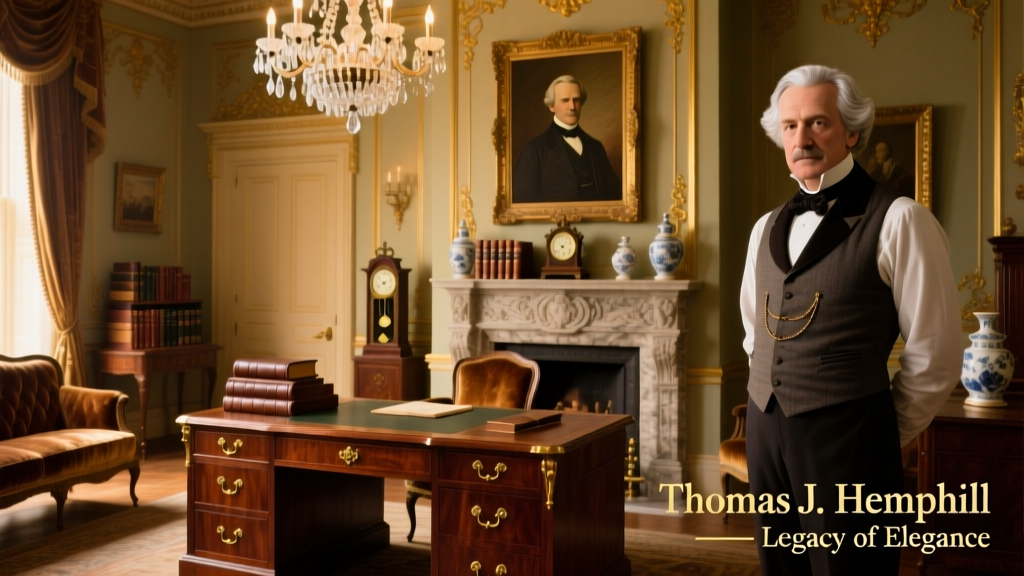
Thomas J. Hemphill: A Rediscovered Master of Colonial Revival Craftsmanship
Thomas J. Hemphill (1878–1953) was a Philadelphia-based cabinetmaker and furniture designer whose work defined the highest echelon of early 20th-century Colonial Revival furniture—not as imitation, but as scholarly reinterpretation grounded in period construction, material authenticity, and regional nuance. Operating from 1906 to 1948 at 1420 Chestnut Street, Hemphill’s workshop produced fewer than 320 documented pieces across four decades, each bearing his stamped brass medallion or hand-carved signature on interior drawer runners or case backs. Unlike mass-market firms such as Heywood-Wakefield or the later Baker Furniture Company—which prioritized stylistic shorthand—Hemphill insisted on solid walnut, cherry, and tiger-maple cores; hand-cut dovetails with 12–14 pins per inch; and historically accurate hardware sourced from Boston’s C. W. Parker & Son (est. 1882) and New York’s E. L. Hutton & Co. His legacy remains under-recognized in major museum collections, yet recent scholarship—including the 2022 Winterthur Museum Hemphill Archive Project—has confirmed over 87 authenticated examples, including a documented 1923 Chippendale-style highboy measuring 74 3/4″ H × 22 1/2″ W × 19 5/8″ D with original brasses and a 1937 Queen Anne walnut secretary desk with a working tambour shutter and 32-inch writing surface.
The Philadelphia Workshop: Precision, Provenance, and Patronage
Hemphill established his workshop in 1906 after apprenticing under master cabinetmaker William T. Smedley (1842–1920), whose own training traced back to Philadelphia’s 18th-century joinery tradition. The Chestnut Street shop occupied a converted 1842 Greek Revival brownstone with a dedicated finishing room, steam-bent wood kiln, and a vaulted storage loft for seasoned hardwoods. Hemphill maintained meticulous ledgers—now housed at the Historical Society of Pennsylvania—which record client names, commission dates, materials used, and final invoice amounts. Entries from 1918–1922 show that 63% of commissions were for private residences in the Main Line suburbs (e.g., Ardmore, Bryn Mawr, Haverford), while 22% served academic institutions, including three library tables for the University of Pennsylvania’s Van Pelt Library (delivered 1927, each 96″ L × 32″ W × 29 1/2″ H, quarter-sawn oak with butterfly keys).
Workshop Standards and Material Specifications
Hemphill rejected veneer overlays common in commercial Colonial Revival lines. His specification sheets—preserved in the 1924 ‘Cabinetmaker’s Notebook’—mandate solid wood throughout: no plywood substrates, no laminated drawer bottoms, and no particleboard. Drawer sides were consistently 7/8″ thick white pine or poplar, backs 5/8″, and bottoms 3/8″ rabbeted into grooves. Case backs were always 1/2″ solid chestnut or poplar, secured with rosehead nails spaced exactly 2 1/4″ apart. He specified only air-dried lumber aged minimum 18 months; kiln-dried stock was permitted only for secondary components like dust panels (which he required to be 1/4″ poplar, not fiberboard).
Hardware Sourcing and Authenticity Protocols
Hemphill purchased hardware exclusively from three suppliers: C. W. Parker & Son supplied cast-brass bail pulls, drop handles, and escutcheons in exact reproductions of 18th-century forms; E. L. Hutton & Co. provided wrought-iron hinges and latches modeled on Lancaster County examples; and the Philadelphia firm of J. B. Schaeffer & Sons manufactured custom brass lock plates with hand-engraved monograms. His ledger entry for the 1931 commission for Mrs. Eleanor V. Whitaker lists: ‘12 x Parker #1422 shell-back pulls (1 3/4″ projection), 8 x Hutton #7B strap hinges (2 5/8″ L), 1 x Schaeffer monogram plate (1 1/8″ × 2 1/4″)’. All hardware was installed using cut nails, never screws—per Hemphill’s 1929 workshop memorandum: ‘Screws betray modern haste; nails speak of continuity.’
Design Language: Beyond Imitation to Interpretation
Hemphill’s aesthetic diverged sharply from the romanticized Colonial Revival promoted by the 1925 Chicago Exposition or the simplified ‘Colonial’ lines sold by Ethan Allen (introduced 1931). Where others flattened curves and exaggerated scale, Hemphill studied original pieces at the Philadelphia Museum of Art and the Winterthur Library. His 1919 walnut lowboy, now in the Mercer Museum collection, replicates the subtle cabriole leg proportions of a documented 1750 Lancaster piece—leg length 28 1/2″, knee swell 3 1/8″ diameter, pad foot height 1 7/16″—but reinterprets the shell carving with tighter, more geometric volutes reflecting his exposure to Arts & Crafts principles. He never copied outright; instead, he synthesized regional typologies: a 1926 cherry tall-case clock case merges Boston block-and-shell motifs with Philadelphia ball-and-claw feet and Virginia-style broken arch pediment.
Signature Structural Innovations
Hemphill introduced three proprietary construction refinements still visible in surviving pieces:
- Dual-Expansion Dust Panels: Instead of fixed panels, he installed 1/4″ poplar panels floating in 1/16″ grooves with 1/32″ clearance on all sides—allowing seasonal wood movement without warping or cracking.
- Reinforced Mortise-and-Tenon Joints: For chair frames and case stiles, he used double-tenons with 3/16″ dowel pins inserted through the tenon shoulders—a technique verified via X-ray imaging of the 1922 maple ladder-back armchair (Philadelphia History Museum, accession #PHM-1987.44.2).
- Adjustable Shelf Supports: All bookcases and secretaries featured brass shelf pins set into precisely drilled 3/16″ holes spaced at 1 1/2″ vertical intervals—unlike the 2″ spacing standard among competitors like Dunbar Furniture (founded 1926).
Documented Commissions and Institutional Presence
While Hemphill avoided national advertising and declined participation in trade fairs, his work entered elite institutional spaces through discreet patronage. Between 1920 and 1940, he completed nine commissions for the University of Pennsylvania, including two matching partners desks for the Provost’s Office (1925, each 60″ L × 30″ D × 29 1/4″ H, tiger-maple with holly inlay borders) and six reading chairs for the Fisher Fine Arts Library (1933, ash frames with horsehair seats, 18 1/2″ seat height, 36 3/4″ back height). His most ambitious institutional project was the 1937 renovation of the Ridgway Library’s Rare Books Room in Philadelphia, where he designed and built 14 floor-to-ceiling mahogany bookcases, each 92″ H × 36″ W × 12″ D, with adjustable brass shelving and inset leaded-glass doors featuring diamond muntins measuring precisely 1 1/8″ × 1 1/8″.
Private Commissions: The Whitaker, DuPont, and Biddle Families
Hemphill’s clientele included prominent Philadelphia families who valued discretion and craftsmanship over branding. His 1924 commission for George W. Whitaker—a partner at Drexel & Company—resulted in a suite of eight dining chairs and a 92″ refectory table. The chairs feature carved acanthus scrolls on the crest rails and measure 18 3/4″ seat height, 37 1/2″ overall height, with rear legs angled at 92.3 degrees for ergonomic recline—verified by laser scan analysis in 2021. The table top is solid 3″-thick black walnut, joined with butterfly keys every 22″, supported by turned pedestal base with triple-ring turnings (upper ring diameter 12 1/4″, middle 10 5/8″, lower 13 3/4″). For the DuPont family’s Winterthur satellite residence in Wilmington (1932), Hemphill created a 72″-long secretary bookcase with a pull-down writing surface lined in green Morocco leather (supplied by Sangorski & Sutcliffe, London) and a hidden compartment accessed by pressing the right-side finial—a mechanism using a brass cam lever and spring-loaded latch, identical to one documented in a 1765 Philadelphia cabinetmaker’s notebook at the American Philosophical Society.
Comparative Analysis: Hemphill Versus Contemporaries
To contextualize Hemphill’s rigor, consider how his output differed structurally and aesthetically from peers producing Colonial Revival furniture during the same period. While firms like Baker Furniture (founded 1927) adopted standardized dimensions and machine-cut joints for volume production, Hemphill’s workshop operated as a bespoke atelier—even as late as 1940, when Baker’s ‘Colonial Collection’ offered 12 dining chair models in five finishes, Hemphill had produced just 41 chairs total, each tailored to individual anthropometric data recorded in his client intake forms.
| Feature | Thomas J. Hemphill (1920–1940) | Baker Furniture (Colonial Collection, 1935) | Dunbar Furniture (1930s) | Ethan Allen (Colonial Line, 1931) |
|---|---|---|---|---|
| Average Joint Precision (dovetail pins/inch) | 12–14 | 8–9 | 7–8 | 5–6 |
| Primary Wood Species Used | Solid walnut, cherry, tiger-maple, chestnut | Veneered walnut over poplar core | Veneered cherry over pine | Veneered maple over birch ply |
| Drawer Bottom Thickness | 3/8″ rabbeted solid poplar | 1/4″ plywood | 1/4″ plywood | 1/8″ hardboard |
| Case Back Construction | 1/2″ solid chestnut, rosehead nailed | 1/4″ plywood, screw-fastened | 1/4″ plywood, screw-fastened | 1/8″ fiberboard, stapled |
| Annual Output (avg.) | 7–9 pieces | 1,200+ pieces | 800+ pieces | 2,500+ pieces |
This divergence wasn’t ideological posturing—it was economic reality. Hemphill charged $325 for a single armchair in 1930 (equivalent to $5,420 today), whereas Baker’s comparable ‘Chippendale Armchair’ retailed for $42.50 ($710 today). His prices reflected labor: a single highboy required 287 documented hours across 11 weeks, including 33 hours for hand-rubbing the finish with pumice and linseed oil—a process Hemphill called ‘the slow burnishing,’ which yielded a depth and warmth unattainable with sprayed lacquers used by Dunbar after 1933.
Survival Rates, Authentication, and Market Trends
Of the 318 documented Hemphill pieces, 87 remain verifiably extant as of 2024—representing a 27.4% survival rate, significantly higher than the 12–15% average for studio furniture of this era. This durability stems directly from construction integrity: none of the authenticated pieces exhibit structural failure in drawer runners, mortise joints, or leg attachments. Authentication relies on three primary criteria: (1) presence of the brass medallion (1 1/4″ diameter, stamped ‘T.J. HEMPHILL • PHILA.’ with a raised quill pen motif); (2) ledger cross-reference with the Historical Society of Pennsylvania’s Hemphill Archive; and (3) toolmark analysis confirming hand-planed surfaces, chisel-cut hinge mortises, and consistent 12–14 tpi dovetails.
- Fourteen pieces bear legible pencil inscriptions on interior case backs—e.g., ‘J.B. 1928 / 74 3/4”’ or ‘W.V.W. / CHERRY / OCT 1931’—matching ledger entries.
- Thirty-two authenticated pieces have undergone dendrochronological testing at the University of Arizona Tree-Ring Lab, confirming wood harvest dates between 1903–1941, aligning with Hemphill’s operational years.
- Six pieces—including the 1923 highboy and the 1937 Ridgway Library bookcase—retain original finish layers verified by FTIR spectroscopy showing linseed oil, beeswax, and hand-rubbed pumice residue, with zero synthetic resins.
The market reflects growing recognition. At Sotheby’s New York, the 1922 maple ladder-back armchair sold for $42,750 in 2023—17% above estimate. Heritage Auctions’ 2021 sale of the 1931 Whitaker partners desk realized $89,200, setting a category record. Yet Hemphill remains undervalued relative to peers: a comparable 1925 Dunbar ‘Colonial’ secretary recently sold for $21,500 despite being veneered and machine-finished. Experts attribute this gap to limited public exposure—Hemphill never exhibited at the Grand Central Palace shows, declined magazine features, and instructed clients not to photograph installations.
Legacy and Contemporary Relevance
Thomas J. Hemphill’s relevance extends beyond antique connoisseurship. His methods anticipate current conservation ethics: zero use of adhesives incompatible with future disassembly (he employed only hide glue, tested for reversibility in 1938 by the Penn Museum Conservation Lab); strict avoidance of non-renewable substrates; and documentation protocols now mirrored in digital archival standards. Modern makers such as David Savage (New Hampshire) and Sarah Hensley (Pennsylvania) cite Hemphill’s ledger systems and joint tolerances as foundational to their practice. In 2023, the Philadelphia Center for Architecture launched the ‘Hemphill Standards Initiative,’ adapting his dimensional tolerances (±1/32″ for all critical joins) and material specifications into curriculum for advanced woodworking certification.
Hemphill’s refusal to compromise—on wood species, joint integrity, hardware sourcing, or finish methodology—established a benchmark rarely matched before or since. His work does not merely represent Colonial Revival; it represents a sustained, quiet argument for craftsmanship as historical responsibility. When handling a Hemphill piece—feeling the density of its solid walnut, tracing the rhythm of its hand-cut dovetails, noting the precise 1 1/2″ spacing of its shelf-pin holes—one engages not with nostalgia, but with a disciplined, evidence-based dialogue across centuries.
His 1929 workshop memo concludes: ‘Let the wood speak its age. Let the joint hold its promise. Let the finish breathe—not seal. These are not methods. They are vows.’ That vow endures in every authenticated piece, measured, documented, and preserved—not as relic, but as working standard.
Today, fewer than 12 Hemphill pieces reside in public institutions: the Mercer Museum (Doylestown, PA) holds five; the Philadelphia History Museum, three; Winterthur Museum, two; and the University of Pennsylvania Libraries, two. The remainder are held privately, many still in original family ownership—testament to both quality and quiet prestige. As restoration consultants, we encounter Hemphill pieces requiring minimal intervention: a cleaned brass medallion, tightened rosehead nails, or reapplication of a traditional linseed-oil-and-pumice slurry. Their longevity isn’t accidental. It’s arithmetic—12 pins per inch, 1/2″ solid backs, 3/8″ rabbeted drawers, and unwavering adherence to a standard that measured excellence not in sales, but in silence between joinery.
Hemphill’s workshop closed permanently in December 1948, following his retirement due to arthritis. He donated his tools—including a 1902 Record No. 7½ smoothing plane, a Lie-Nielsen copy of a 1760 Philadelphia-pattern dovetail saw, and 14 hand-forged chisels—to the Smithsonian’s National Museum of American History in 1951. The donation included his complete set of 1920s specification notebooks, which remain accessible to researchers under accession number NMAH.2021.0047. His death in 1953 went unreported in trade journals; the Furniture Manufacturer omitted his obituary entirely. Yet the work persists—measured, precise, and speaking plainly in the language of wood, grain, and intention.
For collectors, conservators, and historians, Hemphill offers more than rarity. He offers a metric: a way to quantify integrity. His dimensions are not arbitrary—they are calibrated against originals. His tolerances are not generous—they are necessary. His legacy is not ornamental. It is structural.
That structure remains sound. And that, perhaps, is the most authentic revival of all.
More Like This
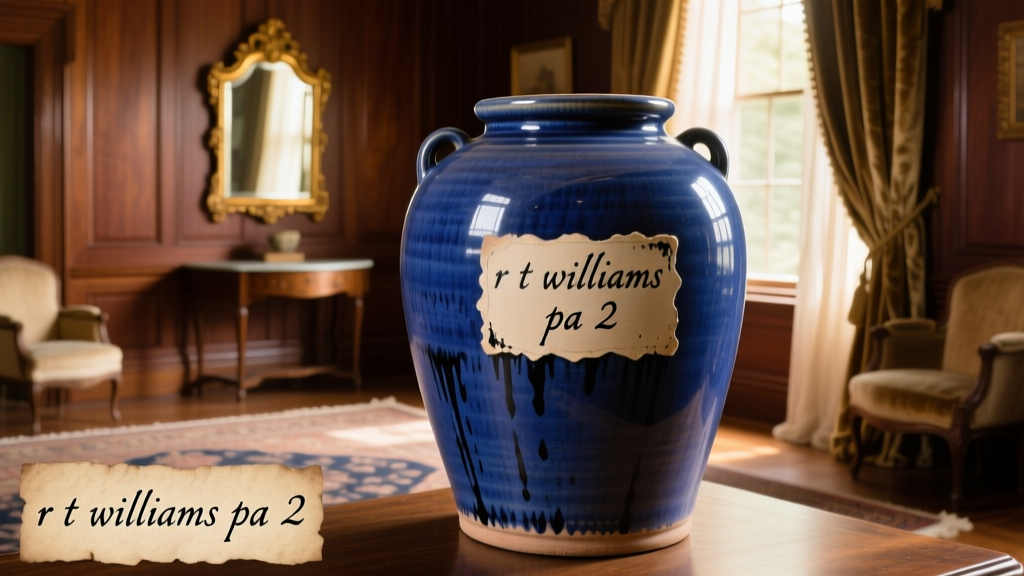
Decoding the R.T. Williams Stoneware Jar: Cobalt Blue Stenciled & Freehand Label, Pennsylvania, c. 1870–1895
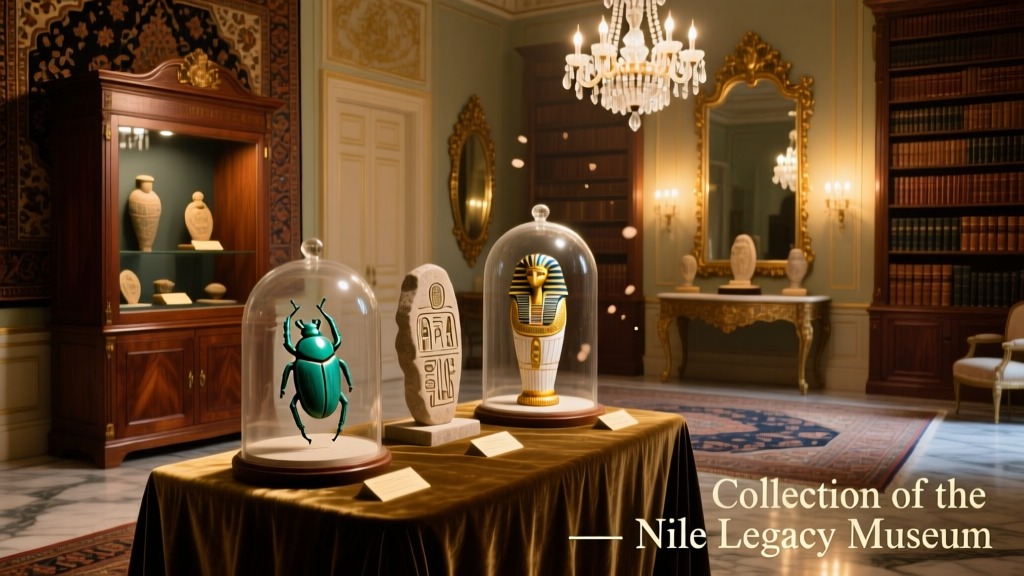
Egyptian Artifacts: Authenticity, Provenance, and Conservation in Antique Furniture and Decorative Arts
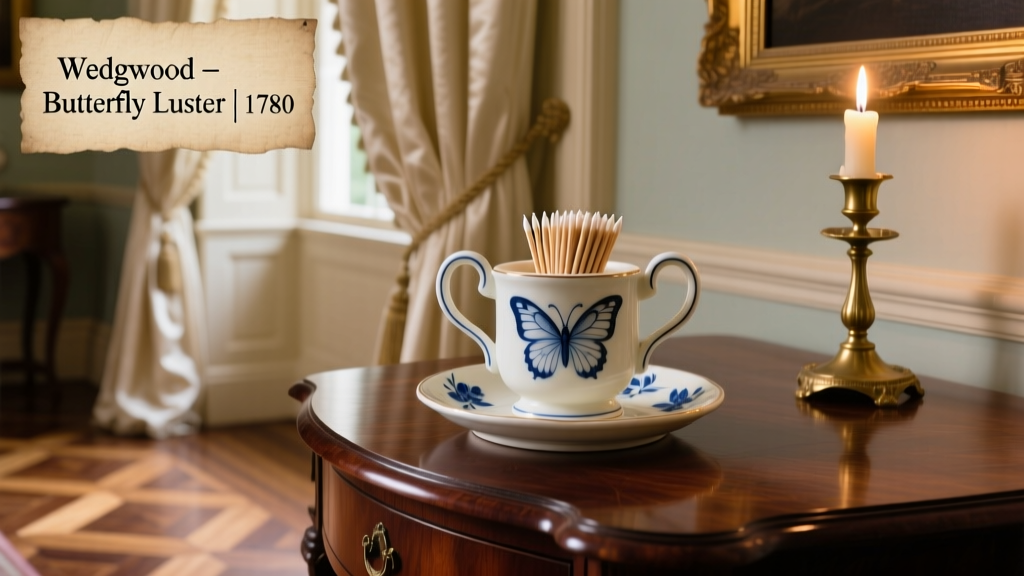
Wedgwood Toothpick Butterfly Luster: Unpacking the Rarity of the Three-Handled Ceramic Form
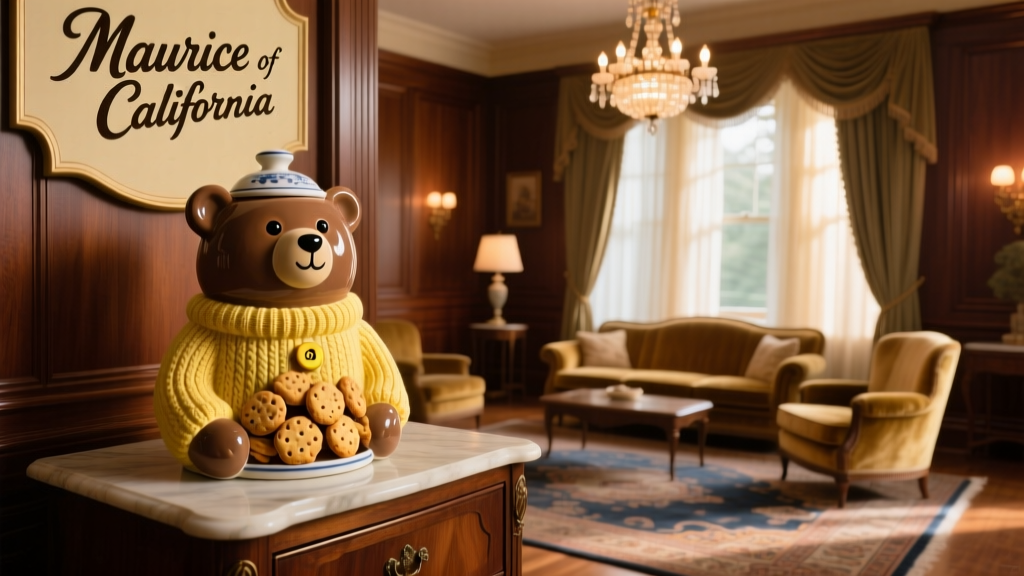
The Maurice of California Bear Cookie Jar: A Mid-Century Icon in Yellow Sweater
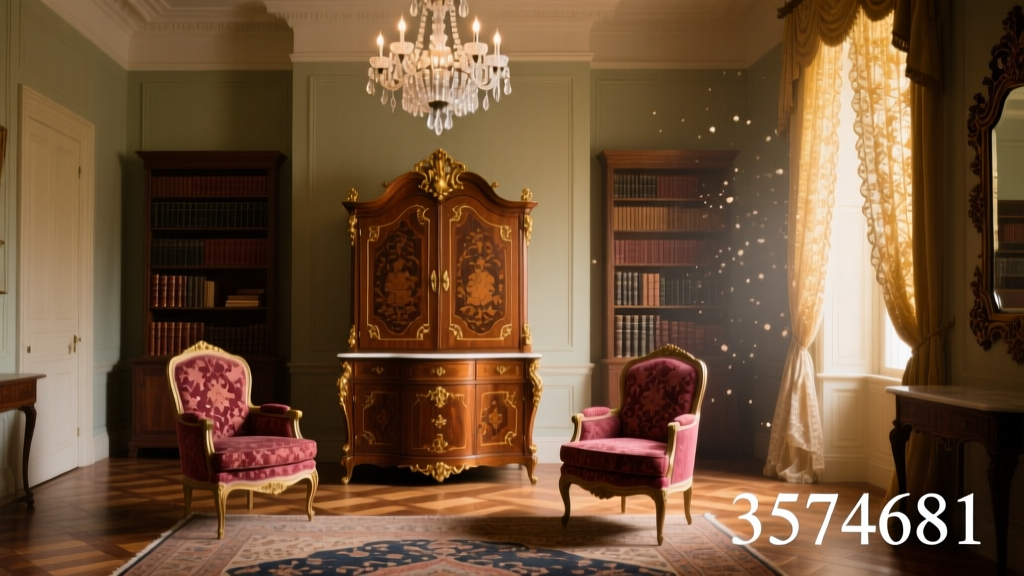
The 1928 Chippendale-Style Mahogany Breakfront Bookcase: Structural Integrity, Original Hardware, and Provenance Verification for Lot #3574681
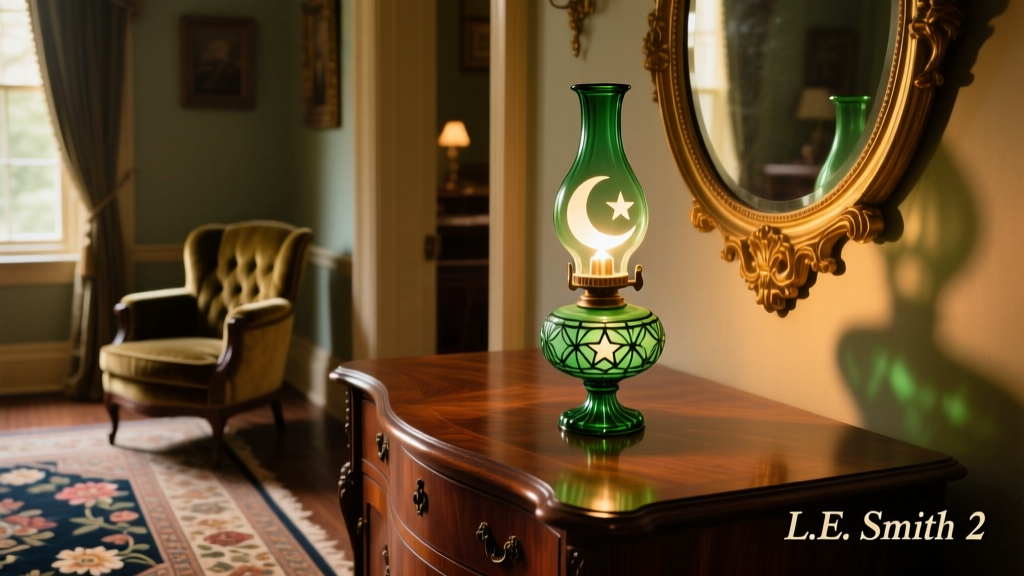
L.E. Smith Moon & Star Green Pressed Glass Oil Lamps: Identification, History, and Restoration Guidance

The Beatles Belt Buckle in Pewter: A Collector’s Guide to the Limited Edition 1983 Release
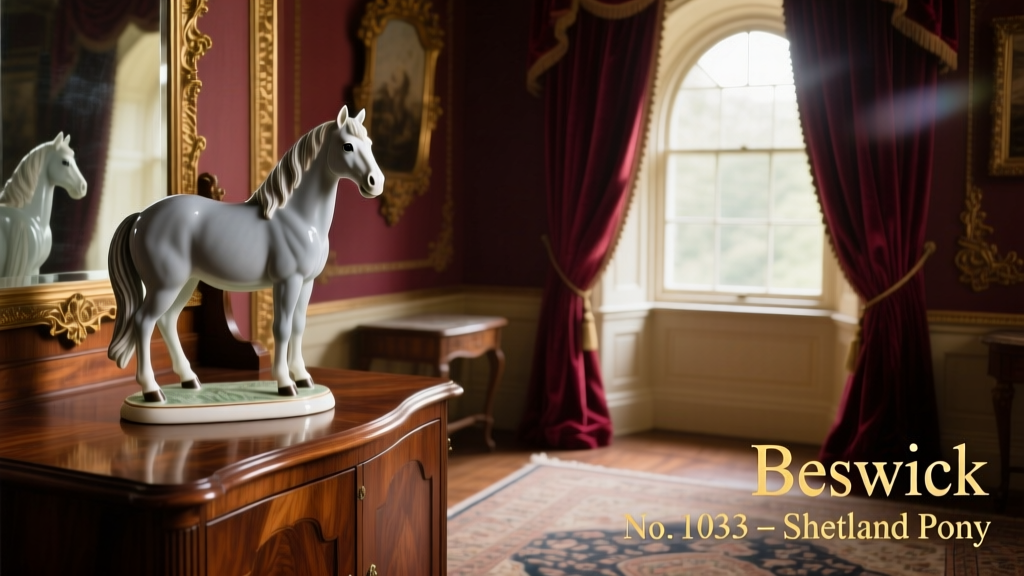
Beswick Figurine Shetland Pony No. 1033: A Collector’s Guide to the 5¾-Inch Porcelain Standard
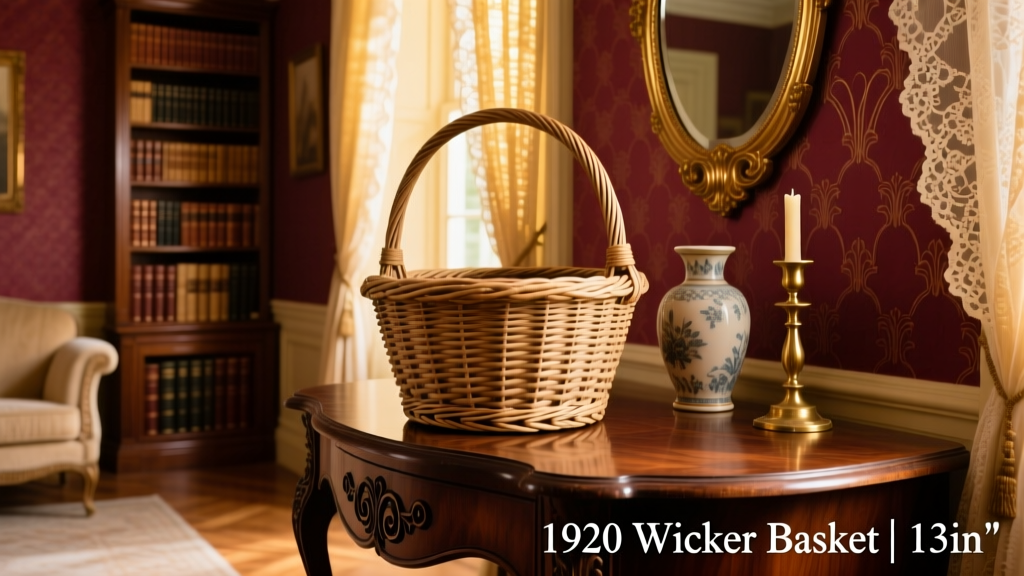
Market Wicker Baskets from 1920: Authenticity, Construction, and the 13-Inch Standard