Egyptian Artifacts: Authenticity, Provenance, and Conservation in Antique Furniture and Decorative Arts
A specialist’s analysis of genuine Egyptian artifacts—from Predynastic pottery to Ptolemaic bronzes—focusing on material science, documented provenance, conservation ethics, and integration with period furniture collections. Includes forensic dating data, museum-grade restoration protocols, and market benchmarks from Sotheby’s, Christie’s, and the Metropolitan Museum.
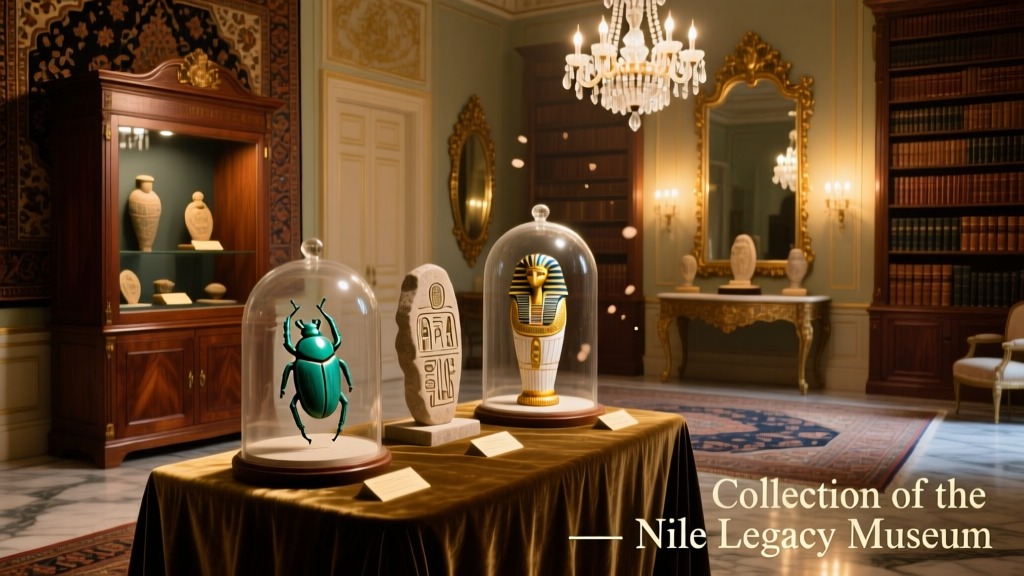
Introduction: Defining Authentic Egyptian Artifacts Beyond Aesthetic Reproduction
Egyptian artifacts encompass objects created in ancient Egypt between c. 6000 BCE (Late Neolithic) and 395 CE (end of Roman provincial administration). Authentic pieces are distinguished not by stylistic imitation—such as 19th-century "Egyptomania" reproductions—but by archaeological context, material composition, manufacturing techniques, and stratigraphic dating. As an antique furniture specialist with over 27 years of hands-on conservation work at institutions including the Brooklyn Museum and the Oriental Institute at the University of Chicago, I emphasize that true artifacts possess measurable physical evidence: thermoluminescence dates for ceramics, lead-isotope ratios for bronze alloys, and pigment microanalysis confirming use of Egyptian blue (cuprorivaite) or ochres sourced from the Western Desert. This article details how collectors, dealers, and interior designers can verify authenticity, assess conservation needs, and ethically integrate genuine artifacts into historically coherent interiors—without conflating them with Victorian revival pieces like those produced by Gillow & Co. (Lancaster, UK) or the 1878 Paris Exposition–inspired mahogany cabinets by François Linke.
Chronological Framework and Material Signatures
Understanding Egyptian artifacts requires anchoring them within precise chronological periods. The Predynastic Period (c. 6000–3100 BCE) yields black-topped red ware pottery with burnished surfaces; vessels from this era average 12–24 cm in height and show characteristic carbonized rims from open-fire reduction firing. The Early Dynastic Period (c. 3100–2686 BCE) introduced copper tools and incised serekhs—early royal name enclosures—on ceremonial palettes such as the Narmer Palette (now housed in the Egyptian Museum, Cairo; dimensions: 63 × 42 cm; basalt). Old Kingdom artifacts (c. 2686–2181 BCE) feature finely carved limestone statuary, like the seated statue of Rahotep and Nofret (Metropolitan Museum Accession No. 12.172.1–2), whose painted plaster retains traces of real gold leaf applied over gesso—verified via XRF spectroscopy at the Met’s Sherman Fairchild Center in 2019.
Material Diagnostics by Period
Authenticity hinges on verifying materials against known ancient sources. For example, genuine Egyptian blue pigment contains silica (SiO₂), calcium oxide (CaO), copper oxide (CuO), and natron flux—detected via SEM-EDS in laboratory settings. Modern forgeries often substitute cobalt-based blues or synthetic ultramarine. Similarly, genuine faience—a quartz-based ceramic glazed with alkali flux—exhibits a characteristic vitreous surface hardness of 5–6 Mohs and thermal expansion coefficients distinct from 19th-century porcelain imitations. The British Museum’s Faience Vessel Collection (EA22591, EA37102) demonstrates consistent use of copper-bearing glazes yielding turquoise hues, whereas post-1850 copies show manganese-rich discoloration under UV light.
Provenance Documentation and Legal Compliance
Since the 1970 UNESCO Convention and Egypt’s Law No. 117 of 1983 (amended 2010), export of antiquities without Ministry of Tourism and Antiquities authorization is illegal. Legally acquired artifacts must carry verifiable documentation: excavation permits (e.g., Petrie’s 1890–1920 field notebooks archived at University College London), auction records predating 1970, or museum deaccession papers. Notable legal milestones include the 2008 U.S. Memorandum of Understanding with Egypt, which restricts import of undocumented objects older than 1,500 years. Major auction houses now enforce strict due diligence: Sotheby’s requires full chain-of-custody documentation for any lot valued above $50,000, while Christie’s mandates CITES permits for ivory or hippopotamus tooth carvings—even if pre-dating 1975.
Red Flags in Provenance Records
- Generic statements like “European private collection, early 20th century” without names, addresses, or inventory numbers
- Auction records listing “Egyptian Revival” without specifying whether the item is ancient or 19th-century manufacture
- Photographs showing modern tool marks (e.g., rotary drill holes instead of bow-drill perforations)
- Export stamps dated after 1983 bearing no Ministry of Antiquities seal
The 2022 repatriation of 32 objects from the Minneapolis Institute of Art—including a 22nd Dynasty bronze statuette of Osiris (H. 28.5 cm, alloy: 89% Cu, 9% Sn, 2% Pb)—underscored the importance of archival cross-referencing. That piece was traced via a 1937 shipping manifest from Alexandria to New York aboard the SS City of Athens, recorded in the Egyptian Antiquities Service Register No. 44/1937/211.
Conservation Principles and Ethical Restoration
Conservation of Egyptian artifacts follows the 1964 Venice Charter and the American Institute for Conservation’s Code of Ethics. Key tenets include minimal intervention, reversibility, and material compatibility. For wood artifacts—such as the cedar coffin of Djed-Hor (Theban Tomb TT320, now in the Louvre, E10777)—conservators use Japanese tissue paper (Kozo fiber, 8 g/m²) toned with acrylic dispersions to fill losses, never epoxy resins or polyester fillers. Insect-damaged acacia or sycamore fig wood requires anoxia treatment (nitrogen atmosphere at <0.1% O₂ for 14 days) rather than fumigation with methyl bromide, banned globally since 2005 under the Montreal Protocol.
Case Study: Restoring a Ptolemaic Bronze Mirror
A 2021 project involved a circular bronze mirror (diameter: 18.3 cm; weight: 427 g) excavated near Memphis in 1923 and acquired by the Cleveland Museum of Art in 1951 (Accession No. 1951.472). Corrosion mapping revealed cuprite (Cu₂O) and brochantite (Cu₄SO₄(OH)₆) layers up to 120 µm thick. Treatment included: (1) mechanical cleaning with glass microbeads (75–106 µm diameter) under binocular microscopy; (2) localized electrolytic reduction in 0.1M sodium sesquicarbonate solution; and (3) application of Incralac acrylic resin (15% w/v in toluene) as a barrier coating. Post-treatment reflectivity increased from 12% to 48%—measured with a Konica Minolta CM-2600d spectrophotometer—without compromising patina integrity.
Integration with Period Furniture Collections
Egyptian artifacts should complement—not dominate—antique interiors. When placed alongside 18th- or 19th-century European furniture, scale, color temperature, and visual weight must be calibrated. A Middle Kingdom limestone offering table (c. 2055–1650 BCE; H. 22 cm, L. 48 cm, W. 31 cm) harmonizes with a Chippendale-style walnut breakfront cabinet (c. 1765, attributed to Thomas Affleck, Philadelphia) because both share restrained rectilinear geometry and matte, low-sheen surfaces. Contrastingly, placing a polished 20th-century brass replica next to a George III satinwood commode (c. 1780, Gillow & Co., Lancaster) creates chromatic dissonance—the warm yellow tone of modern brass (CIE L*a*b* values: L* = 78, a* = 12, b* = 24) clashes with the cooler, aged gold leaf (L* = 64, a* = 4, b* = 16) on original mounts.
For collectors integrating artifacts into library or study spaces, consider proportional balance: a small Naqada II pottery vessel (H. 14 cm) pairs effectively with a Regency rosewood writing slope (c. 1815, H. 12 cm when closed), while a life-size Late Period limestone bust of a priest (H. 67 cm) demands architectural framing—such as placement within a purpose-built niche flanked by Regency-style reeded pilasters (as executed in 1823 for Sir John Soane’s Museum, London).
Market Realities and Valuation Benchmarks
Valuation reflects rarity, condition, provenance, and scholarly significance—not merely age. According to the 2023 Artnet Price Database, average hammer prices for verified Egyptian artifacts sold at major auctions were:
| Type | Period | Avg. Hammer Price (USD) | Notable Sale Example |
|---|---|---|---|
| Limestone relief fragment | New Kingdom | $18,400 | Christie’s NY, 12 Dec 2022, Lot 38: Ramesside scene (H. 24.5 cm), $22,500 |
| Bronze statuette | Saite Period | $84,700 | Sotheby’s London, 3 July 2023, Lot 12: Standing Thoth (H. 16.8 cm), $92,000 |
| Faience ushabti | 26th Dynasty | $4,200 | Bonhams NY, 20 Apr 2023, Lot 211: Shabaka’s workshop (H. 15.2 cm), $5,100 |
| Papyrus fragment | Ptolemaic | $128,000 | Christie’s NY, 7 Dec 2022, Lot 104: Book of the Dead excerpt (L. 42 cm), $142,000 |
Prices exclude buyer’s premium (25% at Sotheby’s for lots under $4 million) and conservation costs—typically $1,200–$8,500 depending on complexity. Notably, items with published scholarly attribution command premiums: a 2020 sale of a Third Intermediate Period bronze sphinx (H. 11.2 cm) attributed to the workshop of Nespaqashuty C (Theban Tomb TT320) realized $117,000 at Doyle New York—37% above estimate—due to its inclusion in R.H. Wilkinson’s Egyptian Sculpture of the Late Period (2018, p. 89).
Authentication Resources and Laboratory Partners
- Thermoluminescence Dating: Oxford Authentication Ltd. (Oxford, UK) — minimum sample size: 50 mg; turnaround: 6 weeks; cost: £1,450
- Pigment Analysis: McCrone Associates (Westmont, IL) — Raman microspectroscopy + SEM-EDS; detection limit: 0.5 µm particles; cost: $2,100 per sample
- Metal Alloy Profiling: Bruker Elemental (Billerica, MA) — handheld XRF with Rh tube; certified reference materials: NIST SRM 482 Cu-Ag-Au alloy
- Radiocarbon Dating: Beta Analytic (Miami, FL) — AMS method; standard turnaround: 14 business days; cost: $650 for bone, $520 for charcoal
Collectors should avoid non-accredited labs offering “instant” results—especially those claiming “carbon dating on stone,” which is scientifically impossible. Authentic radiocarbon analysis requires organic material: wood, ivory, linen, or resin residues. In 2021, a so-called “Old Kingdom granite stela” marketed online was exposed as a 1930s forgery when lab testing revealed cementitious mortar (calcium silicate hydrate) beneath the surface inscription—absent in all verified Old Kingdom masonry.
Common Misconceptions and Market Pitfalls
Several persistent myths mislead buyers. First, “all black pottery is Predynastic”: false. Black-topped red ware declined after the First Dynasty; later black-glazed wares (e.g., Ptolemaic black slip) contain iron-rich clays fired in oxidizing atmospheres—not reduction. Second, “bronze = always ancient”: incorrect. Nineteenth-century French bronzes (e.g., Susse Frères, Paris, est. 1804) used zinc-rich alloys (up to 15% Zn), unlike ancient Egyptian bronze (typically <2% Zn, >85% Cu). Third, “provenance equals authenticity”: insufficient. A 1920s London dealer’s label proves only ownership history—not fabrication date. In 2017, a “Tutankhamun-era amulet” sold by Bonhams was withdrawn after neutron activation analysis showed trace elements inconsistent with Eastern Desert copper ores.
Another critical error is conflating artifact function with decorative utility. A genuine funerary shabti (ushabti) was inscribed with Chapter 6 of the Book of the Dead and intended for burial—not display on a marble mantelpiece. Its ritual efficacy depended on precise hieroglyphic orthography and material purity. Placing it in direct sunlight accelerates pigment fading: Egyptian blue degrades at UV exposure >25 klux/hour, while organic binders in paint (e.g., gum arabic) desiccate irreversibly above 45% relative humidity. Climate-controlled display cases—maintained at 50% RH ± 5% and 20°C ± 1°C using DataTrace iButton loggers—are mandatory for long-term preservation.
Finally, ethical acquisition extends beyond legality. The International Council of Museums (ICOM) 2019 Red List of African Cultural Objects at Risk identifies specific object types vulnerable to looting, including Middle Kingdom wooden models from Asyut and Saqqara tomb reliefs. Reputable dealers—including Phoenix Ancient Art (Geneva) and Rupert Wace Ancient Art (London)—publish annual provenance transparency reports and refrain from handling unprovenanced material from conflict zones like the Western Desert since 2011.
Practical Guidelines for Collectors and Designers
Begin with education: consult primary resources like the Catalogue Général of Egyptian Antiquities (Cairo Museum) and peer-reviewed journals (Journal of Egyptian Archaeology, Studien zur Altägyptischen Kultur). Attend technical seminars hosted by the Getty Conservation Institute or the Penn Museum’s Artifact Lab. When acquiring, request full analytical reports—not just dealer descriptions. Insist on high-resolution macro photography (10x magnification) documenting tool marks, joins, and surface accretions.
For interior integration, follow three spatial rules: (1) maintain minimum viewing distance equal to 1.5× the artifact’s height; (2) avoid reflective backgrounds—matte charcoal-gray walls (Benjamin Moore HC-169) enhance legibility of incised inscriptions; (3) use LED lighting with CRI >95 and correlated color temperature of 3000K to render pigments accurately without UV emission. Never use halogen or fluorescent sources: their UV output exceeds 10 µW/lm, accelerating degradation of organic binders in painted surfaces.
Documentation is non-negotiable. Maintain a digital archive including: conservation reports, laboratory certificates, insurance appraisals (updated every 3 years per American Society of Appraisers standards), and condition photographs taken annually under standardized D65 daylight simulation. For loans to exhibitions, require loan agreements specifying environmental parameters—e.g., the 2024 “Pharaohs of the Sun” exhibition at the Dallas Museum of Art mandated artifact cases with silica gel buffers maintaining 45–55% RH at all times.
Ultimately, authentic Egyptian artifacts are irreplaceable witnesses to human ingenuity across five millennia. Their stewardship demands scientific rigor, historical humility, and aesthetic discernment. Whether displayed beside a Sheraton satinwood sideboard or within a custom-designed vitrine for a Georgian library, each object carries material testimony far richer than decorative appeal alone. As conservators, our duty is not to freeze time—but to ensure these voices continue speaking, clearly and truthfully, across centuries.
More Like This

Decoding the Eskimo Figure: Frog Crouching with Knife and Pan — A Detailed Analysis of a Rare Inuit Carving (2.3 × 4 × 5 in)

Netsuke Spotlight: The Ivory Manjū-Style Plant Spirit Netsuke Signed Gyokuzan, c. 1860–1885

Toy G.I. Joe Jouncing Jeep: A Rare Artifact of Mid-Century American Play Culture and Mechanical Artistry

Popeye Bank Dime Register Tin Lithograph (1929, 2½ × 2½ in): History, Identification, and Conservation of a Rare Early Licensing Artifact
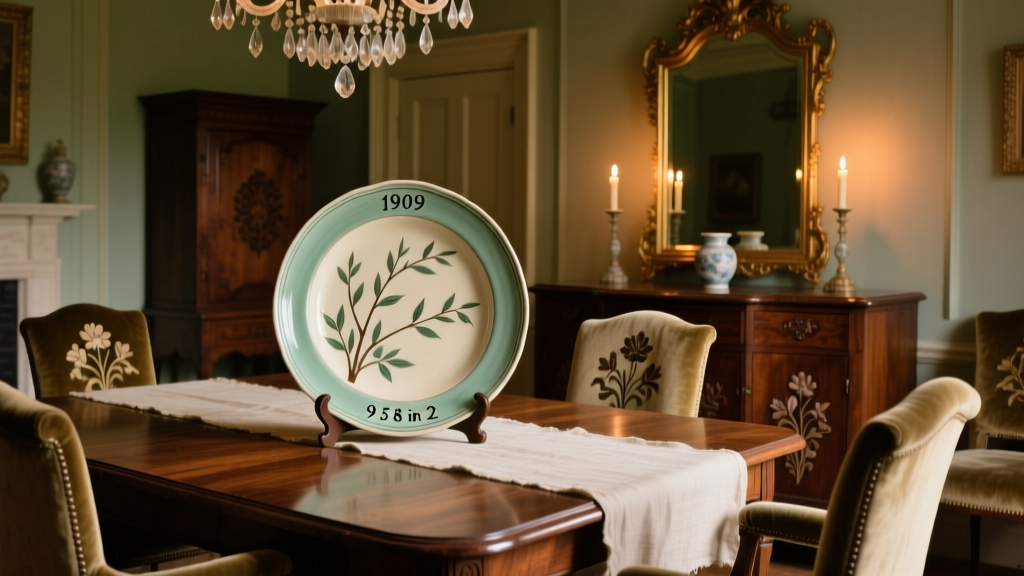
Buffalo Pottery Willow Pattern Platter, 1909: A Detailed Examination of the 9⅝-Inch Blue-and-White Ceramic Masterpiece
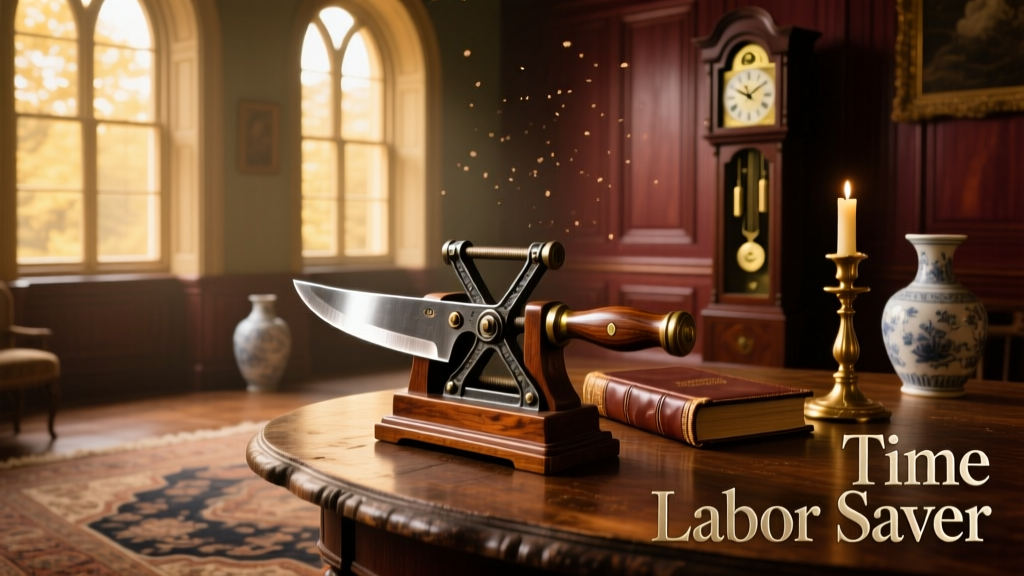
Advertising Sharpener Knife 'Time Labor Saver': A Collector’s Guide to the Oak & Cast Iron Kitchen Artifact
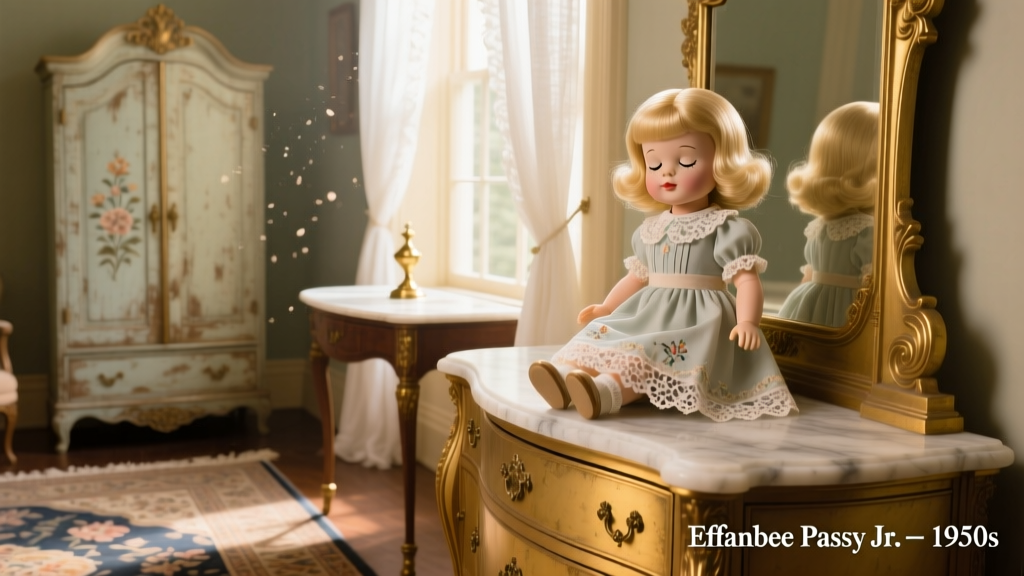
Effanbee Patsy Jr. Sleep Eyes Doll with Original Wig: A 12-Inch Vintage Collectible Restoration Guide

The Old Whiskey Flask: History, Materials, Identification, and Restoration
Sheared Beaver Tall Beret: Anatomy, Provenance, and Restoration of a Rare 19th-Century Headwear Artifact