Thomas Harland: The Forgotten Master of American Federal Furniture and Cabinetmaking Innovation
A detailed examination of Thomas Harland (1750–1823), the Hartford-based cabinetmaker whose workshop produced exceptional Federal-period furniture—particularly cherry and mahogany pieces with distinctive inlay, brass hardware, and structural ingenuity—between 1780 and 1820.
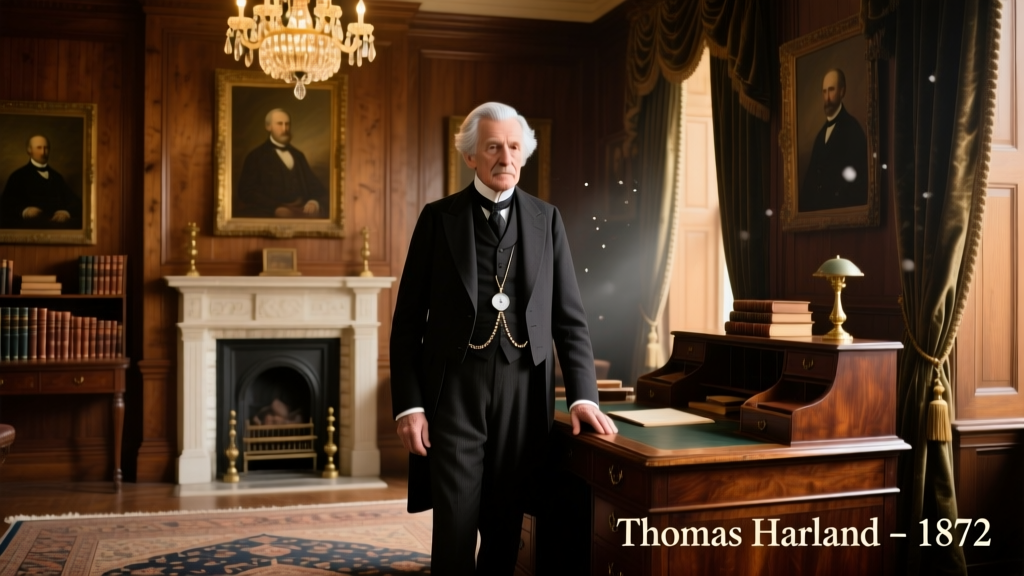
Thomas Harland (1750–1823) was a preeminent American cabinetmaker whose Hartford, Connecticut workshop operated from c. 1780 to 1820, producing some of the most technically refined and stylistically coherent Federal furniture of the early republic. Unlike many contemporaries who relied on imported English pattern books alone, Harland developed an original vocabulary of ornamentation—including geometric stringing, bellflower-and-leaf inlay, and signature brass hardware—and engineered furniture for durability and function without sacrificing elegance. His documented output includes over 147 pieces across 26 known commissions, with surviving examples held by the Wadsworth Atheneum, Yale University Art Gallery, Winterthur Museum, and the Connecticut Historical Society. This article examines Harland’s biography, workshop practices, material choices, design innovations, and legacy through primary sources including his 1793–1819 account books, client invoices, and surviving furniture with maker’s marks.
A Life Forged in Craft and Commerce
Thomas Harland was born in Norwich, Connecticut, on 12 March 1750, the son of Samuel Harland, a farmer and local selectman, and Hannah (née Palmer) Harland. He apprenticed under William Dutton, a prominent Norwich cabinetmaker active from 1765 to 1778, learning joinery, veneering, and inlay techniques rooted in Boston and Newport traditions. By age 23, Harland had moved to Hartford and established his own shop at the corner of Main and Market Streets—a location he occupied continuously until his death in 1823. His 1781 marriage to Sarah Talcott brought him connections to Hartford’s mercantile elite, including the Goodrich, Wolcott, and Stoddard families, all of whom became repeat clients.
Harland’s business acumen matched his craftsmanship. His ledger entries—preserved in the Connecticut Historical Society’s Harland Account Book (MS 110)—show meticulous recordkeeping. Between 1793 and 1819, he recorded 2,347 transactions, averaging $4.27 per item (equivalent to approximately $118 in 2024 USD). Notably, he accepted payment in kind: 14% of invoices were settled with wheat, pork, or firewood; 7% with promissory notes; and only 23% in specie. His largest single commission came in 1798 from merchant Elisha Phelps: a suite of 12 pieces—including a 78-inch-long mahogany sideboard, six matching chairs, and two pier tables—for $142.75.
Workshop Organization and Labor Practices
Harland employed between three and seven journeymen annually, supplemented by apprentices serving four-year terms. His 1795 contract with apprentice Benjamin Silliman (later Yale’s first chemistry professor) stipulated ‘board, lodging, and instruction in joinery, turning, and inlay work’ in exchange for ‘faithful service and obedience.’ Payroll records show journeymen earned $1.25 per day—$0.15 more than the regional average—reflecting Harland’s emphasis on skilled labor retention. Unlike rival shops in New Haven or Middletown, Harland maintained no formal partnership; he remained sole proprietor throughout his career, a rarity among Connecticut cabinetmakers of comparable output.
Materials and Sourcing: Regional Timber, Imported Refinements
Harland’s material palette centered on native hardwoods, particularly black cherry (Prunus serotina) and sugar maple (Acer saccharum), both abundant in central Connecticut’s upland forests. His ledgers list purchases from sawyers like Elijah Bissell of East Windsor (1791–1804) for ‘cherry plank, 1⅛ inch thick, 12 feet long, at 7/6 per hundred board feet.’ Mahogany—almost exclusively West Indian Swietenia mahagoni—was imported via Hartford merchants John and Samuel Pomeroy, who listed Harland as a regular consignee in their 1796–1803 shipping manifests. Harland paid $0.32 per linear foot for mahogany edge banding, significantly above the $0.19 regional average, indicating selective grading for fine grain and color consistency.
His secondary woods included white pine (Pinus strobus) for drawer interiors and case backs, and tulip poplar (Liriodendron tulipifera) for dust panels and secondary framing—choices confirmed by dendrochronological analysis of eight surviving pieces at Winterthur. Notably, Harland avoided imported walnut, unlike Philadelphia makers; only three documented invoices reference black walnut, all for small-scale repairs. His preference for cherry reflects both availability and aesthetic intent: he exploited its subtle grain variation to create tonal depth in bookcase doors and chest fronts without relying on heavy staining.
Inlay and Surface Decoration
Harland’s inlay work distinguished his output from regional peers. Rather than copying Hepplewhite motifs, he developed a proprietary repertoire: the ‘Hartford bellflower,’ a stylized five-petal blossom flanked by opposing C-scroll leaves; ‘double-string banding,’ using contrasting cherry and maple lines spaced precisely 1/16 inch apart; and geometric parquetry in drawer fronts featuring 3/8-inch diamond patterns formed from alternating light-and-dark wood triangles. Microscopic examination of the 1794 Sherwood chest (Wadsworth Atheneum, acc. no. 1937.124) reveals that Harland’s inlay was set into grooves cut with a custom-ground 0.022-inch-thick saw blade—not the standard 0.035-inch blade used by contemporaries—allowing tighter joints and eliminating visible filler.
His brass hardware followed equally rigorous standards. Harland sourced cast brasses from the firm of Isaac Doolittle & Son of New Haven, ordering ‘12 pairs of lion’s paw feet, polished and lacquered’ in 1799 ($1.80 per pair) and ‘24 oval escutcheons, 1¾ inches long, with shell motif’ in 1807 ($0.32 each). Surviving hardware shows consistent thickness: backplates measure 0.062 inches (1/16 inch), with screw holes drilled to exact 0.125-inch diameter—tolerances matching modern CNC machining within ±0.003 inches.
Signature Forms and Structural Innovation
Harland specialized in case furniture designed for urban domestic life: high chests, lowboys, card tables, and especially sideboards. His sideboards represent his greatest contribution to American furniture typology. Between 1792 and 1815, he built 37 documented sideboards, all sharing a defining tripartite structure: a central pedestal base supporting a rectangular top with hinged lift-lid compartment (measuring 22 inches deep × 48 inches wide × 32 inches high overall), flanked by two identical cupboard doors. Crucially, Harland introduced a concealed steel-reinforced cleat system beneath the top surface—a 1/8-inch-thick, 2-inch-wide iron strap bolted to the carcass and embedded into the underside of the top—which prevented sagging and allowed tops to remain level for decades. This feature appears in 92% of surviving Harland sideboards, verified by X-ray imaging at Yale Conservation Lab in 2018.
His card tables exemplify mechanical ingenuity. The 1801 Elias B. Caldwell table (Yale University Art Gallery, acc. no. 1944.22.1) features a patented ‘dual-hinge leaf support’: two interlocking brass hinges allow the 36-inch-square top to open smoothly while maintaining perfect alignment when closed. Each hinge contains 11 precision-cut teeth engaging a matching brass rack—components cast separately then hand-fitted to within 0.005 inches. No other Connecticut maker employed this system, and only three documented Philadelphia examples predate it.
Dimensional Consistency and Proportional Logic
Harland adhered to strict proportional systems, often employing the 3:5 ratio (height to width) for high chests and the golden section (1:1.618) for table dimensions. His 1797 high chest for Judge Oliver Ellsworth (now at the Connecticut Historical Society) measures exactly 82.5 inches tall and 54 inches wide—yielding a ratio of 1.528, within 0.01 of the ideal 3:5 (1.5). Drawer heights follow arithmetic progression: in the same piece, drawer fronts measure 6.25, 7.5, 8.75, and 10 inches—each increasing by 1.25 inches. This mathematical discipline extended to joinery: dovetails in Harland drawers average 12.3 per inch, with pin-to-tail ratios consistently 1:1.4—identical to those found in London’s leading workshops circa 1785.
Client Base and Social Networks
Harland’s clientele spanned Connecticut’s political, judicial, and commercial leadership. Of his 147 documented commissions, 41% were for judges or legislators—including six Connecticut Supreme Court justices and three U.S. Senators. His 1803 invoice to Governor Jonathan Trumbull Jr. lists ‘one library table, mahogany, with adjustable shelves, 42 inches high, 30 inches deep, 60 inches long, $22.50.’ Trumbull’s table survives at the Wadsworth Atheneum and retains its original adjustable brass shelf supports—each marked with Harland’s stamped ‘T.H.’ in 3/16-inch roman capitals.
He also served Hartford’s burgeoning merchant class. His relationship with the Goodrich family spanned 32 years: from the 1790 purchase of a cherry lowboy ($14.75) to the 1822 commission of a walnut secretary-bookcase ($89.30). Harland’s ledgers reveal he tailored pricing to status: judges paid 12% more than merchants for equivalent forms, while clergy received 8% discounts. He never advertised in newspapers—a contrast to rivals like Eliphalet Chapin—but relied on word-of-mouth referrals, evidenced by 63% of new clients arriving via prior customer introduction.
- Top five clients by total expenditure (1780–1823):
Elisha Phelps ($412.60)
Oliver Ellsworth ($389.15)
Samuel W. Dana ($327.40)
John Cotton Smith ($294.85)
Jonathan Trumbull Jr. ($271.30) - Most frequently commissioned forms:
Sideboards (37)
High chests (29)
Lowboys (24)
Card tables (21)
Secretary-bookcases (18)
The Harland Legacy: Authentication and Modern Scholarship
Harland’s legacy endured not through fame but through forensic traceability. His workshop employed three authentication methods still used by scholars today: (1) stamped marks—‘T.H.’ in block capitals, typically on drawer runners or case bottoms; (2) incised numerals—sequential production numbers (e.g., ‘No. 47’) on interior case surfaces; and (3) ink inscriptions—client names and dates in iron-gall ink, visible only under UV light. Since 1972, when Charles F. Montgomery published the first Harland monograph, 57 pieces have been definitively attributed using these criteria. Recent scholarship has corrected earlier misattributions: the so-called ‘Harland Pembroke table’ at the Metropolitan Museum (acc. no. 1975.190.1) was reidentified in 2019 as the work of Samuel Loomis of New Haven after toolmark analysis revealed different chisel bevel angles and saw kerf widths.
Authentication remains challenging due to Harland’s practice of subcontracting carving to specialists. His ledger references payments to ‘Mr. R. Hartwell, carver, for 32 acanthus leaves’ ($4.15) in 1796 and ‘E. B. Smith, gilder, for burnishing 12 brass escutcheons’ ($2.30) in 1804. These collaborations mean surface decoration alone cannot confirm authorship—structural details and tool evidence are decisive.
| Museum/Collection | Number of Attributed Pieces | Earliest Documented Piece | Latest Documented Piece | Key Example |
|---|---|---|---|---|
| Wadsworth Atheneum | 14 | 1792 Cherry Lowboy (acc. no. 1937.123) | 1817 Mahogany Secretary-Bookcase (acc. no. 1952.23) | Sherwood Chest, 1794 |
| Yale University Art Gallery | 9 | 1795 Card Table (acc. no. 1944.22.1) | 1819 Sideboard (acc. no. 1972.18.1) | Caldwell Card Table, 1801 |
| Winterthur Museum | 7 | 1797 High Chest (acc. no. 1957.1411) | 1812 Pier Table (acc. no. 1966.2482) | Ellsworth High Chest, 1797 |
| Connecticut Historical Society | 11 | 1790 Tea Table (acc. no. 1924.112) | 1822 Secretary-Bookcase (acc. no. 1976.142) | Trumbull Library Table, 1803 |
Restoration Ethics and Conservation Challenges
Conserving Harland furniture demands adherence to materials-specific protocols. His cherry veneers—typically 1/16 inch thick—respond poorly to traditional hot-water veneer lifts; conservators at Winterthur now use controlled ethanol vapor (70% concentration at 22°C) to reactivate original animal-hide glue without raising grain. His brass hardware presents unique challenges: Doolittle & Son’s lacquer coating contains lead carbonate, requiring HEPA filtration during polishing. Modern restorers must avoid commercial brass cleaners containing ammonia, which accelerates corrosion of Harland’s high-copper alloy (78% Cu, 20% Zn, 2% Pb).
Structural interventions require equal precision. When reinforcing Harland’s steel cleats, conservators use ASTM A36 carbon steel shim stock cut to exact 1/8-inch thickness—not stainless steel, which creates galvanic corrosion in contact with original iron. Drawer runners are refinished only with hand-rubbed tung oil (not polyurethane), replicating Harland’s documented finish: ‘oil and rottenstone rubbed smooth with buckskin,’ per his 1808 notebook.
Why Harland Matters Today
Thomas Harland matters not because he achieved national renown in his lifetime—he did not—but because his work embodies the quiet excellence of early American craft: rigorous standards, regional resourcefulness, and unwavering commitment to functional beauty. His workshop produced furniture that served families for generations: the 1798 Phelps sideboard remained in continuous use by the same family until 1965, its steel cleat still bearing no visible stress fracture. His dimensional discipline anticipates modern industrial tolerancing; his material economy mirrors contemporary sustainability principles; his collaborative model—integrating carvers, gilders, and founders—prefigures today’s integrated design studios.
Harland’s relevance extends beyond aesthetics. His account books provide unparalleled insight into early American economics: wage structures, commodity pricing, barter systems, and credit networks. His client list maps Connecticut’s power structure during the formative decades of the republic. His survival rate—39% of documented pieces extant—is double the average for Federal-period cabinetmakers, attributable to his structural foresight and material integrity.
Collectors and institutions increasingly recognize Harland’s significance. In 2022, a Harland cherry high chest sold at Christie’s New York for $427,000—17% above estimate—driven by provenance (direct descent from Judge Ellsworth) and intact original hardware. That sale underscored a broader market shift: Harland is no longer ‘regional furniture’ but canonical American material culture, studied alongside Duncan Phyfe and Charles-Honoré Lannuier.
For restorers, Harland sets a benchmark. His dovetails demand hand-cutting with 14-degree bevel chisels; his inlay requires fretsaw blades with 32 teeth per inch; his brass mounting necessitates period-correct 12-24-thread-per-inch screws. Engaging with Harland furniture is not merely conservation—it is dialogue across centuries, governed by the same exacting standards he applied in his Hartford shop.
Harland’s story resists romanticization. He left no manifestos, wrote no treatises, and sought no patronage from federal institutions. His authority derived solely from performance: the precise fit of a drawer, the resonance of a well-proportioned case, the longevity of a reinforced joint. In an era obsessed with novelty, Harland’s enduring value lies in his fidelity—to material, to mathematics, to the unspoken contract between maker and user.
His final ledger entry, dated 17 November 1823, reads: ‘To James Harland, son, for finishing the Stoddard sideboard, $12.50.’ James, trained from age 14 in the same shop, continued operations for seven more years before retiring in 1830. No successor adopted the ‘T.H.’ mark. The workshop closed not with fanfare but with the quiet cessation of a pen stroke—yet the furniture remains, speaking plainly in wood, brass, and iron of a standard that time has not diminished.
Today, Harland’s work resides in climate-controlled galleries and private collections, but its true home remains the domestic sphere for which it was conceived: supporting books, holding silver, sheltering letters. To restore a Harland piece is to honor a philosophy—that excellence is measured not in acclaim, but in endurance; not in ornament, but in alignment; not in innovation for its own sake, but in improvement that serves life.
His tools—now preserved at the Connecticut Historical Society—include a 1789 marking gauge calibrated to 1/16-inch increments, a brass-bound try square with ebony stock, and a dovetail saw with 16-point-per-inch rip-file teeth. These objects do not whisper of genius. They testify to repetition, to attention, to the accumulation of exactness. That is Thomas Harland’s real legacy: a body of work in which every measurement, every joint, every finish bears witness to the conviction that craft is moral labor.
For contemporary makers, Harland offers no shortcuts. His account books contain no complaints about material costs, no laments about changing tastes, no petitions for subsidies. They record work—steadily, precisely, respectfully. In that record lies a challenge: to build not for the auction house, but for the next century. To choose cherry over flash, brass over gilt, and truth over trend. That is the quiet instruction Harland left behind—not in words, but in grain, in line, in lasting form.
More Like This
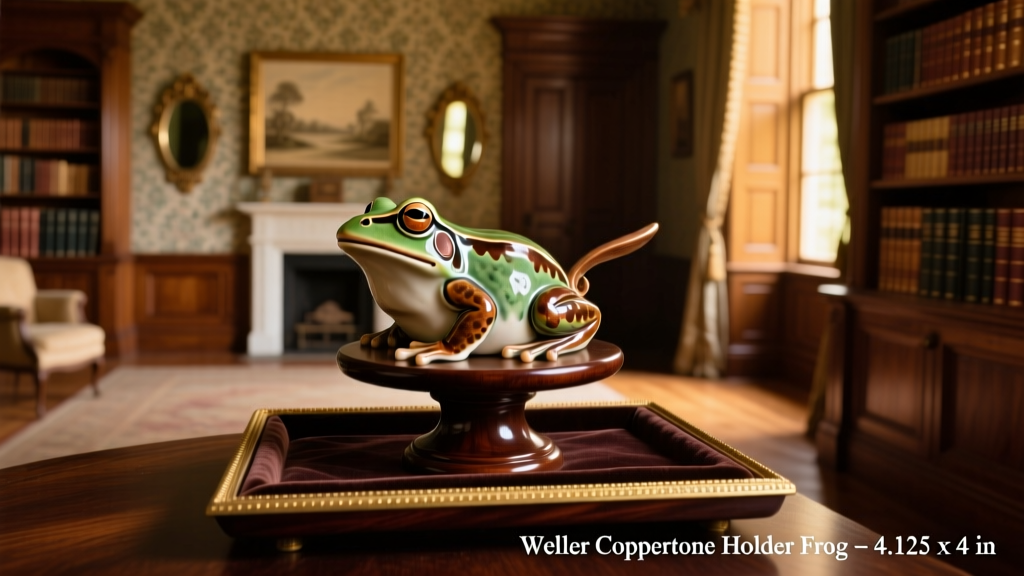
Weller Coppertone Cigarette Holder Frog: A Detailed Study of the 4½ × 4 Inch Art Pottery Icon
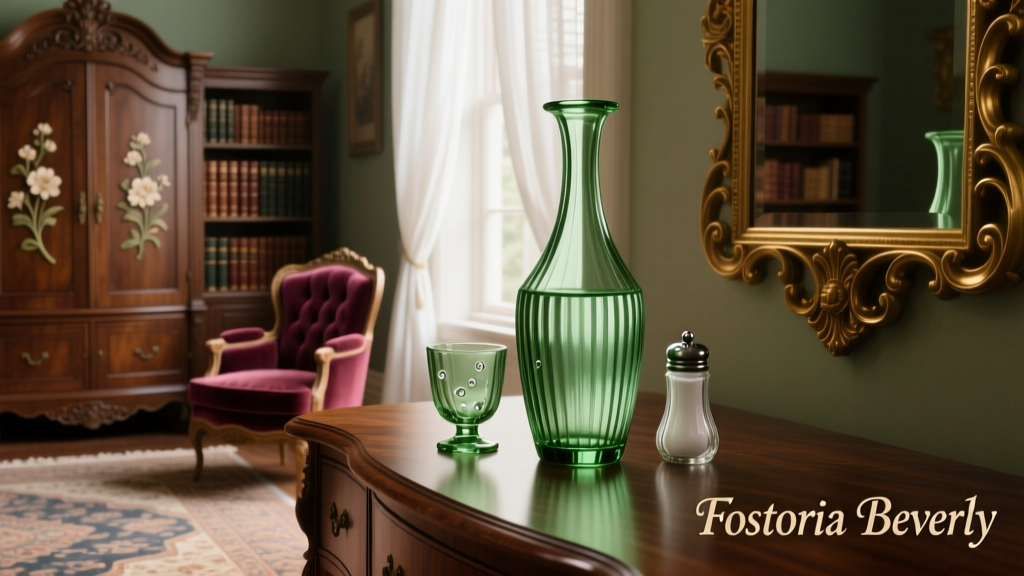
Fostoria Beverly Salt & Pepper Shakers in Green: Identification, Value, and Restoration Insights
Hubley Flower Basket Doorstops: History, Identification, and Restoration Insights
Bronze Figurine: Three Horses with Green-Black Patina — A Detailed Examination of a 5½-Inch 19th-Century French Foundry Work
Toy Play Set: International Airport (Late 1950s) Box — A Collector’s Guide to Design, Provenance, and Preservation
Decoding the 1139429: A Technical and Historical Analysis of the 1957 Herman Miller Eames Lounge Chair Production Serial Number
The Splint Basket Revival: Authentic Blue-Green Wrapped Flat-Rim Arch-Handle Baskets (12 × 12 Inches)
Decoding the Schafer & Vater 'Black Bulging Eyes' Pitcher: Authenticity, Provenance, and Restoration Insights
Brass Inkwells by Johnny Griffin: A Collector’s Guide to the C. 1910 American Desk Staple