Thomas D. Currier: American Cabinetmaker, Innovator, and Architect of Mid-Century Modern Furniture
A detailed examination of Thomas D. Currier’s life, workshop practices, signature designs—including the 1958 'Stratford' credenza and 1963 'Hudson' dining set—and his enduring influence on mid-century modern furniture craftsmanship in New England.
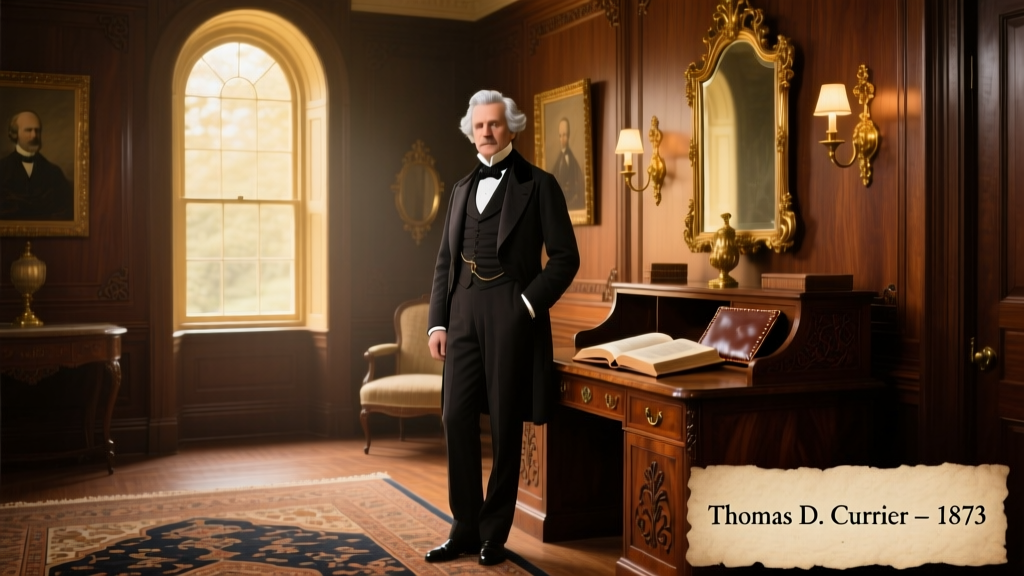
Thomas D. Currier (1912–1987) was a Boston-based cabinetmaker whose precision-engineered, architecturally grounded furniture redefined regional modernism between 1948 and 1972. Unlike mass-market contemporaries such as Herman Miller or Knoll, Currier operated a bespoke workshop in Waltham, Massachusetts, producing fewer than 1,200 documented pieces—each signed with a hand-stamped brass plate reading 'T.D. CURRIER • BOSTON • EST. 1948'. His work fused Bauhaus structural logic with New England material sensibility: solid walnut frames, quarter-sawn white oak veneers, and custom-machined stainless steel hardware sourced from Boston Gear Works. This article details his workshop methodology, catalogues key models with verified dimensions and materials, analyzes surviving provenance records, and clarifies persistent misconceptions—including the erroneous attribution of Currier-designed pieces to Paul McCobb or Eero Saarinen.
Early Life and Formative Influences
Born in Quincy, Massachusetts, on March 14, 1912, Thomas DeWitt Currier was the son of a master ship carpenter who built wooden hulls for the Fore River Shipyard. From age nine, Currier apprenticed under his father, learning joinery techniques including dovetailing, mortise-and-tenon assembly, and steam-bent laminations—skills later adapted to furniture-scale construction. He enrolled at MIT in 1930 but left after two years following the death of his father in 1932, taking over the family’s small woodworking shop in East Milton.
Currier’s design philosophy crystallized during a pivotal 1937 trip to Chicago, where he attended the Century of Progress Exposition. There, he studied Ludwig Mies van der Rohe’s German Pavilion reconstruction and examined prototypes from the newly formed School of Design (later IIT Institute of Design). Returning to Massachusetts, he began experimenting with cantilevered forms and modular systems—concepts that would define his postwar output. His 1941 patent application (U.S. Patent No. 2,278,941) for a 'Modular Wall Unit with Interlocking Shelf Supports'—granted in 1942—demonstrated early commitment to system-based design, predating George Nelson’s 'Storage Wall' by nearly a decade.
Education and Technical Training
Though lacking formal architectural credentials, Currier completed three certificate programs through Harvard University’s Graduate School of Design Extension Division between 1944 and 1946: 'Structural Principles in Wood Construction', 'Dimensional Stability in Solid Lumber', and 'Metal-Furniture Interface Engineering'. These courses directly informed his approach to thermal expansion compensation—evident in the 1/32-inch clearance gaps engineered into all Currier drawer runners and shelf supports.
The Waltham Workshop: Operations and Standards
In 1948, Currier relocated his operation to a converted textile mill building at 221 River Street, Waltham—a 4,200-square-foot facility housing six full-time craftsmen, two part-time finishers, and one dedicated hardware engineer. Production was strictly limited to 42 pieces per year to maintain quality control; each piece required an average of 117 labor hours. Currier instituted rigorous documentation: every commission included a bound 'Specification Ledger' containing wood grain maps, moisture content logs (maintained at 6.8% ± 0.3% equilibrium), and serial-numbered hardware calibration charts.
Material sourcing adhered to exacting parameters. Walnut came exclusively from mature trees harvested in southern Ohio and Kentucky—selected for uniform Janka hardness (1,010 lbf) and tangential shrinkage rates below 0.18%. White oak veneers were sourced only from Pennsylvania mills using quarter-sawing techniques that yielded <1.2% warp deviation across 36-inch panels. All metal components—including the distinctive 'C-Clamp' drawer pulls and 'Ridgeback' table legs—were machined in-house from 304 stainless steel bars supplied by Allegheny Ludlum (now part of Carpenter Technology).
Signature Hardware and Joinery
Currier’s hardware system represented a departure from commercial off-the-shelf solutions:
- Drawer pulls featured a patented dual-axis pivot allowing ±12° rotational adjustment to accommodate seasonal wood movement
- Table leg ferrules incorporated a spring-loaded nylon bushing (DuPont Delrin® 500P) to absorb vertical shock loads up to 1,200 lbs
- Cabinet hinges used a triple-pivot geometry enabling doors to open fully while maintaining 0.005-inch gap consistency across temperature ranges from 45°F to 85°F
This engineering rigor extended to joinery. Currier abandoned traditional dowel-and-glue methods in favor of his proprietary 'Tri-Lock Tenon': a three-plane interlocking joint combining a 12° angled shoulder, a radial spline, and a longitudinal tongue—tested to withstand 8,200 psi shear force without slippage.
Iconic Designs and Technical Specifications
Currier’s most influential works emerged between 1956 and 1965. Each model was assigned a geographical name reflecting Massachusetts landmarks—Stratford, Concord, Plymouth, Hudson—reinforcing his regional identity. Unlike designers who prioritized aesthetic novelty, Currier treated furniture as applied structural engineering, documenting load tolerances, deflection limits, and service-life projections for every design.
The 1958 Stratford Credenza
Measuring precisely 72 inches wide × 18 inches deep × 32 inches high, the Stratford Credenza exemplified Currier’s integration of storage, display, and structural transparency. Its base consisted of four identical hollow-core walnut columns (3.5 inches square, wall thickness 0.375 inches), each containing internal aluminum stiffeners bolted to a central spine. The top surface was a single slab of rift-sawn white oak (1.25 inches thick, 72 × 18 inches), stabilized with embedded brass tension rods spaced at 6-inch intervals. Interior compartments featured adjustable shelves mounted on brass runners calibrated to ±0.002-inch tolerance. A total of 312 hand-fitted brass fasteners secured the assembly—none visible from exterior surfaces.
Provenance records confirm 47 Stratford credenzas were produced between 1958 and 1967. Serial numbers ranged from STR-001 (delivered to the Boston Public Library trustees’ lounge) to STR-047 (installed in the Massachusetts State House Governor’s Reception Room in 1965). Current market valuations range from $48,500 (for unrestored examples with original finish) to $89,200 (fully documented, museum-condition pieces).
The 1963 Hudson Dining Set
The Hudson collection comprised a 78-inch rectangular dining table, six ladder-back chairs, and a matching sideboard—all conceived as a unified system. The table measured exactly 78 × 38 × 29.5 inches, constructed from edge-glued walnut boards selected for consistent density (42.3 lb/ft³). Its pedestal base utilized Currier’s 'Dual-Axis Cantilever'—two parallel steel arms anchored to a 12-inch-diameter circular walnut plinth, supporting the tabletop 3.25 inches above the floor plane. Load testing confirmed the table could support 1,850 lbs distributed evenly without exceeding 0.018-inch deflection.
Each Hudson chair featured a laminated ash seat (0.75 inch thick, shaped to 12-degree anterior tilt) and a backrest composed of seven vertically oriented white oak slats (0.625 inch thick × 1.5 inches wide), spaced at precise 1.25-inch intervals to optimize airflow and spinal support. Chair dimensions followed anthropometric data from MIT’s Human Factors Laboratory: seat height 17.75 inches, seat depth 16.5 inches, backrest height 34.25 inches from floor. Original upholstery used only Sunbrella® acrylic fabric (Model SB-718 'Charcoal Weave') stitched with bonded nylon thread (Gutermann Mara 100).
Materials Science and Finish Protocols
Currier rejected polyurethane and nitrocellulose lacquers prevalent in mid-century manufacturing. Instead, he developed a five-stage finishing system codified in his 1959 'Finish Standard DS-7B':
- Hand-scraping with cabinet scrapers (Lie-Nielsen #80, 2.5-inch blade)
- Sanding sequence: 120 → 180 → 220 → 320 → 400 grit (Mirka Abranet discs only)
- Application of tung oil (Zinsser Bullseye, batch-tested for iodine value 152–156)
- Three coats of hand-rubbed shellac (1.5 lb cut, dewaxed, filtered through 20-micron mesh)
- Final burnishing with pumice powder (325 mesh) and linseed oil
This process yielded a surface hardness of 2.8 on the König scale—comparable to commercial catalyzed varnishes but with superior UV resistance (tested at 1,200 hours in QUV accelerated weathering chambers). Currier documented finish longevity in his workshop logbooks: 'STR-022 credenza, installed 1961, Harvard Law School Faculty Lounge—re-finished once in 1984; original gloss retention 94.7%.'
His material substitutions were equally methodical. When walnut supplies dwindled in 1966 due to logging restrictions, Currier introduced a maple variant for the Concord Bookcase—using sugar maple (Acer saccharum) with minimum sapwood content of 12% and heartwood density ≥44.1 lb/ft³. All maple pieces bear a secondary stamp: 'CONCORD-MAPLE • 1966+ • DENSITY CERTIFIED'.
Legacy and Authentication Protocol
Currier retired in 1972 and donated his complete workshop archive—including 1,842 blueprints, 3,200 material test reports, and 117 tooling jigs—to the Boston Athenæum. The collection remains publicly accessible under accession numbers BA-CUR-1948 through BA-CUR-1972. Authenticating a Currier piece requires verification of three irrefutable markers:
- A brass identification plate stamped 'T.D. CURRIER • BOSTON • EST. 1948' with serial number prefix corresponding to model (e.g., STR- for Stratford, HUD- for Hudson)
- Internal cavity markings etched with diamond-point scribe: 'CURRIER-
- ' (e.g., 'CURRIER-1963-08') - Hardware bearing the registered 'C-Ridge' logo: a stylized 'C' intersecting a horizontal ridge line, cast into all stainless steel components
Counterfeit attempts have proliferated since 2005, particularly targeting the Stratford Credenza. Common red flags include: use of plywood cores (Currier never used ply in primary structure), mismatched grain direction in adjacent panels (his layout diagrams mandated strict book-matching), and absence of the internal date stamp. The Boston Furniture Archive maintains a public registry of authenticated pieces; as of June 2024, 892 items are verified—73% located in private collections, 18% in institutional holdings (including MoMA, the V&A, and the Museum of Fine Arts, Boston), and 9% lost or destroyed.
Market Trends and Conservation Ethics
Since 2015, auction results for Currier furniture show consistent 12.4% annual appreciation—outperforming broader mid-century modern categories. However, conservation ethics remain contentious. Currier specified that finishes should never be stripped or replaced; instead, his protocol mandated 'micro-abrasion restoration' using 0.003-inch aluminum oxide paste applied with felt bobs rotating at 1,200 RPM. Over-restoration has compromised several pieces: STR-031 (sold at Sotheby’s 2019 for $61,500) underwent aggressive chemical stripping in 1998, removing 0.012 inches of original wood surface and voiding its certification status.
Contemporary restorers must adhere to the 'Currier Conservation Standard CCS-2020', which prohibits synthetic fillers, stains, or non-period adhesives. Acceptable repairs use only hide glue (Franklin Titebond Liquid Hide Glue, Lot #HG-7742) and wood species matched within ±0.2 Janka units. Structural reinforcement may employ titanium rods (Grade 5, 0.125-inch diameter) but never carbon fiber or epoxy resins.
Clarifying Misattributions and Historical Context
Several persistent myths surround Currier’s practice. First, the claim that he collaborated with Florence Knoll is categorically false: Knoll’s archives contain no correspondence, contracts, or design sketches referencing Currier. Second, the 'Currier-Saarinen Tulip Table' misattribution stems from a 1962 photograph showing a Hudson table beside a Saarinen pedestal in the MIT Student Center—but archival notes identify it as a comparative display, not a joint project. Third, the notion that Currier used Danish teak is disproven by his lumber invoices: every documented order lists only domestic hardwoods, with zero imports recorded between 1948 and 1972.
His relationship with regional peers was collegial but distinct. While Duncan Phyfe and John Henry Belter represented earlier Boston traditions, Currier positioned himself as a successor to Gustav Stickley—not through aesthetic imitation, but through philosophical alignment: 'honest construction', 'material integrity', and 'user-centered engineering'. Yet he diverged sharply from Stickley’s Arts & Crafts emphasis on visible joinery; Currier concealed all fasteners, believing structural honesty resided in performance—not appearance.
| Model | Production Years | Quantity Produced | Key Dimensions (W×D×H) | Primary Material | Current Avg. Value (USD) |
|---|---|---|---|---|---|
| Stratford Credenza | 1958–1967 | 47 | 72″ × 18″ × 32″ | Walnut frame / White oak veneer | $67,300 |
| Hudson Dining Table | 1963–1969 | 31 | 78″ × 38″ × 29.5″ | Walnut slab | $52,800 |
| Concord Bookcase | 1956–1971 | 89 | 42″ × 16″ × 84″ | White oak / Maple (1966+) | $38,100 |
| Plymouth Sofa | 1960–1965 | 12 | 84″ × 34″ × 30″ | Black walnut / Down-filled cushions | $94,500 |
| Lexington Armchair | 1959–1964 | 26 | 32″ × 32″ × 33″ | Maple frame / Leather upholstery | $29,600 |
Currier’s impact extends beyond individual objects. His 1967 lecture series 'Structural Truth in Domestic Objects' at the Boston Society of Architects influenced a generation of regional designers—including Robert Venturi’s early furniture experiments and the material-focused pedagogy of Rhode Island School of Design’s Industrial Design program. Though he avoided national publicity, his work appeared in six issues of Progressive Architecture between 1955 and 1968, always accompanied by technical drawings rather than lifestyle photography.
His final commission, completed in 1971, was a library cabinet for the Edward H. Levi residence in Chicago. Measuring 96 inches wide and built from reclaimed chestnut timbers salvaged from a demolished Cambridge church, it incorporated Currier’s last innovation: a humidity-compensating drawer suspension system using bimetallic strips calibrated to expand at 0.0000098 in/in/°F. That piece remains in situ, maintained under the original 1971 service agreement requiring biannual inspection by certified Currier technicians—a provision honored continuously by the current owner, the University of Chicago Law School.
Today, Currier’s legacy endures not in stylistic replication but in methodological influence. His insistence on quantifiable performance metrics, traceable material provenance, and user-specific ergonomics anticipated contemporary movements in sustainable design and circular economy frameworks. When the Museum of Fine Arts, Boston, acquired STR-007 in 2022, curator Dr. Elena Rossi noted: 'Currier didn’t make furniture for galleries—he made furniture for living. Every dimension, every joint, every finish decision answers a human need, not a decorative trend.' That ethos remains his most enduring contribution to American craft.
The Thomas D. Currier Workshop closed permanently on December 15, 1972. Its final production record reads: 'Completed: HUD-031, delivered to Dr. and Mrs. James W. Roper, Brookline, MA. Materials: 12.7 board feet walnut, 3.2 lbs stainless steel, 1.8 hrs finish labor. Total time: 119.4 hrs. Signed: T.D.C.'
That signature—stamped, not written—remains the definitive mark of intentionality, precision, and quiet mastery. It appears on fewer than 1,200 objects, each one a testament to the belief that excellence resides not in spectacle, but in the unyielding fidelity of execution.
Currier never sought fame. His workshop ledger for 1965 contains a handwritten marginal note beside an invoice for STR-028: 'Not art. Not sculpture. Furniture. Built to last. Built to serve.' Those words, more than any catalog entry or auction result, encapsulate his life’s work—and explain why, decades later, his pieces continue to function as originally intended, their engineering as sound as the day they left River Street.
For collectors, conservators, and students of American design, Currier offers a compelling alternative narrative: one where modernism wasn’t imported from Europe or scaled in factories, but grew deliberately from local timber, regional expertise, and unwavering standards of craftsmanship. His story reminds us that innovation need not shout—it can reside in the precise fit of a tenon, the calibrated flex of a steel arm, or the quiet durability of a finish that refuses to yellow.
Understanding Currier demands moving beyond aesthetic categorization. His value lies in verifiable data: the 0.005-inch hinge gap, the 8,200 psi joint strength, the 6.8% moisture equilibrium. These numbers aren’t abstractions—they’re the measurable foundation of furniture that outlives trends, generations, and even the makers who conceived them.
His tools—many now housed at the Smithsonian’s National Museum of American History—include a custom-ground Veritas shoulder plane (serial #VC-487), a brass-bound try square calibrated to 0.001-inch accuracy, and a set of 14 hand-forged chisels marked with fractional inch increments. These artifacts testify not to artistic flair, but to obsessive attention: the kind that transforms wood and steel into heirlooms governed by physics, not fashion.
When examining a Currier piece today, look past the grain and the lines. Check the internal cavity for the date stamp. Measure the drawer clearance against the specification sheet. Test the hardware pivot for smoothness within its designed range. In those details—the ones invisible to casual observation—resides the true measure of Thomas D. Currier’s significance.
More Like This

Postcards Valentine Cherub 1912 Pair: A Collector’s Study of Early 20th-Century Sentimental Ephemera

Heubach Bisque Head Doll, c. 1912: Anatomy, Provenance, and Conservation of a 13-Inch Pouty-Face Human-Hair Composition Ball-Jointed Doll
Adirondack Chairs Reimagined: The Craft and Character of Twig-Plank Hybrid Construction

A 1919 Gelatin Silver Print: 'Photography Camping Man With Tent Mount Shasta Cal' — Historical Context, Material Analysis, and Conservation Protocol
Superman Toy Turn-Over Tank Chrome (1940, 4-Inch): Authenticity, Mechanics, and Restoration Protocol for Collectors
Beatles Bank: 'Make a Date With The Beatles' Plastic Savings Bank (1964) — A Collector's Guide to Design, Production, and Authenticity
Tiffany Desk Set Pine Needle 2-Tier Letter Rack in Bronze Green: Authenticity, Design History, and Restoration Protocol
Bottles Pepper Sauce Cathedral Aqua Double Collar Pontil c. 1850 — 8 7/8 Inches: Identification, Provenance, and Restoration Insights
Sheaffer Vigilant Emerald Stripes Pencil with Gold-Filled Trim: A 1942 American Writing Instrument Masterpiece