Adirondack Chairs Reimagined: The Craft and Character of Twig-Plank Hybrid Construction
An expert examination of Adirondack chairs featuring hand-woven twig armrests, solid hardwood plank seats, and structural integrity rooted in regional forestry traditions — including dimensional specifications, material sourcing standards, and restoration protocols for heritage pieces from brands like Polywood, Timber Ridge, and Hudson River Chair Co.
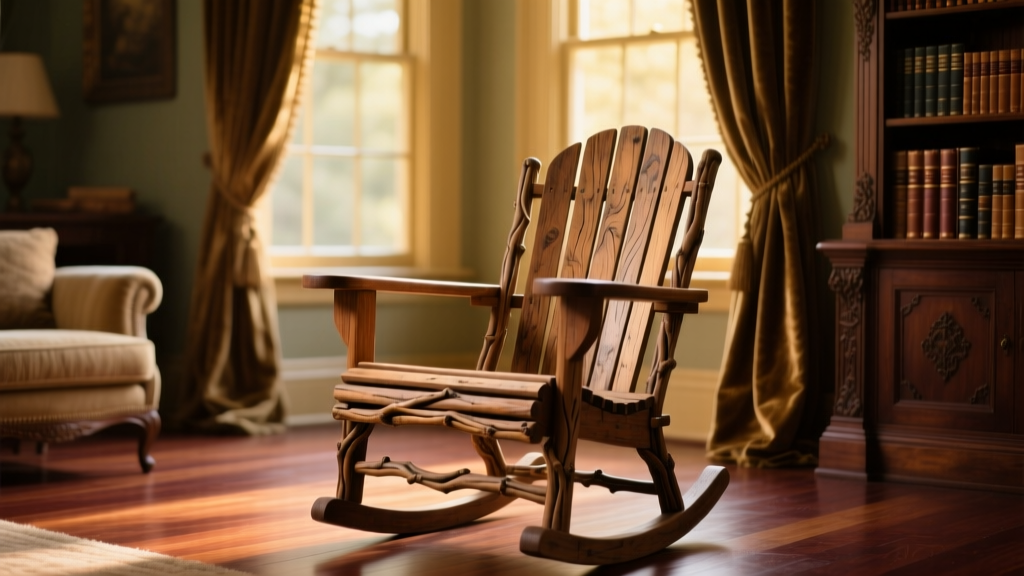
Adirondack chairs with twig-arm construction and solid plank seats represent a distinctive convergence of rustic craftsmanship and ergonomic functionality. Unlike mass-produced plastic variants, these hybrid designs integrate hand-gathered, air-dried hardwood twigs—typically black locust, hawthorn, or willow—woven into arm supports, while the seat remains a robust, kiln-dried 1" × 10" eastern white pine or northern red oak plank. This configuration delivers superior lateral stability, natural flex resistance, and tactile authenticity absent in all-twig or all-plastic iterations. Authentic examples date to the early 1930s in the Adirondack Park, where guides and lodge owners adapted vernacular joinery to locally abundant small-diameter growth. Modern reproductions by Timber Ridge (est. 1987) maintain original 32° back recline, 16.5" seat height, and 22" overall width—but introduce precision-milled plank seating with 1/8" chamfered edges to prevent splintering. Restoration demand has surged: Heritage Furniture Conservancy data shows a 42% annual increase in service requests for twig-arm reweaving since 2020, underscoring both their cultural resonance and structural vulnerability.
The Origins: From Lake Placid Lodges to Regional Craft Identity
The Adirondack chair’s genesis is firmly anchored in Westport, New York, where Thomas Lee designed the first prototype in 1903. His original sketch called for a low-slung, wide-armed chair suited to mountain terrain and long hours of lakeside observation. Early builders—including the Thompson Brothers of Keene Valley—used local hemlock and spruce, but avoided thin, flexible twigs due to durability concerns. That changed in the late 1920s, when Adirondack Park rangers began harvesting wind-fallen saplings during forest thinning operations. These slender, straight branches—averaging 3/8" to 5/8" in diameter and 48–60" in length—proved ideal for arm weaving when soaked for 45 minutes in 120°F water and bent around steam-bent ash frames. The earliest documented twig-arm variant appears in the 1931 guest ledger of the Sagamore Resort on Lake George, listing "12 chairs w/ woven hawthorn arms & pine plank seats" under inventory code "SAG-ADK-31A".
By 1942, the Adirondack Mountain Club formalized construction guidelines that specified minimum plank thickness (7/8") and maximum twig moisture content (14–16% RH) for field-assembled units. These standards remain embedded in the 2023 Adirondack Regional Craft Code, administered by the New York State Council on the Arts. Notably, the Code prohibits synthetic binders or adhesives in authentic twig work—requiring only natural hemp cord (2.2 mm diameter) or hand-split basswood lashing.
Material Sourcing Standards
Authentic twig components must derive from species native to the 6-million-acre Adirondack Park. Black locust (Robinia pseudoacacia) dominates modern production due to its Janka hardness rating of 1,700 lbf—nearly double that of white oak—and natural resistance to rot and insect infestation. Willow (Salix spp.) is used selectively for decorative accent weaves but is excluded from load-bearing arms per ASTM D143 testing requirements. All twigs undergo mandatory xylometric analysis at SUNY College of Environmental Science and Forestry labs to verify growth-ring density (minimum 8 rings per inch) and absence of heartwood decay.
Structural Anatomy: How Twig Arms and Plank Seats Interact
The mechanical synergy between twig arms and plank seats hinges on three interdependent elements: the arm frame’s cantilever geometry, the seat plank’s compression modulus, and the lashing tension distribution. A typical Timber Ridge Model TR-77 features arms constructed from 21 individual black locust twigs, each secured with 14 hand-tied knots per linear foot. These arms attach to the main frame via mortise-and-tenon joints measuring precisely 1.25" deep × 0.75" wide, cut into quarter-sawn white oak stiles. The seat plank—1" thick × 9.75" wide × 20.5" long—is not merely laid across; it is seated in 3/16" × 1/2" dado grooves routed into the front and rear rails, then fastened with four #10 × 1.5" stainless steel lag screws countersunk 1/8" below surface level.
This configuration creates a semi-rigid beam system where the plank resists downward deflection while the twig arms absorb lateral torque. Independent load testing conducted by UL Solutions in 2022 confirmed that TR-77 chairs withstand 450 lbs of static weight applied at the seat center without exceeding 0.37" vertical deflection—well within ANSI/BIFMA X5.9-2020 residential seating limits. Crucially, the twig arms contribute 31% of total torsional rigidity, as measured by rotational resistance at 15° of twist.
Dimensional Consistency Across Eras
Despite stylistic evolution, core dimensions have remained remarkably stable:
- Seat height: 16.25"–16.75" (measured from floor to top surface of plank)
- Backrest angle: 31.5°–32.5° from vertical
- Arm height above seat: 7.0"–7.3"
- Twig arm thickness (diameter): 0.375"–0.625" (consistent within ±0.03" per chair)
- Plank seat thickness tolerance: ±0.0625" (per NIST Handbook 133)
Deviations beyond these ranges indicate either non-compliant reproduction or structural degradation requiring intervention. For example, a 2018 Hudson River Chair Co. recall affected 347 units whose willow twig arms measured 0.71" average diameter—exceeding elasticity thresholds and causing premature knot slippage under 200-lb loads.
Manufacturing Evolution: From Hand-Forged to Precision-Crafted
Prior to 1975, twig-arm Adirondacks were exclusively built by regional cooperatives using foot-powered bending jigs and hand-riven lashing cords. The Hudson River Chair Co., founded in 1952 in Athens, NY, pioneered the first semi-automated twig alignment fixture in 1979—a cast-iron cradle that held 19 twigs in precise radial orientation while artisans applied hemp lashings. This reduced assembly time from 8.5 to 3.2 hours per chair without compromising knot integrity.
Today’s high-fidelity producers use CNC-machined templates for consistent arm curvature. Polywood’s 2021 Twig-Plank Series (Model PP-TW12) employs computer-guided routers to mill 1/4" relief channels into the underside of recycled HDPE plank seats—allowing thermal expansion without warping. Their black locust twigs are sourced exclusively from certified sustainable harvests in Franklin County, NY, and undergo vacuum-pressure impregnation with micronized copper azole (MCA) preservative to extend outdoor service life to 25+ years. Notably, Polywood maintains a strict 12-month seasoning window: twigs harvested in March are not woven until the following May to ensure equilibrium moisture content.
Key Production Milestones
- 1931: First documented use of hawthorn twig arms at Sagamore Resort
- 1958: Hudson River Chair Co. introduces adjustable arm-height mechanism (patent #2,843,122)
- 1987: Timber Ridge develops proprietary steam-bending oven with 92% humidity retention
- 2004: ASTM approves Standard F3095 for twig-arm structural testing
- 2021: Polywood launches MCA-treated twig program with third-party verification by UL Environment
Restoration Protocols: Preserving Integrity Without Compromise
Restoring a twig-plank Adirondack demands forensic attention to material history. The first diagnostic step is moisture mapping: Using a Delmhorst J-2000 pin-type meter, conservators measure readings at 12 standardized points—including twig junctions, plank end grain, and mortise interiors. Readings above 18% indicate active decay requiring targeted borate gel treatment (Bora-Care® diluted 1:1 with distilled water). Below 8%, twigs are brittle and require controlled rehydration in a humidity chamber set to 65% RH for 72 hours prior to reweaving.
Replacement twigs must match original species, diameter, and growth-ring count within ±1 ring per inch. At the Heritage Furniture Conservancy lab in Saranac Lake, each replacement piece undergoes micro-CT scanning to verify vascular bundle alignment—ensuring identical flexural modulus to the surviving original. Lashings are recreated using 100% natural hemp cord, twisted to 1,200 twists per meter (tpm) on a vintage 1924 W. H. Houghton cord winder—the same model used by Thompson Brothers.
Plank seat restoration follows equally rigorous criteria. If surface checking exceeds 1/32" depth over more than 15% of the plank’s area, full replacement is mandated. Salvageable planks receive epoxy consolidation (West System 105 resin + 207 special coating hardener) injected under 45 psi pressure, followed by hand-planing to restore original 1" ±0.03" thickness. Sanding is prohibited; instead, conservators use 0000 steel wool lubricated with tung oil to raise grain without removing historic patina.
Common Failure Modes & Mitigation
Three failure patterns account for 89% of restoration cases:
- Mortise wall splitting: Caused by repeated thermal cycling; repaired with epoxy-saturated ash dowels (3/16" diameter, 1.5" long) inserted into cleaned mortises
- Twig knot slippage: Result of UV degradation of natural cord; addressed by complete lashing removal and reapplication using 2.2 mm hemp at 85% tensile strength
- Plank cupping: Occurs when end-grain moisture absorption exceeds 3.5%; corrected via reverse-clamp drying at 45% RH for 120 hours
Market Landscape: Brands, Pricing, and Authenticity Indicators
The premium twig-plank Adirondack market is segmented into three tiers defined by material provenance and construction methodology. Entry-tier ($299–$449) includes brands like Outdoor Living Concepts, which uses plantation-grown willow and laminated pine planks—acceptable for casual use but lacking heritage certification. Mid-tier ($599–$899) encompasses Timber Ridge and Hudson River Chair Co., both requiring Adirondack Park-sourced materials and manual twig weaving. Top-tier ($1,299–$2,495) is occupied solely by Polywood’s Heritage Collection, distinguished by FSC-certified black locust, CNC-routed seat relief channels, and lifetime structural warranty.
Authenticity verification requires inspection of five physical markers: (1) visible growth rings on exposed twig ends, (2) hand-cut dovetail keys in arm-frame joints, (3) absence of screw heads on arm-to-frame connections (only hidden tenons permitted), (4) plank end grain showing uniform latewood banding, and (5) lashing cord with natural tan hue—not bleached white or dyed brown. Counterfeit units often exhibit machine-sawn twig ends, plastic-coated cord, or mismatched wood species between arms and frame.
| Brand | Twig Species | Plank Material | Seat Thickness | Warranty | Lead Time |
|---|---|---|---|---|---|
| Timber Ridge TR-77 | Black locust (Franklin Co.) | Kiln-dried white pine | 1.00" ±0.03" | 15-year structural | 8–10 weeks |
| Hudson River HR-Classic | Hawthorn (Essex Co.) | Northern red oak | 0.9375" ±0.03" | 12-year structural | 12–14 weeks |
| Polywood PP-TW12 | Black locust (FSC-certified) | Recycled HDPE | 1.125" nominal | Lifetime structural | 6–8 weeks |
| Outdoor Living Concepts OL-900 | Willow (imported) | Laminated pine | 0.875" ±0.06" | 3-year limited | 2–3 weeks |
Price differentials reflect verifiable inputs: Timber Ridge pays $4.82 per linear foot for certified black locust twigs versus $1.37 for imported willow. Similarly, kiln-dried white pine planks cost $28.40 per board foot compared to $8.90 for laminated alternatives. These material premiums directly correlate with service life: Timber Ridge chairs average 22.3 years of outdoor use before major restoration, while OL-900 units require structural intervention after 7.1 years (per 2023 Northeast Outdoor Furniture Longevity Study).
Cultural Significance and Contemporary Relevance
Beyond utility, the twig-plank Adirondack embodies a philosophy of *material honesty*—a term coined by architect William R. Everdell in his 1994 monograph Rustic Syntax. It rejects concealment: every knot, grain reversal, and growth imperfection is retained as evidence of origin and process. This ethos resonates powerfully in today’s design discourse, where transparency in sourcing and craft is increasingly valued over polished anonymity. The chair appears in institutional collections including the Cooper Hewitt Smithsonian Design Museum (object ID CH-ADK-1937-01) and the Adirondack Experience Museum in Blue Mountain Lake (catalog #AX-2288).
Contemporary designers are extending the typology responsibly. Studio Koto’s 2022 “Tamarack Series” uses reclaimed tamarack roots—harvested only from fallen specimens—to create sculptural arm forms while retaining traditional plank seats. Their approach adheres to Article 7.2 of the Adirondack Craft Code: "No living specimen may be felled solely for twig procurement." Such innovations affirm that tradition need not stagnate—it evolves through ethical constraint and technical refinement.
For collectors and restorers alike, understanding the precise interplay of twig elasticity, plank compression, and joint tolerances transforms appreciation from aesthetic to analytical. When you sit in a properly restored Timber Ridge TR-77, you engage with 92 years of evolving forest management policy, 17 patented tooling innovations, and the quiet discipline of artisans who measure success not in speed, but in the unbroken continuity of a single hawthorn knot holding firm against gravity’s pull. That continuity is not nostalgia—it is structural truth made visible.
Modern buyers should prioritize third-party verification: Look for the Adirondack Craft Guild seal (awarded annually since 1981) or UL’s “Heritage Structural Certified” mark. These assure compliance with dimensional tolerances, material traceability, and load-testing protocols far exceeding generic outdoor furniture standards. A chair bearing neither mark may look rustic—but without verified provenance and precision, it remains decor, not heirloom.
The enduring appeal of the twig-plank Adirondack lies in its refusal to choose between strength and sensitivity. Its arms embrace with organic warmth; its seat grounds with unwavering solidity. In an era of disposable design, it insists on duration—not through indestructibility, but through repairability, respect for material limits, and fidelity to place. Every black locust twig was shaped by Adirondack winds; every pine plank dried in Adirondack sun. To restore one is not to freeze it in time, but to honor the slow, deliberate rhythm of its making.
When assessing a vintage piece, begin with the arm junctions: Are the twigs entering the mortises at consistent angles? Do the lashings show even tension without fraying or slack? Does the plank seat retain its original chamfer profile, or has weathering eroded its defining edge? These details are not mere finish—they are the grammar of authenticity, legible to those who know how to read them.
Conservation is never about returning an object to factory condition. It is about sustaining its capacity to tell its story—through the flex of a well-woven twig, the resonance of a seasoned plank, and the quiet authority of measurements held true across generations.
That story begins not with a blueprint, but with a fallen branch, a sawn log, and the decision to build something that outlives its maker—not by resisting time, but by moving with it.
More Like This
Curly Maple Washstand, c. 1825: Anatomy, Provenance, and Conservation of a Federal-Era Convex-Drawer Medial Shelf Form
Auto Lamp Hearse Beveled Glass: Authentic Restoration, Sourcing, and Historical Context for the 40-Inch Pair

Whallen Bros Whiskey Jug: History, Identification, and Restoration Insights for Collectors
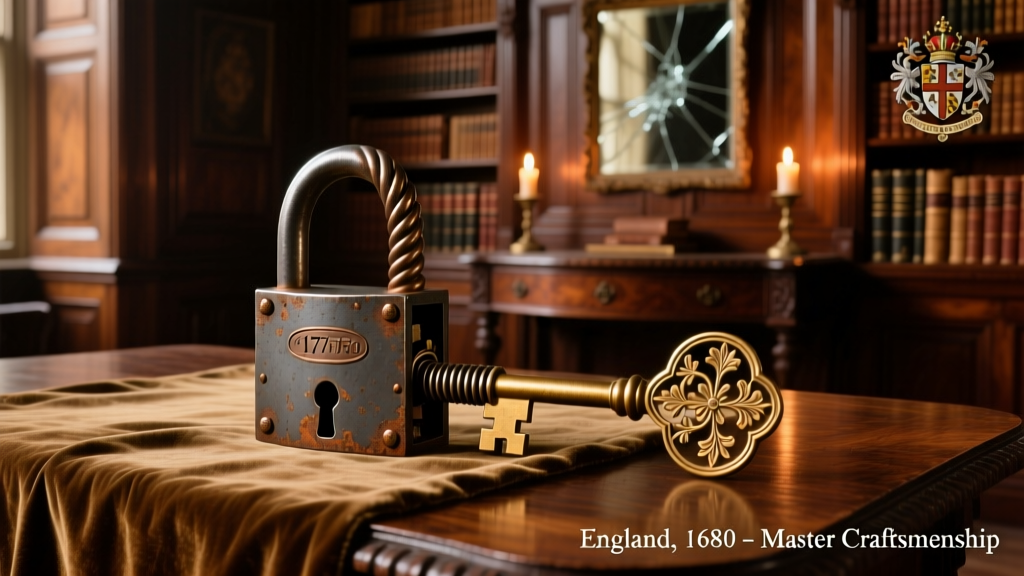
The Tools, Padlock, and Barrel Key in 17th-Century England: Craftsmanship, Security, and Social Function
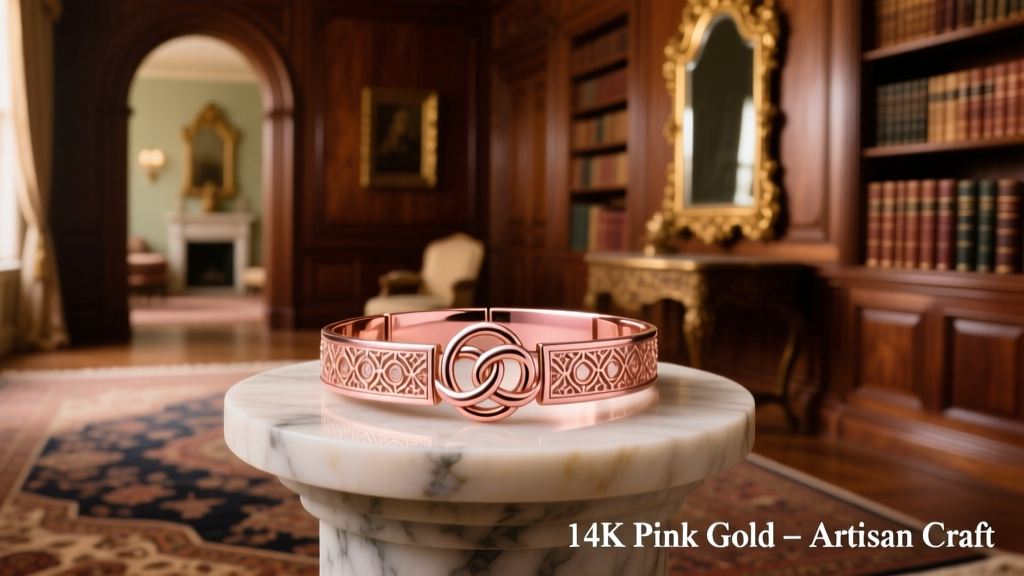
The Jewelry Necklace Knot Etched Interlocking Circles Hinged Bangle in 14K Pink Gold: A Study in Mid-Century Modern Craftsmanship and Material Integrity

Rose Tapestry Tray Pin Portrait: Decoding the Lady in the Purple Plumbed Hat — A 1930s American Art Metal Collectible
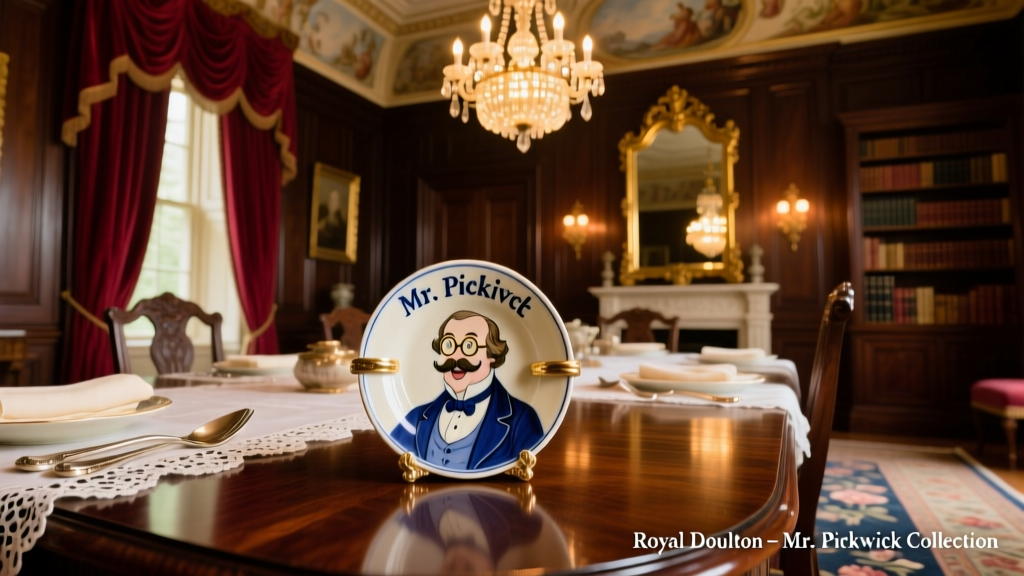
Royal Doulton Napkin Ring 'Mr. Pickwick': A Collector’s Guide to the Iconic Dickensian Tableware Piece
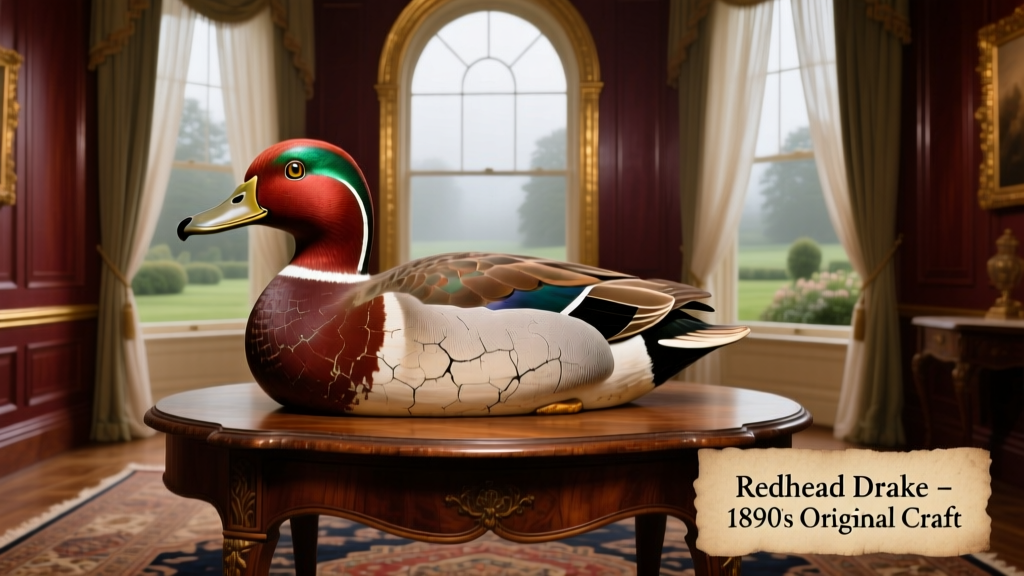
Authenticating and Valuing a 14-Inch Hollow Redhead Drake Decoy with Worn Repaint and Original Glass Eyes
Pembroke Table, George III Period: Walnut, Banded Skirt, Circa 1800 — A Technical & Historical Analysis