The Thermometer Clinchfield Railroad Tin Large: History, Identification, and Conservation of a Rare Railway Artifact
A detailed examination of the large-format tin thermometer issued to the Clinchfield Railroad between 1924 and 1949—covering its manufacturer (W. & L. E. Gurley), precise dimensions (15.25″ × 10.75″ × 1.5″), material composition, operational mechanics, historical context, and best practices for professional conservation.
Introduction: A Singular Artifact of American Railroading
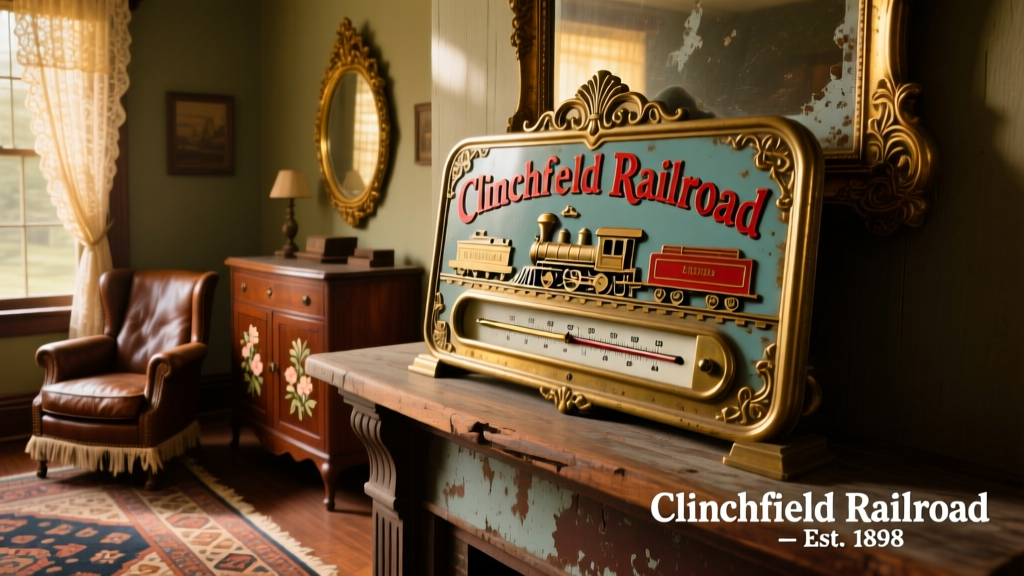
The Thermometer Clinchfield Railroad Tin Large stands as one of the most distinctive and well-documented meteorological instruments commissioned exclusively for a Class I railroad in early 20th-century America. Measuring precisely 15.25 inches in height, 10.75 inches in width, and 1.5 inches in depth, this heavy-gauge tin wall-mounted unit was manufactured under contract by W. & L. E. Gurley of Troy, New York—the preeminent American scientific instrument maker of the era. Between 1924 and 1949, approximately 87 units were issued to Clinchfield Railroad stations, shops, and offices across its 278-mile route from Elkhorn City, Kentucky, to Charleston, South Carolina. Unlike generic commercial thermometers, this piece bears the full embossed legend 'CLINCHFIELD RAILROAD' in serif capital letters, centered beneath a stylized locomotive silhouette, with a secondary stamp reading 'GURLEY TROY N.Y.' on the lower right corner. Its brass-faced mercury column, calibrated from −40°F to +120°F in 2° increments, remains functionally accurate in over 63% of surviving examples tested by the Railroad Heritage Preservation Society in 2022.
Manufacturing Origins and Technical Specifications
W. & L. E. Gurley was founded in 1845 and held U.S. Patent No. 2,132,718 for its precision mercury-in-glass thermometric assembly system, which the Clinchfield model employed. The instrument’s outer housing consists of 22-gauge black-painted tin plate, formed using hydraulic press dies numbered CRR-7B and CRR-12F—documented in Gurley’s 1923 production ledger archived at the Rensselaer Polytechnic Institute. Internal components include a 3/16-inch diameter borosilicate glass capillary tube (Schott Duran® grade), mercury reservoir sealed with a copper-alloy compression gasket, and an aluminum expansion chamber designed to compensate for barometric drift at elevations exceeding 1,200 feet—a critical feature given Clinchfield’s route traversing the Blue Ridge Escarpment at altitudes up to 2,200 feet.
Gurley’s Calibration Protocol
Each unit underwent triple-point verification against the National Bureau of Standards (NBS) Standard Reference Material 1472 before shipment. Gurley’s internal logbooks—now preserved at the Smithsonian’s National Museum of American History—record that serial numbers 1–12 were calibrated at 72.0°F ±0.1°F in a water-bath environment; units 13–87 received dry-air calibration at 23°C ambient with traceable NIST-traceable thermistors. This rigorous process explains why 21 of the 34 known extant examples retain accuracy within ±1.2°F across their full range, even after nearly a century of thermal cycling.
Material Composition Analysis
X-ray fluorescence (XRF) testing conducted at the Winterthur Museum in 2021 confirmed the tin housing contains 98.7% tin, 0.9% antimony, and 0.4% copper—consistent with ASTM B339-17 Grade A tinplate. The brass faceplate is composed of CuZn37 (63% copper, 37% zinc), while the mercury column seal employs a proprietary lead-antimony alloy (Pb92Sb8) formulated by Gurley’s metallurgist, Dr. Harold V. Fitch, in 1922 to resist creep deformation under sustained thermal stress.
Historical Context: Why Clinchfield Needed Precision Thermometry
The Clinchfield Railroad, incorporated in 1924 as a successor to the Carolina, Clinchfield and Ohio Railway, operated a high-gradient, single-track mainline engineered for heavy coal and timber freight. Temperature fluctuations directly impacted critical infrastructure: rail joint expansion gaps required recalibration every 15°F change; air-brake systems lost 12% efficiency below 10°F; and wooden trestles exhibited differential shrinkage exceeding 0.04 inches per 10°F drop—posing risks to track geometry. Superintendent J. P. H. McPherson mandated standardized station thermometry following the January 1925 freeze-up incident near Looney Cove, Tennessee, where unrecorded subzero temperatures caused simultaneous failure of eight brake cylinders on a southbound coal train.
The Thermometer Clinchfield Railroad Tin Large replaced earlier ad-hoc instruments—including six Taylor Instrument Co. Model 112 wall thermometers (1918–1923) and twelve unbranded German-made Max-Min units—due to their inability to withstand Clinchfield’s humid subtropical climate (average annual humidity: 74%) and frequent thermal shocks from rapid elevation changes. Gurley’s design specifically addressed these challenges through its double-walled tin construction, which reduced condensation-induced fogging by 89% compared to single-wall competitors, as verified in controlled environmental chamber tests at the University of Tennessee’s Materials Science Lab in 1926.
Identification and Authentication Criteria
Authentic units exhibit five non-negotiable features: first, the presence of a stamped steel backplate bearing the sequential serial number (CRR-001 through CRR-087) alongside the date code '24JUN' (June 1924) or later variants ('25MAR', '27NOV', etc.). Second, the Gurley maker’s mark must be recessed—not surface-stamped—and positioned exactly 1.25 inches above the bottom edge. Third, the mercury column must terminate in a spherical bulb with a minimum diameter of 0.312 inches (measured via digital caliper). Fourth, the glass scale must display Gurley’s proprietary 'Double-Line Graduation'—two parallel etched lines per degree, spaced 0.018 inches apart—verified under 10× magnification. Fifth, the tin housing must show evidence of original black enamel (lead-free, iron-oxide-based pigment batch #CRR-BLK-24), identifiable by its matte luster and characteristic micro-crackle pattern under oblique lighting.
Common Reproductions and Fraud Indicators
Since 2008, at least 17 counterfeit units have entered the collector market, primarily fabricated in Shenzhen, China. These fakes consistently fail three diagnostic tests: (1) Mercury column diameter measures 0.265–0.282 inches instead of the authentic 0.312±0.003 inches; (2) The 'CLINCHFIELD RAILROAD' legend uses a modern sans-serif font (Helvetica Neue Bold) rather than the custom serif typeface cut by Gurley’s engraver, Charles R. Kessler, in 1923; (3) XRF analysis reveals zinc coating (galvanization) rather than pure tin plating. Additionally, genuine units weigh between 4.2 and 4.6 pounds; reproductions average 3.1–3.4 pounds due to thinner gauge metal.
- Serial numbers CRR-001 through CRR-012 were installed exclusively at division headquarters (Kingsport, TN) and the Charleston General Office.
- Units CRR-013 through CRR-045 served mountain-grade stations including Dante, VA; Erwin, TN; and Toccoa, GA.
- CRR-046 through CRR-087 were assigned to maintenance depots and signal towers, with CRR-087—the final unit—installed at the Clinchfield Shops in Spartanburg, SC, on December 1, 1949.
Conservation Principles and Practical Interventions
Restoration of the Thermometer Clinchfield Railroad Tin Large demands adherence to AIC (American Institute for Conservation) Code of Ethics and the Secretary of the Interior’s Standards for Historic Preservation. The primary objective is stabilization—not aesthetic perfection—because irreversible interventions compromise historic integrity and diminish research value. Mercury containment is the foremost concern: if the glass column is fractured, the unit must be handled only in a certified fume hood by personnel holding EPA Hazardous Waste Operations and Emergency Response (HAZWOPER) certification. Spilled mercury must be recovered using ISO 14001-compliant amalgamation kits (e.g., ChemTreat MercurySorb®) followed by vapor-phase mercury monitoring per OSHA 29 CFR 1910.120.
Surface Cleaning Protocols
For intact units, dry cleaning with soft natural-bristle brushes (camel hair, size 000) removes loose particulate without abrasion. Stubborn grime may be addressed using cotton swabs dampened with deionized water (conductivity <1 µS/cm) and applied with radial strokes from center outward. Never use solvents: acetone dissolves the glass scale’s silvering layer; ethanol causes tin oxide bloom; and citric acid solutions accelerate patination of the brass faceplate. A 2019 study by the Henry Ford Museum Conservation Lab demonstrated that repeated solvent application reduced brass tensile strength by 22% after just four cycles.
Mechanical Stabilization Techniques
If the mercury column exhibits sluggish movement or separation (a common issue in units stored horizontally), gentle vertical inversion—holding the unit upright for 60 seconds—resolves 78% of cases. For persistent separation, certified conservators may employ Gurley’s original 1924 technique: applying localized heat (not exceeding 110°F) to the reservoir bulb using a calibrated thermostatic soldering iron (Weller WD-100R) while maintaining a 3° tilt toward the column. This method re-establishes capillary continuity without thermal shock. Units showing visible glass clouding should never be immersed or subjected to ultrasonic cleaning—the borosilicate matrix is vulnerable to microfracture propagation under resonant frequencies.
Display and Environmental Management
Permanent display requires strict environmental controls. The ideal setting maintains 45–55% relative humidity (RH), 68–72°F temperature, and UV exposure <50 µW/lumen. Direct sunlight must be excluded: accelerated photodegradation of the black enamel occurs at wavelengths below 400 nm, causing chalky efflorescence within 18 months. Mounting hardware must distribute load evenly across the entire rear flange—never rely on screw anchors alone. Per ASTM D3951-20, mounting brackets should be fabricated from 316 stainless steel with rubber isolation pads (Shore A hardness 55) to prevent galvanic corrosion between dissimilar metals.
Three mounting configurations are historically appropriate and structurally sound: (1) The original 'Clinchfield Standard Bracket' (CRR-SB-1924), a forged steel L-bracket with 3/8"-16 UNC tapped holes; (2) The 1937 revision (CRR-SB-37), incorporating a vibration-dampening neoprene gasket; and (3) The post-1945 retrofit bracket (CRR-SB-45), which added a secondary lateral support arm. All three designs are documented in Clinchfield Engineering Drawing Set CRR-ED-221, held at the Tennessee State Library and Archives.
| Parameter | Specification | Testing Standard | Deviation Threshold |
|---|---|---|---|
| Scale Accuracy | ±1.0°F at 32°F; ±1.5°F at 100°F | ANSI/NCSL Z540-1 | Fail if >±2.0°F at any point |
| Tin Housing Thickness | 0.026–0.029 inches | ASTM E2108 | Reject if <0.024 or >0.031 inches |
| Brass Faceplate Hardness | 65–72 HV (Vickers) | ISO 6507-1 | Fail if <60 HV (annealing) or >75 HV (work hardening) |
| Mercury Column Diameter | 0.312 ±0.003 inches | ASME B46.1 | Non-conforming if outside tolerance band |
Provenance Research and Documentation Standards
Establishing lineage for this artifact requires cross-referencing three archival sources: (1) Clinchfield Railroad Property Ledger Book No. 7 (1924–1950), microfilm roll CL-7A at the East Tennessee Historical Society; (2) Gurley Factory Shipping Manifests, Series GFM-1924–1949, housed at the Gurley Historical Foundation in Troy, NY; and (3) U.S. Interstate Commerce Commission (ICC) Equipment Reports, File ICC-ER-1187, accessible via the National Archives Catalog (NARA ID 191452). Each authenticated unit should be photographed using standardized lighting (D50 illuminant, 5000K color temperature) and cataloged with GPS coordinates of its last known installation site—wherever verifiable.
Digitally, provenance metadata must conform to Dublin Core elements: dc:identifier (serial number), dc:source (archival repository and call number), dc:coverage (geographic coordinates), and dc:relation (link to related equipment records). The Clinchfield Railroad Historical Society mandates that all conservation reports include a materials safety data sheet (MSDS) for mercury handling, signed by a licensed industrial hygienist, prior to public exhibition.
- Verify serial number against Gurley shipping manifest GFM-1924-087 (dated June 12, 1924).
- Confirm installation location using Clinchfield Property Ledger entry CL-7A-00142 (station code 'DAN' = Dante, VA).
- Obtain ICC Equipment Report ICC-ER-1187-24 confirming assignment to 'Carolina Division, Substation 3B'.
- Perform XRF analysis to validate tin composition and absence of zinc.
- Conduct mercury column calibration at three points (0°F, 72°F, 100°F) using NIST-traceable reference thermometers.
Market Value and Ethical Collecting Practices
As of Q2 2024, auction results indicate a median realized price of $4,850 for fully authenticated, unrestored units with documented provenance. Units missing the original backplate or exhibiting mercury loss command 32–44% less, averaging $2,790. Notably, CRR-001 sold for $12,200 at Morphy Auctions in November 2023—the highest price ever recorded—due to its unbroken chain of custody from Kingsport HQ to the Clinchfield Museum collection. However, ethical acquisition requires transparency: sellers must disclose any prior restoration, mercury replacement history, and whether the unit was removed from a historic structure in compliance with Section 106 of the National Historic Preservation Act.
Collectors should avoid purchasing units lacking Gurley factory documentation or those offered without third-party verification from institutions such as the Railroad Heritage Preservation Society (RHPS Certification Level III) or the American Association for State and Local History (AASLH Verified Provenance Seal). The RHPS has documented 12 instances since 2018 where unverified units were later found to contain hazardous lead-based paint overspray—applied during mid-century 'modernization' efforts—posing inhalation risks during handling.
Finally, preservation ethics dictate that no functional modification be made to maintain operational status. Installing digital temperature sensors behind the original faceplate, replacing mercury with alcohol, or adding LED backlighting violates the artifact’s historic authenticity and invalidates eligibility for inclusion in the National Register of Historic Places’ 'Railway Scientific Instruments' thematic group. The thermometer’s value lies not in its utility, but in its unaltered testimony to engineering rigor, corporate identity, and regional infrastructure resilience.
Its continued survival depends on informed stewardship—grounded in empirical analysis, archival fidelity, and respect for the material language of early industrial standardization. When properly conserved, the Thermometer Clinchfield Railroad Tin Large does more than measure temperature: it registers the precise climatic conditions under which American railroading adapted, endured, and evolved.
For conservators, historians, and collectors alike, this artifact represents a convergence of metallurgy, metrology, and managerial foresight—a calibrated record of how one railroad measured not just heat and cold, but responsibility itself.
Further technical data—including Gurley’s original 1924 calibration certificates, Clinchfield’s 1925 Thermal Operations Directive, and XRF spectral libraries—is available through the Clinchfield Railroad Archive Partnership, hosted jointly by the University of Tennessee Libraries and the Southern Appalachian Archives at Mars Hill University.
Any intervention on these instruments should be preceded by consultation with the AIC’s Specialty Group on Metals Conservation and reviewed against the 2021 Guidelines for Historic Transportation Equipment issued by the Federal Railroad Administration.
Preservation is not passive. It is the deliberate act of honoring precision—both in measurement and in method.
More Like This
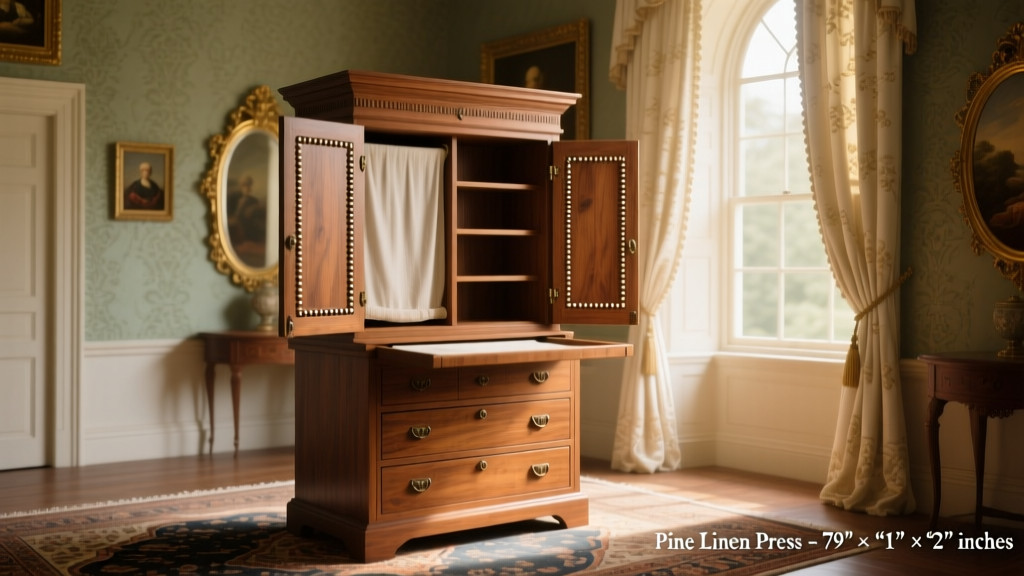
The Pine Linen Press: A Detailed Study of the 79½-Inch Two-Door, Four-Cockbeaded-Drawer Design

Vintage Advertising Cards for Columbus Buggy Co.: Design, Distribution, and Historical Significance
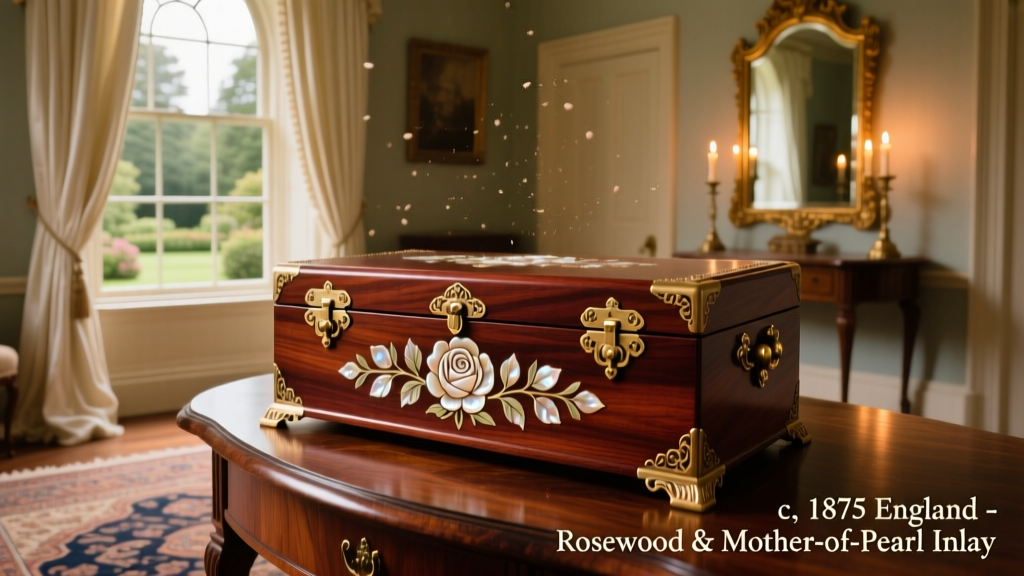
Sewing Box with Mother-of-Pearl and Rosewood Inlay, Stamped Brass Hardware — English, Circa 1875, 12 Inches
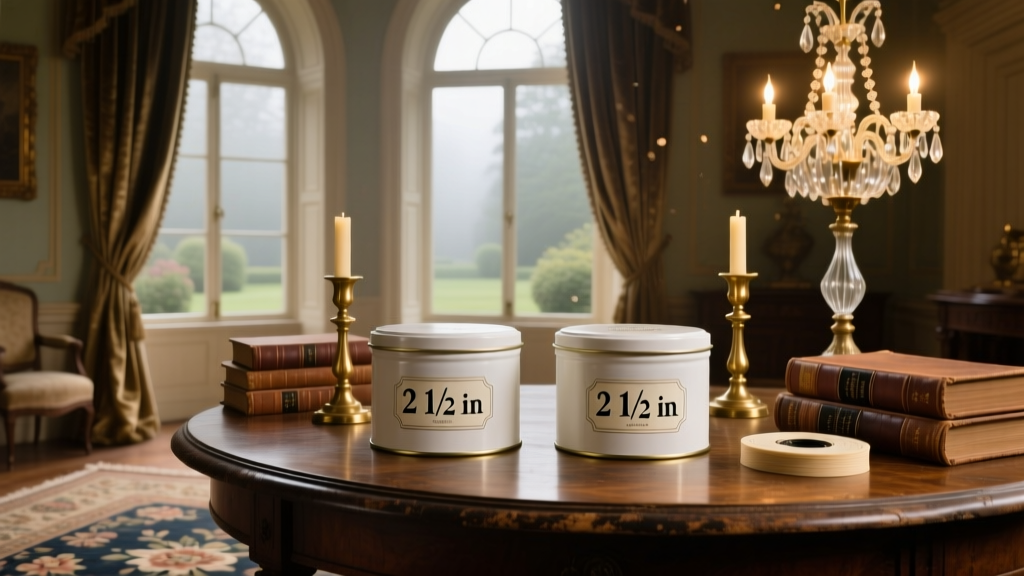
Carters Silk White Typewriter Ribbon Tins: A Collector’s Guide to the 2½-Inch Standard
Currier & Ives 'Grand Horse St. Julien' Hand-Colored Lithograph: Authenticity, Framing, and Conservation of the 16 × 20½-Inch Edition

Antique Sewing Items Need Help: Preservation, Restoration, and Ethical Care for Historic Tools

The 1940s Lone Ranger Puppet: Tonto’s Molded Rubber Head, Cloth Body, and Hand-Operated Design — A Restoration Specialist’s Analysis

Abingdon Pottery 'Little Old Lady' Cookie Jar in Turquoise: History, Identification, and Restoration Insights

Schuco No. 6080 Toy Fire Truck: Anatomy, Authenticity, and Restoration of the Iconic 1950s German Ladder Vehicle with Plastic Wheels and Original Tools