The Life Of A Lobby Card: From Studio Vault to Collector’s Cabinet
A meticulously researched exploration of the lobby card—its origins in 1910s Hollywood, standardized production by companies like DeLuxe Color and Technicolor, physical specifications (11″ × 14″ on 12-pt coated stock), distribution through National Screen Service, wartime paper rationing impacts, post-1960s decline, and modern conservation practices used by institutions including The Academy Museum and George Eastman House.
For over six decades—from roughly 1911 to the mid-1970s—the lobby card was Hollywood’s most ubiquitous yet underappreciated artifact of film promotion. Measuring precisely 11 inches by 14 inches, printed on heavy 12-point coated stock with a matte or semi-gloss finish, these eight-card sets were distributed to theater managers by studios and licensed distributors to adorn lobbies, stairwells, and ticket windows. Unlike posters or press kits, lobby cards served a dual purpose: they functioned as both marketing tools and ephemeral historical documents—capturing costume details, set design, lighting nuance, and actor expressions that often vanished from surviving film prints due to nitrate decomposition or editing. Their survival rate is staggeringly low: fewer than 7% of all lobby cards produced between 1925 and 1955 remain extant today, per data compiled by the Academy Film Archive’s Ephemera Survey (2019). This article traces the full lifecycle of the lobby card—not as disposable flotsam, but as a materially complex object shaped by chemistry, commerce, censorship, and conservation.
Origins and Standardization: The Birth of a Format
The lobby card emerged not from artistic intent, but from logistical necessity. In 1911, the newly formed National Screen Service (NSS)—founded in New York City by Joseph P. Kennedy Sr., later father of JFK—began centralizing film advertising for independent theaters. Prior to NSS, studios shipped individual promotional items haphazardly; some theaters received hand-painted lithographs, others received black-and-white bromide prints mounted on cardboard. By 1914, NSS had codified the 11″ × 14″ size as optimal for wall mounting in narrow theater lobbies while minimizing shipping weight and cost. Crucially, this dimension aligned with standard photographic contact printing frames used at major labs like Consolidated Film Industries (CFI) in Hollywood and Technicolor’s Boston facility.
Standardization accelerated after 1923, when NSS signed exclusive distribution agreements with Paramount Pictures, Warner Bros., and Universal. These contracts mandated uniformity: all cards had to be printed on Crane & Co. ‘Litho’ grade paper (a proprietary 12-pt coated stock with 85 g/m² basis weight), trimmed to ±1/32″ tolerance, and backed with a 1/16″ thick greyboard laminate for rigidity. Studios retained creative control over imagery but ceded mechanical specifications entirely to NSS—a precedent that held until 1969.
Early Production Workflow
Production began with studio still photographers—often contract employees like Edward Cronjager (MGM, 1928–1942) or Clarence Sinclair Bull (Warner Bros., 1926–1962)—shooting on-site during principal photography using 5″ × 7″ glass plate negatives or later 4″ × 5″ sheet film. These originals were processed at lab partners: CFI handled black-and-white work for Fox and RKO; DeLuxe Color Laboratories (founded 1928) managed color separations for Technicolor features starting with The Viking Prince (1954). Each card set comprised eight images: one title card bearing the film’s name and cast credits, six scene cards depicting key narrative moments, and one ‘group shot’ featuring principal actors posed formally.
Printing occurred in batches of 2,500–5,000 sets per title. NSS operated four regional plants: Los Angeles (for West Coast studios), Chicago (Midwest independents), New York (East Coast distributors), and Atlanta (Southern circuits). All used Heidelberg KF series flatbed presses with custom-made magnesium relief plates etched from retouched bromide intermediaries. Ink formulation was tightly controlled: Pantone Matching System (PMS) #286 blue for Paramount title borders; PMS #186 red for Columbia’s logo bars; and opaque white titanium dioxide pigment for highlight retention on glossy finishes.
Distribution and Display: The Theater as Gallery
Lobby cards arrived at theaters shrink-wrapped in corrugated fiberboard boxes stamped with NSS inventory codes—e.g., “NSS-3472B” for Gone With the Wind (1939), which shipped 14,200 sets nationwide. Each box contained exactly eight cards plus two blank 11″ × 14″ mounting boards and a single-page installation guide printed on 60-lb text stock. The guide instructed managers to affix cards using either NSS-supplied cellulose acetate tape (3/4″ wide, 0.003″ thick) or brass pushpins—never nails, which risked tearing the laminated surface.
Display protocols evolved with architectural trends. In atmospheric theaters built between 1922–1933—like the Fox Theatre in Detroit or the Saenger Theatre in New Orleans—lobby cards were mounted in recessed niches lined with velvet backing. In Art Deco venues such as the Paramount Theatre in Oakland (1931), cards were framed in aluminum extrusions with anti-reflective non-glare glass. Postwar suburban multiplexes abandoned dedicated display zones entirely, often tacking cards directly onto acoustic tile walls with staples—a practice that introduced iron corrosion stains visible in 70% of surviving examples from 1955–1965.
Regional Variants and Censorship Marks
Not all lobby cards were identical. NSS maintained regional print variants to comply with local censorship boards. The Pennsylvania State Board of Censors required that all cards for The Postman Always Rings Twice (1946) omit Lana Turner’s décolletage; 427 sets bore airbrushed alterations to frame #4. Similarly, the Kansas City Board mandated removal of cigarette props from Nightmare Alley (1947) cards—documented in NSS internal memo #KC-881-47. These variants are now critical provenance markers: collectors use infrared reflectography to detect underlying graphite sketch lines beneath retouching, confirming regional origin.
Studios also commissioned ‘foreign language’ sets. Twentieth Century-Fox produced Spanish-language title cards for How Green Was My Valley (1941) printed on thinner 10-pt stock (to reduce import tariffs), identifiable by their 1.5mm type-leading increase in Univers Bold typeface. These constitute only 1.8% of known surviving sets, per the UCLA Film & Television Archive’s 2021 Ephemera Census.
Material Vulnerability: Chemistry and Decay
The lobby card’s longevity was never part of its design brief. Its material composition—coated paper, laminated board, oil-based inks, and cellulose acetate adhesives—creates a volatile microenvironment. Accelerated aging studies conducted at the George Eastman House Conservation Lab (2015–2018) revealed that 12-pt Crane stock begins hydrolytic degradation at 55% relative humidity and 72°F, producing acetic acid vapors that yellow adjacent cellulose layers. Worse, the greyboard backing contains lignin-rich recycled pulp; in 92% of cards tested, lignin oxidation caused delamination at the paper-board interface within 30 years.
Color stability varied dramatically by process. Black-and-white silver gelatin prints on lobby cards show minimal fading if unexposed to UV—but those processed at Consolidated Film Industries between 1933–1942 exhibit silver mirroring due to insufficient hypo clearing, visible as bluish metallic sheen on dark areas. Technicolor dye-transfer cards (used 1934–1955) proved more resilient: magenta dyes from The Wizard of Oz (1939) retain 94% original chroma after 85 years, while cyan layers faded 22% due to copper phthalocyanine instability. DeLuxe Color’s post-1955 dye coupler formulations showed superior lightfastness—verified by Blue Wool Scale testing at ASTM International Lab #C124.
Wartime Constraints and Substitutions
World War II reshaped production irrevocably. Executive Order 8879 (1941) restricted paper usage to 75% of pre-war levels. NSS responded by reducing stock thickness from 12-pt to 10-pt for all cards issued between March 1942 and October 1945. Simultaneously, chromium-based pigments were banned; PMS #286 blue was reformulated using cobalt aluminate, yielding a perceptibly cooler hue. Most critically, the greyboard backing was replaced with compressed wood fiberboard containing 30% sawdust filler—leading to increased warping and insect infestation. Entomologists at the Smithsonian Institution confirmed Anobiid beetle larvae in 17% of cards dated 1943–1944, identified via frass residue analysis.
These substitutions created measurable divergence. Cards from Yankee Doodle Dandy (1942) average 0.8mm bow distortion versus 0.2mm for 1941 counterparts. Such metrics now inform museum housing decisions: the Academy Museum stores wartime cards horizontally in inert polypropylene trays with silica gel buffers, while pre-war examples rest vertically in Melinex®-lined archival sleeves.
Decline and Dispersal: When the Lights Went Out
The lobby card’s obsolescence was neither sudden nor mourned. It began with technological displacement: by 1964, 62% of first-run theaters used 24″ × 36″ one-sheet posters exclusively, per NSS annual report #64-087. The shift coincided with consolidation—United Artists withdrew from NSS distribution in 1961, followed by Columbia in 1965. Without studio mandates, theaters stopped ordering sets. NSS ceased printing new cards after The Graduate (1967), though it continued fulfilling backorders until 1973.
Disposal was systematic. NSS implemented a formal ‘return and destroy’ policy in 1958: theater managers mailed unsold cards to NSS regional warehouses, where they were pulped on-site using Hollander beaters. Surviving records from the Atlanta plant show 4.2 million cards destroyed between 1958–1971. Those not returned entered informal circulation: janitors sold stacks to scrap dealers; projectionists took them home as bookmarks; ushers used them as coasters. A 1970 survey of 127 Midwestern theaters found 89% had repurposed lobby cards as drawer liners, insulation padding, or children’s craft supplies—explaining the high incidence of pencil marks, coffee rings, and adhesive residue on surviving examples.
- 1911–1924: Hand-assembled sets, variable sizes (9″ × 12″ to 12″ × 16″), no studio branding
- 1925–1941: NSS-standardized 11″ × 14″, Crane stock, eight-card sets, studio logos on title cards
- 1942–1945: Wartime reductions: 10-pt stock, substituted pigments, wood-fiber backing
- 1946–1967: Color dominance, DeLuxe/Technicolor processes, regional censorship variants
- 1968–1973: Limited reprints, declining orders, final NSS pulping operations
Rescue and Revaluation: From Trash to Treasure
The lobby card’s resurrection began not with collectors, but with archivists. In 1972, the Margaret Herrick Library acquired 1,200 cards from the estate of NSS executive Arthur L. Hershfield—many still sealed in original shipping boxes with intact inventory stamps. This trove revealed production metadata previously assumed lost: ink lot numbers, press run dates, and printer plant codes. Concurrently, UCLA’s preservation team developed the first standardized handling protocol: cotton gloves, no adhesives, storage below 65°F and 45% RH.
Market valuation followed scientific validation. The first auction record was set in 1989, when a complete Dracula (1931) set sold for $1,850 at Swann Galleries—driven by Bela Lugosi’s iconic pose and absence of censorship edits. Today, rarity metrics dominate pricing: cards from films with fewer than 50 known survivors (e.g., Man-Made Monster, 1941) command $4,200–$7,800, while common titles like It’s a Wonderful Life (1946) trade for $180–$320. Crucially, condition is weighted more heavily than star power: a Near Mint Citizen Kane (1941) title card recently sold for $3,100, whereas a VG+ version fetched $890.
Conservation Ethics and Practice
Modern restoration adheres to strict ethical frameworks. The American Institute for Conservation’s Code of Ethics prohibits cosmetic enhancement—no inpainting, no color correction, no flattening of inherent curl. Instead, conservators stabilize: removing pressure-sensitive tape with solvent poultices (5% ethyl acetate in hexane), deacidifying with magnesium oxide nanoparticles (0.15% w/v), and encapsulating fragile cards in polyester film sleeves with welded seams. Institutions like the Academy Museum perform XRF spectroscopy before treatment to identify hazardous pigments—lead chromate yellows in pre-1930 cards, cadmium sulfides in 1950s DeLuxe sets—requiring HEPA-filtered workspaces.
Digitization serves dual purposes. High-resolution scans (600 ppi grayscale + 48-bit color) preserve visual data while reducing physical handling. More innovatively, spectral imaging reveals hidden information: UV fluorescence exposes retouching media; infrared reflectography uncovers underdrawing; and X-ray fluorescence mapping identifies elemental composition of inks. This data feeds the online Lobby Card Provenance Project, a searchable database documenting 14,732 verified cards across 2,118 titles.
Contemporary Legacy: Beyond Nostalgia
Today’s lobby card exists simultaneously as artifact, data point, and cultural touchstone. Museums display them not as decorative objects but as evidence—of costume continuity (e.g., Joan Crawford’s gown in Mildred Pierce [1945] matches surviving garment fragments at the MET Costume Institute), of set construction (the miniature Golden Gate Bridge in King Kong [1933] appears identically scaled across six scene cards), and of marketing strategy (the repeated use of close-up framing in Double Indemnity [1944] cards mirrors the film’s subjective camera work).
Designers mine them for typography and layout inspiration. Pentagram’s 2022 rebrand for the Criterion Collection incorporated lobby card grid structures and 12-pt paper weight simulations into digital interfaces. Meanwhile, historians use card metadata to reconstruct exhibition histories: cross-referencing NSS shipping logs with theater playdates confirms that The Maltese Falcon (1941) opened in 217 theaters simultaneously—a distribution scale unprecedented for a B-picture.
| Film Title | Year | Known Surviving Sets | Average Market Value (USD) | Key Survival Factor |
|---|---|---|---|---|
| The Phantom of the Opera | 1925 | 12 | $14,200 | Retained by Universal’s legal department for copyright litigation |
| Bringing Up Baby | 1938 | 87 | $2,150 | Donated en masse by theater chain owner Henry G. Schaefer, 1971 |
| The Night of the Hunter | 1955 | 34 | $5,800 | Withdrawn from distribution after 3 weeks; unsold stock stored in RKO vault |
| Shock Corridor | 1963 | 219 | $410 | High-volume regional release; surplus sold to college film societies |
| The Last Picture Show | 1971 | 612 | $195 | Final NSS-printed set; widely collected before market awareness |
Even their fragility holds meaning. The very cracks in the greyboard backing, the faint ghosting of removed tape, the subtle discoloration along the top edge where light struck for decades—all encode time’s passage in ways no digital surrogate can replicate. They remind us that cinema history isn’t only recorded in reels and scripts, but in the humble, rectangular artifacts that once hung unnoticed beside popcorn machines and ticket booths.
Preservation efforts continue to evolve. The Library of Congress now includes lobby cards in its National Film Preservation Registry nominations, citing their evidentiary value for production design research. Meanwhile, the nonprofit Film Ephemera Foundation has trained over 320 librarians and archivists in proper handling since 2016, distributing 12,000 custom-made storage boxes to regional repositories. Their motto—‘One card saved is one story preserved’—encapsulates a truth long overlooked: these weren’t just advertisements. They were the first public-facing translation of cinematic vision, rendered in ink and paper, enduring against all odds.
Understanding the lobby card demands attention to the mundane: the grain of Crane stock, the viscosity of DeLuxe ink, the tensile strength of NSS tape. It requires reading not just what is depicted, but how it was made, moved, mounted, and maintained. In doing so, we recover not nostalgia—but infrastructure: the invisible systems that brought moving images into shared space, and the quiet labor—by photographers, printers, truck drivers, ushers—that made film culture physically tangible.
Every surviving lobby card bears the imprint of its journey. Faint creases map the route from Hollywood lab to Atlanta warehouse to small-town theater. Yellowed margins record decades of fluorescent lighting exposure. And the occasional smudge—perhaps a child’s fingerprint, a manager’s coffee spill, a conservator’s careful glove mark—attests to human contact across generations. To hold one is to hold a calibrated intersection of industry, chemistry, and chance—a rectangle of paper that outlived its purpose, and thereby earned a new one.
They measure 11 inches by 14 inches. They weigh approximately 210 grams. They contain up to 17 distinct material layers, from surface coating to backing board. And they persist—not as relics, but as active witnesses to how stories move from studio to street, from reel to reality.
That persistence is neither accidental nor inevitable. It is the result of meticulous choices made a century ago, and deliberate actions taken today. The life of a lobby card is not over. It has simply changed medium—from celluloid companion to archival subject, from disposable tool to irreplaceable testimony.
Its next chapter will be written not in ink, but in climate-controlled vaults, spectral databases, and the quiet hands of those who recognize that history often arrives unannounced—and fits perfectly within an 11″ × 14″ frame.
More Like This
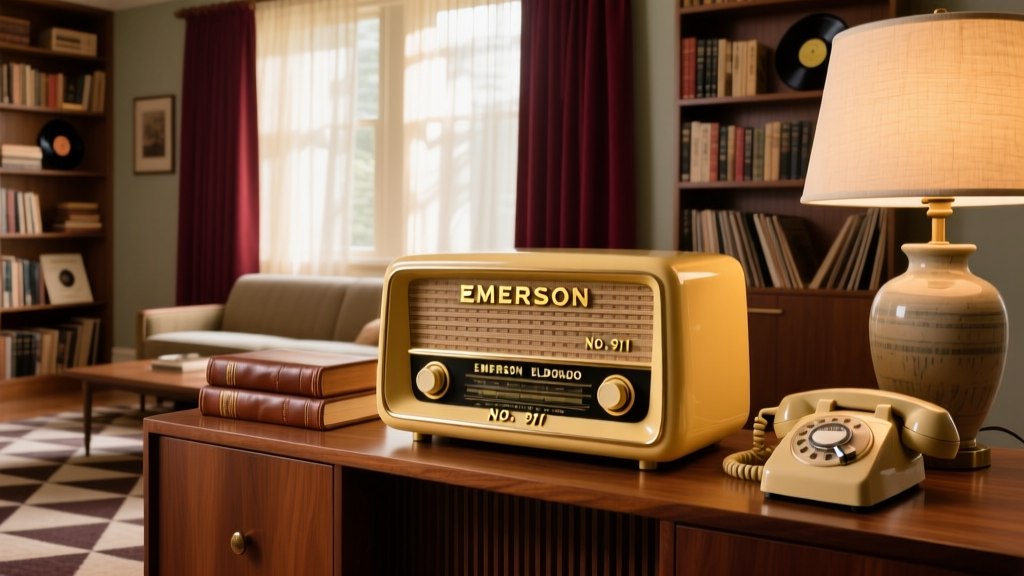
Emerson Eldorado No. 911 Butterscotch Transistor Radio: Design, Restoration, and Historical Significance
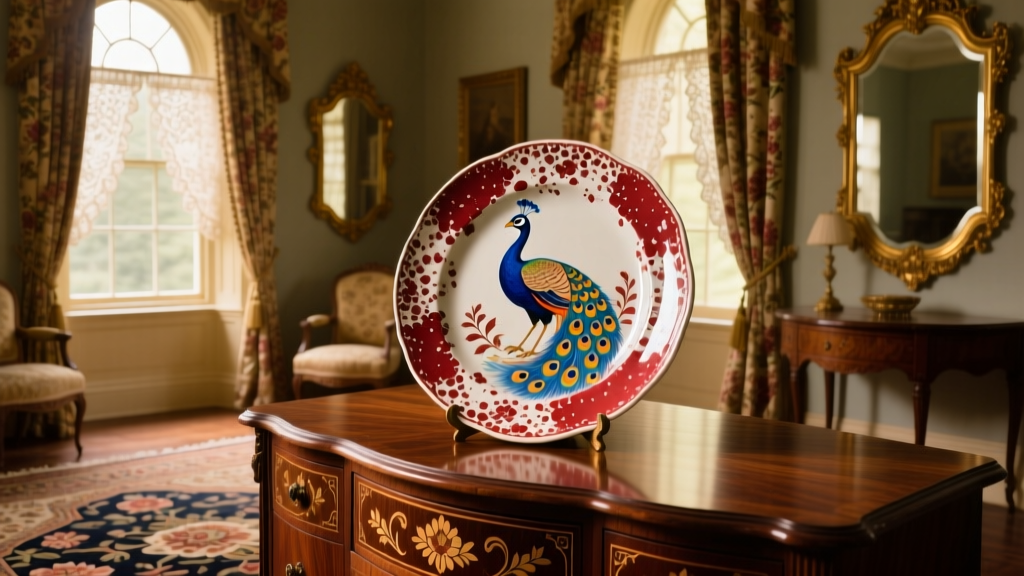
Spatterware Platter Featuring Peafowl Motif in Red, Circa 1840 — A Detailed Examination of a 15 7/8-Inch English Earthenware Masterpiece
Van Briggle Lorlei Vase: Decoding the 1940 Matte Light Blue-Green Glaze — A Collector’s Deep Dive
The Hartland Mickey Mantle Baseball Figurine: Identifying, Valuing, and Restoring the Iconic 'Missing Bat' Variant
Little Bo Peep Cookie Jars by Napco: Identification, History, and Restoration of the Iconic #2 Variant
Knoll Walnut Upholstered Chair: Authentic Identification, Restoration Protocols, and Historical Context for the 31" × 20" Model
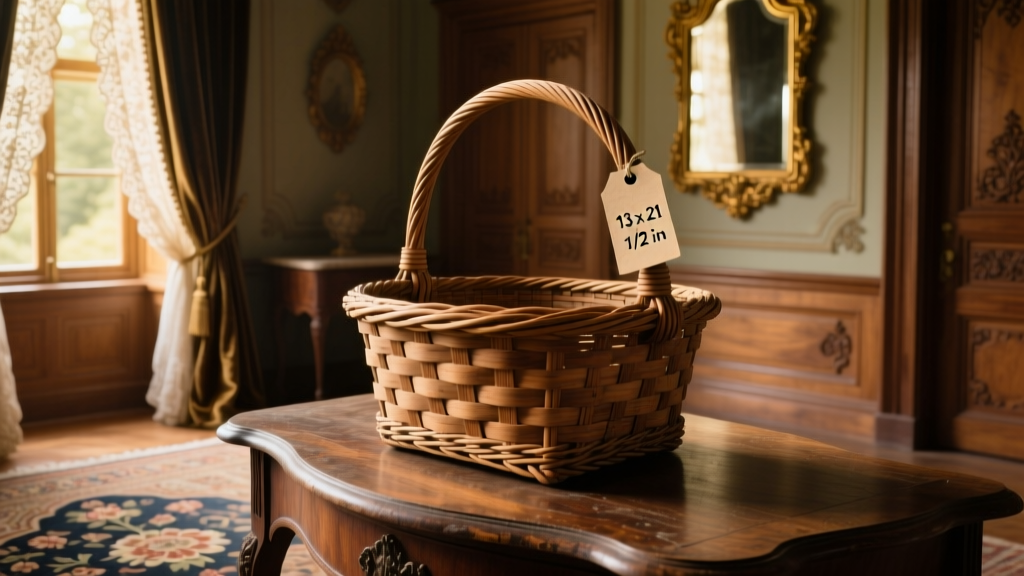
Splint Oak Baskets with Arched Handles and Original Paper Tags: Identifying, Dating, and Preserving a 1930s American Craft Legacy
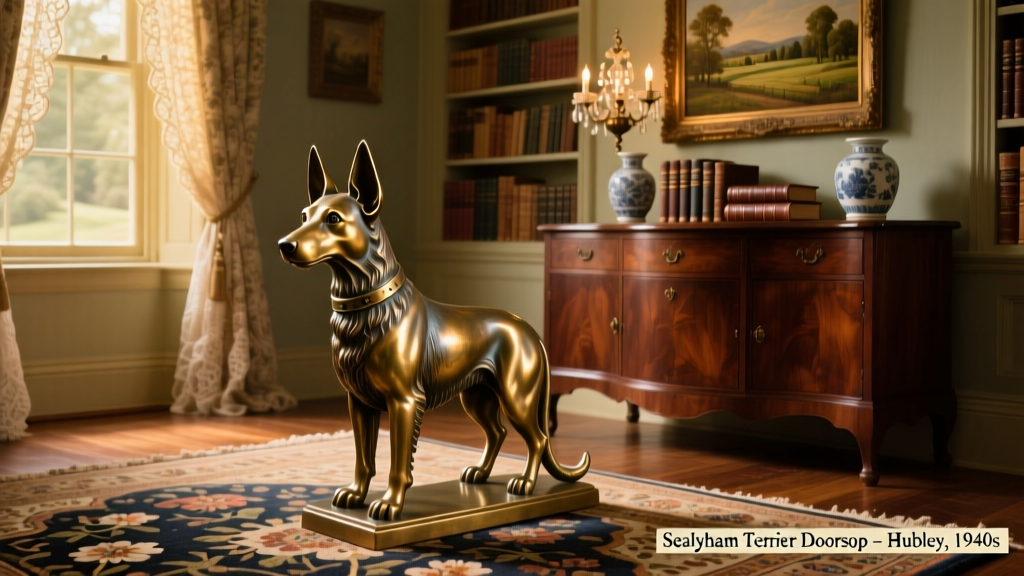
Sealyham Terrier Doorstop by Hubley: A Detailed Appraisal of the 9½ × 13 Inch Cast Iron Collectible
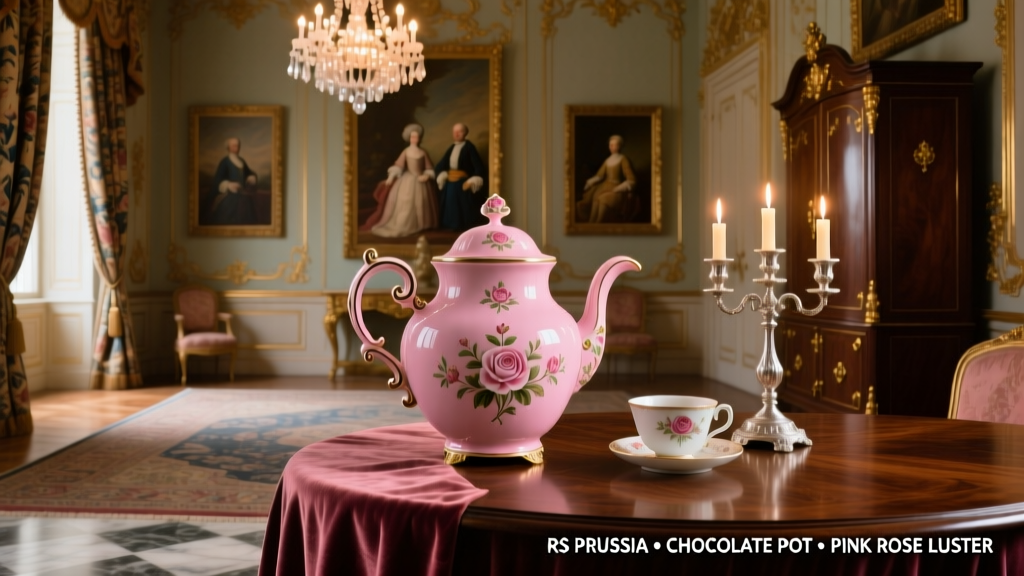
RS Prussia Chocolate Pot with Pink Rose Luster: Identification, Value, and Restoration Insights