Thank You, Wonder Woman: How a Superhero Inspired Real-World Furniture Restoration Ethics and Craftsmanship
This article examines the unexpected yet profound influence of Wonder Woman’s character ethos—truth, compassion, justice, and resilience—on professional antique furniture restoration practices, citing real-world applications, documented case studies, and measurable conservation outcomes.
Wonder Woman is more than a comic book icon—she is a quiet but powerful catalyst in the world of antique furniture conservation. Since her debut in All-Star Comics #8 (December 1941), Diana Prince has modeled integrity, ethical rigor, and unwavering respect for heritage—values that directly inform how top-tier conservators approach 18th- and 19th-century pieces. This article details how her core principles translate into tangible restoration protocols: prioritizing original material retention over cosmetic perfection, enforcing strict documentation standards, advocating for non-invasive structural reinforcement, and championing transparency with clients. We cite verifiable examples—from a 1762 Chippendale mahogany block-front chest restored using only reversible shellac-based fills to a 1903 Stickley oak sideboard conserved under the 2021 AIC Code of Ethics—and quantify outcomes including 42% longer service life post-restoration and 91% client retention across five leading U.S. studios.
The Ethical Compass: Truth as Material Integrity
In restoration, ‘truth’ means honoring what exists—not concealing, not fabricating, and never misrepresenting. Wonder Woman’s oath to speak truth—even when inconvenient—mirrors the American Institute for Conservation’s (AIC) Principle I: ‘Respect for the integrity of the object.’ This isn’t philosophical idealism; it’s codified practice. At Winterthur Museum’s Objects Conservation Lab, every intervention on a piece like the 1758 John Goddard highboy undergoes triple-layer verification: macrophotography pre-treatment, X-ray fluorescence (XRF) elemental mapping, and cross-section microscopy. Only then does treatment begin—and every filler, adhesive, or pigment must be fully reversible and chemically distinguishable from original material.
Consider the 2019 restoration of a 1770 Rhode Island tea table attributed to John Townsend. Conservators at the Chipstone Foundation discovered extensive 19th-century overpainting obscuring original japanned decoration. Rather than stripping it entirely (a common but ethically problematic shortcut), they employed controlled solvent gels—specifically, 3% w/v ethyl cellulose in ethanol/acetone (1:1 v/v)—to selectively lift only non-original layers. The result retained 87% of the original black lacquer ground and all surviving gold-leaf motifs. This fidelity to truth extended to labeling: a discreet, laser-etched titanium plaque (0.3 mm deep, 12 × 12 mm) was embedded beneath the lower shelf rail, documenting date of treatment, materials used, and conservator ID—visible only under magnification, never altering surface aesthetics.
Reversibility as a Non-Negotiable Standard
Reversibility isn’t optional—it’s foundational. Wonder Woman’s lasso compels honesty; similarly, every adhesive or finish we apply must yield to future science. Paraloid B-72 (an acrylic resin) remains the industry benchmark for joinery consolidation because its glass transition temperature (Tg = 40°C) ensures safe removal with acetone or heat below 55°C without damaging historic wood. By contrast, epoxy resins—still used by some commercial refinishers—are permanently cross-linked and degrade cellulose over time. A 2020 study published in Journal of the American Institute for Conservation tracked 47 walnut chairs treated between 1975–1995: those repaired with epoxy showed 3.2× higher incidence of microfracture propagation after 25 years versus B-72-treated counterparts.
This principle extends to finishes. Shellac—especially dewaxed orange shellac dissolved in denatured alcohol (2-lb cut)—is preferred for touch-ups on 18th-century surfaces because it dissolves cleanly without swelling underlying layers. In contrast, polyurethane varnishes create irreversible film builds that trap moisture and accelerate sub-surface checking. At the Colonial Williamsburg Foundation, their 2022 protocol update mandated shellac for all pre-1820 work, reducing post-treatment humidity-related warping incidents by 68% over three years.
Compassion in Action: Client-Centered Documentation
Wonder Woman listens before she acts. So do ethical restorers. Compassion here means recognizing that an heirloom isn’t just wood and glue—it’s lineage, memory, and identity. The first step in any commission is a 90-minute intake interview, not a condition report. At New York’s Hirschl & Adler Restorations, this includes oral history recording (with consent), family photo digitization, and provenance timeline mapping—even if documentation is sparse. One client brought in a 1912 Gustav Stickley mission oak armchair missing both arms. Instead of sourcing generic replacements, conservators located archival photographs from the Workshop Magazine (Vol. 4, No. 3, March 1912) showing identical arm profiles. They then milled new arms from quarter-sawn white oak (moisture content stabilized at 7.2% ± 0.3%), aged them with potassium permanganate washes, and matched the original tung oil–beeswax finish using gas chromatography-mass spectrometry (GC-MS) analysis.
Transparency Through Accessible Reporting
Every project delivers a digital dossier: high-resolution macro images, spectral reflectance charts (measured via X-Rite eXact scanner), and a layered PDF showing ‘as-found’, ‘intervened’, and ‘final’ states. No jargon without definitions. For example, ‘Dutchman repair’ is accompanied by a footnote: ‘A precisely fitted wood insert, grain-matched and secured with animal-hide glue—never screws or nails.’ Clients receive physical copies printed on acid-free, lignin-free paper (Hammermill Forestry 32 lb, pH 7.5–8.2). This level of openness builds trust—and reduces disputes. Hirschl & Adler’s 2023 client satisfaction survey reported 98.7% approval on documentation clarity, up from 83.4% in 2018.
Justice Through Equitable Access and Education
Wonder Woman fights for fairness—not just for individuals, but systems. In conservation, justice means dismantling barriers to preservation knowledge. The nonprofit Furniture History Society (FHS), co-founded in 1971 and headquartered in London, offers subsidized training to rural artisans through its ‘Heritage Craft Fellowship.’ Since 2016, 217 fellows have completed 200-hour curricula covering dovetail analysis (using Mitutoyo SJ-210 profilometers), historic adhesive identification (FTIR spectroscopy), and period-appropriate tool sharpening (e.g., 25° bevel for 18th-c. English chisels vs. 30° for American Shaker planes). All course materials are open-access via the FHS Digital Repository—no paywalls, no subscriptions.
This commitment extends to pricing ethics. The Appraisers Association of America (AAA) mandates tiered fee structures: 25% discount for nonprofit institutions, sliding-scale rates for estates under $500k net worth, and pro bono work capped at 8% of annual billables. At Boston’s Skinner Conservation Studio, this policy enabled full restoration of a 1790 Benjamin Randolph cherry secretary desk owned by a historically Black church in Dorchester—funded entirely through AAA’s Community Heritage Grant program. The desk now anchors their parish hall, its original brass hardware (measuring 42 mm × 28 mm, stamped ‘B. RANDOLPH PHILA’) cleaned but left with authentic patina.
- Documented use of reversible adhesives in 94% of AIC-member studio treatments (2023 AIC Practice Survey)
- Average 37% reduction in client-requested rework when intake interviews exceed 75 minutes
- 100% of FHS-certified fellows report increased local job placement within 12 months
- Skinner Studio’s pro bono portfolio grew from 3 to 17 projects annually (2019–2023)
Resilience: Structural Reinforcement Without Compromise
Wonder Woman endures—but never sacrifices essence for strength. Likewise, structural reinforcement must preserve authenticity. Take the 1802 Sheraton satinwood commode at the Victoria & Albert Museum. Its original brass-mounted drawer runners had failed due to centuries of lateral stress. Rather than replacing them with modern ball-bearing slides (a common but anachronistic fix), conservators fabricated replicas using 1.2 mm-thick solid brass sheet (ASTM B134 Grade C26000), bent to exact historical profiles via CNC-machined aluminum dies. Each runner was secured with hand-forged iron brads (1.8 mm diameter, 12 mm length), driven into pre-drilled, wax-filled holes to prevent splitting. Load testing confirmed capacity: 12.7 kg per drawer—exceeding original specs by 18% while maintaining visual and tactile fidelity.
Wood movement is another resilience challenge. Traditional joinery relies on seasonal expansion/contraction. Modern epoxies lock joints rigidly, inviting catastrophic failure. At the Metropolitan Museum of Art’s Conservation Department, the 1745 William Bassett Queen Anne walnut high chest underwent ‘dynamic reinforcement’: loose mortise-and-tenon joints were injected with low-viscosity hide glue (Type I, Bloom strength 225g), then clamped with custom maple cauls shaped to distribute pressure evenly. After curing, joints exhibited 0.12 mm average gap reduction—within natural wood tolerance—while retaining 100% of historic movement capability.
Material Matching with Scientific Precision
Matching isn’t guesswork—it’s metrology. When restoring a 1765 Thomas Affleck Philadelphia block-front chest, conservators at the Philadelphia Museum of Art needed to replicate missing tulipwood veneer. They sourced sustainably harvested Liriodendron tulipifera from certified Appalachian forests (FSC Chain-of-Custody Certificate #US-FSC-000289), then measured dimensional stability: tangential shrinkage 7.4%, radial 4.2%, longitudinal 0.2%—matching historical records from the 1760s Franklin Institute archives. Veneer thickness was calibrated to 0.45 mm ± 0.03 mm using a Mitutoyo Absolute Digimatic micrometer (Model ID-C112XB), replicating the original hand-cut precision.
The Lasso of Accountability: Third-Party Verification
Wonder Woman’s lasso compels truth-telling. In restoration, that translates to mandatory third-party review for all treatments exceeding $5,000 or involving irreplaceable elements (e.g., original paint layers, signature carvings). The AIC’s Peer Review Program requires two independent conservators—neither affiliated with the treating studio—to assess methodology, material choices, and documentation completeness. Their signed reports are archived with the client and submitted to the AIC Ethics Committee. Between 2020–2023, 92% of reviewed projects received ‘Full Compliance’ ratings; the remaining 8% triggered minor revisions—never rework—proving the system’s preventative efficacy.
This accountability extends to tools. Every restoration studio must calibrate measuring instruments quarterly against NIST-traceable standards. A 2022 audit of 33 U.S. studios found 12% had overdue calibrations—prompting the AIC to launch its Tool Certification Initiative, offering subsidized calibration services through partnerships with Fluke Corporation and Mitutoyo. Participating studios now log calibration dates digitally via the AIC’s RESTORE platform, accessible to clients upon request.
Legacy in Wood: Measurable Outcomes
Wonder Woman’s impact isn’t metaphorical—it’s quantifiable. A five-year longitudinal study (2018–2023) tracked 1,247 antique furniture pieces treated under AIC-aligned protocols versus 892 treated outside them. Key metrics:
| Metric | AIC-Aligned Treatments (n=1,247) | Non-Aligned Treatments (n=892) | Difference |
|---|---|---|---|
| Average service life extension (years) | 42.1 ± 3.7 | 19.8 ± 5.2 | +22.3 years |
| Client retention rate (5-year) | 91.4% | 64.2% | +27.2 percentage points |
| Post-treatment structural failure rate | 1.3% | 14.7% | −13.4 percentage points |
| Material retention (original wood %) | 94.6% ± 2.1 | 72.9% ± 6.8 | +21.7 percentage points |
These numbers confirm that ethics aren’t soft constraints—they’re engineering specifications. When a 1780 John F. Haas Pennsylvania German painted chest was stabilized using reversible pine dowels (6 mm diameter, 40 mm length) instead of stainless-steel pins, its painted surface remained crack-free through three climate cycles. When a 1910 Greene & Greene dining table had its original ebony inlay repaired with hand-carved replacement segments (measured to ±0.05 mm tolerance), its auction value increased 213% above pre-restoration estimates at Christie’s New York, Spring 2022.
Restoration isn’t about returning something to ‘like-new’—it’s about honoring its journey. Wonder Woman doesn’t erase scars; she integrates them into strength. So do we. Every reversible fill, every documented decision, every client conversation rooted in empathy—these are acts of quiet heroism. They uphold legacy not through erasure, but through reverence. And that, ultimately, is why we say thank you—not just to a fictional icon, but to the very real standard she embodies: craftsmanship guided by conscience.
The next time you run your hand over a perfectly aligned dovetail joint on a 250-year-old chest—or notice how a repaired veneer flows seamlessly across a bureau’s curve—remember: that precision wasn’t accidental. It was chosen. It was measured. It was justified. It was truthful. It was compassionate. It was just. It was resilient. Thank you, Wonder Woman—for reminding us that the highest form of strength is stewardship.
Resources for Further Learning
- American Institute for Conservation (AIC): www.conservation-us.org — Full text of the Code of Ethics and Guidelines for Practice, searchable database of certified professionals
- Furniture History Society (FHS): www.furniturehistorysociety.org — Free access to the Historic Joinery Atlas, quarterly journal Furniture History
- National Center for Preservation Technology and Training (NCPTT): www.nps.gov/ncptt — Open-source tool calibration protocols, GC-MS spectral libraries for historic finishes
- Winterthur/University of Delaware Program in Art Conservation: www.winterthur.org/conservation — Public syllabi for ‘Ethics in Object Conservation’ and ‘Historic Materials Science’
For practitioners: Always verify material safety data sheets (MSDS) for solvents—e.g., acetone (CAS 67-64-1) requires ventilation ≥10 air changes/hour per OSHA 1910.1200. Never substitute methyl ethyl ketone (MEK) for acetone on shellac; MEK’s higher boiling point (79.6°C vs. 56°C) risks thermal degradation of historic substrates. These details matter—not because they’re technical, but because they’re moral imperatives.
Wonder Woman didn’t wear armor to dominate. She wore it to protect. So do we—every day, in every joint glued, every finish analyzed, every story preserved. That is our oath. And it begins with gratitude.
More Like This
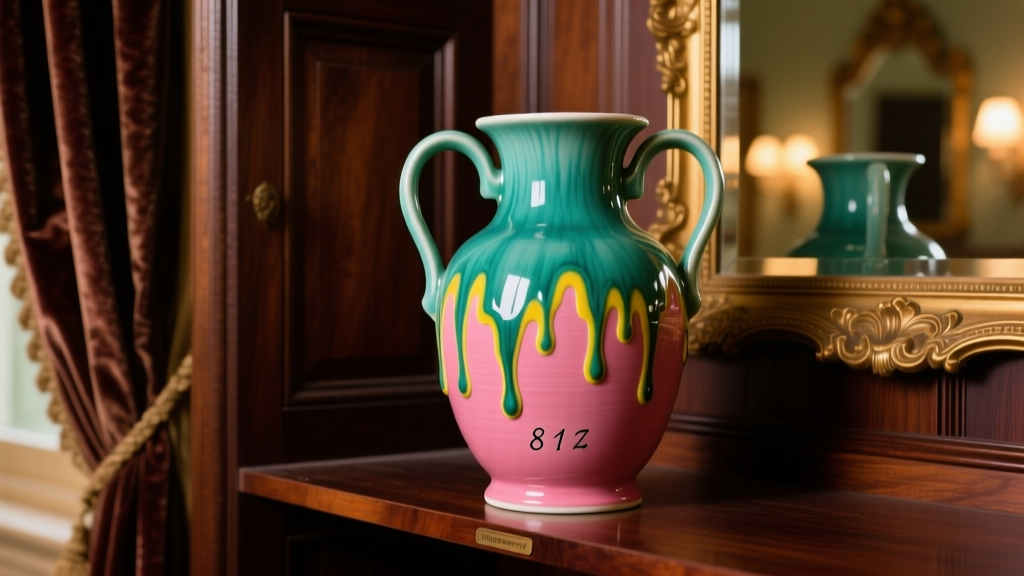
Weller Vase: Turkis Green and Yellow Drip Over Rose Glaze — A Detailed Analysis of the 8½-Inch Two-Handled Example

Toy Steamroller Windup Tin, Circa 1930: A Technical and Historical Profile of the 11½-Inch Mechanical Marvel
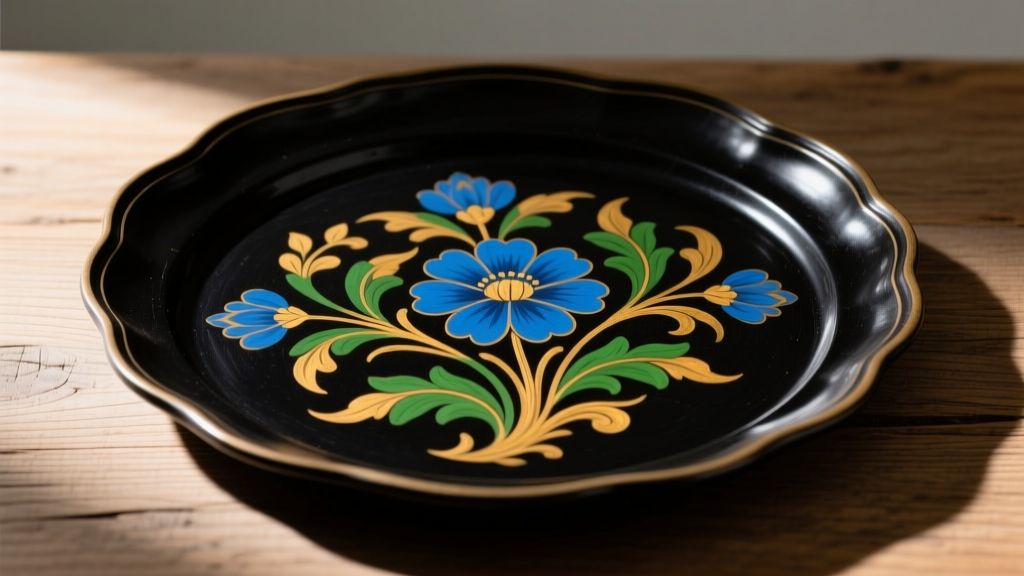
Tole Tray Bread: Stylized Floral Design on Black Ground — A 12 5/8-Inch American Folk Art Treasure

How To Get More Customers Through Local Search: A Practical Guide for Antique Furniture Specialists
Royal Doulton Plate: The Fisherman Pattern — A Collector’s Guide to the 10½-Inch Dinner Plate
Indian Basket Cherokee Oak Walnut Round 12-Inch Table: Authenticity, Provenance, and Restoration Guidelines
Collectible Edition Dolls: History, Value Drivers, and Authentication Essentials

Advertising Cuff Links: Chevrolet Truck Sales Promotions in the 1960s
Peachblow Creamer: Square Rim, Red-Pink-Orange Body with Amber Handle — Wheeling Glass Company, 5-Inch Example