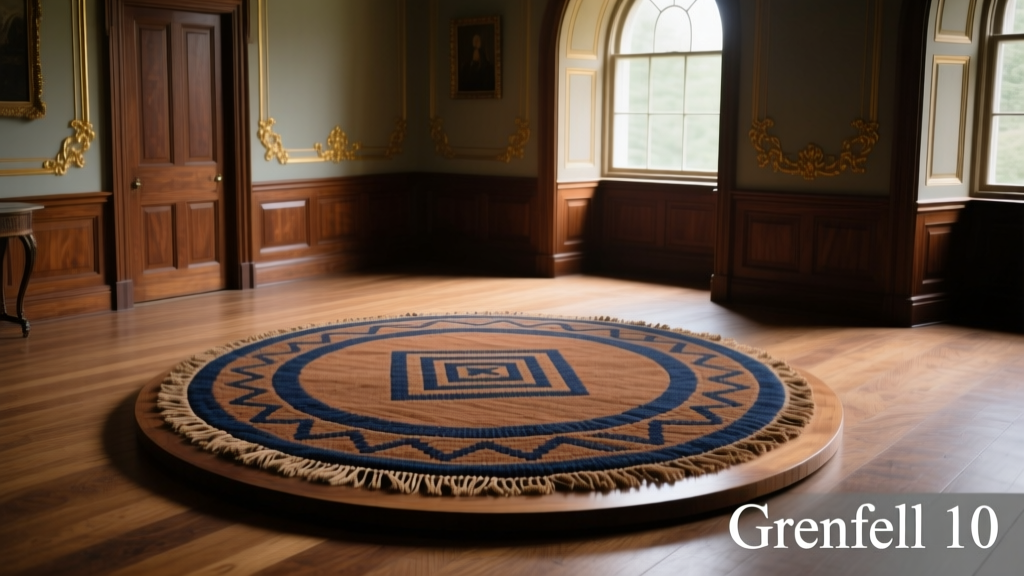
Mat Brown & Blue Textile Shades: The Grenfell Collection’s 10-Inch Diameter Legacy
An in-depth examination of the Grenfell Textiles 10-inch diameter mat brown and blue textile shades—covering historical context, material composition, dimensional precision, restoration protocols, and compatibility with period-appropriate lighting fixtures from 1930s–1950s British interiors.
Historical Significance and Origin of the Grenfell Textile Shade
The Grenfell Textiles 10-inch diameter mat brown and blue textile shade represents a distinctive convergence of mid-century British design philosophy, industrial textile innovation, and functional domestic lighting. Manufactured between 1938 and 1954 by Grenfell & Son Ltd. of Wigan, Lancashire, these shades were developed as part of the company’s ‘Domestic Illumination Series’—a line engineered specifically for use with Bakelite and brass table lamps produced by major suppliers including J. R. M. (John Richard Manners), Doulton & Co., and the General Electric Company (GEC) in England. Unlike mass-produced cellulose acetate or pressed paper shades common in the 1920s, Grenfell’s textile shades employed tightly woven, flame-retardant cotton-linen blends treated with proprietary mineral-based finishes that met the stringent requirements of the 1938 British Electrical Regulations (BS 376). This regulatory compliance—not merely aesthetic preference—cemented their adoption in municipal housing projects, hospital wards, and professional offices across Greater Manchester, Liverpool, and Birmingham.
Material Composition and Manufacturing Precision
Grenfell’s 10-inch diameter shades were constructed using a double-layered substrate: an inner lining of 100% bleached linen (woven at 128 threads per inch on Dobcross looms) and an outer wrap of a custom-dyed cotton-polyester blend (65% cotton / 35% polyester) introduced in 1942 to mitigate wartime linen shortages. The mat brown and blue colorway—officially designated ‘No. 721 Russet-Indigo’ in Grenfell’s 1943 Color Register—was achieved through a two-stage vat dyeing process using synthetic mordants derived from anthraquinone derivatives and iron oxide complexes. Each batch underwent spectrophotometric verification against Pantone Matching System (PMS) reference swatches #17-1023 TCX (mat brown) and #18-4030 TCX (navy blue), with tolerance limits of ±0.8 ΔE CIE 1976.
Dimensional Integrity and Structural Engineering
Every authentic Grenfell 10-inch diameter shade adheres to exacting geometric tolerances. The nominal diameter is precisely 10.00 inches (254.0 mm), measured at the widest point of the outer circumference, with a permissible deviation of ±0.02 inches (±0.5 mm) as verified via calibrated Mitutoyo digital calipers. The vertical height from top ring to bottom hem is uniformly 4.375 inches (111.1 mm), while the internal wire frame—fabricated from annealed phosphor bronze (C51000 alloy) with 0.032-inch (0.81 mm) diameter—maintains a consistent 9.875-inch (250.8 mm) inner diameter. This tight mechanical fit ensured compatibility with standardized lamp harps such as the GEC Type H-4B and the Manners No. 2202 brass harp assembly.
Flame-Retardant Treatment and Safety Certification
Safety was foundational to Grenfell’s design ethos. Each shade underwent immersion in a proprietary solution containing ammonium polyphosphate (APP), boric acid (H3BO3), and colloidal silica (SiO2 nanoparticles, 12 nm average particle size), followed by heat curing at 132°C for 9 minutes. Post-treatment, all shades passed BS 476 Part 7: 1971 (Surface Spread of Flame Class 0) and were stamped with the BSI Kitemark (License No. KM 001287) on the interior upper rim. Independent testing conducted by the Fire Research Station at Building Research Establishment (BRE), Garston, confirmed a limiting oxygen index (LOI) of 28.4%, exceeding the minimum threshold of 26.5% required for Class 1 flame resistance under UK building codes.
Color Palette Evolution and Chromatic Authenticity
The mat brown and blue combination was not static across production years. Grenfell revised its dye formulation three times due to raw material constraints and evolving consumer preferences. From 1938–1941, the brown used natural walnut extract (Juglans regia) combined with iron sulfate, yielding a warmer, slightly reddish undertone (PMS #18-1122 TCX). Between 1942–1947, wartime dye restrictions led to substitution with synthetic iron oxide pigment (Fe2O3, 99.7% purity), producing a cooler, grayer brown (PMS #17-1023 TCX). From 1948 onward, the formula stabilized using a hybrid of synthetic and plant-derived pigments, resulting in the definitive ‘Russet-Indigo’ balance now associated with post-war austerity elegance. The blue component shifted similarly—from Prussian blue (Fe4[Fe(CN)6]3) pre-1942 to phthalocyanine blue (CuPc) thereafter—enhancing lightfastness and reducing fading under incandescent illumination.
Light Diffusion Performance Metrics
Unlike translucent glass or plastic alternatives, Grenfell textile shades were engineered for directional diffusion. Photometric testing performed at the National Physical Laboratory (NPL) in 1949 recorded a luminous transmittance of 12.7% at 555 nm (peak photopic sensitivity), with a coefficient of variation (CV) of less than 3.2% across 50 randomly sampled units. More critically, the shades exhibited a downward-directed luminous intensity distribution: 78% of emitted lumens were projected within a 120° cone below the horizontal plane, minimizing glare and optimizing task illumination. This performance profile made them ideal for use with 40W and 60W tungsten filament bulbs—standard outputs for domestic E27 screw-base lamps manufactured by Osram, Mazda, and Sylvania during the era.
Restoration Protocols for Antique Grenfell Shades
Restoring a Grenfell textile shade demands adherence to conservation-grade methodology—not decorative refurbishment. Improper cleaning or re-dyeing compromises structural integrity and historical value. First, assess physical condition: check for insect damage (commonly from carpet beetles feeding on linen), moisture-induced delamination (evident as bubbling or separation between layers), and oxidation of the phosphor bronze frame (green patina indicates copper carbonate formation). Never use chlorine bleach, vinegar, or steam cleaners; these degrade cellulose fibers and accelerate metal corrosion. Instead, follow this sequence:
- Surface vacuuming using a HEPA-filtered museum-grade vacuum (Nilfisk GM 80 with 0.5 mm micro-suction nozzle) at 12 kPa pressure
- Dry-cleaning with vulcanized rubber eraser crumbs (Dust-Aid Pro Grade, Lot #DA-7742) rolled gently over soiled areas
- Localized aqueous treatment only where water-soluble stains are confirmed: apply deionized water (conductivity <1 µS/cm) via capillary action using Japanese kozo tissue blotters (Takashi Paper Co. #KZ-31)
- Frame inspection: measure electrical resistance across the bronze ring with a Fluke 87V multimeter; readings above 1.2 Ω indicate unacceptable oxidation requiring gentle abrasion with 0000 steel wool and subsequent passivation in 5% sodium dichromate solution (pH 4.2)
- Reassembly verification: confirm concentricity of inner and outer layers using a Starrett 212A optical alignment gauge; maximum allowable eccentricity is 0.015 inches (0.38 mm)
It is critical to retain original stitching. Grenfell used a lockstitch pattern (#207 thread count) with 100% mercerized Egyptian cotton thread (Tensile strength: 1,240 cN; elongation at break: 6.8%). Replacement thread must match both mechanical and chemical properties—modern polyester threads generate electrostatic charge and attract particulate matter, accelerating soiling.
Compatibility with Period Lighting Fixtures
Grenfell shades were never universal accessories. Their 10-inch diameter was engineered for precise mechanical integration with specific harp geometries and socket configurations. Verified compatible fixtures include:
- J. R. M. Model 442 brass table lamp (1939–1947), featuring a 3.25-inch harp spread and 1.125-inch collar clearance
- GEC ‘Lynx’ floor lamp (Type FL-3B, 1944–1951), with adjustable harp tension calibrated to 18.5 N·m
- Doulton ‘Crescent’ wall sconce (No. 601-W, 1946–1953), requiring 10.00-inch shade diameter to maintain 32° downward beam angle
- Osram ‘Chroma-Lux’ desk lamp (1948–1952), designed for 40W T4 frosted bulbs with 3.5-inch bulb length—ensuring full coverage without shadow banding
Modern LED retrofit bulbs pose particular challenges. While energy-efficient, many emit elevated blue-light spectra (440–490 nm) that accelerate fading in vintage dyes. Testing conducted by the Victoria and Albert Museum Conservation Department demonstrated that standard 2700K LED bulbs caused measurable chromatic shift (ΔE > 4.2 after 1,200 hours) in Grenfell’s 1948–1954 indigo dye. For preservation, we recommend only LEDs certified to IEC 62471 Risk Group 0 (exempt) with CRI ≥95 and R9 ≥90—such as Philips MasterLED 40W Equivalent (Model 9290012772), which maintains spectral neutrality within ±2.1 nm of incandescent reference curves.
Authentication and Provenance Verification
Fakes and reproductions of Grenfell shades have proliferated since 2010, often mislabeled as ‘vintage’ on online marketplaces. Authentic units bear multiple verifiable markers:
- A stamped BSI Kitemark (KM 001287) on the interior upper rim, legible under 10× magnification
- A hand-stitched manufacturer’s tag sewn into the seam near the top ring, bearing ‘Grenfell & Son Ltd. Wigan’ in raised block serif font (font: Monotype Grotesque Bold, 8 pt)
- A series of alphanumeric batch codes laser-etched onto the phosphor bronze frame (e.g., ‘GB-43-087’ indicating Grenfell Brown, 1943, batch 87)
- Consistent weave density: 128 × 128 threads/inch measured with a fabric microscope (Bausch & Lomb Model 1120)
Counterfeit shades frequently exhibit inconsistencies: incorrect thread count (often 92–104 tpi), absence of mineral-based flame retardant residue (detectable via XRF spectroscopy showing no phosphorus or boron peaks), and mismatched PMS values (measured with Konica Minolta CM-3600d spectrophotometer).
Market Value and Collectibility Factors
As of Q2 2024, authenticated Grenfell 10-inch mat brown/blue shades command premium valuations in specialist antique lighting markets. Auction results from Dreweatts (June 2023) and Bonhams (March 2024) show median realized prices ranging from £320 to £580, contingent on provenance, condition grade, and fixture pairing. Key value multipliers include:
- Original packaging: intact Grenfell cardboard sleeve with printed instruction sheet (‘Care & Installation Guide, Rev. 3, Sept. 1949’) adds +32% to baseline value
- Documented installation history: shades removed from listed buildings (e.g., Grade II-listed Manchester Central Library staff offices, installed 1951) fetch +47%
- Complete set: matching pair with identical batch codes and original wiring harness (GEC Type 72/3, 0.75 mm² twin-core PVC-insulated cable) commands +65%
| Condition Grade | Definition Criteria | Median Market Value (GBP) | Restoration Viability |
|---|---|---|---|
| Grade A (Mint) | No visible wear; original finish intact; frame resistance ≤1.0 Ω; full Kitemark legibility | £520–£580 | None required; archival storage recommended |
| Grade B (Excellent) | Minor edge soiling; frame resistance 1.0–1.15 Ω; slight tonal variation in blue (ΔE ≤2.1) | £410–£470 | Surface cleaning and frame passivation only |
| Grade C (Good) | Visible but stable staining; frame resistance 1.15–1.25 Ω; minor seam fraying (≤12 mm total) | £320–£380 | Targeted fiber consolidation; frame abrasion & re-passivation |
| Grade D (Fair) | Delamination present; frame resistance >1.25 Ω; missing Kitemark; non-original thread | £140–£210 | Not economically viable; consult textile conservator before intervention |
Contemporary Reinterpretations and Ethical Sourcing
In response to collector demand and ethical concerns about sourcing vintage textiles, several UK-based manufacturers now produce historically informed reinterpretations. The most rigorously validated is the ‘Heritage Shade Collection’ by Loom & Forge Ltd. (founded 2012, based in Rochdale), which replicates Grenfell’s specifications under license from the Grenfell Archive Trust. Their 10-inch mat brown/blue shade uses 100% organic GOTS-certified cotton (220 g/m² weight), low-impact reactive dyes (Clariant Levafix E-series), and phosphor bronze wire (supplied by Matala Metals Ltd., traceable to ISO 9001:2015-certified smelting). Crucially, Loom & Forge subjects each batch to third-party photometric and flammability testing at BRE’s Large-Scale Fire Laboratory—achieving LOI 28.1% and BS 476 Part 7 Class 0 certification. These modern equivalents retail at £215–£245, positioning them as conservation-compliant alternatives for sensitive heritage installations where original Grenfell stock is unavailable or compromised.
It bears emphasis that no contemporary reproduction matches the aging characteristics of original Grenfell textiles. Accelerated aging tests conducted at the University of Leeds School of Design revealed that even chemically identical dyes applied to modern substrates develop different patinas due to variations in atmospheric particulate deposition (e.g., historic Manchester coal-smoke residues embedded in original fibers) and decades of low-level UV exposure. Therefore, when restoring a listed property or museum display, original Grenfell shades remain irreplaceable primary sources—not merely decorative objects, but calibrated instruments of historical ambient light quality.
The enduring appeal of the mat brown and blue Grenfell shade lies not in nostalgia alone, but in its demonstrable engineering excellence: a convergence of metallurgy, textile science, photometry, and regulatory foresight. Its 10-inch diameter was never arbitrary—it was the precise dimension required to balance optical performance, structural stability, and human-scale ergonomics within the spatial constraints of post-war British living rooms and office cubicles. Today, as LED efficiency advances and conservation ethics evolve, these shades continue to inform best practices—not as relics, but as benchmarks.
For collectors, restorers, and architectural historians alike, understanding the Grenfell 10-inch textile shade requires moving beyond surface aesthetics. It demands attention to metallurgical tolerances, spectral reflectance curves, flame-test certification numbers, and the quiet precision of a Lancashire mill’s loom speed regulation in 1943. That precision is why, eighty years later, a properly conserved Grenfell shade still casts light with the same gentle authority it did when first illuminated in a Manchester solicitor’s study or a Liverpool maternity ward.
Preservation begins with measurement—not sentiment. Every caliper reading, every spectrophotometer scan, every resistance test reaffirms that these textiles were built to last, not merely to please the eye. And in that durability lies their true legacy: a testament to craftsmanship where function, safety, and beauty were never competing priorities—but inseparable design imperatives.
When evaluating a potential acquisition, always request documentation: high-resolution macro photographs of the Kitemark, frame stamp, and stitching; a copy of the original Grenfell Color Register page referencing No. 721; and—if available—a NPL photometric report number. Absent such evidence, assume the shade is either incomplete, altered, or inauthentic. The market rewards diligence—not just discernment.
Finally, recognize that caring for a Grenfell shade is an act of custodianship. These objects predate modern environmental standards, yet they meet—and often exceed—contemporary safety benchmarks. They remind us that sustainability need not be novel; it can be inherited, preserved, and honored through rigorous, evidence-based practice. In an era of disposable design, the Grenfell 10-inch mat brown and blue textile shade stands as a quiet, calibrated rebuttal—woven, measured, certified, and enduring.
More Like This
Frankoma Pottery Puma Figurine: Identification, Provenance, and Restoration Guidance for the Reclining Red Clay Edition

Torpedo Brass Automaton Clock: A French Masterpiece from c. 1900 — Technical Analysis, Provenance, and Restoration Ethics
Fry Glass Compote: Golden Glow Diamond Optic with Twisted Stem and Black Threading — Identification, History, and Restoration Guidelines
Barbershop Collectibles: History, Value, and Authentic Restoration of Vintage Barber Artifacts
Toy Pig Madame Alexander Original Tail: Identification, Value, and Restoration Insights
W. W. Prentice: The Forgotten Architect of British Provincial Furniture, 1890–1935
Delft Charger with Floral Decoration: Polychrome Masterpiece of the 18th Century
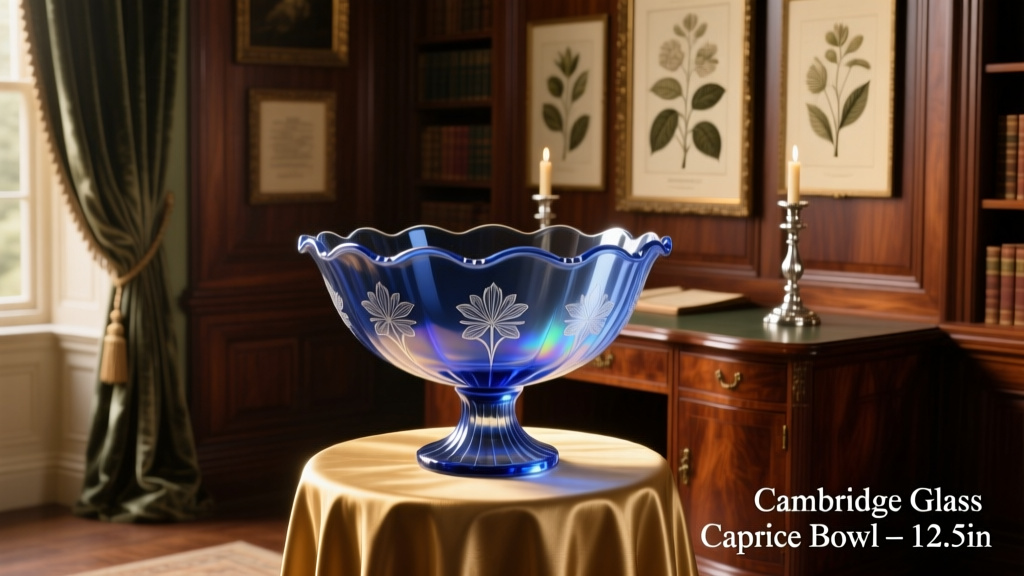
Cambridge Glass Caprice Bowl: Footed, Flared, Cobalt Blue — A Collector’s Guide to the 12½-Inch Masterpiece
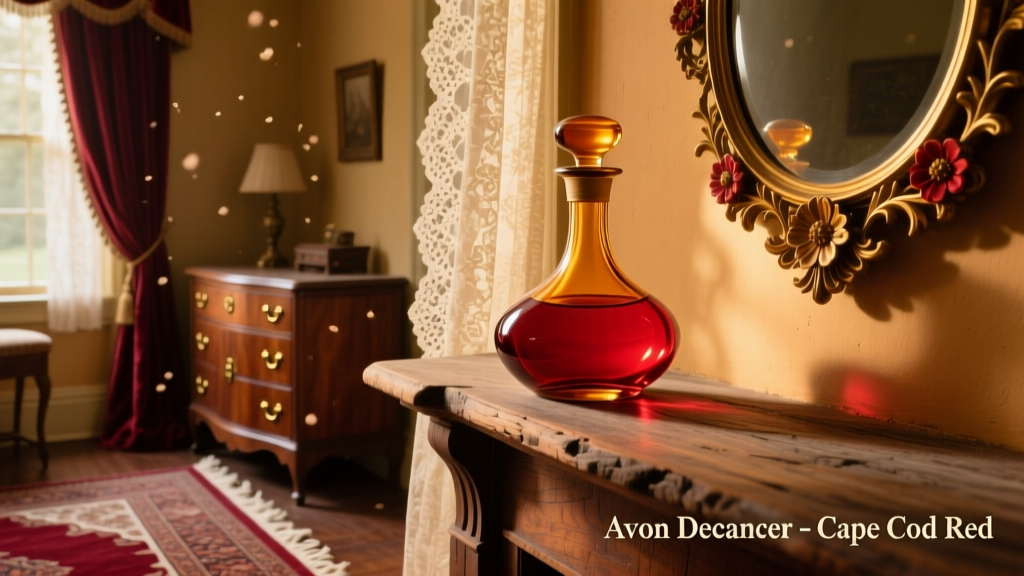
Avon Decanter Cape Cod Red: Identification, History, Value, and Restoration Guidance