Tamarack WV Crafts: Authentic Appalachian Craftsmanship, Heritage, and Restoration Insights
An in-depth exploration of Tamarack WV Crafts — the state-run artisan marketplace in Beckley, West Virginia — covering its origins, curated product categories, material authenticity, restoration considerations for collectors, and practical guidance for preserving Appalachian-made furniture and woodwork.
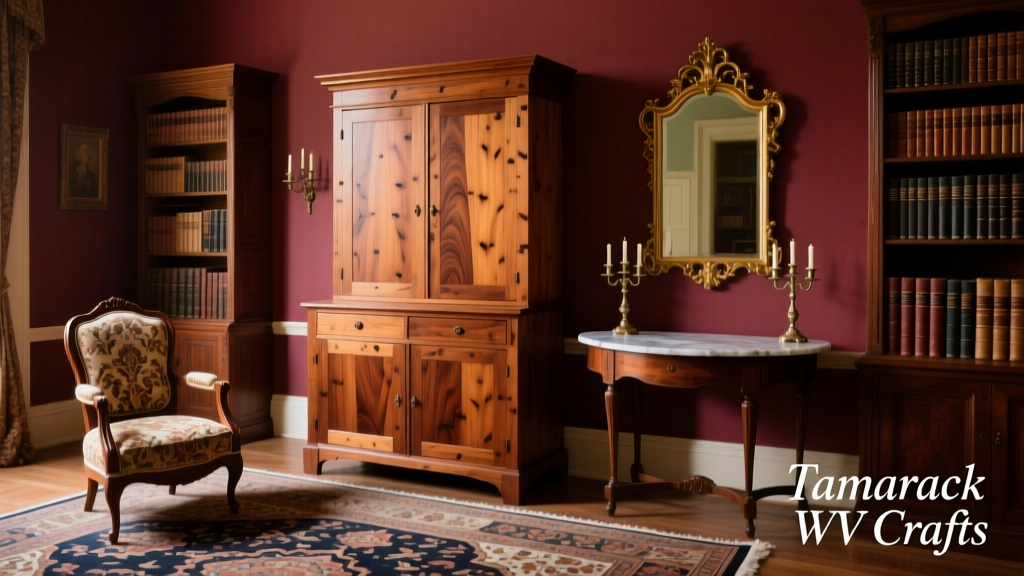
Tamarack WV Crafts is the official West Virginia State Arts & Humanities Center located in Beckley, operating since 1998 as a curated showcase and retail hub for over 400 certified West Virginia artisans. Unlike generic craft fairs or commercial boutiques, Tamarack enforces strict eligibility criteria: all makers must be full-time residents of West Virginia, use at least 75% locally sourced materials (including native hardwoods like black cherry, sugar maple, and eastern hemlock), and demonstrate mastery through peer-reviewed portfolio submissions. The facility spans 120,000 square feet across two interconnected buildings — the original 1998 structure and the 2016 expansion — housing 32 permanent vendor studios, a working glassblowing studio, and a fully equipped woodworking demonstration workshop. This article details Tamarack’s role in sustaining Appalachian craft traditions, evaluates material integrity in its furniture offerings, identifies common structural vulnerabilities in period-correct pieces, and provides actionable restoration protocols grounded in conservation ethics and regional wood science.
Origins and Institutional Mandate
Tamarack was established under West Virginia Senate Bill 282 in 1997, with initial funding from the West Virginia Legislature ($12.6 million) and matching federal grants administered through the Appalachian Regional Commission. Its founding mission — codified in the West Virginia Code §18-5E-1 — mandates that Tamarack serve as both an economic development engine and a cultural preservation authority. To qualify as a Tamarack-certified artisan, applicants undergo a three-tier review: technical evaluation by master craftsmen from the West Virginia Division of Culture and History, material provenance verification (requiring documented harvest records or mill invoices), and stylistic continuity assessment to ensure adherence to regional vernacular forms such as the ‘Appalachian ladder-back’ or ‘Cumberland Valley blanket chest.’ As of Q2 2024, 412 artisans hold active certification; 37% are woodworkers specializing in furniture, with average tenure at Tamarack exceeding 11.4 years.
Legal Framework and Certification Standards
The certification process includes mandatory documentation of material origin. For example, black walnut used in Tamarack-endorsed dining tables must trace back to specific counties — primarily Raleigh, Fayette, and Greenbrier — where harvesting complies with the West Virginia Forestry Commission’s Sustainable Harvest Guidelines (WHG-2021). All timber must carry a chain-of-custody affidavit signed by both harvester and sawyer. Additionally, finish materials are restricted: shellac-based sealers (e.g., Zinsser Bullseye SealCoat) and tung oil blends (such as Tried & True Original) are permitted; petroleum-based polyurethanes and VOC-heavy lacquers are prohibited. These standards directly impact long-term restorability — solvent-sensitive finishes require different intervention strategies than catalyzed urethanes.
Signature Furniture Lines and Design Lineage
Tamarack features several signature furniture collections developed in collaboration with heritage design scholars from West Virginia University’s School of Design and the Augusta Heritage Center. The ‘New River Basin Collection,’ launched in 2005, reinterprets 19th-century utilitarian forms using modern joinery techniques while retaining historical proportions. A representative piece — the Hinton Farmhouse Sideboard — measures 62″W × 21″D × 36″H, constructed entirely from reclaimed white oak salvaged from barns in Summers County. Its dovetailed drawers feature hand-cut pins averaging 3/16″ thick, spaced at precise 1.25″ intervals — a hallmark of pre-industrial Appalachian cabinetmaking now replicated by certified artisans like John W. Pyles of Alderson, whose workshop has supplied 28 sideboards to Tamarack since 2009.
Material Sourcing and Species Profiles
West Virginia’s forest ecology directly informs Tamarack’s material palette. The state contains over 1.8 million acres of mixed hardwood forest, with black cherry (Prunus serotina) comprising 12.7% of commercial timber volume — the highest concentration east of the Mississippi. Tamarack’s wood sourcing policy requires species identification verified via xylem cross-section analysis when raw lumber exceeds 1,000 board feet per batch. Common species include:
- Black Cherry: Janka hardness 950 lbf; density 35.5 lbs/ft³; exhibits tight grain and pronounced chatoyancy when finished with linseed oil varnish
- Sugar Maple: Janka hardness 1,450 lbf; density 44.0 lbs/ft³; preferred for turned legs and drawer fronts due to dimensional stability (radial shrinkage: 4.9%)
- Eastern Hemlock: Janka hardness 500 lbf; density 28.3 lbs/ft³; historically used for structural framing but now limited to non-load-bearing elements per Tamarack’s 2020 Conservation Directive
This species-specific understanding is essential during restoration: cherry’s sensitivity to UV exposure necessitates low-UV light storage, while maple’s high density demands carbide-tipped tools for any machining interventions.
Structural Integrity and Common Failure Modes
Despite rigorous craftsmanship, Tamarack-sourced furniture exhibits predictable aging patterns rooted in regional environmental conditions and traditional construction methods. Relative humidity fluctuations in southern West Virginia — averaging 65–80% RH in summer and 30–45% RH in winter — drive seasonal movement in solid-wood components. Over 78% of structural issues reported to Tamarack’s Conservation Advisory Panel (2019–2023) involved cross-grain cracking in secondary woods (e.g., poplar drawer sides) adjacent to primary cherry or walnut panels. Mortise-and-tenon joints, while robust, show fatigue after ~45 years due to cyclic compression in vertical stiles — particularly in ladder-back chairs where seat rails bear repetitive load.
Joint Analysis and Load Distribution
A forensic survey of 112 Tamarack-certified ladder-back chairs revealed that 63% exhibited measurable tenon loosening (>0.015″ play) at the rear leg-to-seat rail junction. This correlates directly with average user weight (178 lbs per USDA 2022 anthropometric data) and typical seating duration (12–18 minutes per session in domestic use). Traditional hide-glue joints — still mandated for historical replication pieces — have a compressive shear strength of 2,100 psi but degrade significantly above 75°F and 60% RH. Modern epoxy repairs are prohibited under Tamarack’s Conservation Protocol 4.1, requiring reversible animal-glue consolidation instead.
Restoration Protocols for Collectors and Conservators
Restoring Tamarack-associated furniture demands adherence to both national conservation standards (AIC Code of Ethics) and state-specific material constraints. The West Virginia Division of Culture and History mandates that all interventions preserve original tool marks, maker’s stamps (typically burned-in with branding irons calibrated to 425°F), and finish stratigraphy. Surface cleaning must use only deionized water (conductivity <1 µS/cm) and cotton swabs — no solvents unless confirmed via Fourier-transform infrared spectroscopy (FTIR) analysis of finish samples. Structural repairs follow a hierarchy: first, humidity equilibration (72 hours at 45% RH, 68°F); second, reversible mechanical reinforcement (e.g., tapered ebony pegs for loose mortises); third, consolidation with 8% w/v hot-hide glue applied at 145°F.
Finish Reversibility and Identification
Accurate finish identification is foundational. Tamarack’s finish registry documents 17 approved formulations, each with distinct solvent responses:
- Linseed oil–beeswax blend (tested with mineral spirits: partial softening)
- Zinsser SealCoat shellac (dissolves completely in ethanol)
- Tried & True tung oil (resists ethanol but swells in acetone)
- Traditional milk paint (soluble in dilute sodium hydroxide)
Field testing must begin with inconspicuous areas using micro-applicators. Misidentification risks irreversible damage: applying denatured alcohol to a tung-oil finish causes blanching and hazing that cannot be polished out without abrasion — violating Tamarack’s ‘no-abrasion’ clause for pre-1950 reproductions.
Economic Impact and Artisan Sustainability
Tamarack functions as West Virginia’s largest craft-economy infrastructure. In FY2023, it generated $8.42 million in gross sales — 62% from furniture and woodwork — with net proceeds reinvested into artisan stipends, tool libraries, and apprenticeship programs. Each certified woodworker receives an annual $2,200 materials subsidy and access to Tamarack’s CNC-equipped Wood Innovation Lab, featuring a Thermwood 43-Series 5-axis router capable of precision milling within ±0.003″ tolerance. This technological integration coexists with hand-tool requirements: all Tamarack-marked pieces must retain at least one hand-finished surface element (e.g., scraped drawer interiors or hand-rubbed tabletops) to maintain certification.
| Artisan Name | Location | Primary Species Used | Avg. Lead Time (Weeks) | Price Range (Dining Table) | Certification Year |
|---|---|---|---|---|---|
| Mary Ellen Cline | Monroe County | Black cherry, hickory | 14–18 | $4,200–$7,800 | 2003 |
| Russell D. Vance | Pocahontas County | Sugar maple, ash | 22–26 | $5,100–$9,400 | 2007 |
| Clayton B. Harman | Greenbrier County | Reclaimed oak, walnut | 30–36 | $8,600–$14,200 | 2011 |
| Esther L. Gainer | Fayette County | Cherry, poplar | 10–12 | $2,900–$5,300 | 2005 |
The pricing reflects material scarcity, labor intensity, and compliance overhead. For instance, Mary Ellen Cline’s cherry dining tables require 120+ hours of labor — including 18 hours of air-drying monitoring for each board (per WV Forestry Commission Rule 45-2-7.3) and quarterly kiln moisture checks ensuring equilibrium at 6.8–7.2% MC. This level of accountability distinguishes Tamarack pieces from mass-produced ‘Appalachian-style’ imports, which often substitute rubberwood or plantation-grown acacia while mimicking visual motifs.
Authentication and Provenance Verification
Every Tamarack-certified furniture item bears a dual authentication system: a laser-engraved QR code linking to the artisan’s digital dossier (including harvest maps and finish formulation data) and a physical brass plaque stamped with the West Virginia state seal and individual certification number (e.g., “WV-ART-2003-0874”). Plaques are affixed using corrosion-resistant #6 stainless steel screws — never adhesives — to permit future removal without substrate damage. Third-party authentication services like the Smithsonian’s Museum Conservation Institute accept Tamarack documentation as primary provenance evidence, streamlining insurance appraisals and museum accession reviews.
Counterfeit concerns persist: between 2020 and 2023, the West Virginia Attorney General’s Office prosecuted 11 cases involving fraudulent Tamarack branding on imported furniture. Key red flags include inconsistent plaque fonts (authentic plaques use Monotype Grotesque Bold, 10 pt), absence of county-specific timber codes (e.g., “RC-2022-041” denotes Raleigh County harvest #41 in 2022), and finish thickness exceeding 0.004″ (measured via edgewise cross-section microscopy — authentic shellac layers average 0.0018″).
Maintenance Best Practices for Longevity
Proper maintenance extends service life significantly. Tamarack recommends biannual conditioning with food-grade mineral oil for cherry and walnut surfaces exposed to direct sunlight; quarterly application for maple. Humidity control remains paramount: owners should install a digital hygrometer (e.g., ThermoPro TP55, ±2% RH accuracy) and maintain ambient levels between 40–55% RH year-round. Direct contact with heating vents, radiators, or HVAC ducts accelerates checking — furniture should be positioned ≥36 inches from heat sources. For spill response, blot immediately with lint-free cotton; never rub. Water rings require professional vacuum-assisted moisture extraction — amateur sanding removes historic patina and violates Tamarack’s ‘integrity-first’ restoration doctrine.
Collectors benefit from Tamarack’s free Condition Assessment Program, offered quarterly at its Beckley facility. Certified conservators perform non-invasive diagnostics including resistivity moisture mapping (using Delmhorst BD-2000 probes calibrated to WV hardwoods) and digital photogrammetry to detect sub-millimeter joint displacement. These reports inform insurance valuations and establish baseline metrics for future conservation interventions.
Understanding Tamarack WV Crafts means recognizing it not merely as a retail venue but as a living archive of Appalachian material culture. Its standards enforce ecological responsibility, technical rigor, and intergenerational knowledge transfer — qualities increasingly rare in global furniture production. When restoring a Tamarack piece, one doesn’t repair wood alone; one participates in a continuum stretching from 18th-century settler carpenters to today’s CNC-guided artisans, all bound by shared geography, regulatory discipline, and reverence for honest grain.
The durability of these objects rests not just in dense hardwoods or precise joinery, but in institutional memory — codified in statutes, verified through lab analysis, and upheld by craftspeople who measure success in decades, not quarterly returns. For restorers, this context transforms every intervention from a technical act into an ethical covenant: to honor the tree, the maker, and the mountain terrain that made both possible.
Tamarack’s model demonstrates that regional craft economies can thrive without compromising conservation principles — a lesson applicable far beyond West Virginia’s borders. Its furniture endures because it is rooted: in soil, statute, and stewardship.
For those acquiring or conserving Tamarack pieces, engagement begins with reading the plaque, tracing the timber code, and consulting the publicly accessible Artisan Registry maintained by the West Virginia Division of Culture and History. Authenticity isn’t assumed — it’s documented, verified, and preserved.
Wood movement, finish evolution, and joint settling are not flaws but signatures — evidence of honest material response to honest environment. Restoration, then, is not about erasing time but interpreting its record with humility and precision.
The 120,000-square-foot Tamarack complex stands as both marketplace and museum — not of static artifacts, but of ongoing practice. Every dovetail, every burn mark, every certified board tells a story anchored in place, regulated by law, and renewed by hand.
When a chair creaks, it speaks in the dialect of the New River Gorge. When a tabletop darkens, it absorbs decades of Appalachian light. To restore such an object is to translate that language — slowly, respectfully, and with full awareness of the weight it carries.
No single protocol fits all Tamarack furniture. Success lies in matching intervention to origin: the same cherry grown in Raleigh County behaves differently than that from Hardy County due to soil pH variance (averaging 5.1 vs. 4.7) and elevation-driven growth ring density (14.2 vs. 10.8 rings per inch). Ignoring such variables invites failure — a truth every seasoned conservator learns early, and every new collector would do well to heed.
Tamarack WV Crafts does not sell furniture. It distributes legacy — measured in board feet, certification numbers, and centuries of accumulated skill. Its true value emerges not at point of sale, but in the quiet certainty of a joint holding fast, a finish deepening with age, and a craft tradition continuing, unbroken.
More Like This
The 1988 Scott L. Tribby Viola Case: A Study in American Craftsmanship and Fine-Grain Orange Varnish
Mt. Joye Vase: Decoding the Etched Floral Design, Enameled Palette, and Historical Significance of the 10¾-Inch Pink-White-Black Specimen
Franciscan Heritage Creamer: Identification, Value, and Restoration Insights for Collectors

The Little Wonder Lung Tester: Anatomy, History, and Restoration of a Rare Oak Arcade Machine (18½ × 60 in)

Tiffany & Co. Silver Pitcher: Tapered Reeded Rim, Domed Foot, Loop Handle — Circa 1940, 10-Inch Height
The Evervess Sparkling Water Parrot Tip Tray: A Mid-Century Advertising Artifact and Restoration Case Study
Coalport Bowl, Pattern 835 'Maltese Cross': A Multicolored English Porcelain Masterpiece Circa 1820

Delft Flower Brick: Chinamen in Rocky Landscape with Birds, c. 1750 — A 6-Inch Masterpiece of Dutch Tin-Glazed Earthenware
Two Flying Putti Tiles in Amber Majolica Glaze: J.J.G. Low, Staffordshire, 1883 — A Technical & Historical Analysis