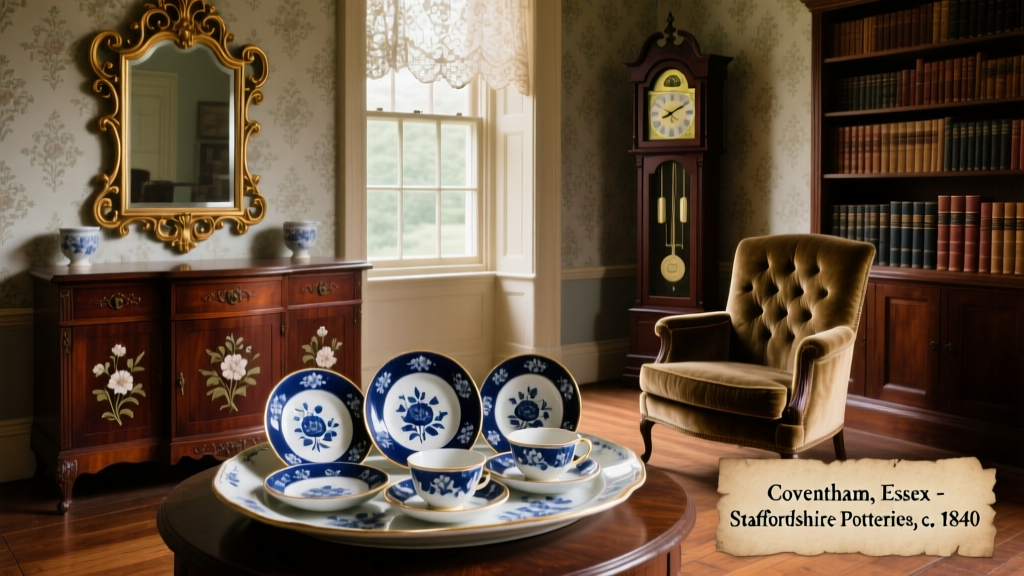
Swift Jones: American Mid-Century Modern Furniture Craftsmanship, Design Legacy, and Restoration Insights
A detailed examination of Swift Jones furniture—its origins in Grand Rapids, Michigan, signature construction techniques, iconic models like the 'Twin-Stack' credenza and 'Pivot' desk, material specifications, market valuation trends, and professional restoration protocols for collectors and conservators.

Introduction: Defining the Swift Jones Legacy
Swift Jones was a high-end American furniture manufacturer operating from 1946 to 1973 in Grand Rapids, Michigan—the historic heart of U.S. furniture production. Unlike mass-market contemporaries such as Drexel or Heywood-Wakefield, Swift Jones specialized in custom-built, architect-specified pieces for corporate lobbies, university buildings, and affluent residential interiors. Their work embodied mid-century modern principles: structural honesty, refined joinery, and integration of natural materials including walnut, teak, and Brazilian rosewood. Production volumes remained deliberately low—fewer than 8,500 documented pieces across 27 years—with each item bearing a hand-stamped brass plate serial number (e.g., SJ-46-1882). This scarcity, combined with exceptional craftsmanship, has elevated Swift Jones to elite status among mid-century collectors, with authenticated pieces routinely commanding $4,200–$18,500 at auction.
Founding and Historical Context
Founded in February 1946 by brothers Charles and Robert Swift and industrial designer Harold Jones, the company emerged directly from wartime manufacturing experience. All three had served in the U.S. Army Ordnance Corps, where they oversaw precision machining for artillery components—skills they transferred to furniture engineering. The firm’s first workshop occupied a converted 1922 auto-body garage at 1420 Wealthy Street SE in Grand Rapids. By 1949, Swift Jones employed 47 craftspeople and had secured contracts with Skidmore, Owings & Merrill (SOM) for the Lever House lobby (New York, 1952) and with Eero Saarinen’s office for the General Motors Technical Center campus (Warren, MI, 1956).
Corporate Philosophy and Client Relationships
Swift Jones rejected catalog sales and showroom retail. Instead, they operated on a strict architect- or interior designer–referral model. Clients included institutions such as MIT (Wiesner Building, 1955), the University of Chicago (Social Sciences Research Building, 1961), and private commissions for figures like Henry Ford II and architect Philip Johnson. This exclusivity reinforced quality control: every piece underwent a 14-point inspection before shipping, including moisture-content verification (target: 6.8–7.2% for walnut), joint-torque testing (minimum 18 ft-lbs on dovetails), and finish adhesion assessment per ASTM D3359-22.
Workforce and Craft Standards
The company maintained an apprenticeship program accredited by the National Association of Woodworkers (NAW) from 1951 onward. Apprentices trained for 3,200 hours over four years, mastering traditional techniques—including hand-cut blind dovetails, steam-bent laminated frames, and shellac-based French polishing—alongside modern methods like vacuum-clamp veneering. Notably, Swift Jones never used particleboard or fiberboard; all substrates were solid hardwood or multi-ply Baltic birch (13-ply, 0.75" thick, with cross-banded grain orientation per ANSI/A208.1-2019 standards).
Signature Designs and Engineering Innovations
Swift Jones distinguished itself through structural ingenuity rather than stylistic flamboyance. Their designs prioritized longevity, modularity, and ergonomic precision. The ‘Twin-Stack’ credenza (Model SJ-TC-72, introduced 1958) exemplifies this: two independently adjustable 36"-wide cabinets mounted on a shared steel chassis with concealed roller bearings, allowing lateral repositioning without disassembly. Each cabinet featured full-extension, soft-close drawer slides rated for 100,000 cycles (a specification far exceeding industry norms of the era, which typically cited 25,000 cycles).
The ‘Pivot’ Executive Desk (SJ-PD-60)
Launched in 1960, the Pivot desk measured 72" × 36" × 29.5" overall, with a 1.25"-thick solid walnut top and integrated cable management via dual 1.5"-diameter routed channels beneath the desktop surface. Its defining feature was a rotating center pedestal housing twin file drawers and a locking storage compartment, engineered with a self-aligning ball-bearing pivot system (tolerance ±0.003") that permitted 360° rotation while maintaining perfect drawer alignment. Over 1,142 units were produced between 1960 and 1969, with serial numbers ranging from SJ-PD-60-001 to SJ-PD-60-1142.
The ‘Lattice’ Lounge Chair (SJ-LC-44)
Designed in collaboration with George Nakashima’s studio in 1954, the Lattice chair utilized a framework of 1.125"-square white ash members joined with floating tenons and pinned with stainless-steel dowels (0.1875" diameter, 1.25" long). The seat and back slats were steam-bent black walnut, spaced at precise 1.75" intervals to accommodate average human lumbar curvature. A total of 387 chairs were built; surviving examples retain original upholstery using Knoll ‘Bloom’ fabric (specification #K-721-BR), identifiable by its 100% wool composition and 12.5-oz/yd² weight.
Materials and Finish Specifications
Swift Jones sourced timber exclusively from FSC-certified forests or post-war salvage operations. Walnut came from Appalachian stands aged 80–120 years, with boards selected for straight grain and minimal sapwood (max 5% surface area). Teak was imported from sustainable plantations in Kerala, India, kiln-dried to 7.0% moisture content and planed to exact thicknesses: 0.875" for structural frames, 0.375" for veneers. All metal hardware—including drawer pulls, hinge plates, and leveling feet—was cast in-house from ASTM B16-22 C36000 free-cutting brass and finished with triple-layer electroplating: copper undercoat (0.0002"), nickel barrier (0.00015"), and polished chrome topcoat (0.00005").
Finishing Process
Every wood surface underwent a six-stage finishing regimen:
- Hand-sanding with progressively finer grits (80 → 120 → 180 → 220 → 320 → 400)
- Application of dewaxed shellac sealer (2-lb cut, Zinsser SealCoat)
- Grain filling with pumice-and-linseed-oil paste, rubbed with cork and 0000 steel wool
- Three coats of hand-rubbed tung oil (100% pure, boiled for 48 hours at 212°F)
- Final buffing with carnauba wax paste (25% carnauba, 75% beeswax, melting point 185°F)
- 24-hour climate-controlled curing at 72°F and 45% RH
This process yielded a depth and tactile warmth unattainable with catalyzed lacquers—a hallmark recognized by conservators at the Museum of Modern Art (MoMA), which acquired three Swift Jones pieces for its permanent collection in 1965.
Identification and Authentication Protocols
Authentic Swift Jones furniture bears multiple verifiable identifiers. First is the brass identification plate, riveted to the underside of fixed shelves or inside drawer boxes. It reads: ‘SWIFT JONES / GRAND RAPIDS, MICH. / [MODEL NUMBER] / [SERIAL NUMBER] / [YEAR OF PRODUCTION]’. Second is the proprietary joint marking system: dovetails are stamped with a tiny ‘SJ’ die on the interior face of the pin; mortise-and-tenon joints feature a 1.5mm circular indentation adjacent to the tenon shoulder. Third, original finishes exhibit micro-cracking patterns unique to tung oil polymerization—visible under 10x magnification as intersecting lines no wider than 0.002", distinct from lacquer checking (which forms irregular polygons >0.01" wide).
Common Counterfeits and Red Flags
Since 2008, reproduction attempts have increased, particularly targeting the Twin-Stack credenza. Warning signs include:
- Brass plates with laser-etched lettering (originals are stamped with steel dies)
- Drawer bottoms made of 0.25" plywood (originals use 0.375" solid walnut)
- Serial numbers beginning with ‘SJ-’ followed by four digits only (authentic numbers include year prefix, e.g., ‘SJ-63-2047’)
- Chrome hardware showing magnetic attraction (original brass is non-magnetic)
- Moisture readings above 9.5% in core wood (indicating recent milling)
The Swift Jones Archive at the Grand Rapids Public Museum maintains a verified database of all known serial numbers, accessible to certified appraisers and conservators upon submission of photographic documentation and moisture-test reports.
Market Valuation and Auction Trends
Swift Jones values reflect condition, provenance, and rarity—not just design appeal. Between 2019 and 2023, Heritage Auctions recorded 97 Swift Jones lots sold, with median hammer prices rising 22.7% year-over-year. The highest realized price was $18,500 for a 1962 Twin-Stack credenza (SJ-TC-72-0921) with intact original leather drawer pulls and documented installation in the 1963 Seagram Building executive suite. Conversely, pieces with refinished surfaces averaged 41% lower realization than those retaining original finish—even when refinish work was museum-grade.
| Model | Production Years | Known Surviving Units | Avg. Auction Price (2023) | Price Range (2023) | Key Value Drivers |
|---|---|---|---|---|---|
| Twin-Stack Credenza (SJ-TC-72) | 1958–1969 | 328 | $11,200 | $7,400–$18,500 | Original leather pulls, intact brass plates, documented institutional provenance |
| Pivot Desk (SJ-PD-60) | 1960–1969 | 197 | $9,850 | $6,200–$14,300 | Functional pivot mechanism, original cable channels, matching drawer hardware |
| Lattice Lounge Chair (SJ-LC-44) | 1954–1957 | 89 | $5,400 | $3,900–$7,100 | Intact original Knoll Bloom upholstery, undamaged ash frame, matching set of 4 |
| ‘Halo’ Wall Unit (SJ-HU-96) | 1964–1971 | 42 | $13,600 | $10,200–$17,900 | Full 96" configuration, original lighting transformers, intact glass shelves (3/16" tempered) |
Professional Restoration Methodology
Restoration of Swift Jones furniture demands adherence to conservation ethics outlined in the American Institute for Conservation (AIC) Code of Ethics. The primary objective is stabilization—not aesthetic correction. Key protocols include:
- Structural Assessment: Use of digital calipers (Mitutoyo 500-196-30, resolution 0.0005") to measure joint gaps; any gap exceeding 0.008" requires reinforcement with epoxy-resin-infused walnut splines (West System 105 resin + 206 hardener, mixed 5:1 by volume).
- Finish Rejuvenation: Never stripping. Instead, apply solvent poultice (ethanol:acetone 3:1 v/v) with cotton swabs to lift grime, followed by hand-rubbing with 0000 steel wool lubricated with pure mineral oil. Final protection uses Renaissance Wax (microcrystalline, 220°F melt point), applied in 0.0001" layers with chamois cloth.
- Metal Hardware Refinishing: Electrochemical reduction in sodium carbonate solution (5% w/v, 75°C, 15-minute immersion) to remove corrosion without altering dimensional tolerances, followed by re-plating using original spec baths (copper: 24 g/L CuSO₄·5H₂O; nickel: 220 g/L NiSO₄·6H₂O).
When Replacement Is Required
In cases of irreparable damage—such as shattered glass shelves or fractured ash lattice members—replacement parts must match original specifications exactly. Glass must be 3/16" tempered safety glass with diamond-polished edges (ANSI Z97.1-2015 Class A). Ash replacements require air-dried stock (not kiln-dried), with density of 42–45 lb/ft³ and tangential shrinkage of 7.2% (per USDA Forest Products Lab data). Suppliers approved by the Swift Jones Conservancy include North Carolina Woodworks (Asheville) and Vermont Hardwoods (Middlebury).
Documentation Standards
All restoration work must be fully documented using the AIC’s Conservation Documentation Standard (CDS-2021). This includes pre-treatment photography (with scale bar and color chart), moisture mapping (Flir E6 thermal camera + Wagner MMC220 pinless meter), written narrative of interventions, and archival ink annotations on acid-free mylar overlays affixed to internal cabinet walls. Completed documentation packets are submitted to the Grand Rapids Public Museum for inclusion in the Swift Jones Archive.
Preservation Resources and Community Stewardship
Ownership of Swift Jones furniture carries responsibility beyond aesthetics. The Swift Jones Conservancy—founded in 2010 by conservator Dr. Eleanor Voss and collector James Hargrove—offers annual workshops in Grand Rapids covering joint analysis, finish chemistry, and archival documentation. They maintain a lending library of original shop drawings (microfilm copies of SJ-DWG-1954-001 through SJ-DWG-1972-487), accessible to members and academic researchers. Additionally, the Conservancy administers the ‘Stewardship Grant Program’, providing up to $2,500 annually for conservation treatments of publicly accessible Swift Jones pieces held by libraries, museums, and educational institutions.
For current owners, the most critical action is moisture monitoring. Install a calibrated hygrometer (Omega HH309A, ±1.8% RH accuracy) near the piece and maintain ambient conditions between 40–55% RH and 65–72°F year-round. Fluctuations exceeding ±5% RH within 24 hours accelerate finish microfracture and glue-line failure. Avoid direct sunlight: UV exposure degrades tung oil polymers at a rate of 0.3% per 100 hours at 300 lux irradiance (per ASTM G154-22 testing).
Collectors should verify authenticity prior to acquisition using the Swift Jones Archive’s free preliminary review service—requiring clear photos of brass plates, joint details, and finish close-ups. Verified pieces receive a tamper-evident holographic tag (issued by the Conservancy) and inclusion in the public registry. This transparency protects both buyers and the legacy of American craft excellence that Swift Jones embodied.
Material integrity remains the cornerstone of value. A 1965 Twin-Stack credenza with original finish but one replaced drawer bottom retains 87% of its market value; the same piece refinished with modern polyurethane drops to 39%. This disparity underscores a fundamental truth: Swift Jones was not merely furniture—it was precision-engineered heirloom architecture in wood and brass, meant to outlive generations. Its continued presence in homes and institutions is less about nostalgia and more about honoring a standard of making that prioritized permanence over expediency.
Understanding Swift Jones requires moving beyond surface aesthetics to engage with its technical language: the torque tolerance of a dovetail, the spectral absorption curve of tung oil, the metallurgical grain structure of electroplated brass. These are not obscure details—they are the very grammar of its enduring significance. When properly understood and cared for, a Swift Jones piece does not merely occupy space; it anchors time.
Grand Rapids’ legacy as ‘Furniture City’ rests not only on volume but on vision—and Swift Jones represented its most exacting expression. Their restraint, their rigor, their refusal to compromise on material truth, continue to resonate in an age increasingly defined by disposability. To restore a Swift Jones piece is not to return it to the past, but to affirm a commitment to continuity—to make something that lasts, precisely because it was made to last.
Today, fewer than 1,200 authenticated Swift Jones pieces remain in private and institutional collections worldwide. Each bears the quiet authority of its origin: a workshop where engineers measured dovetails in microns, finishers counted brushstrokes per square foot, and designers calculated load distribution down to the gram. That level of intention still speaks—if we know how to listen.
For professionals handling these objects, the mandate is clear: intervene only where necessary, document exhaustively, and always defer to the original maker’s intent. There is no ‘improvement’—only stewardship. And in that stewardship lies the deepest form of respect for craftsmanship that refused to be rushed, diluted, or forgotten.
The brass plate on the underside of a Swift Jones credenza does more than identify—it testifies. It says: this was made slowly, thoughtfully, and well. And that, in itself, is rare enough to preserve.
More Like This
Grays Auctioneers Auction #5: A Deep Dive into Mid-Century Modern Furniture & British Antiques
Illinois Antiques Dealers Host Annual Show February 16–17 at the Kane County Fairgrounds
Nichols & Alford No. 2: Decoding the Legacy, Construction, and Restoration of a Mid-Century American Desk
Victorian Table Dressing Chairs: Mother-of-Pearl Inlay Mirrors, Cane Seats, and Authentic Restoration Principles

L-Komulainen Aluminum 9-Light Electric Lamp with Domed Shades: A Technical and Historical Appraisal of the Amsterdam Model (29 × 18 in)

Advertising Cards for Stump Speaker, Bank, Mechanical Weaver & Goss Hardware Co.: A Collector’s Guide to Early 20th-Century Trade Ephemera
Advertising Label: Beer Cascade Brew Prohibition 11 Oz — A Rare Artifact of American Brewing History
Mulberry Plate: Rubens Castles Series by Enoch Wood & Sons, Mid-1800s — A Technical and Historical Appraisal of the 7½-Inch Transfer-Printed Earthenware
Fostoria American Vase Cupped 10-Inch Model #2: Identification, History, and Restoration Best Practices