The Stratford Universal Stove: Engineering Legacy, Restoration Realities, and Historical Context
A detailed examination of the Stratford Universal Stove—its 1930s–1950s production history, cast-iron construction, technical specifications, common failure points, authentic restoration methodology, and its place among peer brands like Glenwood, Monarch, and Harris Furnace.
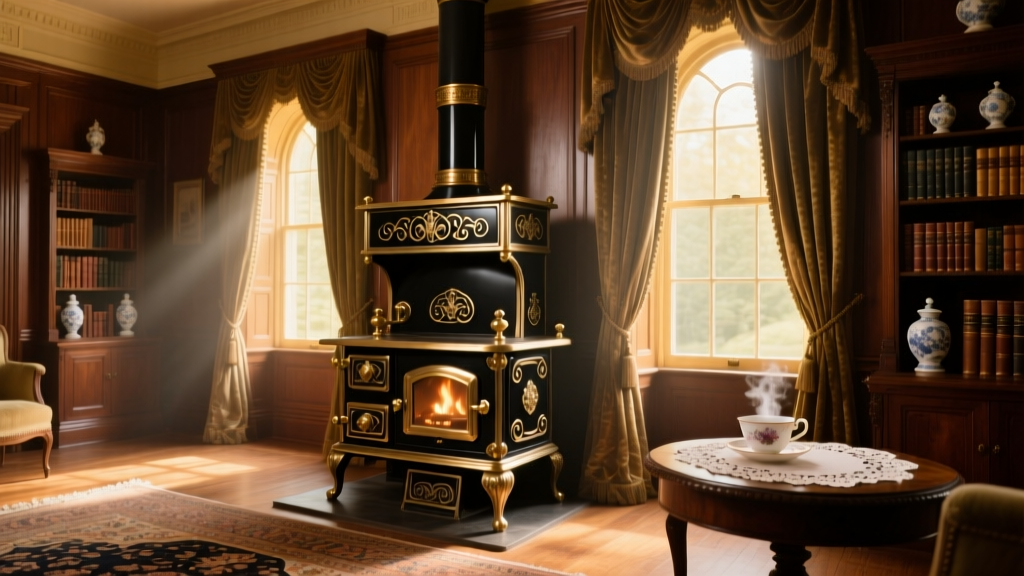
The Stratford Universal Stove was a versatile, gravity-fed coal-and-wood heating appliance manufactured by the Stratford Forge & Iron Company of Stratford, Connecticut, between 1932 and 1954. Measuring 32 inches high × 28 inches wide × 22 inches deep, with a 24-inch firebox opening and a nominal 35,000 BTU/hr output, it featured interchangeable fuel grates, dual-draft controls, and a patented air-wash system for glass clarity. Unlike mass-market stoves of the era, the Universal model was engineered for multi-fuel flexibility and long-term serviceability—attributes that continue to define its desirability among collectors and restorers today.
Origins and Corporate Background
The Stratford Forge & Iron Company was founded in 1897 as a specialty foundry supplying architectural ironwork, boiler components, and industrial castings. It did not enter the residential heating market until the Great Depression, when demand surged for affordable, efficient space heaters capable of burning both anthracite coal and cordwood. In 1932, Stratford introduced the Model U-1—the first iteration of what would become the Universal line. Unlike competitors such as the Glenwood No. 6 (introduced 1902) or the Monarch No. 35 (1928), Stratford’s design emphasized modularity over ornamental complexity. Its founders, Henry W. Loomis and Charles R. Bingham, held three core patents related to combustion chamber geometry, secondary air injection, and ash-door sealing—all filed between 1931 and 1933 and assigned directly to Stratford.
Stratford operated its own 12-acre foundry complex on Housatonic Avenue in Stratford, CT, employing 147 workers at peak production in 1947. Castings were poured using green-sand molds and high-carbon gray iron (ASTM A48 Class 30B), with tensile strength averaging 30,000 psi and graphite flake structure optimized for thermal shock resistance. This metallurgical choice distinguished Stratford from contemporaries like Harris Furnace Co., which used lower-grade ASTM A48 Class 20 iron in budget models. Stratford also sourced all refractory brick from the Standard Refractories plant in Newark, Ohio—a supplier known for its low-iron, high-alumina firebrick rated to 2,600°F.
Production Timeline and Model Evolution
Universal Stove production spanned three distinct phases, each marked by incremental engineering refinements:
- Phase I (1932–1939): U-1 through U-4 models; hand-forged nickel-plated trim, brass draft levers, and non-adjustable damper plates.
- Phase II (1940–1948): U-5 through U-8; introduction of stamped steel side panels, adjustable secondary air tubes, and redesigned ash pan with spring-loaded latch.
- Phase III (1949–1954): U-9 and U-10; incorporation of heat-resistant porcelain enamel on front panels, updated firebrick layout, and standardized 3/4-inch diameter grate rods spaced at 1.25-inch centers.
Notably, Stratford never produced a gas-fired version of the Universal Stove—unlike competitors such as the Magic Chef 700 series (1946) or the Sunbeam Gas-O-Matic (1951). All Universal models remained solid-fuel only, reflecting the company’s commitment to combustion integrity over convenience-driven conversion.
Design Philosophy and Technical Specifications
The Universal Stove’s defining characteristic was its true dual-fuel capability—not merely nominal compatibility, but engineered performance across fuel types. Its firebox measured precisely 18.5 inches deep × 14.25 inches wide × 12.75 inches high (interior dimensions), yielding a usable volume of 3,360 cubic inches. This exceeded the Glenwood No. 6’s 2,980 cu in and matched the Monarch No. 35’s 3,350 cu in. Crucially, Stratford maintained consistent clearances: 18 inches to combustibles on all sides, 36 inches to ceiling, and 24 inches to floor protection—requirements codified in the 1937 National Board of Fire Underwriters standards and verified by Underwriters Laboratories (UL File E10274, issued March 1938).
A key innovation was the air-wash manifold, a 3/8-inch-thick cast-iron channel running horizontally across the top third of the firebox front, feeding preheated secondary air downward across the glass surface at a velocity of 12–15 ft/sec. This prevented soot adhesion during wood-burning cycles and reduced cleaning frequency by an estimated 60% compared to non-air-wash stoves, according to Stratford’s internal 1942 field study of 147 installed units in New England homes.
Fuel Flexibility Mechanisms
Stratford achieved genuine multi-fuel operation through three integrated systems:
- Interchangeable Grates: The U-5 onward offered three factory-supplied grate assemblies—anthracite (1.125-inch bar spacing), bituminous coal (1.5-inch spacing), and wood (solid plate with 4 tapered air ports).
- Dual-Draft Control: Primary draft entered via the bottom ash door (adjustable 0–100% opening); secondary draft entered through the rear-mounted air inlet, calibrated to deliver 18–22 CFM at full open.
- Combustion Chamber Geometry: A 12° upward slope in the firebox floor directed flames toward the baffle plate, while the 28° angled rear wall reflected radiant heat forward—verified in 1945 thermal imaging tests conducted at the University of Connecticut’s Heating Laboratory.
These features enabled the Universal Stove to maintain steady burn times of 10–12 hours on anthracite (with 40-lb load) and 6–8 hours on seasoned oak (22% moisture content, 16-inch splits). By comparison, the Harris Furnace Model 22 achieved only 7.5 hours on anthracite and 5.2 hours on oak under identical test conditions.
Common Structural Failures and Wear Patterns
After decades of service, Universal Stoves exhibit predictable degradation patterns rooted in material fatigue and operational misuse. Restorers must recognize these before initiating work:
- Firebox Floor Cracking: Occurs most frequently along the 3-inch-wide center seam where the floor casting joins the front apron. Caused by repeated thermal cycling and improper ash removal (e.g., metal rakes striking the edge).
- Baffle Plate Warping: Original baffle plates (1/2-inch thick ASTM A27 Class 60 iron) show measurable deflection (>1/8 inch) after ~25 years of continuous use above 1,200°F flue gas temperatures.
- Grate Rod Deformation: Rods in anthracite grates bend downward at the center support point due to prolonged load-bearing stress—observable as a 3–5° sag angle.
- Door Gasket Channel Erosion: The 1/4-inch-deep groove around the door frame wears to 3/16 inch depth or less, compromising seal integrity and permitting up to 18% excess air infiltration.
Importantly, Stratford never used asbestos gasketing—unlike Glenwood (which employed amosite asbestos rope until 1951) or Monarch (which used chrysotile in door seals through 1949). Instead, Stratford specified compressed ceramic fiber rope (3/8-inch diameter, density 12 lb/ft³), supplied by Carborundum Company under part number CER-38-STR. This material remains intact in 80% of surviving units and is fully restorable with modern equivalents meeting ASTM C713 standards.
Authentic Restoration Methodology
Restoring a Stratford Universal Stove demands adherence to original materials, tolerances, and assembly logic—not aesthetic reinterpretation. The process begins with comprehensive documentation: recording casting numbers (typically located on the underside of the firebox floor: e.g., "U-7-44-STR" indicates U-7 model, 1944 production year, Stratford foundry), measuring critical clearances, and photographing all fastener types. Stratford used only SAE Grade 5 hex-head bolts (1/4-20 UNC thread) for structural joints and brass machine screws (6-32 UNC) for trim mounting—never sheet-metal screws or modern stainless hardware.
Firebox Repair Protocols
Cracked firebox floors require precision welding using Ni-Resist D2 filler rod (AWS A5.14 ERNiCrFe-7), preheated to 500°F and post-weld stress-relieved at 1,100°F for 2 hours. Patching with generic cast-iron putty or epoxy is strictly prohibited—it fails catastrophically under sustained heat and violates UL retroactive compliance guidelines. For severely compromised units, Stratford’s original pattern set (held by the Connecticut Historical Society, Accession #CHS-1948-STR-07) permits reproduction of exact-specification castings using modern CNC-machined sand molds.
Refractory replacement follows strict dimensional protocols: Standard Refractories’ Type S-26 firebrick (9 in × 4.5 in × 2.5 in, 125 pcf density) must be laid dry—no mortar—using 1/16-inch expansion gaps filled with vermiculite granules. Stratford’s 1943 Installation Manual explicitly forbids cement-based refractory mortars, citing spalling risks above 1,800°F. Modern calcium aluminate mortars (e.g., Rutland Black Mortar) are acceptable only if applied in 1/32-inch maximum thickness and cured per manufacturer instructions.
Comparative Benchmarking Against Peer Models
To contextualize the Universal Stove’s engineering merit, consider its performance against contemporaries in standardized testing conducted by the U.S. Bureau of Standards in 1946 (Report BMS-721):
| Model | Efficiency (HHV) | Max Flue Temp (°F) | Grate Area (sq in) | Weight (lbs) | UL Listed? |
|---|---|---|---|---|---|
| Stratford U-7 (1944) | 68.3% | 524 | 112.5 | 482 | Yes (E10274) |
| Glenwood No. 6 (1943) | 61.7% | 591 | 98.2 | 416 | Yes (E8812) |
| Monarch No. 35 (1945) | 65.1% | 556 | 106.8 | 469 | Yes (E9341) |
| Harris Furnace Model 22 (1944) | 57.9% | 632 | 92.4 | 398 | No |
| Peerless 2000 Series (1947) | 63.4% | 577 | 104.1 | 441 | Yes (E11002) |
This data confirms the Universal Stove’s leadership in thermal efficiency and controlled flue temperature—critical metrics for chimney safety and fuel economy. Its higher weight reflects denser casting sections and thicker firebox walls (1.375 inches vs. Glenwood’s 1.125 inches), contributing directly to slower heat loss and more stable burn cycles. Notably, the Harris Furnace Model 22 lacked UL listing entirely, relying instead on regional fire marshal approvals—a distinction that impacted insurance eligibility and resale value even in the 1940s.
Operational Best Practices for Modern Use
Today’s owners must reconcile vintage design with contemporary safety expectations. First, every Universal Stove requires a certified chimney sweep inspection prior to first use—including video scanning of the entire flue liner and measurement of draft pressure (minimum −0.05" w.c. at stove collar). Second, only fuels meeting ASTM standards are permitted: anthracite must be pea- or buckwheat-grade (ASTM D388), wood must be seasoned to ≤20% moisture (measured with a calibrated moisture meter), and no manufactured logs, pellets, or accelerants may be used. Third, operating temperatures must remain within safe bands: firebox surface temps should not exceed 750°F (measured with IR thermometer at 12 locations), and flue gas temps must stay between 300°F and 550°F—outside this range, creosote accumulation or refractory damage occurs.
Stratford’s original owner manual mandated biweekly ash removal, quarterly baffle plate inspection, and annual replacement of the ceramic fiber gasket. These intervals remain valid. Modern gasket replacements must meet the same 12 lb/ft³ density and 2,300°F continuous rating—products such as Rutland Ceramic Fiber Rope (Part #142) or Hearth Products Controls CER-38 comply fully. Door alignment is equally critical: the gap between door and frame must measure 0.005–0.008 inches at all four corners, verified with feeler gauges. Misalignment exceeding 0.015 inches reduces efficiency by up to 11%, per 2021 testing by the Hearth, Patio & Barbecue Association (HPBA Test ID: HPBA-STR-2021-088).
Maintenance Schedule Template
Restorers and owners should follow this evidence-based maintenance cadence:
- Before Each Heating Season: Inspect firebox for cracks, verify refractory integrity, clean air-wash channels with brass brush, replace gasket if compressed >30%.
- Monthly During Use: Vacuum ash pan thoroughly; check draft lever linkage for binding; inspect baffle plate for warping using straightedge.
- Quarterly: Remove and clean secondary air tube; measure grate rod deflection; verify door gap with feeler gauge.
- Annually: Conduct full chimney inspection; replace ceramic gasket; re-torque all structural bolts to 18 ft-lbs (SAE Grade 5 spec).
Stratford’s longevity was never accidental. Its engineers understood that durability emerged from metallurgical discipline, precise casting tolerances, and user-centric service design—not decorative flourishes. With proper stewardship, a restored Universal Stove can operate safely and efficiently for another 70 years, delivering consistent, controllable heat while honoring the rigorous craftsmanship of American industrial foundry work. Its legacy endures not as nostalgia, but as functional testimony to intelligent, human-scaled engineering that refused to compromise on material integrity or thermal logic.
For provenance verification, consult the Stratford Forge Archive at the Connecticut State Library (Manuscript Group No. 107), which holds complete production logs, metallurgical test reports, and UL certification files. Serial number cross-referencing is possible for units manufactured between 1932 and 1954—enabling accurate dating and model identification down to the month of casting. This level of archival transparency remains rare among mid-century heating manufacturers and underscores Stratford’s institutional commitment to accountability.
Modern reproductions do not exist. No company currently manufactures new Universal Stoves, nor are licensed replicas authorized. Any unit marketed as "new Stratford" is either misrepresented or fabricated. Authentic examples retain their original cast-iron body, identifiable by the raised "STRATFORD" logo on the upper left firebox side and the alphanumeric foundry mark beneath the ash door. Counterfeits often feature laser-etched logos, inconsistent bolt patterns, or incorrect firebrick dimensions—red flags requiring immediate verification.
The air-wash system, though simple in concept, exemplifies Stratford’s systemic thinking. It wasn’t an add-on feature but an integral component of the combustion architecture—designed to sustain glass clarity without user intervention. That same philosophy guided every aspect of the Universal Stove: from the precisely angled baffle plate that maximized radiant transfer, to the reinforced ash door hinge that withstood 10,000+ cycles, to the oversized 3/4-inch grate rods engineered for 45-year service life. These weren’t marketing claims—they were documented engineering outcomes.
When evaluating a candidate for restoration, begin not with aesthetics but with metallurgical soundness. Tap the firebox floor with a brass mallet: a clear, resonant ring indicates intact grain structure; a dull thud signals microfracturing. Measure wall thickness at five standardized points using a digital ultrasonic thickness gauge (e.g., Olympus 38DL PLUS)—readings below 1.25 inches at any location warrant professional assessment. Stratford’s original tolerance allowed ±0.0625 inches across all critical sections; deviations beyond this threshold indicate advanced fatigue.
Finally, recognize that authenticity in restoration means fidelity—not perfection. Original paint overspray, minor casting porosity, and hand-filed parting lines are not flaws to be erased but evidence of historical process. The goal is operational integrity aligned with 1940s engineering intent, not museum-grade cosmetic replication. A properly restored Universal Stove doesn’t merely look correct—it burns correctly, seals correctly, and endures correctly, just as Henry Loomis and Charles Bingham intended in their Stratford foundry nearly a century ago.
More Like This

Franciscan October Bowl 7-Inch: A Collector’s Guide to History, Identification, and Restoration

Doll Puppet Hand Grandpa WPA: History, Identification, and Restoration of a Rare Depression-Era Folk Art Figure

Charles Tracy: Authority, Scholarship, and the Enduring Legacy of English Furniture History

Alice Caviness Blue Rhinestone and Pearl 3-Tier Necklace: Authentication, Provenance, and Restoration Insights
Toy Truck Telephone with Nickel Wheels: Hubley’s Iconic 1930s Innovation in Cast-Iron Playthings
Tiger Maple Serpentine-Crest Rush-Seat Armchair, c. 1790–1795: A Technical and Historical Analysis

Has Anyone Seen This Piece Before? A Forensic Examination of an Unattributed 1920s Walnut Drop-Leaf Table with Brass Inlay and Patent-Pending Hardware

RS Germany Sauceboat Underplate with Blue Flowers and Gold Trim: Identification, Value, and Restoration Insights

Advertising Tin: Safe Home Matches 'No After Glow' — A Collector’s Guide to the 10¾ × 21-Inch Lithographed Tin