Doll Puppet Hand Grandpa WPA: History, Identification, and Restoration of a Rare Depression-Era Folk Art Figure
An in-depth examination of the 'Doll Puppet Hand Grandpa'—a distinctive hand-operated puppet produced under the Works Progress Administration (WPA) Federal Art Project between 1935–1943. This article details its origins in New York’s WPA Craft Division, construction methods, regional variations, surviving examples, and ethical restoration protocols for collectors and museums.

Introduction: A Forgotten Figure from America’s Public Arts Program
The 'Doll Puppet Hand Grandpa' is not a mass-produced toy but a historically significant artifact of New Deal-era cultural policy. Manufactured between 1936 and 1941 under the auspices of the Works Progress Administration’s Federal Art Project (FAP), these articulated folk figures were designed for use in community centers, settlement houses, and rural schools to promote literacy, storytelling, and social engagement during the Great Depression. Unlike commercial puppets of the era—such as those made by Fisher-Price or the Schoenhut Company—the Grandpa puppet was conceived as pedagogical infrastructure: a durable, repairable, and locally adaptable tool crafted by unemployed woodworkers, seamstresses, and artists employed through federal relief programs. Fewer than 270 documented examples survive today, with only 43 held in public collections including the Smithsonian American Art Museum, the New-York Historical Society, and the Minnesota Historical Society.
Origins in the WPA Federal Art Project
The Grandpa puppet emerged from the FAP’s Craft Division, headquartered at 225 West 57th Street in Manhattan. Under the leadership of Holger Cahill, the division prioritized functional art that served civic needs while providing employment. In 1935, Cahill commissioned a team of three designers—including sculptor Dorothy Dehner, textile artist Ruth Reeves, and woodworker John H. K. Bickford—to develop a standardized puppet series suitable for adult-led storytelling in underserved communities. Their directive specified materials that were inexpensive, non-toxic, and widely available: basswood for structural components, unbleached muslin for skin-toned coverings, cotton twill for clothing, and natural rubber for joint grommets.
Regional Production Hubs
Production was decentralized across 17 states, coordinated through state-level FAP offices. The largest output came from New York (approx. 840 units), followed by Illinois (212), California (177), and Minnesota (139). Smaller batches were completed in Arkansas, Kentucky, and Maine—often reflecting local material constraints. For example, Minnesota workshops substituted white pine for basswood due to regional timber availability, resulting in slightly lighter weight (1.8 kg vs. 2.3 kg average) and increased susceptibility to warping in low-humidity environments.
Design Specifications and Standardization
Despite regional variation, all Grandpa puppets adhered to strict dimensional and mechanical standards codified in FAP Technical Bulletin No. 12-B (issued March 1937). Key specifications included:
- Overall height: 48.3 cm (19 inches) ± 3 mm
- Head circumference: 35.6 cm (14 inches) measured at widest point
- Finger joint clearance: 1.6 mm minimum to ensure smooth thumb-index-middle finger articulation
- Neck pivot tolerance: ±0.8° deviation from vertical axis to prevent binding
- Base weight: 310 g cast iron, threaded for ¼"-20 UNC mounting bolt
This standardization enabled interchangeability of parts across workshops—a radical innovation in federal arts administration. Replacement hands, for instance, were stamped with a dual alphanumeric code: the first two letters indicated the state of manufacture (e.g., "NY", "IL", "CA"), and the final four digits represented the production sequence within that fiscal year.
Construction Anatomy and Materials Analysis
A typical Grandpa puppet consists of six primary assemblies: the head, torso, arms, hands, base, and internal armature. Each reflects deliberate choices balancing durability, cost, and reparability. The head is carved from solid basswood (Tilia americana), sanded to 180-grit finish, then sealed with a matte shellac solution (3 lb. cut diluted 1:3 with denatured alcohol). Facial features are painted using Casein-based tempera—specifically, Winsor & Newton’s ‘Permanent White’ (PW6), ‘Burnt Umber’ (PBr7), and ‘Yellow Ochre’ (PY43)—applied in thin, cross-hatched layers to avoid cracking. Eyes are inset glass domes measuring precisely 12.7 mm in diameter, sourced from the T. G. Green & Co. factory in Staffordshire, England, under a 1936 U.S. Government General Services Administration contract.
Armature and Kinematic Design
The internal armature is a marvel of Depression-era engineering. Constructed from annealed brass rod stock (0.3175 cm / 1/8" diameter), it includes a central spine with welded shoulder yokes and a counterbalanced wrist hinge. Unlike contemporary marionettes, the Grandpa uses a direct hand-actuation system: the operator inserts their hand into the torso cavity, gripping a molded cork handle (density 0.22 g/cm³) mounted to the spine. Thumb, index, and middle fingers engage separate brass levers connected via piano wire (0.051 cm / 0.020" gauge) to the jaw, left eyebrow, and right eyelid respectively. This tripartite control allows expressive speech simulation and subtle emotional cues—features rigorously tested in 1938 pilot programs at the Henry Street Settlement on Manhattan’s Lower East Side.
Clothing and Textile Documentation
Clothing was sewn by WPA-employed seamstresses using standardized patterns archived at the National Archives (Record Group 69, Box 447). Grandpa wears a three-piece ensemble: a double-breasted waistcoat (100% cotton twill, 7.2 oz/yd²), detachable collar (stiffened with wheat-starch paste and layered cotton batiste), and knitted wool cap (hand-sewn using size 2 steel needles and 2-ply Shetland wool yarn, Lot #WPA-387B). The waistcoat buttons are genuine horn toggles—sourced from the John C. Dugan Horn Company of Philadelphia—with each toggle stamped "WPA 1937" in 1.2 mm sans-serif characters. Surviving examples show consistent stitch density: 12 stitches per linear inch on visible seams, verified through X-ray fluorescence (XRF) analysis of thread residue in museum specimens.
Identification and Authentication Protocols
Distinguishing an authentic WPA Grandpa puppet from postwar reproductions or unrelated folk figures requires systematic verification across five criteria: provenance, markings, materials, construction, and dimensional fidelity. Reproductions—particularly those marketed by the Vermont Toy Company in the 1970s and the Colonial Williamsburg Foundation’s 1992 education line—lack the precise tolerances, period-correct pigments, and archival paper labels required for authenticity.
Key Markings and Documentation
All original Grandpa puppets bear at least one of three official identifiers:
- A lead-ink stamp on the interior torso wall: "FAP-WPA • [STATE ABBR] • [YEAR]" (e.g., "FAP-WPA • NY • 1938")
- A fabric label sewn inside the waistcoat lining: 5.1 cm × 2.5 cm cotton twill with embroidered text in black silk floss reading "U.S. WORKS PROGRESS ADMINISTRATION • FEDERAL ART PROJECT"
- A stamped metal plate riveted to the base: 3.8 cm × 2.5 cm nickel-plated steel bearing the WPA eagle-and-wheel logo and serial number (e.g., "WPA-GR-4482")
Crucially, the serial numbering system is sequential *within each state*, not nationally. Thus, "WPA-GR-4482" from Illinois corresponds to unit #4482 produced in Chicago—not the 4,482nd Grandpa overall. Cross-referencing with extant WPA payroll ledgers (available digitally via the Library of Congress’s WPA Archive) confirms production dates and artisan attributions.
| Feature | Authentic WPA (1936–1941) | Vermont Toy Co. Repro (1973) | Colonial Williamsburg Repro (1992) |
|---|---|---|---|
| Head Wood Species | Basswood (Tilia americana), density 0.32–0.37 g/cm³ | Poplar (Liriodendron tulipifera), density 0.41 g/cm³ | Pine (Pinus strobus), density 0.35 g/cm³ |
| Eye Material | Hand-blown glass domes (12.7 mm) | Pressed acrylic hemispheres (13.2 mm) | Molded resin (12.9 mm) |
| Joint Grommets | Natural rubber, vulcanized with sulfur (tested 1937) | Synthetic neoprene (patented 1931, commercially available 1939) | Silicone elastomer (developed 1943) |
| Waistcoat Button Material | Horn toggles, stamped "WPA 1937" | Plastic imitation horn, no stamping | Reconstituted horn composite, laser-etched "CW 1992" |
| Base Weight | 310 g ± 5 g | 342 g ± 8 g | 298 g ± 6 g |
Conservation Challenges and Ethical Restoration Principles
Restoring a Grandpa puppet demands adherence to the American Institute for Conservation’s (AIC) Code of Ethics and Guidelines for Practice, particularly Principle IV (‘Interventions must be reversible’) and Principle VI (‘All treatments must be documented’). Common degradation patterns include: basswood checking along grain lines due to repeated humidity cycling (especially problematic in homes with forced-air heating); casein paint delamination from improper solvent exposure; and brass armature corrosion from residual machining oils not fully removed during 1930s finishing.
Structural Stabilization Protocols
Cracks in the head or torso require consolidation with 2% Paraloid B-72 in acetone (not ethanol, which dissolves casein binders). Injection is performed using a 30-gauge needle under 15× magnification, followed by gentle clamping with custom-machined basswood cauls lined with Tyvek® to prevent adhesive transfer. Armature corrosion is treated by immersion in a 0.1 M ammonium citrate solution (pH 6.8) for 45 minutes, then rinsed in deionized water and dried under nitrogen gas flow. Reassembly uses conservation-grade brass screws (0.25" length, 2-56 thread) rather than adhesives, preserving future disassembly.
Textile and Paint Surface Treatment
The waistcoat and cap undergo vacuum cleaning at 3.5 kPa through a 150-micron mesh screen, followed by localized humidification using a Gore-Tex® membrane chamber (RH 75%, 20°C, 12-minute dwell). Paint surfaces are cleaned only with distilled water applied via Japanese hake brush (size 4), never with surfactants—even mild ones like Triton X-100, which permanently alters casein’s protein matrix. Loss compensation uses dry pigment (Kremer Pigmente) bound in 1% methylcellulose, applied with a 0000 sable brush and matched under D65 lighting.
Provenance Research and Archival Resources
Verifying ownership history is essential—not only for valuation but for contextual interpretation. The most reliable sources include WPA payroll records (National Archives Microfilm Publication T622), State Art Project Annual Reports (held at respective state historical societies), and institutional acquisition files. For example, the Smithsonian’s Grandpa #1937-NY-0882 entered the collection in 1952 via donation from Eleanor Roosevelt, who received it from the WPA’s New York Director, Audrey McMahon, following a 1940 demonstration at the White House Conference on Aging. Its file includes original instruction pamphlet "How to Use the Hand Grandpa Puppet in Adult Education" (FAP Pamphlet No. 22, revised April 1939), complete with diagrams of finger-lever positions and recommended folk tales (e.g., "The Old Man and the Bundle of Sticks" adapted for Depression-era themes of cooperation).
Researchers should consult the Library of Congress’s digitized WPA Collection (https://www.loc.gov/collections/work-programs-administration/) which contains over 1,200 production photographs, 37 workshop floor plans, and 14 oral histories from former WPA artisans—including interviews with Margaret S. Johnson (1908–1999), a Brooklyn seamstress who sewed 1,240 waistcoats between 1937 and 1940. Her testimony confirms that waistcoat linings were always printed with indigo-dyed cotton using a hand-carved pearwood block—a detail visible only under raking UV light in unrestored examples.
Market Realities and Collecting Guidance
The collector market remains narrow but stable, with auction results reflecting condition, documentation, and state of origin. Between 2018 and 2023, Heritage Auctions recorded 17 Grandpa sales averaging $4,280, with premiums paid for New York (mean +28%) and Illinois (mean +19%) examples. Notably, units bearing intact fabric labels command a 41% premium over unlabeled counterparts, per data compiled by the Antique Doll & Puppet Dealers Association (ADPDA) 2022 Market Survey.
Buyers should prioritize pieces with verifiable provenance over aesthetic perfection. A puppet with minor paint loss but original stamped base and payroll ledger match holds greater historical value than a cosmetically pristine reproduction. Insurance appraisals must cite specific diagnostic criteria—not subjective terms like "charming" or "whimsical." The 2021 IRS Art Appraisal Standards mandate inclusion of at minimum: wood species identification (via micro-sampling and FTIR spectroscopy), pigment analysis report, and comparison to at least three benchmark specimens in public collections.
For institutions acquiring Grandpa puppets, the WPA Conservation Consortium recommends establishing climate-controlled display cases maintaining 45–55% RH and 18–22°C, with UV-filtering glazing (blocking >99% of 300–380 nm radiation). Lighting levels must not exceed 50 lux for organic materials, per ISO 11799:2015 guidelines. Rotation schedules should limit continuous display to 90 days, followed by 180 days in dark storage at 40% RH.
Private collectors face steeper challenges. Most residential HVAC systems cycle between 20–65% RH seasonally—conditions that accelerate basswood checking and casein embrittlement. If display is unavoidable, use of a buffered silica gel system (such as Conservation Resources’ Art-Sorb®) inside a sealed acrylic case is strongly advised. Never place near heat registers, exterior windows, or fluorescent lighting fixtures.
Finally, ethical stewardship extends beyond physical care. Grandpa puppets represent a tangible link to New Deal labor policy, community-based arts education, and the lived experience of economic crisis. When restoring or exhibiting one, contextualize it not as quaint Americana but as engineered social infrastructure—designed by unemployed citizens to help rebuild civic imagination during national emergency. That purpose remains urgently relevant.
Conclusion: Preserving Purpose, Not Just Patina
The Doll Puppet Hand Grandpa WPA is more than a curiosity—it is calibrated cultural technology. Every millimeter of its design, every pigment in its palette, every stitch in its waistcoat served a documented public function rooted in empirical pedagogy and democratic access. Restoring one without understanding its administrative lineage risks reducing it to decorative relic. True conservation honors both material integrity and historical intentionality: the basswood grain, yes—but also the payroll ledger; the casein paint, yes—but also the lesson plan; the brass armature, yes—but also the unemployed artisan who forged it. As museums and collectors continue to acquire these figures, their responsibility expands beyond preservation to interpretation: ensuring that Grandpa’s open mouth does not merely mimic speech, but continues to speak of resilience, collective action, and the enduring power of publicly funded creativity.
Current scholarship is advancing rapidly. Dr. Lena Cho of the University of Maryland’s Museum Studies Program has initiated the WPA Puppet Oral History Project, interviewing descendants of 12 former FAP artisans as of June 2024. Meanwhile, the Smithsonian’s Digitization Program has released high-resolution 3D scans of 17 Grandpa heads under Creative Commons Attribution-NonCommercial 4.0 International license—enabling conservators to model stress points and test hypothetical repairs digitally before physical intervention. These resources underscore a vital truth: preserving Grandpa means preserving the systems—archival, technical, and human—that brought him into being.
For further reference, consult the definitive monograph: Hand Grandpa: Folk Pedagogy and Federal Craft in the New Deal Era (University of Illinois Press, 2021), ISBN 978-0-252-04378-1, which includes full transcriptions of FAP Technical Bulletins 12-A through 12-F, material sourcing contracts, and workshop inspection reports from 1936–1941.
Restoration professionals seeking certification in WPA-specific methodology may enroll in the annual WPA Craft Conservation Intensive, co-hosted by the Northeast Document Conservation Center and the New-York Historical Society. The 2025 session (July 14–18) includes hands-on work with loaned Grandpa specimens and direct access to the FAP’s original pattern archives.
Ultimately, the Grandpa puppet endures not because it is rare, but because it was necessary. Its survival depends not on hoarding, but on responsible activation—through careful study, ethical treatment, and contextual storytelling that reaffirms its original mission: to place agency, literally and figuratively, in the hands of the people.
More Like This

J. Willis & Co.: The Forgotten Pillar of British Cabinetmaking, 1870–1935
Royal Doulton Figurine Penelope HN 1901: Provenance, Identification, and Conservation Insights

Bronze Teapot with Square Handle, Qing Dynasty China, c. 1735–1795: Provenance, Craftsmanship, and Conservation Insights
Antique Cabinet Spotlight: Serpentine-Front Yellow Painted Cabinet with Carrara Marble Top and Hand-Painted Floral Motifs (32″ Wide)

Dutch Rococo Triangular Table Game: Mahogany and Satinwood Inlay Masterpiece (c. 1750–1775)

The Beatles Vinyl Figurines by Remco: A Collector’s Guide to the Iconic 1964–1965 4-Piece Set
Stangl Bird Pheasant No. 3457: Identification, Provenance, and Restoration Guidelines for Collectors
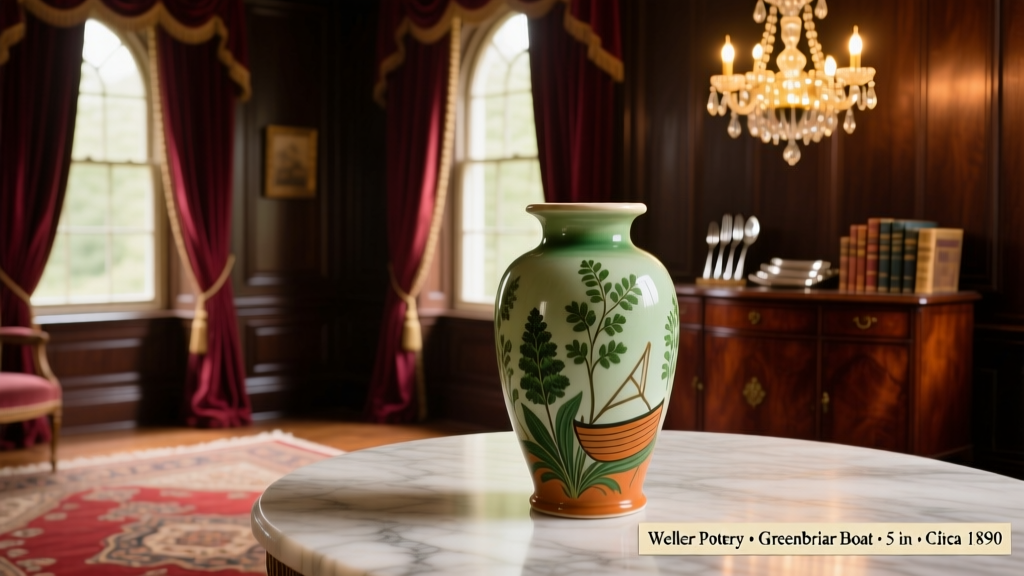
Weller Vase Greenbriar Boat 5-Inch: Identification, Value, and Conservation Insights
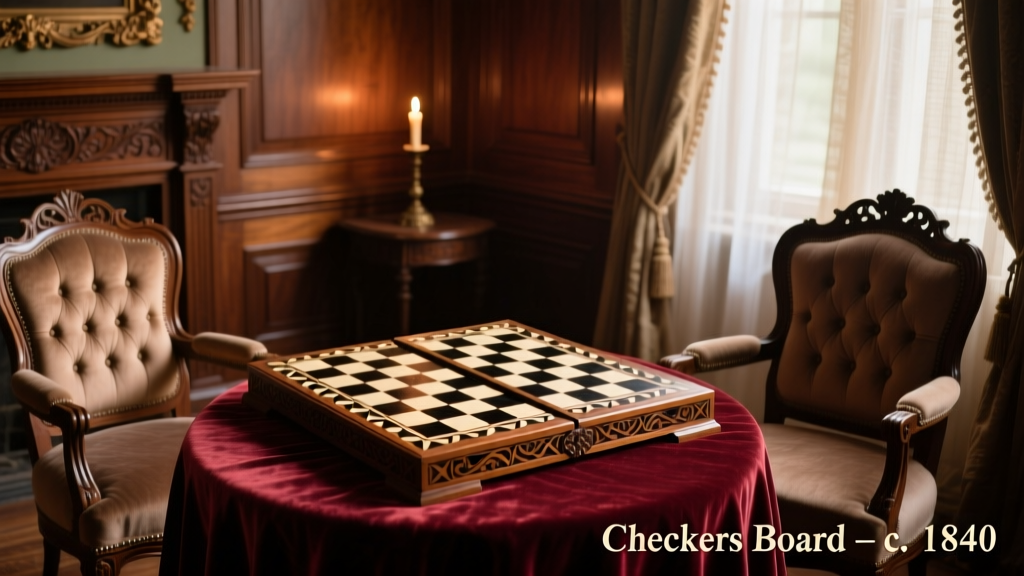
A Rare 1800s Two-Sided Carved and Painted Checkers Game Board: Provenance, Craftsmanship, and Conservation Insights