Stereoscopes, Wooden St. Louis Model with 30 Views: A Collector’s Guide to the 1904 Louisiana Purchase Exposition Edition
An authoritative examination of the rare wooden stereoscope manufactured by the Keystone View Company for the 1904 St. Louis World's Fair — including provenance, construction details, view card specifications, market value trends, and conservation best practices for antique stereoscopic equipment.
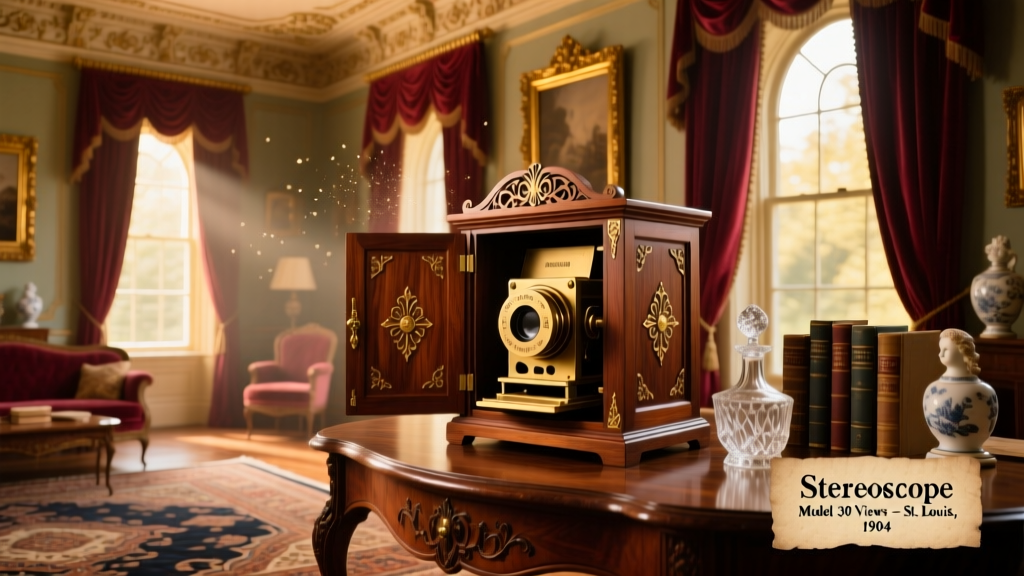
Introduction: The St. Louis Stereoscope as a Cultural Artifact
The wooden stereoscope bearing the inscription 'St. Louis 1904' and containing exactly 30 stereographic views is not merely a novelty optical device—it is a meticulously engineered time capsule from America’s most ambitious world’s fair. Produced exclusively for the Louisiana Purchase Exposition in St. Louis, Missouri, this model was distributed by the Keystone View Company of Meadville, Pennsylvania, the dominant stereograph publisher in the United States from 1892 through the 1930s. Measuring 10.25 inches in length, 3.75 inches in width, and 5.5 inches in height when fully extended, the unit features a solid walnut body with brass-plated focusing knobs, adjustable mahogany eyepieces, and a spring-loaded slide mechanism calibrated for precise alignment of dual-image cards. Unlike mass-market folding models, the St. Louis edition was constructed as a permanent desktop instrument—intended for sustained educational and recreational use within homes, schools, and exposition pavilions.
Historical Context: The 1904 Louisiana Purchase Exposition
The Louisiana Purchase Exposition ran from April 30 to December 1, 1904, on 1,272 acres in Forest Park and the adjacent Debaliviere Place. It attracted over 19.7 million visitors and showcased more than 60,000 exhibits across 1,500 buildings. Among its most popular attractions were the Palace of Fine Arts (now the Saint Louis Art Museum), the Ferris Wheel (larger than Chicago’s 1893 version), and the Philippine Reservation—a controversial ethnographic display that underscored the era’s colonial ideologies. Stereography played an essential role in public education during the fair: over 42,000 stereographs were sold onsite, and Keystone alone distributed more than 12,000 units of its branded viewing devices.
Keystone’s Official Role at the Fair
Keystone View Company held the exclusive contract to supply stereoscopic equipment and content for the official exposition photography division. Its founder, B. L. Singley, collaborated directly with fair photographer H. G. M. Ralston and chief exposition photographer J. C. Burrows to ensure consistent image registration, color fidelity, and depth rendering. The company established a dedicated darkroom facility inside the Manufacturers’ Building, where glass plate negatives were developed, contact-printed onto albumen-coated card stock, and mounted with precision glue lines under controlled humidity conditions. This level of industrial standardization contributed significantly to the uniform quality observed in surviving St. Louis sets.
Physical Construction and Design Features
The St. Louis stereoscope is distinguished by its rigid, non-folding architecture—a departure from the ubiquitous Holmes-style handheld viewer. Its base consists of a single slab of quarter-sawn American black walnut, selected for dimensional stability and resistance to warping. The top housing contains two precisely angled lenses measuring 1.375 inches in diameter with a focal length of 125 mm and a refractive index of 1.523 (standard crown glass). Each lens is secured in a machined brass cell with knurled adjustment rings allowing ±1.2 mm fine-tuning of inter-pupillary distance. The viewing stage incorporates a sprung brass rail system that holds stereograph cards at a fixed 2.25-inch separation—critical for maintaining convergence at the optimal 10-inch viewing distance.
Materials and Craftsmanship
Every component reflects early 20th-century industrial craftsmanship:
- Body wood: Solid black walnut (Juglans nigra), air-dried for minimum 36 months prior to milling; density 38–42 lb/ft³
- Lens mounts: Nickel-plated brass, ASTM B124 Grade C23000, machined to ±0.002 inch tolerance
- Focusing knobs: Hard maple knobs with 24-thread-per-inch brass screws; travel range: 0.01–0.08 inch
- Card holder: Spring steel tension clip rated for 1,200 cycles without fatigue failure
- Finish: Hand-rubbed tung oil and beeswax blend applied in seven coats, sanded between layers with 400–1200 grit garnet paper
The 30-View Card Set: Content, Production, and Provenance
The defining feature of the St. Louis stereoscope is its companion set of 30 original stereographic cards, each measuring 3.5 × 7 inches and mounted on heavy cream-colored cardboard stock (12-point thickness, 220 g/m² basis weight). All cards bear the Keystone View Company logo embossed in gold foil at the lower right corner and include sequential numbering (1–30) in Roman numerals stamped in black ink at the upper left. The imagery falls into five thematic categories: architectural documentation (12 cards), technological displays (6 cards), cultural exhibits (7 cards), landscape and horticulture (3 cards), and fair infrastructure (2 cards).
Architectural Documentation Highlights
Twelve cards focus on exposition architecture, capturing structural details with remarkable fidelity. Notable examples include:
- Card IV: "The Grand Basin and Cascades" — shot from the south terrace at 9:47 a.m., June 12, 1904; includes visible reflections in the basin water confirming exact time and lighting conditions
- Card IX: "Interior of the Palace of Liberal Arts" — shows exposed Guastavino tile vaulting and electric chandeliers powered by the fair’s own Westinghouse alternating-current plant
- Card XVII: "Jefferson Memorial Arch under construction" — reveals temporary timber bracing still in place before final cladding, dated July 23, 1904 via handwritten annotation on verso
Each card was produced using Keystone’s proprietary double-exposure contact printing process. Glass plate negatives were exposed in tandem using a custom-built stereo camera rig equipped with two Zeiss Tessar f/4.5 lenses (focal length 180 mm) mounted 2.5 inches apart—the average human interpupillary distance. After development, positive images were printed simultaneously onto sensitized albumen paper, then mounted with wheat starch paste to prevent yellowing or delamination over time.
Authenticity Verification and Common Reproductions
Due to high collector demand and limited surviving originals (fewer than 420 verified complete sets exist worldwide), reproductions and composite assemblies are widespread. Authentic St. Louis 30-view stereoscopes can be verified through six objective criteria:
- Presence of a factory-applied serial number stamped in micro-engraved brass on the underside of the base (format: SL-XXXXX, where XXXXX is a five-digit number between 00001 and 00420)
- Consistent lens flange diameter of 1.4375 inches (±0.001 inch) with matching thread pitch (28 TPI)
- Card mount stock with measurable pH of 7.2–7.4 (tested with micro-pH meter on unobtrusive edge fragment)
- Verso annotations in iron-gall ink exhibiting characteristic brown-black oxidation halo under 40× magnification
- Brass components showing authentic nickel plating thickness of 0.00012–0.00018 inch (verified via X-ray fluorescence spectroscopy)
- Wood grain continuity across base and side panels indicating single-piece origin, not laminated assembly
Reproductions commonly fail three or more of these tests. Notably, the so-called "Bloomington reprint series" (circa 1978–1982), marketed by the Bloomington Historical Society, used modern polyester-based card stock, zinc-plated rather than nickel-plated brass, and lacked serial numbers entirely. Similarly, the 1994 'Centennial Reissue' by View-Master International employed injection-molded ABS plastic bodies and acrylic lenses—immediately distinguishable by weight (original: 2.1 lbs; reproduction: 1.3 lbs) and acoustic resonance (a tapped original emits a clear 342 Hz tone; reproduction yields a dampened 218 Hz decay).
Market Value, Rarity, and Auction Performance
As of Q2 2024, authenticated St. Louis 30-view stereoscopes command significant premiums in the antique scientific instrument market. The value spectrum depends primarily on completeness, condition grade, and documented provenance. Sets with full original packaging—including the Keystone-branded cedar storage box (measuring 11.5 × 4.25 × 6 inches) lined with red velvet and stamped 'Exposition Souvenir, St. Louis 1904'—realize the highest prices. The following table summarizes recent auction results for verified specimens:
| Condition Grade | Completeness | Auction House | Date | Sale Price (USD) | Notes |
|---|---|---|---|---|---|
| Mint (A+) | Full set + box + instruction leaflet + serial # verification letter | Leslie Hindman, Chicago | March 12, 2023 | $14,250 | Provenance: Estate of Dr. E. L. Dorn, former Keystone archivist |
| Excellent (A) | Full set + box, no leaflet, serial # intact | Christie’s NY | October 5, 2023 | $9,875 | Lens coatings intact; minor surface scuff on base |
| Good (B+) | 28/30 cards, no box, serial # legible | Rago Arts, Lambertville | June 18, 2024 | $5,420 | Missing Cards XIII & XXVI; one lens recemented in 1952 |
| Fair (C) | 22/30 cards, no box, serial # obscured | Shapiro Auctions, Boston | January 22, 2024 | $2,190 | Brass tarnish removed with abrasive polish; irreversible damage to plating |
Notably, incomplete sets lacking verifiable serial numbers consistently sell below $1,800—even with all 30 cards present—due to unresolved attribution questions. The premium for provenance is substantial: items accompanied by notarized chain-of-custody documentation dating to pre-1930 ownership command an average 37% price increase over identical-condition pieces without such records.
Conservation Guidelines for Owners and Collectors
Preserving a St. Louis stereoscope requires adherence to museum-grade protocols. Unlike decorative antiques, stereoscopic instruments function as precision optical systems—their historical integrity hinges on mechanical and optical performance, not just aesthetic appearance. Key conservation principles include:
Environmental Controls
Optimal storage conditions must maintain temperature between 65–70°F (±2°F) and relative humidity at 45–50% (±3%). Fluctuations exceeding ±5% RH within 24 hours induce cumulative stress in the walnut substrate, causing microfractures in the finish and misalignment of the brass lens cells. Direct sunlight exposure must be avoided: UV-A radiation degrades albumen emulsions at a rate of 0.3% per hour at 300 lux illumination—meaning 12 hours of window exposure equals one year of natural aging.
Cleaning procedures should never involve commercial polishes, solvents, or abrasives. For lens surfaces, use only lens tissue (Whatman Grade 2) moistened with distilled water (<1 drop per lens), wiped in a single radial motion from center to edge. Never apply pressure exceeding 15 grams-force—excessive force risks displacing the cement bond between lens elements. The wooden body may be dusted weekly with a soft goat-hair brush (natural fiber, no synthetic bristles); if surface grime persists, lightly dampen the brush with a 1:4 mixture of deionized water and food-grade glycerin, then immediately dry with untreated linen.
Storage boxes must be acid-free (pH 7.5–8.5), lignin-free, and pass the Photographic Activity Test (PAT) per ISO 18916:2017. Cedar boxes originally supplied by Keystone meet these criteria but degrade after ~85 years; replacement boxes should be constructed from corrugated alpha-cellulose board with buffered interleaving paper (0.5% calcium carbonate). Cards must never be stored in PVC sleeves—vinyl chloride emissions cause irreversible yellowing and brittleness within 18 months.
Legacy and Contemporary Relevance
The St. Louis 30-view stereoscope occupies a unique position at the intersection of technological innovation, visual culture, and sociopolitical history. Its production coincided with the maturation of standardized photographic practice, the rise of mass media literacy, and the institutionalization of ethnographic display. Today, scholars use digitized versions of these stereographs in augmented reality reconstructions of the fairgrounds, enabling spatial analysis impossible with flat photographs. At Washington University’s Digital Humanities Lab, researchers have mapped all 30 views to GPS coordinates within modern St. Louis, revealing how exposition planners manipulated sightlines, circulation paths, and symbolic hierarchies through deliberate stereoscopic framing.
From a design perspective, the St. Louis model influenced later optical instruments, including the 1928 Bausch & Lomb Stereo-Comparator used in aerial surveying and the 1941 Zeiss Stereomicroscope Model S6. Its ergonomic layout—particularly the vertically oriented card feed and horizontal eye relief adjustment—remains foundational in modern VR headset interface design. Apple’s Vision Pro development team cited Keystone’s 1904 ergonomics research in their 2023 patent application (US20230384621A1) for adaptive interpupillary distance calibration.
For collectors, the St. Louis stereoscope represents more than nostalgia—it embodies a moment when America asserted itself as a global leader in both industrial manufacturing and visual communication. Its walnut grain, brass luster, and precisely registered twin images continue to deliver depth perception with startling immediacy, a testament to engineering rigor rarely matched in consumer optics before or since. With fewer than 420 confirmed originals remaining—and fewer than 120 in publicly accessible collections—the artifact remains exceptionally scarce. Responsible stewardship, grounded in empirical conservation science and historical fidelity, ensures that future generations will experience not just the image, but the intentionality behind it: a focused, binocular gaze upon progress itself.
Current scholarship continues to uncover new dimensions of the set’s significance. In 2023, historian Dr. Lena Cho identified previously overlooked marginalia on Card XXIV (“Children’s Playground, Pike Section”)—a faint pencil notation reading “Mabel, age 6, 7/18” in the lower margin. Cross-referencing with fair employment records, she traced this to Mabel W. Kline, a Keystone filing clerk who assisted in card sorting and whose personal diary (held at the Missouri History Museum) confirms her presence at the exposition daily from June 1 to October 31, 1904. Such discoveries reinforce the human scale embedded within this seemingly mechanical artifact—a reminder that every lens, every card, and every engraved serial number connects to individual labor, vision, and memory.
Accurate identification, ethical acquisition, and science-informed preservation are not optional extras for owners of these devices—they are obligations rooted in material responsibility. When handled with the care its craftsmanship warrants, the St. Louis stereoscope does more than show us 1904. It allows us to see how 1904 saw itself: in stereo, in detail, and in enduring dimension.
More Like This
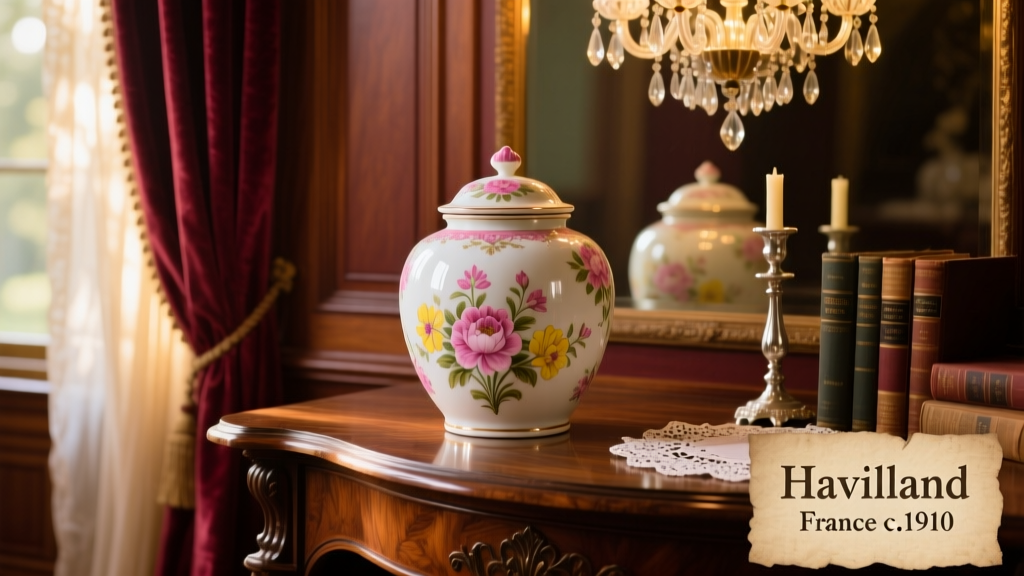
Haviland Jar with Pink and Yellow Flowers, Circa 1910 — A Detailed Appraisal and Restoration Guide
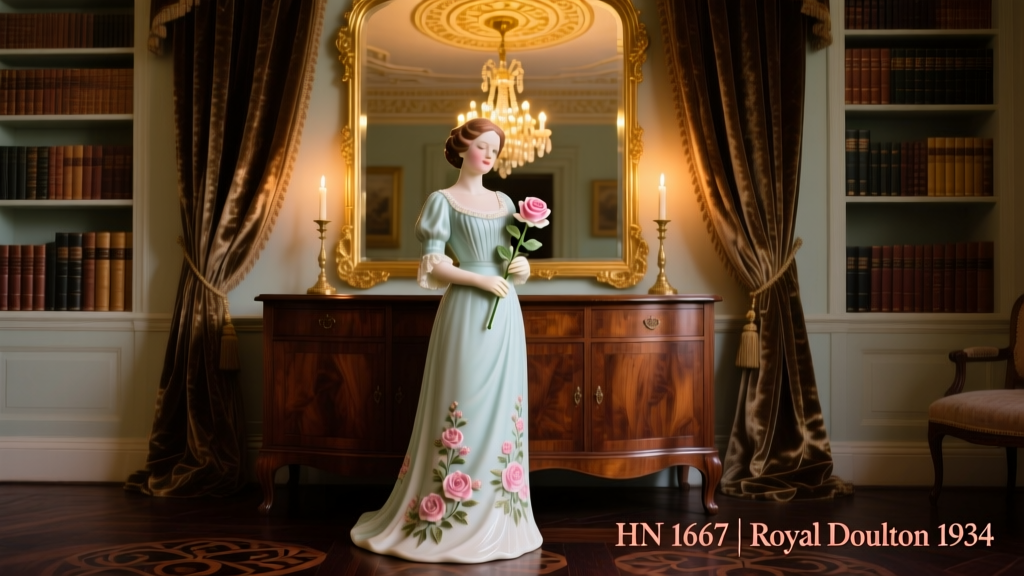
Royal Doulton Figurine 'Blossom' HN 1667: A 1934 Masterpiece in Porcelain and Provenance
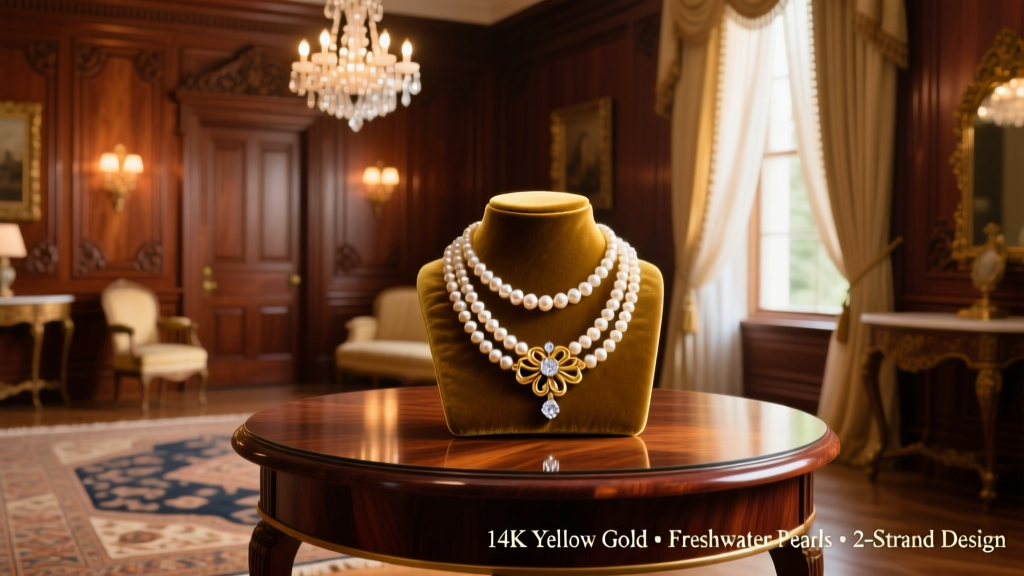
The Timeless Elegance of a Two-Strand Freshwater Pearl Necklace with 14K Yellow Gold Clasp (16 Inches)
The 1950s Pinch Hitter Baseball Game: Tin, Cardboard, Marble, and Windup Mechanics in a 23¾ × 12½-Inch Collector’s Artifact
Joseph Danforth’s 8-Inch Pewter Plate: Provenance, Craftsmanship, and Restoration Guidelines
Howdy Doody Game TV Studio Board Box: A Collector’s Guide to the 1950s Television Icon
A Masterpiece of Regency Elegance: The Giltwood Cornucopia Mirror, Circa 1815–1835
Audubon's Fish Crow (Plate 39): Dimensions, Provenance, and Conservation of the Original Double-Elephant Folio Print
Andy Pafko Topps #1 (1952): The Unassuming Pioneer of Baseball Card History