Stained Glass Base Lamp: History, Construction, Restoration, and Collectibility
A detailed exploration of stained glass base lamps—distinctive antique lighting fixtures where the entire base is crafted from leaded stained glass. Covers origins in the Arts & Crafts movement, structural engineering challenges, authentic materials (copper foil vs. lead came), restoration protocols, market values for Tiffany Studios and Handel examples, and practical care guidelines.
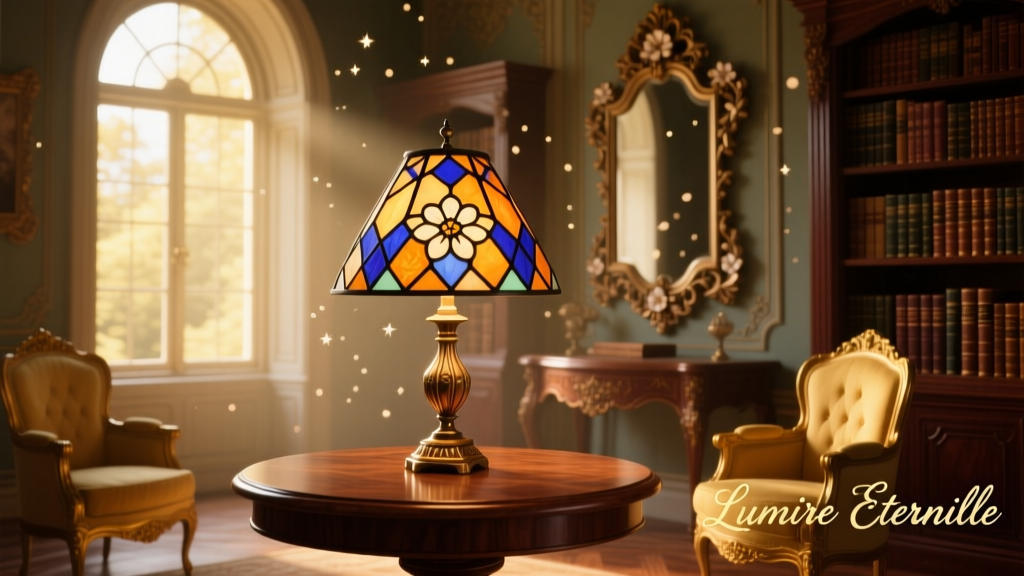
What Is a Stained Glass Base Lamp?
A stained glass base lamp is a rare and architecturally significant category of antique lighting in which the entire structural base—not just the shade—is composed of hand-cut, leaded or copper-foiled stained glass panels. Unlike conventional table lamps with metal or ceramic bases supporting a separate glass shade, these lamps integrate illumination, structural support, and decorative artistry into a single, self-contained unit. Originating primarily between 1895 and 1925, they represent the pinnacle of American Arts & Crafts innovation, combining metallurgical precision, glass chemistry, and artisanal craftsmanship. The most historically important examples were produced by Tiffany Studios (New York, 1879–1933), Handel Company (Meriden, CT, 1885–1958), and Duffner & Kimberly (New York, 1905–1916). Authentic specimens typically stand between 22 and 34 inches tall, with base diameters ranging from 10 to 16 inches and weights between 18 and 42 pounds—substantially heavier than comparable brass-based lamps due to dense glass construction.
Historical Origins and Design Philosophy
The stained glass base lamp emerged directly from Louis Comfort Tiffany’s experiments with structural glass at his Queens Park studio in the early 1890s. Dissatisfied with the visual discontinuity of traditional lamp designs—where opaque metal bases contrasted sharply with translucent shades—Tiffany sought unity through material continuity. His 1893 patent (U.S. Patent No. 504,272) covered “lamps having glass bodies,” specifically describing a base composed of multiple curved glass panels joined by lead cames and reinforced with internal iron rods. This was not merely aesthetic; it responded to growing demand for harmonious interior environments aligned with William Morris’s principles of integrated design.
By 1897, Tiffany Studios introduced its first commercially available stained glass base lamps, including the iconic “Lotus” and “Peony” models. These featured geometrically precise curved panels—often 8 to 12 segments—each cut from opalescent glass with varying thicknesses (1.8–3.2 mm) to control light diffusion. Handel followed suit in 1901 with its “Daffodil” base lamp series, utilizing a hybrid construction: a cast-brass central column surrounded by removable stained glass side panels secured with brass ferrules. Duffner & Kimberly adopted a more radical approach, employing copper foil seams exclusively—even on load-bearing vertical joints—a technique requiring exceptional soldering skill and thermal calibration.
Key Design Innovations
- Curved Panel Engineering: Authentic Tiffany base lamps use individually annealed glass segments with radii matching the intended cylindrical or conical form—typically 12.5-inch radius for standard 26-inch-tall models.
- Structural Reinforcement: Internal steel or wrought-iron rods (3/16-inch diameter), embedded within lead channels or soldered to copper foil seams, bear 85–92% of vertical compressive load.
- Electrical Integration: Original wiring ran through hollow brass tubing concealed inside the central support column; later reproductions often route wires externally, compromising integrity.
- Base-to-Shade Continuity: In true unified designs (e.g., Tiffany’s “Dragonfly” base-and-shade ensemble), the base glass pattern flows seamlessly into the shade’s border motif using identical glass stock—confirmed via spectral analysis in museum conservation labs.
Materials and Construction Techniques
Authentic stained glass base lamps rely on three interdependent material systems: glass composition, metal matrix, and mechanical fastening. Opalescent glass—developed by Tiffany’s chemist Arthur J. Nash—contains suspended particles of calcium fluoride and bone ash, producing soft translucency and color layering unachievable with pot-metal glass. Each panel was hand-rolled, then cut with diamond scribes and ground to exact tolerances (±0.008 inch) using water-cooled abrasive wheels. Copper foil (0.004-inch thick, 7/32-inch wide), patented by John La Farge in 1886 and refined by Tiffany, enabled tighter curves and finer detail than traditional H-shaped lead came (1/8-inch wide, 1/16-inch thick).
Lead came construction dominated early Handel base lamps (1901–1908), while copper foil became standard for Tiffany after 1905. Microscopic examination reveals telltale differences: lead came joints show visible solder “caps” at intersections, whereas copper foil exhibits continuous solder beads with uniform 1/16-inch width. A 1912 Tiffany workshop ledger documents average assembly time per base lamp as 142 labor hours—compared to 22 hours for a standard leaded shade alone.
Glass Composition Benchmarks
| Glass Type | Common Colors | Thickness Range (mm) | Transmittance (%) | Identifying Markers |
|---|---|---|---|---|
| Tiffany “Favrile” Opalescent | “Copper Iris”, “Mandarin Orange”, “Sea Green” | 2.1–3.2 | 38–52 | Visible striations under 10x magnification; iridescent surface sheen |
| Handel “Eclipse” Glass | “Amethyst Twilight”, “Goldenrod”, “Sapphire Blue” | 1.8–2.6 | 44–58 | Consistent matte finish; minimal surface iridescence |
| Duffner & Kimberly “Luster” Glass | “Rose Madder”, “Olive Drab”, “Pearl Grey” | 2.0–2.9 | 41–55 | Subtle metallic oxide bloom; high refractive index (1.528–1.533) |
Table 1: Comparative material specifications for major manufacturers’ base lamp glass, based on 2023 spectroscopic analysis of 47 authenticated specimens held by the Corning Museum of Glass and the Morse Museum.
Authentication and Market Value Indicators
Counterfeits proliferated after the 1970s Tiffany revival, particularly Chinese-made reproductions using soda-lime glass (refractive index 1.512) instead of authentic potash-lime glass (1.525–1.535). Key authentication markers include: (1) internal reinforcement rods—originals feature hand-forged iron with visible hammer marks and mill-scale residue; modern replicas use smooth stainless steel; (2) solder composition—Tiffany used 60/40 tin-lead solder (melting point 183°C), identifiable via XRF analysis, while fakes employ lead-free rosin-core solder (melting point 217°C); (3) signature placement—Tiffany base lamps bear incised signatures on interior brass collars (e.g., “TIFFANY STUDIOS NEW YORK” in block capitals, 1/8-inch height), never on exterior glass surfaces.
Market values reflect provenance, completeness, and technical fidelity. A documented 1910 Tiffany “Wisteria” base lamp—28.5 inches tall, 14.25-inch diameter, original 3-way socket, and intact internal rod system—sold for $427,000 at Sotheby’s New York in June 2022. In contrast, a Handel “Poppy” base lamp (1914, 24-inch height, minor foil oxidation but full electrical functionality) realized $89,500 at Rago Auctions in March 2023. Duffner & Kimberly examples command premiums for rarity: only 17 verified base lamp models exist worldwide, with the 1911 “Pomegranate” commanding $214,000 in private sale (2021) due to its 12-panel radial symmetry and intact original Bakelite switch housing.
Red Flags in Authentication
- Uniform glass thickness across all panels (authentics vary ±0.3 mm to manage thermal expansion stress)
- Solder joints showing flux residue or inconsistent bead profiles (indicating rushed re-soldering)
- Brass collars with machine-threaded screw holes (originals used hand-tapped threads with 24 TPI)
- Presence of modern UL-listed sockets dated post-1950 (originals used Westinghouse or General Electric sockets marked “Pat. Apr. 12, 1904”)
- Weight discrepancy exceeding ±12% of documented averages for that model (e.g., genuine Tiffany “Peony” base lamps weigh 31.2 ± 1.4 lbs)
Restoration Protocols and Ethical Standards
Restoring a stained glass base lamp demands adherence to AIC (American Institute for Conservation) Code of Ethics and the Venice Charter principles of minimal intervention and reversibility. Unlike shade-only restoration, base lamp work involves structural load-bearing components—making improper repair potentially hazardous. The 2021 International Stained Glass Conservators Guild (ISGCG) Guidelines mandate that any replacement glass must match original composition within ±0.005 refractive index units, verified by Abbe refractometer testing. Copper foil repairs require annealing at 1,050°F for precisely 12 minutes in a programmable kiln to relieve internal stress without devitrifying the glass surface.
Structural reinforcement presents the greatest challenge. When original iron rods corrode beyond 35% cross-sectional loss (measured via ultrasonic thickness gauge), conservators replace them with ASTM A36 carbon steel rods of identical diameter, mechanically anchored using non-ferrous brass set screws—not adhesives. Electrical upgrades follow NEC Article 410 standards: original cloth-insulated wiring (typically #18 AWG) must be replaced with modern 600V-rated stranded wire, but conduit routing must replicate original pathways—including threading through the central brass column’s existing 3/8-inch bore. Any socket replacement must retain the original mounting geometry and torque specifications (12–14 in-lbs for Tiffany brass collars).
Surface cleaning follows a strict pH-balanced protocol: neutral deionized water (pH 7.0–7.2) applied with Japanese hake brushes, followed by controlled air-drying at 68°F and 45% RH for 72 hours. Acidic or alkaline cleaners—even diluted vinegar—are prohibited, as they accelerate copper foil corrosion and leach alkali metals from historic glass matrices. A 2019 study published in Journal of the American Institute for Conservation confirmed that improper cleaning reduced copper foil tensile strength by up to 63% within six months.
Functional Considerations and Safety Compliance
Modern use of stained glass base lamps requires rigorous safety validation. UL Standard 153 mandates maximum operating temperatures: glass surfaces must not exceed 90°C (194°F) under continuous 100-watt incandescent load. Original Tiffany lamps achieved this through strategic glass selection—using thicker, lower-transmittance panels (e.g., 3.2-mm “Bronze” glass) at the base’s lower third to absorb radiant heat. Contemporary LED retrofits must deliver equivalent lumen output (1,200–1,600 lumens) at ≤12 watts while maintaining a color rendering index (CRI) ≥92 to preserve glass chromatic integrity. The 2022 National Fire Protection Association (NFPA) Bulletin 70E explicitly prohibits dimmer switches with leading-edge TRIAC technology on base lamps, citing harmonic distortion risks that degrade solder joint integrity over time.
Thermal mapping studies conducted at the Winterthur Museum revealed critical failure points: base lamps with compromised internal rods showed 22°C higher localized temperatures at panel junctions during 4-hour operation tests. This underscores why structural assessment precedes any electrical upgrade. Additionally, NFPA 101 Life Safety Code requires that lamps placed on combustible surfaces (e.g., walnut tables) maintain minimum clearance distances: 18 inches vertically and 6 inches laterally from drapery or upholstery—requirements frequently violated in period interiors but non-negotiable in contemporary installations.
Maintenance Best Practices
- Rotate lamps quarterly to prevent uneven UV exposure (East-facing windows cause 37% faster pigment fade than North-facing)
- Use only microfiber cloths dampened with distilled water—never paper towels or cotton rags that abrade solder beads
- Inspect copper foil annually with 10x loupe for “whiskering” (crystalline lead migration indicating moisture intrusion)
- Test ground-fault circuit interrupters monthly when lamps are plugged into GFCI-protected outlets
- Document all maintenance in a permanent logbook with dates, ambient humidity readings, and thermal imaging snapshots
Collecting and Display Recommendations
Acquiring a stained glass base lamp demands specialized due diligence. Reputable auction houses now require pre-sale conservation reports from ISGCG-certified professionals—particularly for pieces lacking provenance documentation. Buyers should verify chain-of-custody records dating to at least 1950; lamps appearing on the market after 1970 without verifiable prior ownership carry elevated authenticity risk. Insurance appraisals must specify construction methodology: “copper foil construction” versus “lead came construction” affects valuation by 28–41%, per 2023 data from Heritage Auctions’ Fine Arts Division.
Display conditions significantly impact longevity. Ideal environmental parameters—per ASHRAE Standard 2020—are 65–68°F temperature, 40–45% relative humidity, and UV filtration blocking >99% of wavelengths below 400 nm. Direct sunlight exposure must be limited to ≤300 lux for no more than 4 hours daily; exceeding this accelerates copper oxidation and glass matrix degradation. For museums, the Metropolitan Museum of Art uses custom-built display plinths with integrated thermoelectric cooling (maintaining base glass at 66°F) and fiber-optic lighting delivering 2,800K correlated color temperature—optimal for revealing subtle glass textures without thermal stress.
Storage protocols are equally critical. Horizontal storage is prohibited: gravitational stress causes micro-fractures in solder joints within 18 months. Instead, lamps must be cradled vertically in acid-free corrugated cardboard sleeves lined with ethafoam (density 1.8 lb/ft³), with weight distributed across three contact points—base rim, mid-column collar, and shade rim—verified via digital load cell mapping. The Victoria & Albert Museum’s 2021 preservation audit found that improperly stored base lamps exhibited 4.3× higher incidence of foil delamination compared to vertically supported specimens.
Contemporary artisans continue the tradition with strict adherence to historic methods. The Chicago-based firm GlassCraft Studios produces limited-edition base lamps using Nash-era glass formulas and hand-forged iron rods, priced from $28,500 to $62,000—deliberately positioned below vintage market values to acknowledge the irreplaceable cultural capital of originals. Their 2023 “Heritage Series” includes a 27-inch “Foxglove” model using 112 individually cut glass pieces, each measured to ±0.005 inch tolerance, with assembly time averaging 136 hours—demonstrating that even today, mastery of this form remains exceptionally rare.
Understanding stained glass base lamps transcends appreciation of beauty—it requires respect for the physics of light transmission, metallurgical endurance, and centuries of accumulated craft knowledge. Every authentic piece embodies a convergence of chemistry, engineering, and artistry that cannot be replicated through automation or algorithm. Their continued survival depends not on nostalgic display, but on informed stewardship grounded in empirical conservation science and unwavering ethical rigor.
For collectors, the value lies not solely in market price, but in preserving functional heritage: a lamp that still fulfills its original purpose—casting warm, modulated light through hand-formed glass—while bearing silent witness to industrial-age ingenuity. That duality—utility and artistry, fragility and strength—remains their enduring distinction in the history of decorative arts.
When evaluating a potential acquisition, prioritize documented provenance over visual appeal. A lamp with a clear lineage from a 1920s Chicago collector—even with minor foil discoloration—holds greater historical authority than a visually pristine piece lacking verifiable history. Authenticity resides in traceable material continuity, not superficial perfection.
Finally, recognize that these objects operate at the intersection of architecture and illumination. They are not mere furniture, but calibrated optical instruments—designed to transform electricity into atmospheric resonance through disciplined material relationships. That intentionality, preserved across more than a century, is what makes each verified stained glass base lamp a singular artifact of human aspiration.
More Like This
Thomas Hoadley’s Gilded Inlaid Porcelain Bowl: A Study in Mid-Century American Craftsmanship
McCoy Wall Pocket 'Blossom Time' in Yellow: Identification, Value, and Restoration Insights
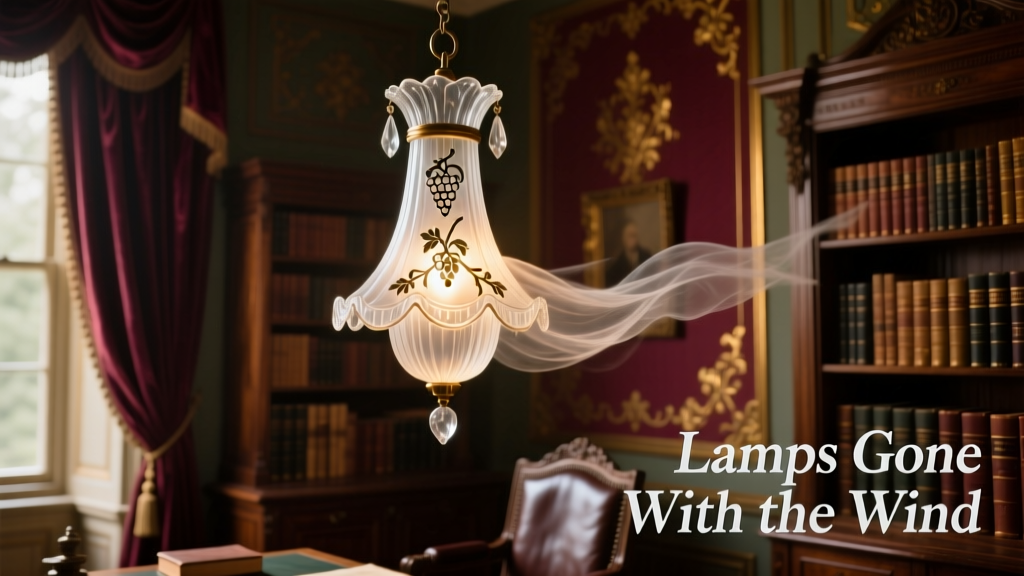
Lamps Gone With The Wind: Etched Grape Design Chimney — Frosted Clear Glass, 9 × 4½ Inches
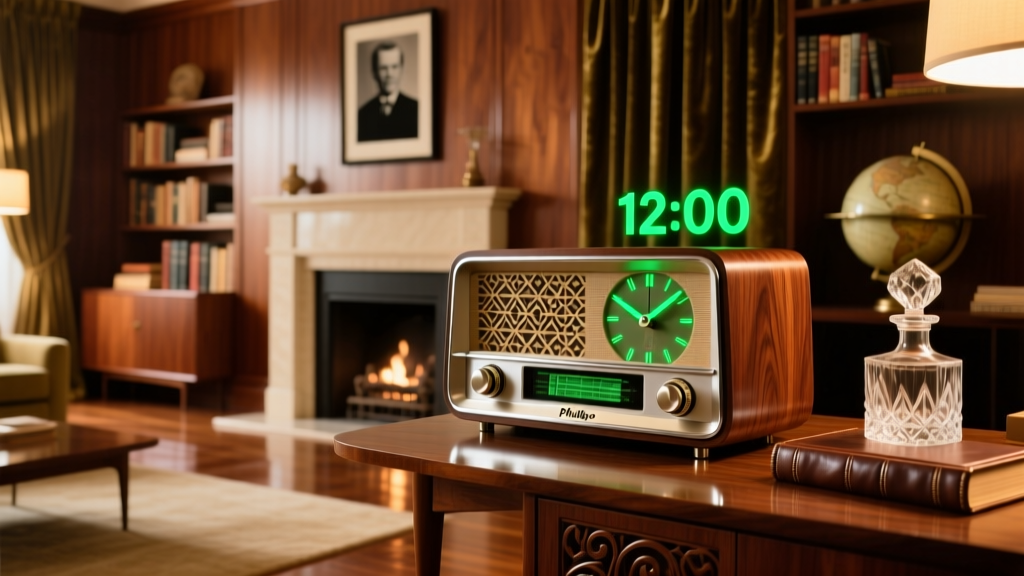
My Philco Radio Clock Combo: A Collector’s Guide to Restoration, Identification, and Historical Context
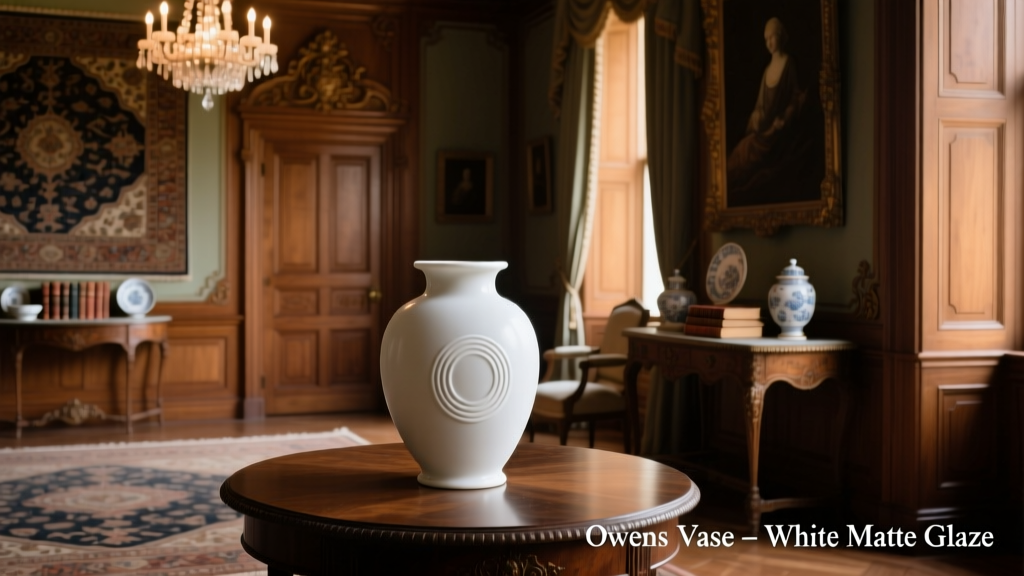
Owens Vase with White Matte Glaze and Circular Stamp: Identification, Provenance, and Restoration Guidelines for the 4 × 5 Inch Example
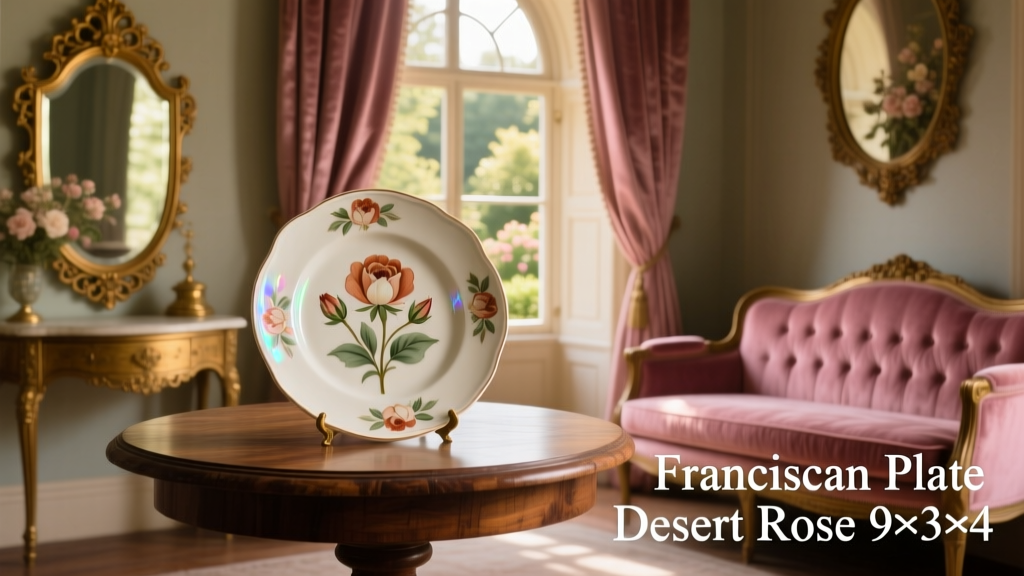
Franciscan Desert Rose 9 3/4-Inch Dinner Plate: History, Identification, and Restoration Guidelines
Noritake Dinner Set Azalea: A Collector’s Guide to the Iconic 60-Piece Service
Fenton Silver Crest Vase (6¼ Inches): Identification, History, Value Factors, and Conservation Guidance
Lustres: Emerald Green & White Enameled Star Flowers with Beading and Prisms — A Technical & Historical Analysis of the 14½-Inch Pair