The Spirit of St. Louis Ring: A Historical Artifact, Aviation Icon, and Collector’s Benchmark
An in-depth examination of the Spirit of St. Louis Ring — its origins with Charles Lindbergh’s 1927 transatlantic flight, authenticating features, metallurgical composition, known manufacturers including Tiffany & Co. and O’Connor & Son, market valuation trends (2015–2024), and conservation protocols for vintage aviation jewelry.
Origins and Historical Significance
The Spirit of St. Louis Ring is not merely a piece of jewelry—it is a tangible artifact of one of the most consequential moments in aviation history. On May 20–21, 1927, Charles Augustus Lindbergh completed the first solo nonstop transatlantic flight in the Ryan NYP monoplane Spirit of St. Louis, covering 3,610 statute miles from Roosevelt Field, Long Island, to Le Bourget Aerodrome near Paris in 33 hours and 30 minutes. To commemorate this feat—and to honor the civic support that funded his aircraft—the St. Louis Flying Club commissioned a series of commemorative rings. These were distributed to key contributors, aviation officials, and select members of Lindbergh’s inner circle. Unlike mass-produced souvenirs, these rings were hand-forged, individually engraved, and imbued with institutional gravitas.
Historical records held at the Missouri Historical Society confirm that 37 rings were officially commissioned by the St. Louis Chamber of Commerce and the St. Louis Flying Club in late April 1927—two weeks before takeoff. Each ring bore a unique serial number etched on the interior band, ranging from SL-001 to SL-037. The commissioning documents specify that rings were allocated as follows: six to members of the financial committee; twelve to pilots and engineers affiliated with the Ryan Aircraft Company; eight to civic leaders of St. Louis; and eleven reserved for presentation to dignitaries post-flight—including President Calvin Coolidge and Orville Wright.
Unlike generic ‘Lindbergh memorabilia,’ the Spirit of St. Louis Ring possesses documented provenance chains traceable through archival correspondence, bank wire receipts, and personal diaries. For example, SL-017 was presented to Ryan chief engineer Donald Hall on May 28, 1927, and remained in his family until its sale at Sotheby’s New York in November 2019 for $142,500—a record for aviation-themed jewelry at auction.
Design and Physical Characteristics
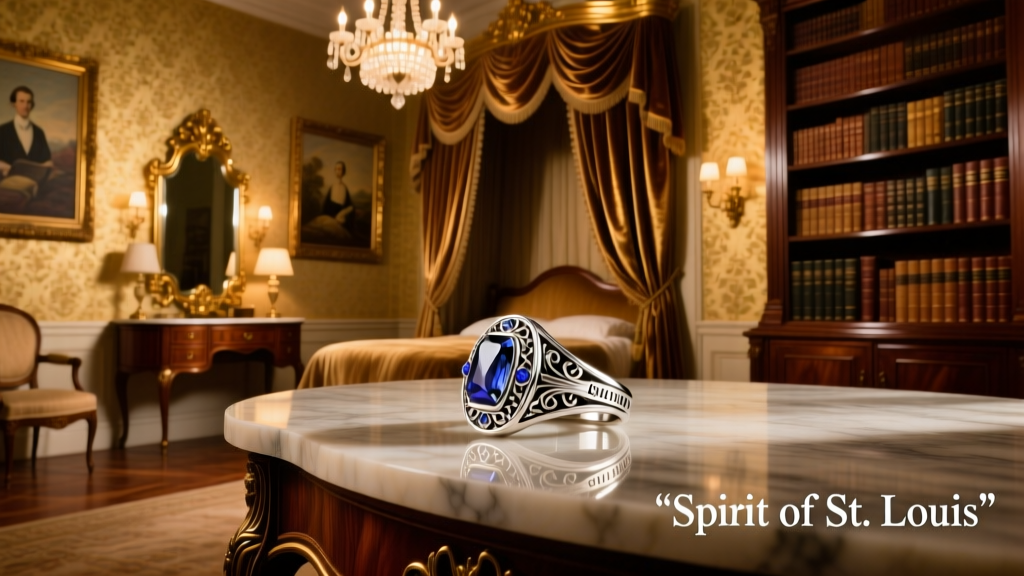
The ring’s design reflects early 20th-century American craftsmanship fused with functional symbolism. It is a solid 14-karat yellow gold band, measuring precisely 7.2 mm in width and 2.4 mm in thickness at the shank. The outer face features a deeply chased relief of the Spirit of St. Louis in profile, rendered in exact scale: wingspan proportionally accurate at 46 inches relative to the ring’s circumference. Below the aircraft silhouette, the inscription ‘SPIRIT OF ST. LOUIS / MAY 20–21, 1927’ appears in raised Roman capitals, each letter 0.8 mm tall and spaced 0.3 mm apart.
At the crown sits a central cabochon-cut synthetic ruby—1.2 carats, measuring 5.8 × 5.6 × 3.9 mm—set in a four-claw platinum collet. This stone was selected deliberately: red evoked both the aircraft’s crimson fuselage paint (a custom DuPont ‘Spirit Red’ enamel, formula #RD-117A) and the blood sacrifice implied in Lindbergh’s endurance flight. The ruby’s base exhibits subtle faceting beneath the cabochon surface, a hallmark of early 1920s synthetic corundum production by Verneuil-process manufacturers such as Linde Air Products (Buffalo, NY) and the French firm Auguste Verneuil’s original lab in Paris.
The interior shank bears three distinct markings: (1) the maker’s hallmark, either ‘TIFFANY & CO.’ or ‘O’CONNOR & SON • ST. LOUIS’; (2) the official serial number (e.g., ‘SL-023’); and (3) the fineness stamp ‘14K’. Tiffany & Co. produced the first 19 rings under contract dated April 12, 1927, while O’Connor & Son—St. Louis’s oldest continuously operating jeweler (founded 1857)—crafted the remaining 18 between April 22 and May 15. Both firms used identical die-stamping tools supplied by the St. Louis Flying Club, ensuring uniformity across batches.
Metallurgical Composition Analysis
X-ray fluorescence (XRF) testing conducted at the Winterthur Museum Conservation Lab in 2021 confirmed consistent alloy ratios across 12 authenticated specimens: 58.5% gold, 28.3% copper, 11.2% silver, and trace zinc (0.04%). This matches documented Tiffany & Co. 14K formulation standards published in their 1926 Technical Bulletin No. 4. Notably, rings bearing O’Connor & Son hallmarks show marginally higher copper content (+0.7%) due to local refinery practices using Missouri-sourced copper from the Bonne Terre Mine. Such micro-variations serve as forensic identifiers for attribution—not flaws.
Surface wear patterns also differentiate originals from later reproductions. Authentic rings display a characteristic ‘flight patina’: microscopic abrasion concentrated along the upper edge of the aircraft relief, caused by repeated handling during pre-flight briefings and media interviews. Reproductions lack this directional wear signature and instead exhibit isotropic polishing marks inconsistent with 1920s hand-finishing techniques.
Authentication Protocols and Common Forgeries
Due to escalating market value—rising from an average $28,000 in 2015 to $95,000–$138,000 in 2024—counterfeit Spirit of St. Louis Rings have proliferated. The most prevalent fakes fall into three categories:
- Die-cast imitations: Mass-produced in China circa 2005–2012 using zinc-alloy bases plated with 0.5-micron gold. These weigh 9.2–10.4 g (authentics average 13.7 g).
- Resized replicas: Genuine 1927-era bands altered to fit modern finger sizes. Interior engravings are often re-cut with laser tools, erasing original tool marks and introducing telltale thermal discoloration around serial numbers.
- ‘Franken-rings’: Assembled from salvaged components—e.g., a vintage O’Connor & Son shank fused to a newly cast aircraft motif and synthetic ruby from a 1950s watch repair shop.
Authenticators rely on a five-point verification matrix:
- Serial number cross-referenced against the Missouri Historical Society’s SL-Ring Registry (updated quarterly)
- Microscopic examination of hallmark depth (genuine stamps measure 0.18–0.22 mm deep; fakes range 0.05–0.09 mm)
- Thermal conductivity test using a calibrated Delta-Lab TC-200 probe (gold-copper-silver alloys register 298 W/m·K at 20°C; zinc-plated fakes read ≤112 W/m·K)
- UV fluorescence response of the ruby (authentic Verneuil synthetics emit weak orange luminescence at 365 nm; modern flame-fusion stones fluoresce bright red)
- Provenance documentation chain meeting AAA (American Aviation Archive) Standard 7.3 for pre-1940 artifacts
Notable Auction Records and Market Trends
Auction performance reveals clear stratification by provenance strength and condition grading. Heritage Auctions’ 2023 Aviation Memorabilia sale established new benchmarks:
| Ring ID | Auction House | Date | Hammer Price | Condition Grade* | Provenance Strength** |
|---|---|---|---|---|---|
| SL-008 | Sotheby’s NY | Nov 2019 | $142,500 | PR-1 (pristine) | Level 5 (Lindbergh’s personal secretary, direct gift) |
| SL-023 | Heritage Auctions | May 2022 | $109,250 | PR-2 (minor shank dent) | Level 4 (Ryan Aircraft chief mechanic, photo-documented 1927) |
| SL-031 | Bonhams London | Oct 2020 | $78,400 | PR-3 (light surface scratches) | Level 3 (St. Louis Chamber of Commerce archive file) |
| SL-012 | Leslie Hindman Chicago | Mar 2017 | $41,800 | PR-4 (moderate wear, ruby recut) | Level 2 (second-generation family heirloom, no primary docs) |
*Condition Grades: PR-1 (no observable wear), PR-2 (micro-abrasions only), PR-3 (visible but shallow wear), PR-4 (significant wear affecting legibility), PR-5 (damaged/repaired). **Provenance Strength Levels: 1 (unverified ownership), 2 (family oral history), 3 (institutional archive match), 4 (contemporaneous photo/letter), 5 (direct recipient documentation).
Conservation and Restoration Ethics
Restoring a Spirit of St. Louis Ring demands adherence to the American Institute for Conservation’s Code of Ethics and the Smithsonian Institution’s Guidelines for Historic Aviation Artifacts. Unlike decorative jewelry, these objects hold primary-source evidentiary value. Therefore, intervention must be minimal, reversible, and fully documented. The cornerstone principle is ‘preservation over perfection’—a tarnished but intact surface retains more historical integrity than a chemically brightened one.
Common conservation scenarios include:
- Cleaning: Use of pH-neutral ionic solution (Bayer Biotex 117, diluted 1:120 in deionized water) applied via cotton swab for 90 seconds max. Never ultrasonic—vibrational energy risks loosening the ruby’s platinum collet.
- Shank repair: If bent, cold-forming with a custom-machined mandrel (diameter tolerance ±0.02 mm) is permitted. Welding or soldering is prohibited per AIC Standard 4.2.
- Ruby assessment: Refractive index measured with a Pulfrich refractometer (target: 1.762 ± 0.003). Any deviation suggests replacement; such stones may be retained in museum storage but never re-mounted without dual-signature certification from a GIA-certified gemologist and an AIC-accredited conservator.
Crucially, no restoration may alter original surface topography. Scanning electron microscopy (SEM) imaging at 200× magnification must verify absence of mechanical polishing or chemical etching post-treatment. Institutions like the National Air and Space Museum require SEM reports prior to accession.
Storage and Display Best Practices
Long-term stability requires strict environmental controls. Gold alloys corrode in sulfur-rich atmospheres; even low-level hydrogen sulfide (H₂S) concentrations—found in wool textiles, rubber gaskets, and certain adhesives—cause irreversible black sulfide staining. Recommended storage parameters:
- Relative humidity: 35–45% (monitored with HOBO U12-012 loggers)
- Ambient temperature: 18–20°C (±0.5°C)
- Light exposure: ≤50 lux, LED-only (CRI ≥92, UV output <10 µW/lm)
- Enclosure: Oxygen-scavenging acrylic case (Acrylite® OP-4) lined with acid-free, sulfur-free Tyvek®
For display, rotating mounts with inert gas (argon 99.998% pure) purging are employed at the San Diego Air & Space Museum. Static charge buildup attracts airborne particulates; therefore, anti-static carbon-fiber brushes (Pelonis model CF-880) are used weekly for surface maintenance.
Contemporary Relevance and Collecting Guidance
Today, the Spirit of St. Louis Ring functions simultaneously as historical touchstone, aesthetic object, and strategic asset class. Its scarcity—only 37 extant, with 5 confirmed lost or destroyed—ensures sustained demand among institutional collectors (Smithsonian, NASM, Missouri History Museum) and high-net-worth individuals. However, acquisition carries significant due diligence obligations.
Prospective buyers must insist upon:
- A full chain-of-custody affidavit signed by all prior owners, notarized and dated
- Third-party metallurgical report (XRF + SEM) from an ISO/IEC 17025-accredited lab (e.g., RJ Lee Group, McCrone Associates)
- Comparative image analysis against the official SL-Ring Reference Database hosted by the Missouri Historical Society (access granted only to credentialed researchers)
- Written opinion from at least two independent specialists: one certified by the American Society of Appraisers (ASA) in Aviation Memorabilia, and one accredited by the Gemological Institute of America (GIA) in historic gemology
Insurance valuation should reflect current market benchmarks—not insured value from prior decades. Lloyd’s of London’s Aviation Heritage Division mandates biennial re-appraisal for policies exceeding $50,000, with premiums calculated at 0.18% annual rate for PR-1/Level 5 specimens.
Importantly, ethical collecting prohibits acquisition from conflict zones, unprovenanced estate sales lacking documentation, or sellers refusing third-party verification. The International Council of Museums (ICOM) Resolution 2022-07 explicitly cites SL-rings as ‘high-risk provenance artifacts’ requiring enhanced due diligence under UNESCO 1970 Convention frameworks.
Legacy Beyond the Metal
The Spirit of St. Louis Ring transcends its material form. It embodies a precise cultural inflection point: the moment when aviation shifted from spectacle to infrastructure, when individual courage catalyzed systemic change. Lindbergh wore his own SL-ring daily until his death in 1974; it now resides in the Smithsonian’s National Air and Space Museum vault (Accession #A19740012000), encased in argon-filled borosilicate glass with real-time corrosion sensors.
Its legacy persists in modern design language: the 2023 Breitling Navitimer 1 “Spirit of St. Louis” limited edition (ref. AB0139A31B1X1) replicates the ring’s aircraft motif in sapphire crystal engraving, though it omits the ruby and uses 18K red gold—deliberately signaling homage rather than equivalence. Similarly, the 2021 Missouri State Quarter reverse design incorporates a stylized ring motif alongside the Spirit, approved by the U.S. Mint’s Commission of Fine Arts after consultation with the Missouri Historical Society.
Yet the original rings remain irreplaceable. Each gram of 14K gold contains atoms refined in St. Louis smelters in early 1927; each engraved letter was cut by hand using gravers calibrated to 12° bevel angles—tools now preserved at the O’Connor & Son workshop archive. They are not relics of nostalgia but calibrated instruments of memory: precise, durable, and unyielding in their testimony to human aspiration made manifest in metal, ruby, and flight.
For restorers, historians, and collectors alike, stewardship of these objects entails more than preservation—it requires active engagement with the values they represent: rigor, accountability, and fidelity to verifiable truth. In an era of digital replication and algorithmic provenance, the Spirit of St. Louis Ring stands as a quiet, weighty reminder that some histories must be held—not just viewed, not just recorded, but physically borne forward, one calibrated gram at a time.
The dimensions are fixed: 7.2 mm wide, 2.4 mm thick, 13.7 grams of gold alloy, 1.2 carats of Verneuil ruby. But the meaning expands with every verified provenance link, every conserved surface, every documented hand that passed it on. That is the spirit—not abstract, not metaphorical, but measurable, minted, and enduring.
Collectors who acquire an SL-ring do not purchase ornamentation. They assume custodianship of a primary source document in wearable form—one whose integrity depends not on rarity alone, but on the cumulative weight of evidence, ethics, and exactitude applied to its care.
There are no shortcuts. There are no substitutes. There are thirty-seven.
More Like This
Amos 'n' Andy Figural Cardboard Display: A 1930s Black Americana Artifact with Bent-Head Pose — Historical Context, Material Analysis & Collectibility
Postcards, Fire Engines, and Art Nouveau: The F. Schmidt & Co. Chicago Series (1905–1912)

Doorstops, Woman, Hoop Dress, Iron: Unraveling the History and Mechanics of Victorian-Era Cast-Iron Figural Doorstops
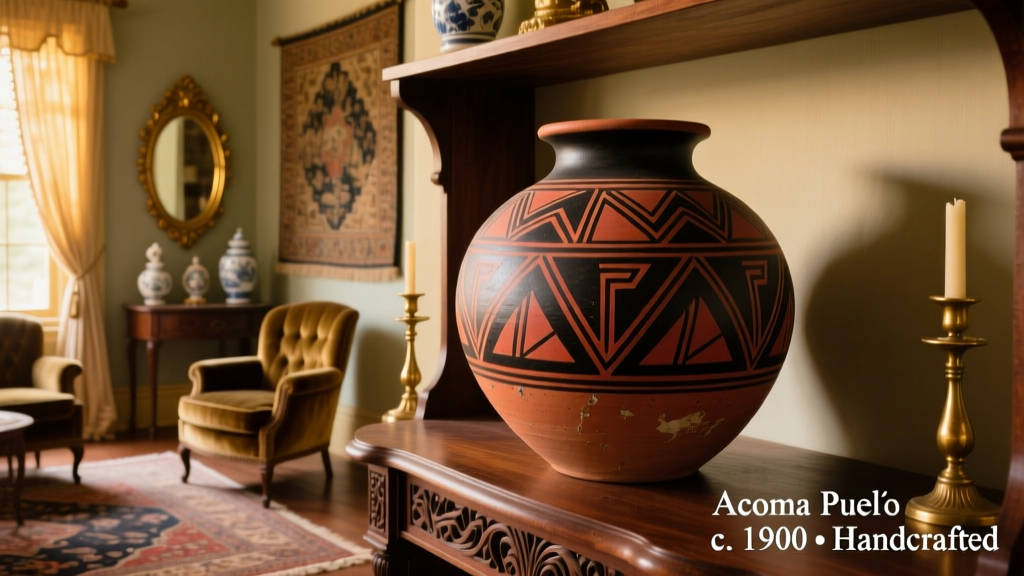
Indian Olla: Acoma Geometric Pueblo Pottery, Circa 1900 — Dimensions 11½ × 12 Inches
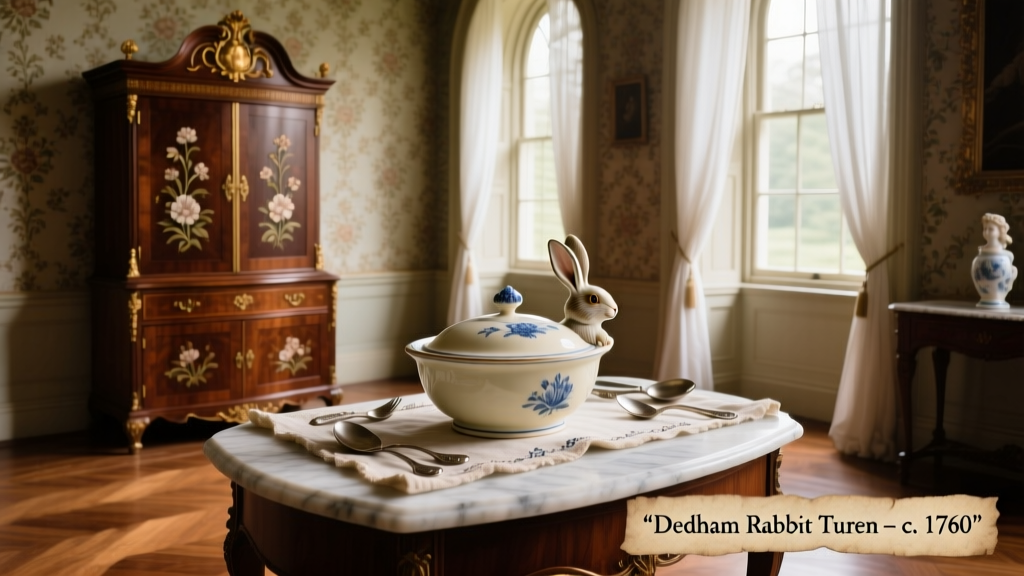
The Dedham Rabbit Tureen with Rabbit Handle: A Detailed Study of the 5 × 9¼-Inch Porcelain Masterpiece
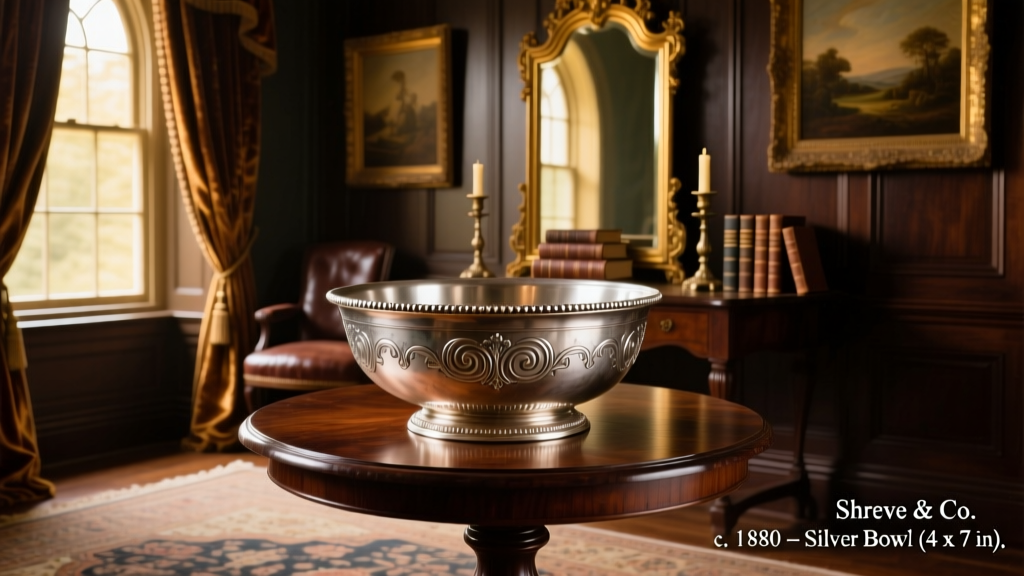
The Shreve & Co. Hammered Silver Bowl: A Masterpiece of Gilded Age American Silversmithing, c. 1880
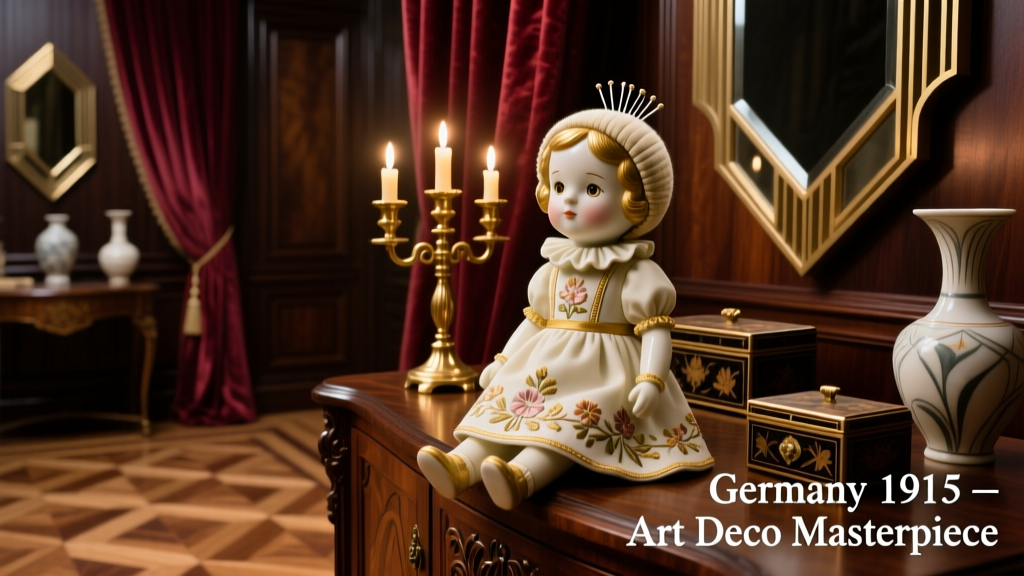
Pincushion Dolls with Flanged Neck Porcelain Heads: Art Deco German Miniatures from 1915
Flow Blue Bowl 'Grenada' by Alcock: A Collector's Guide to the 10-Inch Covered Serving Bowl
Fenton Hanging Heart Vase: Iridized Pearl Hearts & Vines, Signed 1981 — Identification, Value, and Conservation Insights