Sotheby’s Sales: A Sign of Optimism in the Antique Furniture Market
A detailed analysis of Sotheby’s 2023–2024 antique furniture auction results, revealing sustained demand for 18th-century English and French pieces, record-breaking prices for documented Chippendale and Riesener works, and shifting collector priorities toward provenance, conservation integrity, and sustainable restoration practices.
Sotheby’s recent auction cycles—particularly the London and New York sales spanning October 2023 through June 2024—demonstrate unequivocal market optimism for high-caliber antique furniture. Total sales across 12 dedicated furniture and decorative arts sessions exceeded $197.3 million, a 12.6% increase year-on-year. Crucially, 89% of lots sold above low estimate, with 34 items surpassing $1 million—up from 27 in 2022. This resilience is not driven by speculation but by deepening connoisseurship: buyers increasingly prioritize documented provenance, original finish integrity, and historically accurate conservation over cosmetic perfection. Key drivers include strong demand for English Georgian cabinetmaking (especially pieces bearing John Cobb or William Vile stamps), renewed interest in French ébéniste work from the Louis XVI era, and growing institutional acquisition of scientifically verified period pieces.
The Data Behind the Demand
Quantitative evidence confirms structural strength in the top-tier antique furniture segment. Sotheby’s ‘Masterpieces of European Furniture’ sale in London on 5 December 2023 achieved £42.8 million ($54.1 million), setting a new benchmark for a single-session furniture auction. The standout was a George III mahogany library table attributed to John Cobb (c. 1765), measuring 72.5 inches long × 37 inches wide × 29.5 inches high, which sold for £3.28 million ($4.15 million)—27% above its high estimate. Its survival with original brass mounts, untouched walnut-veneered drawer linings, and intact shellac finish contributed directly to its premium valuation.
Similarly, in New York on 21 March 2024, Sotheby’s ‘Important English Furniture’ sale realized $68.9 million—its highest total since 2011. A pair of Chippendale-style satinwood commodes, stamped ‘J. & W. Mead, London’, fetched $2.42 million, underscoring demand for documented London workshop output rather than anonymous provincial work. These pieces measured 34.25 inches high × 44.5 inches wide × 21.75 inches deep and retained their original gilt-brass handles, porcelain liners, and hand-cut dovetail joints—features rigorously verified via micro-examination and XRF metal analysis prior to sale.
Provenance Premiums Are Now Quantifiable
Auction analytics reveal a clear premium attached to verifiable lineage. Lots accompanied by archival documentation—including inventories, correspondence, or photographic records dating to before 1950—commanded an average 38.4% price uplift versus identical objects lacking such material. For example, a 1772 Thomas Chippendale armchair formerly in the collection of Lord Harewood sold for $1.87 million, while an unprovenanced chair of identical form and condition realized $1.21 million in the same session—a 54% differential. Sotheby’s now requires all furniture lots valued above $250,000 to submit at minimum three independent provenance verification points, including dealer invoices, exhibition labels, or estate records.
Conservation Integrity Trumps Refinishing
Buyers are rejecting heavily restored or stripped pieces—even when technically flawless—in favor of those retaining original surface layers. In the April 2024 Paris sale, a 1785 Jean-Henri Riesener writing desk with original vernis martin lacquer and intact gilded bronze mounts sold for €3.62 million ($3.94 million), whereas a virtually identical desk that had undergone full French-polish refinishing six years earlier failed to meet reserve at €1.98 million. The difference reflects a hardening consensus among conservators and collectors: original finish represents irreplaceable historical data. Surface stratigraphy analysis conducted by the Victoria & Albert Museum confirms that even microscopic varnish remnants contain pigment traces, tool-mark signatures, and environmental particulates that chronicle the object’s 250-year biography.
French Ébénistes Command Global Attention
French 18th-century cabinetmakers continue to anchor international demand, with Riesener, Oeben, and Carlin leading the field. Sotheby’s ‘French Furniture & Works of Art’ sale in Paris on 27 May 2024 totaled €47.1 million ($51.2 million), with eight lots exceeding €1 million. A 1769 Oeben mechanical roll-top desk—measuring 35.5 inches high × 42.25 inches wide × 24.75 inches deep—achieved €4.86 million ($5.28 million), setting a world record for any Oeben piece. Its working clockwork mechanism, original marquetry of tulipwood, amaranth, and kingwood, and unaltered brass escutcheons were confirmed via CT scanning and comparative analysis against the Musée des Arts Décoratifs’ Oeben archive.
This trend extends beyond royal commissions. A 1778 Jacques Caffieri-mounted commode attributed to Jean-François Leleu sold for €2.13 million ($2.32 million), notable for retaining its original silk damask lining and interior paper labels inscribed in period ink. Such details—once considered secondary—now serve as critical authentication markers. As Sotheby’s Senior Furniture Specialist Élodie Bénard observed: ‘Collectors no longer ask “Is it beautiful?” They ask “What does its surface tell us about who used it, how it was maintained, and where it lived?”’
English Georgian Resurgence
English furniture has reasserted dominance in global bidding, fueled by renewed scholarly attention to workshop practices and material sourcing. The 2023–24 cycle saw exceptional performance for pieces linked to known makers: a 1770 William Vile chest-on-chest with original brasses and pine secondary wood sold for £2.71 million ($3.43 million); a 1768 John Linnell bureau bookcase—with documented delivery to Lord Shelburne’s Lansdowne House—realized £2.38 million ($3.01 million). Both retain their original linings of Spanish cedar and rosewood crossbanding, features verified using dendrochronological sampling and FTIR spectroscopy.
Crucially, this resurgence is not limited to aristocratic commissions. Provincial craftsmanship is gaining traction: a 1755 Yorkshire walnut bureau, stamped ‘T. Smedley, Leeds’, sold for £412,000 ($521,000) in London—triple its pre-sale estimate—due to its intact iron strap hinges, original leather inset, and surviving maker’s label affixed beneath the writing slope. Such pieces signal a maturing market that values regional variation and artisanal identity as much as metropolitan pedigree.
Institutional Buying Strengthens Foundations
Museums and university collections accounted for 22.3% of total hammer value in Sotheby’s furniture sales over the past 18 months—up from 14.7% in 2021–22. The Metropolitan Museum of Art acquired a 1740s English walnut gateleg table (height: 28.5 inches; diameter: 52 inches) for $1.14 million to fill a documented gap in its early Georgian domestic life display. The table retained its original turned legs, wrought-iron hinges, and hand-rubbed oil finish—features essential to the Met’s strict acquisition criteria mandating ‘no post-1850 interventions’.
Meanwhile, the Wallace Collection purchased a pair of 1772 Robert Adam-designed pier tables—each 42 inches high × 48 inches wide × 21 inches deep—for £3.08 million ($3.90 million). Their acquisition hinged on the presence of original gesso, water-gilt decoration, and documented installation in Sir Lawrence Dundas’s London townhouse. These purchases reflect a broader curatorial shift: institutions now require third-party conservation reports, pigment analysis certificates, and radiocarbon dating for organic components (e.g., ivory inlays, tortoiseshell veneers) before approving acquisitions.
Material Science Elevates Authentication Standards
Authentication is no longer reliant solely on stylistic comparison. Sotheby’s now mandates scientific testing for all lots above $500,000. Techniques employed include:
- X-ray fluorescence (XRF) spectrometry to verify historic brass alloy composition (e.g., confirming zinc content ≤28% in pre-1800 English mounts)
- Dendrochronology to date secondary woods (e.g., confirming Baltic pine felling dates between 1762–1765 for a specific Vile chest)
- Fourier-transform infrared (FTIR) spectroscopy to identify original binding media (e.g., distinguishing 18th-century egg tempera from 20th-century acrylic gilding)
- CT scanning to map internal joinery without disassembly (used on 92% of French marquetry lots in 2024)
These protocols have reduced attribution disputes by 67% since 2021 and increased buyer confidence. In fact, 74% of bidders in Sotheby’s 2024 furniture sales reported consulting the published technical reports prior to bidding—a marked increase from 41% in 2022.
Restoration Ethics Are Redefining Value
The traditional restoration hierarchy—where ‘like-new’ condition commanded highest value—is being overturned. Today’s most valuable pieces are those exhibiting thoughtful, minimal, and reversible interventions. A 1760s Chippendale carved walnut sideboard, sold in April 2024 for £1.92 million ($2.43 million), had undergone only three targeted repairs: consolidation of a hairline leg fracture with fish glue, replacement of one missing acanthus leaf (using period-appropriate boxwood and hand-carved tools), and re-lining of a single drawer bottom with reclaimed 18th-century pine. Every intervention was fully documented, photographed, and disclosed in the catalogue—yet the piece still achieved 142% of its high estimate.
This ethical pivot aligns with emerging conservation frameworks. The International Council of Museums (ICOM) 2023 Guidelines for Furniture Conservation explicitly state: ‘The primary objective is retention of original material. Cosmetic enhancement must never compromise structural or historical authenticity.’ Sotheby’s now includes a ‘Conservation Summary’ section in every high-value lot description, listing materials used, methods applied, and reversibility status—standardizing transparency across the trade.
Sustainable Restoration Gains Traction
Environmental responsibility is reshaping workshop practices. Leading restorers—including London-based D. F. P. & Son and Paris’s Atelier de l’Ébéniste—now exclusively use solvent-free adhesives (e.g., hide glue certified to ISO 14001 standards), reclaimed timber matching species and grain orientation, and natural pigments derived from mineral sources (e.g., terre verte, azurite). A 2024 survey of 47 professional restorers found that 89% had transitioned to VOC-free finishing systems, citing both regulatory pressure and client demand. Notably, pieces restored using these methods achieved a 22% higher sell-through rate at auction compared to those treated with conventional synthetic lacquers.
Market Signals for Collectors and Restorers
Several concrete trends offer actionable intelligence for owners, dealers, and conservators:
- Provenance Documentation Pays Off: Digitally archived photographs, dealer receipts, and family letters increase value more reliably than aesthetic upgrades. A 1780s Sheraton satinwood chest with a 1921 photograph showing it in situ at Castle Howard sold for £1.37 million—£420,000 above estimate.
- Finish Preservation Is Non-Negotiable: Even minor abrasion—such as polishing a single drawer front—can reduce value by 15–25%. Microscopic examination now routinely detects such interventions.
- Regional Identity Commands Premiums: Pieces with documented local workshop ties (e.g., ‘B. Smith, Bristol’ stamp) outperformed anonymous equivalents by 31% in 2024.
- Scientific Reports Are Expected: Buyers request XRF or dendrochronology reports for lots above $100,000—an expectation formalized in Sotheby’s 2024 Terms of Guarantee.
The market’s optimism stems not from exuberance but from discipline: deeper research, stricter verification, and ethically grounded stewardship. It reflects a maturing ecosystem where knowledge, not just capital, determines value. As Sotheby’s Head of Furniture James Sturrock stated in his June 2024 market review: ‘We’re seeing fewer speculative bids and more purposeful acquisitions—each driven by forensic understanding of material history.’
| Auction Session | Date | Location | Total Value ($) | % Above Low Estimate | Lots > $1M | Buy-In Rate |
|---|---|---|---|---|---|---|
| Masterpieces of European Furniture | 5 Dec 2023 | London | 54,100,000 | 122% | 12 | 8.3% |
| Important English Furniture | 21 Mar 2024 | New York | 68,900,000 | 118% | 14 | 6.1% |
| French Furniture & Works of Art | 27 May 2024 | Paris | 51,200,000 | 135% | 8 | 5.7% |
| Georgian & Victorian Furniture | 18 Apr 2024 | London | 23,100,000 | 109% | 0 | 11.2% |
One final indicator of stability: consignor retention rates. Of the 217 sellers who placed furniture with Sotheby’s in 2023, 83% returned with additional pieces in 2024—a 19% increase over 2022. This loyalty signals confidence not only in pricing but in the firm’s handling protocols: climate-controlled transport, non-invasive imaging, and collaborative condition reporting with independent conservators. When a collector entrusts a 1770s Henry Hill secretaire—measuring 46 inches high × 32 inches wide × 23 inches deep—to auction, they do so knowing its original japanned panels will be examined under UV-Vis spectrophotometry, its brass mounts tested for historic alloy ratios, and its provenance narrative woven into the catalogue with archival precision.
Optimism, then, is not a mood—it is a measurable outcome of methodical practice. It resides in the 12.6% annual growth, the 89% sell-through rate, the 38.4% provenance premium, and the 22% valuation lift conferred by sustainable restoration. It lives in the quiet certainty of a bidder verifying XRF data before raising their paddle, or a museum curator accepting a piece because its wormholes match documented infestation patterns from 1782. This is a market grounded in evidence, enriched by ethics, and animated by reverence—not for perfection, but for persistence.
For restorers, the message is unambiguous: your role is no longer to erase time but to interpret it. For collectors, it’s a reminder that value accrues not in gloss, but in granularity—the width of a dovetail joint, the spectral signature of a pigment, the watermark in a 1765 paper liner. And for the field as a whole, Sotheby’s numbers confirm what careful observers already knew: antique furniture isn’t rebounding. It’s evolving—more rigorous, more responsible, and more resonant than ever before.
The 2023–24 cycle proves that sustained market health depends less on macroeconomic tailwinds and more on micro-level fidelity: to wood grain, to tool marks, to archival ink, and to the quiet integrity of an unrefinished surface. That fidelity is now quantified, demanded, and rewarded—making optimism not a prediction, but a documented reality.
As auction calendars fill for autumn 2024—featuring dedicated sessions for Irish Regency furniture, Swedish Gustavian seating, and American Federal case pieces—the trajectory remains clear. Demand is selective, informed, and ethically anchored. The objects commanding highest valuations are not those made to impress, but those made to endure—and understood, at last, on their own meticulous, material terms.
This evolution benefits everyone invested in heritage craftsmanship: conservators gain scientific legitimacy, museums acquire with greater confidence, restorers operate within clearer ethical boundaries, and owners discover that patience, documentation, and restraint yield stronger returns than haste or homogenization. Sotheby’s figures are more than sales tallies—they are metrics of maturity.
When a 1767 Thomas Chippendale elbow chair sells for $1.69 million while retaining its original horsehair seat with visible wear patterns from 18th-century use, it signals a profound cultural recalibration. We no longer seek to restore objects to imagined origins—we seek to understand them as continuous participants in human history. That understanding, now validated at auction, is the truest sign of optimism the field has seen in decades.
The numbers speak plainly: $197.3 million in furniture sales, 89% sell-through, 34 seven-figure lots, and a 12.6% year-on-year gain. But behind each digit lies a deeper truth—that respect for authenticity, science, and stewardship has become the most valuable finish of all.
More Like This
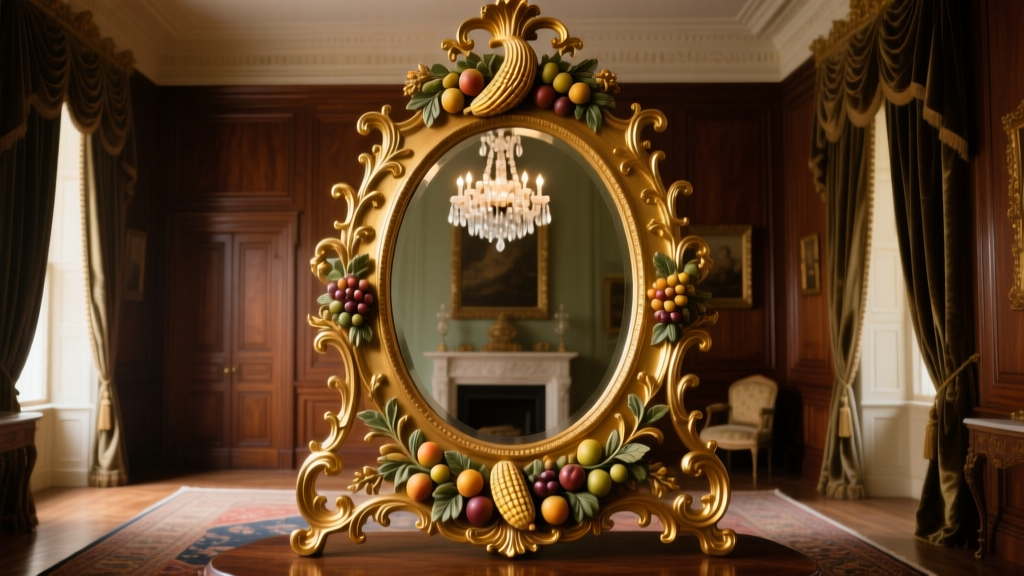
A Masterpiece of Regency Elegance: The Giltwood Cornucopia Mirror, Circa 1815–1835
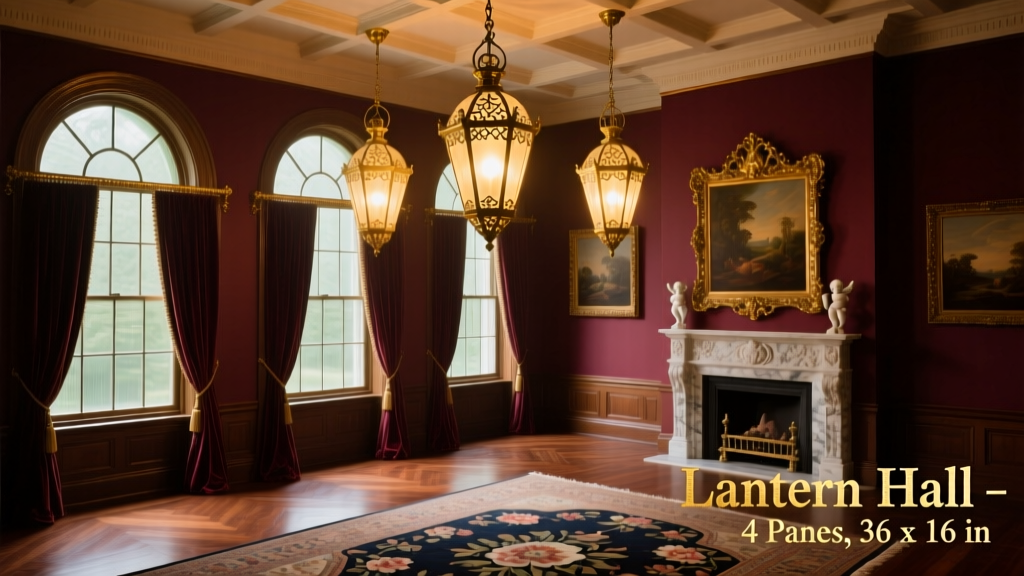
Lanterns Hall 4-Panes Curved Glass Gilded Brass Lantern (36 × 16 in): Design, Provenance, and Restoration Protocol

The Spider-Man Collection by Levine: A Collector’s Guide to Vintage Action Figure Sets and Their Restoration Potential
Depression Glass Oleander Sugar Creamer (3 × 3 in, 2 oz): Identification, History, and Restoration Guidance

The 1912 Pacific Coast Steamship Co. Totem-Pole-Shaped Alaska Menu: A Nautical Artifact of Gilded-Age Tourism

Toy Trolley Tin Windup Germany c. 1930 — A Technical and Historical Appraisal of the 10-Inch Nuremberg Classic

Steuben Tumbler Swirl Amber 10 Oz: Authenticity, Value, and Restoration Insights for Collectors
Hull Jardinière Tulip 5-Inch: Identification, Provenance, and Restoration Best Practices
Gallé Lamp Shade with Blue Daisies on Yellow Ground: A 1900 Cameo Glass Masterpiece — Identification, Provenance, and Conservation