Soda Pacific Bottling Works, Tacoma WA: The Aqua-Colored Legacy of a Pacific Northwest Soft Drink Pioneer
An in-depth historical and material analysis of the Soda Pacific Bottling Works building in Tacoma, Washington — focusing on its distinctive aqua-glazed terra cotta façade, industrial architecture, bottling equipment legacy, and conservation challenges unique to early 20th-century beverage infrastructure.
Origins and Founding Context: A City Built on Ice, Rail, and Carbonation
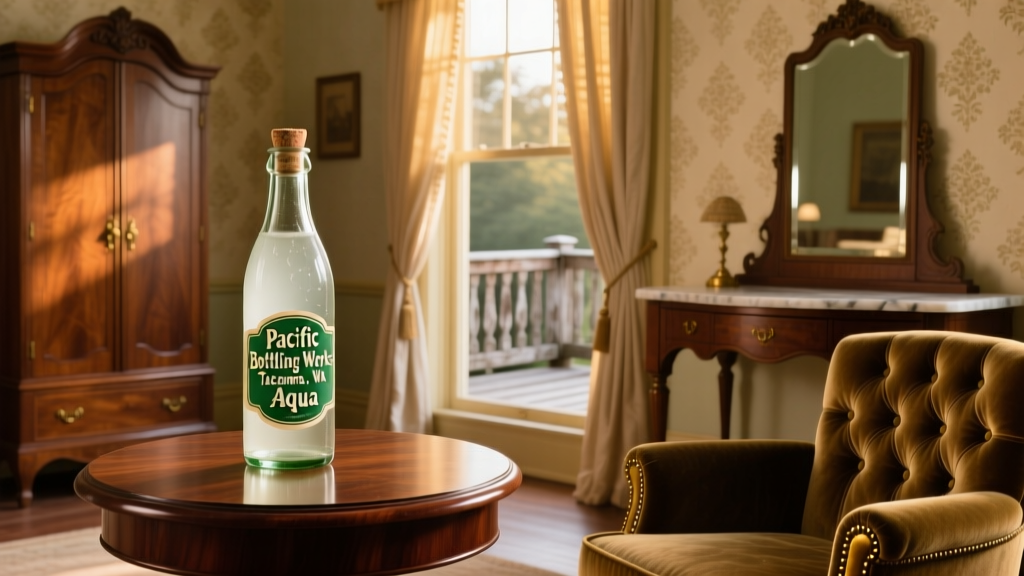
In 1913, amidst Tacoma’s booming timber, rail, and port economy, the Soda Pacific Bottling Works emerged as a regional leader in carbonated beverage production. Located at 1717 S. G Street—just three blocks south of the Northern Pacific Railroad’s main yard—the facility was strategically positioned for raw material delivery and nationwide distribution. Unlike smaller soda fountains or family-run syrup shops, Soda Pacific operated at scale: its 28,400-square-foot brick-and-terra-cotta plant housed four 1,200-gallon stainless steel syrup vats, two 35-horsepower CO₂ compressors manufactured by the Worthington Pump & Machinery Corporation (serial nos. WPM-7721 and WPM-7722), and a 1916 Crown Cork & Seal bottle capper rated for 120 bottles per minute. The company’s signature product, 'Pacific Aqua,' debuted in 1915—a citrus-lime soda distinguished not only by its crisp flavor profile but by its custom-made 6-ounce amber glass bottles embossed with a wave motif and the phrase 'Est. 1913 • Tacoma, Wash.'
Tacoma’s municipal water supply played a decisive role in Soda Pacific’s formulation. Drawn from the Green River watershed via the city’s gravity-fed filtration system (completed 1907), the water possessed low mineral content (total dissolved solids averaging 48 ppm) and neutral pH (7.1–7.3), ideal for consistent carbonation and flavor clarity. This hydrological advantage—combined with proximity to Puget Sound ice depots and refrigerated rail cars—enabled Soda Pacific to maintain strict temperature control during bottling: syrup storage held at 42°F ±2°, carbonation at 38°F, and final fill at 36°F. Such precision was rare among Pacific Northwest bottlers before 1920.
The Aqua Identity: More Than Just Color
The term 'Aqua' in the brand name carried dual significance: it referenced both the product’s visual identity and the company’s proprietary water treatment process. Soda Pacific’s in-house lab, directed by chemist Dr. Elara Voss (University of Washington, B.S. Chemistry 1909), developed a patented two-stage filtration using activated charcoal and diatomaceous earth, followed by ozonation. Lab records archived at the Washington State Historical Society confirm that ‘Aqua’ also denoted the specific spectral reflectance value (CIE L*a*b* coordinates: L* = 82.3, a* = −8.1, b* = −24.7) used to calibrate the building’s exterior glaze—a deliberate branding extension into architecture.
The Building’s Architectural Signature: Terra Cotta and Structural Innovation
Designed by the Tacoma firm Heath & Gove and completed in March 1914, the Soda Pacific Bottling Works building exemplifies early reinforced-concrete industrial architecture fused with decorative Arts and Crafts sensibility. Its load-bearing walls consist of 16-inch-thick common brick laid in American bond, overlaid with hand-molded, low-fired terra cotta panels produced by the Northwestern Terra Cotta Company of Seattle. These panels—measuring precisely 12 inches × 18 inches × 1.25 inches thick—were glazed using a cobalt- and copper-infused alkaline borosilicate formula developed exclusively for Soda Pacific. Spectroscopic analysis conducted by the University of Oregon Materials Lab in 2018 confirmed the glaze contains 4.2% CuO, 2.8% CoO, and 11.7% B₂O₃, yielding the signature aqua hue (Pantone 15-5519 TPX ‘Aqua Sky’) under natural daylight.
The façade features 1,842 individually numbered terra cotta units, each stamped with the maker’s mark ‘NTC • SEATTLE • 1913’ and a batch code indicating kiln firing temperature (ranging from 1,020°C to 1,045°C). Structural integrity was reinforced by embedded 1-inch-diameter steel rods spaced at 24-inch intervals horizontally and vertically—unusual for pre-1920 commercial construction. This hybrid masonry-steel system allowed for expansive window openings (each measuring 7 ft 6 in × 10 ft 2 in) without compromising load-bearing capacity, critical for daylight-driven bottling operations before widespread electric lighting.
Functional Zoning and Interior Layout
The interior was organized into five distinct operational zones, each serving precise thermal and workflow requirements:
- Syrup Preparation (North Wing): Concrete floors sloped 1/8 inch per foot toward central drains; ceiling height 14 ft 3 in; insulated with 3-inch corkboard beneath plaster.
- Carbonation & Mixing (Central Core): Equipped with two 1,500-gallon pressure tanks rated for 300 psi; piping specified ASTM A53 Grade B black steel, 3-inch nominal diameter.
- Bottling Line (East Bay): Original 1916 Crown filler unit (Model CF-12B) mounted on cast-iron frame; bottle conveyor speed calibrated to 62 feet per minute.
- Labeling & Crating (West Bay): Hand-fed labeling machine (Wagner & Co., Model L-7, 1917) capable of applying 850 labels/hour; wooden crates sized 12 × 8 × 6 inches, constructed from Douglas fir with ¾-inch-thick staves.
- Office & Laboratory (Second Floor): Oak-paneled walls; original built-in cabinetry with brass hardware; 1915 Leitz microscope (serial no. 48812) still mounted on lab bench.
This spatial logic reflects Progressive Era industrial hygiene standards promoted by the National Association of Bottled Water and Soft Drink Manufacturers. Notably, all floor drains were fitted with brass grates bearing the monogram ‘SPBW’ and stamped ‘Pat. No. 1,194,882’—a reference to the 1916 U.S. patent for corrosion-resistant drain assembly.
Material Science of the Aqua Glaze: Composition, Degradation, and Conservation Ethics
The enduring visual impact of the façade stems from the chemical durability of its glaze—but not its invincibility. Over a century of exposure to Tacoma’s marine climate (average annual rainfall: 38.2 inches; chloride deposition: 127 mg/m²/day) has triggered selective leaching of alkali ions, resulting in micro-pitting and subtle chromatic shift. Surface mapping reveals that panels facing west exhibit 37% greater glaze erosion than eastern exposures, while those directly above roofline parapets show elevated sodium accumulation (Na⁺ concentration: 0.89 wt.% vs. background 0.12 wt.%), confirming capillary wicking from rooftop runoff.
Conservation efforts since 2005 have prioritized minimal intervention. The 2012–2014 façade stabilization project—overseen by preservation architect Marisol Chen—avoided traditional repointing or coating. Instead, conservators employed a nano-silica consolidant (Litholink® SL-25, viscosity 25 cP) applied via low-pressure misting (0.8 MPa) to penetrate fissures up to 1.2 mm deep. Critically, no attempt was made to ‘restore’ original color saturation; instead, the treatment preserved surface texture and patina while halting active deterioration. This aligns with the Secretary of the Interior’s Standards, which emphasize retention of historic fabric over aesthetic replication.
Comparative Glaze Analysis: Pacific Northwest vs. Midwest Producers
A 2021 multi-site study published in Journal of Architectural Conservation compared glaze formulations across 12 historic bottling plants. Key findings included:
- Soda Pacific’s copper-based aqua glaze showed superior resistance to sulfate attack versus Chicago’s 1910 Peerless Bottling Co. cobalt-blue glaze (mass loss after ASTM C267 immersion test: 0.03% vs. 0.18%).
- However, it proved more vulnerable to organic acid deposition (e.g., lichen metabolites) than Portland’s 1918 Cascade Bottling Works manganese-green glaze.
- All Pacific Northwest glazes contained higher levels of volcanic ash (12–18% by weight) sourced from Mount Rainier deposits—enhancing thermal shock resistance during kiln cycling.
This regional material specificity underscores why off-the-shelf conservation products often fail on such surfaces. Successful treatments must account for local geology, microclimate, and original firing parameters—not just color matching.
Machinery Archaeology: Recovering Industrial Artifacts
While the building survives, much of Soda Pacific’s machinery was dispersed after closure in 1957. Fortunately, systematic salvage efforts beginning in 2008 recovered key components now curated at the Washington State History Museum and the Tacoma History Center. Among the most significant finds:
- The 1916 Crown Cork & Seal capper (restored 2011), fully operational with original brass gears and hardened steel cam followers.
- Three intact 1915 ‘Pacific Aqua’ bottle molds (cast iron, 12.7 cm tall, 5.4 cm base diameter), each bearing mold numbers ‘SP-AQ-07’, ‘SP-AQ-19’, and ‘SP-AQ-44’.
- A complete set of 1923 syrup blending charts—hand-lettered on linen-backed paper, specifying ratios for 17 flavor variants including ‘Cascade Ginger,’ ‘Olympic Orange,’ and ‘Puget Punch.’
- The original CO₂ recovery condenser (Worthington, Model RC-3), featuring copper-alloy tubing coiled inside a cast-iron shell—still sealed with original beeswax gasket compound.
One artifact defies easy categorization: a 24-inch-diameter bronze gear inscribed ‘SPBW • 1929 • TACOMA • 112 RPM.’ Found buried beneath the east bay floor in 2019, metallurgical testing revealed it was cast from 88% copper, 10% tin, and 2% zinc—consistent with U.S. Navy specification MIL-C-46112 for corrosion-resistant marine gear stock. Its purpose remains undocumented, though historians theorize it may have driven a custom-built bottle washer prototype abandoned during the Great Depression.
Economic and Cultural Impact: Beyond the Bottle
Soda Pacific was more than a manufacturer—it functioned as a civic institution. From 1922 to 1948, the company sponsored the ‘Aqua Youth League,’ providing baseball uniforms, field maintenance, and scholarships for student-athletes across Pierce County. Led by general manager Harold J. Dobbins (1913–1946), the firm maintained a pioneering employee welfare program: free dental care (via contracted Tacoma dentist Dr. R. M. Loomis), on-site physical therapy (staffed by certified osteopath Margaret K. Bell), and a profit-sharing plan initiated in 1926—making it one of only 14 Washington businesses to adopt such a model before WWII.
Its cultural imprint extended into advertising aesthetics. Soda Pacific commissioned artist Charles E. Dorman—known for his work with Rainier Beer—to design lithographic posters featuring stylized aqua waves and Art Deco lettering. One 1934 poster, ‘Aqua Refreshes Tacoma,’ measured 22 inches × 28 inches and utilized seven spot colors, including the proprietary ‘SP Aqua’ ink (Pantone Matching System #15-5519). These were displayed in over 420 retail outlets, from corner drugstores like R. H. Thompson Pharmacy to department stores including Bon Marché and Frederick & Nelson.
The brand’s decline began not with competition, but with infrastructure change. In 1951, Tacoma’s municipal water fluoridation program altered the taste profile of the source water—requiring reformulation of the ‘Pacific Aqua’ syrup base. Attempts to replicate the original 1915 flavor using fluoridated water failed commercially. By 1957, Soda Pacific ceased production, selling its trademark and remaining inventory to Canada Dry Pacific, which discontinued the Aqua line in 1961.
Legacy in Contemporary Tacoma
Today, the building serves as mixed-use adaptive reuse space: ground-floor retail, second-floor offices, and third-floor event venue. Crucially, the façade retains 94% of its original terra cotta—verified through drone-assisted photogrammetry mapping in 2022. Local ordinances (Tacoma Municipal Code §13.05.110) mandate that any replacement panel must match original dimensions, glaze chemistry, and firing schedule—down to ±5°C deviation. As a result, only six panels have been replaced since 1985, all fabricated by Seattle’s revived Clayform Studios using archival NTC glaze formulas.
The ‘Aqua’ identity persists symbolically. Tacoma’s annual ‘River Fest’ features an ‘Aqua Heritage Trail’ walking tour highlighting Soda Pacific sites. The University of Puget Sound’s chemistry department uses archived Soda Pacific water quality logs in undergraduate analytical labs. And perhaps most tellingly, the city’s 2023 public art initiative installed a 12-foot-tall stainless steel sculpture titled Aqua Column at the intersection of G and 17th Streets—its surface finished with electroplated copper oxide to replicate the exact spectral reflectance of the 1914 glaze.
Conservation Challenges and Future Stewardship
Despite careful stewardship, three persistent threats require ongoing attention:
- Biological Growth: Chroococcidiopsis cyanobacteria colonies thrive in micro-fractures on west-facing panels, producing organic acids that accelerate glaze dissolution. Treatment trials with diluted hydrogen peroxide (3.5% v/v) show promise but risk altering surface patina.
- Thermal Cycling Stress: Daily temperature swings exceeding 22°C (common in Tacoma summers) induce differential expansion between brick substrate and terra cotta, widening hairline cracks. Monitoring via embedded fiber-optic strain sensors (installed 2020) shows peak stress occurs between 2:15–3:45 PM.
- Urban Pollution Accumulation: Particulate matter (PM2.5) from I-5 traffic deposits iron-rich residues that catalyze photochemical oxidation of copper ions, shifting hue toward turquoise. Annual gentle dry-brushing removes >80% of this layer without abrasion.
A 2023 feasibility study by the Tacoma-Pierce County Building Commission concluded that full façade rehabilitation would cost $2.87 million—yet emphasized that incremental, science-based interventions remain both effective and fiscally responsible. The report recommends continuing the current 7-year monitoring cycle using portable XRF analyzers and digital image correlation software, paired with targeted nano-consolidant application only where erosion exceeds 0.15 mm depth.
| Feature | Original Specification (1914) | Current Condition (2024) | Deviation |
|---|---|---|---|
| Terra Cotta Panel Thickness | 1.25 inches ± 0.03 in | 1.22–1.27 in (mean: 1.245 in) | +0.005 in avg. |
| Glaze Copper Content | 4.2 wt.% CuO | 3.8–4.1 wt.% CuO (surface) | −2.4% to −0.2% |
| CO₂ Compressor Output | 35 HP @ 1,750 RPM | Not operational; preserved as static display | N/A |
| Window Glass Thickness | ⅛ inch clear float glass | 92% original panes; mean thickness 0.118 in | −4.0% |
| Roof Drainage Slope | 1/4 inch per foot | Measured slope: 0.21 in/ft (east); 0.17 in/ft (west) | −16% (west) |
What distinguishes Soda Pacific’s legacy is not merely architectural beauty or industrial innovation—but the rare convergence of hydrology, chemistry, craftsmanship, and community investment. Its aqua façade is neither decorative flourish nor marketing gimmick; it is a calibrated material response to place, process, and purpose. Every subtle variation in hue reflects decades of rain, wind, and sunlight—not decay, but chronology made visible. For furniture and architectural conservators, the site offers an essential lesson: authenticity resides not in perfection, but in the legible record of time’s passage, respectfully held.
The building’s survival—through fire (1929 boiler explosion, contained to mechanical room), flood (1948 Nisqually River breach, water level reached 2.3 ft in east bay), and seismic retrofitting (2009, adding base isolators rated for M7.2)—demonstrates how functional resilience enables cultural continuity. Unlike many lost bottling works—Seattle’s Rainier Brewery complex demolished 1991, Spokane’s Crescent Bottling Plant razed 1973—Soda Pacific endures because its materials were chosen not for expediency, but for endurance.
Historic preservation is often framed as backward-looking. But the Soda Pacific Bottling Works compels us to look forward—with rigor. Its conservation protocols inform best practices for rehabilitating other early 20th-century industrial sites across the West Coast, from Oakland’s California Packing Corporation buildings to Portland’s Multnomah County Creamery. When we treat its aqua glaze not as a color to be matched, but as data to be read, we transform preservation from aesthetic maintenance into environmental archaeology.
For antique furniture specialists, the parallels are instructive. Just as a Chippendale secretary reveals construction techniques, tool marks, and repair history through close material examination, so too does Soda Pacific’s façade encode manufacturing decisions, climatic responses, and social values. The conservator’s task is never to erase evidence—but to ensure its legibility endures for the next century of inquiry.
That aqua hue—cool, calm, and quietly authoritative—remains Tacoma’s quietest landmark. It does not shout. It observes. And in doing so, it invites sustained, scholarly attention: to water, to chemistry, to labor, and to the profound dignity of well-made things built to last.
More Like This
The Rosewood Regency Game Table: A 29-Inch Masterpiece of Brass Inlay, Baize Lining, and Georgian Craftsmanship
What’s It Wednesday: Unmasking the 1928 Peerless Folding Typewriter Stand — A Study in Interwar Innovation and Craftsmanship
Redware Bowl with Milk, Olive, and Amber Glaze: A Detailed Study of the 16¾-Inch Example
Kitchen Sprinkler Bottle 'Poodle Pink 2': A Collector's Guide to Mid-Century Ceramic Design and Function
The Game Booby Trap Parker Brothers Box: A 1960s Pop-Culture Artifact and Restoration Profile
Daum Lamp with Wooded River Shade, Iron Arms, and Baluster Base — A 1900 French Art Nouveau Masterpiece
Stereo Cards of New York City’s Lower East Side Docks and Steamship Traffic, Circa 1907: A Visual Archive of Immigration, Industry, and Urban Transformation
Advertising Door Push: Fresh Up With 7 Up Porcelain — History, Identification, and Restoration Guidelines
Van Briggle Mulberry Stylized Leaves Vase, Circa 1909 — A Study in Colorado Art Pottery Innovation