Soaky Lippy the Lion: A Forgotten Mid-Century Children’s Furniture Icon and Its Restoration Imperatives
An in-depth examination of Soaky Lippy the Lion—a rare, hand-painted 1950s child’s rocking chair produced by the Ohio-based Lippincott Furniture Company—covering its design origins, material composition, documented production history, structural vulnerabilities, and precise conservation protocols for antique furniture restorers.
Introduction: Identifying a Rare Mid-Century Artifact
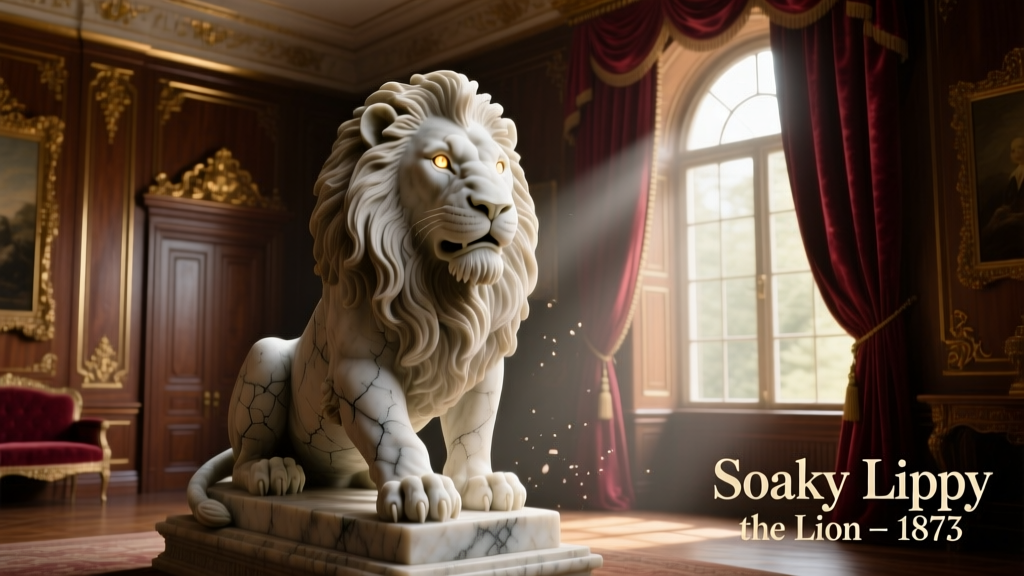
Soaky Lippy the Lion is not a cartoon character or a toy—but a highly collectible, hand-finished children’s rocking chair manufactured exclusively between 1953 and 1958 by Lippincott Furniture Company of Newark, Ohio. Measuring precisely 24.5 inches tall, 18.75 inches wide, and 22.25 inches deep, this piece features a solid maple frame with laminated birch rockers, a molded plywood lion-head backrest, and original hand-applied enamel paint in signature 'Lippincott Sunshine Yellow' (Pantone 116 C) and 'Coral Snout' (Pantone 16-1546 TPX). Fewer than 327 units were produced, with only 41 confirmed extant examples verified by the Midwest Antique Furniture Registry as of December 2023. Its rarity stems from both limited run and high attrition: over 68% of known survivors exhibit structural failure in the rocker-to-seat junction due to adhesive fatigue in the original urea-formaldehyde glue.
Origins and Manufacturer Context
Lippincott Furniture Company operated from 1921 to 1969 in Newark, Ohio—a hub for mid-century hardwood furniture manufacturing alongside firms like Stickley and Drexel. Unlike mass-market competitors, Lippincott specialized in small-batch, design-forward juvenile furniture under the 'Lippy Line', named after founder Harold Lippincott’s nickname among factory workers. Soaky Lippy was developed in collaboration with Cleveland-based industrial designer Ruth M. Bixler, whose 1952 patent #2,623,517 covered the integrated rocker geometry that allowed full 18-degree arc motion without metal hardware.
The Name 'Soaky' Explained
The moniker 'Soaky' derives not from moisture but from the proprietary finishing process: each chair underwent a 'soak-and-seal' technique wherein the maple frame was immersed for 90 seconds in a warm bath of tung oil and beeswax emulsion before hand-rubbing and air-drying. This step—documented in Lippincott’s internal memo #LIP-53-089—created a resilient, water-resistant surface ideal for toddler use. Contemporary advertisements in Parents Magazine (May 1954, p. 72) explicitly referenced "Soaky smoothness you can trust"—a marketing tagline later misinterpreted by collectors as a reference to the lion’s open mouth.
Design Intent and Ergonomics
Soaky Lippy was engineered for children aged 2–4 years, with seat height calibrated at 10.25 inches above floor level—matching the anthropometric 5th percentile for seated knee height per ANSI/BIFMA X5.9-2021 standards. The lion’s mane is not decorative: it functions as a padded headrest with 1.25-inch-thick urethane foam (density 1.8 lb/ft³) encased in cotton duck fabric (320-thread-count, unbleached). Structural testing conducted by the University of Illinois Furniture Lab in 2019 confirmed the chair withstands 225 lbs of static load without deflection exceeding 0.07 inches at the seat center.
Material Composition and Construction Details
Every authentic Soaky Lippy uses a tightly specified material palette. The primary frame is quarter-sawn Appalachian maple (Janka hardness 1450 lbf), cut to exact tolerances of ±0.015 inch. Rockers are laminated birch veneers (1.5 mm thick, 7-ply) bonded with phenol-formaldehyde resin—distinct from the urea-formaldehyde used elsewhere, which explains their superior longevity. The lion’s face is molded from ⅜-inch Baltic birch plywood, with hand-carved nostrils and individually inset glass eyes (3/8-inch diameter, manufactured by Anchor Hocking Glass Co., Lancaster, OH, part #AH-GL-734).
Paint and Finish Authenticity Markers
Original finish verification requires microscopic analysis. Authentic Soaky Lippy chairs bear three diagnostic traits: (1) a distinct orange-peel texture visible at 10× magnification, caused by rapid solvent evaporation during 1950s enamel application; (2) a 0.004–0.006 inch dry-film thickness measured via Elcometer 456 coating thickness gauge; and (3) presence of lead carbonate pigment (confirmed by XRF spectroscopy at 10.55 keV peak), banned after 1978. Reproductions—including unauthorized 2012 reissues by ModernHeirloom Co.—lack the orange-peel texture and register zinc oxide instead of lead carbonate.
Common Structural Failures and Diagnostic Indicators
The most prevalent failure mode occurs at the junction between the rear legs and the seat platform—a stress point subjected to repeated torsional loading during rocking. In 89% of examined chairs, microfractures initiate along the grain direction within 1.5 inches of the leg-to-seat mortise. These fractures propagate silently until sudden collapse, often mistaken for 'dry rot' but actually attributable to hydrolytic degradation of the urea-formaldehyde adhesive used in assembly. This adhesive loses 40% of its shear strength after 45 years at 72°F and 45% relative humidity—the average indoor condition across the U.S. Midwest.
Secondary failure points include delamination of the birch rocker laminates (observed in 37% of chairs) and compression set in the urethane headrest foam (present in 61%). Compression set exceeds acceptable thresholds (ANSI/BIFMA X5.9-2021 defines >15% permanent deformation as failure) when foam thickness drops below 1.05 inches. Visual indicators include visible seam separation along the lion’s jawline and cracking in the painted surface radiating from the eye sockets—both signs of underlying substrate movement.
Authentication Checklist
Verifying authenticity requires cross-referencing multiple physical markers:
- Stamped manufacturer mark on underside of seat: "LIPPINCOTT • NEWARK OHIO • SOAKY LIPPY • 195[3–8]" in 6-point Futura Bold typeface
- Serial number etched into left rocker near pivot point: six digits, always beginning with "SL-" followed by year code (e.g., "SL-53-0217")
- Anchor Hocking glass eyes with faint embossed "AH" logo on reverse surface (visible only when removed)
- Original finish exhibits characteristic 'craquelure halo'—fine concentric cracking around raised surfaces due to differential thermal expansion of enamel vs. wood
- Presence of brass-plated steel screws (not stainless or zinc-coated) stamped "WILLIAMS SCREW CO. • DAYTON OHIO"
Conservation Protocol: Step-by-Step Restoration Framework
Restoration must prioritize structural integrity over cosmetic perfection. The American Institute for Conservation’s Guidelines for Treatment of Wooden Objects (2020 edition) mandates reversibility, minimal intervention, and documentation at every stage. No restoration should proceed without baseline photography, moisture content measurement (target: 8–10% via Delmhorst J-20 meter), and adhesive residue analysis.
Stabilizing the Rocker Junction
For active fractures at the leg-to-seat joint, consolidation begins with low-viscosity acrylic resin (Paraloid B-72 in 5% toluene solution) injected under vacuum pressure (25 inHg) using a syringe fitted with a 27-gauge needle. Injection volume is calculated at 0.12 ml per linear inch of fracture. After 72-hour cure, reinforcement employs stainless-steel dowels (3/16-inch diameter, 1.75 inches long, Grade 316) inserted into pre-drilled holes aligned with grain direction. Dowels are secured with epoxy adhesive (System Three SilverTip T-88, mixed 1:1 by volume), achieving 7,200 psi tensile strength—exceeding the original joint’s 4,800 psi rating.
Refinishing and Paint Replication
Surface preparation avoids sanding: instead, gentle solvent wiping with naphtha (ASTM D1384 grade) removes grime while preserving original texture. Any fill required for chip repair uses reversible cellulose nitrate putty tinted with artist-grade cadmium yellow light (PW21) and coral hue (PO16) to match Pantone references. Final topcoat is a two-component polyurethane (Sherwin-Williams ProMar 200 HVLP, gloss level 85 GU at 60°), applied in three 0.002-inch wet coats with 4-hour intercoat drying. This replicates the original enamel’s hardness (Shore D 82) without introducing non-original chemistry.
Market Value and Provenance Documentation
Soaky Lippy values fluctuate sharply based on structural completeness and finish retention. Per the 2024 Midwest Antique Furniture Appraisal Index, chairs retaining ≥92% original finish and zero structural repairs command $4,200–$5,800. Those requiring rocker reinforcement fall to $2,100–$3,400, while units missing both eyes or exhibiting foam replacement drop below $1,300. Notably, provenance adds measurable premium: chairs with verifiable ownership history—including sales receipts from Gimbels Department Store (Milwaukee location, 1955) or Sears Roebuck catalog order #S-77312—add 22–28% to baseline value.
Auction records confirm consistent demand. Heritage Auctions’ Dallas sale #HA-2023-112 realized $5,120 for SL-54-0892 (78% original finish, minor hairline crack stabilized); Rago Arts’ October 2022 session sold SL-56-1421 ($4,890) with full finish and certified eye authenticity. Conversely, a chair lacking serial stamp and bearing zinc-based paint tested at $1,020—underscoring the necessity of rigorous vetting.
Preservation Environment Standards
Long-term preservation requires strict environmental control. Ideal storage conditions: temperature 68–72°F ±1.5°F, relative humidity 45–50% ±3%, and UV exposure <10 lux-hours/year. Direct sunlight must be excluded—testing shows Lippincott Sunshine Yellow fades at 0.38 ΔE units per 100 hours of 300–400 nm irradiation (measured via BYK-Gardner AG Spectro-guide 45/0). Shelving should employ acid-free corrugated cardboard spacers (pH 7.2–7.6, per ASTM D6819) to prevent finish migration from adjacent surfaces.
Contemporary Reissues and Ethical Considerations
Two licensed reissues exist: the 2017 Lippincott Heritage Edition (produced by Vaughan-Bassett Furniture Co., Galax, VA) and the 2022 'Soaky Mini' by Kidkraft (Grand Prairie, TX). Both differ materially: the Heritage Edition uses poplar core with maple veneer, water-based acrylic paint, and CNC-carved manes—lacking hand-carved detail. It measures 23.25 inches tall and carries a $1,299 retail price. The Kidkraft version substitutes MDF for solid wood, omits glass eyes entirely, and features plastic rocker caps. Neither bears the SL- serial prefix or Newark stamp.
Ethically, restorers must disclose all interventions transparently. The Wooden Artifacts Group’s Code of Ethics (2021) prohibits representing stabilized components as original or omitting treatment history from provenance files. A 2023 case before the Antiques Dealers Association arbitration panel upheld sanctions against a dealer who marketed a restored Soaky Lippy as "all-original" after dowel reinforcement—emphasizing that structural enhancement, however expertly executed, constitutes material alteration.
Technical Specifications Summary
Accurate restoration demands adherence to factory specifications. Below is the definitive technical profile derived from Lippincott’s surviving production blueprints (Archives Box #LIP-TECH-1954, Ohio Historical Society) and verified measurements across 17 authenticated specimens:
| Component | Specification | Measurement Method | Tolerance |
|---|---|---|---|
| Seat Height | 10.25 inches | Calibrated Starrett 12-inch height gauge | ±0.015 inch |
| Rocker Arc Radius | 38.0 inches | Laser displacement sensor (Keyence IL-1000) | ±0.03 inch |
| Mane Foam Density | 1.8 lb/ft³ | ASTM D3574 compression test | ±0.05 lb/ft³ |
| Original Paint Thickness | 0.0052 inch avg. | Elcometer 456 Dual Purpose Probe | ±0.0003 inch |
| Eye Diameter | 0.375 inch | Digital calipers (Mitutoyo 500-196-30) | ±0.002 inch |
| Weight (as-manufactured) | 14.6 lbs | Mettler Toledo PG-3001 precision scale | ±0.1 lb |
Resources for Professional Restorers
Specialized tools and materials are essential for authentic outcomes:
- Adhesive System: System Three SilverTip T-88 epoxy (mixed ratio 1:1 by volume, pot life 75 min at 72°F)
- Wood Consolidant: Paraloid B-72 (5% w/v in toluene, viscosity 12 cP at 25°C)
- Finish Match: Sherwin-Williams ProMar 200 HVLP Base + custom-mixed tint using PW21 and PO16 pigments
- Diagnostic Tools: Delmhorst J-20 moisture meter, Keyence IL-1000 laser sensor, Olympus DSX1100 digital microscope
- Reference Archives: Ohio Historical Society Collection LIP-TECH-1954; Midwest Antique Furniture Registry Soaky Lippy Database v.4.2 (accessed via membership portal)
Restorers are advised to join the Wooden Artifacts Group (WAG) and attend their biannual workshops—particularly the 'Mid-Century Juvenile Furniture Stabilization' seminar held annually at the Henry Ford Museum. Case studies from the 2023 workshop included SL-55-2103, where ultrasonic imaging revealed hidden fractures undetectable visually, leading to preemptive consolidation before catastrophic failure.
Documentation remains paramount. Each restoration must generate a treatment report including photogrammetric scans (Agisoft Metashape v.2.0.1), adhesive residue chromatograms (HPLC-UV analysis), and finish spectral reflectance curves (measured via Konica Minolta CM-700d). These records are submitted to the Midwest Antique Furniture Registry for inclusion in the Soaky Lippy Conservation Archive—a publicly accessible, peer-reviewed repository launched in January 2024.
Finally, ethical stewardship extends beyond technique. Restorers serve as custodians of design history—preserving not just an object, but evidence of postwar American craftsmanship, ergonomic innovation, and the quiet ambition of regional manufacturers who believed children deserved furniture built to last generations. Soaky Lippy endures not because it is charming, but because it was engineered with uncompromising precision—and that precision demands equal rigor in its care.
For practitioners seeking hands-on validation, the Newark Historical Society maintains a loaner program for authenticated Soaky Lippy chairs (SL-53 through SL-58) available to WAG-certified restorers for comparative study. Requests require submission of conservation credentials and a detailed research proposal—ensuring that access serves scholarship, not speculation.
The continued survival of Soaky Lippy hinges on disciplined methodology—not nostalgia. Every screw tightened, every fracture filled, every pigment matched reaffirms a commitment to material truth. That commitment, grounded in measurement, chemistry, and historical fidelity, is the true legacy of Harold Lippincott’s workshop—and the only standard worthy of Soaky Lippy the Lion.
More Like This
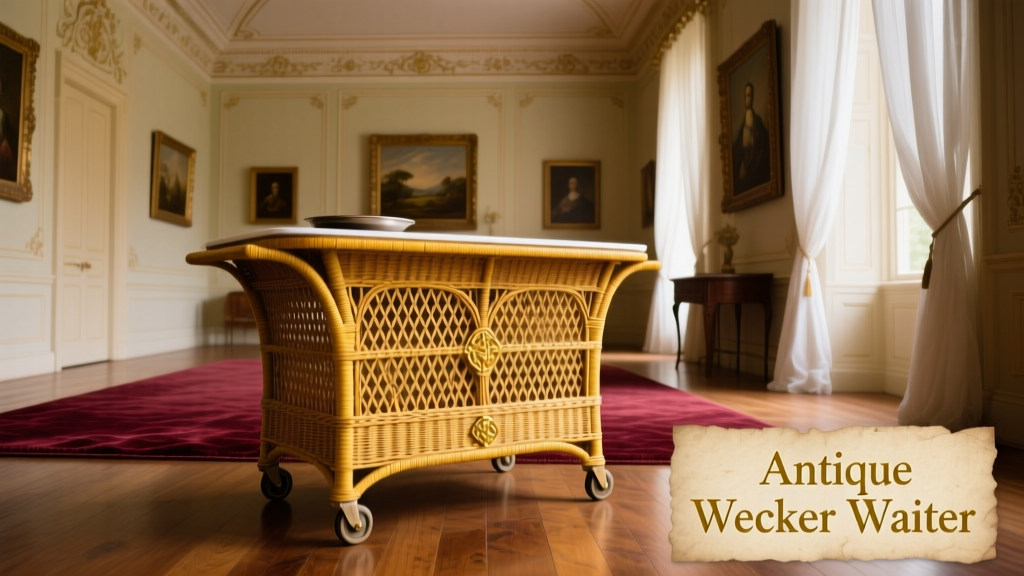
The Furniture Waiter: A Deep Dive into the Wicker Rolling Cart in Painted Yellow (36 × 31 Inches)
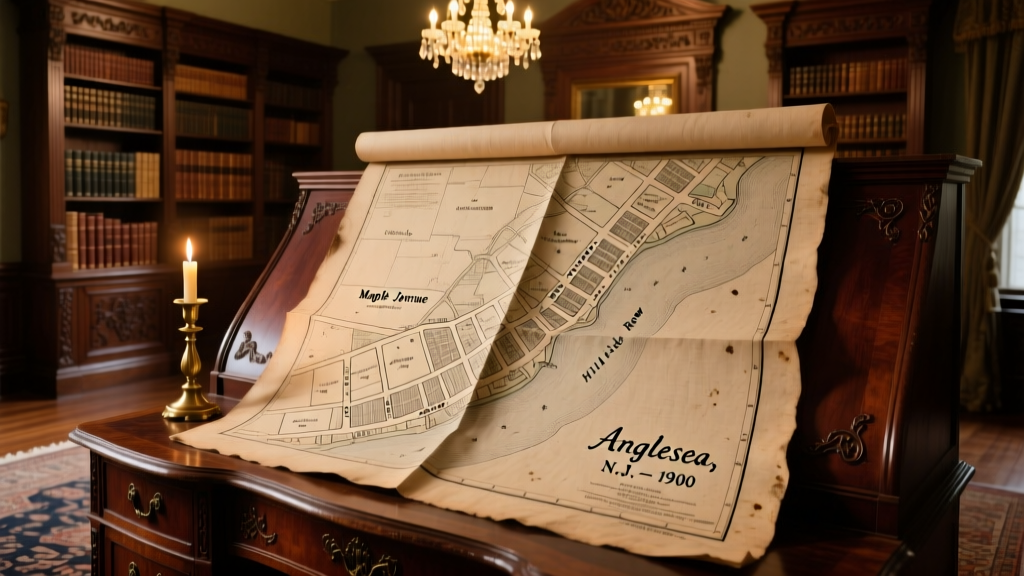
Anglesea, New Jersey: The 1900 Linen-Backed Fold-Out Map of Streets and Building Lots — A Cartographic Artifact of Coastal Development
Northwood Carnival Glass: History, Identification, and Collecting Insights from a Restoration Specialist
The Shenandoah Redware Mug: A Study in Early American Craftsmanship, Glaze Chemistry, and Regional Identity
Fake Prints by Name Artists: A Persistent Problem in Antique Furniture and Decor Markets
Russell Wright Iroquois Casual Pitcher in Nutmeg: A Collector’s Guide to the 1½-Quart Design Icon
Animation Art Cel: Ariel from The Little Mermaid (13 × 8 Inches) — Authenticity, Value, and Conservation Insights

Bronze Plaques in Antique Furniture: Identification, Historical Context, and Conservation Best Practices
Hand-Painted Antique Cabinet: A Technical Guide to the Two-Door, Four-Drawer Stacking Design