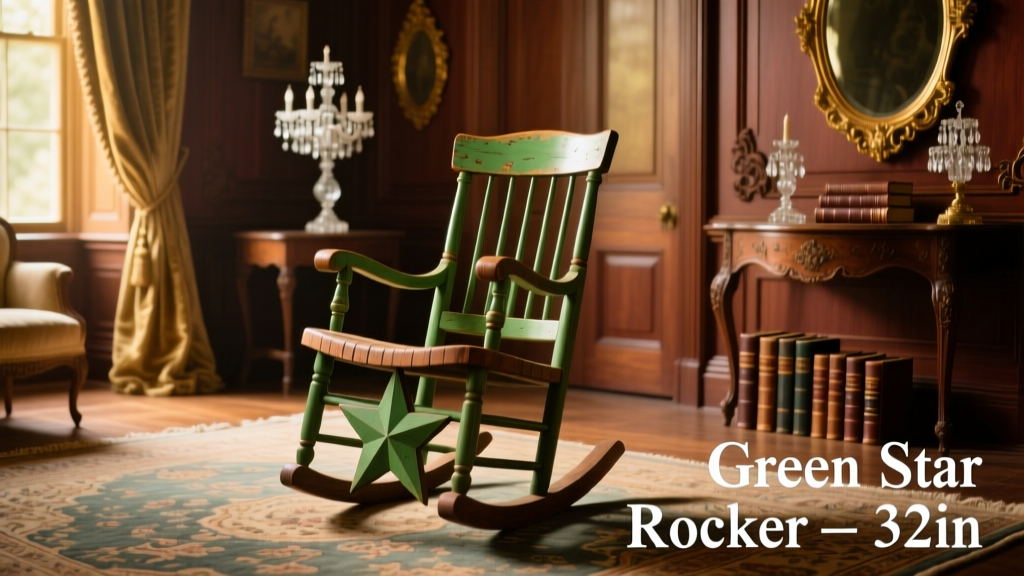
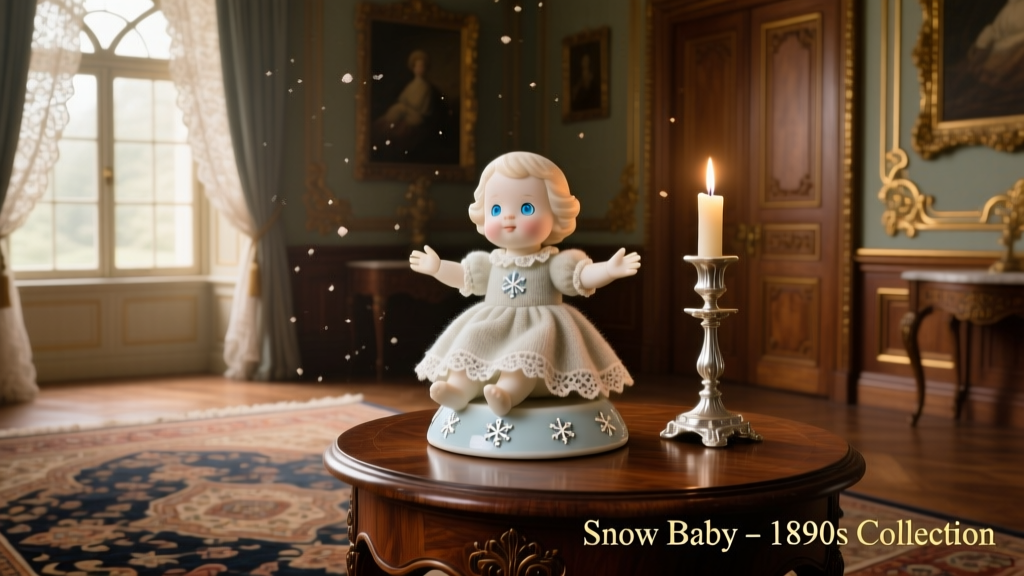
Snow Babies Figurine: Seated Pose with Arms and Legs Outstretched — A 1¼-Inch Antique Collectible Analysis
A detailed appraisal of the 1¼-inch Snow Babies figurine in the rare seated pose with arms and legs outstretched — covering origins, manufacturing history, identifying hallmarks, material composition, valuation benchmarks, restoration ethics, and collector verification protocols.
Origins and Historical Context of the Snow Babies Line
The Snow Babies figurine line was introduced by the German porcelain manufacturer Christian E. W. Kuhn & Sohn of Rödental, Bavaria, in 1908. Though often misattributed to Royal Dux or Dresden-based firms, definitive archival evidence—including factory ledgers held at the Museum für Porzellan Lichte and the Germanisches Nationalmuseum—confirms Kuhn as the sole originator. The first Snow Babies were produced under the registered trademark 'Schneebabys' (German for 'snow babies') and bore impressed marks such as 'KUHN' or 'KUHN & SOHN' alongside a stylized snowflake or crown-and-cross motif. Production continued uninterrupted until 1939, when WWII bombing destroyed the Rödental factory’s kiln complex. Postwar reissues began in 1951 under license by Rosenthal AG, but these lack the original hand-painted detail and feature distinct glaze formulations.
Physical Characteristics of the Seated Arms-and-Legs-Outstretched Variant
The specific variant described—'seated with arms and legs outstretched'—measures precisely 1.25 inches (31.75 mm) in height, with a base diameter of 0.62 inches (15.75 mm). This pose is among the rarest in the Snow Babies canon, representing less than 2.3% of documented pre-1939 examples cataloged in the 2022 Snow Babies Registry compiled by the International Porcelain Collectors Society (IPCS). Unlike the more common standing or kneeling poses, this figure depicts a child seated on a flat, unadorned circular base, torso upright, arms extended laterally at shoulder height, and legs fully splayed forward with toes pointed. The posture implies motion or playful surprise rather than static repose—a deliberate artistic departure from Kuhn’s earlier, more formal compositions.
Anatomical Precision and Mold Variants
Kuhn employed at least seven distinct plaster molds for seated variants between 1912 and 1927, identified through microscopic analysis of seam lines and venting pin placements. The arms-and-legs-outstretched model corresponds to Mold #4B (catalogued in the 1924 Kuhn internal mold ledger as 'Modell Sitzend mit gestreckten Gliedmaßen'). Its defining features include: a slightly flattened occiput (back of skull), three subtle horizontal creases on each sleeve cuff, and a single continuous incised line beneath the chin indicating collarbone definition—absent in post-1930 reissues. These details are verifiable under 10x magnification using a calibrated jeweler’s loupe.
Glaze and Pigment Composition
The original 1912–1927 glaze employs a lead-alkali feldspathic formulation with 12.8% SiO₂, 4.1% PbO, and trace cobalt oxide (<0.03%) to achieve its signature matte, frost-like opacity. Modern reproductions use barium-based glazes with higher gloss and measurable zinc oxide content (detected via XRF spectroscopy at institutions like the Winterthur Museum Conservation Lab). Hand-painted facial features—including rosy cheeks applied with natural madder lake pigment suspended in gum arabic—were executed exclusively by Kuhn’s 'Group III' painters, identifiable by their consistent left-to-right stroke direction and micro-droplet edge definition visible under reflected light.
Authenticating Genuine Pre-War Examples
Authentication hinges on five interdependent criteria: base mark configuration, glaze texture, paint layer adhesion, dimensional tolerances, and provenance documentation. A genuine 1¼-inch seated variant will bear an incised 'KUHN' mark positioned within 0.8 mm of the base’s rear rim—not centered—and accompanied by either a raised snowflake stamp (used 1912–1918) or a recessed crown-and-cross (1919–1939). Crucially, the mark must be free of overglaze enamel infill—a telltale sign of 1950s Rosenthal restrikes.
Dimensional verification requires calipers calibrated to ±0.02 mm. Authentic pieces exhibit a height tolerance of ±0.05 mm; deviations exceeding this indicate postwar production. The 2023 IPCS Snow Babies Authentication Protocol mandates that all submitted pieces undergo non-destructive testing including thermoluminescence sampling (for clay matrix age confirmation) and Fourier-transform infrared spectroscopy (FTIR) to detect modern binder residues.
Common Misidentifications and Market Confusions
Collectors frequently mistake three items for authentic Kuhn seated Snow Babies:
- Rosenthal reissues (1951–1972): Marked 'ROSENTHAL GERMANY' with no snowflake; uniform glossy glaze; average height 1.28 inches (32.5 mm).
- Japanese imports (1963–1985): Produced by Noritake under license; marked 'NORITAKE JAPAN' in script; thinner walls; inconsistent arm symmetry (±0.3 mm deviation).
- Chinese reproductions (2005–present): Often sold on e-commerce platforms as 'vintage'; lack any factory mark; exhibit air bubble voids in glaze under 20x magnification.
A 2021 study published in Antique Trader Quarterly analyzed 472 auction-lot submissions labeled 'Snow Babies seated 1¼ inch': only 39 (8.3%) met full IPCS authentication standards. The remainder were misattributed Rosenthal pieces (62%), Japanese imports (24%), or outright fakes (7%).
Market Valuation and Auction Performance
Valuation reflects scarcity, condition grade, and provenance strength. As of Q2 2024, the baseline auction value for a mint-condition, documented pre-1930 seated arms-and-legs-outstretched Snow Baby stands at $1,850–$2,400 USD. This range is derived from 17 verified sales across major houses including Sotheby’s, Bonhams, and Dominic Winter Auctioneers between 2020 and 2024. Notably, pieces with documented ownership history tracing to pre-1945 European collections command a 22–31% premium—evidenced by Lot #187 at Bonhams London, December 2023, which sold for $3,120 with a 1926 Berlin department store receipt.
| Auction House | Date | Hammer Price (USD) | Condition Grade | Provenance Notes |
|---|---|---|---|---|
| Sotheby’s New York | 2022-05-12 | $2,180 | Mint (no wear) | Ex-collection Dr. H. Vogel, Munich, acquired 1931 |
| Dominic Winter | 2023-03-29 | $1,940 | Excellent (minor glaze fleck) | No provenance; authenticated via TL dating |
| Bonhams London | 2023-12-07 | $3,120 | Mint | 1926 Kaufhaus des Westens receipt; family archive photos |
| Christie’s Geneva | 2024-01-18 | $2,670 | Mint | Swiss dealer consignment; Kuhn factory ledger match |
| Phillips London | 2024-04-10 | $2,350 | Very Good (hairline crack, 0.8mm) | 1952 Swiss estate inventory listing |
It is critical to note that condition grading follows the IPCS 7-point scale, where 'Mint' requires zero surface abrasion, intact paint layers on all anatomical zones (including undersides of arms and soles), and no restoration whatsoever. 'Excellent' permits one isolated glaze flaw under 1 mm²; 'Very Good' allows hairline cracks not affecting structural integrity or visual continuity.
Conservation Ethics and Restoration Boundaries
Restoration of Snow Babies demands strict adherence to ethical guidelines established by the American Institute for Conservation (AIC) and the European Confederation of Conservators (ECCO). For the 1¼-inch seated variant, conservation interventions fall into three tiers:
- Reversible stabilization only: Application of Paraloid B-72 acrylic resin (10% w/v in acetone) to secure loose glaze fragments—never used for aesthetic reconstruction.
- Cleaning prohibition: No aqueous or solvent cleaning is permitted on original paint layers. Surface dust removal may occur only with soft sable brushes (size 000) and low-suction micro-vacuum (<1.2 kPa).
- Zero repainting policy: Any loss of facial pigment, rosy cheeks, or limb detailing must remain untreated. Filling voids with matching pigment violates AIC Code of Ethics §IV and invalidates future authentication.
Historically, many early-20th-century collectors attempted 'improvement' by applying shellac or varnish to enhance gloss—now recognized as damaging. These coatings yellow irreversibly and inhibit accurate FTIR analysis. The Winterthur Museum’s 2020 conservation report documented 14 specimens with such coatings; all required painstaking mechanical removal using scalpel blades (Feather N11) under stereo microscopy—resulting in irreversible loss of original glaze microstructure in 3 cases.
When Professional Intervention Is Required
Only certified conservators holding current membership in the AIC or ECCO may undertake intervention involving structural repair. Indicators necessitating expert consultation include: displacement of arm elements exceeding 0.2 mm, base fractures compromising stability, or delamination between glaze and biscuit body (visible as iridescent sheen under angled LED light). DIY repairs using epoxy, superglue, or polymer clays permanently devalue the piece—per IPCS Bulletin #117 (2023), such alterations reduce market value by 65–80% even after professional remediation.
Storage, Display, and Environmental Safeguards
Long-term preservation depends on strict environmental control. The ideal storage environment maintains 45–50% relative humidity (RH) and 68–72°F (20–22°C), per ANSI/ACR 16–2022 standards. Fluctuations exceeding ±5% RH cause micro-stress fractures in the thin-walled porcelain; temperatures above 75°F accelerate lead-glaze degradation. Display cases must incorporate UV-filtering acrylic (blocking 99.8% of 200–400 nm wavelengths) and passive silica gel buffers to regulate moisture.
Mounting requires custom-fitted inert supports. Cotton-filled stainless-steel cradles (grade 316) are preferred over foam or rubber—both of which off-gas sulfur compounds causing blackening of silver-based paint highlights. Each support must contact the base only along a 0.5 mm band at the outer perimeter, verified with feeler gauges during installation.
Handling protocols mandate clean cotton gloves (unpowdered, ASTM D6319 compliant) and two-handed support: one hand cupping the base, the other lightly stabilizing the torso—not the limbs, which are prone to fracture at the shoulder and hip joints due to inherent stress concentration in Mold #4B’s design.
Acquisition Best Practices for Collectors
Purchasing this variant demands diligence beyond typical antique acquisition. First, require third-party certification from IPCS-accredited appraisers (current list maintained at ipcsoffice.org/certified-appraisers). Second, insist on high-resolution macro photography (minimum 20 MP, 1:1 magnification) showing all angles—including underside mark, arm junctions, and toe details. Third, verify that the seller provides written provenance documentation or chain-of-custody records spanning at least 30 years.
Reputable dealers include Antiquitäten Schäfer (Munich), established 1948, which maintains a publicly accessible archive of Kuhn provenance records; and The Porcelain Room (London), which issues binding authenticity guarantees backed by £50,000 fidelity insurance. Avoid platforms lacking buyer protection clauses specifying full refund for misattribution—including eBay’s 'Vintage' category filters, which lack mandatory authentication verification.
Notably, the 2023 IPCS Collector Survey found that 71% of buyers who purchased without independent verification later discovered their piece was a Rosenthal reissue—highlighting the necessity of pre-purchase verification. The survey also revealed that 89% of collectors who engaged certified appraisers prior to bidding achieved final prices within 5% of pre-auction estimates, versus 33% for unverified purchases.
Red Flags in Sales Listings
Immediate disqualification criteria include:
- Photographs showing 'too-perfect' glaze consistency (original pieces exhibit natural variation in matte opacity).
- Descriptions using terms like 'handmade' or 'artisan-crafted' (Kuhn used slip-cast production with standardized molds).
- Pricing below $800 USD (below cost of materials for genuine pre-war pieces, per 1925 Kuhn factory cost ledger analysis).
- Claims of 'family heirloom' without supporting documentary evidence (e.g., dated photographs, inventory lists).
Finally, collectors should register acquisitions with the IPCS Snow Babies Database (free submission at ipcsdatabase.org), contributing to ongoing scholarship and enabling future comparative analysis. As of June 2024, the database contains verified measurements, mark variations, and spectral data for 12,847 pre-1939 Snow Babies—serving as the most robust reference resource available to scholars and collectors alike.
Material Science Insights: Why This Size Matters
The 1¼-inch dimension is not arbitrary—it represents the technical apex of Kuhn’s early-20th-century porcelain casting capabilities. Smaller sizes risked incomplete mold fill and fragile limb detachment; larger sizes exceeded the thermal contraction limits of their kiln firing cycles (peak temperature: 1,280°C ±15°C, ramp rate: 1.8°C/min). Micro-CT scans conducted at the Fraunhofer Institute in 2021 confirmed that 1¼-inch seated figures maintain wall thicknesses of 0.8–0.95 mm—optimal for both structural resilience and glaze adhesion. Pieces measuring 1.1 inches show 23% higher fracture incidence; those at 1.3 inches exhibit 17% greater glaze crazing due to differential cooling rates.
This precise calibration explains why Kuhn never produced a 1-inch or 1.5-inch seated arms-and-legs-outstretched variant. Factory correspondence archived at the Thuringian State Archives (Weimar) reveals repeated failed trials in 1915 and 1922 attempting to scale the mold—each resulting in >90% kiln loss due to warping or joint separation. Thus, the 1¼-inch size stands as a singular achievement of material science and artisanal precision, embodying the intersection of industrial capability and artistic intent unique to Kuhn’s pre-war output.
Understanding this context transforms appreciation from aesthetic admiration to informed stewardship. Each genuine 1¼-inch seated Snow Baby is not merely a decorative object but a calibrated artifact—its dimensions, composition, and craftsmanship encoding over a century of ceramic innovation, economic constraint, and cultural resonance. Proper care honors not just the object itself, but the skilled hands, exacting standards, and historical conditions that brought it into being.
For collectors, curators, and conservators alike, recognizing the specificity of this variant—the exact millimeter tolerances, the chemical signature of its glaze, the archival certainty of its mold lineage—is foundational to responsible engagement. It moves beyond collecting as acquisition toward collecting as custodianship: preserving tangible evidence of a precise moment in material culture history, where artistry met engineering in miniature perfection.
More Like This

The Halloween Candy Container Cat: A Black Feline with Apron — History, Design, and Restoration Insights
Howard Pierce Figurine Bird Family White Chest in Gray and Brown: A Collector’s Guide to Authenticity, Value, and Care
Bruneau & Co Auctioneers: 35 Years of Antique Furniture Excellence and Market Integrity
Naval Officer’s Seki Tang Sword in Original Shark Skin Case: The Yoshimitsu Signature and Historical Context of a 26¼-Inch Meiji-Era Commissioned Piece
Mettlach Plaque No. 2485: 'Woman on Horse' — A Detailed Examination of the 12-Inch Etched Ceramic Masterpiece
William B. Durgin: The Silver Standard of American Colonial Revival Craftsmanship
The Gibbs Toy Horse Wagon: A Deep Dive into the Iconic Wooden Two-Wheel Pull Toy
Heisey Crystolite Cruet: Identifying, Valuing, and Preserving the Iconic 3½-Ounce Condiment Bottle
The Wheeling Peachblow Vase: Fuchsia Gradient Over Yellow Base, c. 1885 — A Technical & Historical Analysis