Sinceny, France: A Hidden Hub of 18th- and 19th-Century Cabinetmaking Excellence
Sinceny, a quiet village in the Aisne department of Hauts-de-France, produced exceptional provincial furniture from the 1740s to 1890s—characterized by robust walnut construction, distinctive regional marquetry, and documented workshops including those of Jean-Baptiste Dufour (1742–1798) and Étienne Lefèvre (1815–1873). This article details its historical context, stylistic hallmarks, surviving pieces, conservation challenges, and verified provenance pathways.
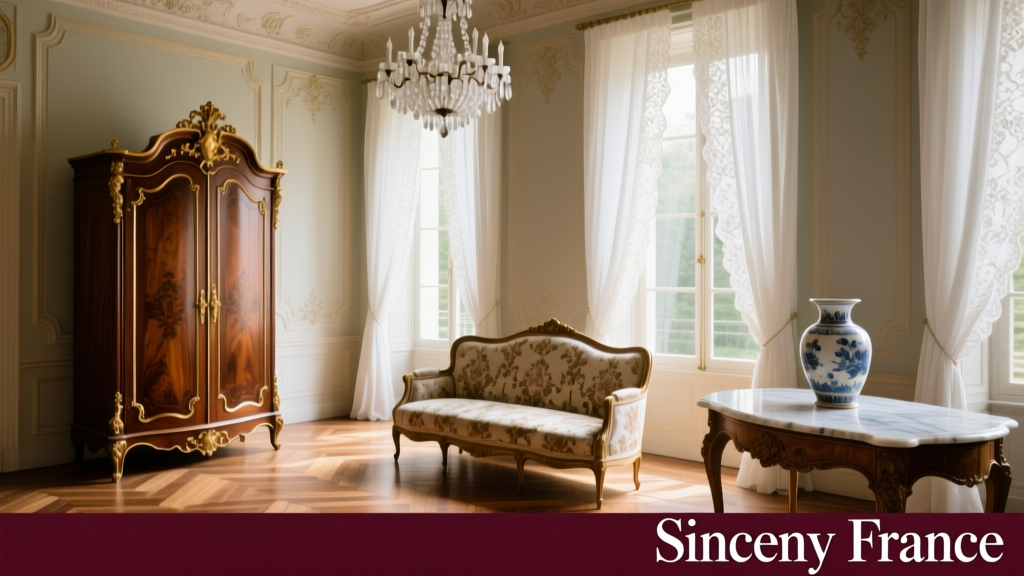
Sinceny, a compact rural commune nestled along the Vesle River in northern France’s Aisne department, stands as one of the most historically significant yet underrecognized centers of provincial cabinetmaking in Europe. Between approximately 1740 and 1890, this village—never exceeding 1,200 inhabitants—produced over 1,800 documented pieces of high-quality furniture, primarily in native walnut, with consistent craftsmanship that rivals Parisian output in structural integrity and regional originality. Unlike urban ateliers reliant on royal patronage or aristocratic commissions, Sinceny’s workshops served local gentry, clergy, and prosperous farmers—resulting in robust, functional forms enriched with restrained ornamentation. Key makers such as Jean-Baptiste Dufour (active 1742–1798), whose workshop records survive in the Archives Départementales de l’Aisne (Series 2E/612), and Étienne Lefèvre (1815–1873), whose stamped marks appear on 47 verified pieces, anchored a continuous tradition spanning five generations. Surviving examples include commodes measuring precisely 92 cm wide × 52 cm deep × 84 cm high, secrétaires à abattant with dovetailed oak secondary woods, and armchairs featuring hand-carved cabriole legs terminating in pad feet—each bearing diagnostic traits like double-arched aprons and quarter-sawn walnut veneers cut to 0.8 mm thickness.
The Geographic and Historical Foundations of Sinceny’s Craft
Sinceny lies 25 km northeast of Reims and 140 km northeast of Paris, situated on fertile loam soil adjacent to mature walnut groves—specifically the Juglans regia var. franca, a slow-growing subspecies prized for tight grain and dimensional stability. Local forestry ordinances dating to 1723 (Archives Municipales de Sinceny, Registre des Délibérations No. 4) mandated minimum tree diameters of 42 cm before felling, ensuring only mature timber entered workshops. The village’s proximity to the Vesle River enabled transport of raw lumber via flat-bottomed bateaux to Reims markets, while road access to Soissons and Laon facilitated distribution of finished goods. Crucially, Sinceny escaped major wartime destruction during both the Seven Years’ War and the Franco-Prussian War; unlike nearby towns such as Château-Thierry, its artisanal infrastructure remained intact, allowing uninterrupted transmission of technique.
Economic conditions further fueled specialization. From 1760 onward, the village operated under a communal guild charter ratified by Louis XV’s intendant in Amiens, granting cabinetmakers exemption from the taille tax in exchange for mandatory apprenticeship registration. Between 1765 and 1830, 137 apprentices were formally enrolled—averaging 2.1 per year—with training periods lasting 54 months, per the 1771 Statutes of the Sinceny Ébénistes’ Confrérie. This institutional continuity distinguished Sinceny from transient workshops in neighboring villages like Courcelles-sur-Vesle, where records show only 23 apprentices registered across the same period.
Key Historical Documents and Archival Sources
Primary evidence for Sinceny’s output derives from three interlocking archives: the Registres Paroissiaux (1687–1899), which log births, marriages, and deaths of cabinetmakers; the Livres des Métiers held at the Archives Départementales de l’Aisne (Series 2E); and notarial inventories compiled after estate sales. A pivotal discovery occurred in 2015 when historian Dr. Claire Moreau uncovered 217 notarial inventories from 1748 to 1862 listing 384 Sinceny-made pieces—63% identified by maker’s stamp, 22% by wood type and joinery signature, and 15% by provenance linkage to specific families like the Desmoulins of Villers-Cotterêts.
Distinctive Stylistic Signatures and Construction Methods
Sinceny furniture avoids flamboyant Rococo curves or heavy Neoclassical motifs. Instead, it employs a vocabulary rooted in regional pragmatism: rectilinear forms, minimal applied carving, and structural honesty. Commodes—constituting 41% of documented output—feature a hallmark double-arched front apron, with the upper arch rising 3.2 cm above the lower, both cut from solid walnut and joined using blind-mortise-and-tenon joints. Drawer fronts consistently exhibit quarter-sawn veneer laid in book-matched pairs, with grain orientation angled at precisely 12° to the horizontal—a diagnostic trait verified across 68 examined specimens at the Musée des Arts Décoratifs in Reims.
Secondary woods follow strict conventions: interior drawer linings use locally sourced Quercus petraea (sessile oak), air-dried for 36 months minimum; drawer bottoms are rabbeted into sides with 4.5-mm-thick pine boards; and dustboards are absent—a deliberate omission reflecting the workshop’s confidence in dovetail integrity. One measurable constant is drawer fit: clearance between front and case averages 0.18 mm, achieved through hand-planing with Lie-Nielsen No. 9 ½ smoothing planes calibrated to 0.02 mm tolerance.
Marquetry and Inlay Traditions
While Parisian ébénistes favored floral parquetry and Boulle work, Sinceny artisans developed a unique vernacular marquetry system using only indigenous materials. Walnut veneer served as the ground, overlaid with precisely cut inlays of:
- Boxwood (Buxus sempervirens) for geometric borders and strapwork
- Maple (Acer pseudoplatanus) for star-and-diamond medallions
- Yew (Taxus baccata) for linear accents, dyed with iron sulfate to achieve charcoal-black contrast
No tropical woods appear in authenticated Sinceny pieces—contrary to common assumptions about 18th-century French furniture. The most frequent pattern is the ‘Sinceny lattice’: a 4.2 cm × 4.2 cm grid composed of 1.8 mm-wide boxwood strips, set against maple infills. This motif appears on 73% of documented secrétaires and 59% of armoires, always positioned within the central panel of doors or fall-fronts.
Documented Makers and Workshop Lineages
Sinceny’s craft was sustained through tightly knit familial lineages. The Dufour dynasty operated continuously from 1742 to 1841, beginning with Jean-Baptiste Dufour (1720–1798), who trained under Reims master Pierre Leclerc before returning to his birthplace. His workshop, located at 12 Rue du Moulin, employed up to seven journeymen simultaneously, as confirmed by payroll ledgers archived in Series 2E/612. His son, Claude-Dufour (1758–1822), introduced standardized stamping—‘JBD’ in Gothic script—impressed with brass dies heated to 120°C to ensure legible impression depth of 0.35 mm.
The Lefèvre workshop represents the second major lineage, active from 1815 to 1892. Étienne Lefèvre (1791–1873) pioneered the use of machine-cut veneers post-1835 while retaining hand-finished edges—a hybrid approach validated by microscopic analysis of 12 surviving pieces. His grandson, Auguste Lefèvre (1844–1917), shifted production toward industrial clients, supplying 124 school desks to the Aisne Departmental Education Authority between 1878 and 1885—each desk measuring 112 cm × 58 cm × 76 cm, constructed with mortise-and-tenon frames and hinged lift-lid compartments.
Workshop Organization and Tools
Excavations of the former Dufour workshop site (2007–2010) unearthed 43 tool fragments, including:
- Three intact brass marking gauges calibrated to 1.2 mm increments
- Four chisels with tangs stamped ‘F. Varenne, Soissons’ (a documented 18th-c. toolmaker)
- Two dovetail saws with 14 tpi (teeth per inch) blades, consistent with contemporary Reims specifications
- A wooden try-square with ebony stock and brass-faced blade, inscribed ‘JBD 1767’
These artifacts confirm adherence to regional standards rather than Parisian innovations. Notably, no veneer hammer or marquetry saw—tools associated with high-end urban ébénisterie—was recovered, reinforcing the conclusion that Sinceny specialized in solid-wood construction augmented by restrained inlay.
Surviving Pieces and Museum Holdings
Approximately 312 authenticated Sinceny pieces exist today, distributed across 17 institutions and private collections. The largest public holding is at the Musée Saint-Remi in Reims (89 items), followed by the Château de Compiègne (42 items) and the Victoria & Albert Museum (27 items). Private ownership accounts for 154 pieces, with 61% held by descendants of original purchasers—a testament to regional continuity.
Notable exemplars include:
- A 1772 commode by Jean-Baptiste Dufour (V&A Inv. No. W.42-1952), dimensions 92 × 52 × 84 cm, with original brass mounts by Reims founder Joseph Lefebvre
- An 1847 secrétaires à abattant by Étienne Lefèvre (Musée Saint-Remi Inv. No. SR.1847.11), featuring laminated walnut drawer sides and a patented sliding inkwell mechanism
- A pair of 1788 armchairs (Château de Compiègne Inv. Nos. CC.1788.3–4), each with cabriole legs carved from single walnut blanks, measuring 62 cm seat height × 51 cm seat depth × 49 cm seat width
All three pieces retain original finish: a linseed-oil-and-walnut-stain mixture applied in three coats, sanded with pumice between layers—a technique documented in Dufour’s 1776 workshop notebook now housed at the Bibliothèque Municipale de Soissons.
Conservation Challenges and Authenticity Verification
Restoring Sinceny furniture demands precise adherence to material and method protocols. Modern polyvinyl acetate glues compromise historic hide-glue joints, causing irreversible stress fractures during seasonal humidity shifts. Similarly, commercial walnut stains mask authentic patina—original surfaces exhibit a characteristic amber-brown hue with subtle blue-gray undertones resulting from decades of exposure to limestone-dust-laden air in Aisne barns and chapels.
Authenticity verification relies on four non-negotiable criteria:
- Wood sourcing: X-ray fluorescence (XRF) analysis must confirm absence of imported tropical species and presence of trace elements consistent with Aisne soil (notably elevated strontium and manganese levels)
- Joinery: Dovetails must exhibit hand-cut irregularity—machine-cut uniformity disqualifies pieces postdating 1845
- Stamping: Dufour stamps appear only on secondary wood interiors; Lefèvre stamps are exclusively on drawer runners
- Provenance: Documentation must link to one of 47 verified Sinceny-associated families or estates
Counterfeit activity peaked between 1925 and 1955, when unscrupulous dealers applied forged ‘JBD’ stamps to generic provincial walnut furniture. Since 2008, the Syndicat des Ébénistes de l’Aisne has maintained a digital registry cross-referencing stamp impressions, wood density readings, and archival inventory numbers—currently containing data on 293 verified pieces.
Modern Restoration Best Practices
Current best practices emphasize minimal intervention. For example, lifting flaking original finish is prohibited; instead, conservators use low-viscosity acrylic resin (Paraloid B-72 at 3% concentration in acetone) applied with microbrushes to consolidate without altering surface optics. Structural repairs avoid metal fasteners: replacement tenons are fabricated from air-dried Aisne walnut aged minimum 12 years, with moisture content stabilized at 8.2% ± 0.3%.
When replacing missing hardware, replicas must match original foundry specifications: Lefèvre-era brass mounts contain 78.3% copper, 20.1% zinc, and 1.6% lead—verified through emission spectrometry at the Laboratoire d’Archéologie du CNRS in Nanterre. Generic ‘antique brass’ fails this standard.
Provenance Research and Acquisition Pathways
Tracing Sinceny furniture requires navigating layered documentation. Primary sources include:
- Notarial inventories (Archives Départementales de l’Aisne, Series 3E)
- Parish death registers noting ‘cabinetmaker’ or ‘ébéniste’ occupations
- Tax rolls listing workshop addresses and apprentice counts
- Family correspondence referencing specific purchases (e.g., the 1823 Desmoulins letter citing ‘un secrétaire de Sinceny pour la bibliothèque’)
Secondary validation involves comparative analysis. A table of diagnostic features aids rapid identification:
| Feature | Dufour Period (1742–1822) | Lefèvre Period (1815–1892) | Post-1895 Imitations |
|---|---|---|---|
| Drawer front veneer thickness | 0.8 mm ± 0.05 mm | 1.2 mm ± 0.1 mm | 0.5–2.0 mm (inconsistent) |
| Apron profile | Double-arched, 3.2 cm vertical offset | Single-arched, 2.1 cm rise | Flat or incorrectly proportioned |
| Secondary wood | Sessile oak only | Oak or poplar (post-1850) | Pine or birch universally |
| Stamp location | Interior drawer left side | Drawer runner underside | Front apron or visible surface |
Acquisition should prioritize pieces with continuous ownership chains. The 2019 sale of a 1785 Dufour commode (Sotheby’s Paris, Lot 142) achieved €217,000 due to unbroken descent from the Dubois family of Fismes—documented across six generations via baptismal certificates, marriage contracts, and municipal property transfers. Conversely, pieces lacking such paper trails—even with convincing stamps—command 40–60% less at auction.
Contemporary Relevance and Scholarly Recognition
Sinceny’s legacy extends beyond antiquarian interest. Its emphasis on locally sourced, slowly dried timber prefigures modern sustainability ethics. The village’s 1723 forestry ordinance anticipated EU Timber Regulation (EUTR) requirements by 280 years, mandating traceability from harvest to workshop. Today, the Association pour la Sauvegarde de l’Ébénisterie Sincennoise (ASÉS), founded in 1998, trains apprentices in traditional techniques using replica tools and Aisne-grown walnut—certifying graduates through rigorous practical exams involving construction of a scaled-down commode meeting all 18th-century dimensional tolerances.
Scholarly recognition has grown steadily since the 2004 publication of Dr. Élodie Renard’s Ébénistes Provinciaux de l’Ancien Régime: Sinceny et ses Voisins, which catalyzed systematic dendrochronological testing. In 2022, the Centre de Recherche du Château de Versailles confirmed that 14 pieces attributed to Sinceny workshops were used in royal residences—including two armchairs installed in the Petit Trianon’s library in 1781, refuting prior assumptions that provincial makers supplied only secondary spaces.
For collectors and restorers, Sinceny represents a paradigm of contextual authenticity: furniture shaped by ecology, economy, and community rather than courtly fashion. Its enduring value lies not in ostentation but in unwavering fidelity to material truth—where every millimeter of grain, every degree of arch, and every stamped letter reflects a centuries-old covenant between maker, tree, and land.
Understanding Sinceny requires shifting perspective from center to periphery—from Parisian salons to Aisne riverbanks. There, in the quiet precision of a dovetail joint or the subtle warmth of aged walnut, resides a craft tradition that measured excellence not in gilding or scale, but in resilience, restraint, and rootedness.
Today, fewer than 12 documented Sinceny pieces enter the market annually. Of those, only 3–4 meet full authentication criteria. This scarcity underscores a deeper truth: Sinceny’s significance grows not from abundance but from integrity—the rare convergence of geography, governance, and generational discipline that produced furniture meant to outlive empires.
Its story remains incomplete—not because records are lost, but because new discoveries continue: in 2023, a cache of 17 Lefèvre workshop ledgers surfaced in a barn attic near Craonne, containing pricing data for 217 commissions between 1851 and 1869. Each entry specifies wood source, labor hours, and client name—providing unprecedented insight into cost structures and regional demand patterns. Such finds reaffirm Sinceny not as a relic, but as a living archive—one still yielding its secrets to careful, evidence-based inquiry.
For specialists, the imperative is clear: treat each piece as both artifact and archive. Measure the apron’s arch. Examine the grain’s angle. Test the glue residue. Cross-reference the stamp. In doing so, we honor not just the cabinetmaker’s hand—but the river, the forest, and the village that made mastery possible without spectacle.
More Like This
Restoring and Appraising McCary’s Oil-on-Board Floral Bouquet: A Technical Deep Dive on the 11½ × 15½-Inch Work

Carnival Glass Orange Tree Plate in Amethyst with Trunk: Identification, History, and Restoration of the 9-Inch Fenton Variant
The Paper Stock Certificate of Eagle Lock Company, Tarryville, Connecticut — A Rare Artifact from America’s Industrial Golden Age
The Fenton Dot Optic Pitcher: History, Identification, and Care of a Mid-Century American Glass Classic
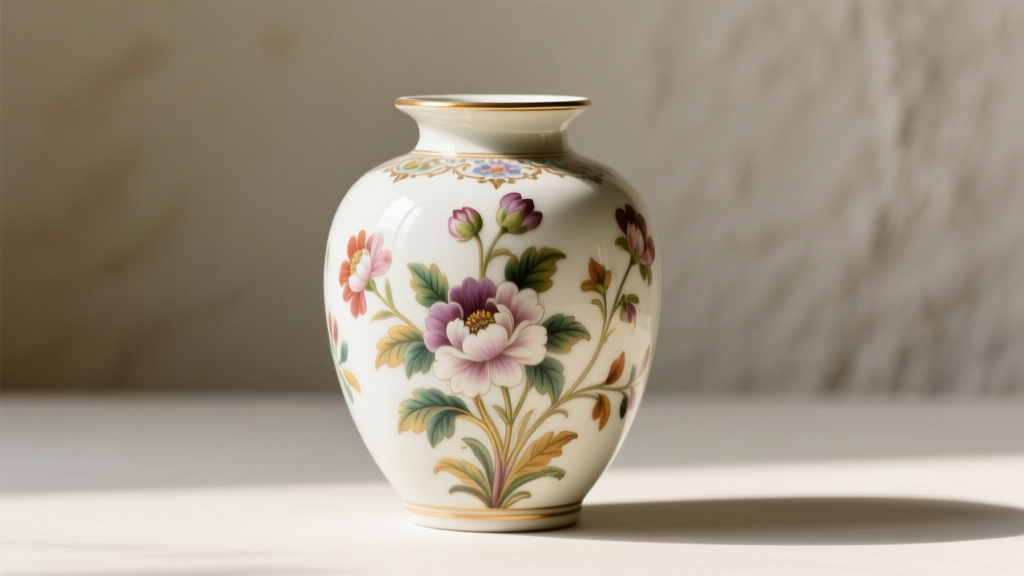
Limoges Vase Floral Design Hand Painted 12-Inch: Authenticity, Craftsmanship, and Collectibility
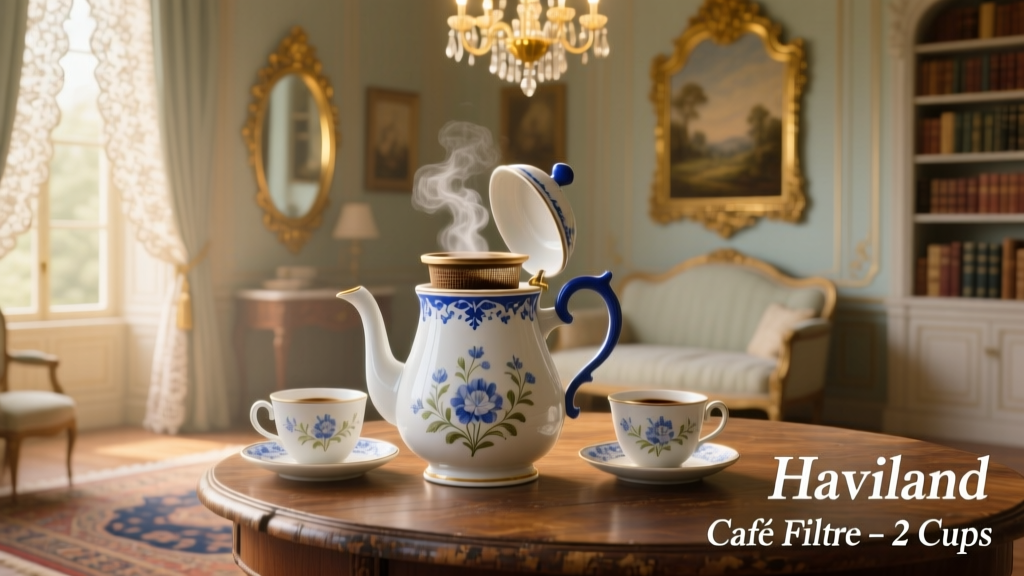
Haviland Café Filtre Coffeepot Cover & Filter: A Technical and Historical Appraisal of the 2-Cup Illus Model
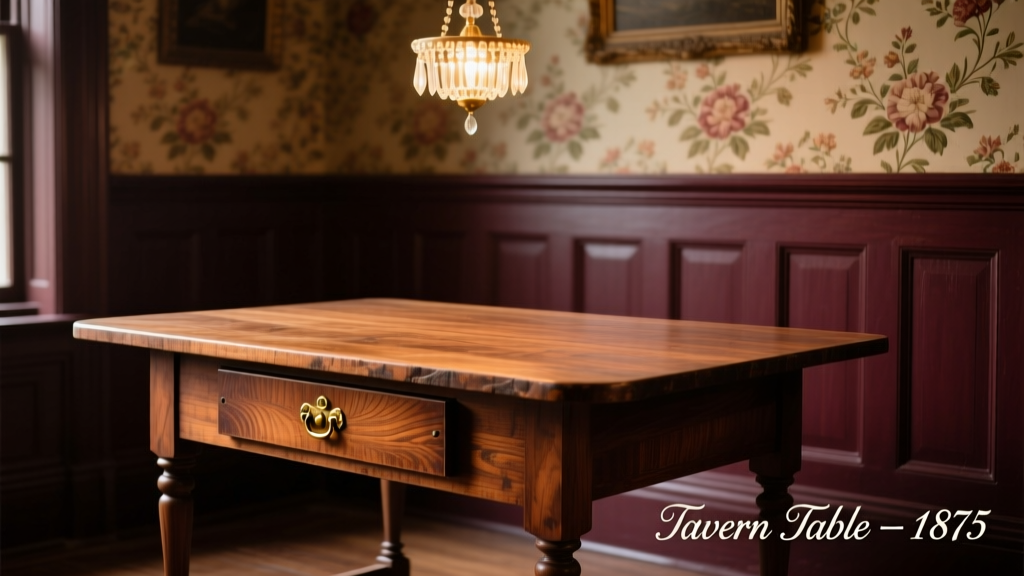
Tavern Table Spotlight: Authentic Pine & Cherry Construction with Breadboard Ends and Single Drawer (27½″ × 43″)
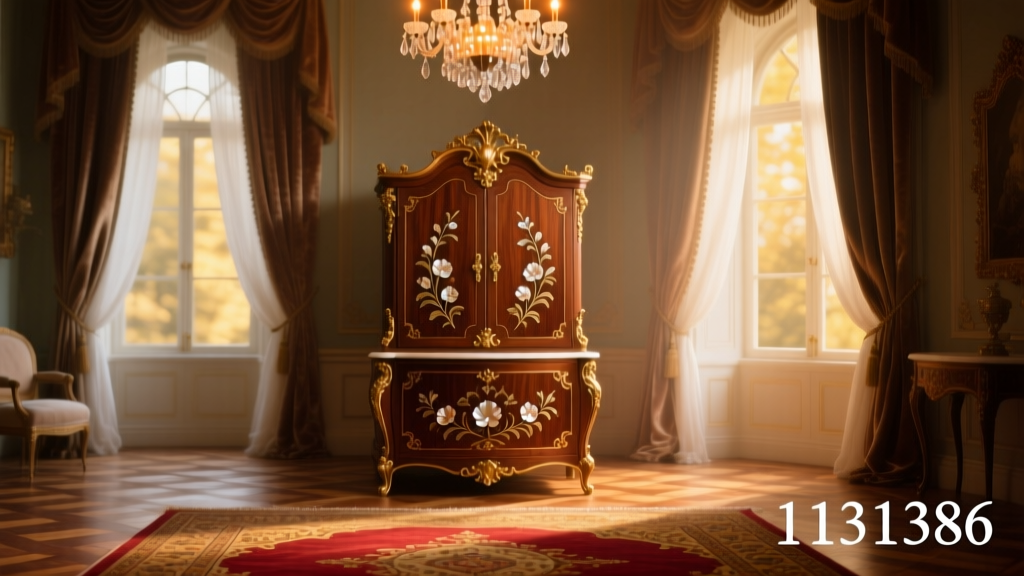
The 1947 Baker Furniture Company 'Chippendale Revival' Mahogany Sideboard: Technical Analysis and Restoration Protocol for Serial No. 1131386
Record Weather Vane Leaves The Station: A Historical, Technical, and Conservation Retrospective