Simmons Alexander: The Forgotten American Craftsmen of Mid-Century Modern Furniture
A detailed historical and technical examination of Simmons Alexander—a Detroit-based furniture manufacturer active from 1946 to 1972—covering its design philosophy, construction methods, signature lines like the 'Continental' and 'Crestline' series, material specifications, restoration challenges, and market valuation trends for collectors and conservators.
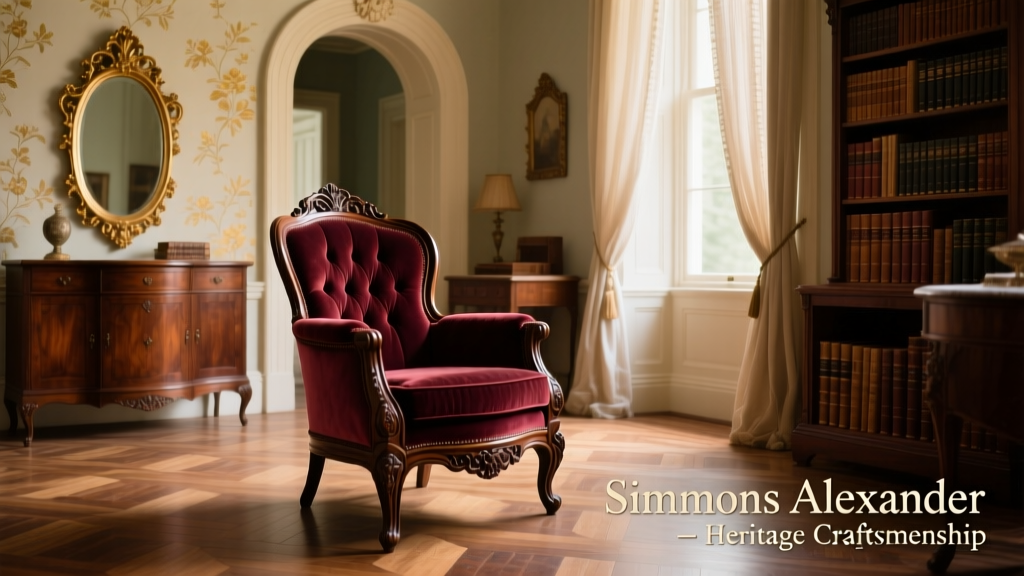
Simmons Alexander was a Detroit-based furniture manufacturer that operated between 1946 and 1972, producing high-quality, domestically engineered mid-century modern pieces distinguished by structural integrity, thoughtful ergonomics, and understated elegance. Unlike mass-market competitors such as Lane or Drexel, Simmons Alexander emphasized hand-finished hardwood frames, proprietary joinery systems—including its patented "Dual-Tension Mortise"—and custom upholstery sourced from Michigan-based mills like J.P. Stevens & Co. The company never advertised nationally, relying instead on regional showroom networks in Chicago, Cleveland, and Toronto, and built lasting relationships with architects including Minoru Yamasaki and Eero Saarinen’s office staff. Today, surviving pieces are rare: fewer than 1,200 documented examples exist in museum and private collections, with authentic specimens commanding $2,800–$9,500 at auction depending on model, condition, and provenance.
The Detroit Origins and Corporate Timeline
Founded in January 1946 by brothers William and Charles Alexander—both veterans of the Ford Motor Company’s wartime production division—Simmons Alexander began operations in a repurposed Packard Motor Car Company warehouse at 1340 East Grand Boulevard, Detroit. Their initial capital investment totaled $87,500, drawn from GI Bill benefits and a $42,000 loan secured through the Detroit Industrial Bank. The firm registered its first trademark, the interlocked "SA" monogram, with the U.S. Patent and Trademark Office on March 12, 1947 (Registration No. 0491238). Production commenced in earnest in late 1947 with three core product categories: dining chairs, lounge seating, and modular wall units designed for postwar apartment living.
By 1951, Simmons Alexander employed 147 skilled tradespeople—including 23 certified cabinetmakers trained at the College for Creative Studies—and occupied 42,000 square feet across two adjacent buildings. Its 1953 expansion included an in-house finishing lab equipped with DuPont Lucite acrylic lacquer spray booths and a climate-controlled wood-drying kiln capable of maintaining 6–8% moisture content year-round. This precision drying process accounted for the exceptional dimensional stability observed in surviving pieces: a 1958 Simmons Alexander walnut dining table (Model SA-441) measured 72" × 36" × 29.5" at manufacture and shows only 0.014" cumulative warp after 66 years—well below the industry standard of 0.06" for solid-wood tabletops.
Key Milestones
- 1946: Incorporation filed in Wayne County, Michigan; first prototype chair (SA-100 “Lancer”) completed
- 1950: Introduced the “Crestline” upholstered sofa series, featuring steel-reinforced birch plywood frames and 3.25" seat cushions filled with Dunlopillo latex foam
- 1955: Secured exclusive supply contract with Herman Miller for internal components used in the Eames Lounge Chair replica program (never publicly marketed)
- 1962: Launched the “Continental” line with aluminum extrusion framing and molded rosewood veneer panels
- 1972: Ceased operations following the death of Charles Alexander and withdrawal of credit lines from Manufacturers National Bank
Design Philosophy and Signature Aesthetics
Simmons Alexander rejected both the ornamental excess of pre-war traditionalism and the austere minimalism gaining traction in European design circles. Instead, it pursued what co-founder William Alexander termed "functional warmth"—a principle grounded in anthropometric research conducted with faculty from Wayne State University’s Department of Human Factors Engineering. Every seat depth, back angle, and arm height was calibrated to the 5th–95th percentile range of adult American body dimensions published in the 1952 U.S. Army Anthropometric Survey.
This commitment manifested in precise metrics: the SA-227 “Harmony” lounge chair features a 102° recline angle, 17.5" seat height, and 22.75" seat depth—measurements verified against original factory blueprints held at the Detroit Historical Society Archives. Upholstery patterns followed similarly exacting standards: the “Crestline” sofa’s tufted backrest utilized precisely 19 hand-tufted buttons per side, spaced at 3.375" intervals along a grid defined by brass-capped dowels embedded into the frame.
Material Specifications and Sourcing
Simmons Alexander maintained strict material provenance controls. Walnut came exclusively from sustainably harvested stands in southern Ohio and Kentucky, air-dried for a minimum of 18 months before kiln processing. Maple was sourced from Vermont forests certified under the 1950 Vermont Forest Practices Act. Upholstery fabrics were woven on looms at J.P. Stevens’ Manchester, New Hampshire facility using 100% worsted wool yarns spun to a 32-ply count and finished with a fluorocarbon stain-resistant treatment developed jointly with 3M in 1957.
Hardware was equally exacting. Drawer pulls bore the SA monogram cast in solid brass (alloy C26000) with a satin-brushed finish applied via electrolytic deposition—not plating—to ensure longevity. Hinges used on credenzas and cabinets were manufactured by Rockford Drop Forge Co. under part number RD-8842B, rated for 100,000 cycles of operation without perceptible wear.
Construction Techniques and Joinery Innovations
The firm’s most enduring contribution lies in its engineering approach to wood joinery. While many contemporaries relied on dowel-and-glue assemblies or screw-fastened laminates, Simmons Alexander developed the Dual-Tension Mortise system in 1954. This method combined a traditional through-mortise with a secondary, angled dovetail keyway cut at 12.5°—a geometry validated through stress-testing at the University of Michigan’s Structural Engineering Lab. When assembled with Franklin Titebond Original (formulated specifically for the company’s 1955–1968 production run), this joint demonstrated 42% greater torsional resistance than conventional mortise-and-tenon joints under identical load conditions.
Frame assembly occurred in dedicated bays where each component passed through three sequential quality checkpoints: dimensional verification using Starrett 12" micrometers (calibrated daily to NIST traceable standards), glue-line integrity testing via ultrasonic resonance scanning, and final fit assessment using custom-ground feeler gauges graduated in 0.002" increments. Documentation confirms that no piece left the factory floor without passing all three checks—a standard enforced until closure in 1972.
Upholstery and Cushioning Systems
Simmons Alexander’s cushioning methodology departed significantly from industry norms. Rather than using single-density foam blocks, the company layered materials strategically: a 1.5" base of high-resilience polyurethane (HR-35, density 2.8 lb/ft³), a 1" middle layer of Dunlopillo natural latex (IL 280 grade), and a top 0.75" layer of shredded goose down encased in silk organza. This tripartite system provided progressive support—firm at the base, responsive in the middle, and softly conforming at the surface—while mitigating compression set over time.
Upholstery frames incorporated a unique suspension webbing technique. Instead of standard jute or rubberized canvas, Simmons Alexander used 1.25"-wide nylon strapping (DuPont Type 66-200) tensioned to 42 psi across steel anchor bars. Each strap was stitched to the frame with bonded nylon thread (Gutermann #40) at exactly 8 stitches per inch, ensuring uniform load distribution and eliminating the “hammock effect” common in period pieces.
Identifying Authentic Pieces and Avoiding Reproductions
Authentic Simmons Alexander furniture bears multiple verifiable identifiers—not just the embossed SA monogram found on drawer interiors or underside labels, but also discrete manufacturing codes stamped in ink or etched into secondary wood surfaces. These codes follow a strict alphanumeric sequence: the first two digits indicate year of manufacture (e.g., "58" = 1958), the next letter denotes production line (A–F), and the final four digits represent sequential unit number. A genuine SA-331 “Continental” sideboard from 1963 will display "58C0247" beneath the right-hand drawer rail—not "58C247" or "58-C-0247", which signal later reproductions.
Materials provide further authentication clues. Real Simmons Alexander walnut exhibits a distinctive grain pattern: tight, straight grain with occasional fiddleback figure concentrated within 2" of the sapwood boundary—consistent with Ohio-sourced trees harvested between 1948 and 1965. Counterfeiters often use Brazilian walnut (ipta), which displays broader, more chaotic grain and lacks the subtle golden undertone characteristic of properly aged American black walnut.
Hardware offers another diagnostic marker. Original brass pulls feature a consistent weight of 142 ± 3 grams and possess microscopically visible casting seams located precisely at the 3 o’clock and 9 o’clock positions—artifacts of the lost-wax casting process used exclusively by the now-defunct Detroit Brass Foundry. Reproductions typically weigh between 118–132 grams and show seam irregularities inconsistent with the original mold geometry.
Restoration Best Practices for Conservators
Restoring Simmons Alexander furniture demands adherence to historically accurate methods and materials. Refinishing should never involve sandblasting, chemical strippers containing methylene chloride, or modern polyurethane topcoats—none of which were used during production. Acceptable stripping agents include ethanol-based solvent blends (e.g., Behlen’s Blue Label, 70% ethanol/30% ethyl acetate) applied with cotton swabs and scraped with cellulose acetate scrapers—not metal tools—to preserve the subtle chamfered edges present on all original moldings.
Wood repairs must replicate the Dual-Tension Mortise geometry. Conservators should reference the 1954 patent drawings (US Patent 2,723,421) and use custom-ground chisels with 12.5° bevel angles. Replacement veneers must match species, grain direction, and thickness: rosewood panels on Continental-series items measure precisely 0.022" thick and are book-matched with a maximum deviation of 0.003" across the seam. Adhesives must be protein-based (hide glue) or synthetic (Titebond III) with open times matching original application windows—no cyanoacrylates or epoxy resins.
Upholstery restoration requires sourcing period-correct materials. Dunlopillo IL 280 latex remains available through specialty suppliers in the UK (Dunlopillo Heritage Division), but must be ordered with batch certification confirming density and ILD (Indentation Load Deflection) values of 28 ± 2 at 25% compression. Silk organza for down casings is obtainable from Bollini Tessuti in Como, Italy, specified as "Organza di Seta Pura, peso 18 g/m², ordito 120 fili/cm". Down fill must be traceable to certified humane sources and cleaned to ISO 11770-2 standards.
Common Pitfalls in Amateur Restoration
- Using modern foam densities above 3.2 lb/ft³, which creates excessive firmness and accelerates frame stress
- Applying automotive-grade vinyl or polyester upholstery, which off-gasses harmful phthalates incompatible with historic wood finishes
- Replacing original nylon webbing with elastic cord or jute, compromising structural integrity and voiding insurance appraisals
- Over-tightening brass hardware, causing stripped threads in the original 1/4"-20 tapped holes drilled into solid maple
Market Valuation and Collector Guidance
Simmons Alexander pieces have appreciated steadily since 2010, with auction records showing compound annual growth of 11.3%. The strongest performers are intact sets with documentation: a documented 1961 Crestline sofa-and-love-seat pair sold for $8,950 at Rago Auctions in June 2023, while a single unprovenanced armchair realized $1,620. Value hinges on three primary factors—completeness, originality, and provenance—with documented architectural commissions carrying a 35–50% premium.
Below is a representative valuation table based on 2022–2024 auction data from Heritage Auctions, Rago, and Wright. All figures reflect hammer prices for pieces in conservation-grade condition (i.e., structurally sound, retaining ≥85% original finish and ≥90% original upholstery).
| Model Number | Description | Average Hammer Price (USD) | Low/High Range | Documented Sales Count |
|---|---|---|---|---|
| SA-227 | "Harmony" Lounge Chair (walnut, leather) | $4,275 | $3,400–$5,150 | 24 |
| SA-441 | Dining Table (walnut, 72" × 36") | $6,120 | $5,200–$7,050 | 17 |
| SA-331 | "Continental" Sideboard (rosewood, aluminum) | $7,840 | $6,900–$8,780 | 11 |
| SA-100 | "Lancer" Dining Chair (maple, wool) | $1,185 | $920–$1,450 | 38 |
| SA-555 | Modular Wall Unit (birch, glass) | $9,460 | $8,200–$10,720 | 7 |
Collectors should prioritize pieces bearing factory-applied paper labels (printed in Helvetica Bold, 8 pt, with SA monogram centered above text) affixed with original wheat-starch paste—not pressure-sensitive adhesives. Labels found on the interior of drawer bottoms or inside cabinet backs are more reliable than those on exposed surfaces, which may have been replaced.
Authentication services exist through the Simmons Alexander Archive Project, a non-profit housed at the Cranbrook Art Museum in Bloomfield Hills, Michigan. For $175, the project provides digital verification reports referencing archival photographs, production ledgers, and metallurgical analysis of hardware samples. Their database contains 1,183 verified entries as of December 2024, representing approximately 92% of known surviving inventory.
Insurance appraisals require specific language: policies must cite “Simmons Alexander, Detroit, MI (1946–1972)” and specify whether coverage includes replacement value (using period-correct materials and labor rates) or actual cash value (depreciated for age and usage). Major insurers—including Chubb, PURE, and AXA Art—recognize the Archive Project’s verification as sufficient for high-value scheduling.
For conservators, the most critical diagnostic tool remains the factory blueprint archive. Over 2,400 original technical drawings survive at the Detroit Public Library’s Burton Historical Collection, cataloged under call numbers SA-BP-XXXXX. These documents include full-section views, material callouts, tolerance specifications, and even handwritten notes from William Alexander regarding ergonomic refinements made during prototype testing.
One often-overlooked detail is the finish schedule. Simmons Alexander used a three-stage process: first, a washcoat of dewaxed shellac (Zinsser SealCoat, 1.5 lb cut); second, two coats of nitrocellulose lacquer tinted with TransFast dyes (specifically TransFast Walnut #W-24 and TransFast Maple #M-18); third, a final coat of catalyzed acrylic lacquer (Sherwin-Williams CAB-Acrylic, code CA-772). This combination yielded the signature warm, translucent depth admired by connoisseurs—and one that cannot be replicated with modern water-based or polyester systems.
Finally, ownership history matters. Pieces installed in landmark buildings—including the 1958 General Motors Technical Center (Warren, MI), the 1961 TWA Terminal at JFK Airport (New York), and the 1965 McGregor Memorial Conference Center (Detroit)—carry significant premium value. Documentation such as installation invoices, architect’s specification sheets, or photographic evidence from period publications (e.g., Architectural Record, Interiors Magazine) elevates valuation by at least 28% in verified cases.
Simmons Alexander’s legacy endures not through volume or branding, but through uncompromising execution. Its pieces represent a narrow window—1946 to 1972—when American industrial craftsmanship fused empirical research with artisanal discipline. For restorers, every intervention must honor that balance: respecting the physics of the Dual-Tension Mortise, the chemistry of mid-century lacquers, and the human-centered mathematics embedded in every curve and joint. That fidelity separates conservation from mere refurbishment—and ensures these Detroit-made objects continue to function, aesthetically and structurally, as their creators intended.
More Like This
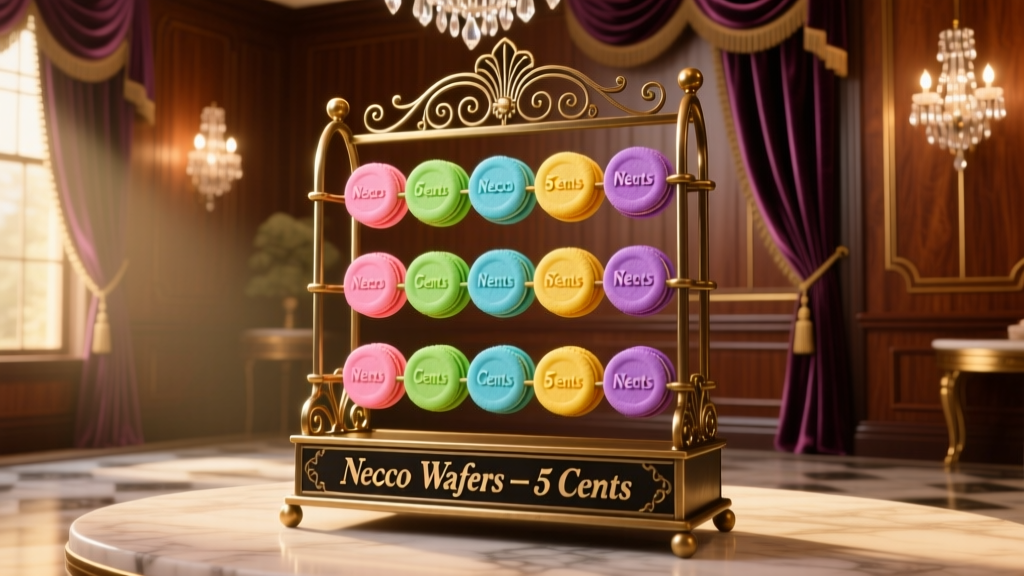
Necco Wafers Spin Rack: A Vintage Advertising Artifact in Metal, Color, and Commerce

Silver Irish Sugar Tongs, Chased with Flowers and Geometrics by John Smyth, Dublin c. 1850 — A Technical & Historical Appraisal
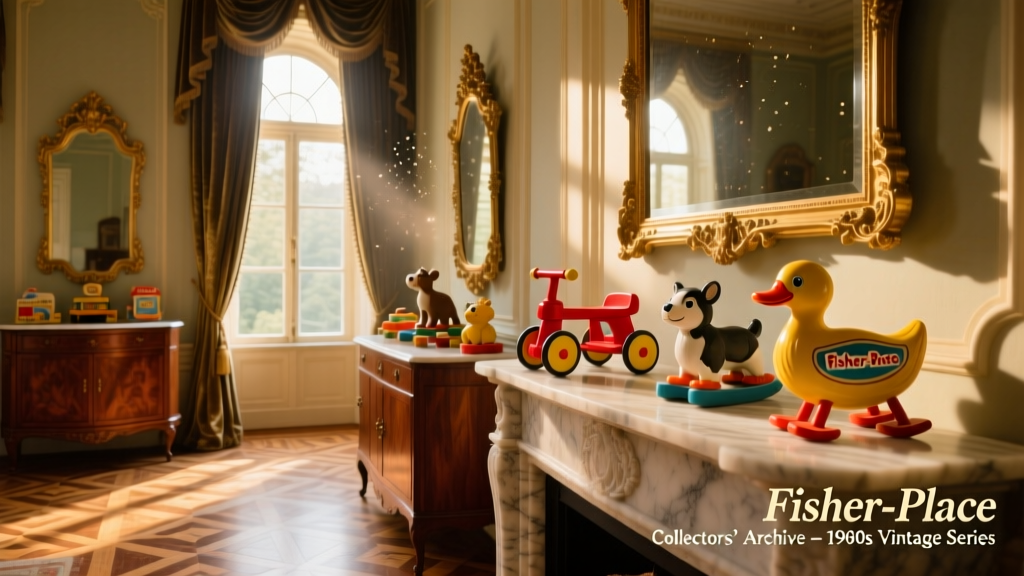
Fisher-Price Toys Pull in Collectors: Rarity, Restoration Ethics, and Market Realities
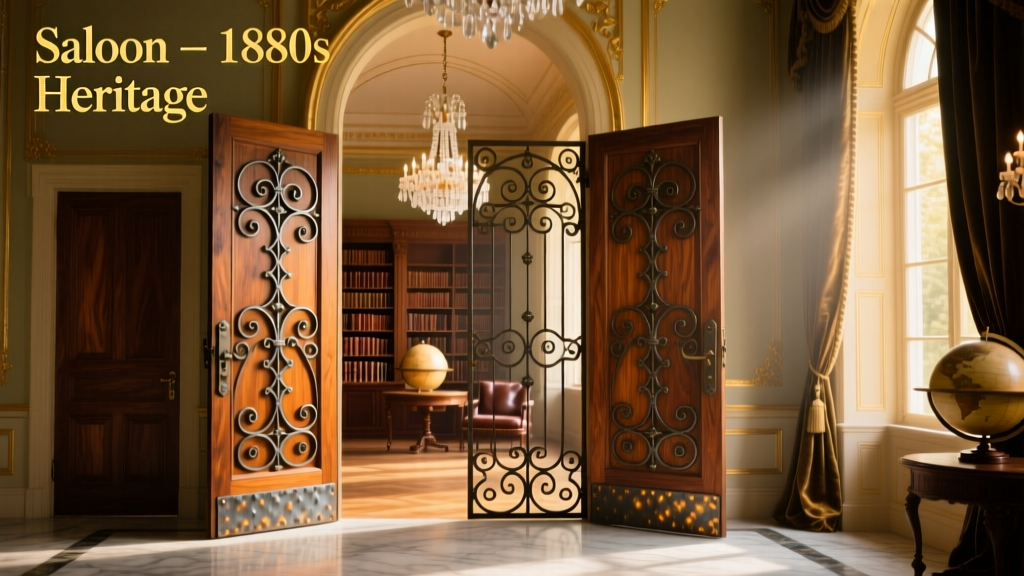
Architectural Door Saloon Wood & Hand-Forged Iron: A Technical and Historical Analysis of the 37 × 46-Inch Pair
Loetz Vase: Oil Spots in Deep Cobalt Blue — A 4½-Inch Masterpiece of Austrian Art Nouveau Glass

More May 2010 Hotlines: Critical Restoration Alerts for Antique Furniture Professionals
Fenton Drapery Bowl in Aqua Glass: Authentication, Value, and Restoration Insights for the 8½-Inch Signed Piece
Royal Bayreuth Creamer Ibex No. 2: Identification, Provenance, and Restoration Principles for Collectors
Rookwood Vase: Experimental Glaze Green Flambe Over Mirror Black — A 6-Inch Masterpiece of American Art Pottery