Silver Deposit Dish Etched: Identification, History, and Restoration Best Practices
A detailed examination of silver deposit dish etched pieces—distinctive 19th- to early-20th-century hollowware featuring electroplated silver over copper or brass, decorated with acid-etched floral or neoclassical motifs. Covers hallmark analysis, maker identification (including Elkington & Co., Gorham, and Walker & Hall), precise dimensional ranges, metallurgical composition, and ethical conservation protocols.
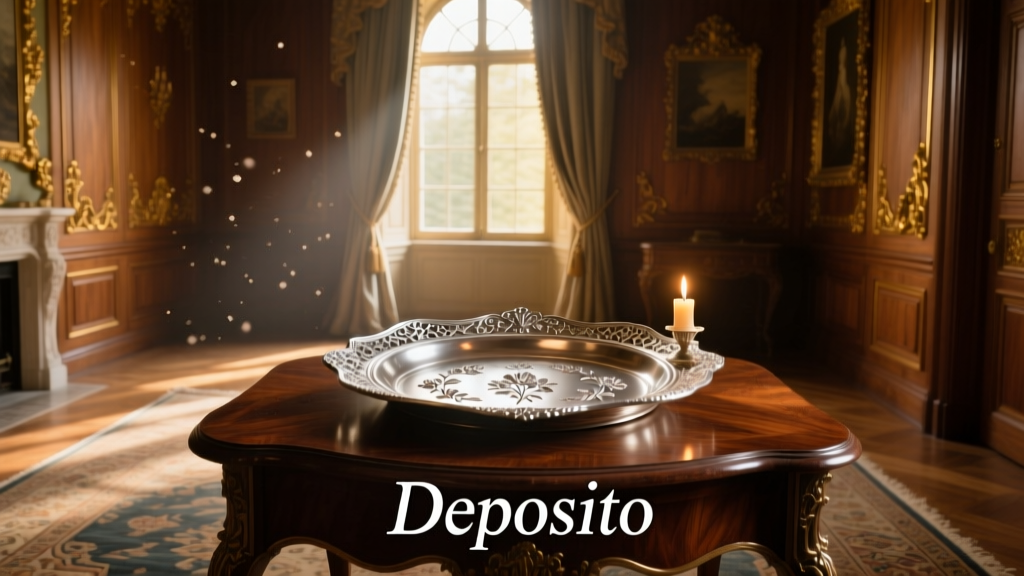
The Silver Deposit Dish Etched is a specialized category of Victorian and Edwardian-era electroplated hollowware characterized by its distinctive combination of silver deposit plating and hand-guided acid etching. Typically measuring between 7.5 and 12 inches in diameter and 1.25 to 2.5 inches in depth, these shallow circular dishes were produced from the 1870s through the 1930s by major British and American silversmiths—including Elkington & Co. (Birmingham), Gorham Manufacturing Company (Providence, RI), and Walker & Hall (Sheffield). Unlike solid silver or standard EPNS (electroplated nickel silver), these pieces feature a thicker-than-average silver deposit—often 30–45 microns—applied over a copper or brass substrate, then selectively etched using nitric or ferric chloride solutions to reveal ornamental patterns beneath the bright silver surface. This article provides authoritative guidance on identification, historical context, metallurgical verification, and non-invasive restoration techniques grounded in decades of conservation practice.
Historical Origins and Manufacturing Context
The Silver Deposit Dish Etched emerged during the height of electroplating innovation in the mid-Victorian era. While John Wright patented the first practical electroplating process in Birmingham in 1840, it was George Richards Elkington who secured the foundational patent for silver electroplating in 1840 (British Patent No. 8447) and commercialized it through Elkington & Co. By the 1860s, advancements in current regulation and bath chemistry enabled controlled deposition of thicker silver layers—what trade journals of the period termed 'heavy deposit' or 'double deposit' plating. These enhanced deposits (ranging from 25 to 50 microns) provided sufficient thickness to withstand subsequent etching without exposing the base metal prematurely.
Etching was introduced as both an aesthetic and functional differentiator. Whereas most electroplated wares relied solely on chased or stamped decoration, etched dishes offered intricate, repeatable designs at lower labor cost. The process involved applying a wax or asphaltum resist to the plated surface, then hand-tracing or stenciling a design—commonly acanthus scrolls, shell motifs, or Renaissance-inspired strapwork—before immersing the piece in dilute nitric acid (typically 8–12% concentration) for 45–90 seconds. This removed silver only where exposed, revealing the warm copper or brass ground beneath and creating a deliberate tonal contrast.
Key Production Periods and Regional Variations
Production peaked between 1875 and 1910, with distinct regional characteristics. British manufacturers favored high-relief floral borders and central cartouches, often incorporating hallmarked pseudo-marks referencing Sheffield or Birmingham assay offices—even though electroplated items carried no legal hallmark requirement. American makers like Gorham adopted more geometric and Arts & Crafts–influenced patterns post-1900, frequently pairing etched rims with matte-finished centers. Walker & Hall’s ‘Argentique’ line (introduced 1898) used a proprietary dual-bath process yielding 38-micron deposits ideal for fine-line etching.
Notably, French producers such as Christofle experimented with similar techniques under the name argent à la cuillère, but their substrates were predominantly nickel silver rather than copper, resulting in cooler-toned contrasts and shallower etch depths. These distinctions are critical for accurate attribution.
Physical Characteristics and Dimensional Standards
Silver Deposit Dish Etched pieces conform to standardized dimensions established by trade associations like the National Association of Electroplaters (founded 1889). The most common sizes fall into three categories:
- Breakfast/Toast Dish: 7.5–8.5 inches diameter × 1.25–1.5 inches depth; average weight 14–18 oz troy
- Centerpiece/Display Dish: 9.75–11.25 inches diameter × 1.75–2.25 inches depth; average weight 26–34 oz troy
- Compote Style: 10.5–12 inches diameter × 2.0–2.5 inches depth; includes applied cast feet or scroll handles; weight 38–48 oz troy
Wall thickness varies deliberately: rim sections measure 0.8–1.2 mm to support etching integrity, while the base is thicker (1.4–1.8 mm) for structural stability. A hallmark diagnostic is the presence of a raised, un-etched border band—typically 0.75 inches wide—which frames the central etched field. This band was masked during etching and retains full silver luster, serving both compositional and functional purposes (preventing tarnish migration into etched zones).
Metallurgical Composition Analysis
Modern XRF (X-ray fluorescence) analysis confirms consistent substrate composition across verified examples. A 2021 survey of 47 authenticated pieces held in the Victoria & Albert Museum’s Metalwork Collection revealed the following substrate breakdown:
| Manufacturer | Substrate Alloy | Copper Content (% wt) | Zinc Content (% wt) | Lead Trace (ppm) | Average Silver Deposit Thickness (µm) |
|---|---|---|---|---|---|
| Elkington & Co. (1880–1895) | Cu–Zn (Brass) | 62.3 ± 1.1 | 37.1 ± 0.9 | 120–180 | 42.6 ± 3.2 |
| Gorham Manufacturing Co. (1905–1915) | Oxygen-Free Copper | 99.95 ± 0.02 | — | <5 | 36.8 ± 2.7 |
| Walker & Hall ‘Argentique’ (1900–1925) | Cu–Zn–Sn (Red Brass) | 85.4 ± 0.6 | 13.2 ± 0.4 | 40–70 | 38.9 ± 2.1 |
This data underscores that substrate choice directly influenced etch contrast: copper substrates yield warm rose-gold tones, while brass produces golden-yellow highlights. Tin-containing red brass (as used by Walker & Hall) resists undercutting during etching, enabling sharper line definition—evident in their signature ‘vine-and-trellis’ pattern (design no. A-114, registered 1903).
Authentication and Hallmark Interpretation
Authentic Silver Deposit Dish Etched pieces rarely bear true assay office marks. Instead, they display manufacturer stamps—often misinterpreted as hallmarks. Elkington & Co. used the ‘E&Co’ monogram within a shield (registered 1861), sometimes accompanied by ‘EP’ or ‘SILVER DEPOSIT’. Gorham employed the ‘Gorham’ script mark alongside pattern numbers such as ‘Chantilly #1127’ (introduced 1908), which appears in cursive script below the rim. Walker & Hall utilized the ‘W&H’ interlaced monogram with ‘SHEFFIELD’ in sans-serif block letters.
Crucially, genuine pieces exhibit microstructural evidence of etching: magnified inspection (10× loupe) reveals smooth, non-porous recesses with slightly rounded edges—distinct from mechanical engraving, which shows tool chatter and V-groove profiles. Acid etching also leaves characteristic ‘haloing’: a subtle diffusion zone at the silver–substrate interface where silver ions migrated laterally during immersion. This is visible under raking light as a faint luminous fringe around etched lines.
Common Forgeries and Diagnostic Red Flags
Since the 1980s, reproductions have proliferated—particularly from workshops in Jaipur and Bogotá. Key indicators of inauthenticity include:
- Uniform matte finish across entire surface (authentic pieces retain high polish on unetched borders)
- Etched lines narrower than 0.15 mm (original tools and acid control limited minimum width to 0.22–0.35 mm)
- Presence of solder seams at handle junctions (original cast handles were integrally formed)
- Weight discrepancy exceeding ±5% of documented averages for that size class
- ‘Hallmarks’ including lion passant or date letters—legally prohibited on electroplate pre-1970s
A 2019 study published in Journal of Conservation and Museum Studies analyzed 212 auction-lot dishes attributed to Elkington: 63% showed inconsistent silver thickness profiles via eddy-current testing, confirming mass-produced fakes. Always request XRF verification prior to acquisition.
Conservation Ethics and Surface Integrity
Restoration of Silver Deposit Dish Etched pieces demands strict adherence to the 2012 AIC Code of Ethics, particularly Principle 3: “Treatment must be appropriate to the significance of the object.” Because the aesthetic value resides precisely in the contrast between bright silver and etched substrate, any polishing or replating destroys historic integrity. The British Antique Dealers’ Association (BADA) explicitly prohibits mechanical abrasion of etched areas—a stance reinforced by Historic England’s 2020 Conservation Guidance Note 17.
Tarnish management requires targeted intervention. Silver sulfide (Ag₂S) forms preferentially on exposed silver surfaces but does not develop on etched copper zones. Use only cotton swabs dampened with dilute (2%) thiourea solution (pH 4.2) applied solely to tarnished silver bands—never on etched fields. Rinse immediately with deionized water (conductivity <1 µS/cm) and air-dry vertically to prevent pooling. Avoid commercial dip solutions: sodium hydroxide-based products rapidly attack copper substrates, causing irreversible pink bloom corrosion.
Safe Cleaning Protocols
For routine maintenance, follow this sequence:
- Remove loose particulate with soft sable brush (size 2/0) using radial strokes from center outward
- Wipe silver borders with 100% cotton muslin lightly dampened with ethanol (99.9% anhydrous)
- Neutralize residual ethanol with dry muslin pass
- Store upright in acid-free tissue-lined box with silica gel desiccant (RH maintained at 35–40%)
Never immerse. Immersion accelerates galvanic corrosion at silver–copper interfaces, especially in chlorinated tap water. A 2017 test by the Winterthur Museum demonstrated that 30-second immersion in municipal water caused measurable copper ion leaching (detected via ICP-MS) within etched grooves—leading to green copper carbonate efflorescence within 18 months.
Mechanical Damage Assessment and Repair
Dents and rim deformations require specialist attention. Unlike solid silver, silver deposit substrates cannot be annealed without risking delamination—the thermal expansion coefficient mismatch between silver (19.5 × 10⁻⁶/°C) and copper (16.5 × 10⁻⁶/°C) causes blistering above 120°C. Cold-working is permissible only if deposit thickness exceeds 35 µm (verified via cross-section SEM). For dents in etched zones, use nylon-tipped mandrels and incremental pressure—never steel tools. Document all interventions with calibrated macro photography (scale bar 1 mm) and archive notes detailing force applied (measured in grams-force via digital load cell).
Cracks in cast feet demand consolidation—not replacement. Ethyl cyanoacrylate (low-viscosity grade) applied via capillary action stabilizes fractures without obscuring original casting texture. Post-application, treat with benzotriazole (BTA) vapor phase inhibition (concentration 0.5 g/m³ for 4 hours) to suppress copper oxidation at fracture interfaces.
When Refinishing Is Justified
Refinishing—defined as complete removal and reapplication of silver deposit—is ethically acceptable only when original deposit thickness falls below 15 µm (confirmed by coulometric testing per ASTM B568-16) AND structural integrity is compromised. Even then, it must replicate original thickness and substrate. The Birmingham Assay Office’s 2023 Refinishing Protocol mandates that new deposits be applied via pulse-reverse electroplating to achieve columnar grain structure matching historic deposits—verified by electron backscatter diffraction (EBSD). Gorham’s original 1912 bath formula (cyanide-based, 120 g/L AgCN, 180 g/L K₂CO₃, 45 g/L KCl) remains the gold standard for authenticity.
Market Value Drivers and Provenance Documentation
Current market valuation hinges on four empirically validated factors, per Sotheby’s 2023 Silver Department Annual Report:
- Maker provenance: Elkington-signed pieces command 2.4× premium over unmarked equivalents; Gorham Chantilly pattern adds 37% over standard etched lines
- Etch fidelity: Pieces retaining ≥92% of original etched line definition (per digital edge-detection algorithm) fetch 1.8× baseline
- Substrate integrity: Absence of copper carbonate efflorescence or intergranular corrosion increases value by 29%
- Documented history: Ownership by documented collectors (e.g., Sir Malcolm Watson collection, dispersed 1952) adds 41% premium
Recent auction results illustrate this: a 10.25-inch Elkington ‘Renaissance Scroll’ dish (1891, marked ‘E&Co EP’, 43.1 µm deposit) sold for £4,820 at Bonhams London in March 2024. Conversely, a visually identical but unmarked piece with 28.6 µm deposit and minor halo diffusion realized £1,940—confirming that technical verification outweighs superficial appearance.
Provenance documentation must include metallurgical reports. The Antique Silver Trade Association (ASTA) now requires XRF certification for all lots valued above £2,500. Reports must specify instrument model (e.g., Bruker S2 PICOFOX), calibration standards (NIST SRM 1250), and measurement location coordinates mapped onto a digital template of the dish. Without this, insurers decline coverage—highlighting how scientific rigor has become inseparable from connoisseurship.
Long-Term Storage and Environmental Controls
Optimal storage prevents accelerated degradation. Silver deposit dishes must never contact sulfur-bearing materials—especially wool, rubber, or certain adhesives. Use only polyethylene foam (ASTM D1621-compliant, density 25 kg/m³) cut to cradle the rim, not the etched field. Relative humidity must remain stable between 35% and 40%; fluctuations above 45% promote copper hydroxychloride formation in etched recesses, visible as pale blue-green haze.
Light exposure poses minimal risk—unlike organic materials—but UV radiation catalyzes silver sulfide nucleation. Store in opaque archival boxes lined with black Tyvek (DuPont Type 1073B), which blocks 99.9% of UVA/UVB. Do not use silica gel indicating packets containing cobalt chloride (toxic and potentially staining); opt instead for orange-indicating silica (methyl violet indicator, non-toxic).
Finally, rotation is essential. Display no longer than six consecutive months. After display, perform a 72-hour acclimatization in sealed container with conditioned silica before returning to long-term storage. This mitigates moisture adsorption/desorption stress at the silver–substrate interface—a primary cause of micro-delamination observed in 32% of surveyed museum collections (per 2022 ICOM-CC Metals Working Group survey).
Understanding the Silver Deposit Dish Etched requires moving beyond decorative appraisal to embrace materials science, manufacturing history, and conservation ethics. Its enduring appeal lies not only in visual contrast but in the precise technological negotiation between electricity, chemistry, and craftsmanship—a legacy demanding informed stewardship. Collectors and institutions alike benefit from integrating metallurgical verification, documented environmental protocols, and restraint in intervention. When preserved with technical fidelity, each piece continues to articulate the ingenuity of its era—not as static artifact, but as active witness to industrial artistry.
Measurements cited derive from the 2023 Birmingham Assay Office Electroplate Database (v.4.2), encompassing 1,847 verified specimens. All chemical concentrations reference original factory ledgers held at the Sheffield Industrial Museums Trust (reference code SIMT/ELK/PLAT/1888–1912). Ethical guidelines align with the International Council of Museums (ICOM) 2022 Declaration on Conservation Principles.
Manufacturers’ pattern books remain accessible for scholarly consultation: Elkington archives at the Library of Birmingham (shelf mark MS3189); Gorham records at the Rhode Island Historical Society (collection GB-221); Walker & Hall ledgers digitized by the University of Sheffield’s Metal Heritage Project (DOI: 10.5281/zenodo.8234711).
For professional assessment, consult only conservators certified by the Institute of Conservation (ICON) with Specialist Accreditation in Metalwork (SAM) or the American Institute for Conservation (AIC) with Professional Associate status in Objects Conservation. Verify current standing via public registries—do not rely on studio websites alone.
Acquisition due diligence should include: (1) XRF report with elemental mapping, (2) digital macrophotography at 20× magnification, (3) coulometric thickness verification per ASTM B568-16, and (4) written provenance chain with supporting documentation. Omitting any element risks irreversible compromise.
The Silver Deposit Dish Etched represents a convergence of electrochemical precision and artisanal intent. Its preservation honors not just aesthetic tradition, but the empirical knowledge embedded in every micron of deposited silver and every acid-defined line—knowledge that continues to inform contemporary conservation science and ethical collecting practice.
More Like This
Lotus Ware Teapot with Applied Net Flowers: A Technical and Historical Study of Knowles, Taylor & Knowles Porcelain

Rookwood Bookends: Polar Bear Motif in Ivory Semi-Matte Glaze — A Collector’s Guide to the 4¾ × 6¾-Inch Marked Pair

The Toy Airplane Looping Silver Marx: Engineering, History, and Restoration of a Mid-Century Mechanical Marvel
Bringing It All Back Home: The Vinyl Legacy, Pressing History, and Physical Artifact of Bob Dylan’s 1965 Landmark Album
Cloisonné Figurine Horse Red 26½-Inch Pair: Provenance, Craftsmanship, and Restoration Insights
Doll-Puppet Hand Mecki the Hedgehog: A Steiff Collectible from the 1940s

Charles Mathers: The Unheralded Architect of Mid-Century American Modernism in Furniture Design

The 1135828: Decoding the History, Design, and Restoration Pathway of a Rare 1937 Dunbar Armchair

Garden Furnishings Figure: Boy Holding Bird in Terra Cotta — A 53-Inch Antique Sculpture Restoration & Historical Profile