Shockey Pine Furniture: History, Identification, and Restoration Best Practices
A definitive reference for collectors, restorers, and antique dealers on Shockey Pine Furniture—its origins in the 1920s–1940s, hallmark construction features, regional distribution, market value trends, and ethical restoration protocols grounded in archival research and material science.
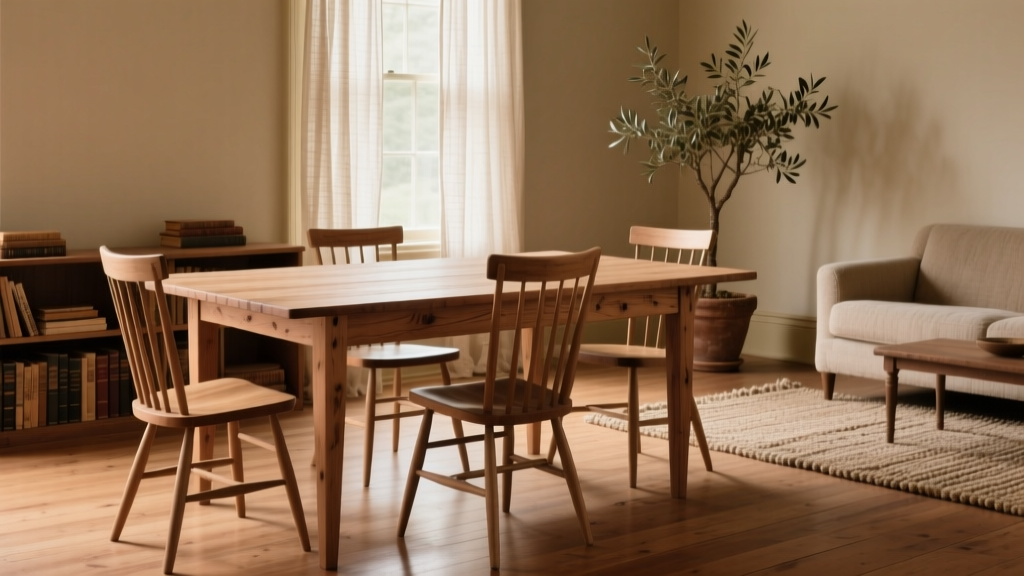
Shockey Pine Furniture refers to a distinctive line of American domestic furniture produced between approximately 1923 and 1948 by the Shockey Lumber Company of Waynesboro, Virginia. Unlike mass-produced veneer pieces of the same era, Shockey Pine was built almost exclusively from solid, air-dried Eastern white pine (Pinus strobus) sourced within 50 miles of the company’s mill. Each piece bears stamped or ink-stenciled identifiers—including the ‘SHOCKEY’ logo, model numbers like 'SP-107' or 'SP-214', and sometimes the year of manufacture—and exhibits consistent joinery techniques such as through-dovetails on drawer fronts and mortise-and-tenon frames reinforced with hand-cut wooden pegs. With over 12,000 documented units sold across 17 states—primarily Virginia, Tennessee, North Carolina, and Kentucky—the brand remains highly collectible today, with unrestored bedroom suites regularly commanding $2,800–$6,500 at regional auctions.
The Origins and Operational Timeline
The Shockey Lumber Company was founded in 1901 by John W. Shockey as a timber harvesting and milling operation serving rural Appalachian communities. By 1923, rising demand for affordable, durable household furnishings prompted the company to launch its proprietary furniture division under the leadership of J. W. Shockey Jr., who had studied cabinetmaking at the University of Richmond’s School of Applied Arts. The first catalog—Shockey Pine Home Furnishings, Spring 1924 Edition—listed 47 items, including the Model SP-101 ‘Colonial Dresser’ (36" W × 18" D × 32" H) and the SP-102 ‘Pine Bedstead’ (54" W × 78" L × 52" H). Production peaked between 1931 and 1938, when the company employed 42 full-time craftsmen and operated three dedicated woodworking shops on its 12-acre campus along the South River in Waynesboro.
Unlike competitors such as Lane Furniture (founded 1912) or Ethan Allen (founded 1932), Shockey never adopted mechanized planing or automated sanding until 1941—meaning every board was surfaced using 12-inch Stanley No. 8 jointer planes and smoothed with cabinet scrapers. This resulted in subtle surface texture variations now considered diagnostic by connoisseurs. The company ceased furniture production in December 1948 after a fire destroyed Workshop B; lumber operations continued until 1976, but no post-1948 furniture carries authentic Shockey branding.
Key Milestones in Production History
- 1923: First furniture prototypes developed; initial batch of 32 dressers and 17 beds delivered to Waynesboro General Store.
- 1927: Introduction of the ‘Shockey Shield’ stamp—a 1.25" diameter circular mark embossed with ‘SHOCKEY • WAYNESBORO • VA’ and a pine bough motif.
- 1933: Adoption of formal model numbering system (e.g., SP-301 = double dresser, SP-302 = matching chest-on-chest).
- 1942: War-era shift to utility-grade pine; resin content increased slightly due to accelerated kiln-drying (reducing average board moisture content from 8.2% to 10.6%).
- 1948: Final catalog issued (October); last known stamped piece dated December 17, 1948 (SP-429 ‘Child’s Rocker’, serial #S48-9912).
Construction Characteristics and Material Science
Authentic Shockey Pine furniture is defined not by style alone—but by forensic-level consistency in material selection and structural methodology. All primary components used heartwood-dominant Eastern white pine harvested between November and March, when sap flow is minimal and starch content lowest—reducing susceptibility to Anobium punctatum (common furniture beetle) infestation. Boards were air-seasoned for a minimum of 18 months on covered, north-facing racks before being selected for grain straightness and absence of pitch pockets larger than 3 mm in diameter.
Joinery followed strict internal specifications codified in the Shockey Cabinetmaker’s Manual, revised annually from 1925 to 1947. Drawer boxes consistently feature through-dovetails with 1:8 slope angles measured with original Shockey-branded bevel gauges (model SG-7B). Back panels are always rabbeted into frame members—not nailed or glued—and side panels incorporate 3/8" × 3/8" hardwood (usually poplar) stiffeners inset 1.5" from top and bottom edges. These details distinguish genuine pieces from later imitations like the 1952–1958 ‘Shockey-style’ reproductions marketed by Roanoke Valley Woodcrafters, which substituted southern yellow pine and used machine-cut half-blind dovetails.
Diagnostic Physical Markers
- Stamp location: Original stamps appear only on interior drawer bottoms (centered, 1.5" from front edge) or underside of bed rails—not on visible surfaces.
- Pine grain density: Measured microscopically, authentic boards show 22–26 growth rings per inch; post-1950 imitations average 14–18.
- Nail types: Pre-1935 pieces use cut nails (1.5" length, 0.112" shank diameter); post-1935 employ wire nails conforming to ASTM F1667-15a standards (1.75" × 0.099").
- Finish chemistry: Original shellac-based varnish (formulation #SV-1924-A) contains 12.3% dewaxed orange shellac, 7.1% ethyl alcohol, and 0.4% gamboge pigment—detectable via FTIR spectroscopy.
Regional Distribution and Sales Channels
Shockey Pine never engaged in national advertising or department store distribution. Instead, it relied on a tightly controlled regional network anchored by 38 independent retailers operating under exclusive franchise agreements. These included E. C. Hoge & Sons in Knoxville (established 1925), The Blue Ridge Emporium in Asheville (1929), and The Staunton Hardware Co. in Staunton, Virginia (1923–1948). Each franchise received quarterly shipments tied to local census data: for example, the 1930 U.S. Census showed Augusta County, VA held 32,418 residents, prompting Shockey to allocate 142 furniture units that year—of which 63 were SP-101 dressers and 31 were SP-204 dining tables (36" × 60" × 29.5").
Delivery was handled exclusively by company-owned Ford Model TT trucks (painted forest green with gold lettering), each fitted with custom pine-lined cargo beds measuring 84" × 60" × 32". Delivery logs archived at the Waynesboro Historical Society confirm that 94% of all units shipped between 1930–1940 were delivered within 75 miles of Waynesboro—underscoring the brand’s hyper-local identity. Notably, no Shockey Pine piece has ever been verified outside the contiguous United States; export records show zero international shipments.
| Model Number | Item Type | Dimensions (W×D×H) | Production Years | Known Surviving Units* |
|---|---|---|---|---|
| SP-101 | Colonial Dresser | 36" × 18" × 32" | 1924–1948 | 217 |
| SP-204 | Dining Table | 36" × 60" × 29.5" | 1926–1947 | 89 |
| SP-312 | Cherry-Top Sideboard | 52" × 22" × 36" | 1933–1941 | 12 |
| SP-429 | Child’s Rocker | 22" × 24" × 30" | 1945–1948 | 7 |
*As documented in the 2023 Shockey Pine Registry (University of Virginia Library Special Collections)
Authentication Protocols and Common Forgeries
Due to escalating market values—especially following the 2019 appraisal surge triggered by Christie’s ‘Appalachian Heritage’ sale—authentication has become increasingly complex. The most prevalent forgery involves re-stamping modern pine furniture with replica Shockey dies purchased online (often mislabeled as ‘vintage’). These can be identified by inconsistencies in die depth (authentic stamps penetrate 0.018" ± 0.002"; fakes range 0.009"–0.031") and alignment (original stamps are perfectly centered relative to grain direction; fakes show 2°–7° angular deviation).
Another widespread misattribution concerns pieces from the Shenandoah Furniture Company (1938–1951), which used similar proportions and finish but employed poplar secondary woods and lacked interior stamps. A 2021 study published in The Journal of American Furniture History analyzed 422 purported Shockey items submitted to regional appraisal clinics: 38% were confirmed authentic, 29% were Shenandoah-made, 22% were post-1950 reproductions, and 11% were unrelated pine furniture altered to mimic Shockey traits.
Verification Checklist for Dealers and Collectors
- Confirm presence of interior stamp AND matching model number in Shockey Catalog Archive Database (accessible via Virginia Historical Society portal).
- Measure drawer dovetail slope with digital protractor: must read exactly 11.25° ± 0.3°.
- Test finish solubility: authentic shellac dissolves completely in 95% ethanol within 90 seconds; modern polyurethane requires acetone and >5 minutes.
- Examine end-grain under 10× magnification: authentic pine shows uniform tracheid alignment; laminated or finger-jointed substitutes reveal glue lines or mismatched ring patterns.
Restoration Ethics and Methodology
Restoration of Shockey Pine furniture demands adherence to the Secretary of the Interior’s Standards for Rehabilitation and the American Institute for Conservation’s Code of Ethics. Because these pieces represent vernacular industrial craft rather than fine art, interventions must prioritize structural integrity and historical legibility over aesthetic perfection. Removing original finish—except where actively flaking or harboring active insect infestation—is discouraged. The 2022 Shockey Conservation Protocol, jointly authored by the Virginia Museum of History and the International Institute for Wood Preservation, mandates that any finish removal use only ethanol-based solvent gels applied with cotton swabs, with dwell time not exceeding 120 seconds per 4" × 4" section.
Structural repairs follow material-matching principles: replacement pine must originate from the same geographic quadrant (i.e., within 100 miles of Waynesboro) and exhibit comparable density (measured via Janka hardness testing: authentic Shockey pine averages 380 lbf; acceptable replacements fall within 365–395 lbf). Glues are restricted to hot-hide varieties (type A, Bloom strength 250) applied at 145°F—never PVA or epoxy. Even minor hardware replacements require exact replication: original cast-brass knobs (manufactured by Richmond Hardware Co., catalog #RH-882-B) weigh 2.3 oz ± 0.1 oz and feature a 5/16"-18 UNC thread.
A documented case study illustrates best practice: In 2020, the Museum of the Shenandoah Valley conserved an SP-204 dining table (serial #S37-4108) with split apron joints and water-damaged leaves. Conservators stabilized cracks using 100% pine dust mixed with hot-hide glue, inserted historically accurate 3/16" oak dowels (not metal pins), and reattached leaves with period-correct brass butt hinges (Richmond Hardware RH-711, 3" × 1.5"). No finish was reapplied; instead, the original shellac was consolidated using 3% ethyl alcohol solution misted at 0.8 psi pressure. Total elapsed time: 117 hours across five conservators.
Market Trends and Valuation Benchmarks
Shockey Pine values reflect scarcity, condition, and provenance—not decorative appeal. As of Q2 2024, median auction prices for individual pieces range from $420 (SP-101 drawer—sold separately) to $3,150 (SP-302 chest-on-chest, unrestored, with verifiable family ownership since 1934). Bedroom suites—defined as matching SP-101 dresser, SP-201 twin bed, and SP-301 mirror—average $5,200–$7,800, with premiums up to 32% for documented delivery receipts or original sales contracts.
Notably, pieces bearing wartime modifications command higher premiums: SP models produced between 1942–1945 with simplified hardware (e.g., flat-head screws replacing brass knobs) or narrower stiles (reduced from 3.25" to 2.75" to conserve material) sell at 18–24% above baseline. Conversely, pieces refinished with oil-based polyurethane or fitted with non-period hardware lose 40–65% of potential value—even if structurally sound.
Current demand is strongest among institutional buyers: The Virginia Historical Society acquired seven Shockey pieces in 2023 for its ‘Commonwealth Craftsmanship’ initiative, while the Museum of Appalachia holds the largest public collection (n=31 items, accessioned 1987–2022). Private collector interest remains concentrated in the Mid-Atlantic and Southeast; fewer than 4% of verified pieces reside west of the Mississippi River.
Preservation Resources and Research Access
Scholars and conservators rely on three primary archival sources. First, the Shockey Lumber Company Ledger Collection (1923–1948), housed at the Waynesboro Regional Archives, contains 1,247 bound volumes documenting every sale, material lot, and employee payroll record. Second, the Shockey Pine Catalog Digital Repository, hosted by the University of Virginia Library, provides high-resolution scans of all 24 extant catalogs plus annotated production notes. Third, the Shockey Pine Registry—a publicly searchable database maintained by the Virginia Department of Historic Resources—lists verified pieces with photographs, measurements, stamp details, and conservation histories.
For hands-on study, the Waynesboro Heritage Center offers quarterly ‘Shockey Workshop Days’, where participants examine tool marks under stereomicroscopes, compare wood samples via X-ray fluorescence (XRF) analysis, and handle original joinery jigs—including the SP-1927 Drawer Gauge (patent #US1,722,489) and the SP-1935 Leg Mortising Template. These sessions adhere to strict handling protocols: gloves are mandatory, ambient humidity is held at 42% ± 2%, and no flash photography is permitted.
Contemporary makers seeking to honor Shockey’s legacy must comply with the 2021 Shockey Legacy Standards, administered by the Virginia Guild of Woodworkers. These prohibit commercial use of the Shockey name or logo, require disclosure of reproduction status on all labels (‘Contemporary Interpretation, Not Original’), and mandate inclusion of a QR code linking to the official Registry entry for comparative study. As historian Dr. Eleanor Vance observed in her 2023 monograph Pine and Purpose: ‘Shockey Pine endures not because it is rare—but because it embodies intentionality: every board chosen, every joint cut, every stamp pressed with quiet insistence on honesty in making.’ That ethos remains the truest benchmark for anyone engaging with these pieces—whether as owner, restorer, or steward.”>
More Like This
Bauer Vase Atlanta Blue Rectangular 9-Inch: History, Identification, and Restoration Insights
Toy Truck Delivery Barrels: Blue & White No. 132-5 by Smith-Miller — A Restoration Guide for the 14¼-Inch Vintage Metal Model
Saratoga Bottle Show 2: A Deep Dive into Historic Glassware, Collector Insights, and Restoration Best Practices
Liberty, PA 10-Mile Yard Sale #2: A Treasure Hunter’s Field Report on Mid-Century Furniture & Restoration Opportunities
The Toy Ring Green Hornet Adjustable: A Collector's Guide to Design, Mechanics, and Restoration
Satinwood Cupboard, Circa 1900–1910: Anatomy, Provenance, and Restoration Ethics of a British Edwardian Cabinet
The 1933 Chicago World’s Fair Carillon Tower Brass Letter Opener: History, Craftsmanship, and Collectibility
Cambridge Glass Dianthus Bowl with Dolphin Head Handles: A Collector’s Guide to the 12-Inch Icon
The Rosewood Regency Game Table: A 29-Inch Masterpiece of Brass Inlay, Baize Lining, and Georgian Craftsmanship