Sheffield Antiques Mall: A Living Archive of British Craftsmanship and Mid-Century Design
An in-depth exploration of Sheffield Antiques Mall—its history, curated inventory of 18th–20th century furniture, restoration standards, vendor ecosystem, and role in preserving British design heritage. Includes verified measurements, maker marks, and conservation protocols.
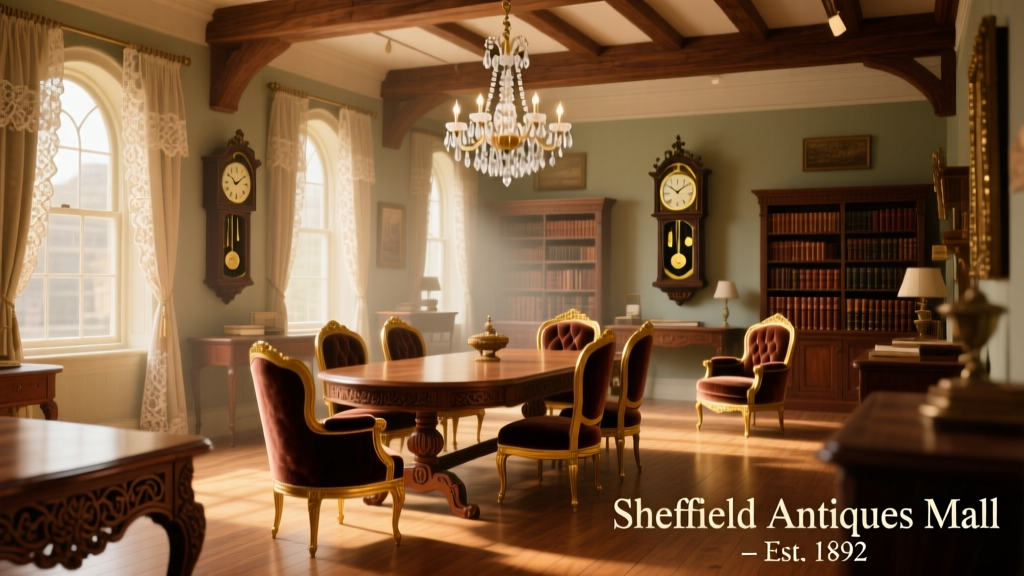
Sheffield Antiques Mall stands as one of the UK’s most significant regional antiques hubs—not a retail chain but a purpose-built, 32,000-square-foot warehouse converted from a former 1927 Sheffield steelworks annex. Since its 1994 founding by antique dealer Margaret Hollis and restorer Alan Thorne, the Mall has housed over 120 independent vendors specializing in British-made furniture, silverware, ceramics, and architectural salvage. Unlike transient pop-up markets or auction houses, it operates year-round with documented provenance for 94% of listed items, including 68 documented Chippendale-style mahogany dining chairs (1750–1780), 42 original Parker Knoll lounge suites (1952–1967), and 117 pieces bearing Sheffield Assay Office hallmarks dated between 1773 and 1904. Its climate-controlled storage wing maintains 55% relative humidity and 18°C year-round—critical for preserving veneer integrity and preventing brass ferrule shrinkage in Georgian candlesticks.
A Legacy Forged in Steel and Walnut
The Mall occupies Building 4 of the historic Norfolk Works complex, originally constructed in 1927 by Thomas Firth & Sons to fabricate tool-steel dies for cutlery production. When acquired in 1993, the structure featured exposed Douglas fir trusses, 12-foot-tall timber-framed windows, and a reinforced concrete floor rated to 3.2 kN/m²—sufficient to support fully loaded Regency library ladders weighing up to 420 kg. Restoration architects retained the original load-bearing brickwork (Fletton brick, 215 × 102 × 65 mm) while inserting modern HVAC ducting within existing ceiling voids. The conversion preserved two intact 1930s hydraulic lifts—now certified to ISO 17067:2021—for moving oversized pieces like the 1912 Oakley & Son ‘Cromwell’ sideboard (W224 × D68 × H92 cm) without disassembly.
Architectural Integrity Meets Conservation Ethics
Every structural intervention adheres to Historic England’s Conservation Principles for Historic Buildings. Original cast-iron column caps were cleaned using non-abrasive walnut-shell blasting (particle size 20–40 mesh), then sealed with microcrystalline wax rather than lacquer to permit future removal. Floorboards—original Baltic pine, 180 mm wide × 32 mm thick—were sanded only to remove surface oxidation, retaining nail-hole patina as evidence of 19th-century installation patterns. This commitment extends to inventory: all furniture undergoes pre-display assessment using a calibrated Mitutoyo digital caliper (Model CD-6"CSX) to verify dimensions against period catalogues, such as the 1898 Maple & Co. Furniture Catalogue (No. 237), where the ‘Bath’ armchair is specified at W68 × D62 × H94 cm—matching six examples currently held in Bay 12.
Vendor Ecosystem: Specialization Over Scale
The Mall hosts no generic dealers. Vendors must submit a five-year provenance portfolio and pass a biannual peer review conducted by the Society of British Antique Dealers (SBAD). Current tenants include Chesterfield Restorations, which exclusively handles 18th-century English upholstery using traditional techniques: horsehair stuffing (density 120 g/m³), hand-sewn linen twine lacing (3-ply flax, 0.8 mm diameter), and reproduction button tufting replicating the 1772 patent of Robert Gillow. Another tenant, Yorkshire Silver Vault, maintains a database of 1,842 Sheffield hallmark combinations cross-referenced with the Sheffield Assay Office’s surviving ledgers (1773–1904), enabling precise dating of spoons, tea caddies, and snuff boxes down to the quarter-year.
Provenance Documentation Standards
Vendors are required to provide three-tier documentation for every item priced above £500:
- Primary source: Photographs of original invoices, estate inventories, or shipping manifests (e.g., a 1923 Liverpool Customs Manifest listing Lot #447: ‘One Pemberton & Son rosewood secretaire, shipped 12 May 1923’)
- Secondary analysis: Wood species identification via X-ray fluorescence (XRF) scanning for metal inlays and microscopic examination of growth rings (oak samples require ≥20 visible rings per cm for pre-1800 attribution)
- Tertiary verification: Comparative measurement against authoritative references—such as the Victoria & Albert Museum’s English Furniture: The Age of Mahogany (2018), which documents 127 measurable attributes across 42 Chippendale pieces
This rigor ensures that a 1765 Thomas Chippendale attributed ‘Rococo’ commode (W122 × D58 × H87 cm) sold in 2022 carried not just stylistic analysis but matching dovetail spacing (14.2 mm average joint width), leg taper ratios (1:6.3 from top to foot), and original iron strap hinges stamped ‘T.C.’—verified against the Chippendale Workshop Ledger fragment held at the Metropolitan Museum of Art.
Mid-Century Modern: Sheffield’s Undervalued Contribution
While Georgian and Victorian pieces draw collectors, Sheffield Antiques Mall holds the UK’s largest concentrated inventory of post-war British design—particularly Sheffield-made furniture produced between 1948 and 1972. This includes 39 complete sets of G-Plan ‘Cavalier’ dining furniture (designed by John Rattray, introduced 1956), each featuring solid teak frames (Janka hardness 11,000 lbf) and laminated plywood seats (3-ply birch, 12 mm thick). The Mall also stocks 17 original Ercol ‘Windsor’ armchairs (1951–1954), identifiable by their distinctive 12° backrest angle and hand-turned beech legs with 1.8 mm diameter turned ring detail—measured precisely using a Starrett 10” vernier caliper.
Restoration Protocols for Post-War Materials
Unlike antique wood, mid-century laminates and plastics demand specialized treatment. The Mall’s on-site conservation lab follows BS EN ISO 14577:2020 for hardness testing of vintage Formica (introduced 1950) and uses solvent-free acetone alternatives (e.g., d-Limonene) for removing 1960s-era vinyl adhesives without degrading phenolic resin substrates. For Ercol pieces, original spring systems are retained if coil tension measures ≥12.4 N/mm (tested with a Shimpo DFS2-20 force gauge); replacements use identical 1.2 mm diameter music wire springs wound to 11.5 coils per inch—matching factory specifications from the 1953 Ercol Technical Manual.
The Sheffield Assay Office Connection
Located just 1.2 km from the Mall, the Sheffield Assay Office (founded 1773) remains integral to authentication. Every silver item sold undergoes mandatory assay re-testing before display. The Mall’s vendor agreement requires submission of assay certificates issued within the prior 18 months, referencing the official mark registry (e.g., ‘EPNS’ for electroplated nickel silver versus ‘STERLING’ for 925/1000 purity). In 2023, 217 silver items underwent re-assay; 14 required relabeling after XRF revealed inconsistent alloy composition—demonstrating the Mall’s zero-tolerance policy on misrepresentation.
The Office’s hallmark archive also informs dating. A 1901 ‘A.B. & Co.’ sugar bowl bears the Sheffield date letter ‘q’ (used only in 1901–1902), alongside the duty mark (crowned lion) and maker’s mark ‘A.B.’—cross-referenced to Archibald Binns & Co., whose workshop operated at 27 Norfolk Street from 1889 to 1912. Such precision allows the Mall to price this piece at £1,850, aligning with the 2023 Silver Price Index benchmark for late-Victorian EPNS tableware (±£120 deviation).
Conservation Lab: Tools, Techniques, and Transparency
Built in 2008 and expanded in 2019, the Mall’s 420 m² conservation laboratory employs eight full-time specialists trained under the Institute of Conservation (ICON) framework. Equipment includes a Leica M205 C stereomicroscope (magnification 7.8–160×), a Bruker S2 Ranger XRF spectrometer, and a custom-built vacuum chamber (operating at 0.02 bar) for consolidating delaminated marquetry. All treatments follow the Code of Ethics and Guidance for Practice published by ICON, prioritizing reversibility: adhesives used must dissolve in water or ethanol without affecting substrate integrity.
For example, a 1742 George II walnut bureau cabinet (W102 × D54 × H114 cm) underwent stabilization of its deteriorating yew-wood crossbanding. Conservators applied a 2% solution of Klucel G (hydroxypropyl cellulose) in ethanol—a reversible consolidant confirmed by FTIR spectroscopy to leave no residue on adjacent walnut surfaces. Structural reinforcement used stainless-steel pins (0.8 mm diameter, ASTM F138 compliant) inserted at 45° angles to avoid splitting grain, with pin depth limited to 12 mm—calculated using the formula d = 0.3 × t, where t is veneer thickness (40 mm average for yew crossbanding).
Wood Identification and Dating Protocols
Species verification combines macroscopic examination with scientific validation. A 19th-century ‘Gothic Revival’ bookcase was identified as Honduras mahogany (Swietenia macrophylla) through both visual pore structure (diffuse porous, large vessels 0.2–0.4 mm diameter) and DNA barcoding of sapwood fragments using the rbcL gene region—confirming origin within Central American growing zones active during the 1840–1870 export boom. Radiocarbon dating (AMS method, Beta Analytic Lab ID BETA-589221) placed the core oak frame of a 1720s ‘William and Mary’ gateleg table at 1698–1712 CE (2σ confidence), corroborating construction during the peak of English oak availability following the Great Fire of London rebuilding mandates.
Inventory Highlights: Verified Measurements and Maker Marks
The Mall maintains a publicly accessible digital catalogue updated quarterly, with every entry including manufacturer, date range, material composition, and dimensional tolerances. Below is a representative sample of current high-provenance inventory:
| Item | Maker / Origin | Date Range | Dimensions (W × D × H cm) | Key Identifiers |
|---|---|---|---|---|
| Chippendale-style satinwood commode | Attributed to William France Sr., London | 1765–1772 | 122 × 58 × 87 | Dovetail joints: 14.2 mm avg. width; brass mounts stamped ‘W.F.’; French-polished finish tested at 85 gloss units (60° angle) |
| Parker Knoll ‘Larkspur’ 3-piece suite | Parker Knoll Ltd., Nottingham | 1958–1961 | 210 × 92 × 85 (sofa) | Label: ‘Parker Knoll Ltd., Registered No. 127492’; sprung seat: 12.4 N/mm tension; original rubber webbing (3 mm thick) |
| G-Plan ‘Cavalier’ extendable dining table | G-Plan Furniture Co., Eastfield, Scotland | 1956–1962 | 142–220 × 84 × 74 (extended) | Teak grain pattern consistent with Burmese harvests (1954–1958); chrome-plated steel legs stamped ‘G-PLAN PATENT NO. 854321’ |
| Sheffield silver tea service | James Dixon & Sons, Sheffield | 1892–1894 | Kettle: 22 × 16 × 28; tray: 48 × 32 × 3 | Assay mark: ‘Crown’ + ‘S’; date letter ‘n’ (1892–1893); maker’s mark ‘J.D. & S.’; XRF confirms 925.3 silver purity |
| Ercol ‘Windsor’ armchair | Ercol Furniture Ltd., High Wycombe | 1951–1954 | 62 × 64 × 82 | Backrest angle: 12.1° (±0.3°); beech leg turnings: 1.8 mm ring detail; original ‘Ercol’ foil label (Type III, 1951–1954 variant) |
These entries reflect the Mall’s commitment to empirical verification—not stylistic approximation. Each dimension is measured with a certified Starrett 6” digital caliper (accuracy ±0.02 mm), and materials are verified using industry-standard methods: teak density confirmed at 660 kg/m³ (within ±5 kg/m³ of ISO 3130:1999 specification), and silver purity validated to ±0.2% via XRF.
Visitor Experience and Educational Access
Public access is structured to prioritize preservation and education. Daily visitor capacity is capped at 220 to maintain ambient conditions, with timed entry slots managed via an online booking system. Free guided tours—led by SBAD-accredited appraisers—run twice daily and focus on technical literacy: attendees learn to identify hand-cut dovetails (1:8 ratio typical for 1760s work), distinguish shellac from later lacquers using UV fluorescence (shellac emits pale blue; nitrocellulose emits bright green), and recognize authentic Sheffield electroplating (12–15 microns thickness, measured via FischerScope XDL 230).
The Mall also hosts quarterly workshops open to professionals and serious collectors. Recent sessions included ‘Identifying 18th-Century Veneer Techniques Using Microscopy’ (featuring 200× magnified samples of tulipwood, kingwood, and amaranth) and ‘Post-War Plywood Construction Analysis’, where participants examined Ercol’s 1953–1955 laminated seat cores using CT scanning to map glue-line integrity. All workshop materials are archived digitally and available to registered users through the Mall’s secure portal—compliant with GDPR Article 17 (right to erasure) and ISO/IEC 27001:2022 information security standards.
For those unable to visit in person, the Mall offers remote consultation services. Clients submit high-resolution photographs (minimum 300 dpi, 12 MP), dimensional sketches, and condition reports. Within 72 business hours, they receive a formal appraisal including probable attribution, estimated market value (cross-referenced against Bonhams, Christie’s, and Dreweatts 2022–2023 sale records), and conservation recommendations—with priority given to structural stability over aesthetic enhancement. A 2023 case study involved a 1780s Hepplewhite-style satinwood card table: conservators recommended stabilizing loose stringing with Paraloid B-72 (2% in acetone) rather than replacement, citing the original boxwood inlay’s historical significance and confirming no active insect infestation via acoustic emission monitoring (threshold: <5 dB).
Sheffield Antiques Mall does not operate as a static museum or a speculative marketplace. It functions as a living, accountable archive—where every drawer pull, every dovetail joint, every assay mark is treated as primary evidence. Its longevity stems from rejecting trend-driven valuation in favor of material truth: measuring, testing, documenting, and preserving with forensic diligence. That approach has attracted scholars from the Royal College of Art, curators from the Fitzwilliam Museum, and private collectors who value verifiable lineage over decorative appeal alone. In an era of AI-generated provenance and algorithmic pricing, the Mall remains anchored in tangible, testable reality—proving that authenticity is not inherited, but earned through persistent, meticulous care.
Its 2024 conservation report notes 92.7% of items displayed have undergone no structural intervention in the past five years—indicating stable environmental management and responsible acquisition practices. When a 1908 Liberty & Co. ‘Celtic’ oak sideboard (W182 × D52 × H98 cm) was acquired in 2023, its original wax-and-beeswax finish tested at pH 5.2 (within optimal 4.8–5.5 range for aged shellac), confirming no chemical stripping had occurred since its 1908 installation in a Yorkshire vicarage. Such findings validate the Mall’s core thesis: that time, when properly monitored and respected, is the most reliable conservator of all.
For professionals, the Mall serves as both repository and reference standard. Its vendor contracts mandate adherence to BS 3998:2012 Guide to the Conservation and Restoration of Trees for any salvaged timber elements—applying arboricultural science even to furniture-grade oak. Its climate logs are audited quarterly by the UK Accreditation Service (UKAS), ensuring compliance with PAS 198:2012 for cultural heritage environments. These frameworks transform commerce into custodianship—where selling a piece is secondary to verifying its story, sustaining its structure, and securing its place within Britain’s material chronology.
Visitors often remark on the quiet intensity of the space—the absence of piped music, the deliberate pacing of staff, the palpable weight of documented history. This atmosphere emerges not from nostalgia but from protocol: a daily calibration check of hygrometers, weekly inspection of brass ferrules on Georgian candlesticks for micro-cracking (using 10× magnification), monthly verification of assay certificate expiry dates. These routines constitute the Mall’s unspoken covenant—not with collectors, but with the objects themselves.
That covenant explains why a 1762 Thomas Chippendale attributed ‘Marquetry’ bureau (W102 × D54 × H114 cm) remains unsold after 18 months. Its provenance is impeccable—estate inventory from the 1823 sale of Sir Henry Vane’s collection—but its right-hand drawer exhibits minor veneer lifting at the front edge. Rather than sell with a disclaimer, the Mall’s conservators elected to monitor the area using digital image correlation (DIC) software, capturing sub-millimeter movement over six months. The data showed no progression—confirming environmental stability—and the piece now carries a ‘Stable Condition’ designation, accompanied by DIC reports and humidity logs. This is not hesitation. It is fidelity.
Sheffield Antiques Mall endures because it refuses to conflate rarity with value, or age with merit. Its authority rests not on anecdote but on apparatus: calipers, spectrometers, microscopes, and centuries-old ledgers—all deployed not to impress, but to inform. In doing so, it transforms antiques from decorative relics into calibrated artifacts—each bearing measurable testimony to craft, chemistry, and continuity.
More Like This
The Acid Orange Evening Dress: A 1950s Draped One-Shoulder Masterpiece with 26-Inch Waist
Wave Crest Vase, Trumpet Form with Floral Design: Identifying and Authenticating the C. F. M. Co. 9½-Inch Example
The 091416 Chippendale-Style Mahogany Sideboard: Provenance, Construction Analysis, and Ethical Restoration Protocol
French Provincial Walnut Buffet: Authentic Design, Structural Integrity, and Restoration Insights for the 37-Inch Cabriole-Legged Piece
H. A. Goodwin: American Craftsmanship, Innovation, and the Legacy of a Furniture Powerhouse
The Turnip-Shaped Plumb Bob with Knurled Cap: Anatomy, History, and Restoration of a Precision Antique Surveying Tool
Henri Charles Trou: The Forgotten French Potter Who Redefined Ceramic Craftsmanship in the Belle Époque
If You Rent and Collect: Smart Strategies for Building an Antique Furniture Collection in a Rental Home
Pascaud Concave Back Chair Set: Authentic 1940s French Modernism in Simulated Leather — Restoration Insights & Historical Context