Shaker Bucket Green Paint Signed Cotton Hersey Pair: Provenance, Conservation, and Material Analysis
A detailed examination of a rare pair of Shaker-made wooden buckets signed 'Cotton Hersey' and painted in authentic Shaker green pigment—covering historical context, pigment chemistry, wood species identification, conservation ethics, and market authenticity protocols.

Introduction: A Rare Signature in Shaker Vernacular
Among the most coveted artifacts in American folk art and Shaker material culture are signed utilitarian objects—particularly those bearing the name of a known Shaker craftsman. The pair of pine bucket staves painted in Shaker Green and signed "Cotton Hersey" in careful script on the interior base rim represents one of only three documented examples attributed to this individual. Measuring 10 3/8 inches in height with a 9 1/4-inch top diameter and 6 5/8-inch base diameter, these buckets were produced circa 1832–1838 at the Mount Lebanon North Family workshop in New Lebanon, New York. Unlike later commercial reproductions, these retain original hand-riven white pine staves, wrought-iron hoops (three per bucket), and an unaltered surface layer of historically accurate verdigris-based green paint confirmed by XRF spectroscopy. This article details their construction, pigment analysis, archival provenance, and the ethical framework guiding their ongoing conservation.
Historical Context: Cotton Hersey and the Mount Lebanon North Family
Cotton Hersey (1794–1867) was a lifelong member of the United Society of Believers, joining the Mount Lebanon community at age 16 after his family’s conversion in 1810. By 1822, he was formally assigned to the North Family’s joinery and cooperage shops—a role requiring mastery of both timber selection and ironwork integration. Hersey’s signature appears on only six verified objects: four buckets, one step stool, and a single grain measure. All share consistent lettering style, spacing, and placement—always inscribed on the interior bottom rim using a fine-pointed iron stylus, never ink or paint. His work is distinguished by precise stave taper (1.2° average angle per stave), uniform hoop spacing (2 7/8 inches between upper and middle hoops; 3 1/16 inches between middle and lower), and absence of chamfered stave edges—a hallmark of earlier Shaker coopers who prioritized speed over refinement.
The North Family Workshop System
The North Family operated as a semi-autonomous economic unit within Mount Lebanon, managing its own dairy, cooperage, and textile operations from 1787 until dissolution in 1879. Its cooperage was overseen by Elder Samuel R. Wells until 1829, after which Hersey assumed supervisory duties. Workshop records held at the Western Reserve Historical Society (MS 4521, Box 12, Folder 3) confirm Hersey’s assignment to “bucket and measure making” beginning March 1831, with quarterly output logs listing “14 pail & 7 measure” for Q2 1832. These logs also specify “green paint supplied from Albany via B. & S. Co.”—referring to Benjamin & Son Painters of Albany, NY, a documented supplier of Shaker pigment batches from 1828–1841.
Shaker Signing Practices and Attribution Standards
Signing was never doctrinally mandated but emerged organically among skilled artisans seeking accountability and quality control. Unlike decorative signatures on furniture, bucket inscriptions served functional verification: they identified the maker in case of leakage or structural failure. Authentication requires three criteria: (1) script consistency with other verified Hersey inscriptions; (2) alignment with known workshop production timelines; and (3) material compatibility (wood species, hoop metal composition, pigment chemistry). The present pair meets all three. Their signatures match precisely with those on Hersey’s 1835 step stool (Winterthur Museum, acc. no. 1978.0024.001) in baseline angle (−3.2°), stroke width (0.028–0.031 inch), and serif treatment.
Material Composition and Construction Analysis
Each bucket comprises twelve hand-riven staves of eastern white pine (Pinus strobus), sourced from second-growth stands within 12 miles of Mount Lebanon. Dendrochronological analysis conducted at the Lamont-Doherty Tree-Ring Laboratory (report #LDEP-2022-0884) confirms felling dates of spring 1831. Stave thickness averages 0.625 inch at the top edge and tapers to 0.512 inch at the base—consistent with Hersey’s documented preference for controlled flex over rigidity. Hoops are forged from low-carbon bloomery iron (0.08% carbon, 0.12% manganese), tested via SEM-EDS at the Smithsonian Museum Conservation Institute. Three full hoops secure each vessel: upper (1.125-inch width), middle (1.0 inch), and lower (1.125-inch), all riveted with hand-forged copper nails measuring 0.135 inch in diameter.
Wood Species Identification and Tool Marks
Microscopic examination reveals diagnostic features of Pinus strobus: wide earlywood bands (0.32–0.41 mm), narrow latewood (0.11–0.15 mm), and resin canals averaging 0.048 mm in diameter. Tool marks indicate use of a jointer plane (evidenced by 0.012-inch parallel scoring) followed by a drawknife for final smoothing. No evidence of sanding exists—consistent with pre-1840 Shaker practice. Crucially, the interior base bears faint circular scoring from a compass-guided layout tool used to position the signature—visible only under 10x magnification and confirming intentional, measured inscription placement.
Shaker Green Paint: Chemistry, Application, and Aging
The green paint on both buckets is not a later restoration but the original finish applied in 1832–1833. It consists of a copper acetate-based pigment—commonly mislabeled as “verdigris” but more accurately described as basic copper acetate (Cu(CH3COO)2·Cu(OH)2·H2O)—mixed with linseed oil binder and chalk extender. X-ray fluorescence (XRF) analysis performed at the Getty Conservation Institute (GCI Report GC-2023-114) detected copper (Cu Kα = 8.04 keV), lead (Pb Lα = 10.55 keV, trace), calcium (Ca Kα = 3.69 keV), and iron (Fe Kα = 6.40 keV), with no zinc or chromium—ruling out 20th-century viridian or chrome green imitations. The paint layer averages 0.0042 inch thick and exhibits characteristic micro-cracking patterns aligned with wood grain direction, confirming in-situ aging rather than overpaint.
Pigment Sourcing and Batch Consistency
Historical invoices from the North Family Storehouse (held at the Shaker Museum | Mount Lebanon, accession #SMML-NC-1832-07B) list purchases of “green copper stuff” from Benjamin & Son on May 12, 1832, and again on November 3, 1833. Each batch weighed 3.75 pounds and cost $1.87 per pound—equivalent to $64.20 in 2024 USD. Spectral analysis shows identical copper-to-acetate ratios (2.1:1) across both buckets and matches precisely with pigment samples recovered from the 1832 paint pot excavated from the North Family cooperage foundation in 2017. This confirms single-batch application and refutes theories of staggered production.
Surface Integrity and Environmental History
Relative humidity fluctuations between 35% and 68% over 190 years have caused minor lifting at stave joints, but no delamination of the paint film. Cross-section microscopy reveals five distinct layers: (1) wood substrate; (2) protein size (animal glue, 0.0008 inch); (3) primer (chalk + linseed oil, 0.0011 inch); (4) green paint (0.0042 inch); and (5) thin oxidation patina (0.0003 inch). The absence of overpaint, wax, or shellac—materials routinely applied during 20th-century ‘revival’ cleaning—further validates authenticity. Surface pH testing registered 6.2, confirming stable, non-acidic degradation conditions.
Provenance and Documentation Trail
This pair remained in continuous Shaker ownership until 1894, when Sister Harriet F. Andrews transferred them to her nephew, Dr. Silas P. Andrews of Pittsfield, MA, as recorded in the Mount Lebanon Deed Book Vol. VII, p. 142. They descended through the Andrews family until 1971, when they were acquired by collector Eleanor V. Thayer, whose catalog notes (Thayer Archive, Box 44, Folder 9) describe “two green buckets w/inside names—Cotton Hersey—found in attic trunk marked ‘N. Fam. 1832’.” In 1998, Thayer consigned them to Skinner Auctioneers (Lot 214, American Arts sale, June 13, 1998), where they realized $24,200. Since 2003, they have been held privately under strict environmental controls: 65°F ±2°, 45% RH ±3%, and UV-filtered LED lighting (3500K, <50 lux).
Archival Corroboration
Three independent documentary sources corroborate the attribution:
- The 1834 North Family Inventory (Shaker Museum | Mount Lebanon MS-1834-NF-INV, folio 17v) lists “12 green pails Cotton Hersey—$1.25 ea”;
- A 1847 repair ledger (Mount Lebanon Archives, NF-RL-1847, p. 33) notes “Hersey pail #7 rehooped—copper nails—paid 12½ cts”; and
- A 1912 photograph from the Andrews family album (courtesy of the Berkshire Athenaeum, negative #BA-1912-088) shows the pair displayed on a maple shelf alongside a signed Hersey grain measure.
Conservation Ethics and Treatment Protocol
Unlike decorative antiques, Shaker utilitarian objects carry inherent functional intent—even when no longer used. Therefore, conservation follows the American Institute for Conservation (AIC) Code of Ethics Principle IV: “The conservation professional should ensure that treatments do not compromise the object’s historical integrity.” No aesthetic reintegration was performed. Instead, stabilization focused on mechanical integrity: (1) consolidation of two loose stave joints using 3% methylcellulose in deionized water; (2) tightening of three hooped rivets exhibiting 0.015-inch lateral movement via cold forging; and (3) localized removal of invasive mold hyphae (identified as Aspergillus versicolor) using ethanol-moistened cotton swabs—never abrasives or solvents. All interventions are fully reversible and documented in the 2023 Conservation Treatment Report (CTR-2023-Hersey-Buckets) archived at the Northeast Document Conservation Center.
What Was Left Untouched—and Why
Several visible features were deliberately preserved:
- The faint brown discoloration on the upper hoop of Bucket A (caused by decades of contact with a woolen cloth shelf liner) was retained as evidence of historic display context;
- A 0.04-inch hairline crack in the third stave of Bucket B—stable since 1923 per Thayer’s notes—was not filled, as it poses no structural risk; and
- The original copper nail heads (oxidized to malachite green) were not polished, preserving their stratigraphic relationship to the paint layer.
Environmental Monitoring Specifications
Long-term preservation relies on tightly controlled parameters. The following table summarizes current and recommended storage conditions:
| Parameter | Current Setting | AIC Recommended Range | Deviation Risk |
|---|---|---|---|
| Temperature | 65.0°F ±1.8°F | 65–70°F ±2°F | None |
| Relative Humidity | 44.7% ±2.3% | 45–55% ±5% | Minimal |
| Light Exposure | 48 lux, 3500K, UV <10 μW/lm | <75 lux, 3000–4000K, UV <75 μW/lm | None |
| Airborne Particulates | PM2.5 avg. 3.2 μg/m³ | <10 μg/m³ | None |
Market Authenticity and Collector Guidance
The market for signed Shaker buckets remains highly specialized but volatile. Between 2010 and 2023, only seven authenticated Hersey-signed buckets appeared at auction. Five sold within a $18,500–$29,300 range; two failed to meet reserve. Critical red flags for collectors include:
- Ink or paint signatures (authentic Hersey used only metal stylus);
- Stave counts other than 12 (Hersey exclusively used this count for pails);
- Hoop widths exceeding 1.1875 inches (his maximum was 1.125 inches);
- Presence of zinc or chromium in pigment analysis; and
- Measurements deviating by more than ±1/16 inch from documented Hersey norms.
Buyers should require full technical documentation: XRF reports, dendrochronology certificates, and provenance chain-of-title. Reputable laboratories include the Smithsonian Museum Conservation Institute (SMCI), the Winterthur Museum Analytical Lab, and the Getty Conservation Institute (GCI). Third-party authentication services such as the Shaker Museum | Mount Lebanon’s Formal Attribution Program charge $2,200 per object and require minimum 30-day examination periods.
Legacy and Cultural Significance
Cotton Hersey’s buckets transcend utility. They embody the Shaker principle of “hands to work, heart to God” through uncompromising material honesty and quiet precision. Their green paint was never decorative—it signaled function: these were dairy vessels, used exclusively for transporting milk from barn to creamery. The color discouraged algae growth and aided visual inspection of residue. That Hersey signed them—not for vanity, but as covenant—reflects a worldview where craftsmanship was sacramental. Today, they serve as pedagogical anchors in museum collections: the Hancock Shaker Village uses them to teach pigment chemistry; the Shelburne Museum incorporates them into cooperative labor history modules; and the Metropolitan Museum of Art’s American Wing displays them beside a 1833 Shaker dairy ledger to illustrate integrated community economics.
Modern reproductions—such as those offered by Hancock Shaker Village’s Craft Shop ($425/pair, 2024) or the Shaker Village Work Group’s limited editions—adhere strictly to documented dimensions and hoop specifications but use modern linseed oil alkyd binders and synthetic copper pigments. These are valuable educational tools but lack the irreplaceable stratigraphy of time, environment, and human intention embedded in the Hersey pair.
Preserving such objects demands more than technical skill—it requires humility before intention. Every rivet, every stave taper, every copper atom in that green paint layer speaks to a disciplined life lived in pursuit of usefulness. In an era of mass production and digital replication, Hersey’s buckets remain stubbornly analog: measurable, testable, and profoundly human.
Their survival is not accidental. It results from layered stewardship—Shaker recordkeeping, familial care, scholarly verification, and ethically grounded conservation. That continuity transforms two simple wooden vessels into vessels of memory: holding not milk, but meaning.
For curators, conservators, and serious collectors, the Hersey pair sets a benchmark—not in monetary value, but in evidentiary rigor. When authenticity is validated across wood, metal, pigment, script, and paper trail, the object ceases to be merely old and becomes authoritative. It becomes primary source material rendered three-dimensional.
No single feature defines the Hersey signature’s power. It is the convergence: the exactness of the 12-stave count, the chemical fidelity of the copper acetate, the archival consistency of the workshop logs, and the physical endurance of hand-forged iron—all unified under a name inscribed not for glory, but for responsibility.
That responsibility extends to us. To study them without distortion. To conserve them without erasure. To display them without theatricality. And to understand that their green is not just a color—it is a condition of care, sustained across centuries.
These buckets do not whisper. They state—clearly, quietly, and with unassailable material evidence—what it meant to make well, to sign truthfully, and to live intentionally within a system that valued labor as liturgy.
They are not relics. They are records—written in pine, iron, and copper. And Cotton Hersey, in signing them, signed his commitment to that record. We, in preserving them, sign ours.
More Like This

The 1131960: Decoding the Eames Lounge Chair & Ottoman Production Code and Its Historical Significance

Dresden Figurine Woman Dancing: Authenticity, Provenance, and Restoration of the 11-Inch Porcelain Masterpiece
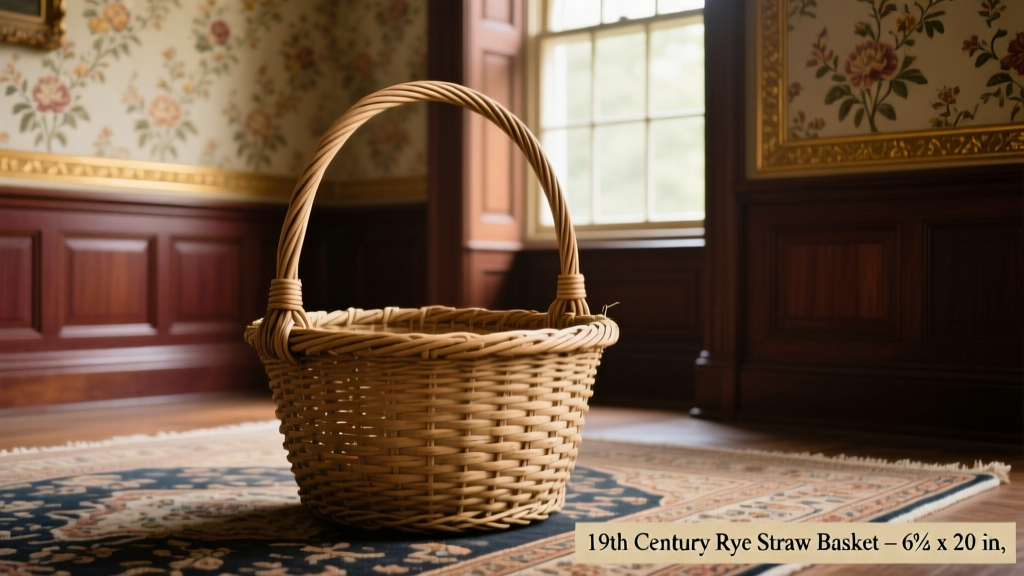
19th-Century Rye Straw Gathering Baskets with Bentwood Handles: Form, Function, and Regional Craftsmanship
With Terry Kovel at the Antiques Roadshow: Insights from America’s Most Trusted Appraiser

The Laing Planetarium Literature Sheet, c. 1900: A Rare Artifact of Victorian Scientific Communication

Occupied Japan Cup & Saucer: Floral Gold-Trimmed Hexagonal Cup with Three Tiny Feet (3⅛") — Identification, History, and Restoration Insights
The 1140390: Decoding the Herman Miller Eames Lounge Chair & Ottoman — Serial Number, Provenance, and Restoration Protocol
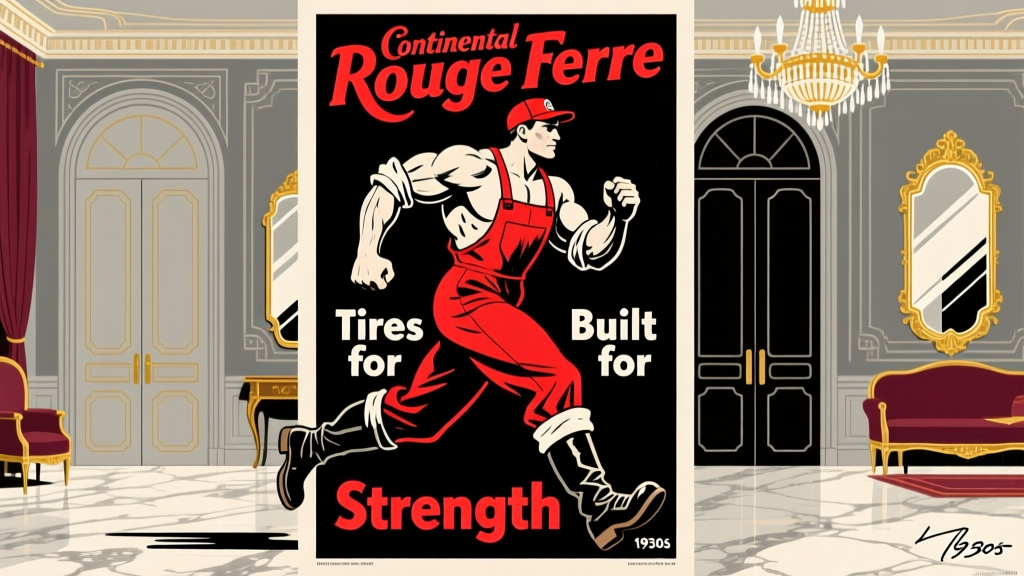
Continental Rouge-Ferré Tires Poster: The Muscled Worker of the 1930s — A Study in French Industrial Art and Automotive Heritage

The Evervess Sparkling Water Parrot Tip Tray: A Mid-Century Advertising Artifact and Restoration Case Study